Name/Title
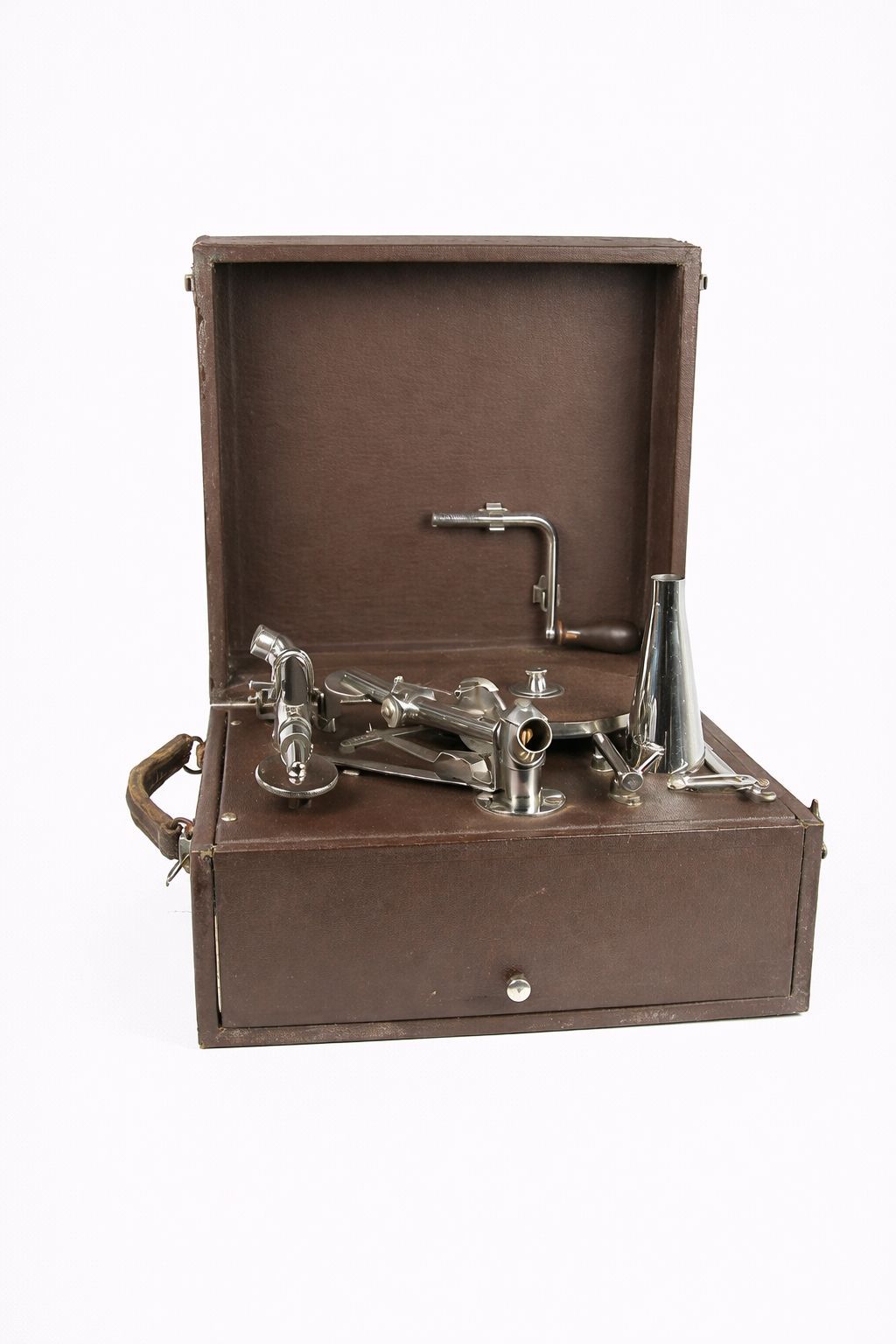
Pathé Post, Correspondence Disc Recording DeviceEntry/Object ID
278Description
Manufacturer: Pathé Frères, Paris
Model name: Pathé Post
Date: ca. 1907–1909
Type: Acoustic disc recorder and player for correspondence use
Drive: Spring-driven, hand-cranked
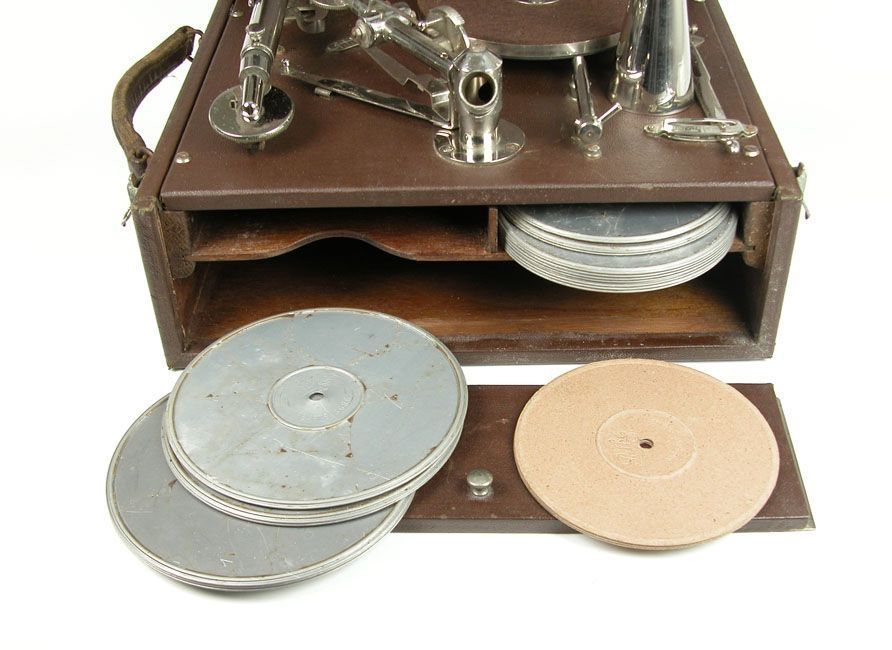
Recording medium: Small special discs (approx. 11 cm and 14 cm diameter)
Function: Recording and playback of spoken messages for postal exchange
Version: Second version (Edisonium collection)
Historical Background
The Pathé Post belongs to a short-lived but highly inventive chapter in the history of sound recording: the attempt to bring personal sound messages into everyday private life.
At the turn of the 20th century, the phonograph made it theoretically possible for anyone to record their own voice. In practice, however, this proved difficult. Domestic cylinder phonographs were far inferior to professional recording equipment, and usable recordings required clear articulation, constant volume, and careful handling—skills few non-professionals possessed. In addition, wax cylinders were fragile and poorly suited for mailing.
To overcome these limitations, several manufacturers experimented with disc-based correspondence devices. Among the most ambitious of these was the Pathé Post, described by Daniel Marty as a “correspondence apparatus” (Korrespondenzapparat).
The Concept of the Pathé Post
The Pathé Post was designed to allow users to record short spoken messages on special small discs, which could then be sent by mail, often together with illustrated postcards. These “sounding greetings” were intended as an acoustic equivalent to written correspondence.
The device recorded and played back special Pathé discs of approximately 11 cm and 14 cm diameter, significantly smaller than standard commercial records. The compact format was chosen specifically to facilitate postal transport.
Despite its ingenuity, the system suffered from limited sound quality, which Marty explicitly notes as a weakness. While the Pathé Post fulfilled its conceptual goal, the acoustic results were modest, and the recording process remained technically demanding for casual users.
Technology and Construction
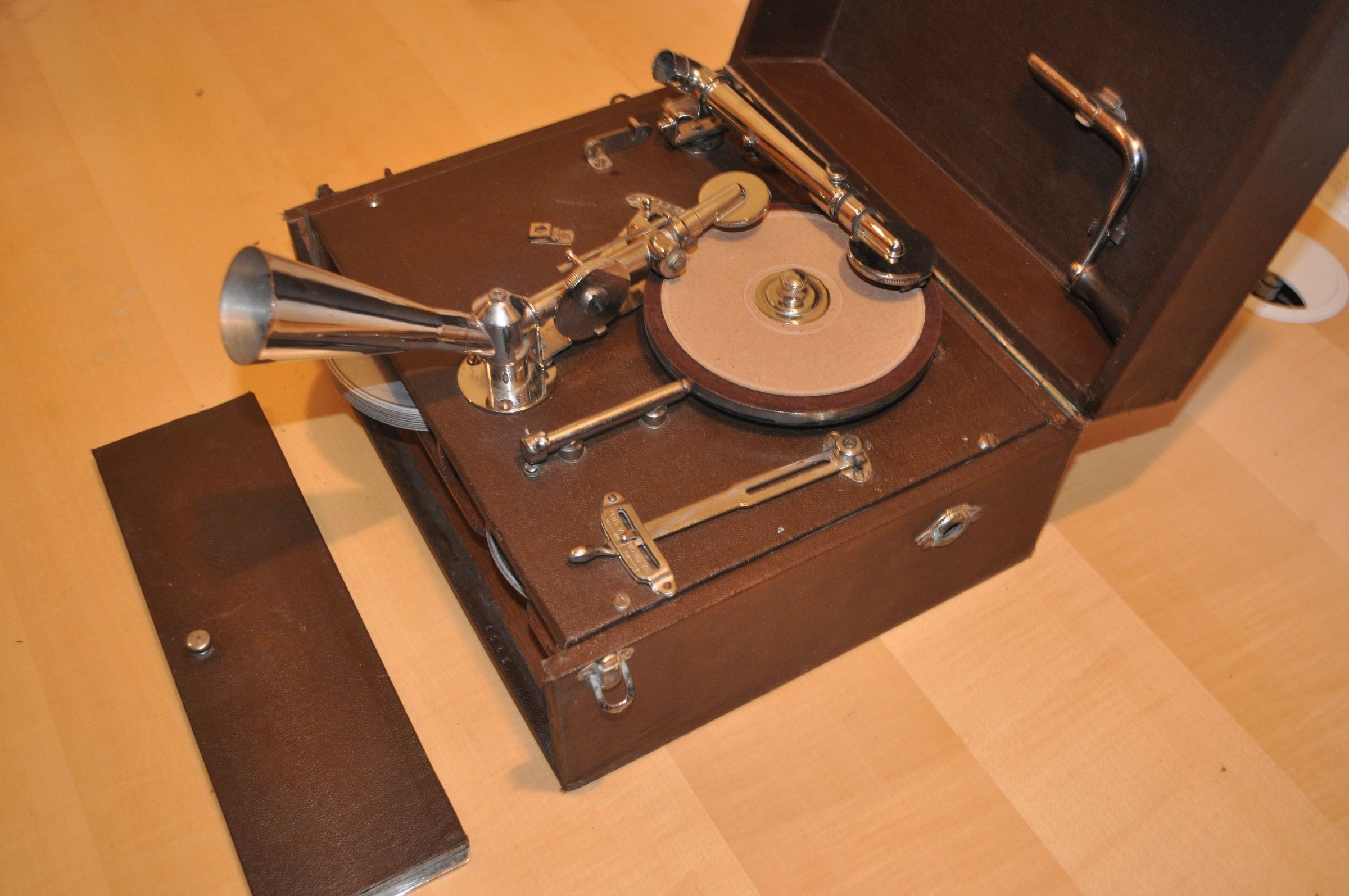
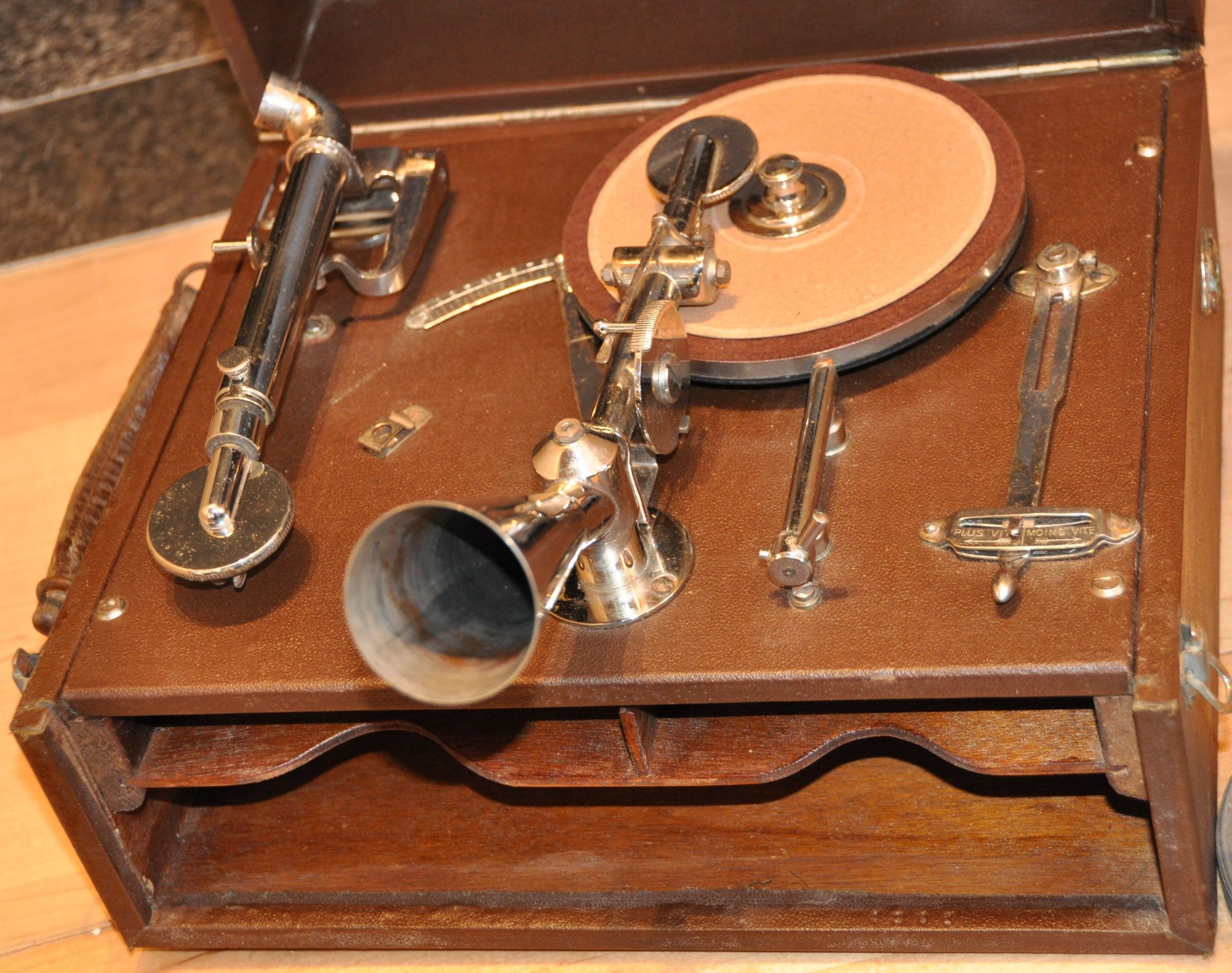
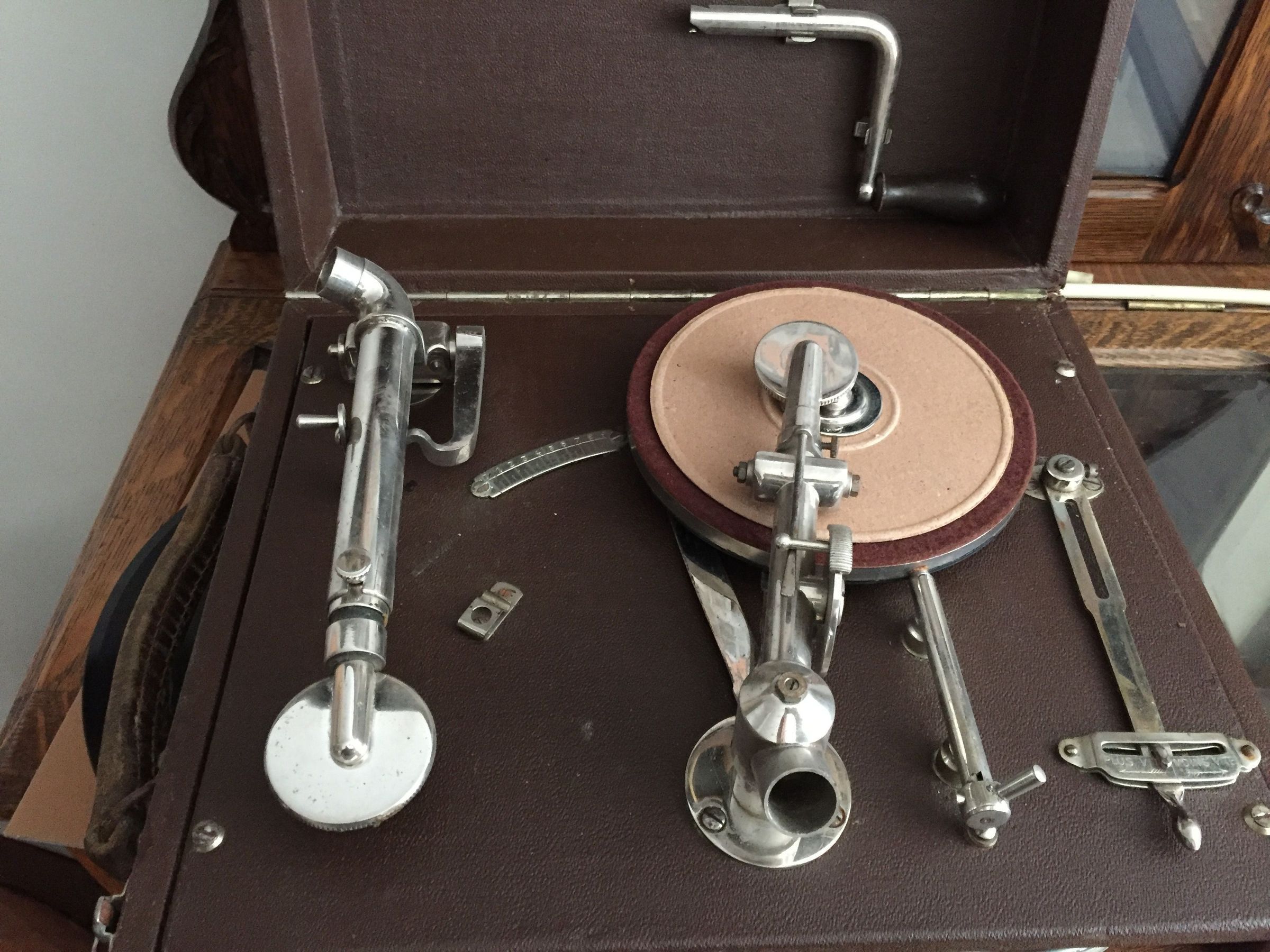
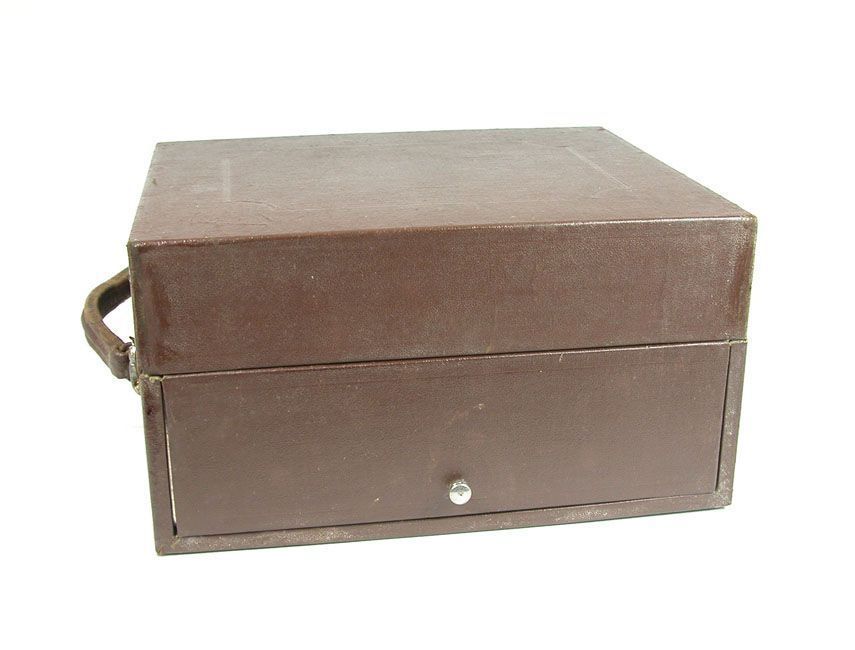
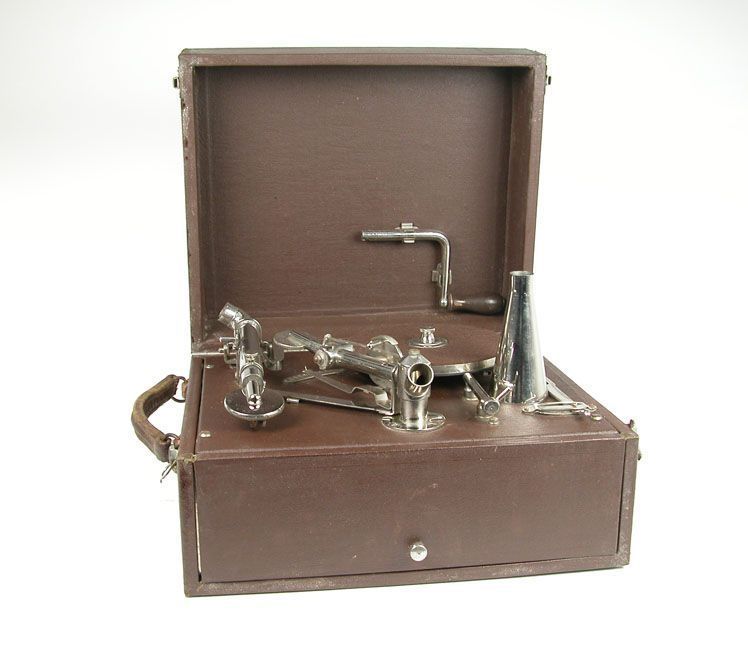
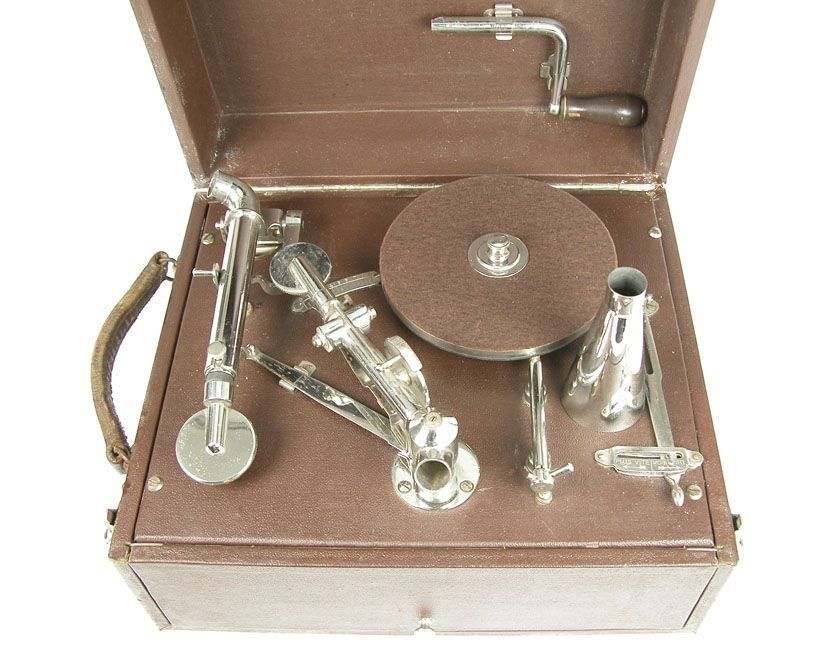
The Pathé Post is a compact, portable tabletop device housed in a fitted case. It combines:
a spring-driven motor,
a small turntable for correspondence discs,
a recording/playback soundbox,
and a small metal horn.
The device operates purely acoustically, without amplification. Recording is done directly onto specially prepared discs, using a cutting stylus. Playback uses the same acoustic system.
The example in the Edisonium represents the second version of the Pathé Post, identifiable by constructional refinements compared to the earliest model. At least two distinct versions of the Pathé Post are known.
Dating and Market Reception
According to Daniel Marty and surviving documentation, the Pathé Post was most likely introduced around 1908.
Commercial success, however, was limited. The device remained a niche product, overshadowed by conventional disc gramophones for listening and by office dictation machines for practical recording. The Pathé Post was soon discontinued, making surviving examples comparatively rare.
Significance
Although commercially unsuccessful, the Pathé Post is of great historical importance. It represents:
an early attempt at audio correspondence,
a precursor to later personal recording media,
and a remarkable example of Pathé’s experimental spirit.
Conceptually, the Pathé Post anticipated later developments such as voice postcards, home tape recorders, and ultimately digital voice messaging—more than a century before such technologies became commonplace.
Significance within the Edisonium
The Pathé Post in the Edisonium documents an important alternative path in the evolution of sound recording:
not mass entertainment, but personal communication.
As a rare example of a disc-based correspondence recorder—and as the second, improved version of the model—it forms a key exhibit illustrating the ambitions and limitations of early domestic recording technology in the years just before the First World War.