Name/Title
Pathé Modèle D – Disc PhonographEntry/Object ID
294Description
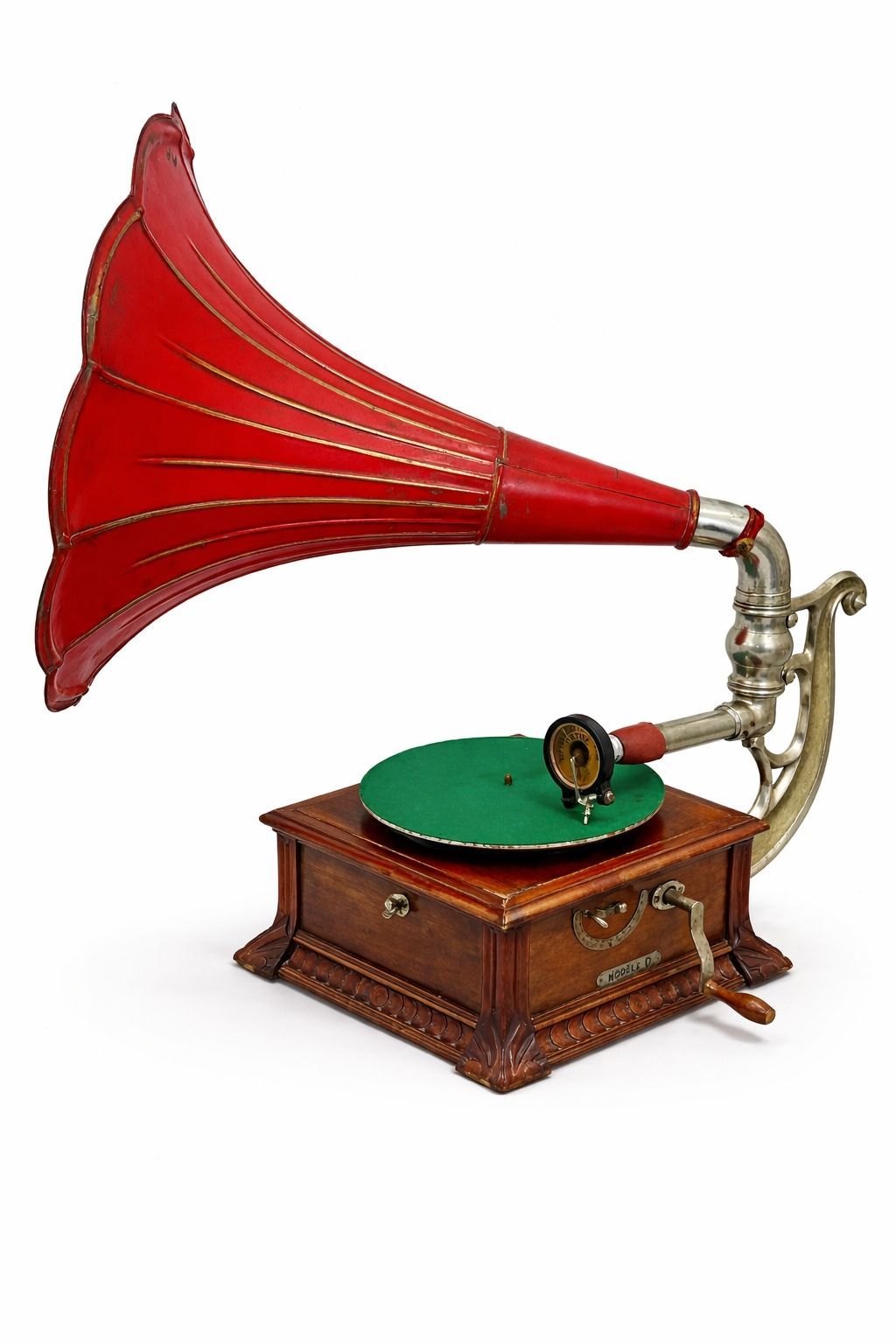
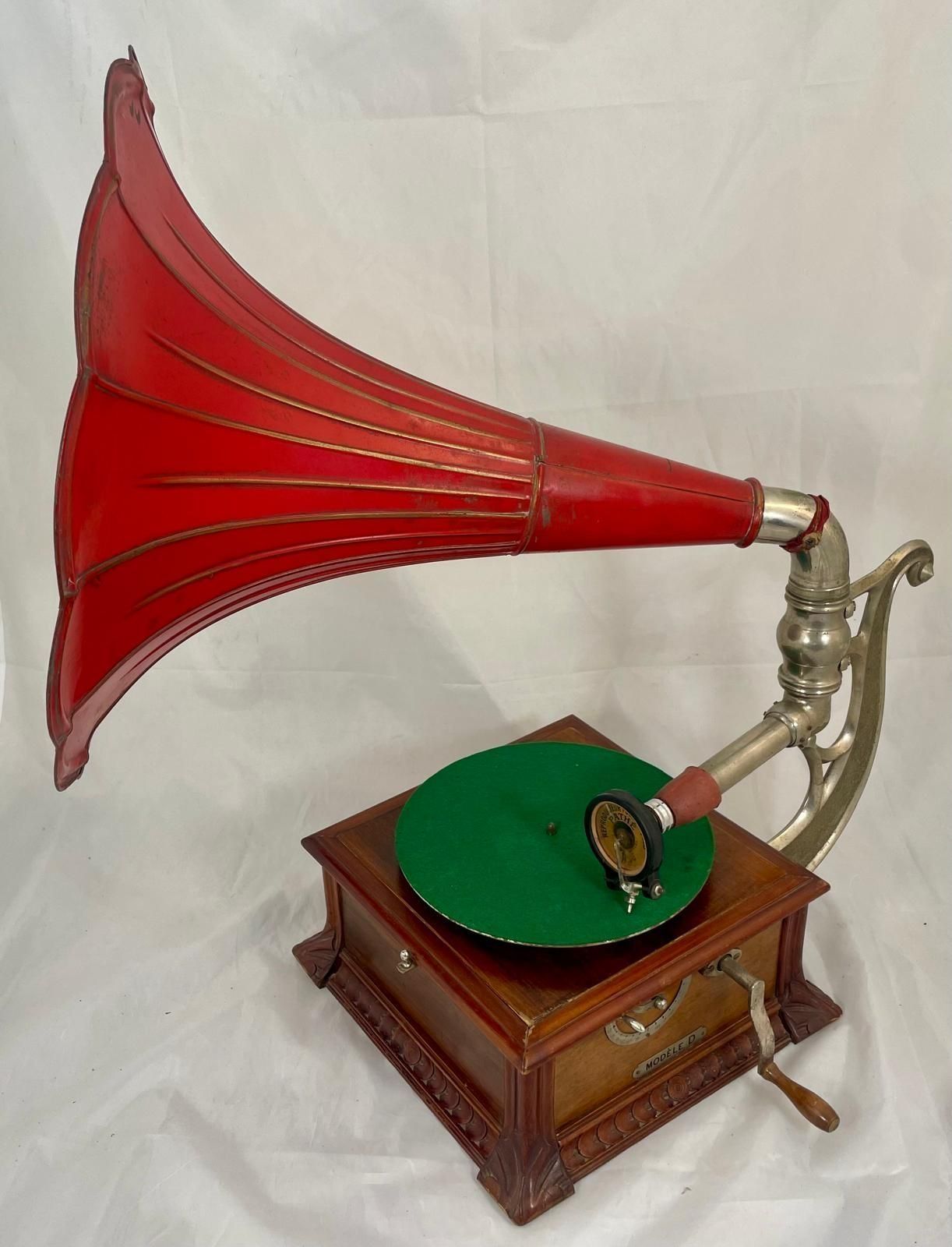
Pathé Modèle D – Disc Phonograph
Pathé Frères, France, c. 1906
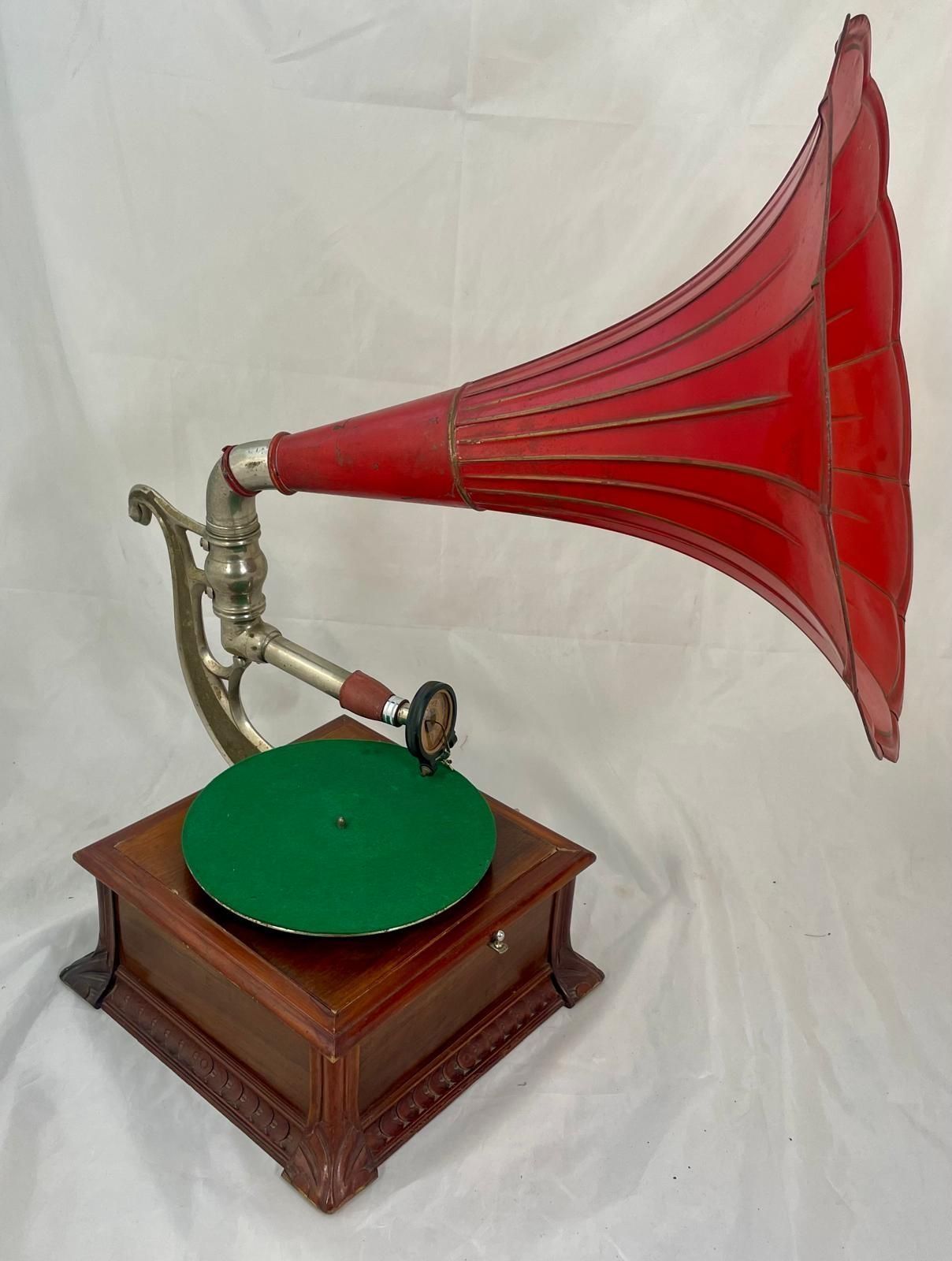
An early French disc machine – with original transport case
The Pathé Modèle D is one of the early disc phonographs manufactured by the Paris-based company Pathé Frères, introduced around 1906. A particularly rare feature of this example is its complete preservation, including original transport case and accessories – highly unusual for machines of this kind today.
Technical Features
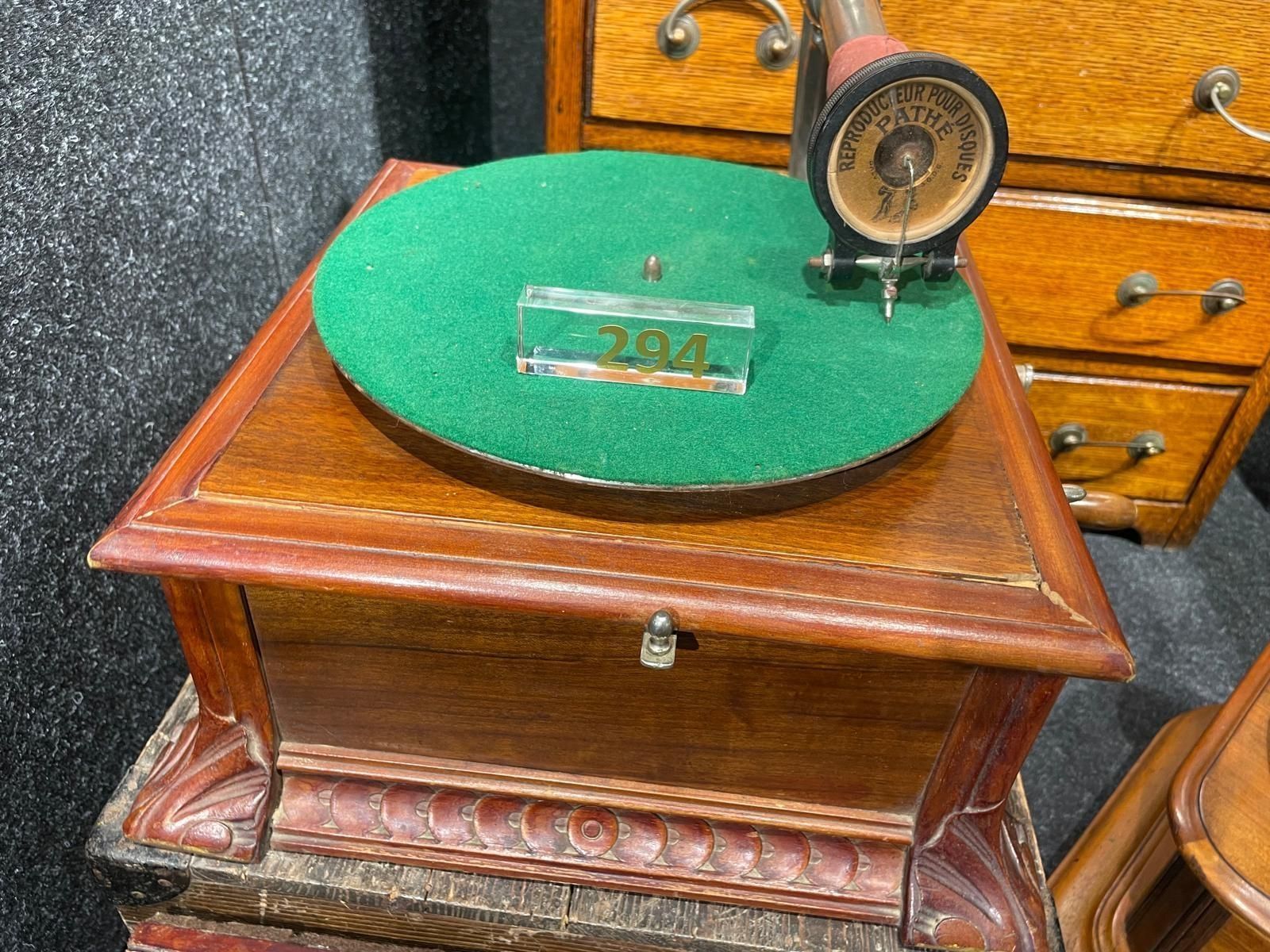
Vertical-cut playback: This machine plays Pathé records with an inside start – the sapphire stylus begins at the center and moves outward, rotating at approximately 90 RPM.
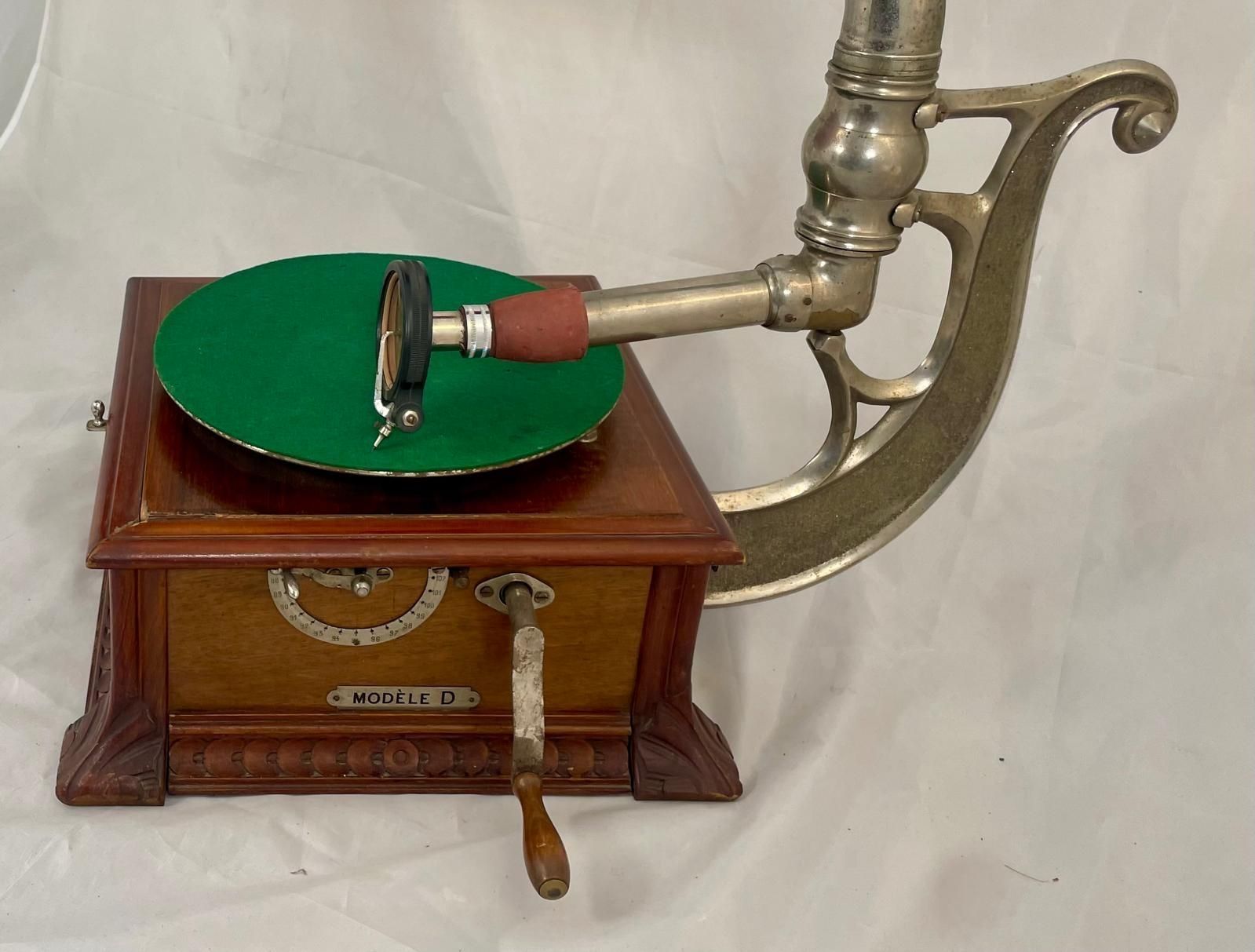
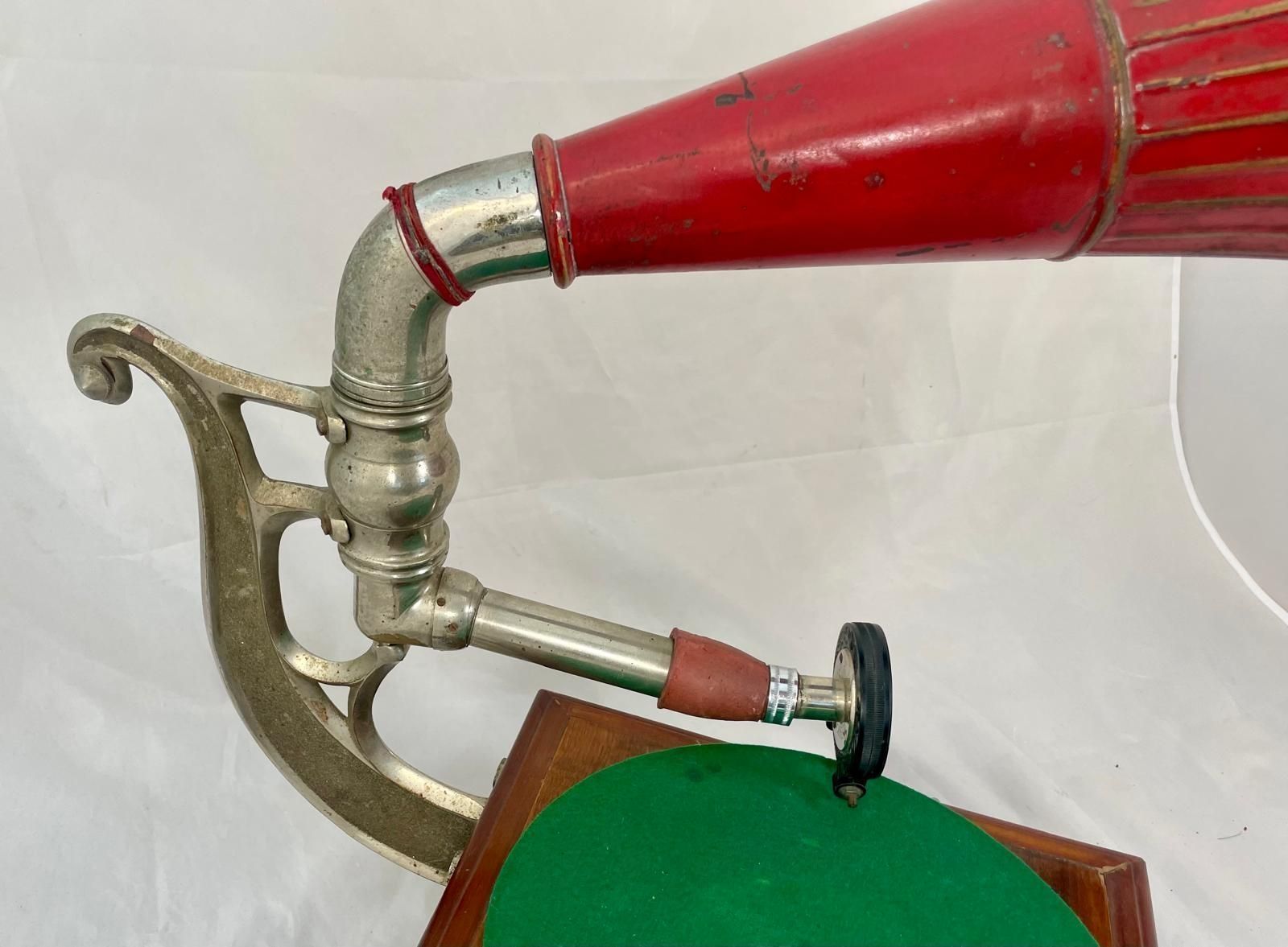
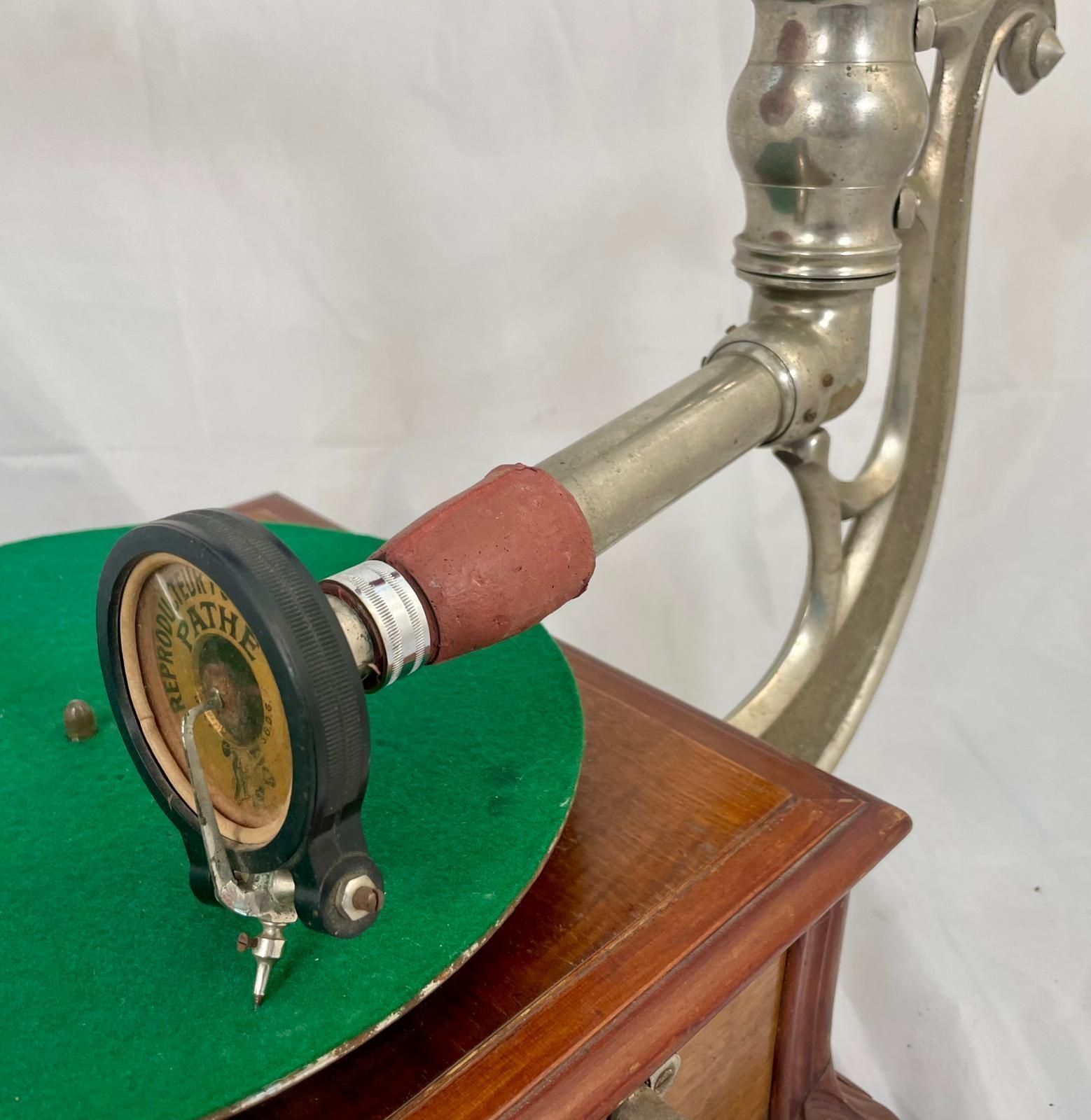
Sapphire stylus: The fixed ball-shaped sapphire stylus was typical of Pathé systems, ensuring gentle playback and long durability.
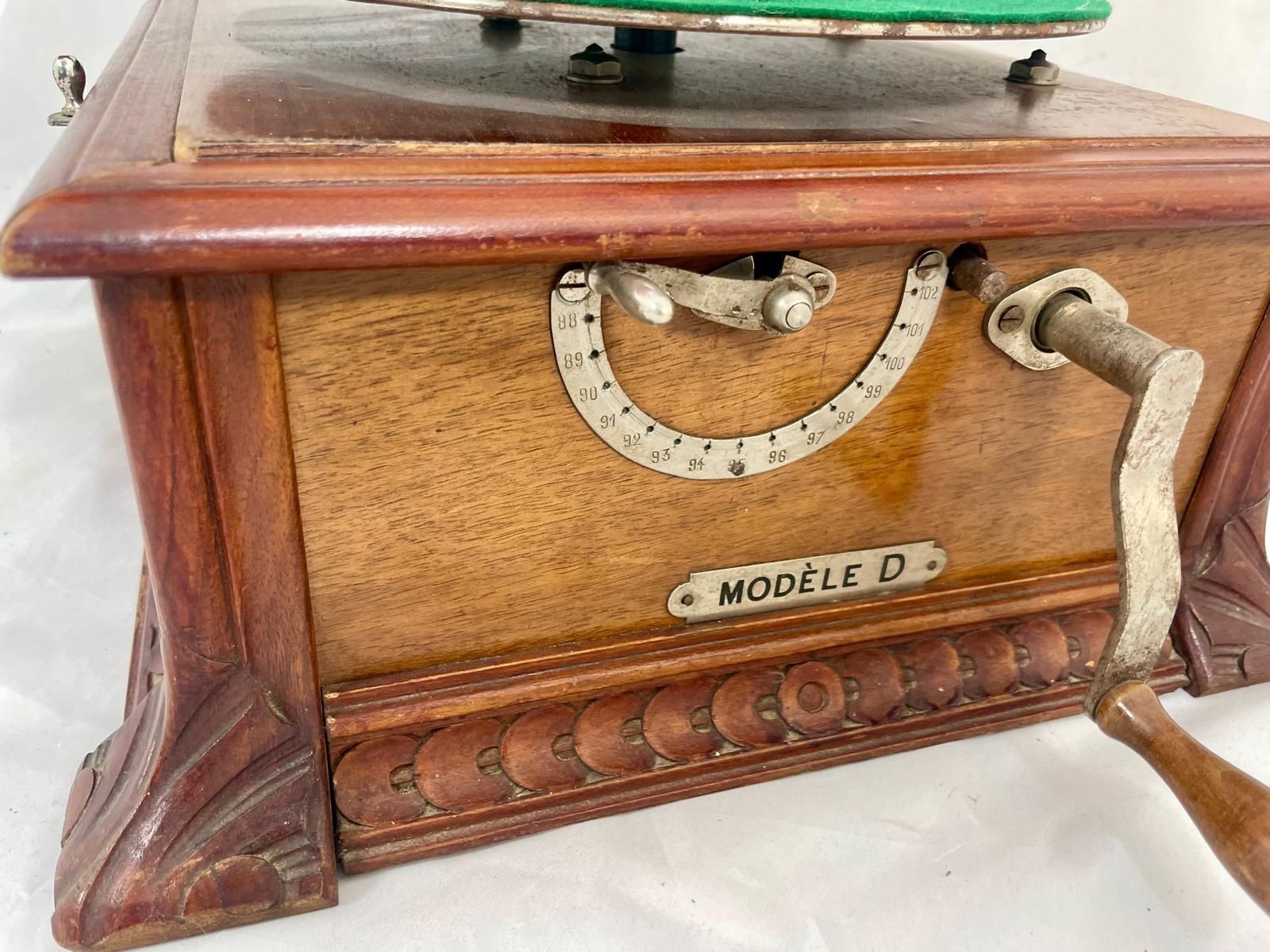
Manual drive: Spring motor with crank handle and a visible speed control dial on the front panel.
Horn and tonearm: The large red-lacquered metal horn is guided by a cast-iron support arm – a signature feature of early French disc phonographs.
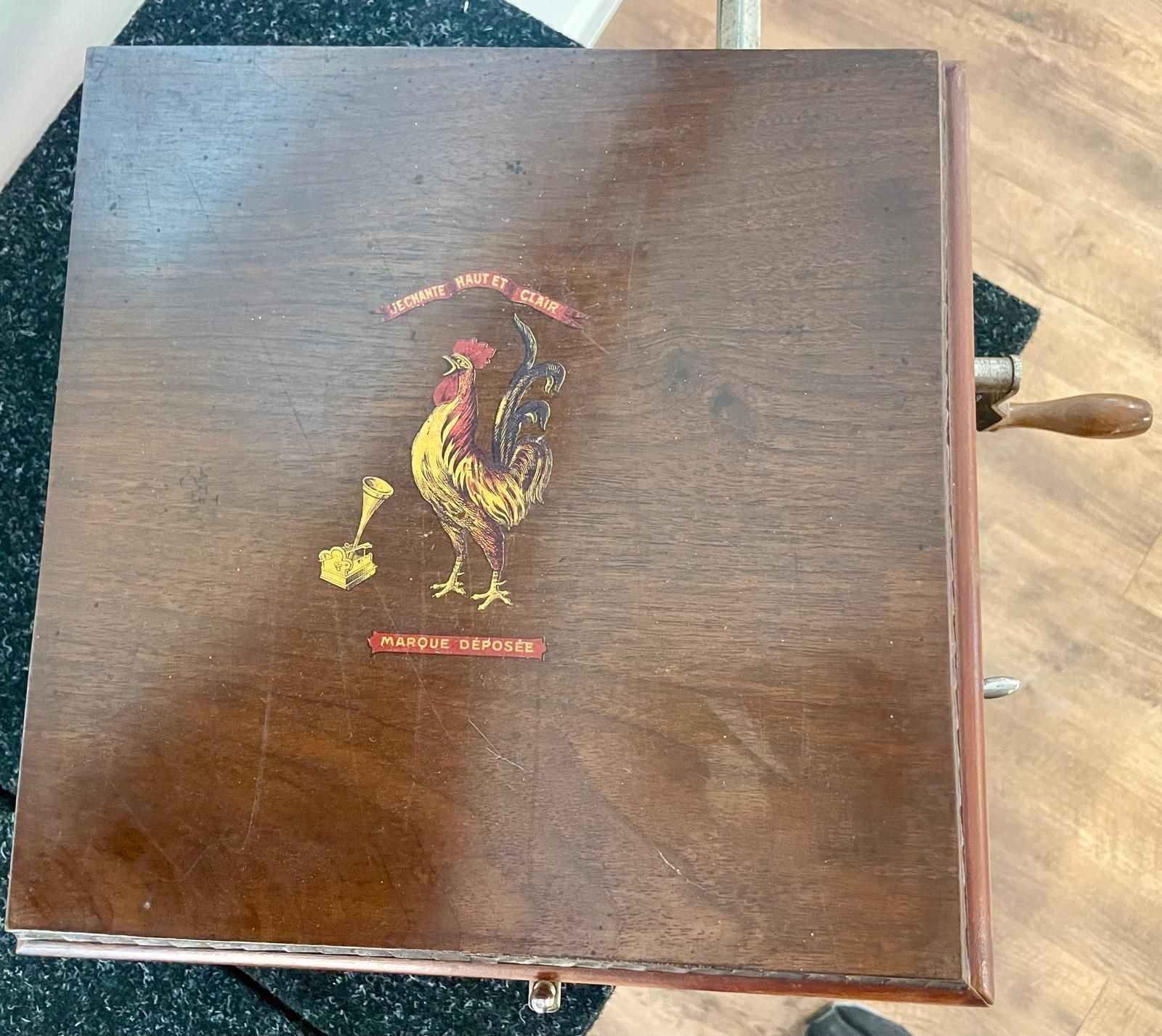
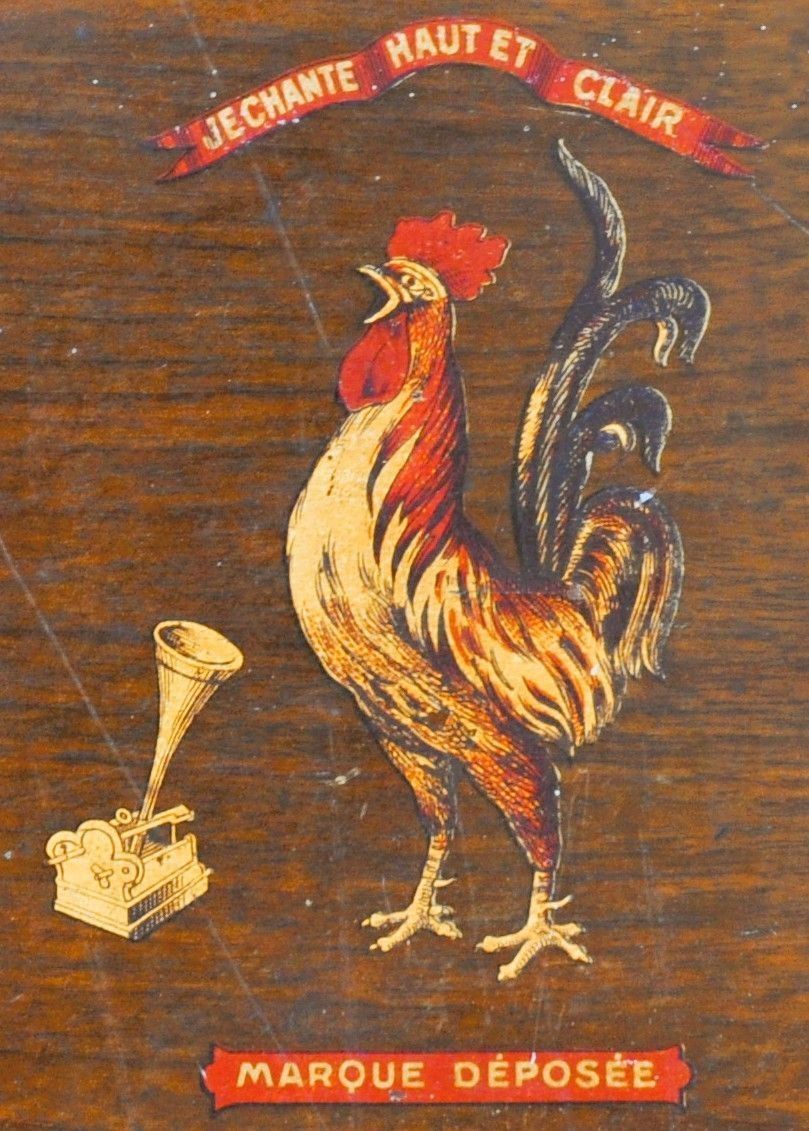
Cabinet: Solid wood construction with decorative front panel and partially carved base. The lid displays the famous Pathé rooster logo, with the slogan "Je chante haut et clair" ("I sing loud and clear").
Historical Context
Pathé began producing disc machines in 1906, after achieving major success with its earlier cylinder phonographs. The Modèle D was among the first Pathé disc models designed specifically for domestic use. The use of vertical-cut discs set Pathé apart from other leading manufacturers like Victor and HMV, who relied on lateral-cut formats.
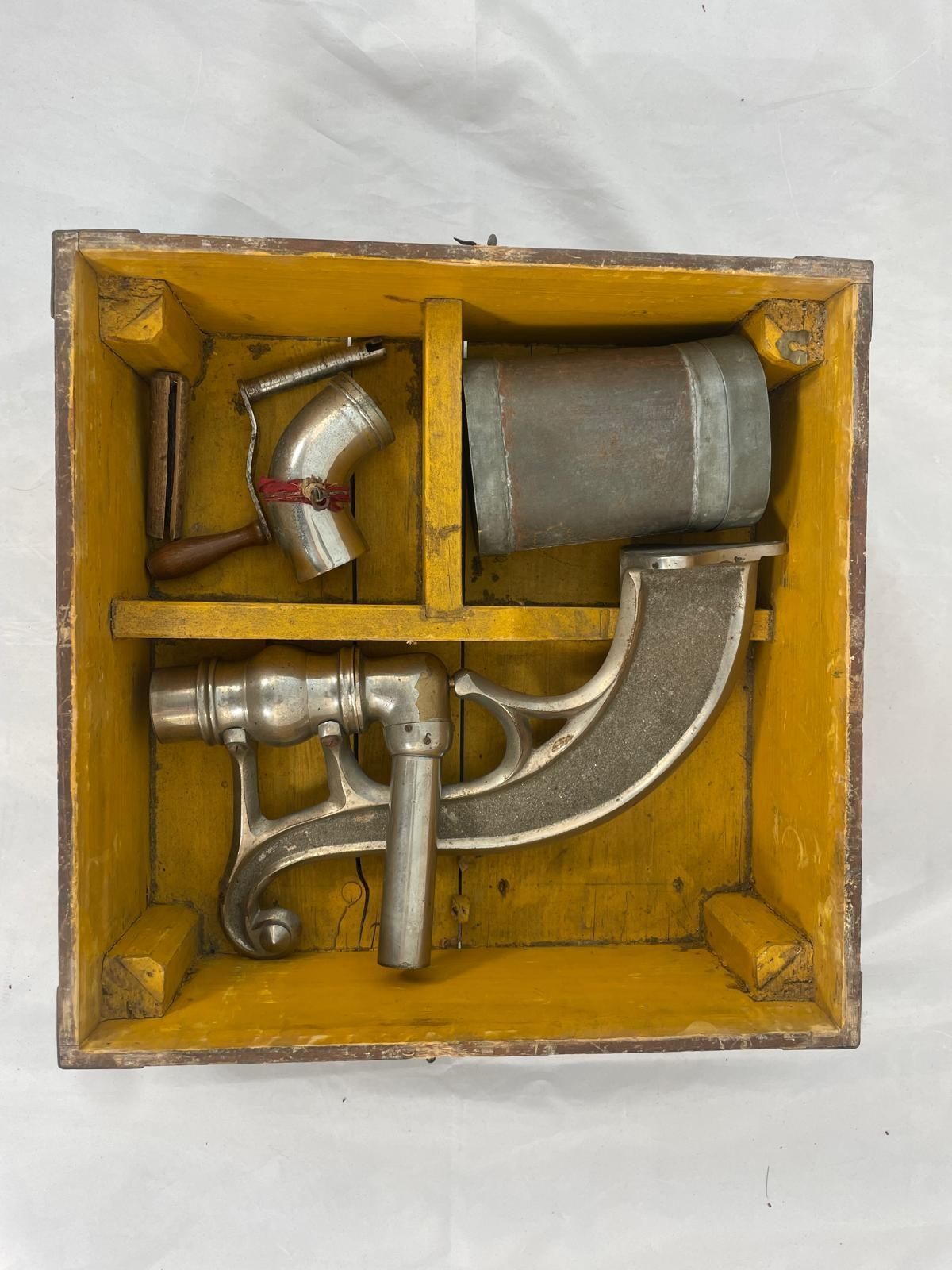
Phonographs of this type were advertised widely in France and abroad – often sold as complete kits, including accessory sets like the original compartmentalized transport box seen here (for horn, tonearm, reproducer, etc.).
Significance in the Edisonium Mariazell
The exhibited machine is not only in remarkably well-preserved condition, but also includes its original accessory kit – a rare surviving example of early 20th-century French phonograph culture. It represents Pathé’s formative leap into the disc format, and reflects the fusion of technology, design, and branding that defined the rise of mass-market sound reproduction.