Name/Title
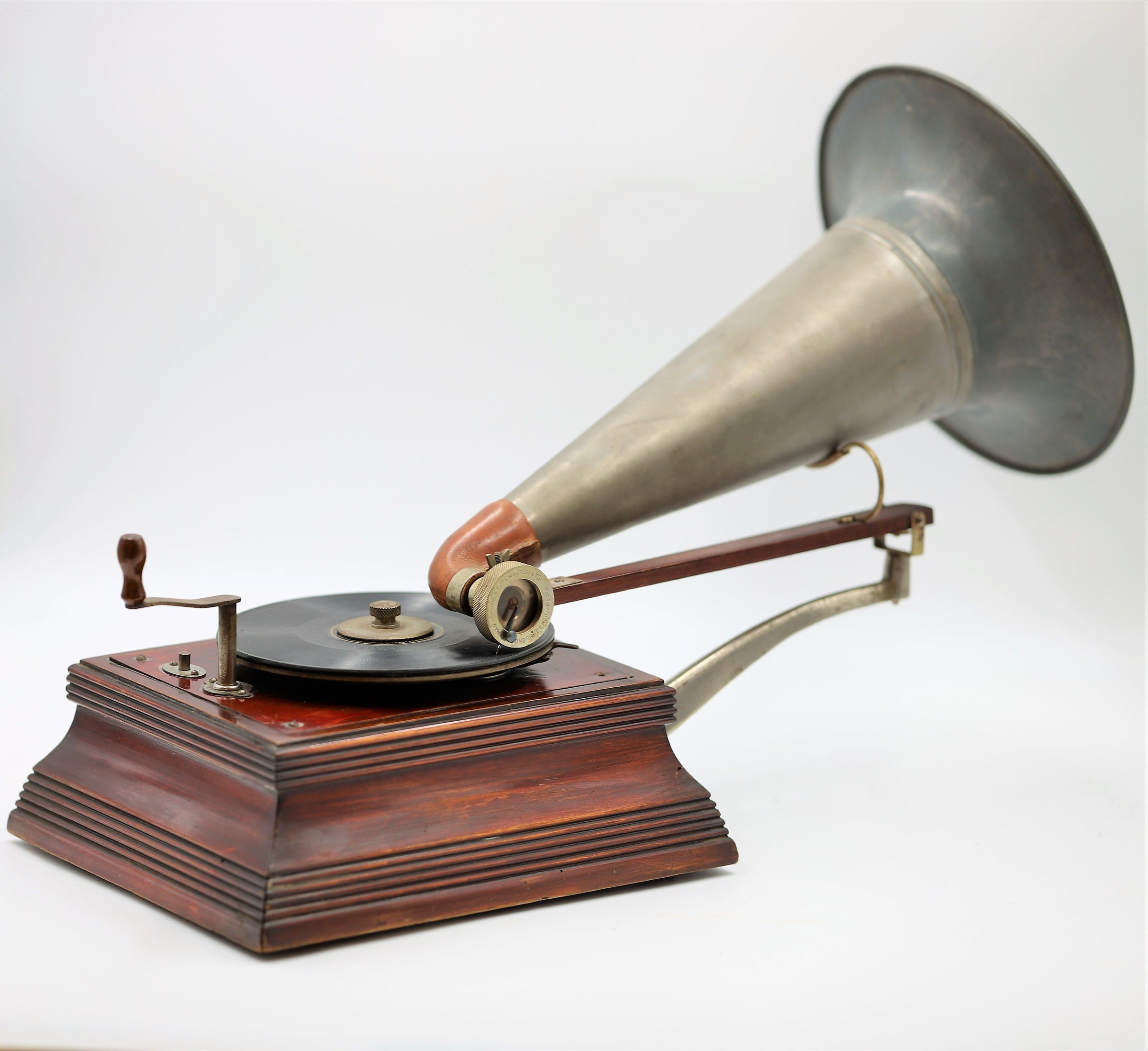
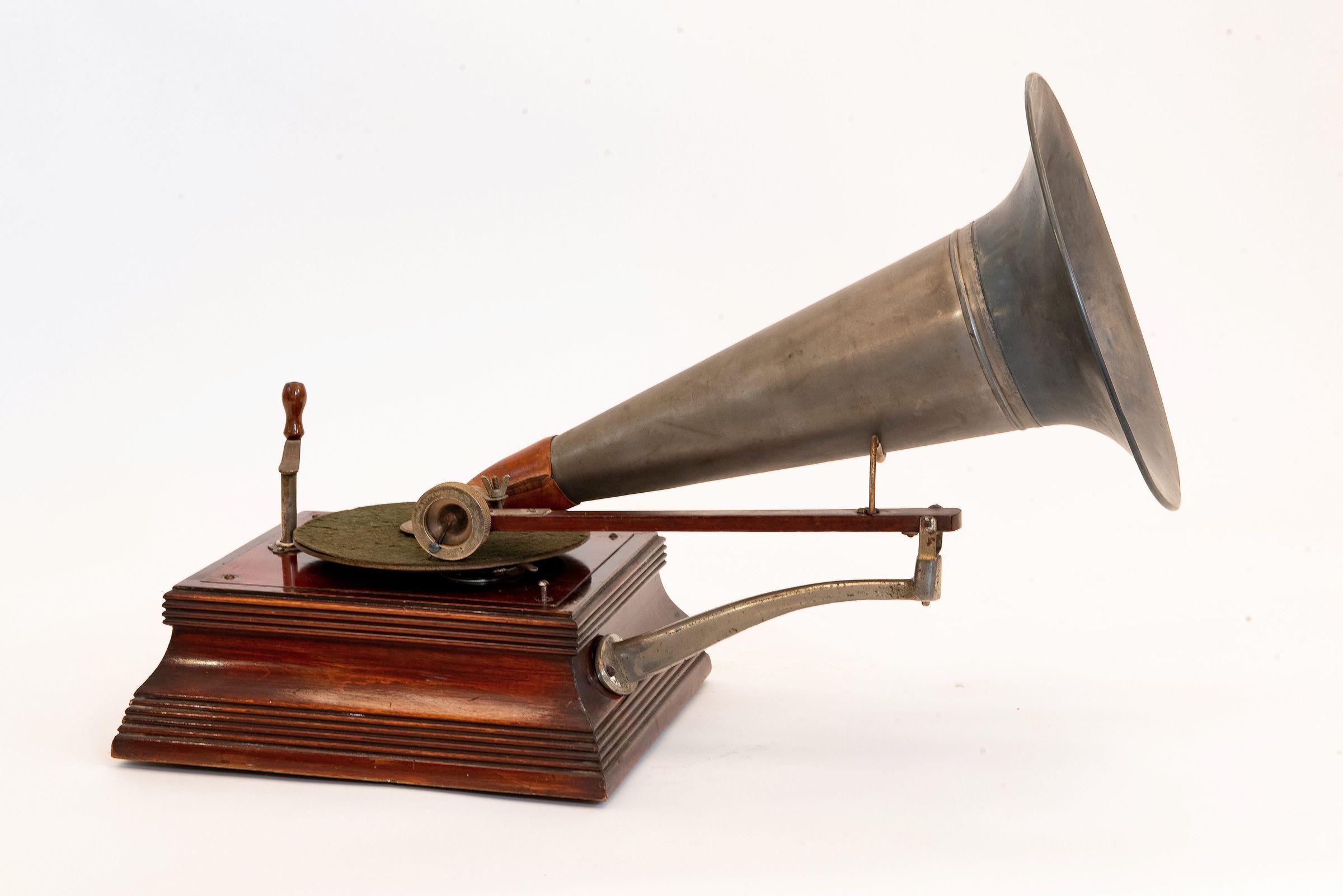
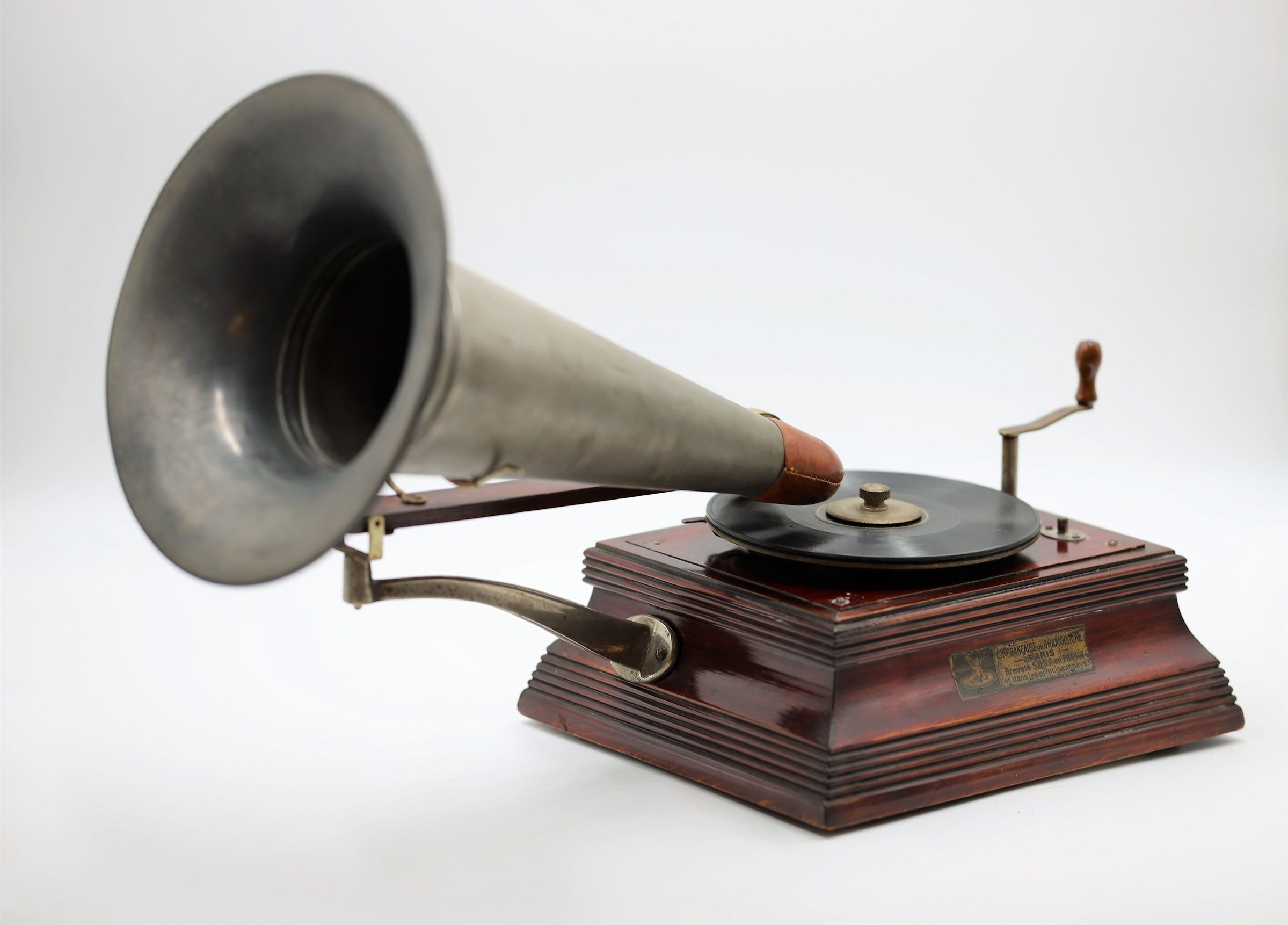
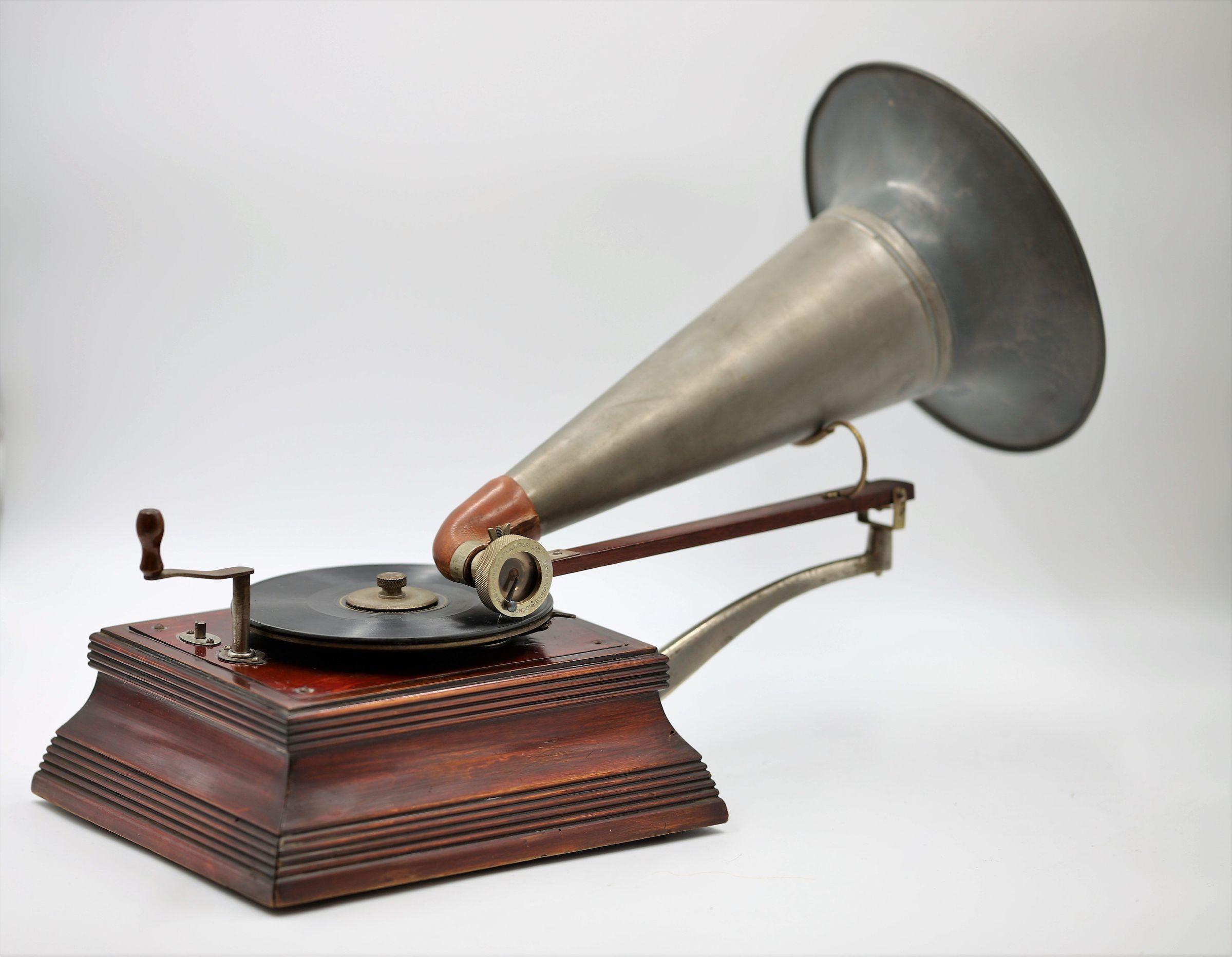
Early Berliner Disc Gramophone for the French MarketEntry/Object ID
298Description
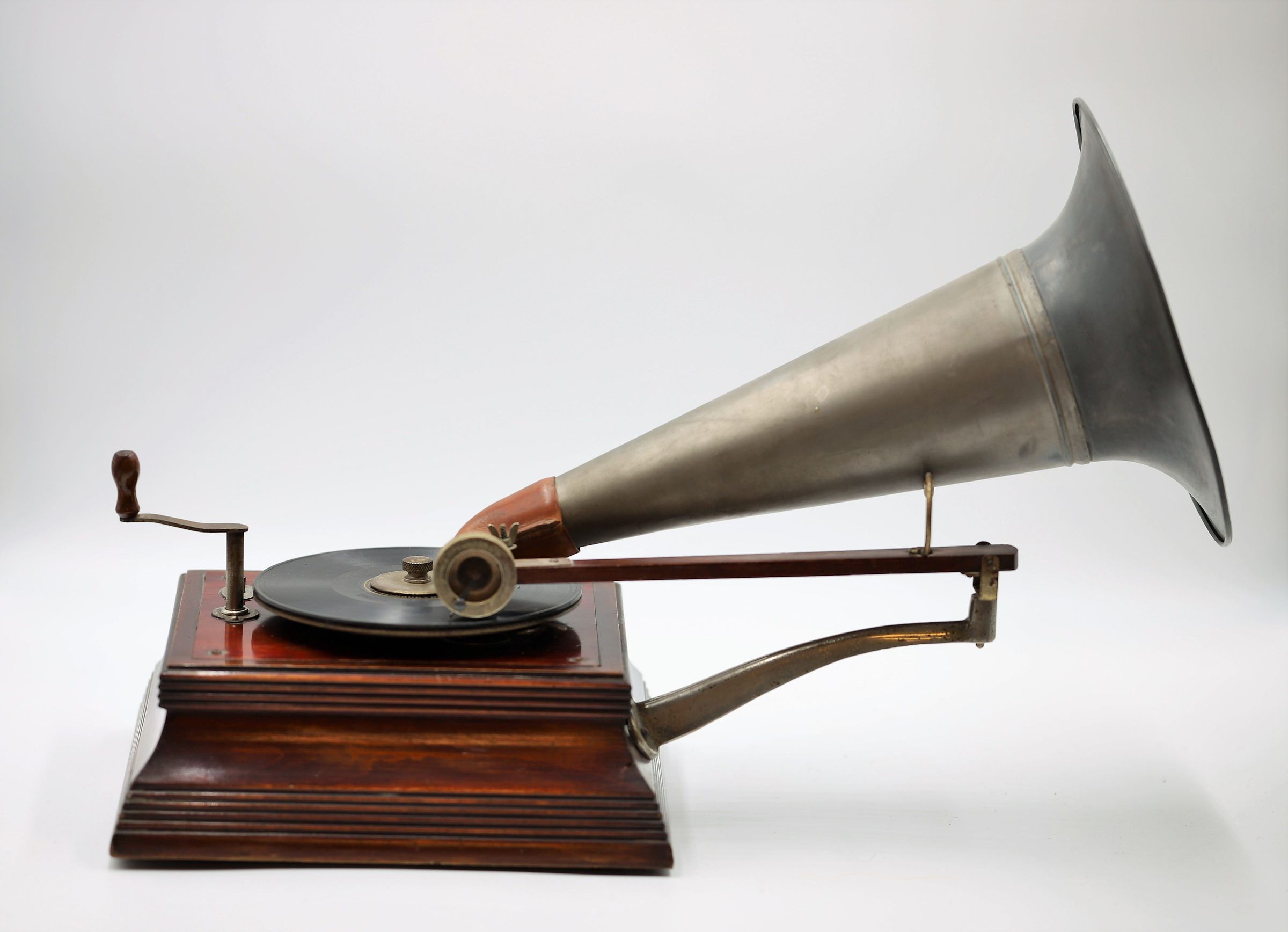
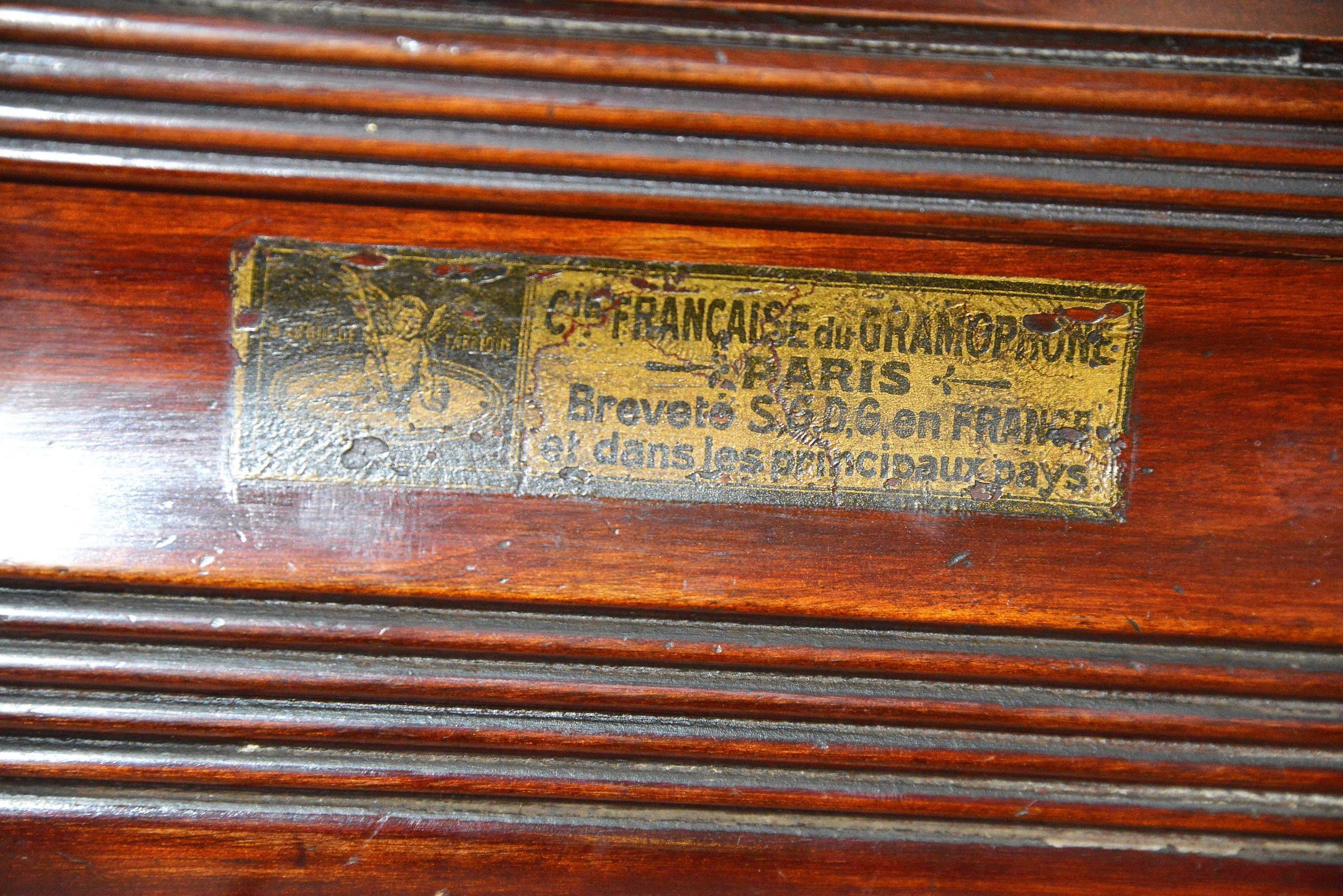
Gramophone Company / Compagnie Française du Gramophone
Manufacturer / Distribution:
Gramophone Company Ltd., London
Distributed in France by the Compagnie Française du Gramophone, Paris
Date: c. 1901–1903
Type: Acoustic disc gramophone, table model
Drive: Spring motor, hand-cranked
Crank: Vertically mounted on top (typical Berliner construction)
Soundbox: Concert Reproducer
Horn: Sheet-metal horn
Trademark: French Gramophone decal
Historical Background
The gramophone exhibited here belongs to the early generation of disc gramophones developed by the Gramophone Company, originating from the Berliner tradition and widely distributed throughout Europe around 1900–1901.
These machines mark the transition from experimental and semi-handcrafted apparatuses to standardized, internationally marketed music-playing machines. A particularly characteristic feature of this early phase is the vertically oriented hand crank, a direct identifying trait of Berliner constructions.
The present example was clearly intended for the French market, as evidenced by the surviving decal of the “Compagnie Française du Gramophone, Paris.” Such market-specific variants were typical of the Gramophone Company’s early expansion strategy.
Construction and Technical Features
In both construction and proportions, this gramophone corresponds to the Berliner-type models produced around 1901–1903, featuring an open or partially enclosed spring motor. The turntable is driven directly by the spring motor, with speed regulated by a centrifugal governor.
Particularly noteworthy is the use of a Concert soundbox, among the most powerful soundboxes of its time, providing significantly louder and clearer reproduction than earlier designs. This indicates that the machine was not an entry-level model, but rather a higher-quality variant.
The external sheet-metal horn corresponds in shape and material to early European Gramophone Company designs and differs clearly from the later, more standardized models.
Position in the Literature
Standard reference works on early gramophone history describe machines of this construction, particularly in connection with the European branches of the Gramophone Company. The illustrated examples in the literature correspond closely to the Edisonium specimen in terms of construction, crank arrangement, tone-arm design, and soundbox.
The example preserved in the Edisonium, however, features a different decal, indicating a version specifically manufactured or supplied for the French market. Such variations are well known from the early period of gramophone production and reflect the still-evolving and not yet fully standardized manufacturing and distribution structures around 1902.