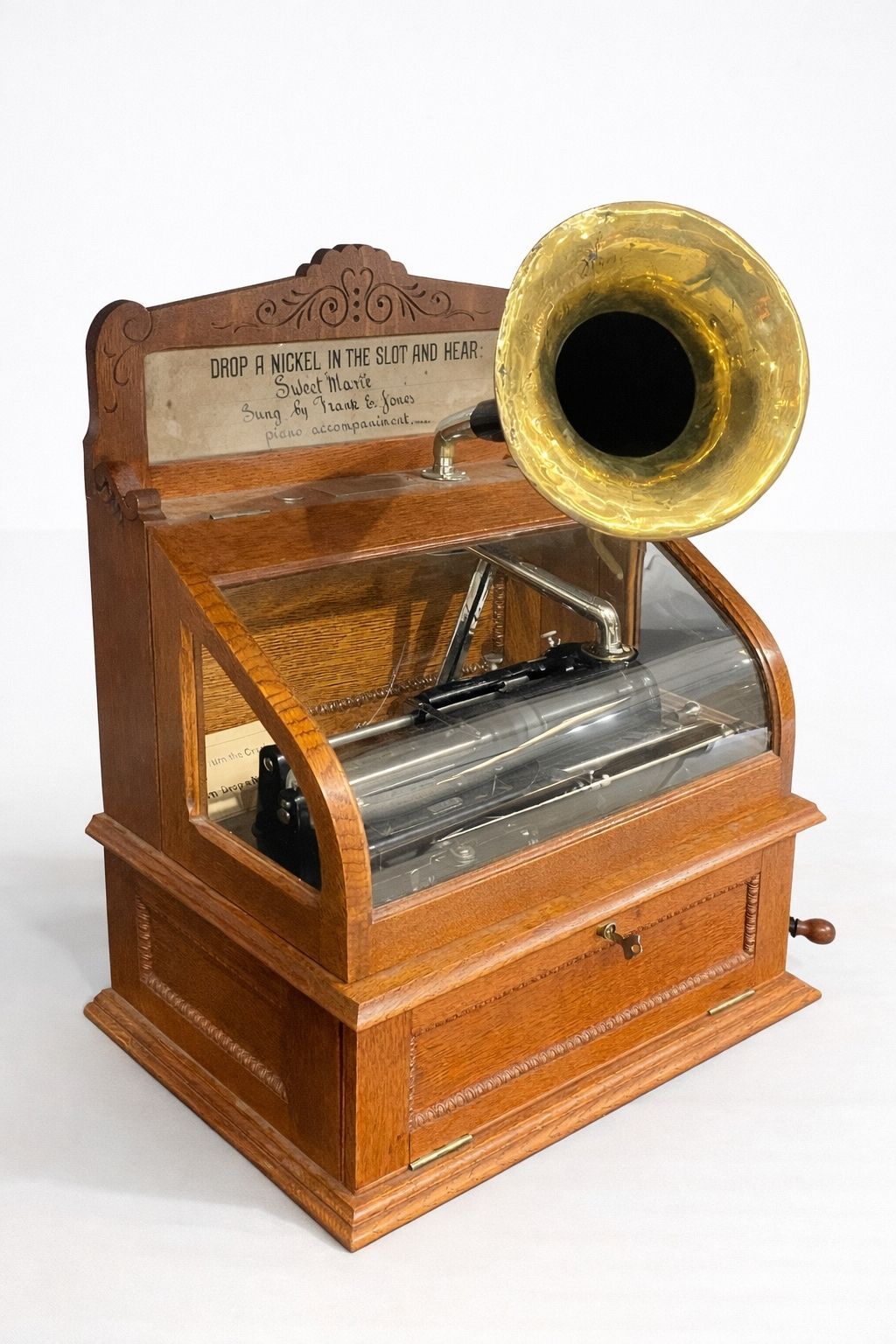
Edison Coin-Slot Phonograph – Type H
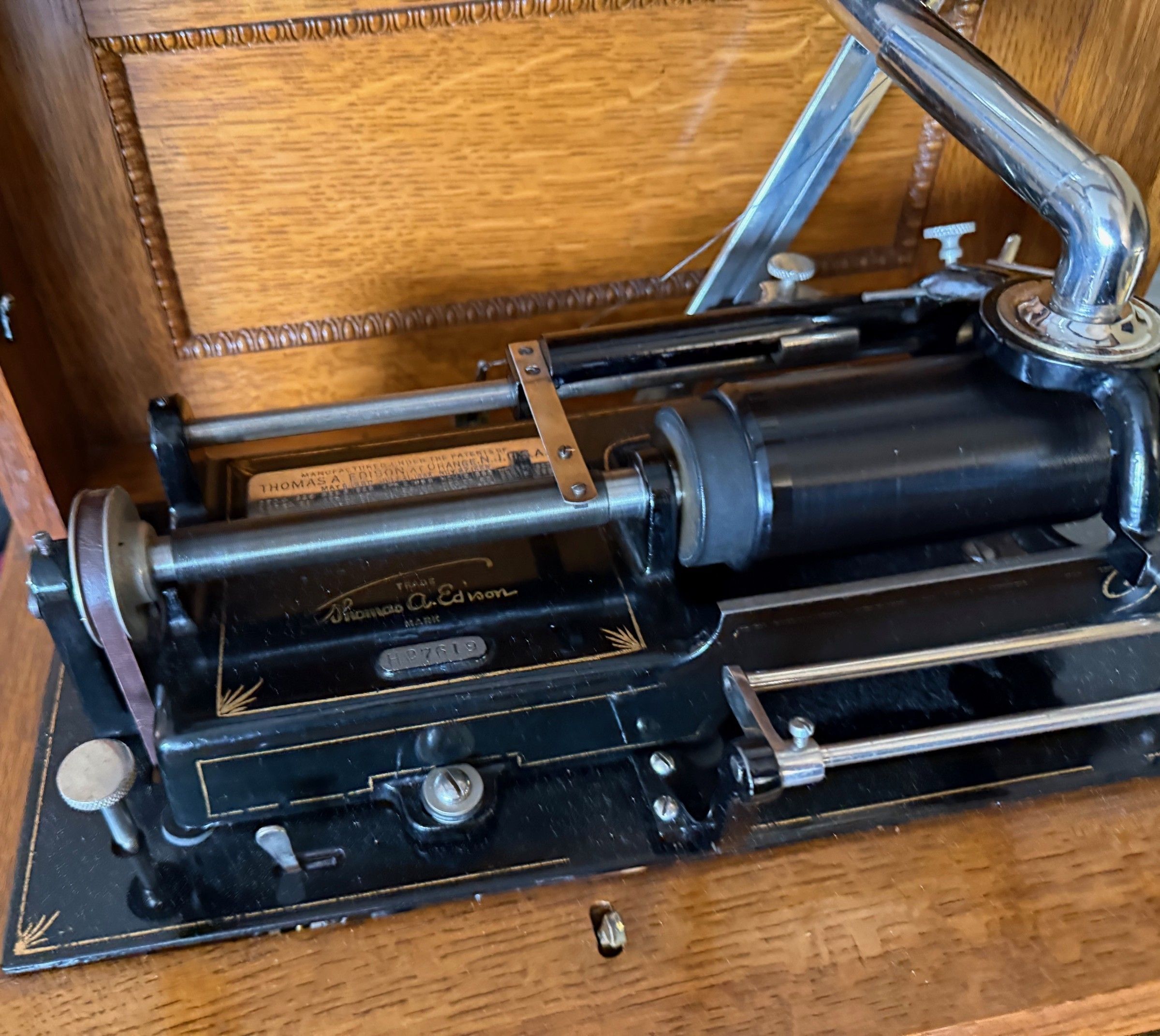
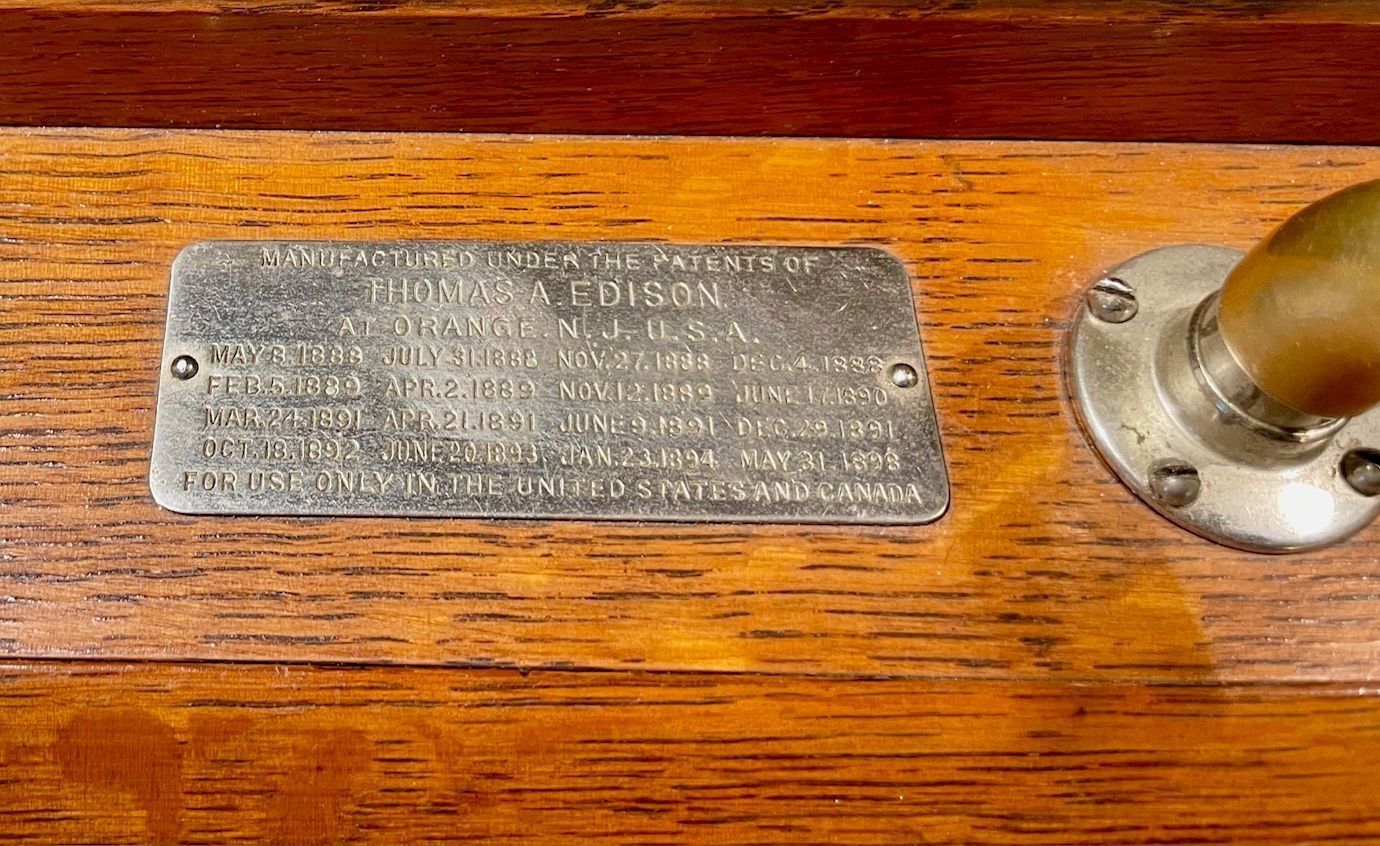
Serial No. H27619 – Chain Repeater Version. Edison Phonograph Works, Orange, New Jersey
ca. 1898–1899 | First factory-produced coin-operated phonograph by Edison
Historical Background
The Edison Coin-Slot Phonograph Type H was the first coin-operated phonograph officially built by Edison himself, designed for bars, train stations, saloons, and amusement venues of the 1890s.
The Type H marks the beginning of commercialized recorded sound:
A customer inserted a coin — and only then was able to wind the machine by hand and listen to a musical or spoken-word cylinder.
Production ran for only a very short period (1898–1899), which is why only about a dozen examples survive today — and only a handful remain in excellent original condition.
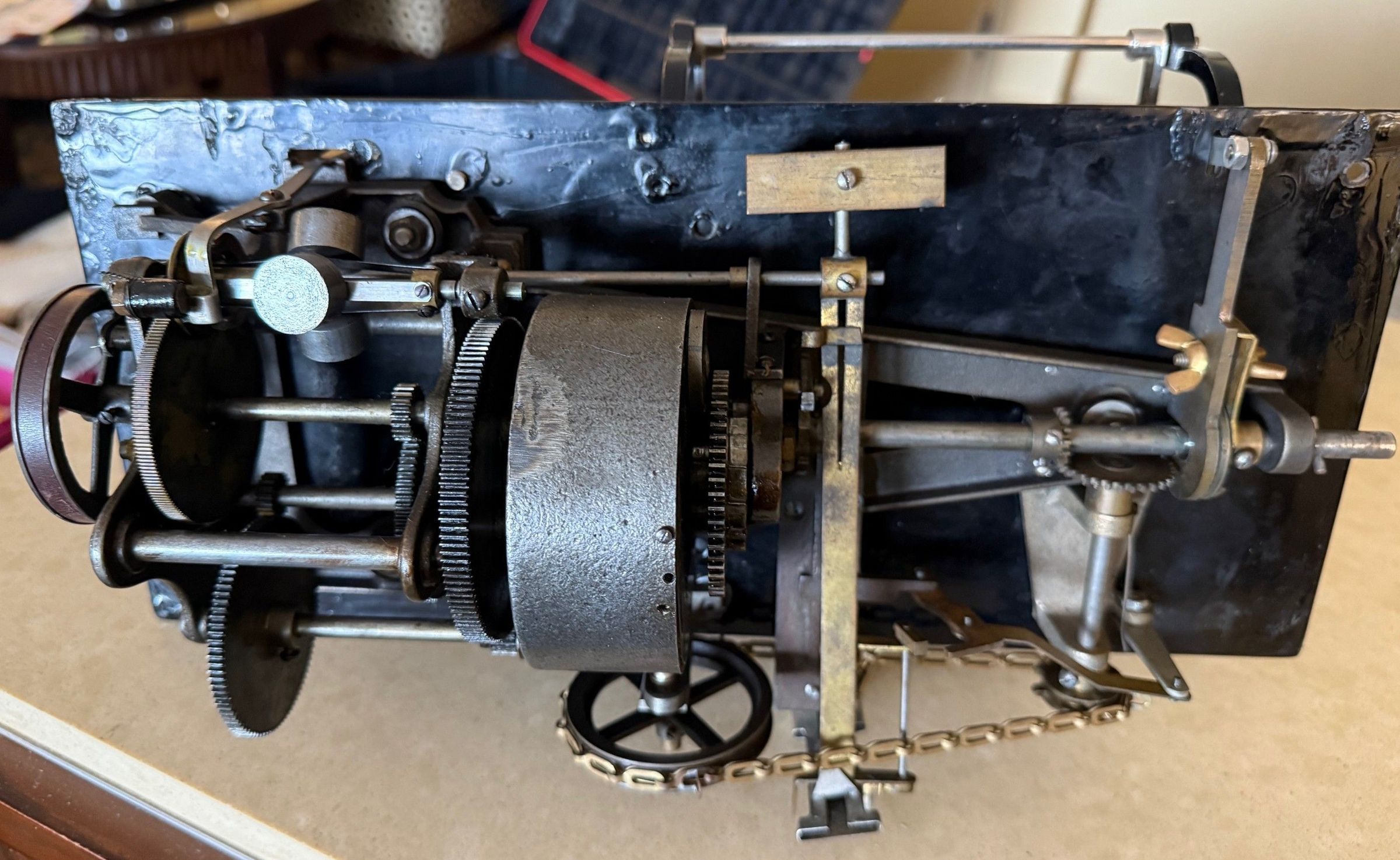
Chain Repeater – the Rarest Version
The Type H exists in two versions:
String Repeater – simple cord mechanism
Chain Repeater – more advanced chain-driven system
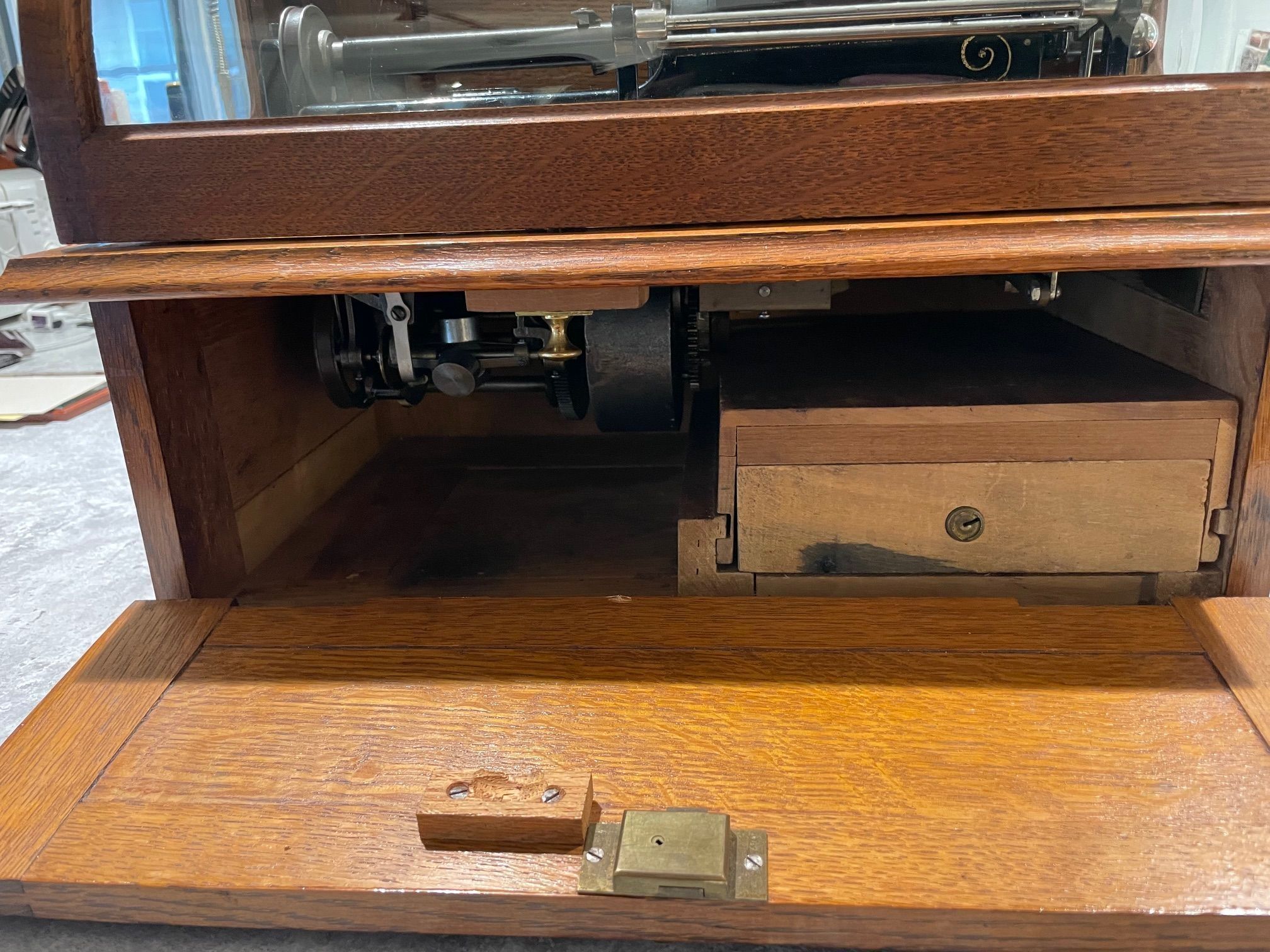
H27619 in the Edisonium is equipped with the extremely rare Chain Repeater, which:
enables more reliable automatic reset
provides steadier start/stop regulation
proved far superior for commercial use
Only very few Type H machines were fitted with this high-quality mechanism.
Technical Features
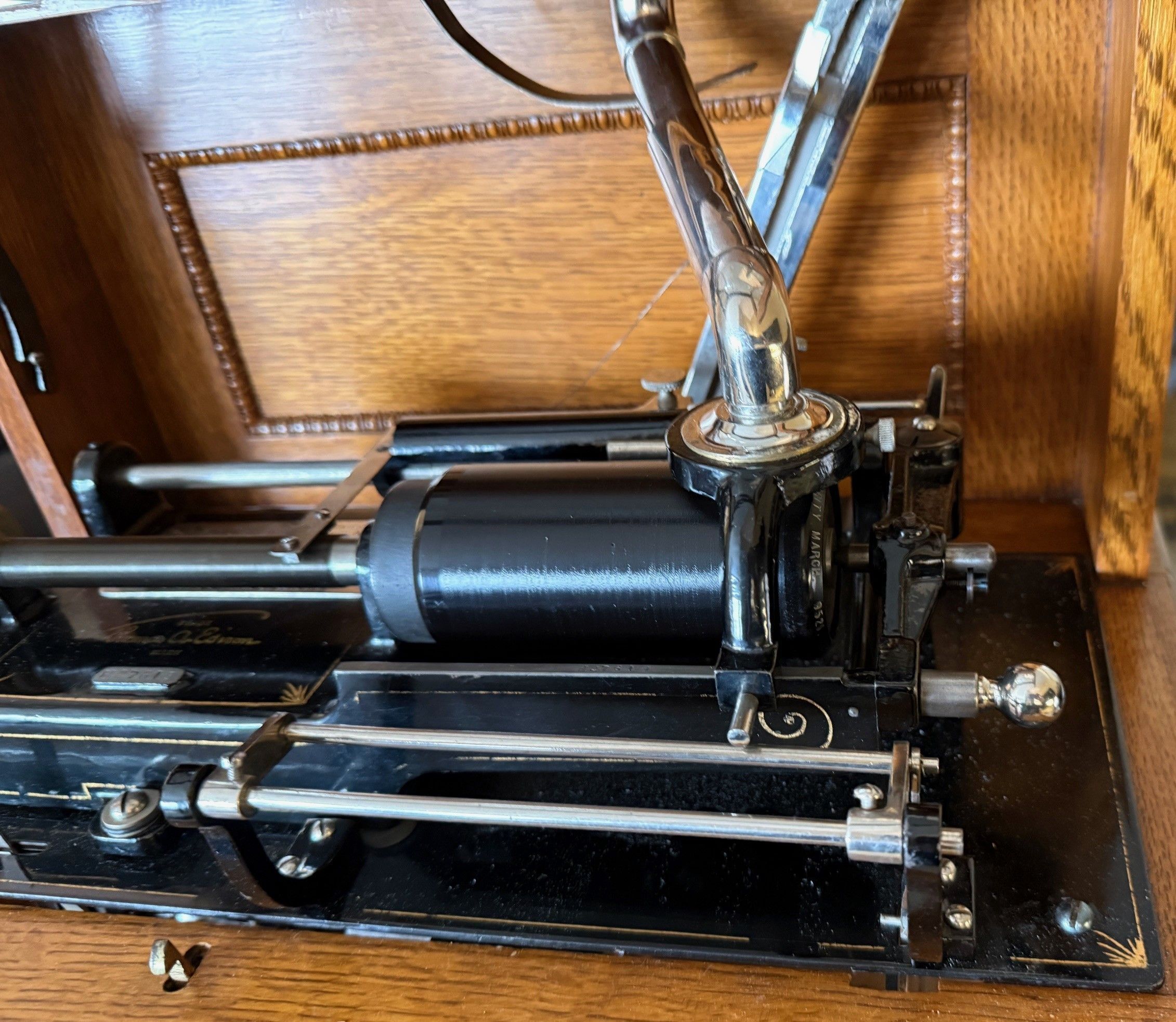
Clockwork-driven mechanism, wound by the customer after inserting a coin
Locking system preventing operation without payment
Chain Repeater for automatic resetting of the machine
Solid, richly decorated oak cabinet
External horn, chosen according to venue size
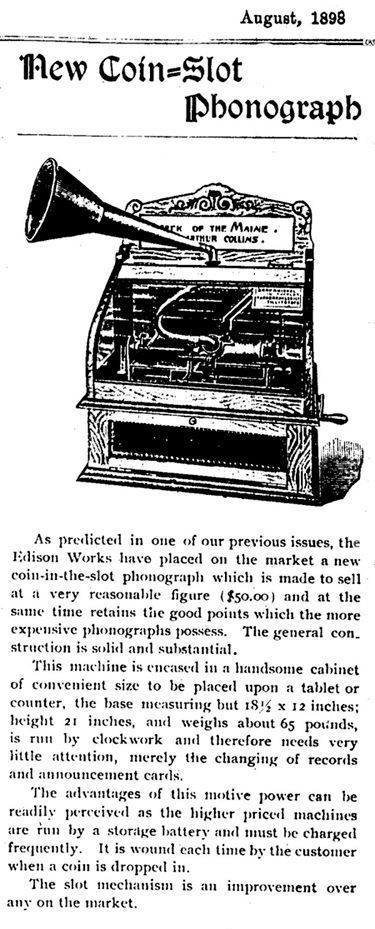
Original price in 1898: 50 US dollars
Contemporary advertisements praised the Type H as “solid and substantial” — and as a major improvement over the expensive battery-powered machines of the era.
Rarity and Condition
Serial number H27619 ranks among the finest surviving Edison H Coin-Ops:
virtually no signs of wear
original mechanism, unrestored
exceptional overall condition (“as if unused”)
For coin-operated phonographs that once stood in public venues, such preservation is extraordinarily rare.
Significance
The Edison Type H stands at a defining moment in media history:
first coin-operated machine produced directly by Edison
early precursor to all later music machines and jukeboxes
beginning of “pay-per-play” culture in recorded sound
milestone between laboratory experimentation and public entertainment
It demonstrates how recorded sound became a product that anyone could hear — for just a small coin.
Conclusion
The Edison Coin-Slot Phonograph Type H, No. H27619, is an exceptionally rare and globally significant artifact of early sound entertainment.
It marks the transition from experimental apparatus to commercially viable coin-operated amusement machines.