Name/Title
Edison Eclipse Coin‑Operated PhonographEntry/Object ID
119Description
National Phonograph Company, Orange, New Jersey, USA – ca. 1906 Early electrically powered coin phonograph with Triumph mechanism
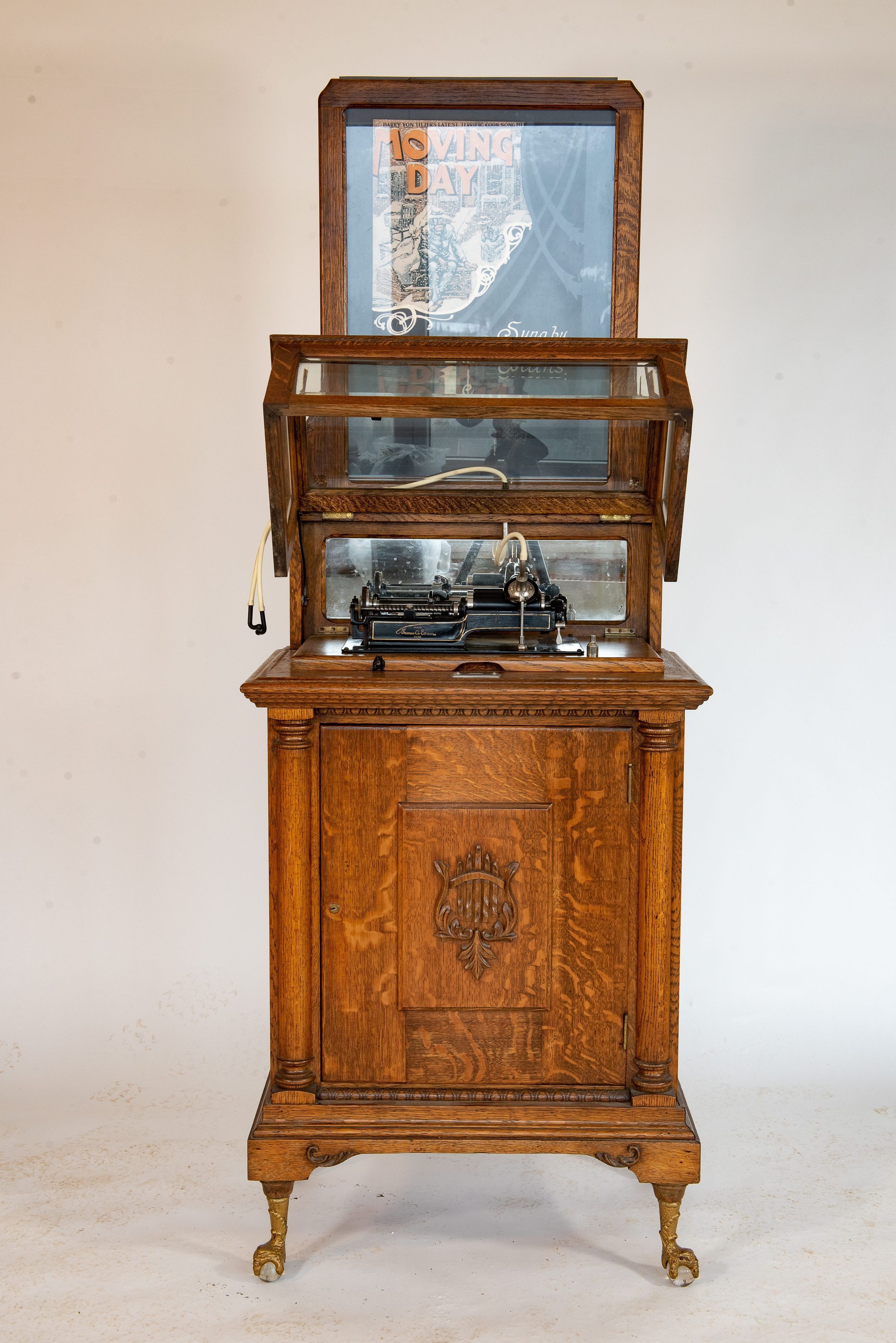
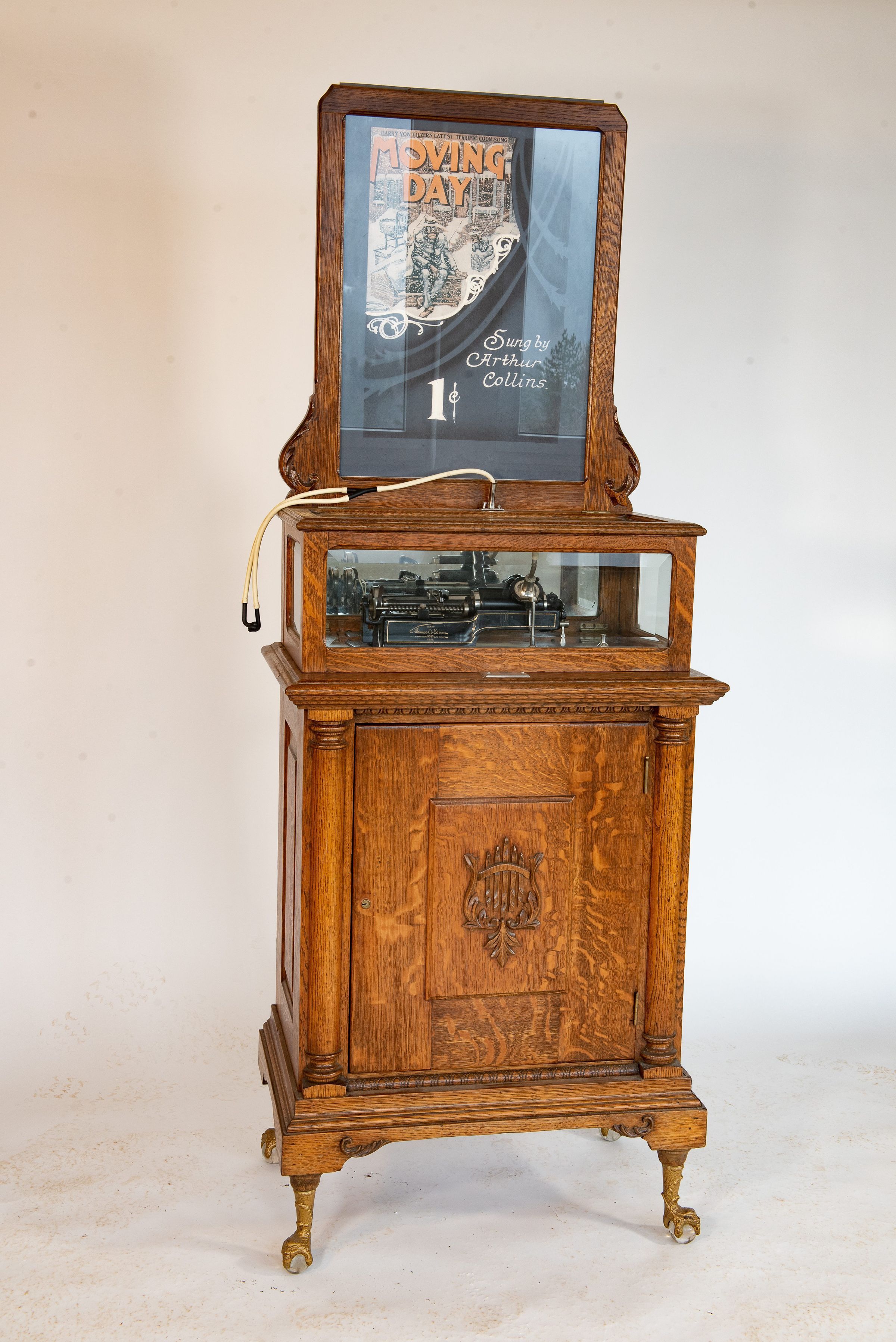
Here at the Edisonium, this exhibit showcases one of the rarest and most fascinating devices ever produced by Edison: the Edison Eclipse, an electrically powered coin-operated phonograph introduced around 1906. Designed for commercial use in hotels, ferry terminals, railway stations, and saloons, the Eclipse combined the reliable Triumph mechanism with a fully automated playback sequence – triggered by the drop of a single coin.
Mechanism and Functionality
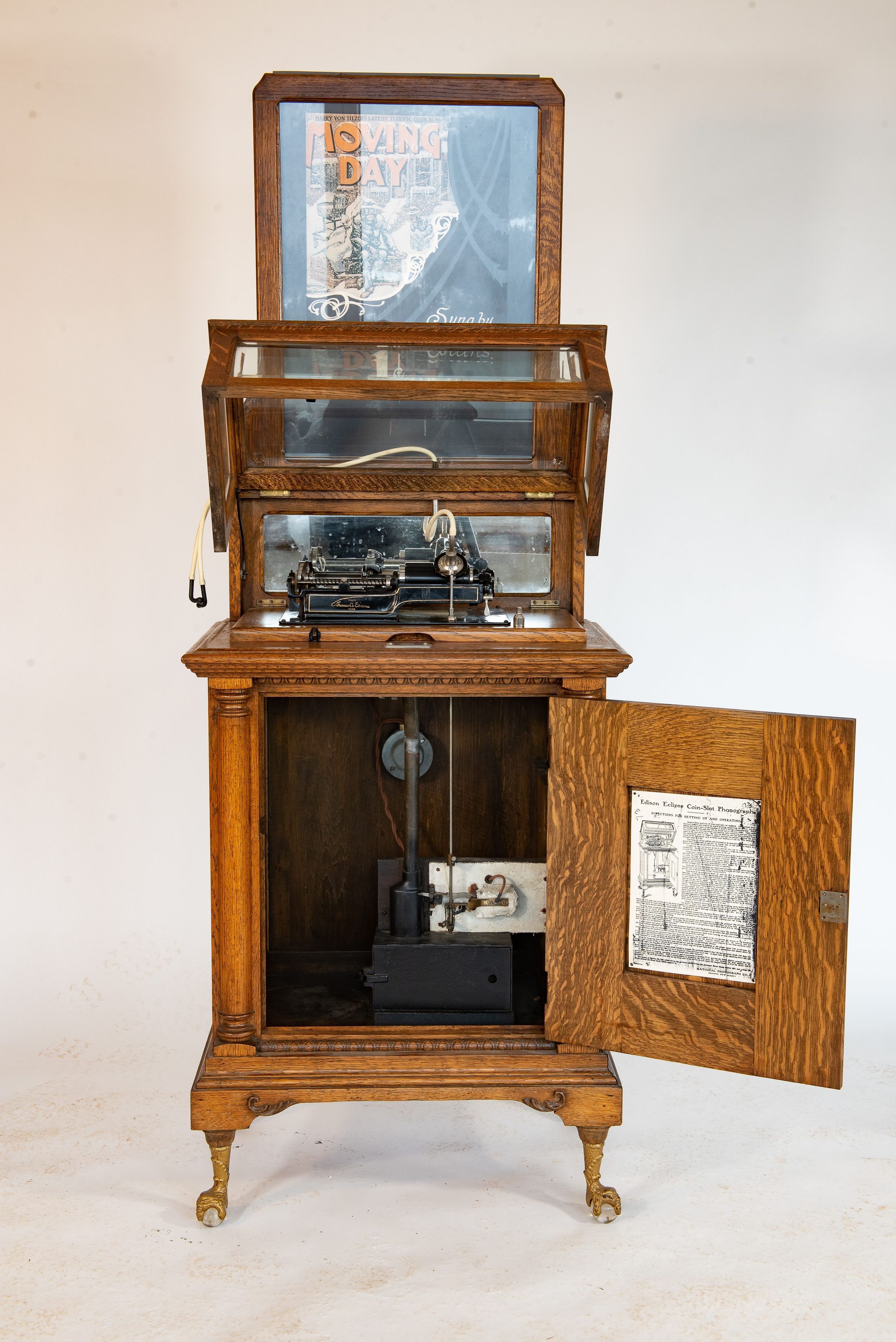
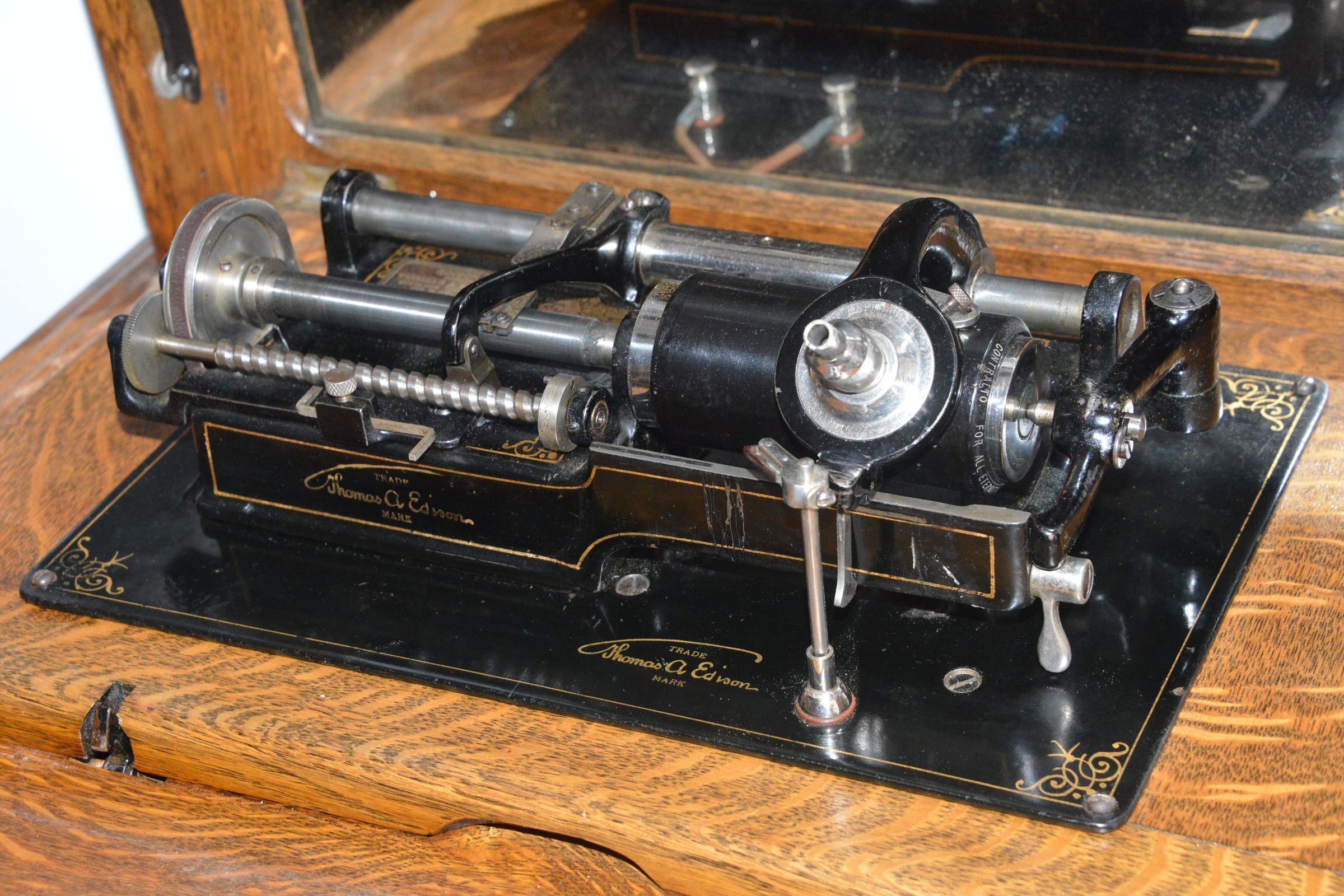
Inside, the Eclipse employs a standard 2-minute Edison Triumph cylinder mechanism driven by an electric motor. Once a penny is inserted, playback begins automatically, and the reproducer lowers onto the cylinder. At the end of the performance, a clever switch system raises the reproducer, resets it to the starting position, and shuts off the motor – making the device ready for the next listener. The entire automation sequence, executed by a combination of mechanical linkages and electrical components, was remarkably advanced for its time.
Power Supply (as stated in the original manual)
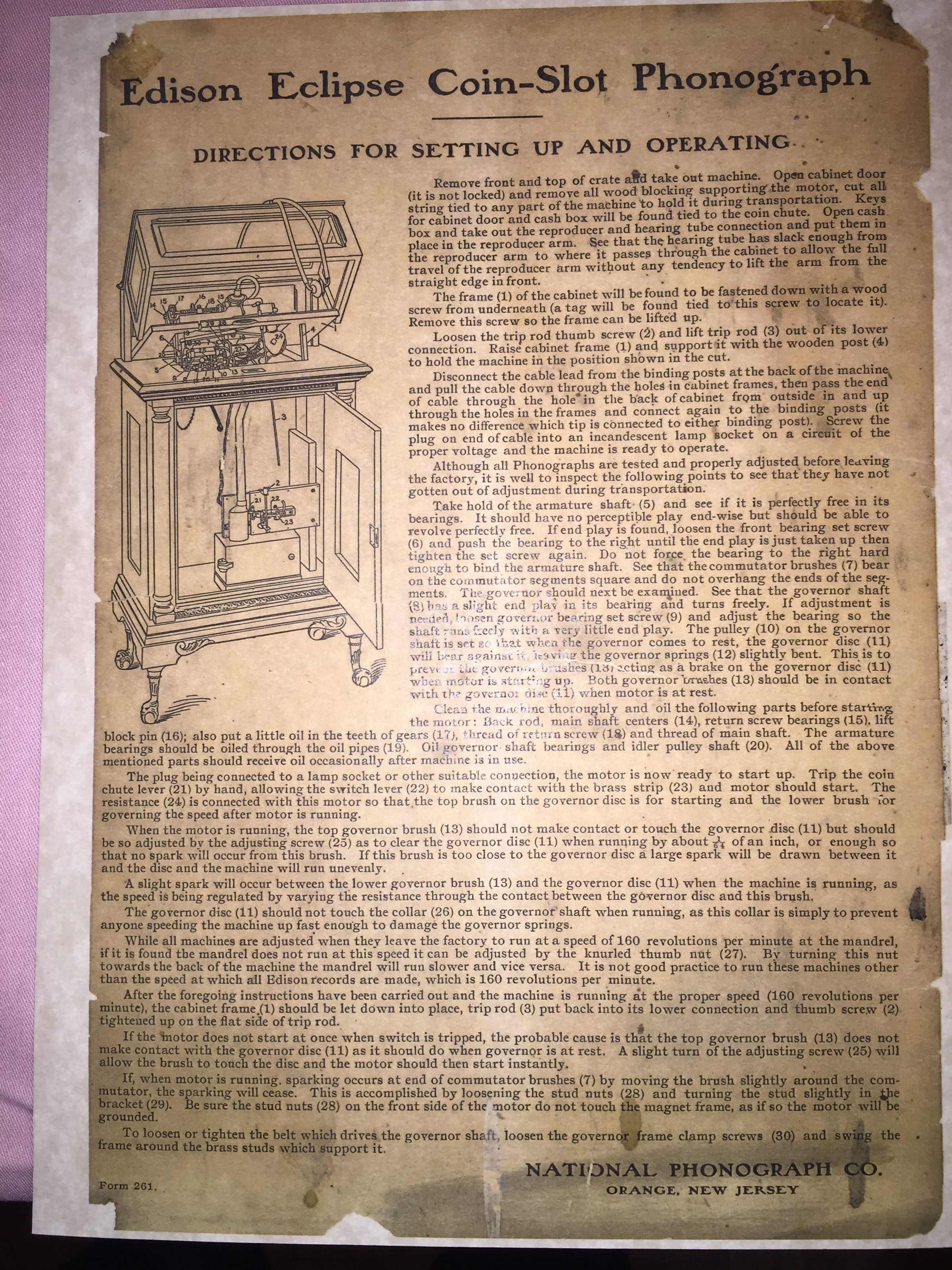
According to the original Edison instruction sheet – also preserved here at the Edisonium – the Eclipse was designed to run on direct current at 2.5 volts and 2 amps, consistent with the low-voltage battery systems of the era. Many units were later converted to 110V AC, adapting them to the modern power grid.
Cabinet and Design
The decorative cabinet was typically made of solid oak and stood on claw-and-glass-ball feet. A color lithograph marquee above the horn often displayed the title of the currently featured cylinder, such as “Cuddle Up a Little Closer” or “Whistling Rufus”. Large glass windows on the front offered passersby a clear view of the moving mechanism, enhancing the visual and mechanical appeal of the performance.
Historical Importance
The Eclipse was one of Edison’s earliest fully automatic coin-operated models with electric drive, representing an important step toward the modern jukebox. Its limited production and complex engineering make it a true collector’s item today.
Rarity and Provenance
Only a handful of Edison Eclipse phonographs are known to survive worldwide. The example on display here at the Edisonium comes from a private collection and has been carefully preserved. It remains in working condition with all original components – a rare artifact of early commercial entertainment technology, brilliantly demonstrating how Edison brought music into public spaces as well as into homes.