Name/Title
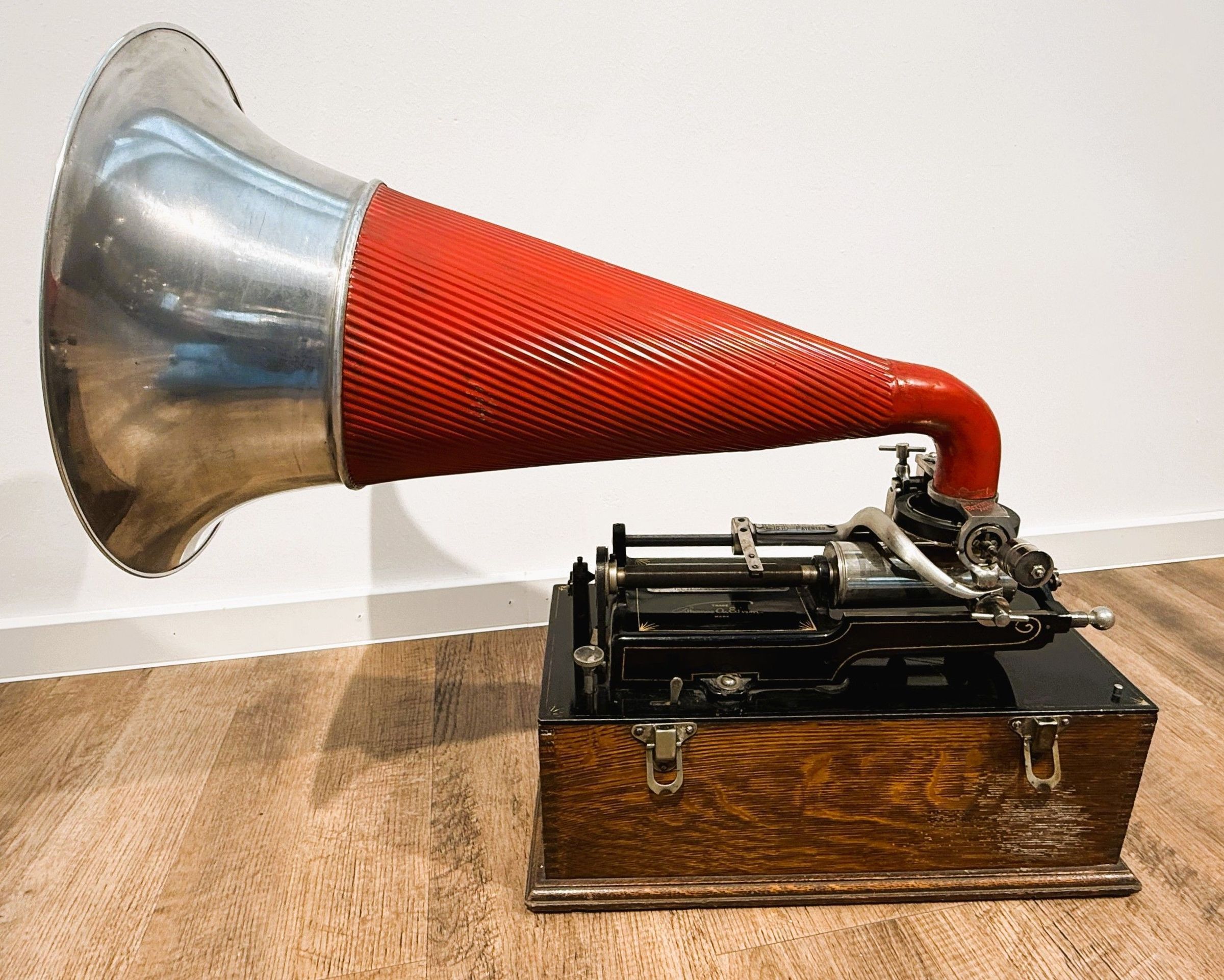
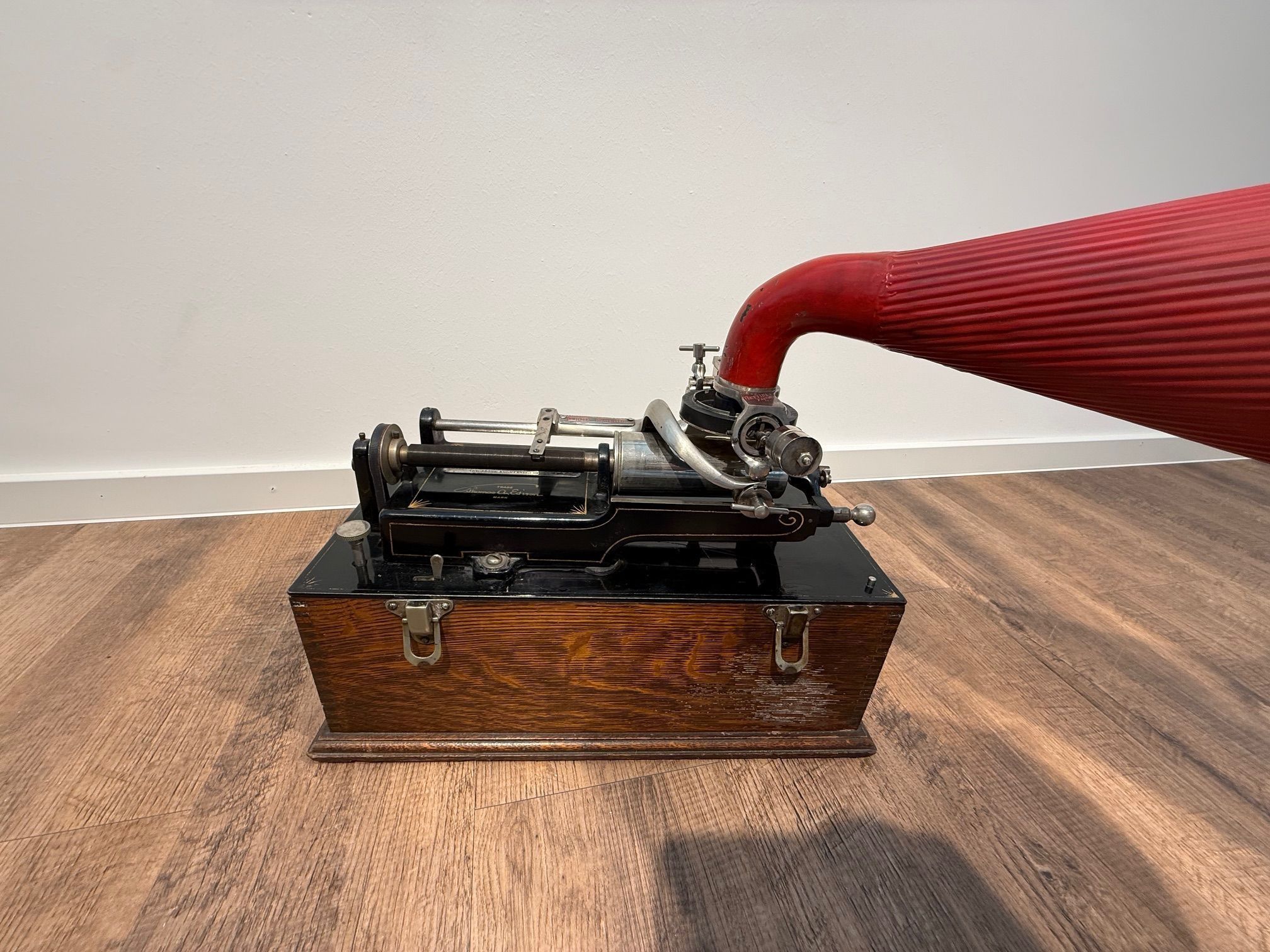
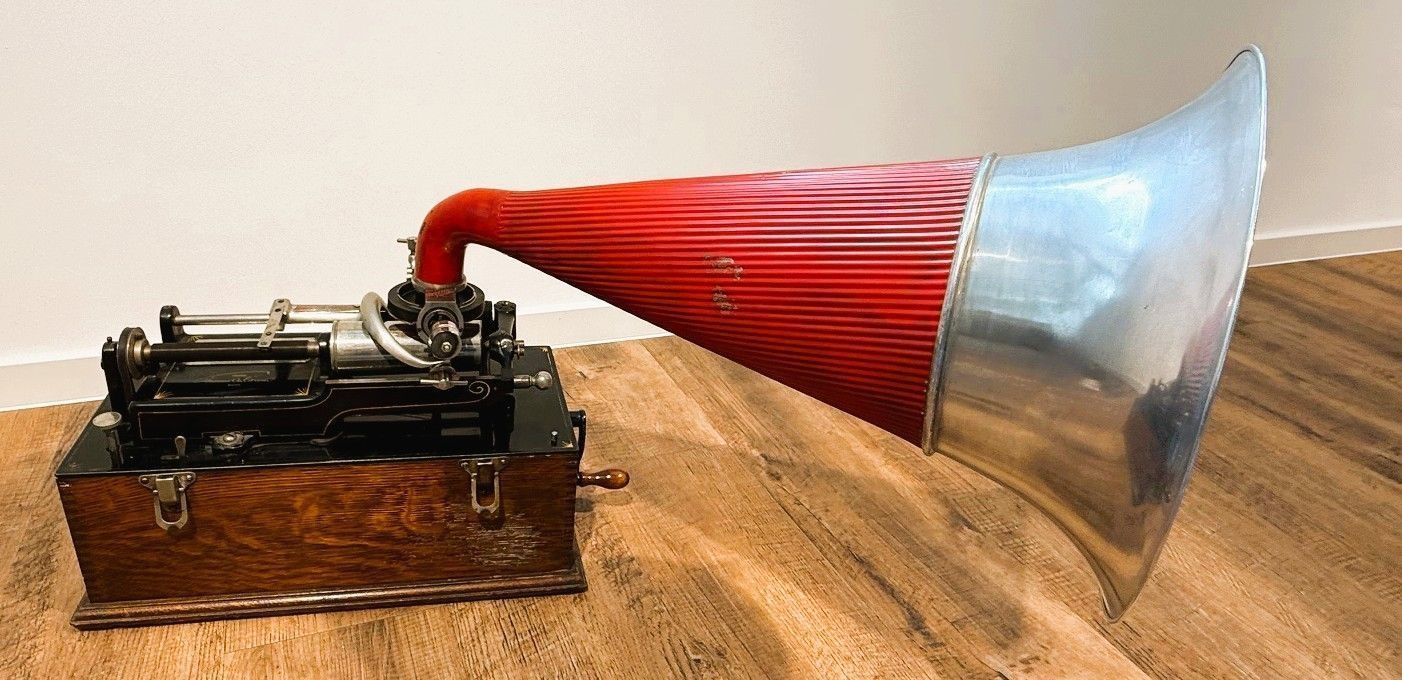
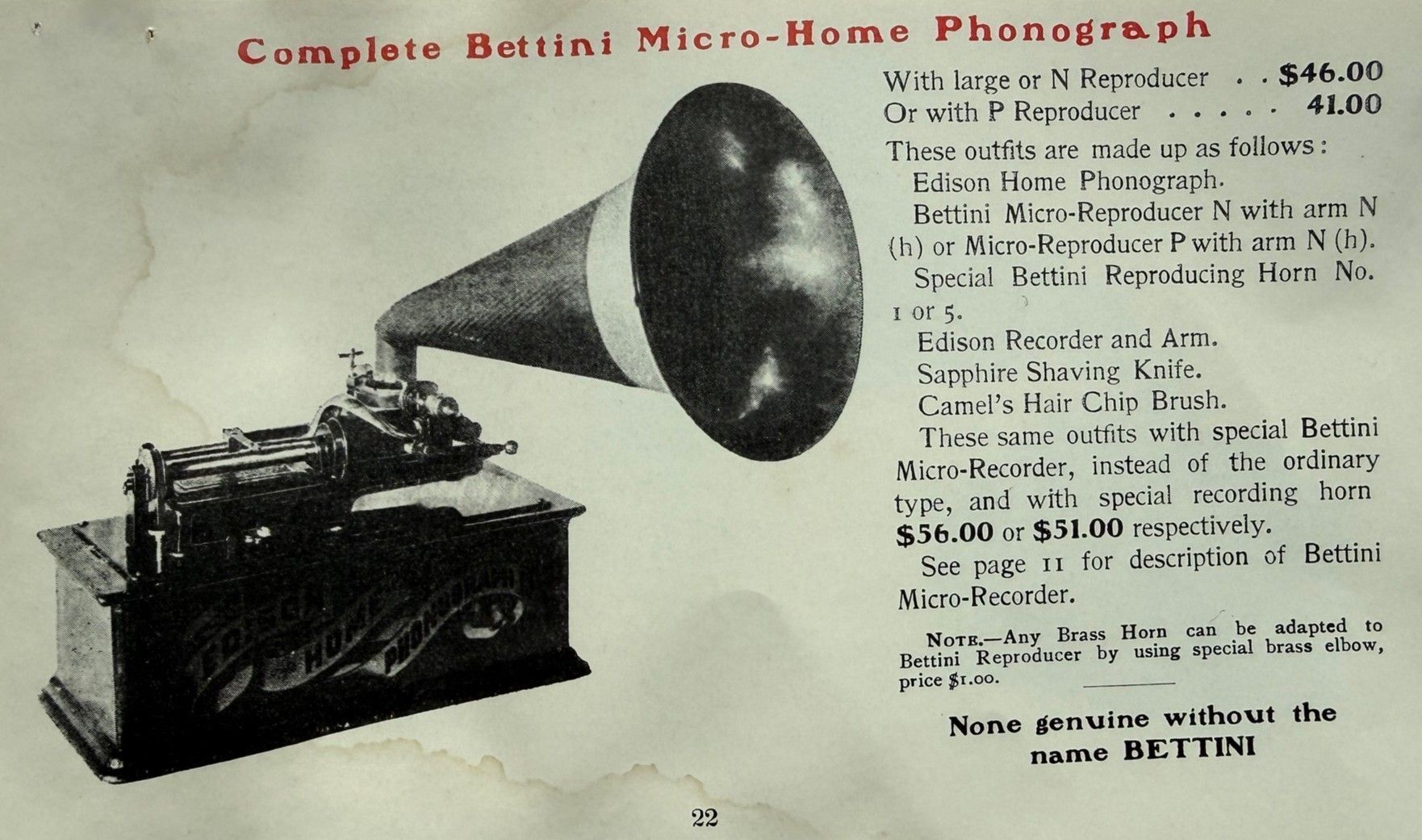
Edison Home Phonograph Bettini, „Suitcase“-Modell ADescription
Manufacturer: Edison Manufacturing Company, Orange, New Jersey, USA
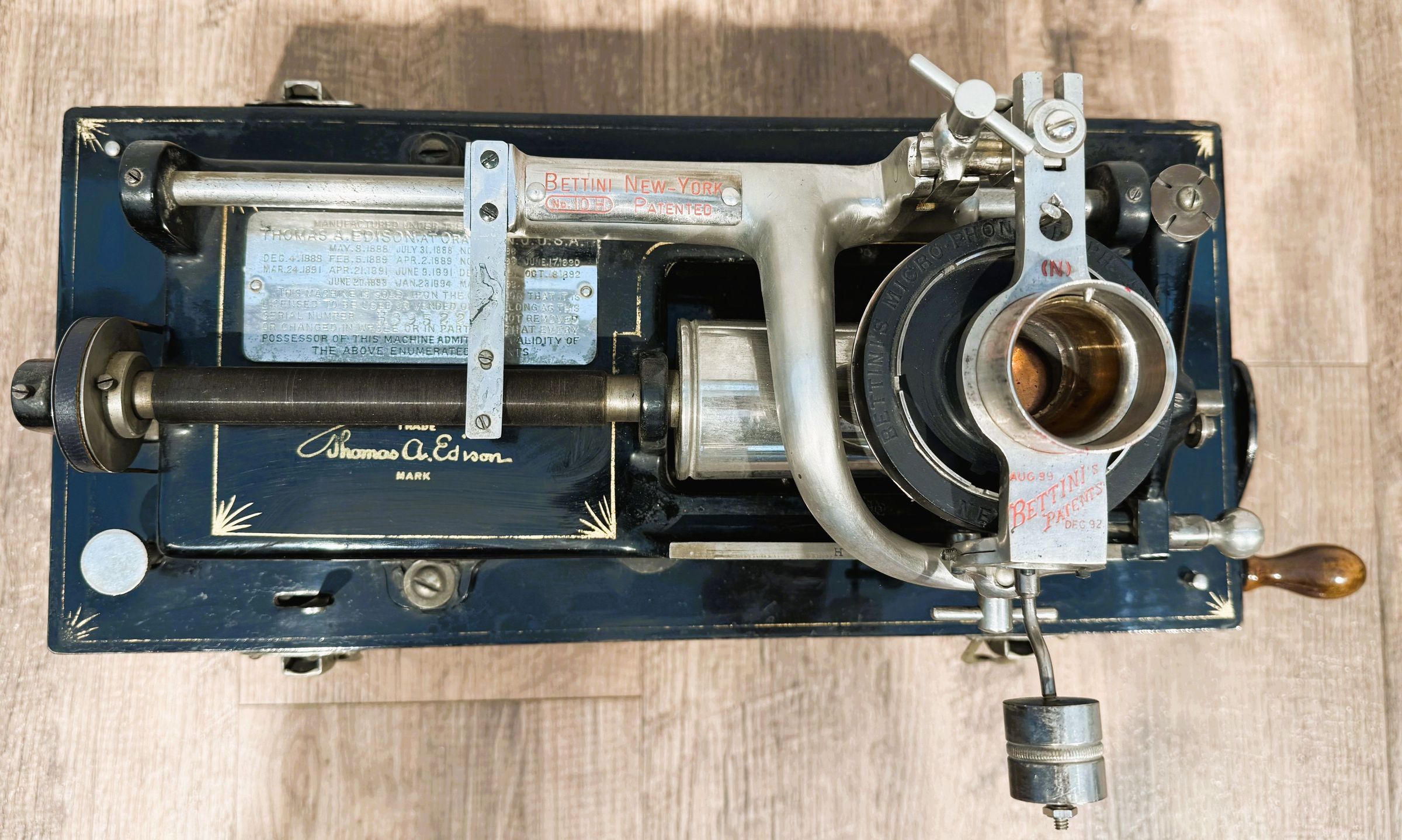
Serial Number: H39522
Date: February 1901
Drive: Spring motor, hand-cranked
Recording Medium: Wax cylinders (2-minute standard)
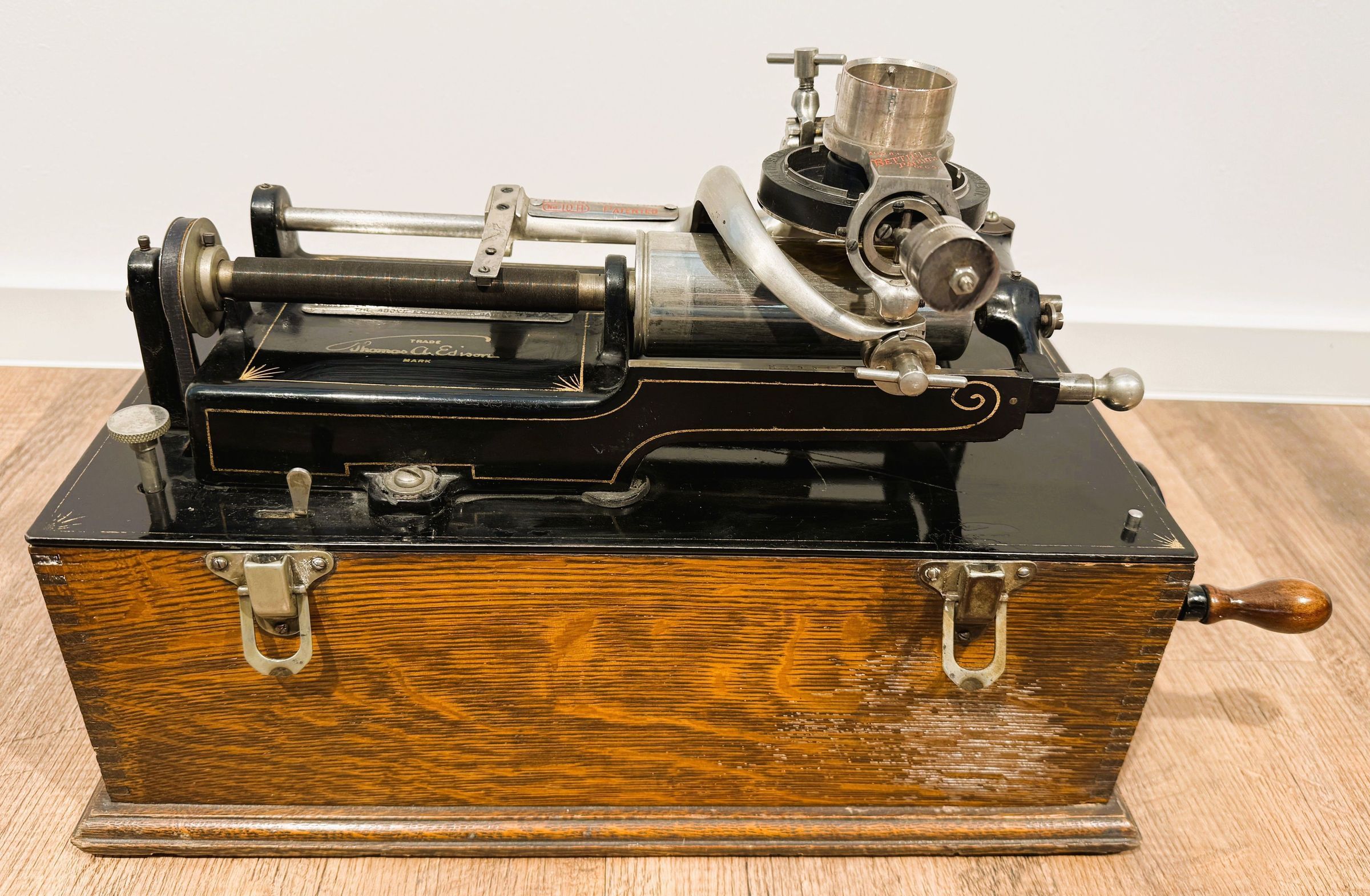
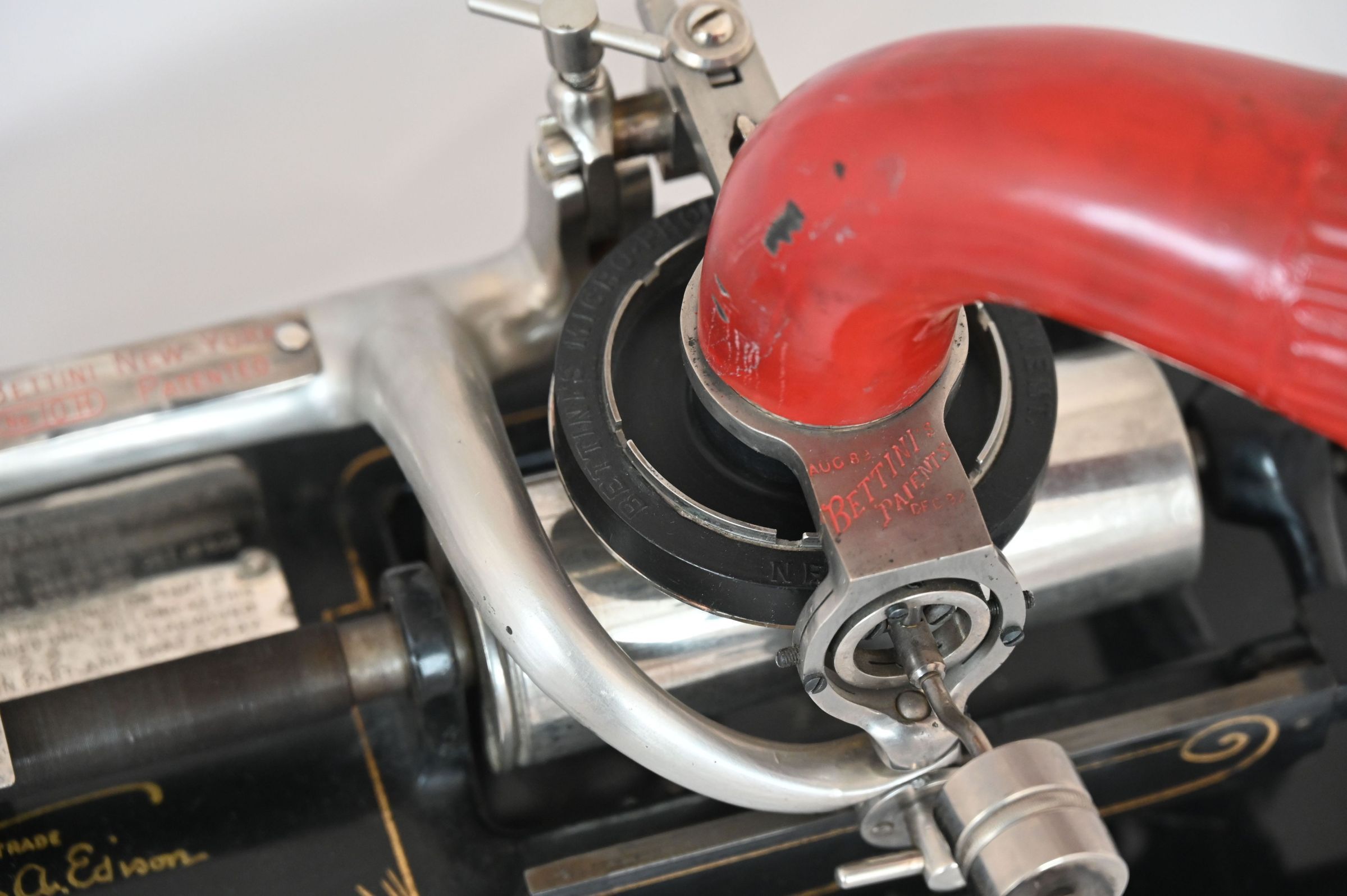
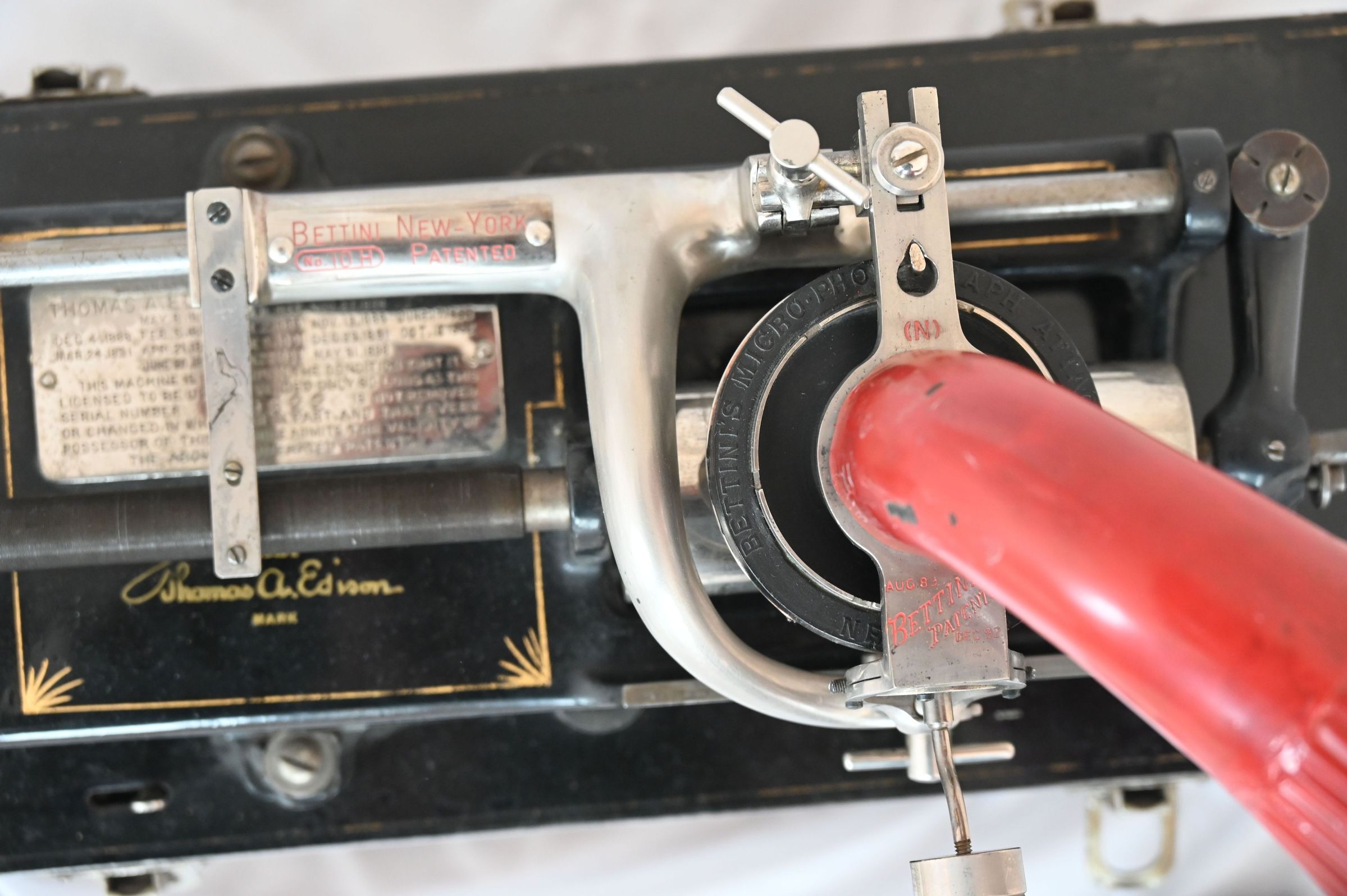
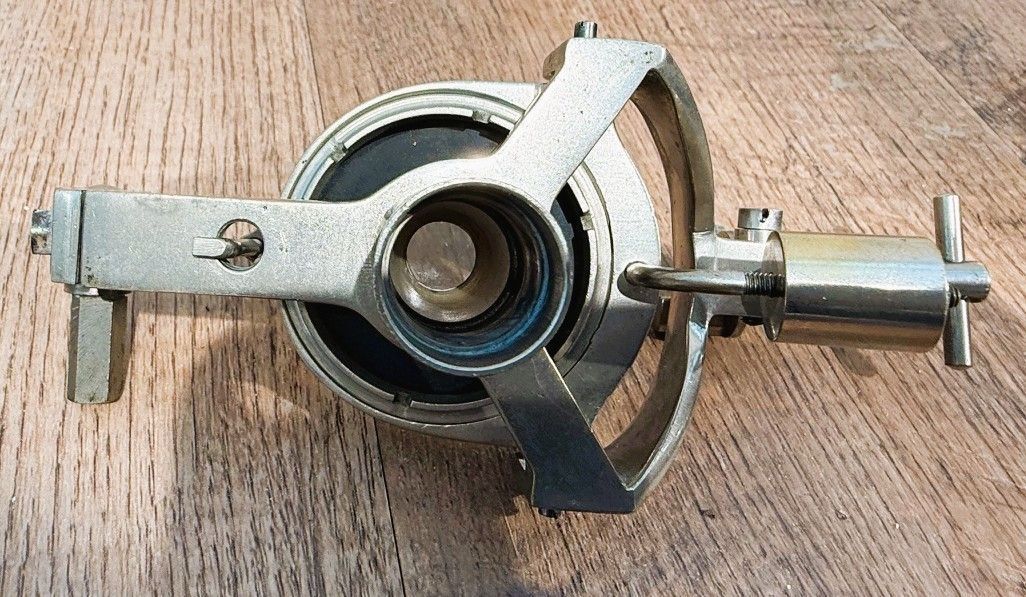
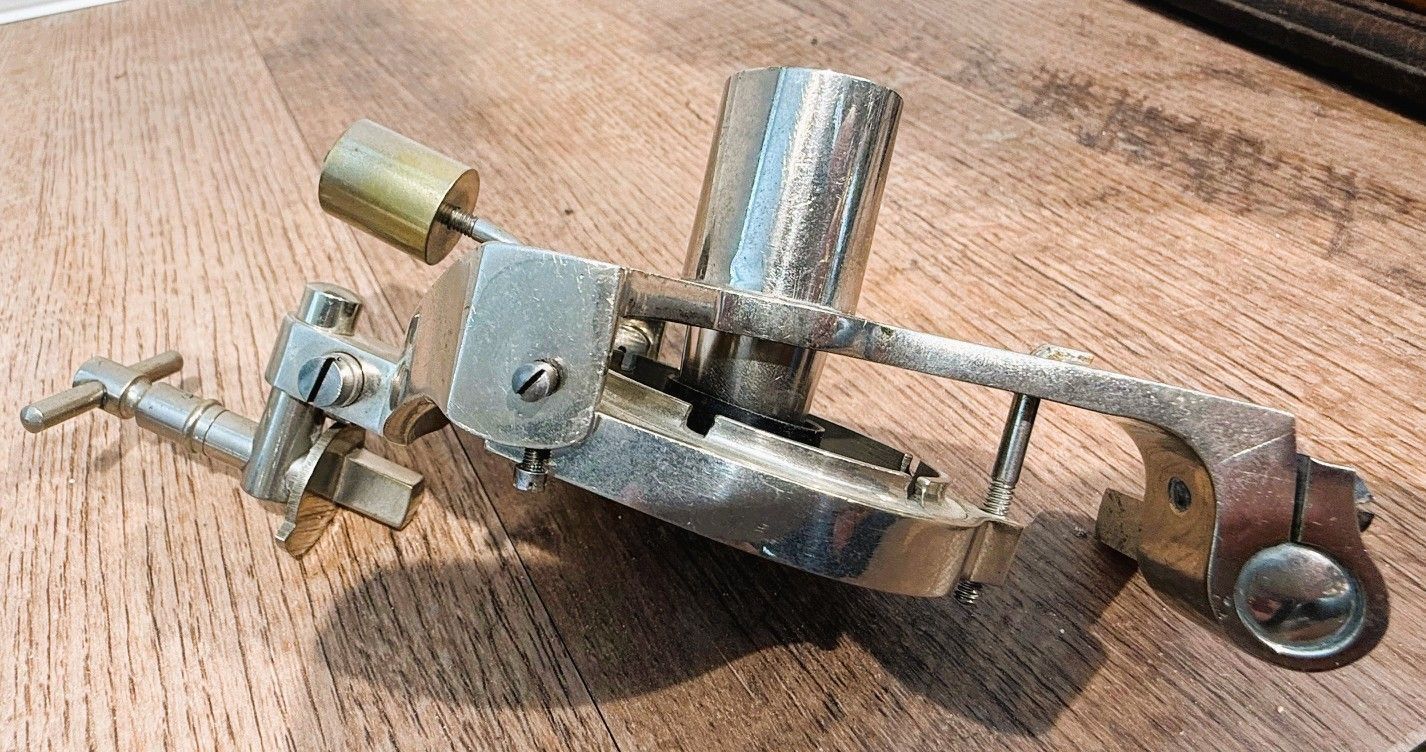
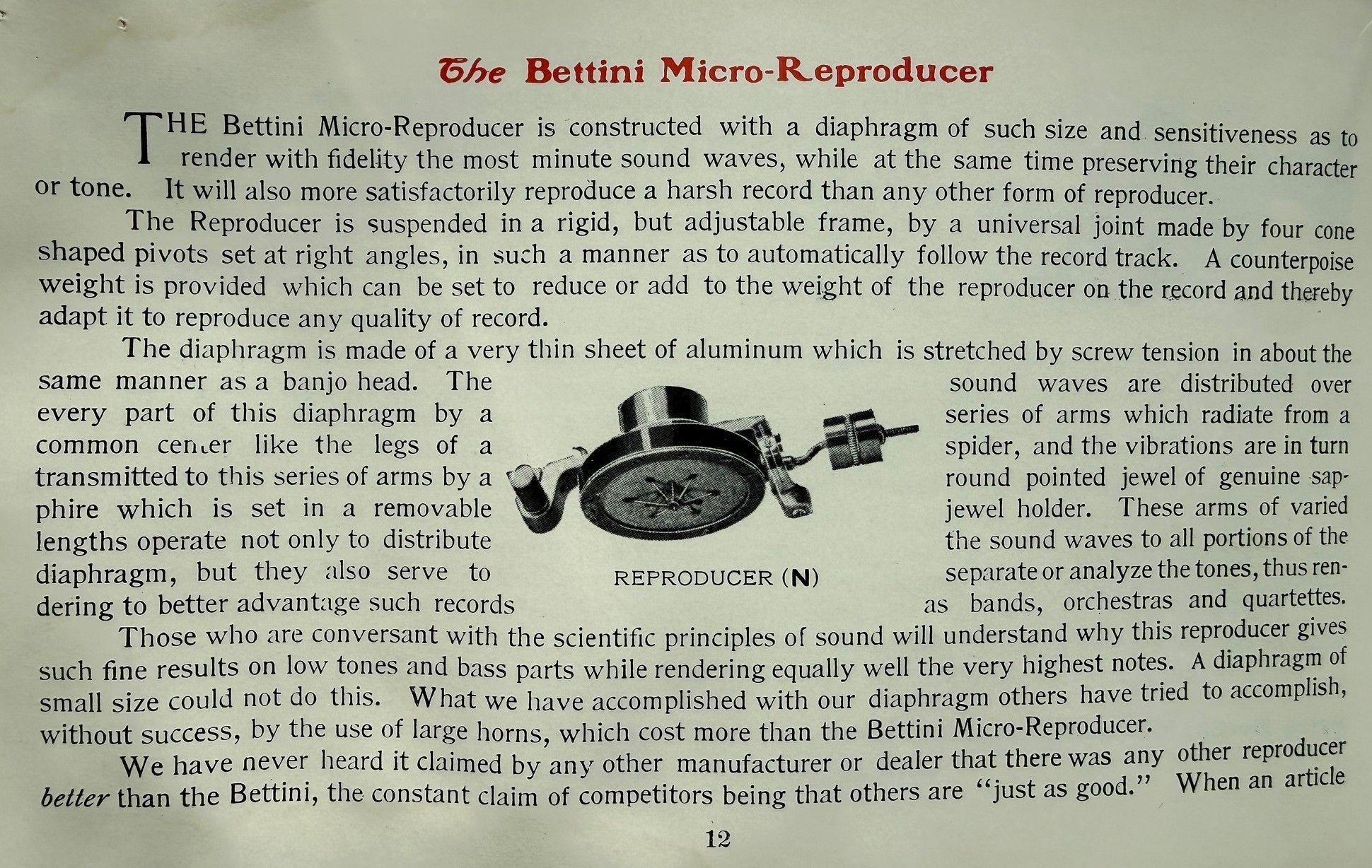
Reproducer: Bettini Micro-Reproducer, Type N
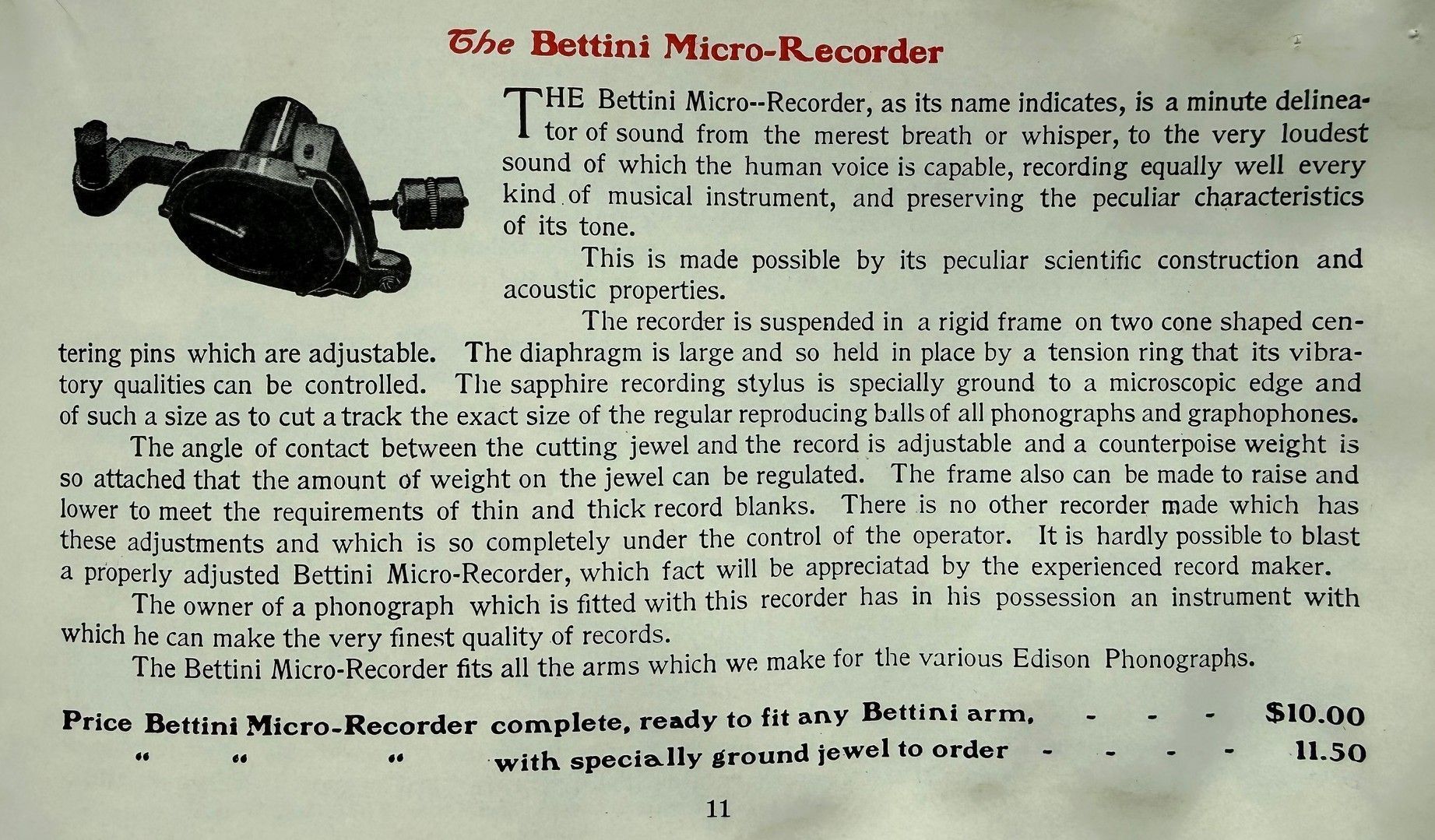
Recorder: Bettini Micro-Recorder
Historical Background
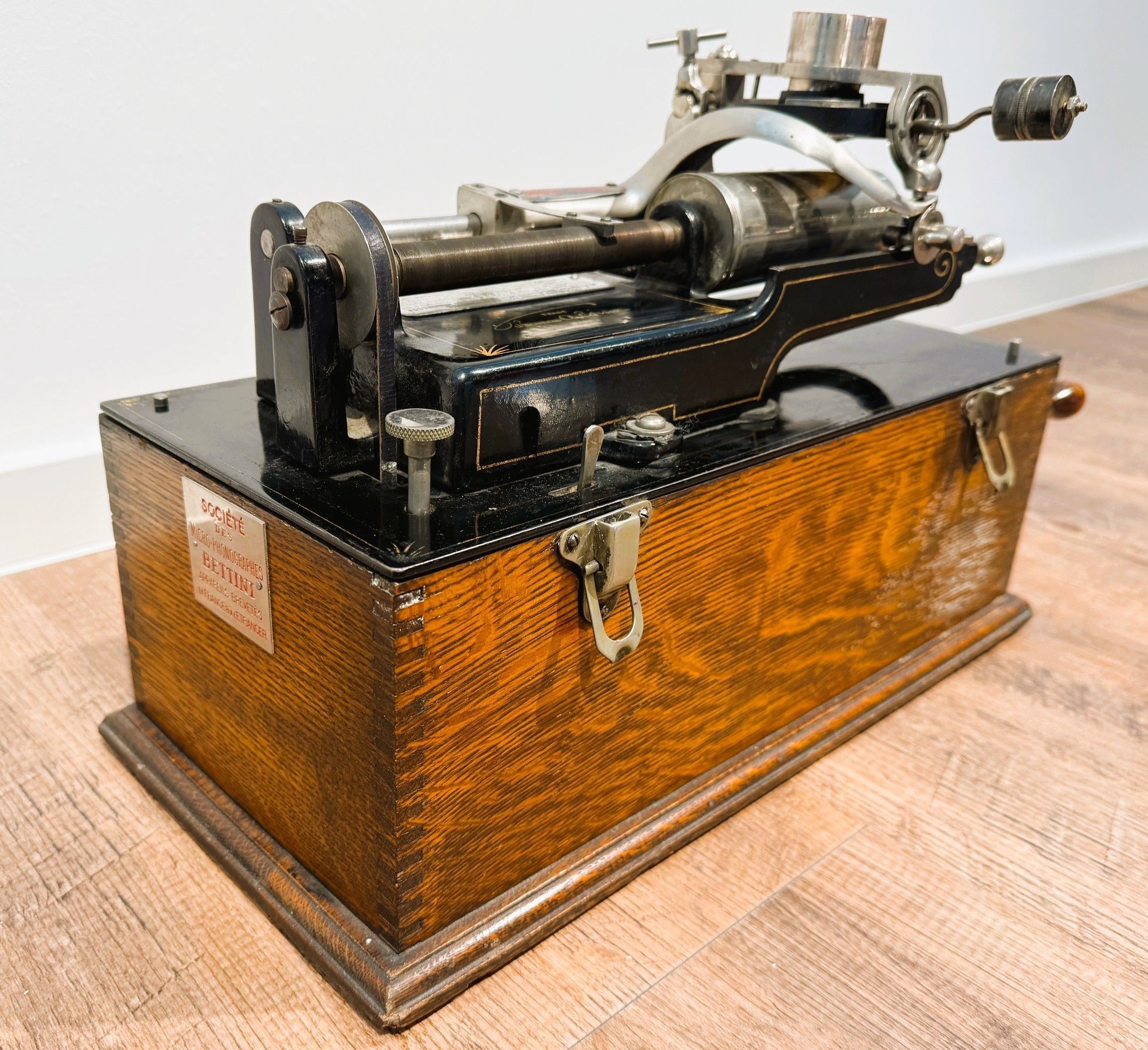
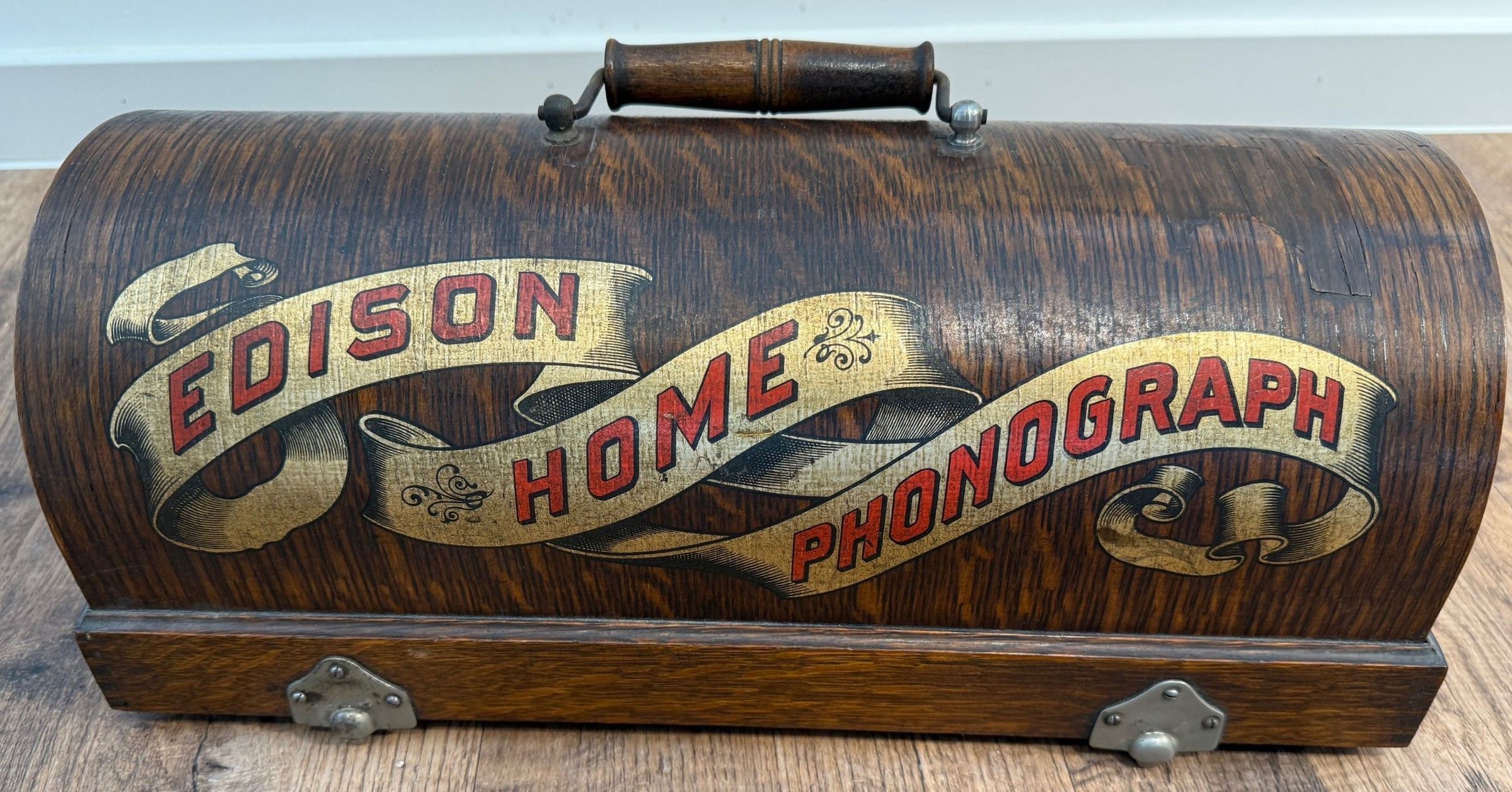
The Edison Home Phonograph was introduced in 1896 as a relatively affordable device for domestic use, intended to make recorded sound accessible to a broader public. Early examples were housed in compact wooden cases with hinged lids and external latches—a design later referred to by collectors as the “suitcase” type.
The present machine, manufactured in February 1901, belongs to the late production phase of this early cabinet style. Shortly thereafter, the so-called “New Style” cases were introduced, representing a more modern construction and marking the end of the classic “suitcase” models.
Technical Description
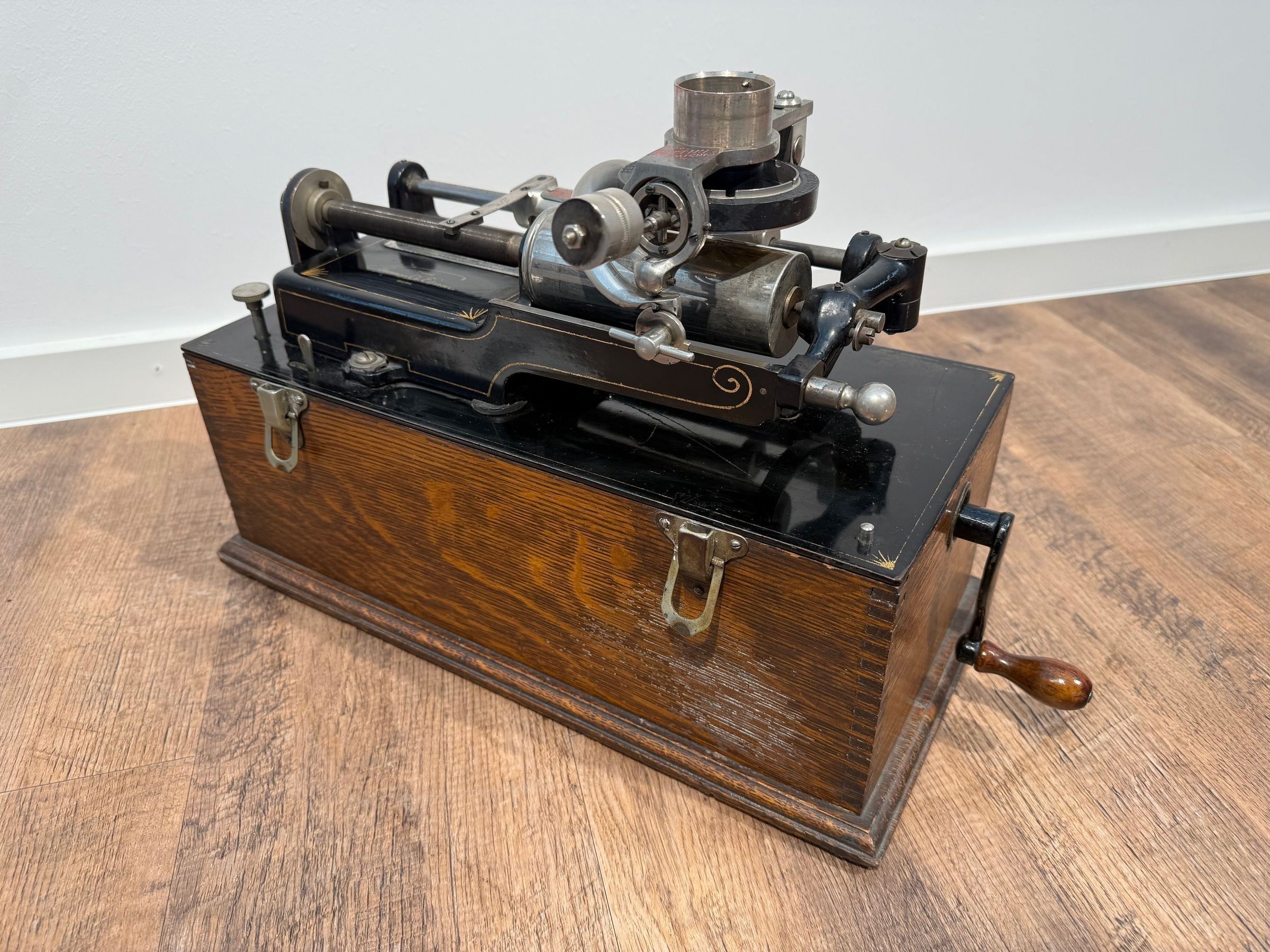
The machine is powered by a spring-driven motor, wound by hand crank. Power is transmitted via a gear train to the mandrel, while a leadscrew ensures the steady longitudinal movement of the carriage during playback.
A characteristic feature of early Home Phonographs is the relatively small mandrel, supported by a bearing located immediately behind it. This construction is supplemented by an additional center bearing on the left side. While typical of the period, this arrangement proved mechanically sensitive and was improved in later models.
The machine is designed for the playback—and, with appropriate equipment, also the recording—of standard 2-minute wax cylinders.
Bettini Equipment
A particularly important aspect of this machine is its equipment with components developed by Bettini, one of the most innovative designers in the field of early sound reproduction.
The mounted Bettini Micro-Reproducer (Type N) differs fundamentally from standard Edison reproducers. It features an अत्यremely thin, tensioned aluminum diaphragm and a finely branched system of transmitting arms, which distribute the vibrations of the sapphire stylus evenly across the diaphragm. The aim of this construction was a highly precise and nuanced sound reproduction.
In addition, the machine is accompanied by a Bettini Micro-Recorder. This recording device is equipped with a finely ground sapphire cutting stylus and allows, through various adjustments, an exceptionally controlled and high-quality recording process on wax cylinders.
Special Features
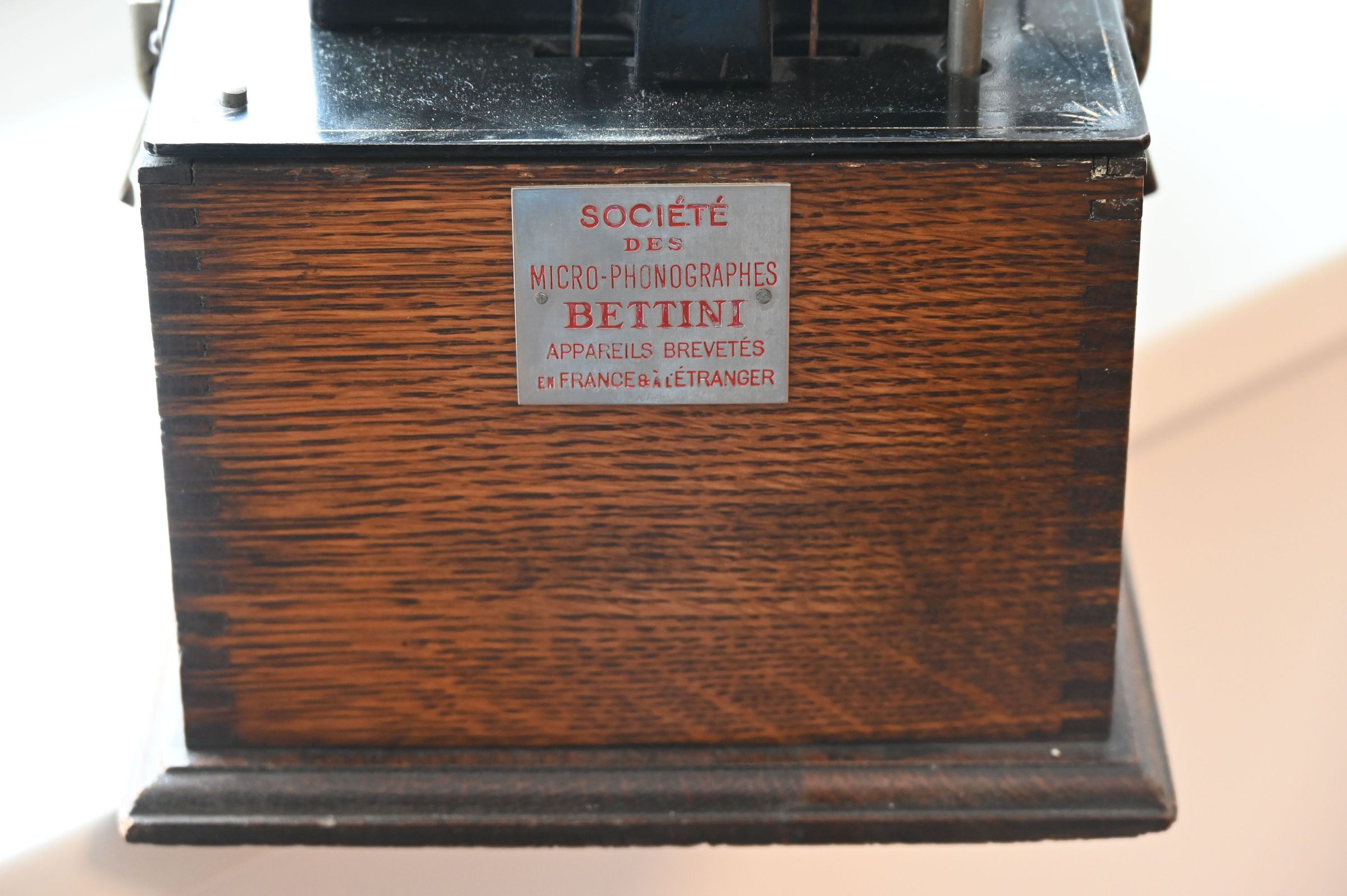
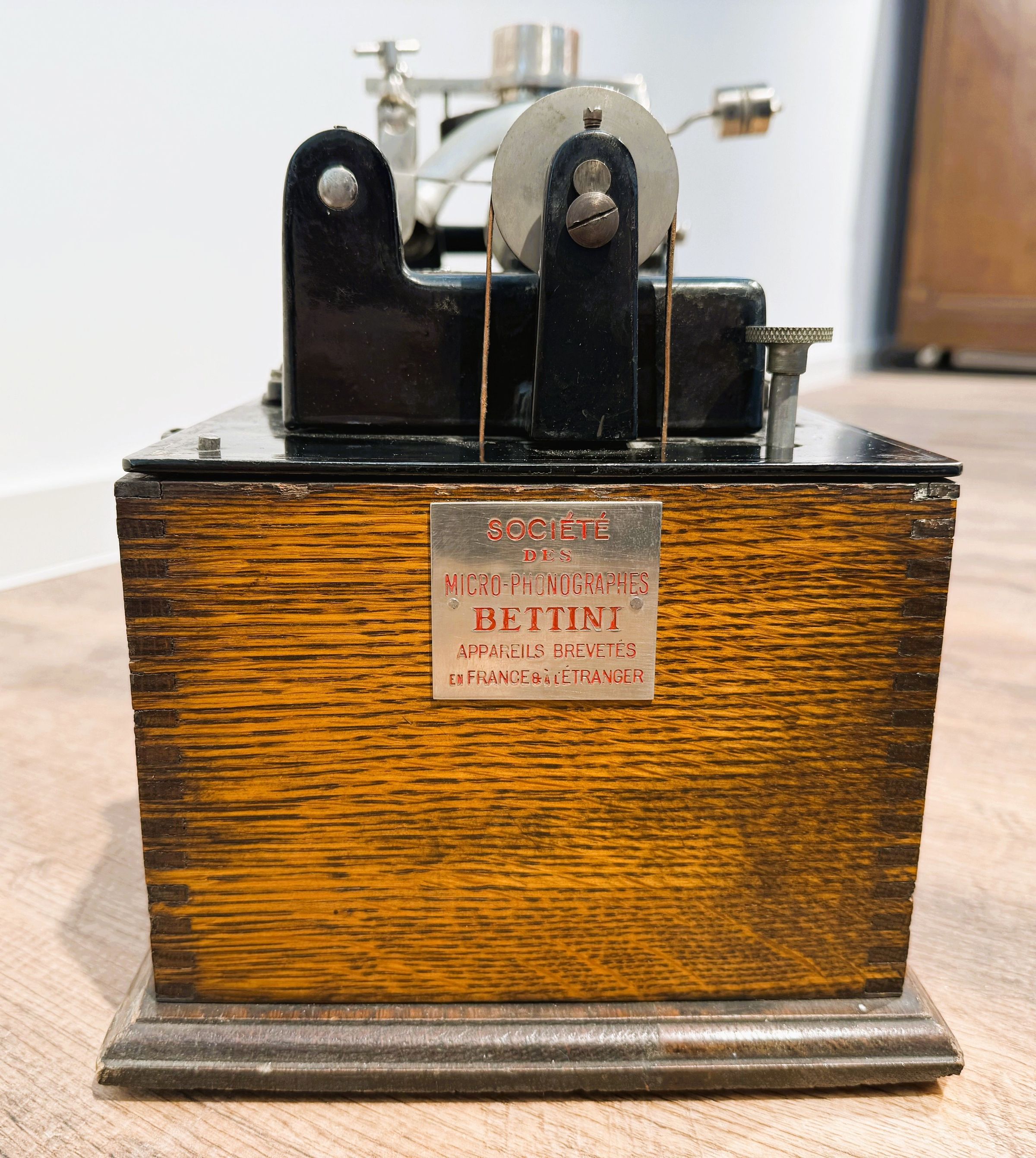
An outstanding detail is the metal plaque mounted on the side of the cabinet, bearing the inscription “Société des Micro-Phonographes Bettini.” This indicates a direct association with Bettini, whether through distribution, specialized outfitting, or later modification of the machine. Such plaques are rare and emphasize the distinctive character of this example.
Significance
This machine represents a rare and historically significant combination: a late example of the early Edison Home Phonograph in “suitcase” configuration, enhanced with one of the most advanced contemporary sound technologies.
It vividly illustrates the state of phonograph development around 1900, as well as the interplay between American industrial production and European innovations aimed at improving sound quality