Name/Title
Edison Home Phonograph, Model A („Suitcase“)Description
Manufacturer: National Phonograph Company, Orange, New Jersey, USA
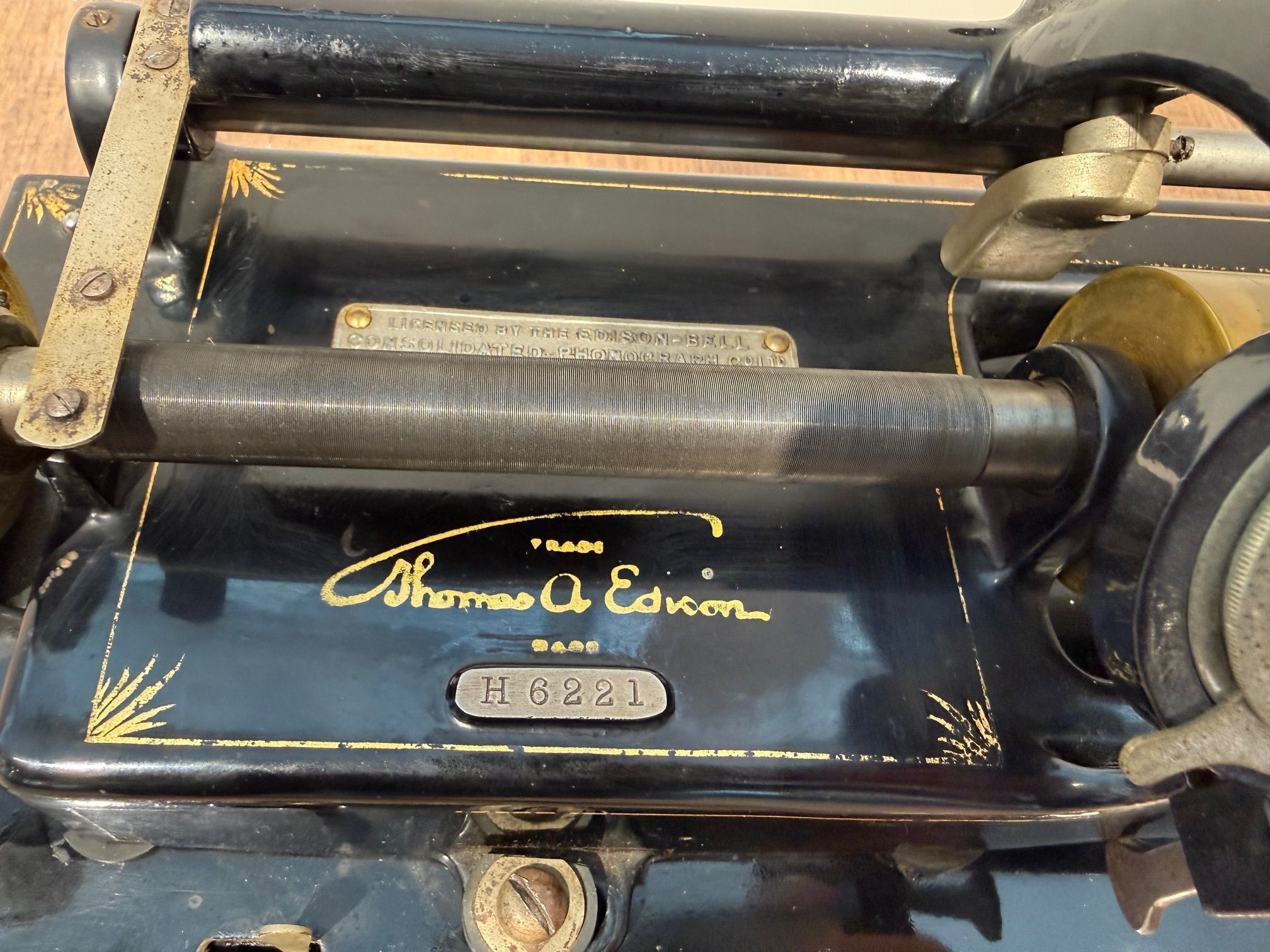
Serial Number: H6221
Date: May 1898
Drive: Spring motor, hand-cranked
Recording Medium: Wax cylinders (2-minute standard)
Historical Background
The Edison Home Phonograph was introduced in 1896 by the National Phonograph Company and represented Edison’s first phonograph specifically designed for the mass market. Its purpose was to offer a more affordable and compact machine compared to earlier models, making sound recording and reproduction accessible for domestic use.
The present example, serial number H6221, dates from May 1898 and belongs to the early production phase of the Model A Home. These machines are commonly referred to today as “suitcase homes” and represent an important transitional stage between early, still experimental phonographs and later standardized production models.
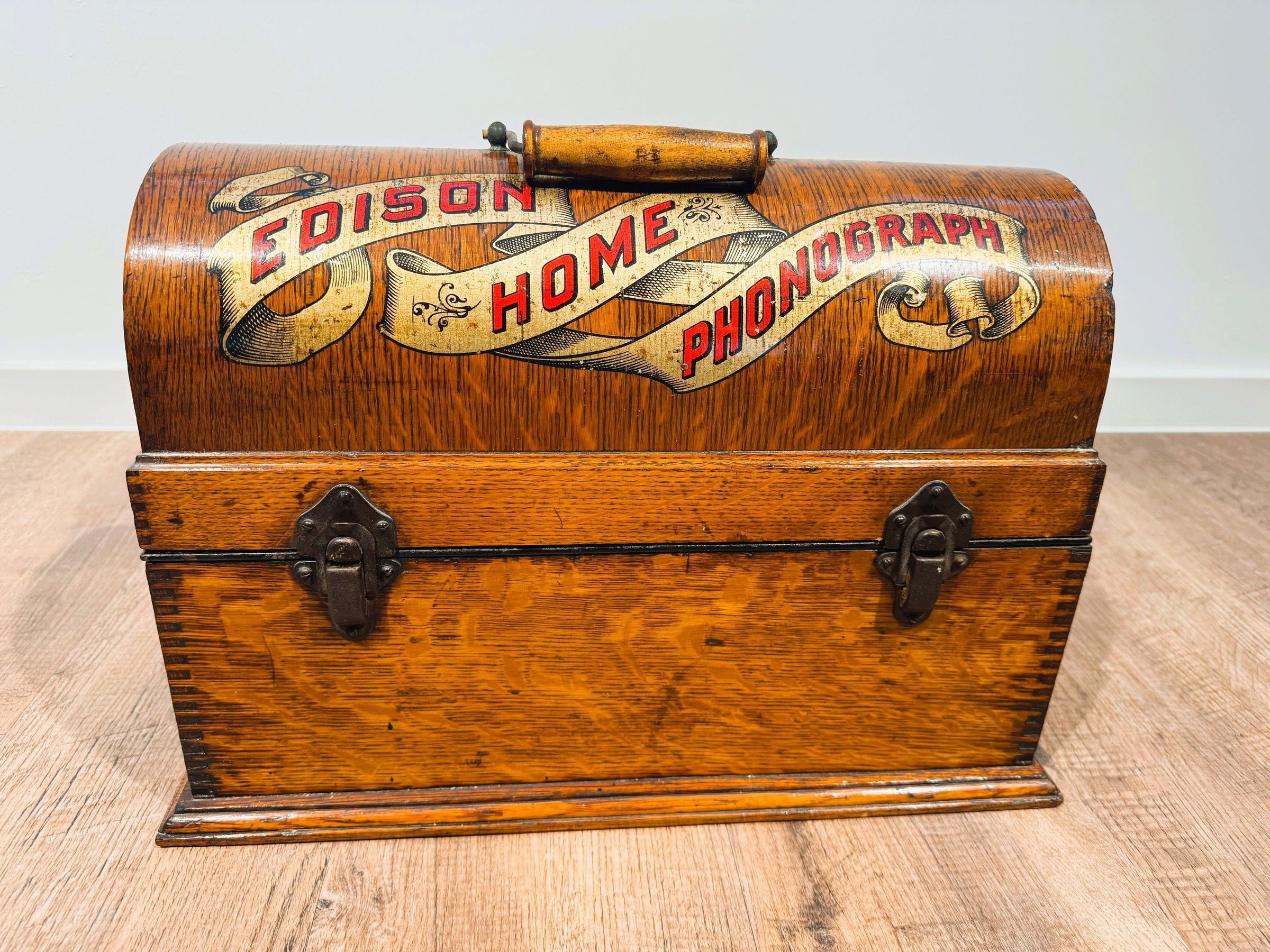
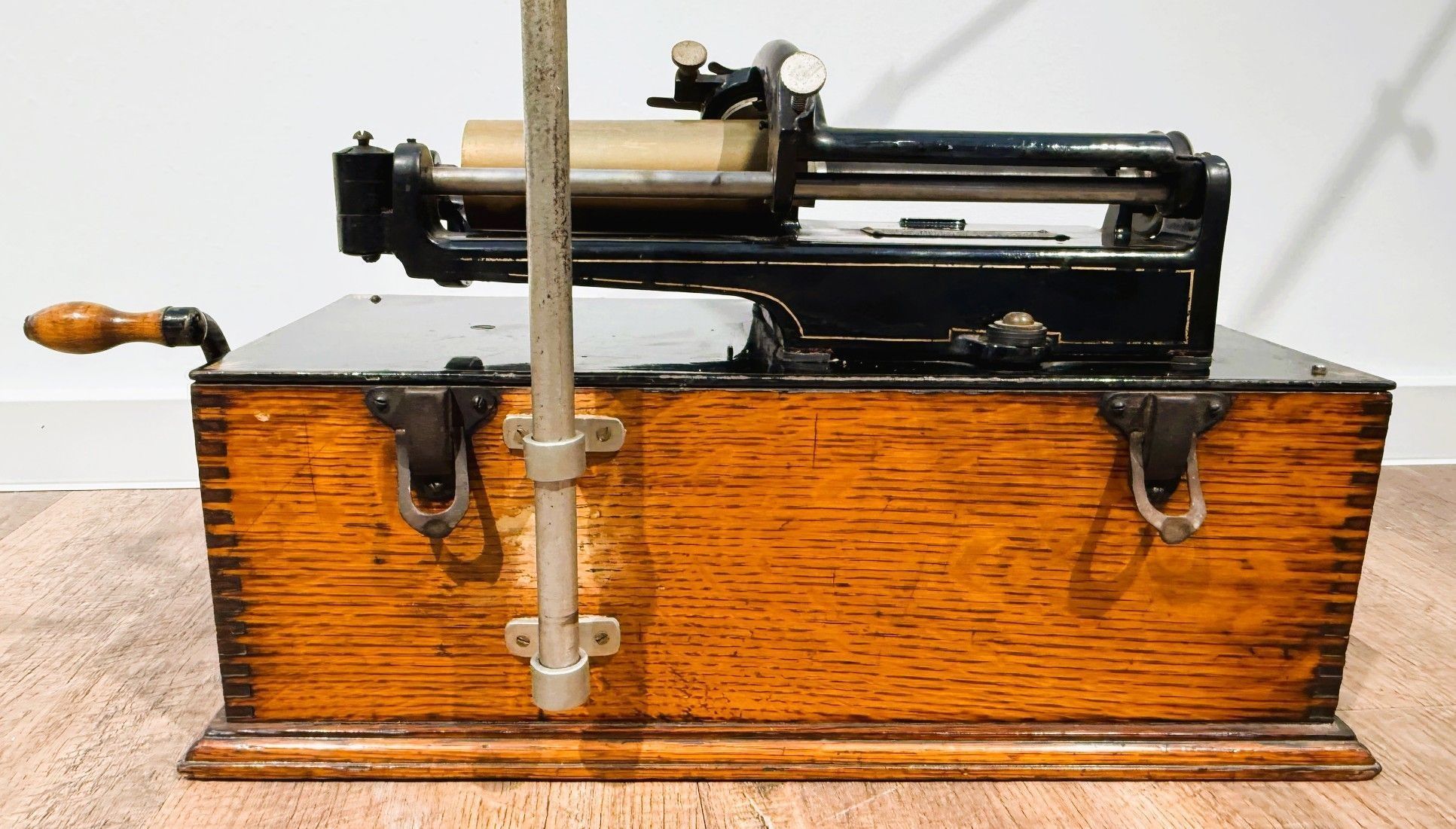
Cabinet Construction – “Suitcase” Type
The term “suitcase” refers to the characteristic form of the cabinet and is not an official model designation.
Typical features include:
rectangular oak wooden case with hinged lid
external metal latches resembling those of a suitcase
carrying handle mounted on the lid
compact, enclosed construction
This design served both to protect the mechanism and to allow transport, reflecting the transitional nature between portable and stationary machines.
Technical Description
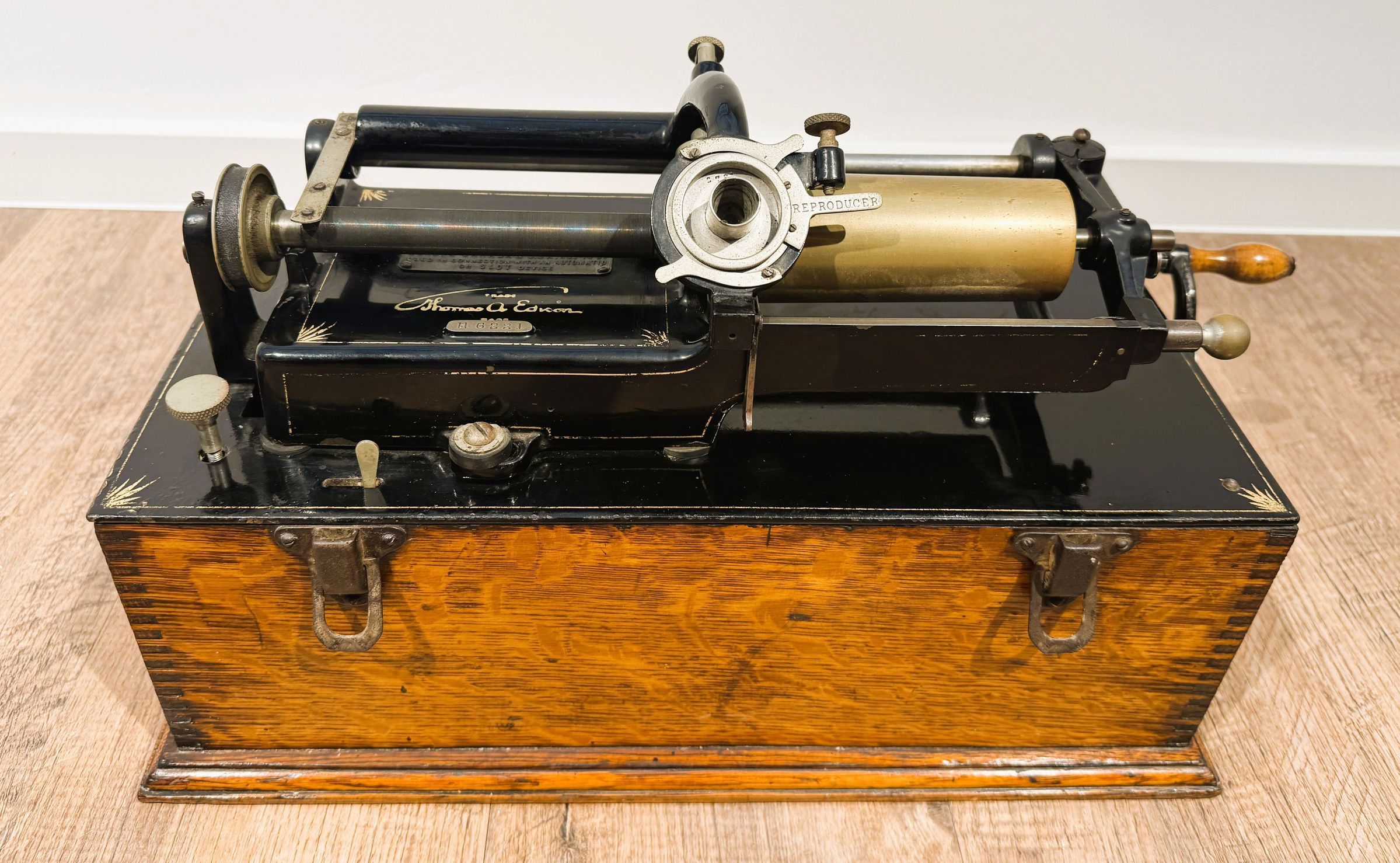
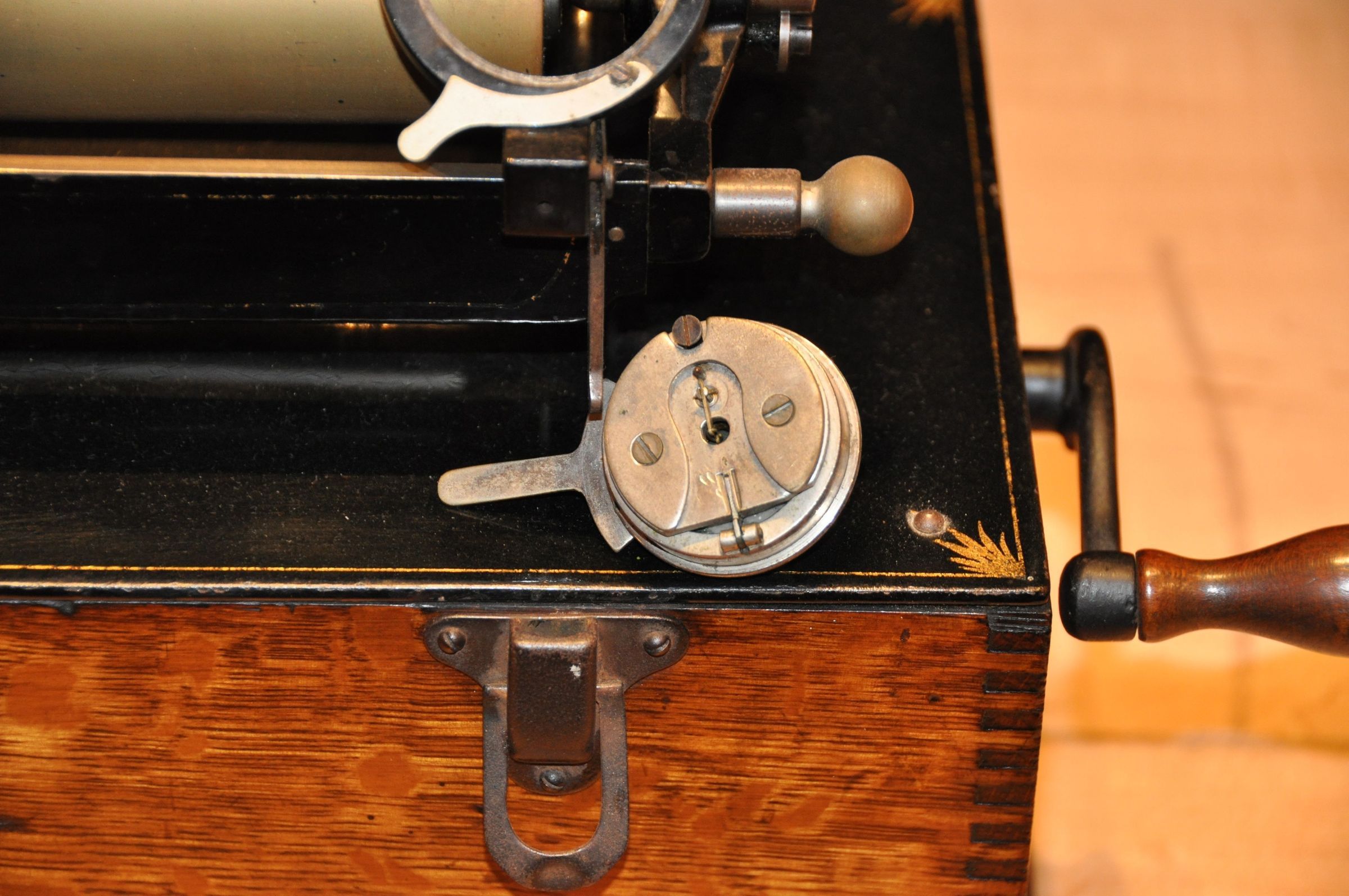
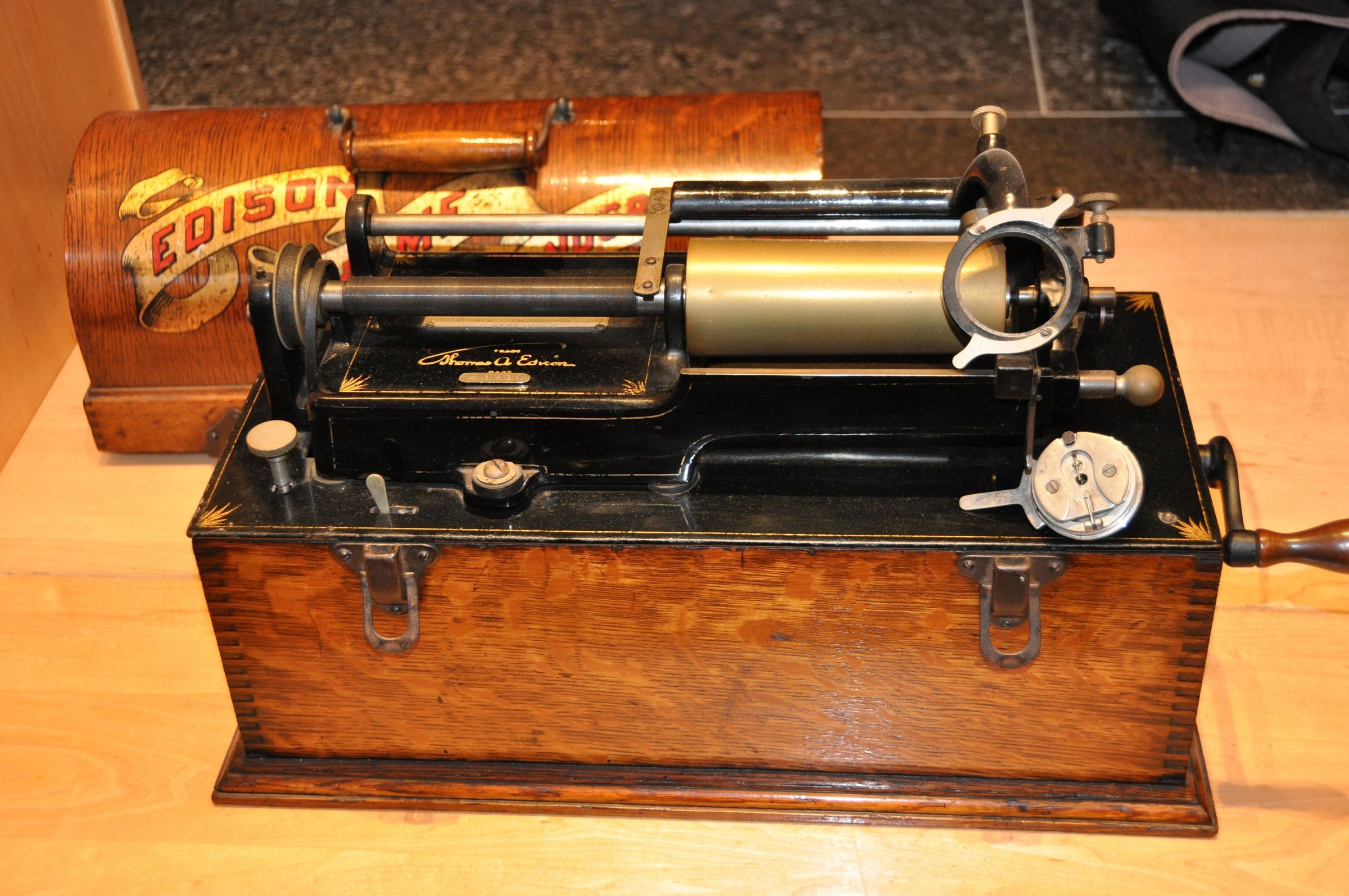
The phonograph is powered by a spring-driven motor, wound by hand crank. The motion is transmitted via an open gear train to the mandrel.
An important feature of early Home Phonographs is the solid brass mandrel, which is characteristic of the first production phase. This construction was later replaced by modified designs in subsequent models.
The carriage is advanced by a separate feed screw, ensuring smooth and even tracking during playback. The mechanism is mounted on a top plate and, in early Model A machines, remains relatively exposed within the cabinet.
The machine is designed as a universal device and can—when properly equipped—be used for playback, recording, and shaving of wax cylinders.
Typical Features of the Early Model A
Early Home Phonographs of this period display several characteristic features:
compact construction, significantly smaller than the Edison Standard
early top plate design typical of the late 1890s
open and visible gearwork
solid brass mandrel of the early type
simple, largely undecorated cabinet
At this stage, production was not yet fully standardized, and minor variations between individual machines are common.
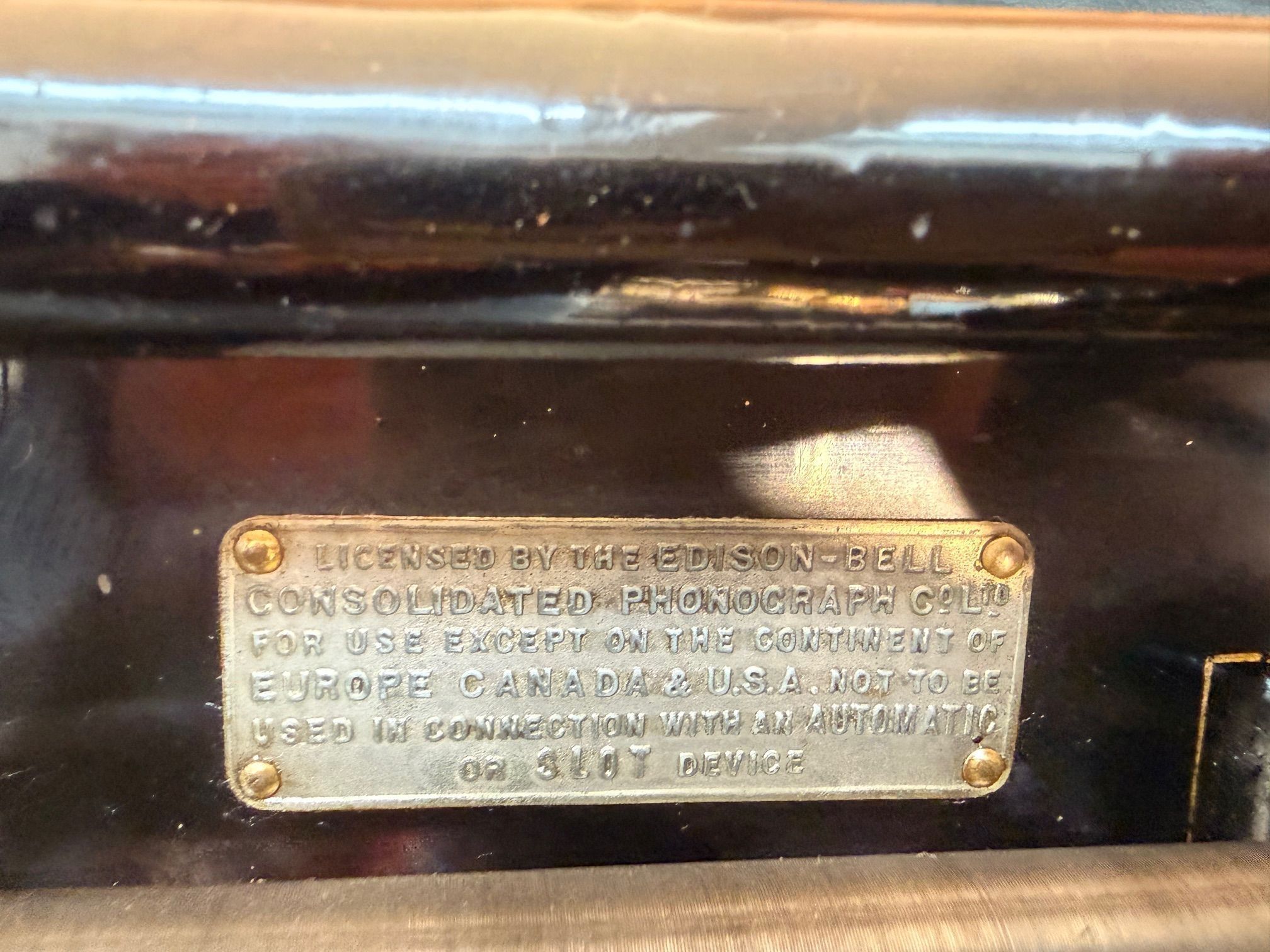
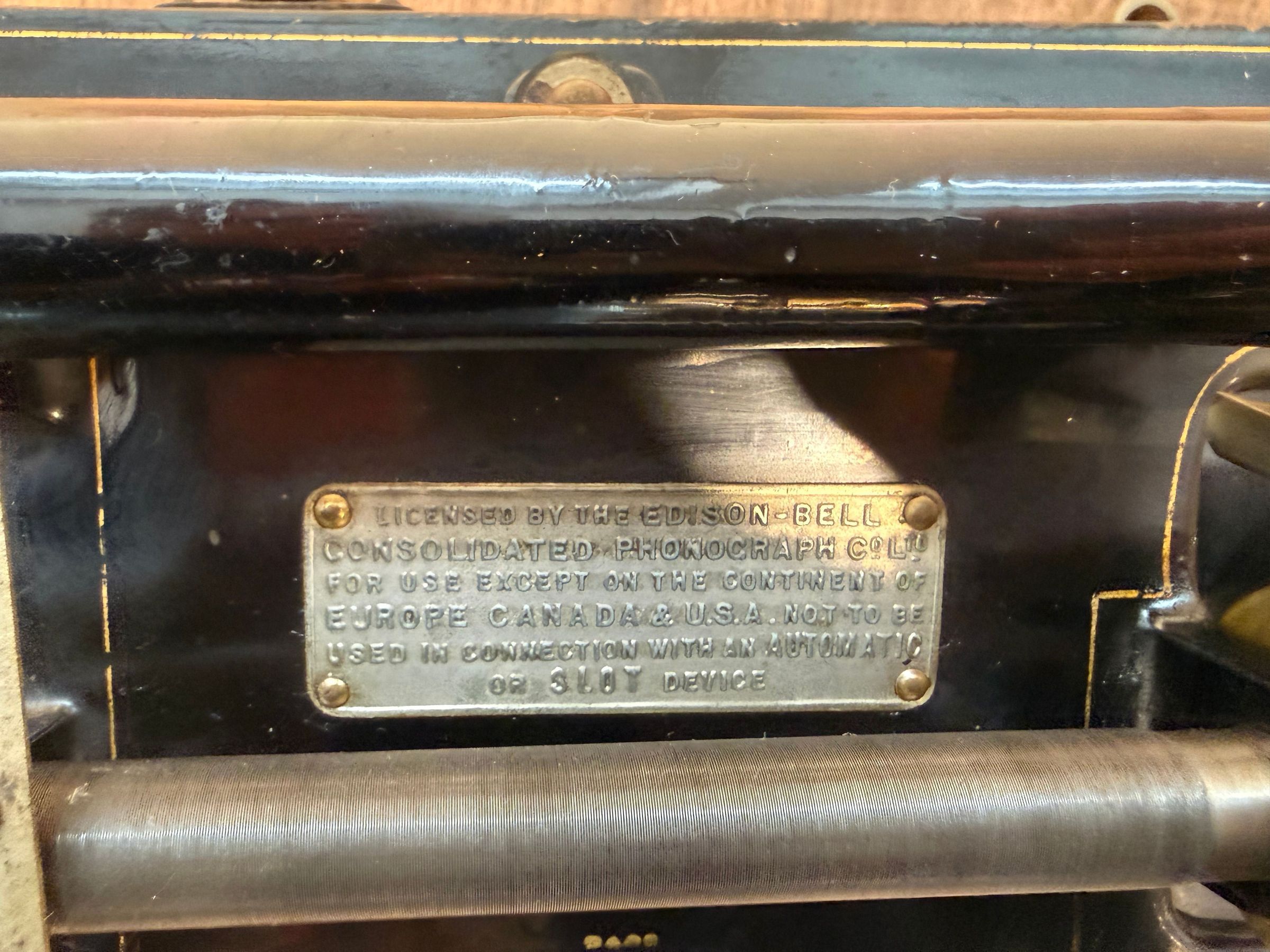
Edison-Bell License Plate
A particularly notable feature is the original metal plate bearing the inscription:
“Licensed by the Edison-Bell Consolidated Phonograph Co. Ltd.
For use except on the continent of Europe, Canada & U.S.A.
Not to be used in connection with an automatic or slot device.”
This plate reflects the complex international patent and licensing structure of the period. The Edison-Bell Company held rights for specific territories, particularly within the British sphere of influence.
The explicit prohibition of use in coin-operated devices illustrates the strict distinction between private and commercial applications of phonograph technology.
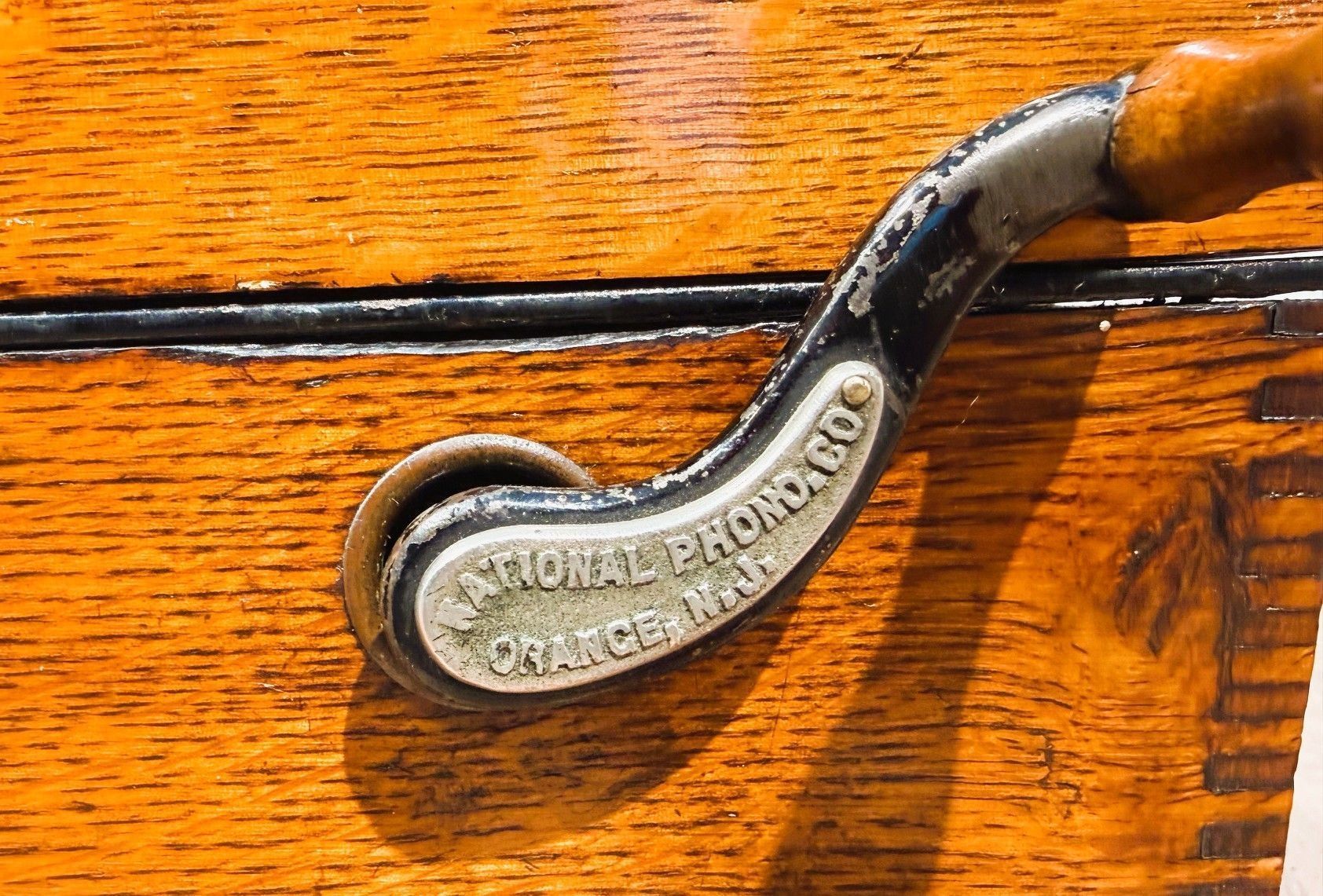
Crank – National Phonograph Company
The hand crank is marked:
“National Phonograph Co., Orange, N.J.”
This marking is typical for machines of this period and confirms attribution to the National Phonograph Company.
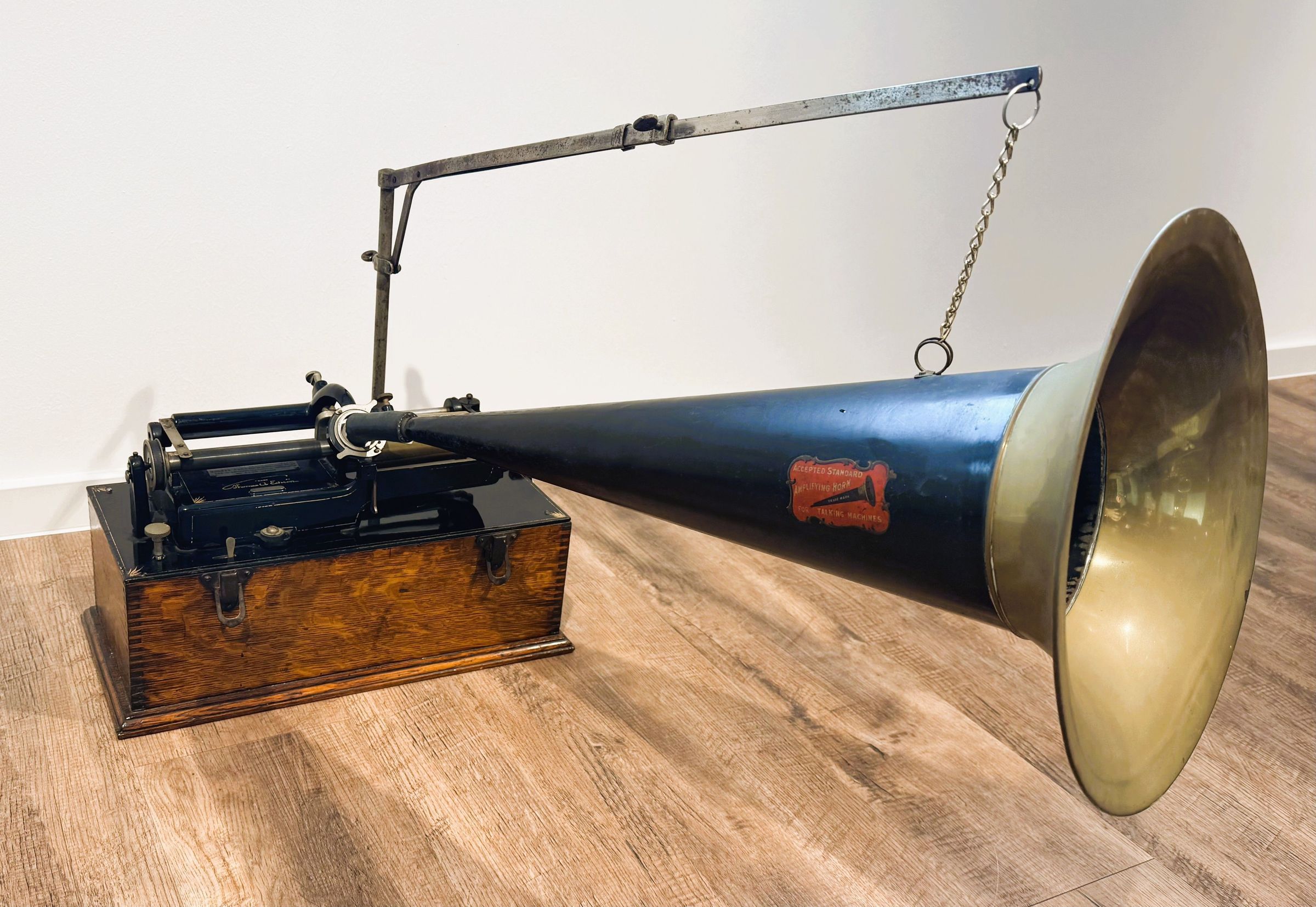
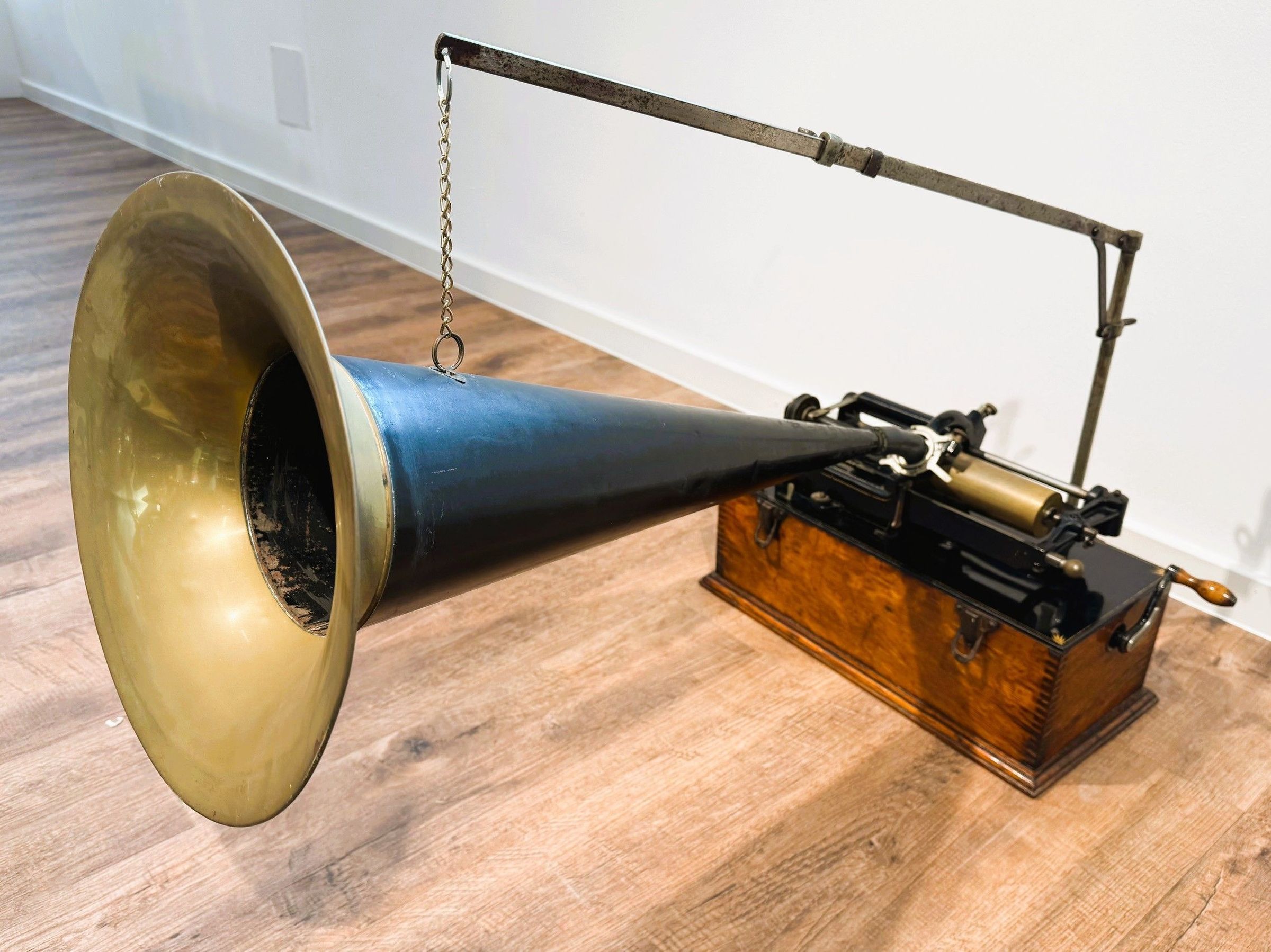
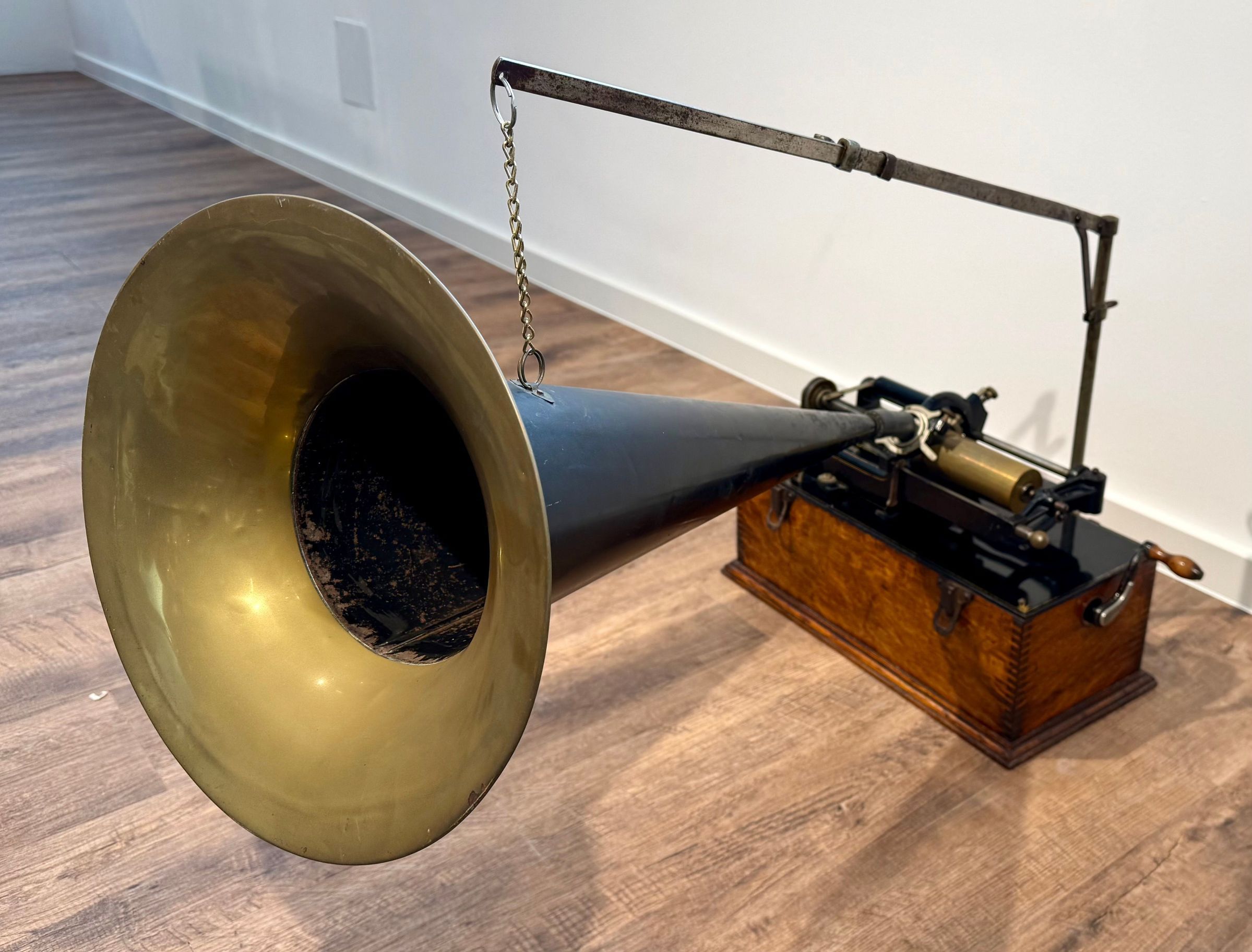
Horn and Decal
The horn bears the original decal:
“Accepted Standard Amplifying Horn for Talking Machines”
The survival of this decal is particularly noteworthy, as such markings were often lost through regular use.
Significance
This machine represents an early and highly characteristic example of the Edison Home Phonograph and documents a key phase in the development of domestic sound reproduction.
It illustrates:
the introduction of an affordable home phonograph
the early “suitcase” cabinet design
the original construction with brass mandrel
the transition from experimental devices to standardized production
the international licensing structure of the phonograph industry
Significance within the Edisonium
The combination of:
early serial number
original Edison-Bell license plate
correctly marked crank
preserved horn decal
makes this example particularly significant.
It clearly documents the moment when the phonograph evolved from a technical specialty device into a widely used household technology.