Name/Title
Edison Manhattan Coin‑Operated PhonographEntry/Object ID
113Description
Manhattan Phonograph Company, New York, USA, ca. 1901–1902
One of the rarest and most unusual coin-operated phonographs ever made
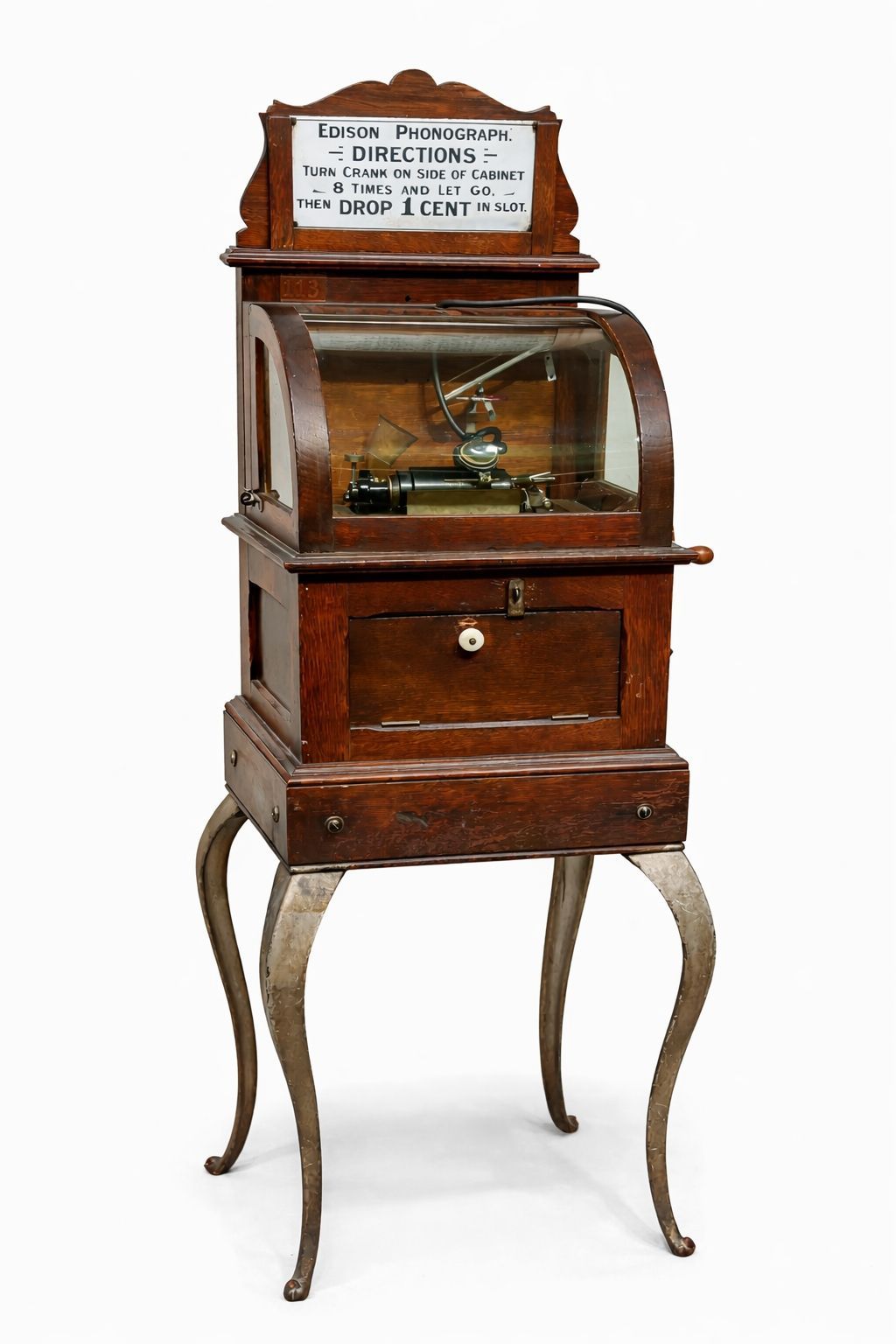
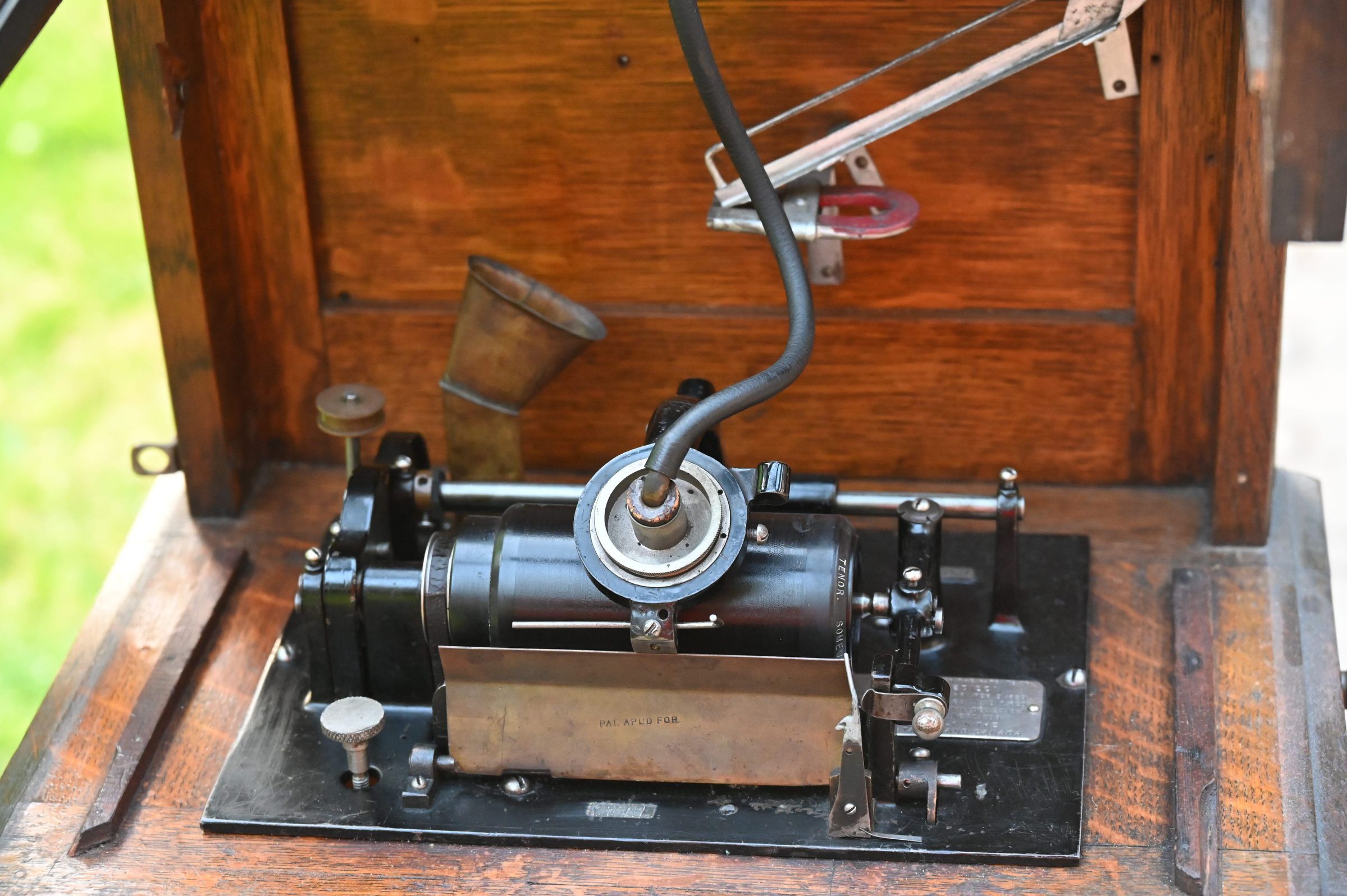
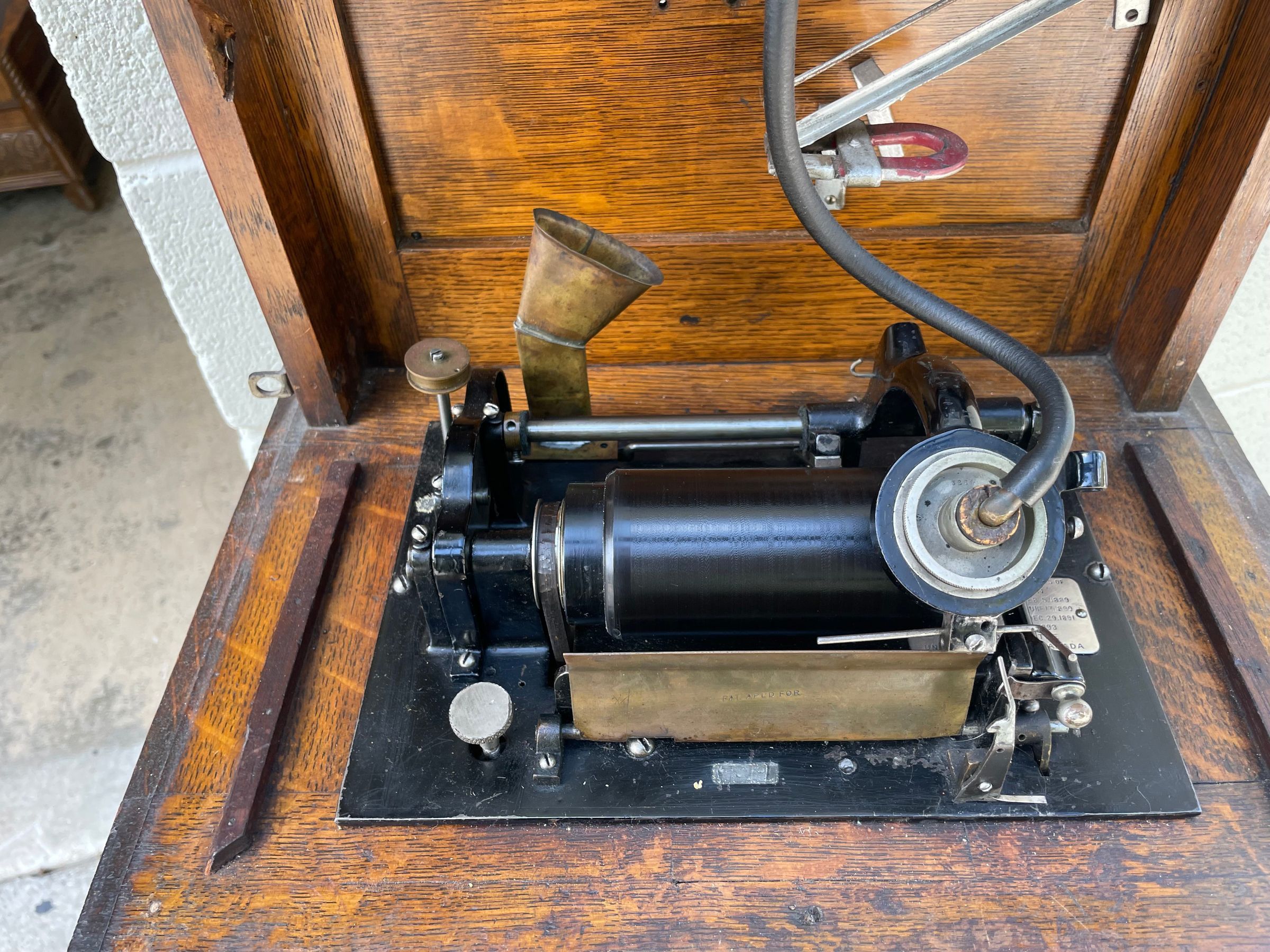
This imposing coin-operated phonograph, standing nearly five feet tall, is among the most visually striking and technically unique devices of its time. It was manufactured around 1901–1902 by the little-known Manhattan Phonograph Company of New York, most likely using surplus Edison Standard mechanisms that had just been discontinued.
Rarity and Variety
Fewer than 20 original machines are known to survive worldwide. They vary significantly in their construction: some feature simpler cabinets, while others have ornate moldings and stand on curved Queen Anne-style metal legs or wooden bases. The coin mechanisms also differ in design and placement.
What all surviving examples have in common is a rather crude and utilitarian finish – suggesting they were produced quickly and cheaply as functional commercial machines for public spaces.
Technology & Function
Mechanism: Based on early Edison “Standard” spring-driven phonograph mechanisms, adapted for coin operation and installed in large oak cabinets.
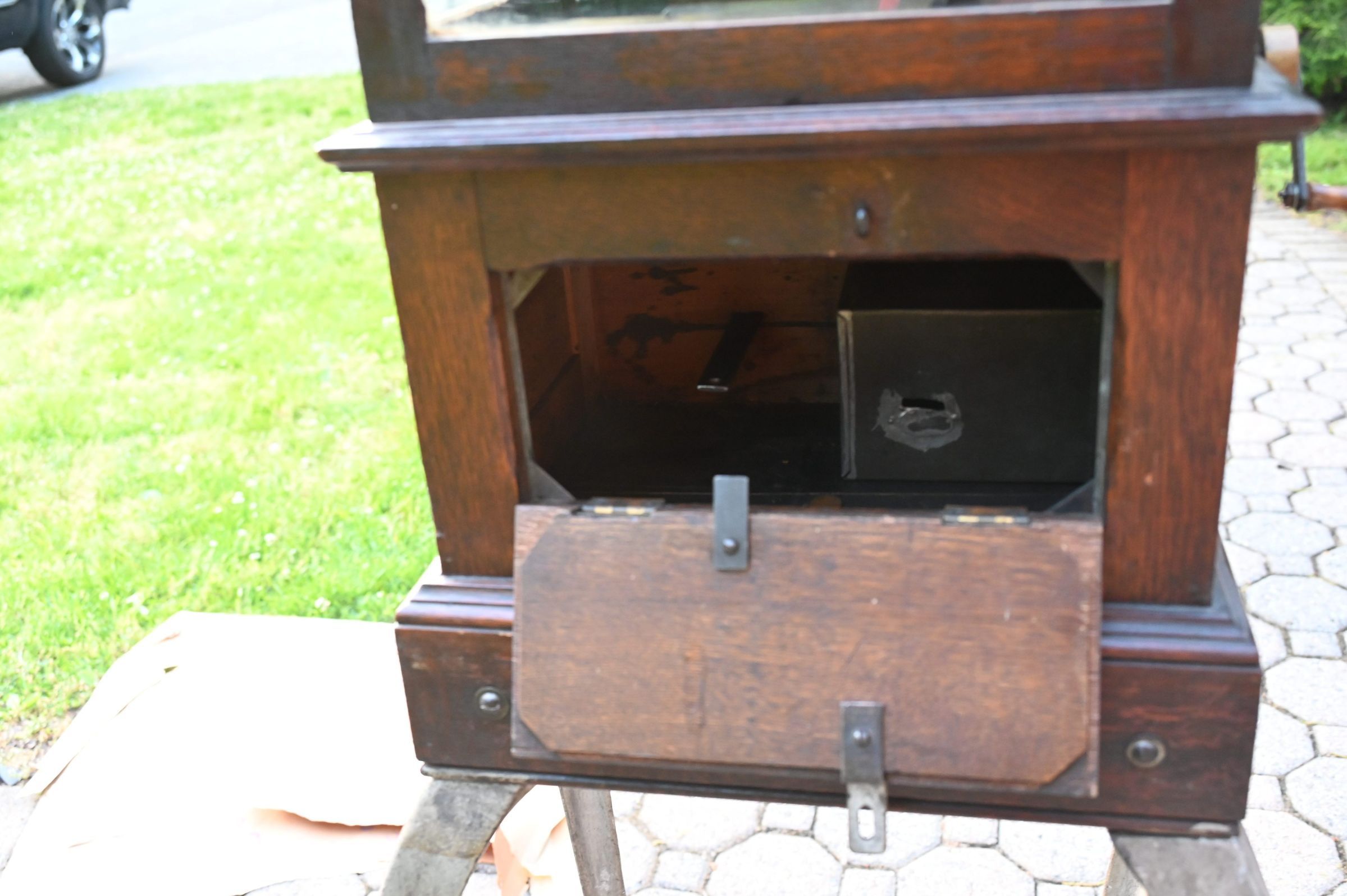
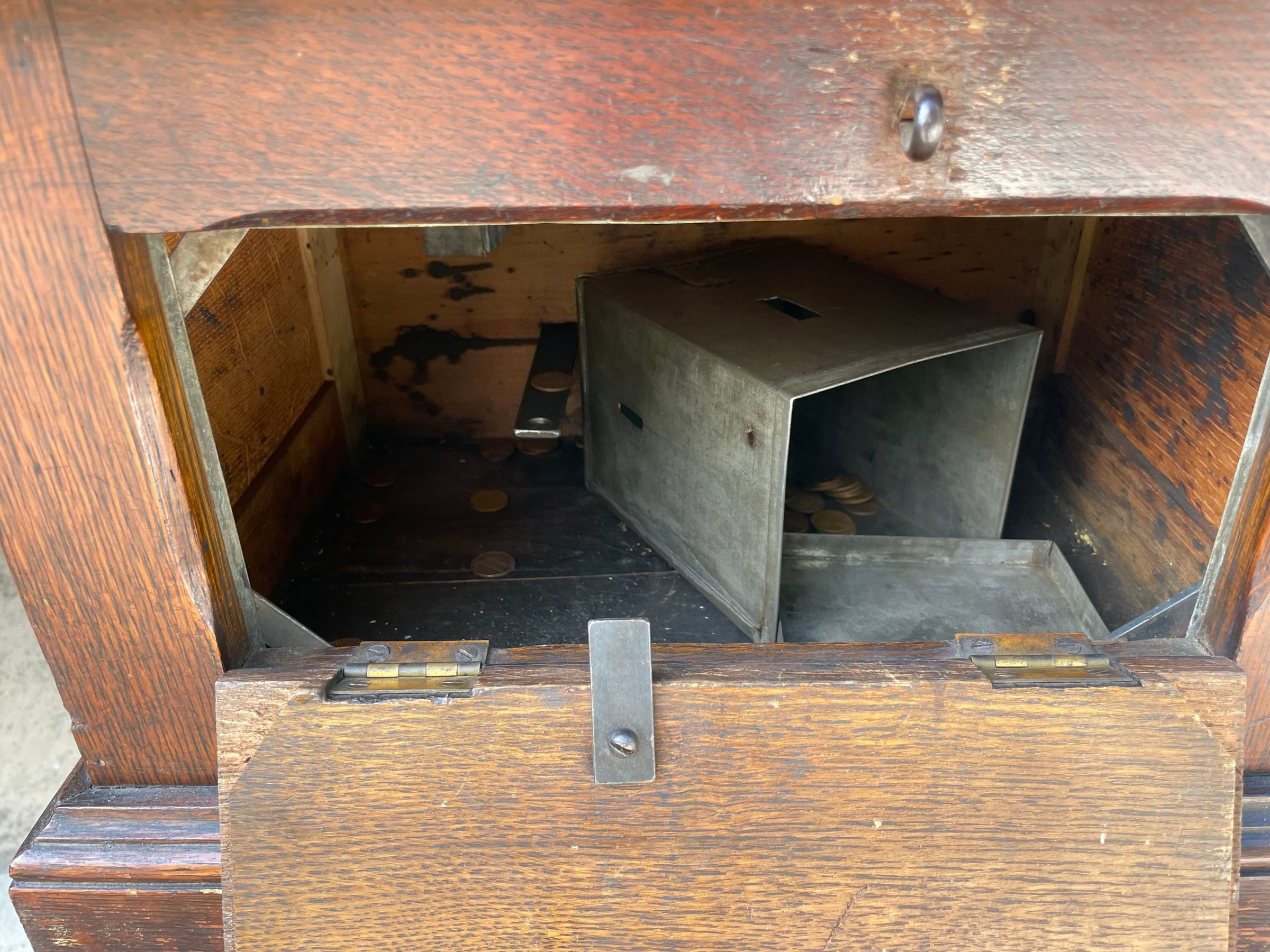
Coin System: Notably, the Manhattan features a unique visual coin chute. After turning the crank, a one-cent coin is inserted and rolls down a ramp, then flies visibly through the air to land in a brass cup. A small horseshoe magnet deflects slugs made of steel.
Activation: The mechanism only engages once the coin is successfully deposited. Power is manually supplied by the user via the crank.
Security: The machines were designed with metal bars, padlocks, and base holes to bolt them to the floor – protecting the coin box from theft.
Playback: The machine typically offered one musical selection per cylinder, played back through a standard reproducer.
Usage and Locations
Manhattan phonographs were installed in ferry terminals, hotels, bars, and waiting areas – anywhere a customer might spend a penny for a short burst of entertainment. They were part of the emerging coin-op culture of the early 20th century.
Design and Details
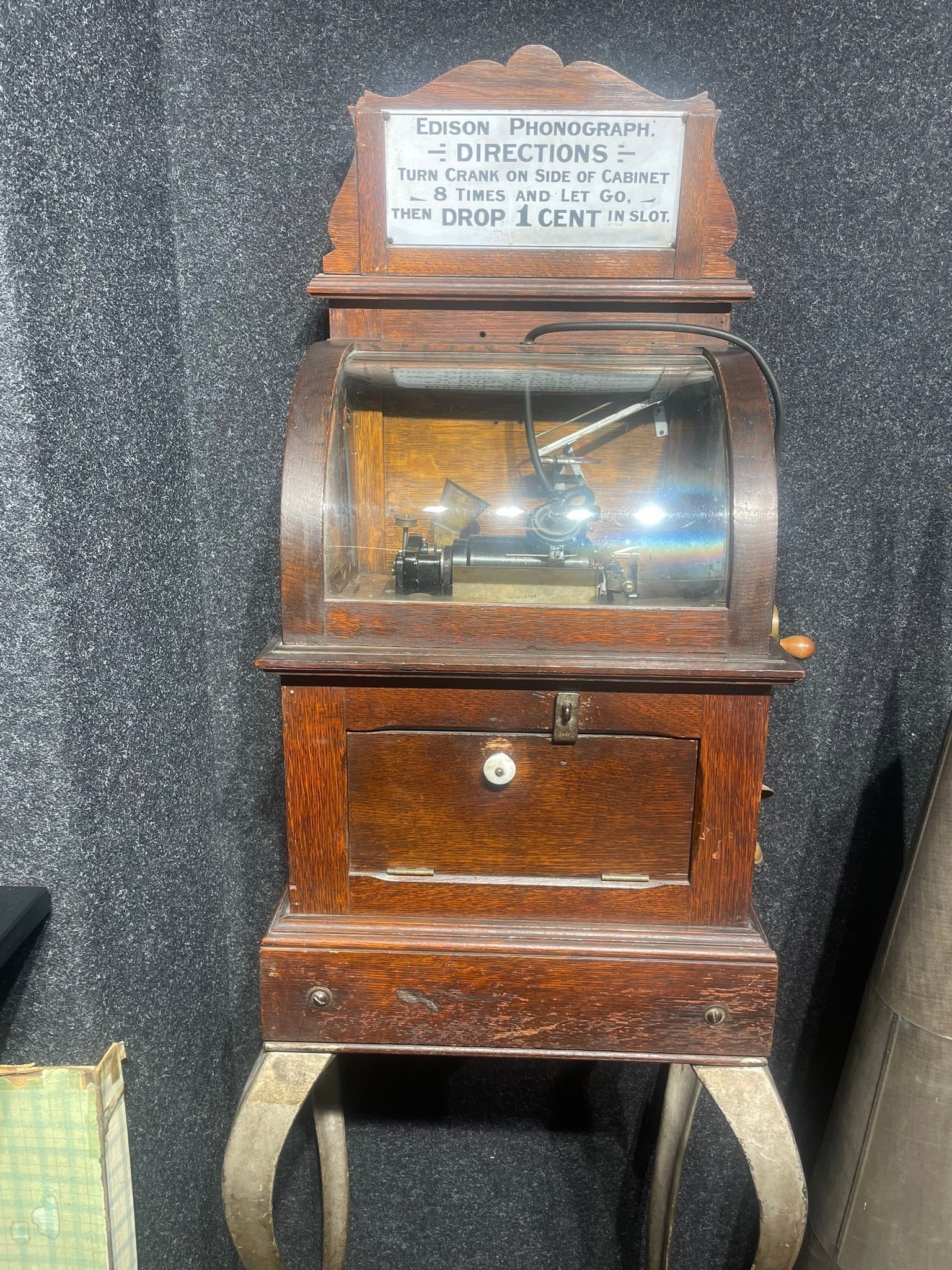
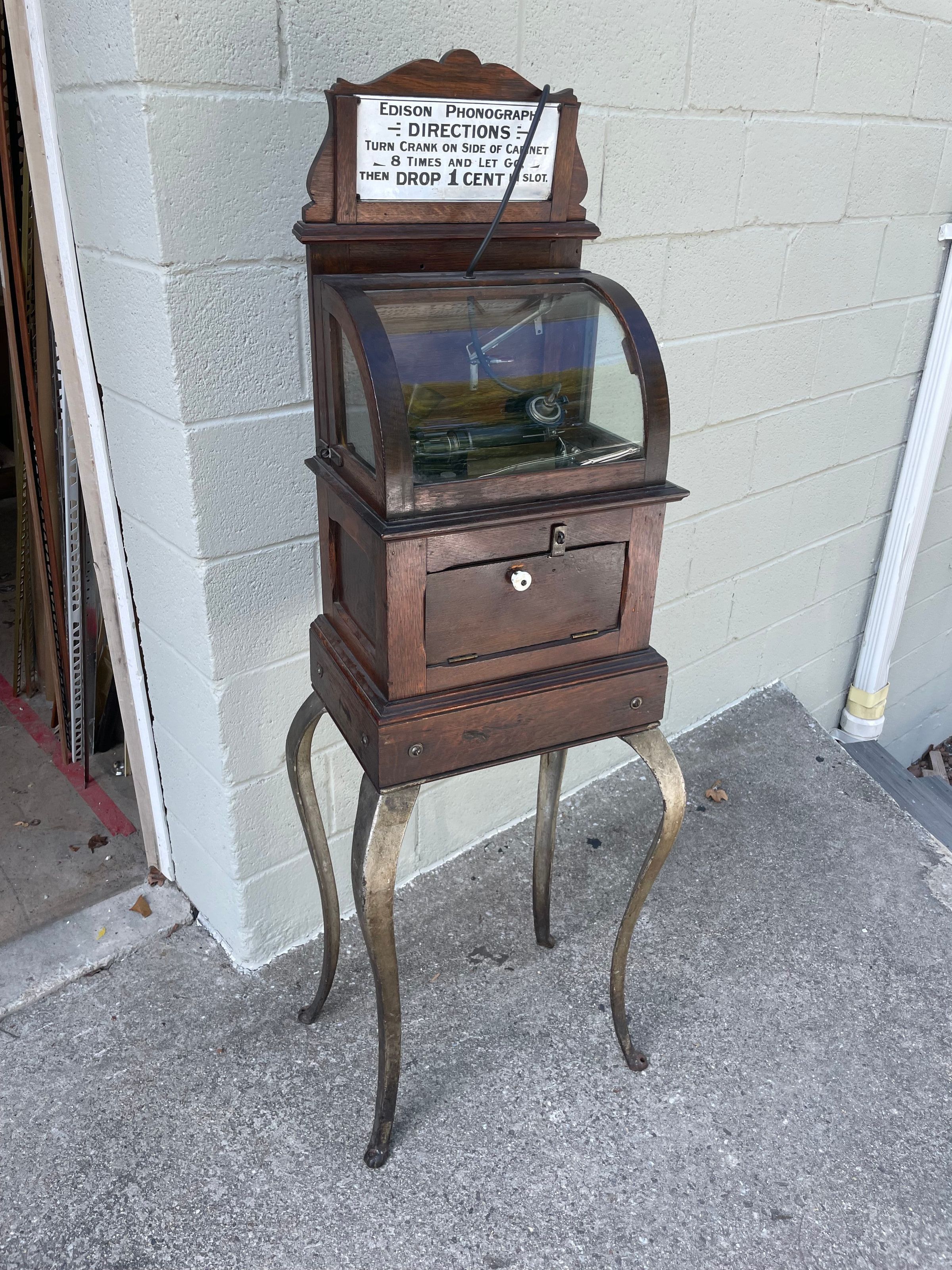
Cabinet: Solid oak with a curved glass lid
Stand: Metal or wooden legs, depending on version
Interior Finish: Unplated brass, soldered joints, unused features sealed crudely
Signage: Original porcelain enamel signs reading “EDISON PHONOGRAPH – DIRECTIONS,” sometimes including the “Manhattan Phonograph Co.” name
Some versions also featured back-to-back dual mechanisms in a single cabinet – an exceptionally rare configuration.
Collector's Significance
The Edison Manhattan is considered one of the rarest and most visually dramatic coin-operated phonographs ever made. The flying coin mechanism, improvised construction, and rich historical context make it highly prized by collectors of early sound machines.
The example on display at the Edisonium is in outstanding original condition, with a fully functional mechanism, intact signage, and an original Edison Standard movement inside. It stands as a unique testament to the early era of mechanical entertainment.