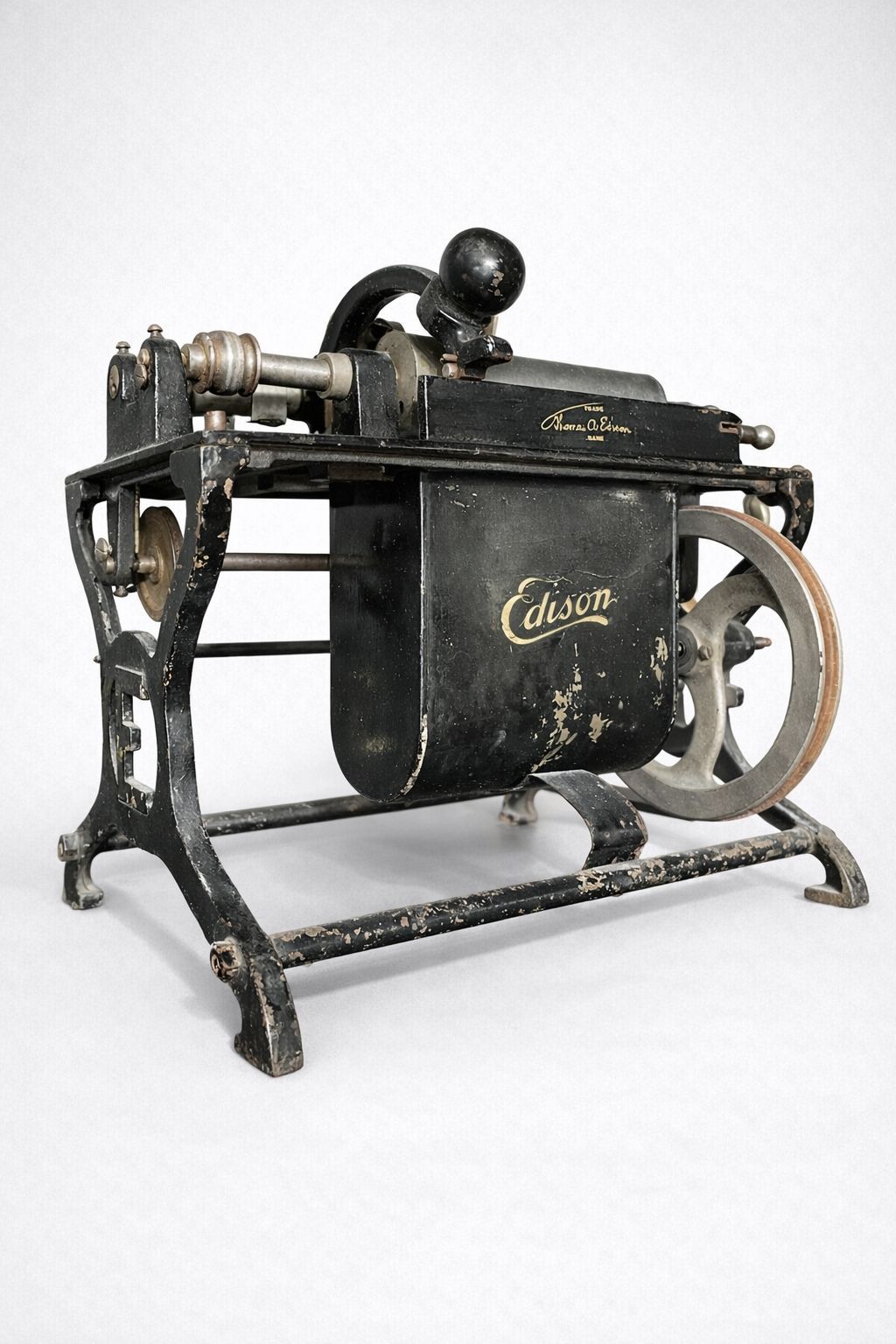
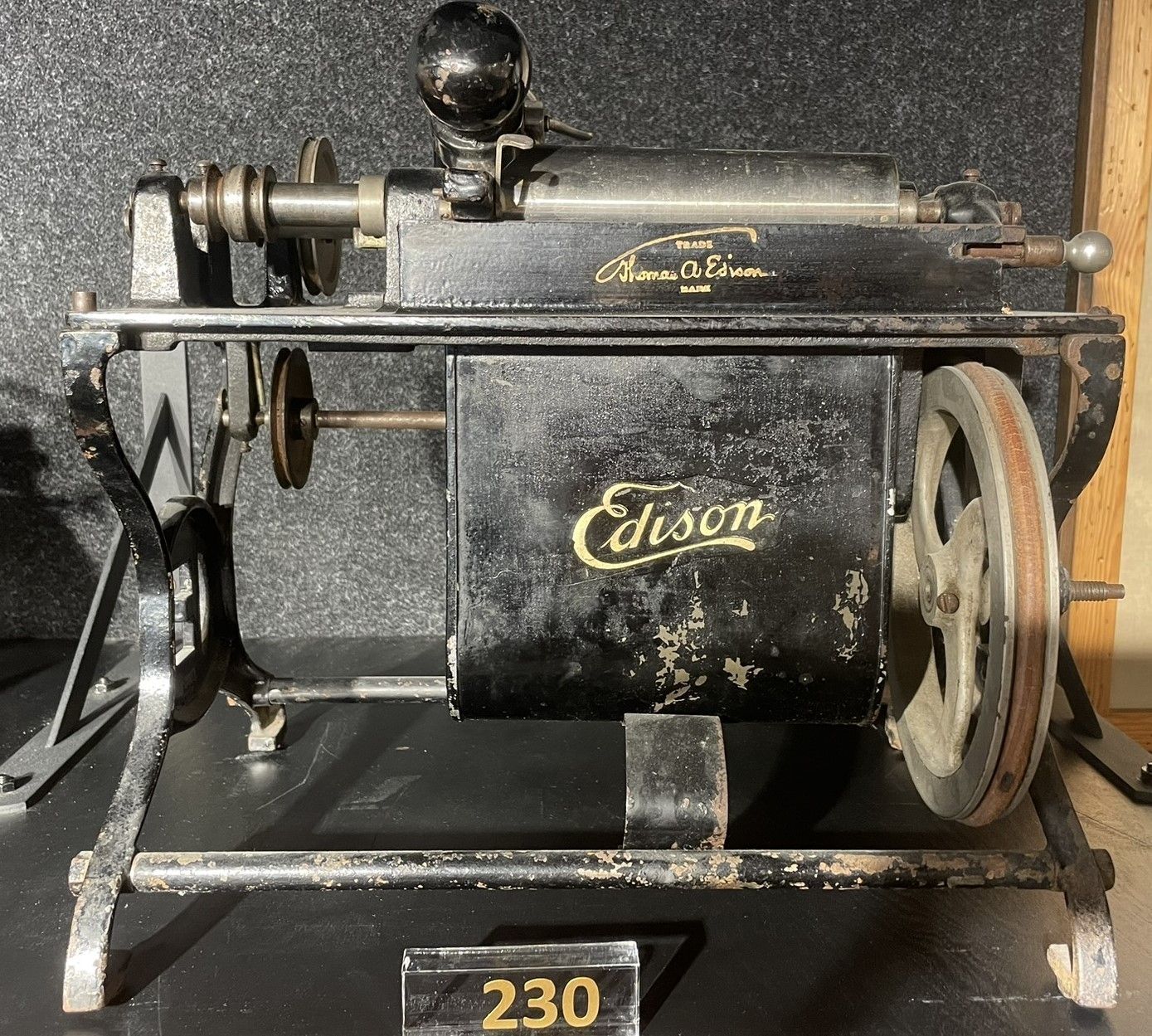
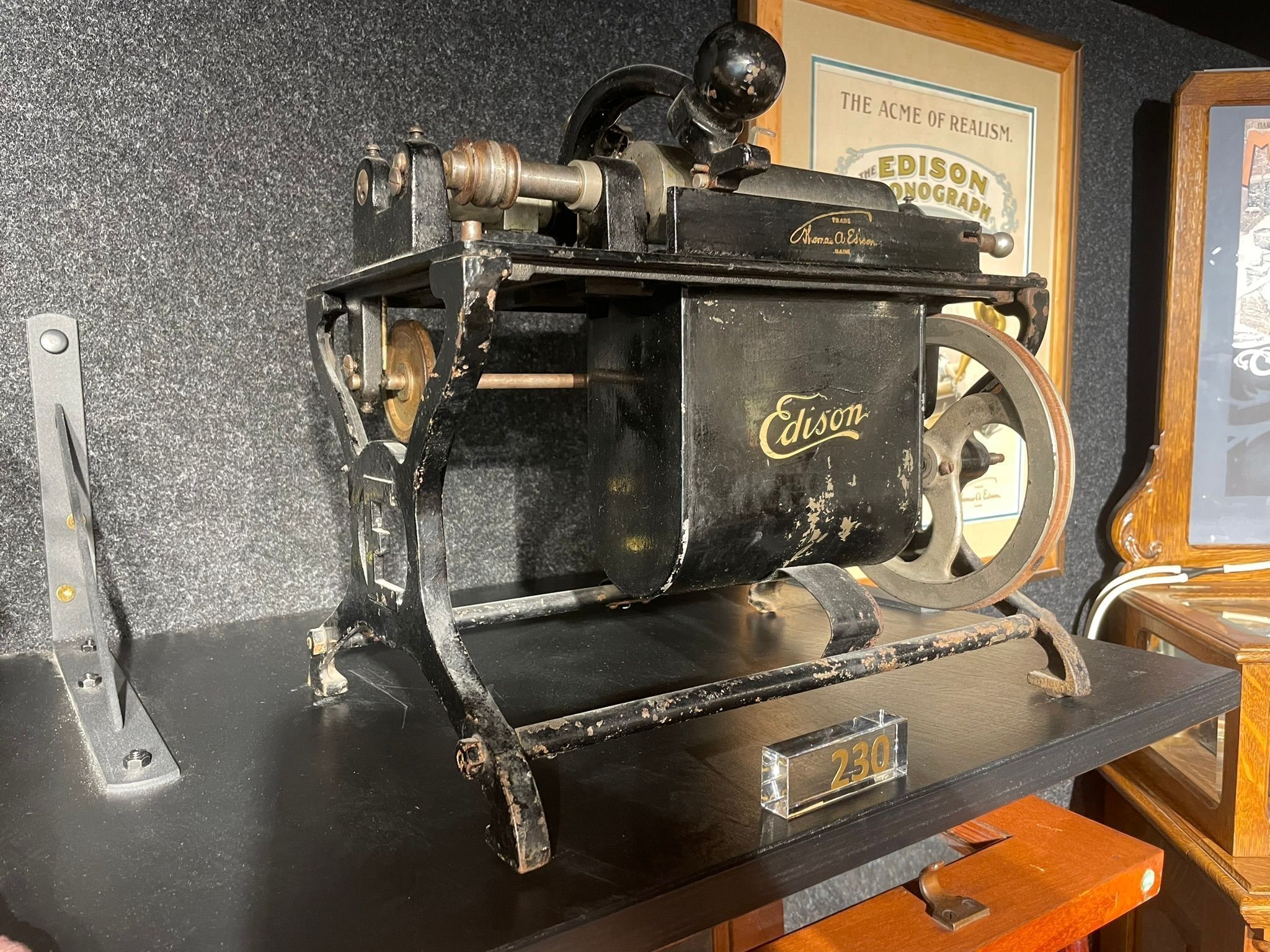
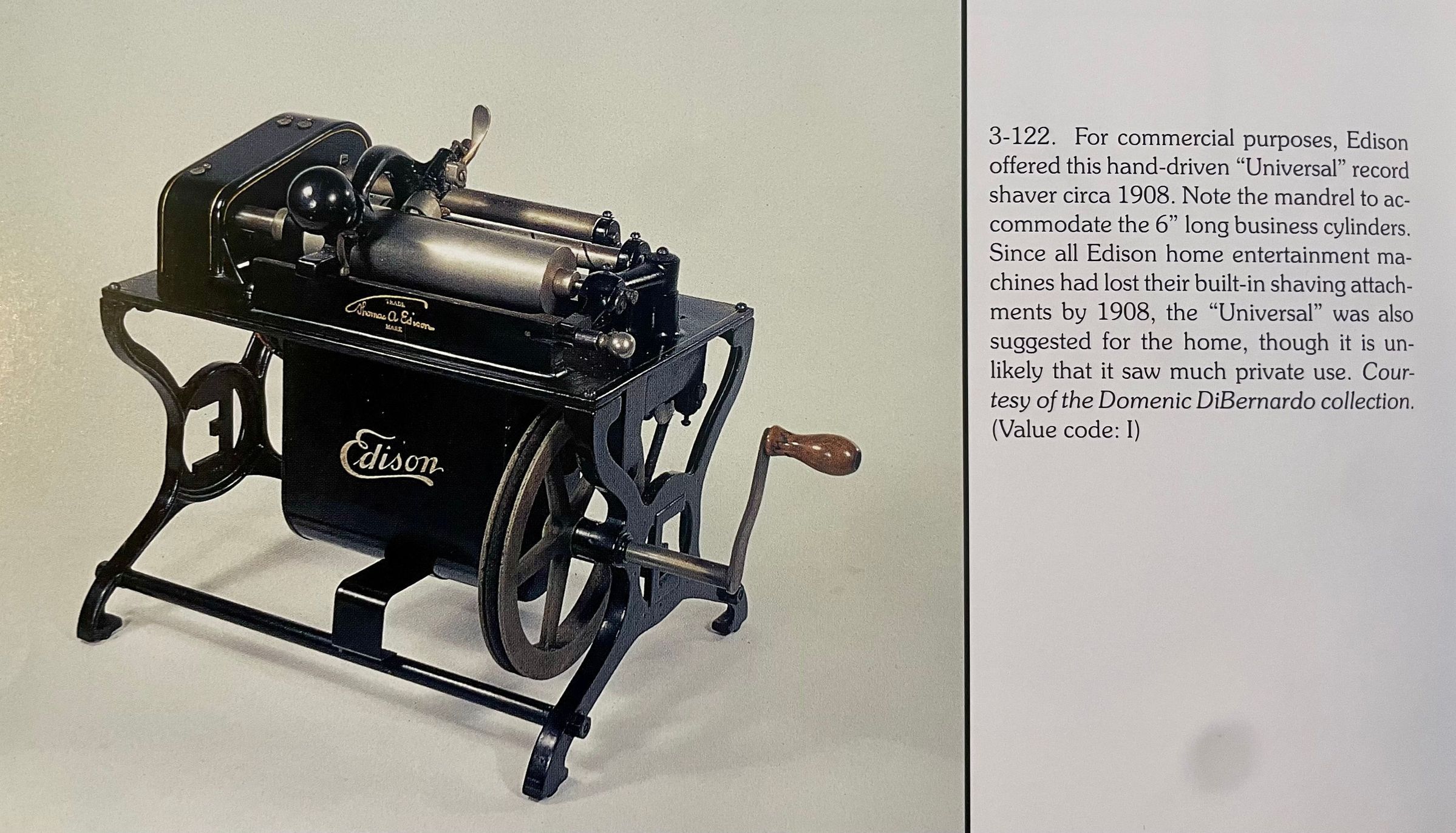
USA, ca. 1903, Wax Cylinder Shaving Machine
This machine is a professional device used to prepare wax cylinders – then the most common recording medium – for reuse. The process was called “shaving” and was an essential part of the daily workflow in recording studios, dictation offices, and for public talking machine demonstrators.
Function and Operation
The wax cylinder was mounted on a centered mandrel. Driven by a belt‑connected flywheel mechanism, the cylinder was rotated evenly. A precision steel cutting blade, mounted on an adjustable carriage, removed approximately 1–2 mm of the upper wax layer as the cylinder turned.
This process completely erased the previous recording and produced a perfectly smooth surface – essential for making a new recording at full sound quality.
The shaving had to be extremely uniform to avoid resonance or unwanted noise during later playback. The blade holder was therefore finely adjustable and was guided steadily along the length of the cylinder during the cutting process.
“Skeleton” Construction
The nickname “Skeleton” refers to the open, heavy iron frame design.
Unlike enclosed models, where the mechanism was hidden behind panels, the Skeleton left all working components visible and accessible.
Historical Use
Such machines were found in:
Professional recording studios for music and speech
Offices and law firms as part of Edison or Columbia dictation systems
Travelling exhibitors and public speakers who needed to regularly re‑record their cylinders
Because wax cylinders could not yet be mass‑duplicated industrially, reusing them by shaving off the surface was the only economical way to record on the same cylinder multiple times.