Name/Title
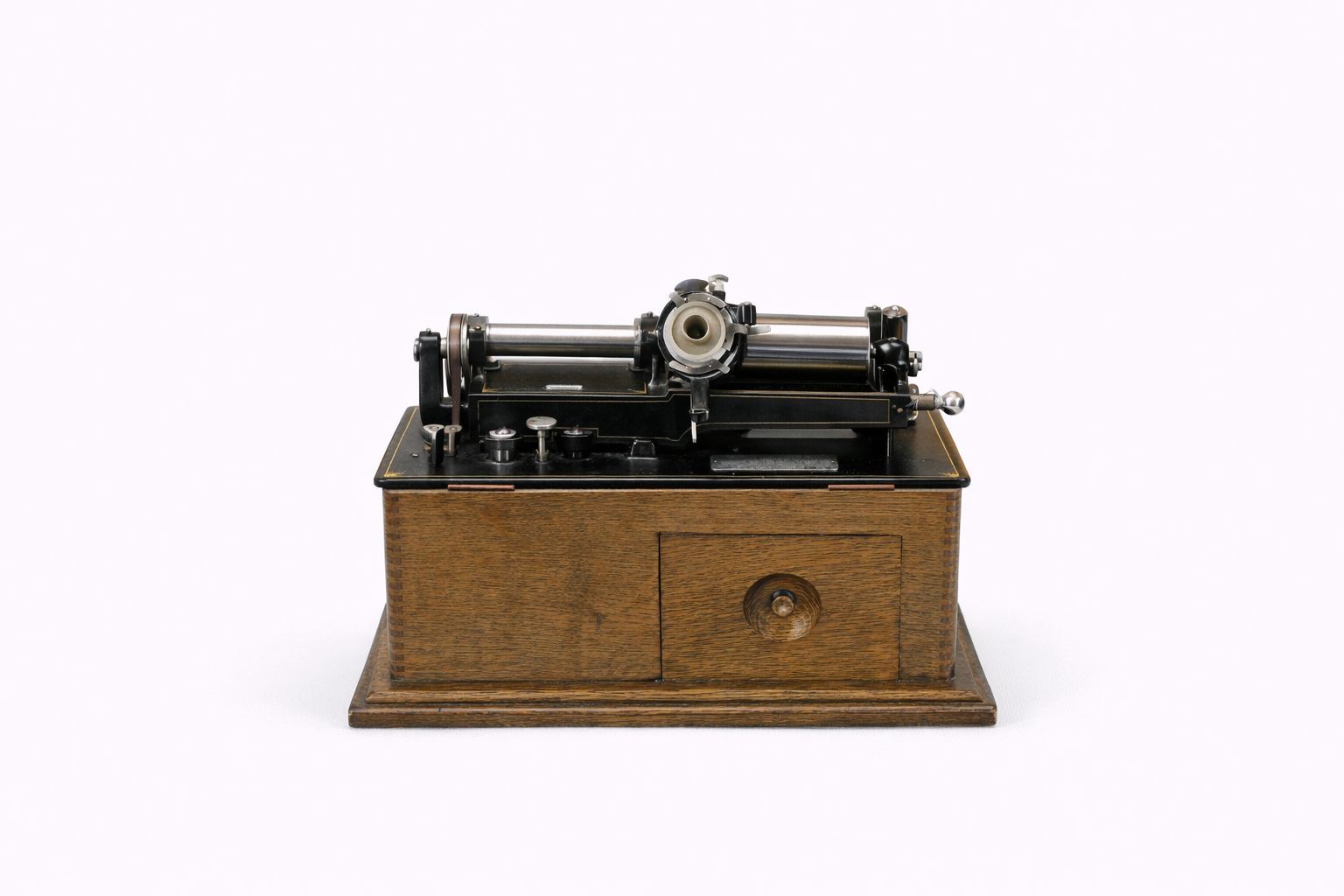
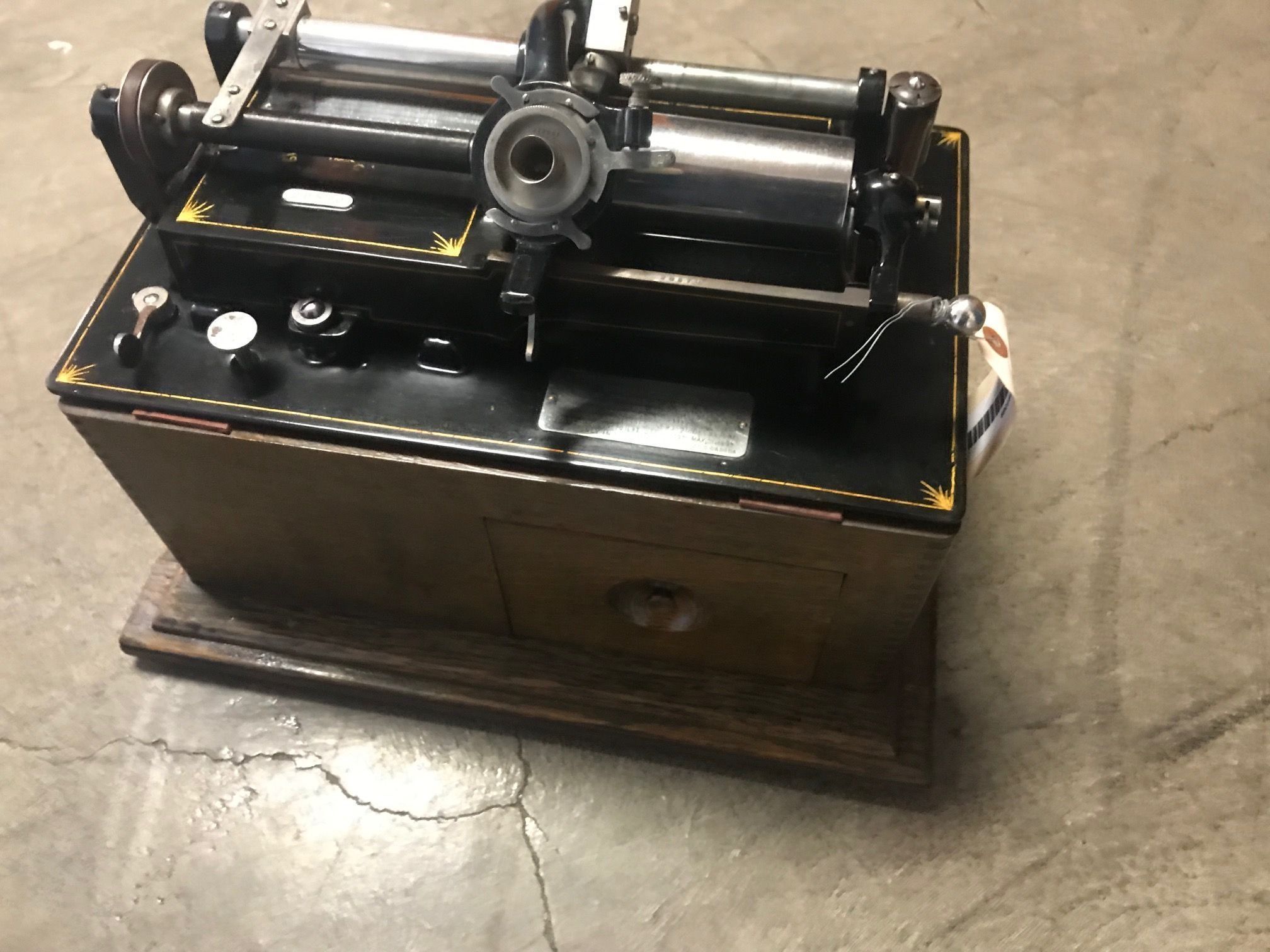
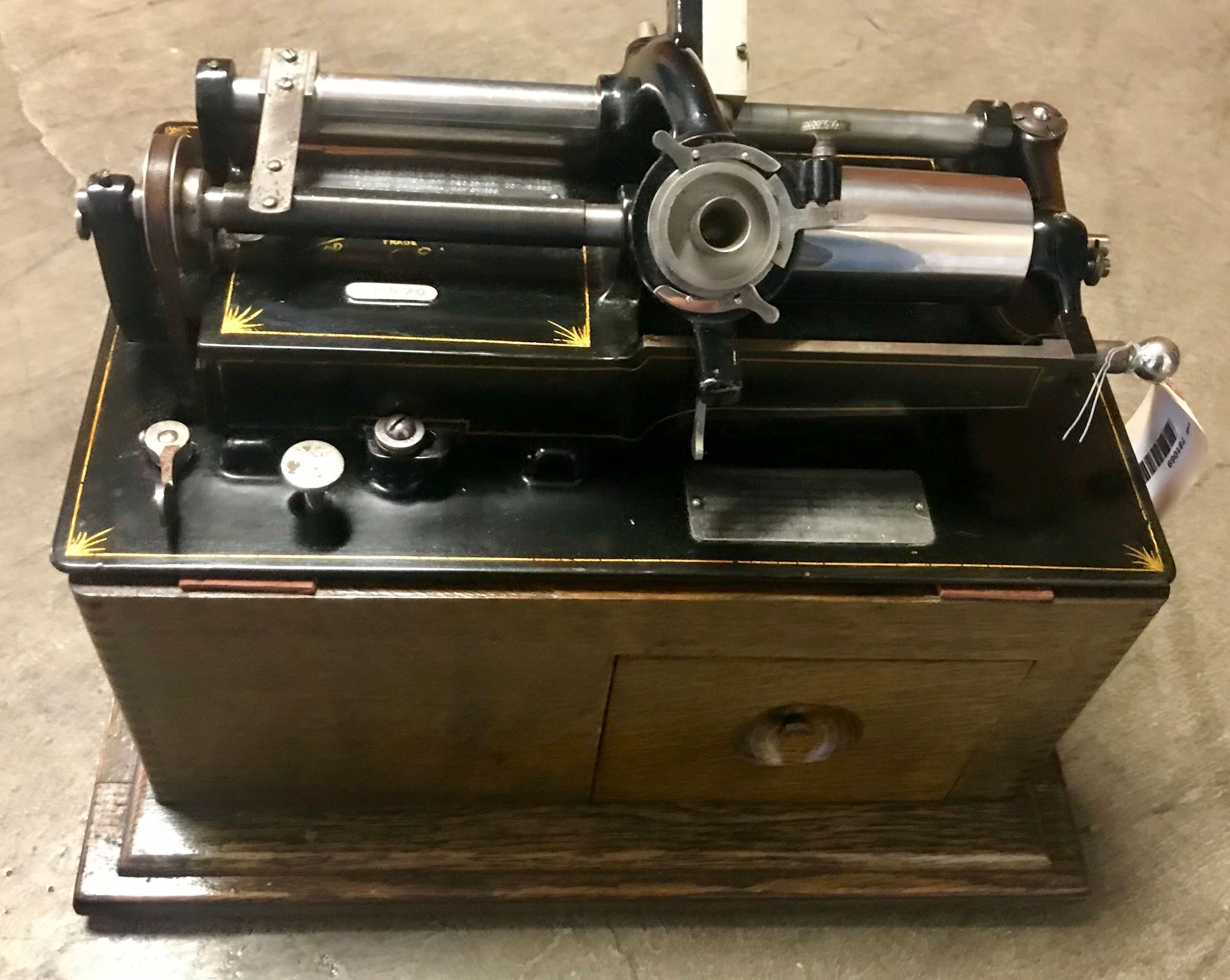
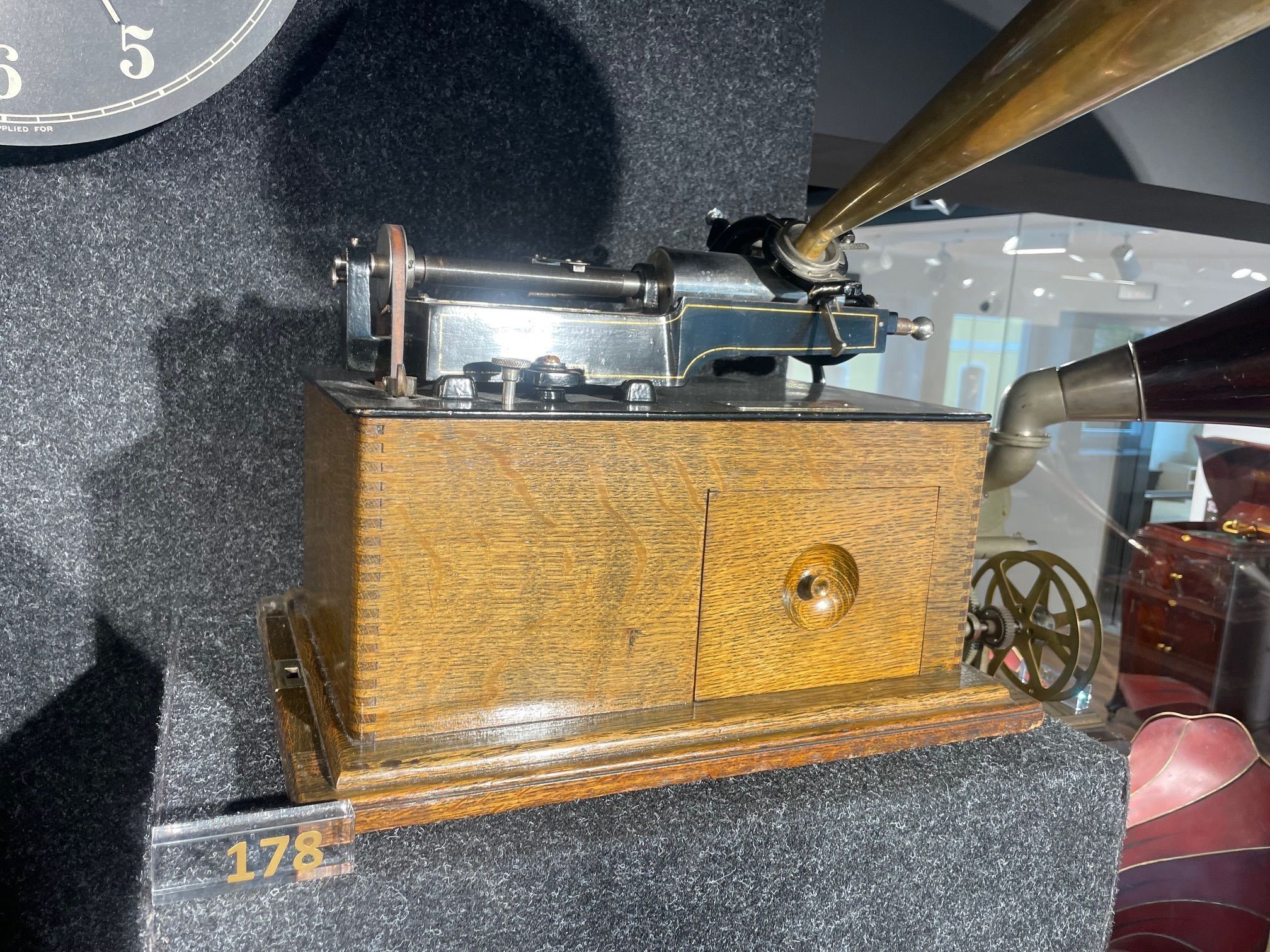
Edison Spring Motor PhonographEntry/Object ID
178Description
National Phonograph Company, Orange (New Jersey), ca. 1898–1900. Serial Number: 28,570
Historical Background
With the Spring Motor Phonograph, Edison introduced his first fully developed spring-driven motor for cylinder phonographs in late 1896. Before this, machines had to be powered by a hand crank, clockwork mechanisms from outside suppliers, or costly electric motors. The “Spring Motor” model made operation far more convenient and reliable – paving the way for Edison’s later and much more famous Triumph Phonograph.
Between 1896 and 1901, only a few tens of thousands of these machines were produced. The version with the characteristic drawer in the base belongs to the earlier models, issued before the renaming to “Triumph” in May 1901.
Technology and Features
Spring-driven motor: robust clockwork mechanism with flywheel, running time approx. 2–4 minutes per cylinder.
Serial number 28,570: indicates a late “Spring Motor” machine, produced shortly before the introduction of the Triumph.
Drawer in the base for storing accessories (reproducer, cylinders, tools).
Mechanism: heavy, precisely made gearworks with centrifugal governor; black enamel bedplate with delicate gold pinstriping.
Rarity and Significance
The Edison “Spring Motor” model is regarded as the direct predecessor of the celebrated Triumph Phonograph. It was Edison’s first successful in-house spring-driven machine and marked the beginning of a new stage in phonograph development: more powerful motors, sturdier cabinets, and the capability to serve larger audiences.
Today, examples with the drawer-style base are particularly rare. The machine displayed at the Edisonium, serial number 28,570, is a remarkably well-preserved example of this transitional model and a key artifact in understanding Edison’s shift from experimental devices to full-scale industrial phonograph production.