Name/Title
Edison Standard Phonograph – Model A (Suitcase)Description
Manufacturer: National Phonograph Company, Orange, New Jersey, USA
Model: Edison Standard Phonograph, Model A
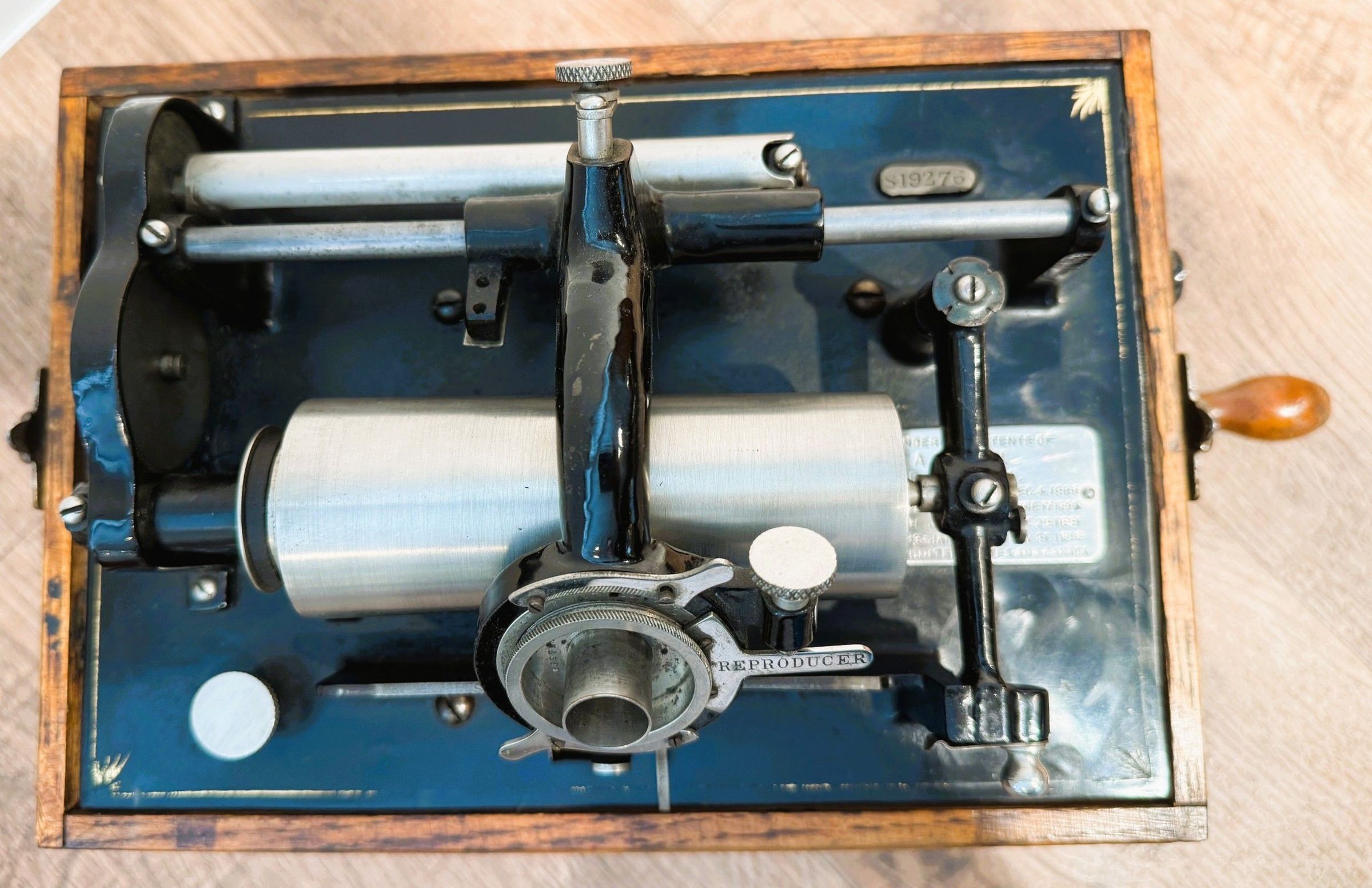
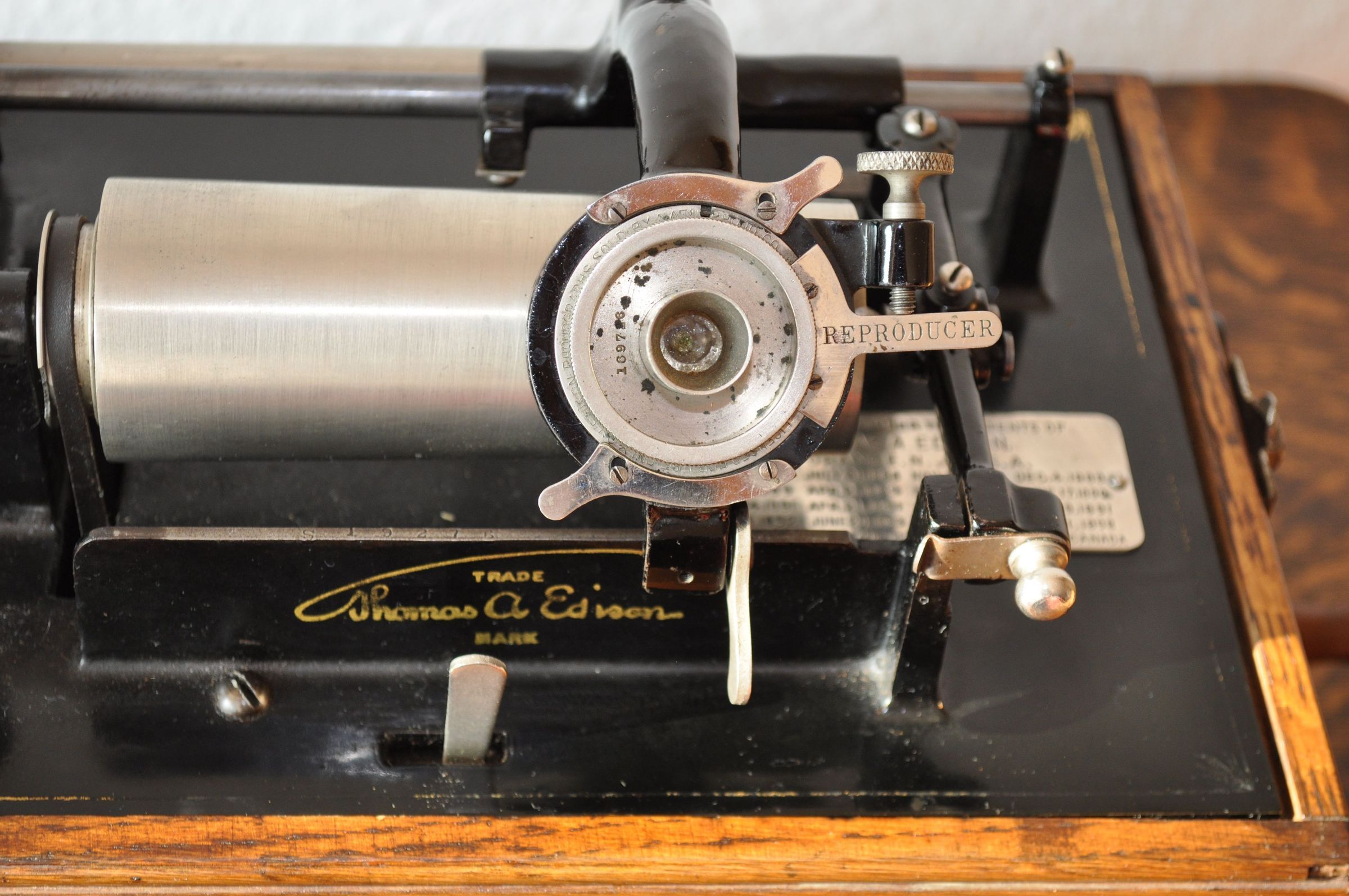
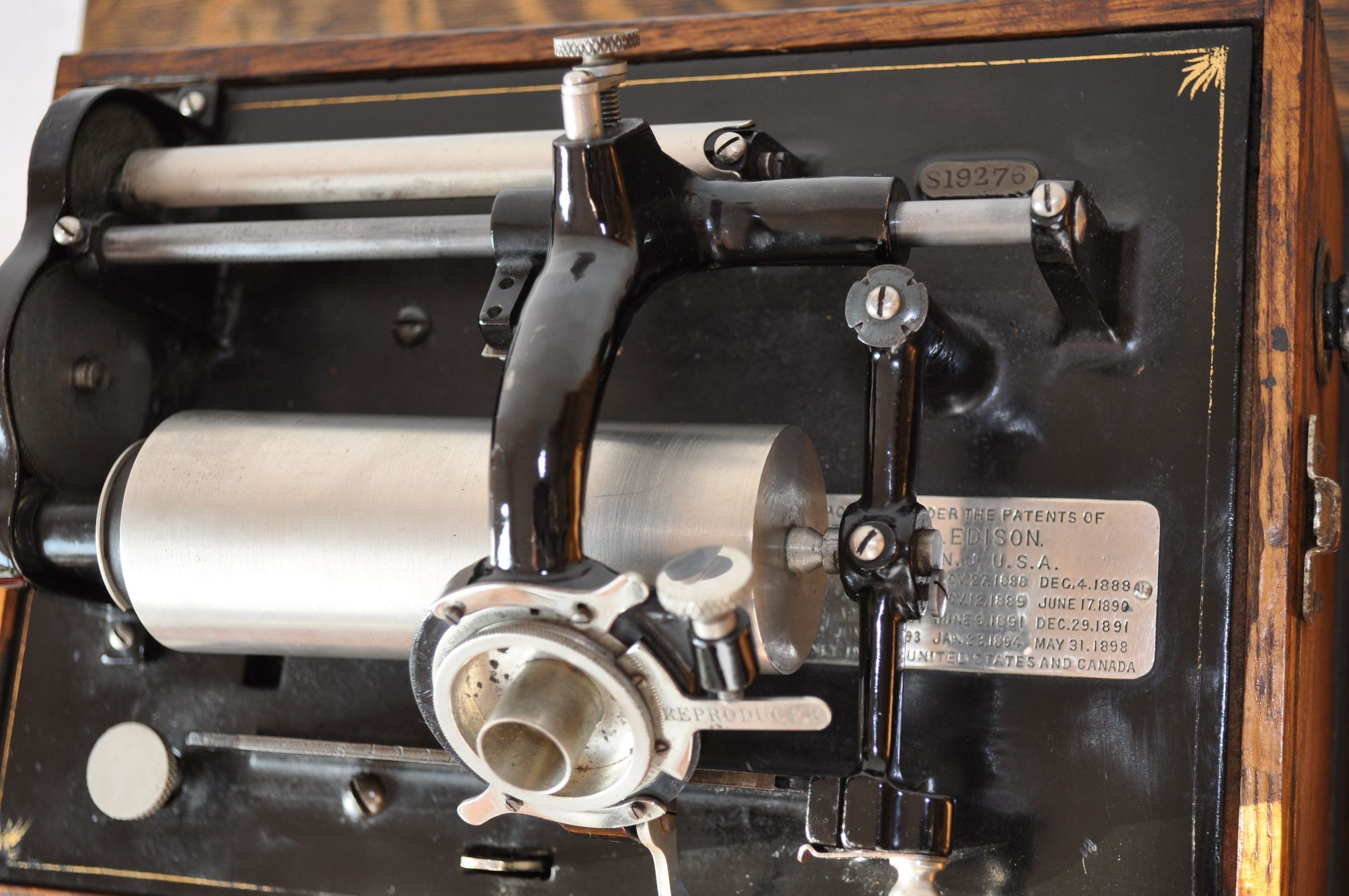
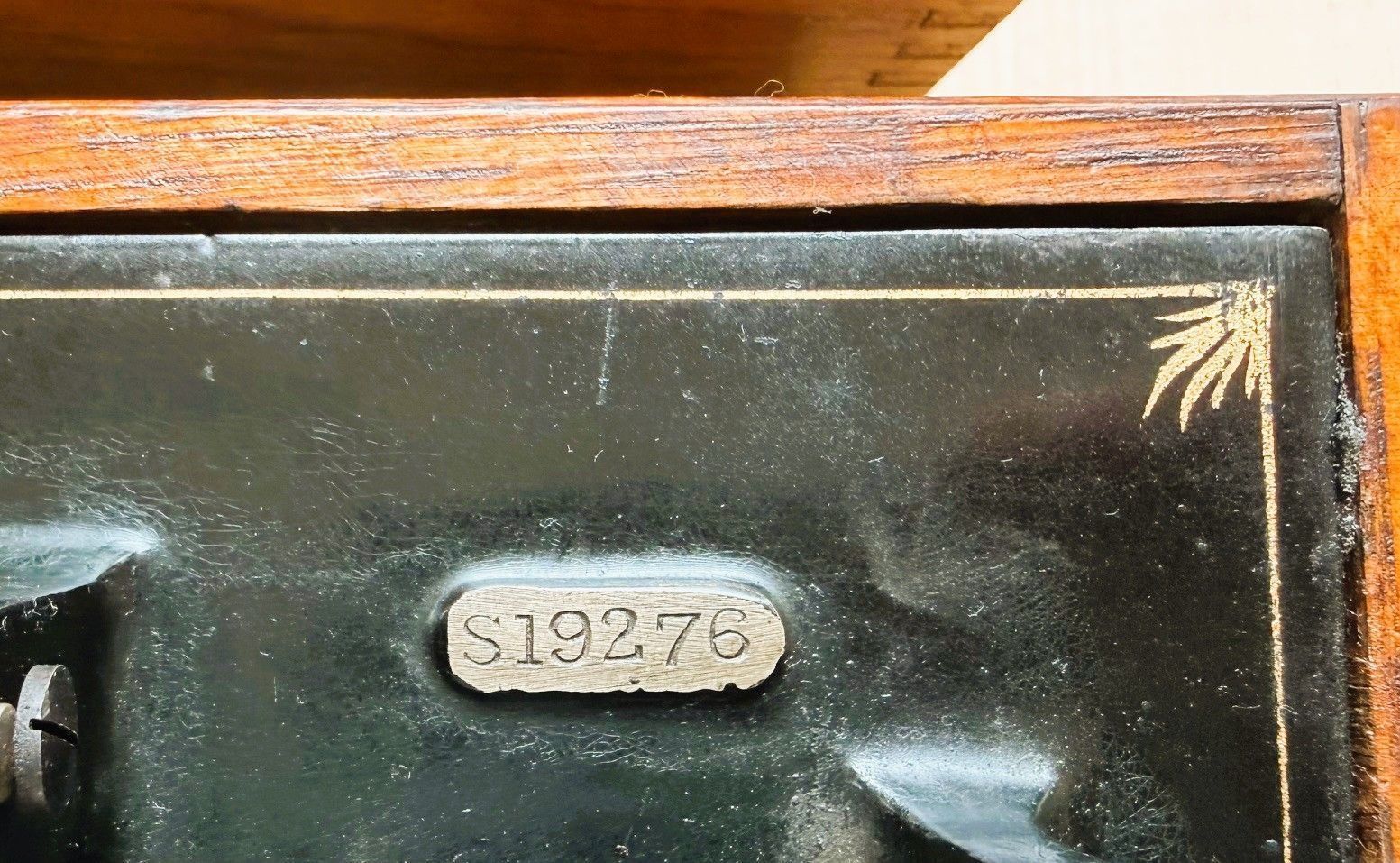
Serial Number: S19276
Date: October 1899
Drive: Spring motor, hand-cranked
Recording Medium: Wax cylinders (2-minute standard)
Historical Background
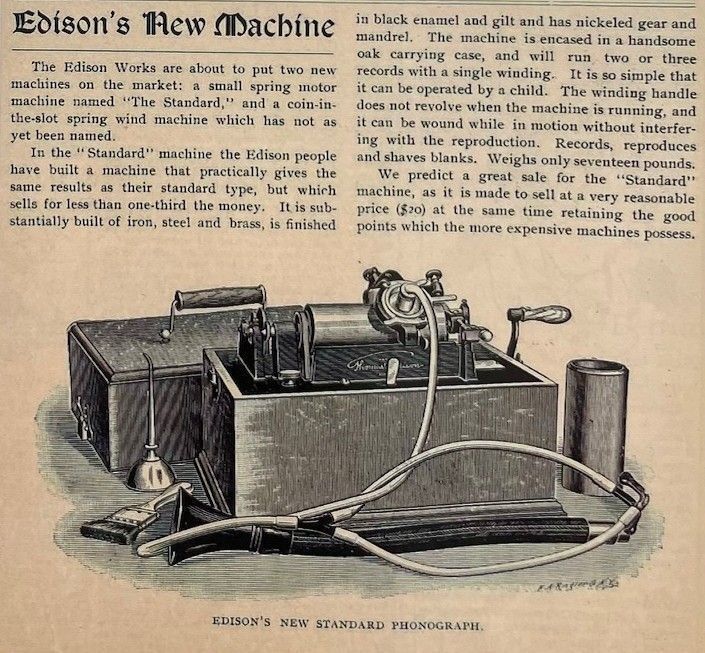
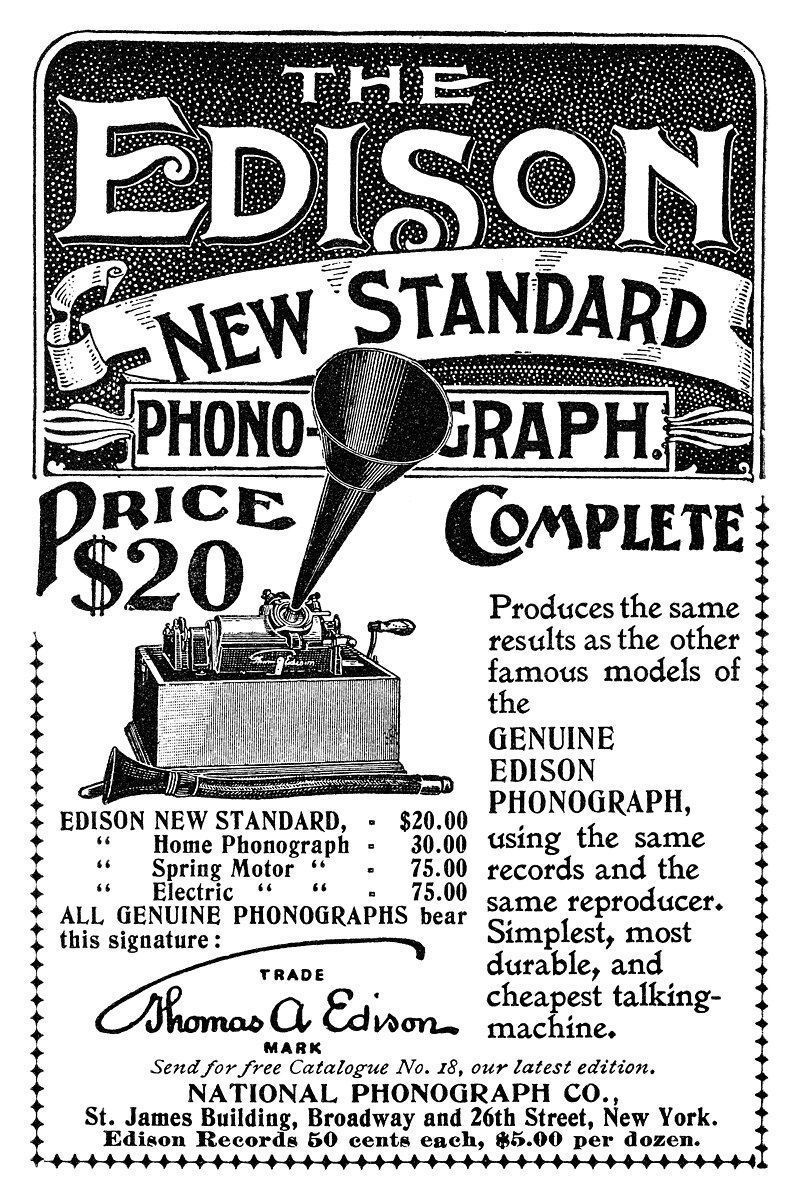
The Edison Standard Phonograph was introduced in 1898 as a direct response to increasing competition from Columbia Graphophones. While earlier Edison machines were technically sophisticated but relatively expensive, the Standard was designed as a more broadly marketable device.
The model quickly became one of Edison’s most important and successful phonographs and remained in production for many years.
This particular example, serial number S19276, belongs to the early production phase (Model A) and can be accurately dated to October 1899 based on serial progression.
The “Suitcase” Construction
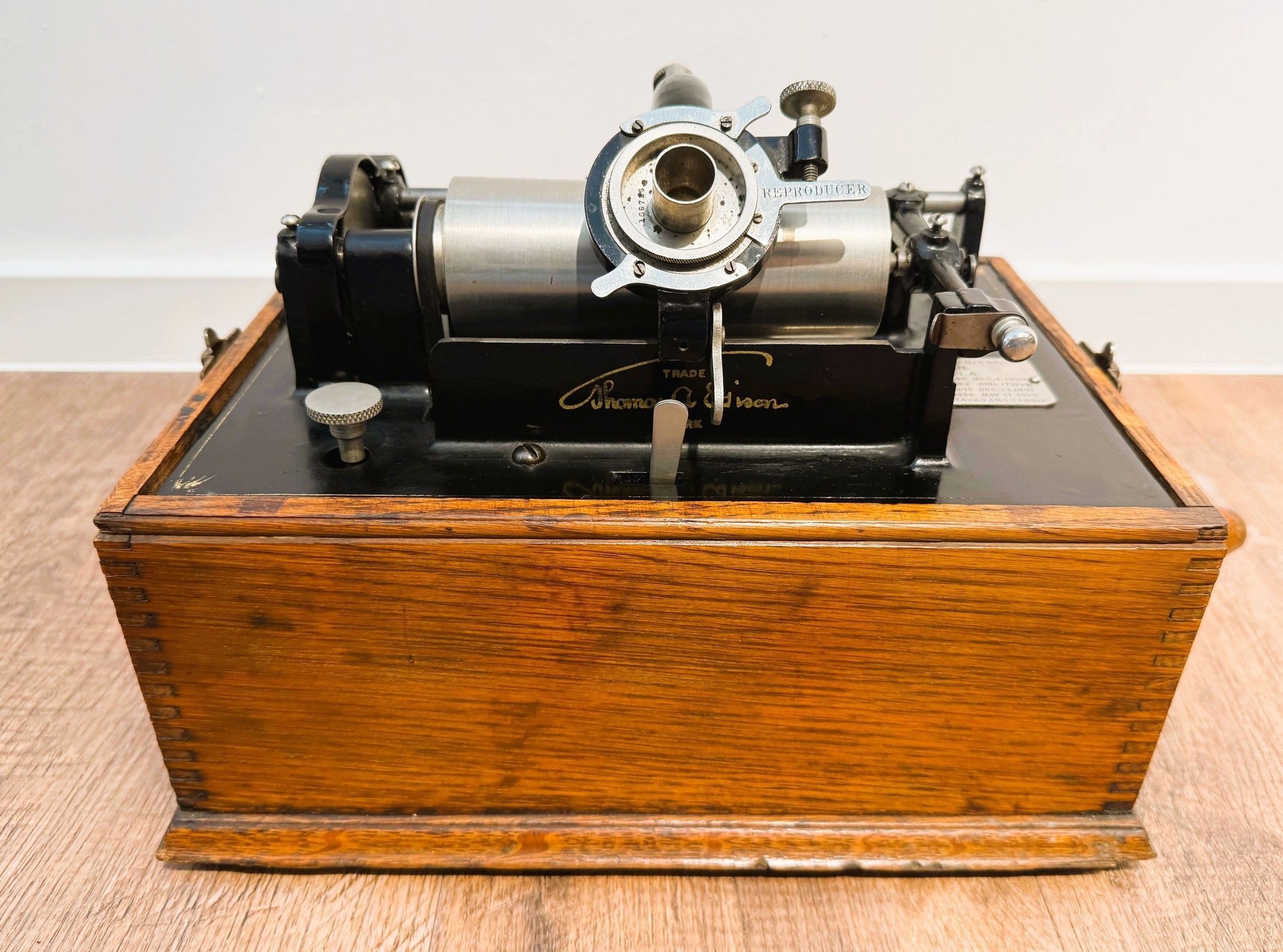
The so-called “suitcase” version refers less to portability in the modern sense and more to the cabinet design:
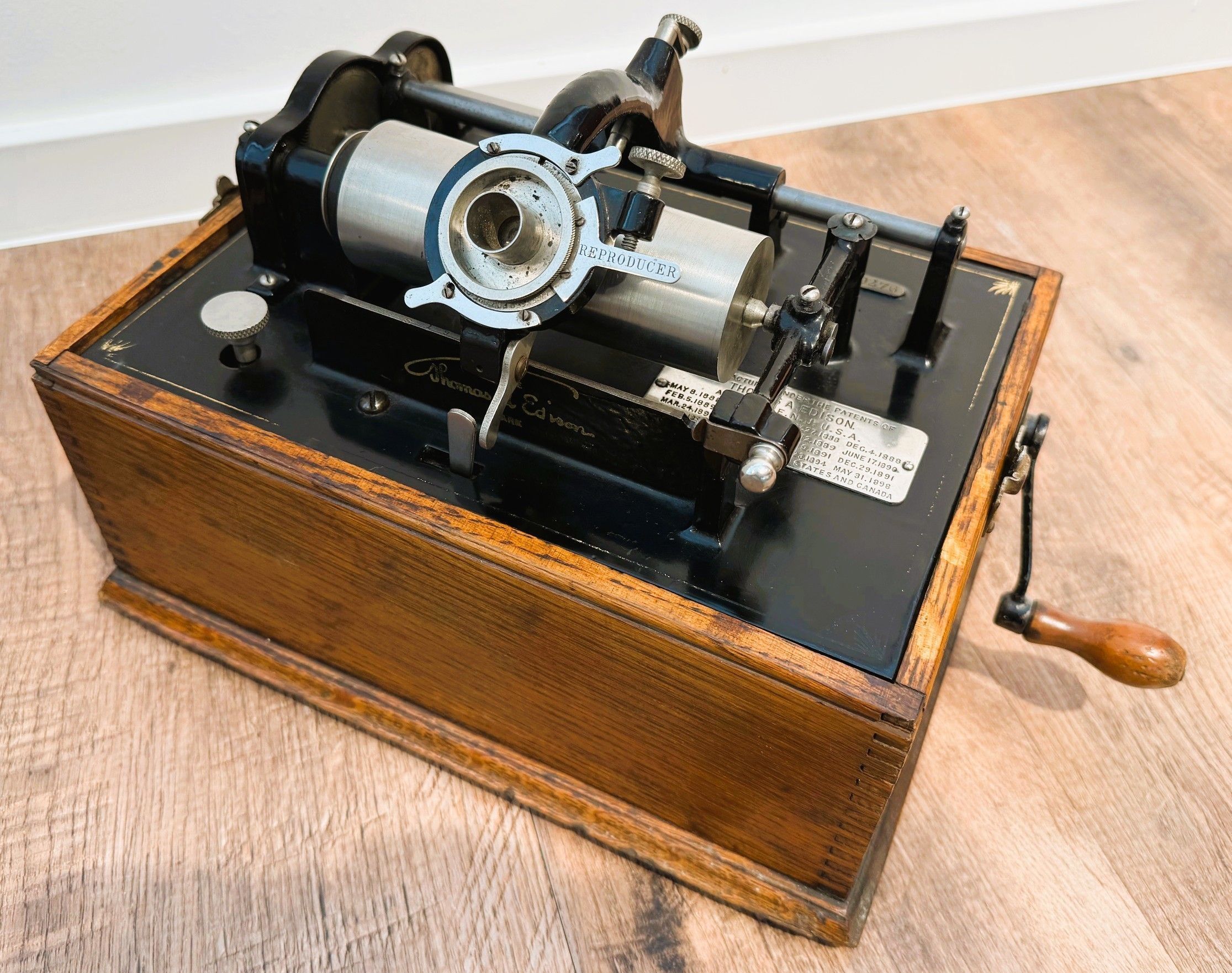
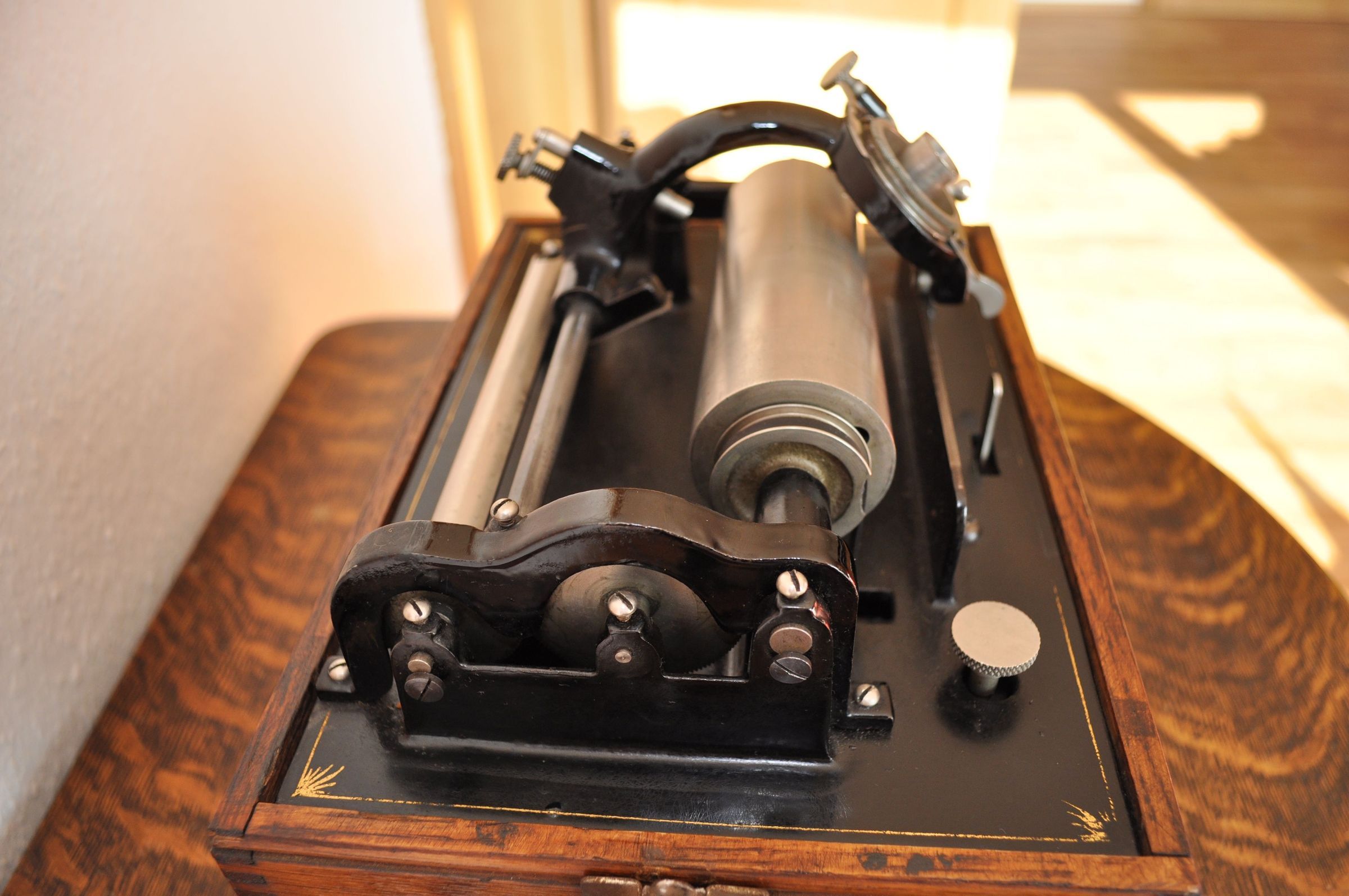
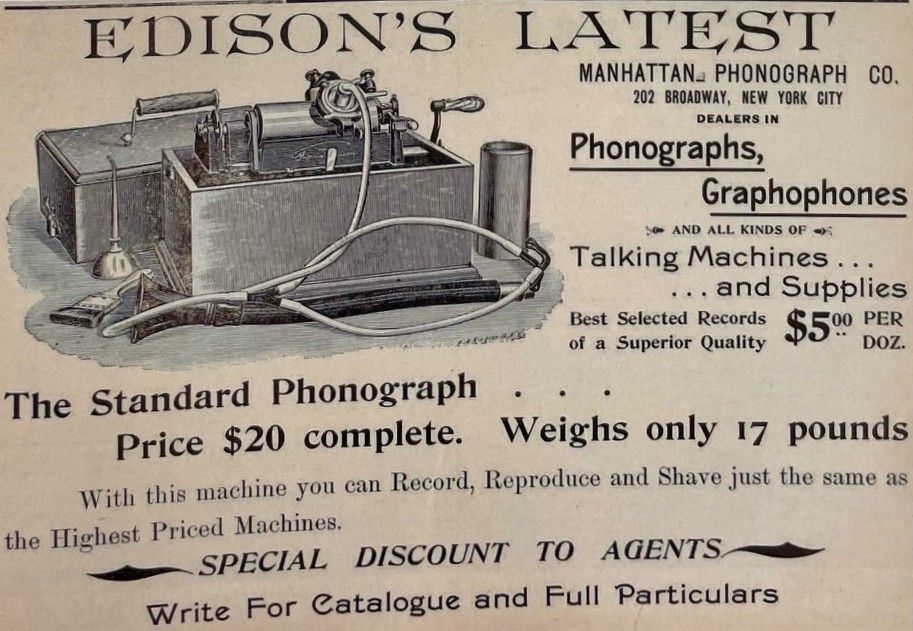
Rectangular oak wooden case with lid
Side clips resembling those of a suitcase
Carrying handle mounted on the lid
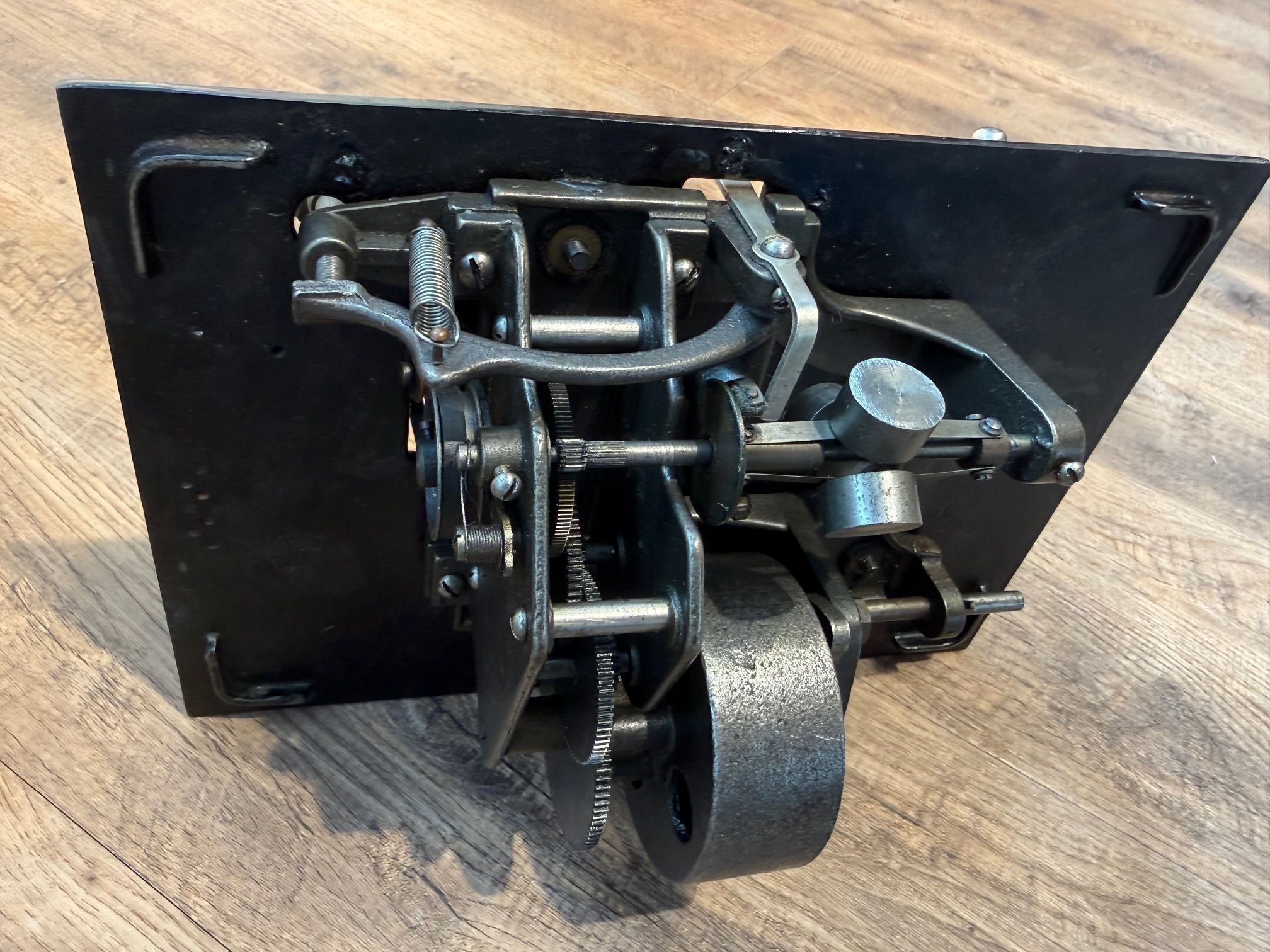
Mechanism resting loosely inside the cabinet, not permanently fixed
Technology and Construction
The Standard Model A demonstrates a construction that is characteristic of Edison, yet technically demanding.
Mandrel and Feed System
A defining feature is the arrangement of the feed mechanism:
The feed screw is positioned behind the mandrel
Mandrel and feed are mechanically coupled
A very fine thread pitch is required
This design differs fundamentally from Graphophone systems, where mandrel and feed are arranged separately.
Disadvantages of this Edison design:
High precision requirements
Sensitive to wear
Mechanically complex
Advantages:
Direct and synchronous tracking without intermediate gearing
Compact Design
A key aspect of the Standard:
It is significantly smaller and more compact than the Edison Home Phonograph.
Shorter overall construction
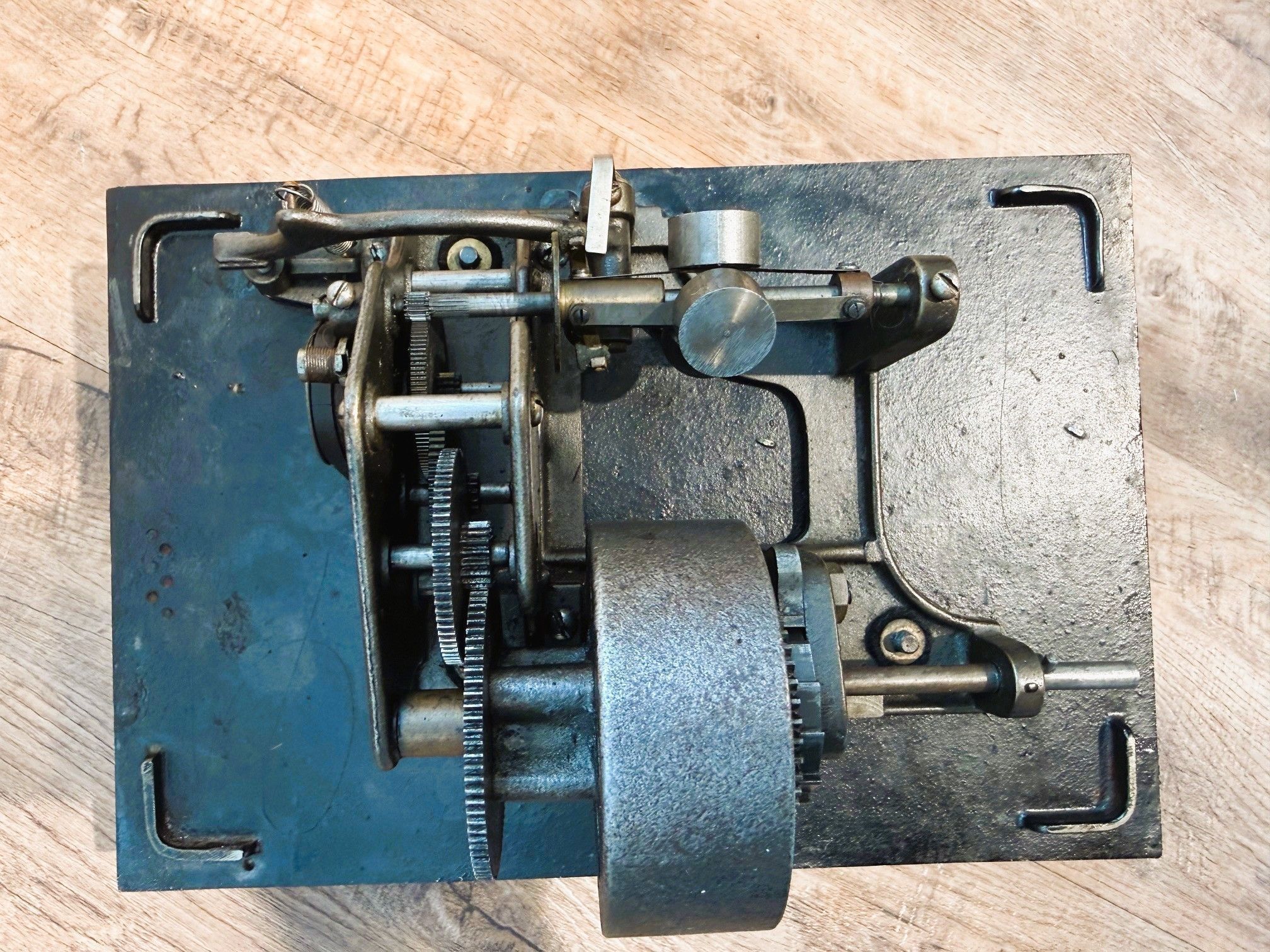
Lighter spring motor
Reduced dimensions
This made the machine:
Less expensive to manufacture
Easier to transport
Affordable for a broader customer base
Additional Technical Features
Spring motor with relatively small mainspring (later enlarged)
Open gearwork without full gear cover
Straight end gate
Mechanism resting in the cabinet without fixed mounting
The machine is designed as a universal device and can:
Record
Reproduce
Shave cylinders
Typical Features of the Early Model A
Early machines such as this example show clear identifying characteristics:
No securing screws in the top plate
Early, model-specific crank
Plain, functional cabinet without decorative elements
Early single-screw speaker support
This phase is marked by ongoing development and variation—the machines were not yet fully standardized.
Significance in Technological Development
The Edison Standard represents a decisive step:
It was the first Edison phonograph consistently designed for:
Cost reduction
Serial production
Broad market penetration
At the same time, it still reflects Edison’s earlier engineering philosophy, particularly the integrated mandrel/feed system—a concept that was later abandoned in favor of simpler designs.
Significance within the Edisonium
This machine represents the moment when Edison successfully brought the phonograph into the mass market.
It documents:
Direct competition with Columbia
The technical independence of the Edison system
The transition from experimental apparatus to industrial mass product
As an early Standard Model A, this example represents not merely a widely produced device, but a key stage in the development of sound recording—compact, functional, and historically highly significant.