Name/Title
Edison Class M – Late Model “Balmoral”Entry/Object ID
117Description
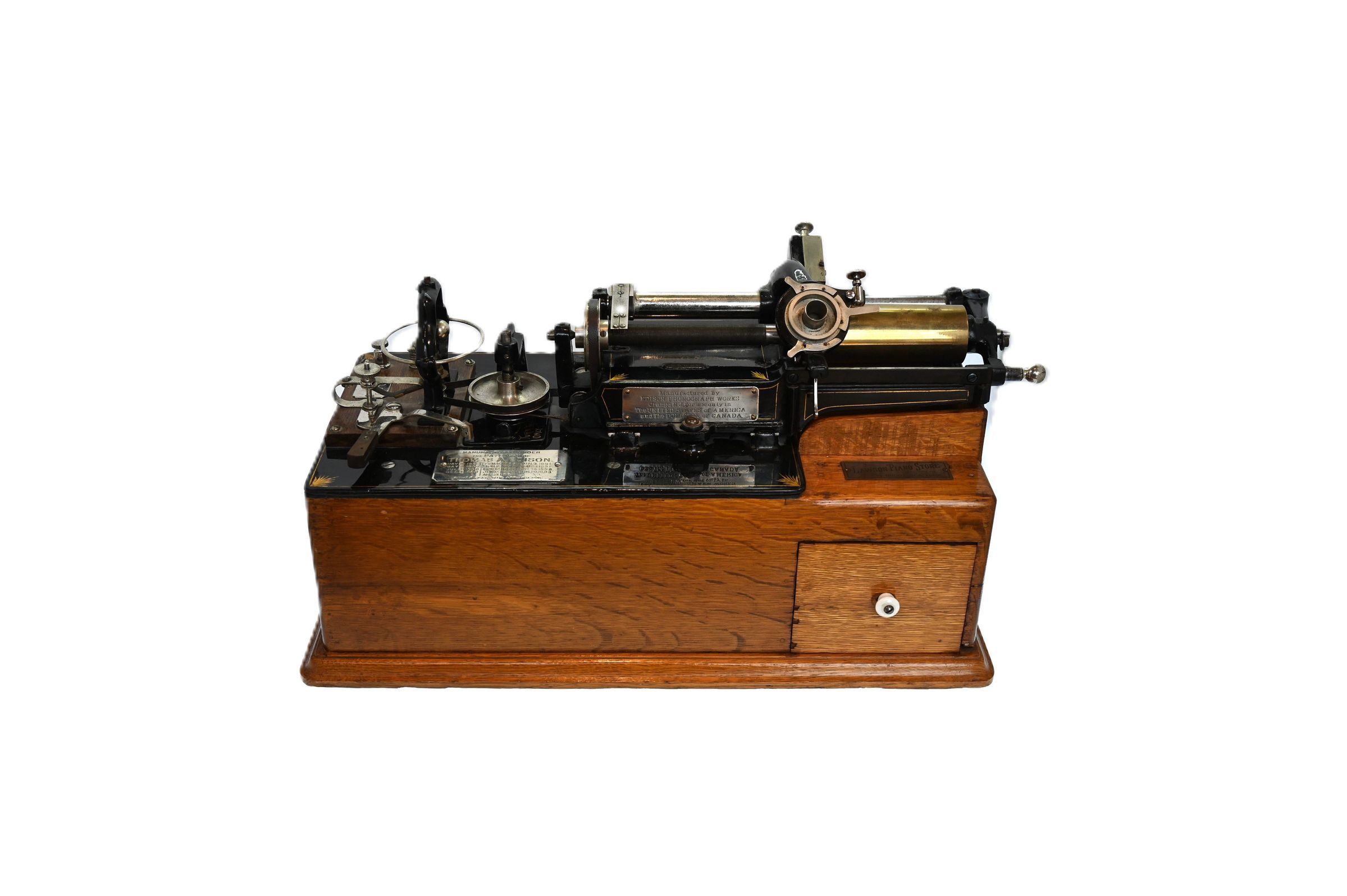
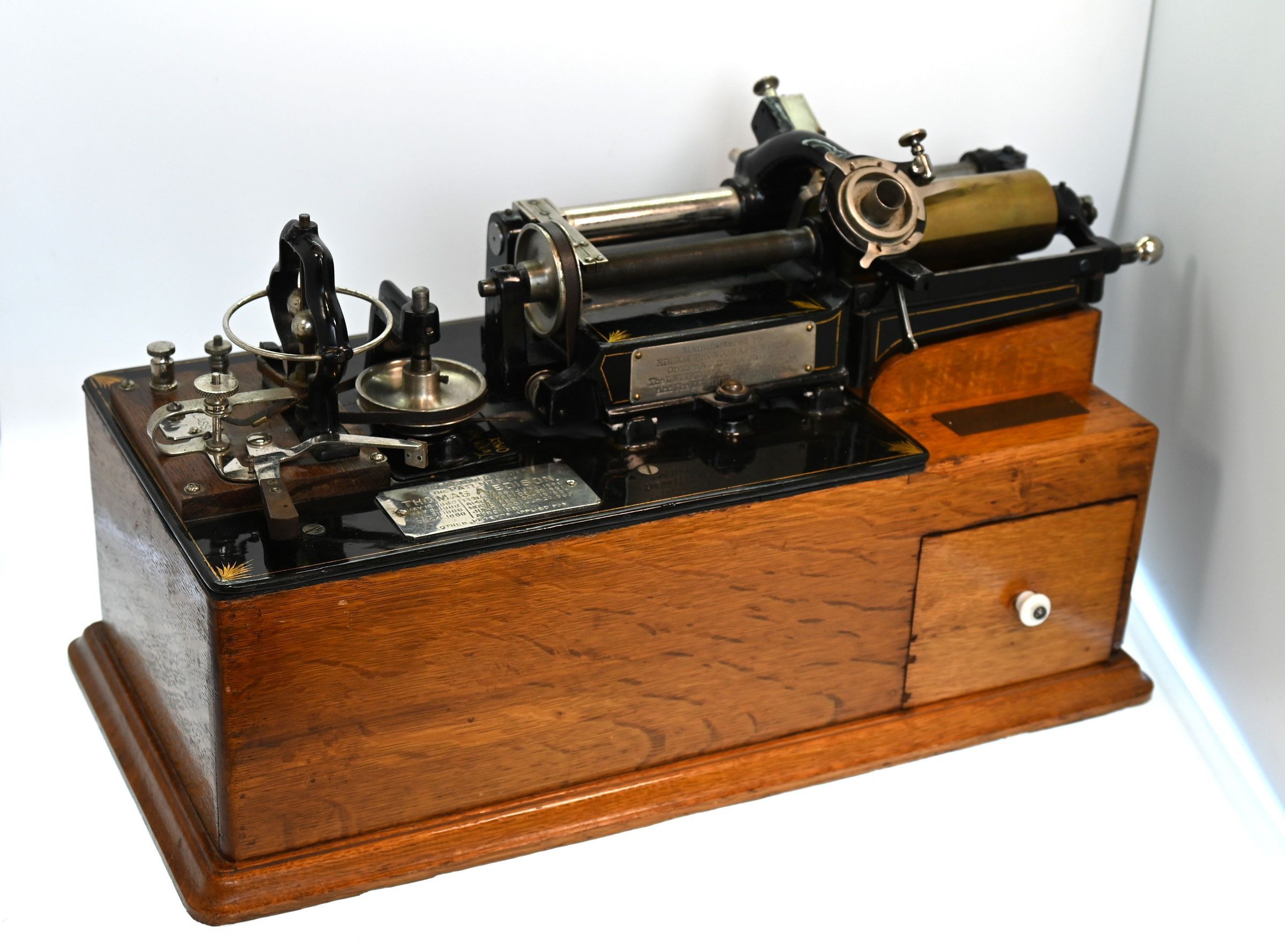
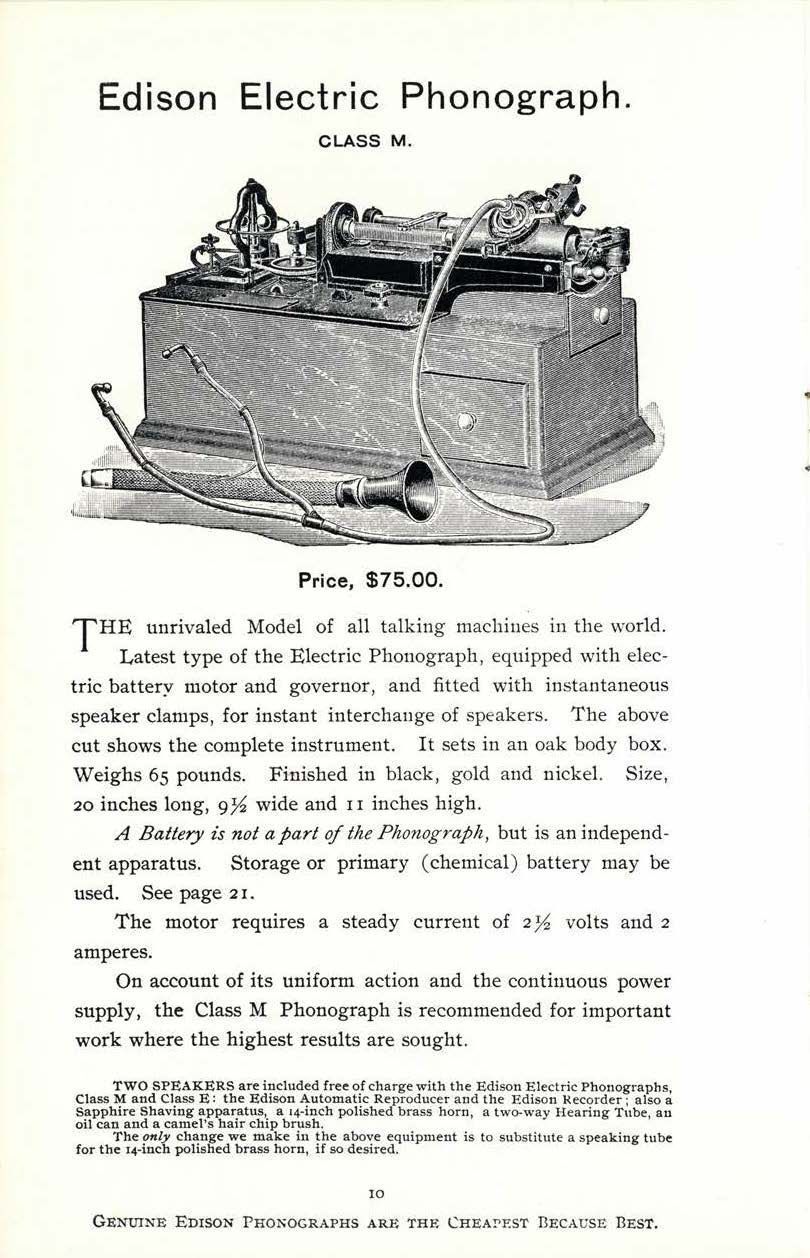
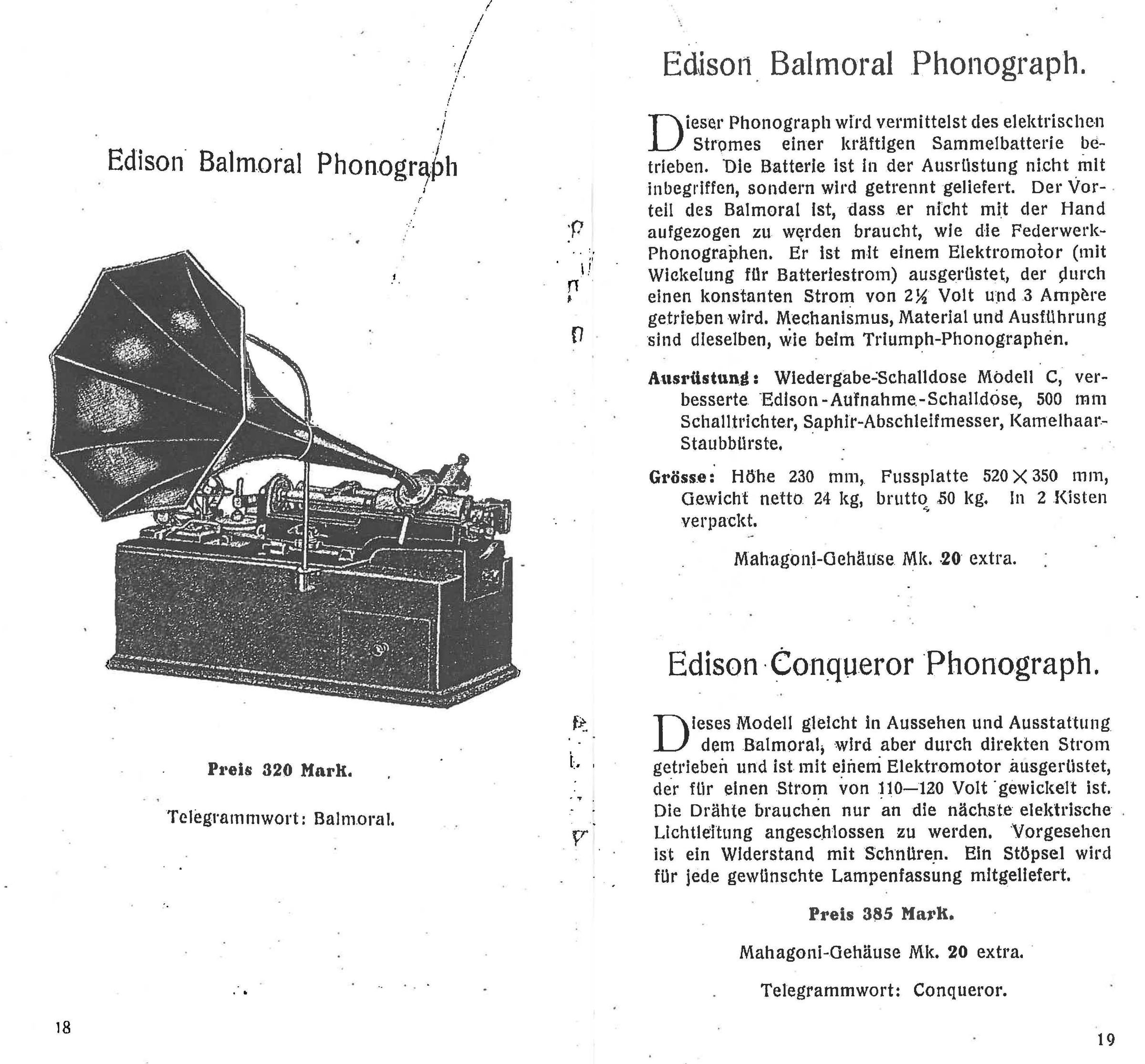
Edison Class M – Late Model “Balmoral”
Edison Phonograph Works, Orange, New Jersey, USA – ca. 1895
Later version of the famous Edison Class M, featuring a solid oak cabinet
Introduction and Development
The Edison Class M was the world’s first commercially produced phonograph with an electric motor. The original version appeared around 1890/91. The device exhibited here represents a later variant, known as the “Balmoral,” which was produced from approximately 1895 and remained on the international market— including in Germany—until around 1910.
While technically very similar to the early Class M, the Balmoral version is distinguished by its elegant oak cabinet and integrated side drawer for accessories.
Technical Specifications and Features
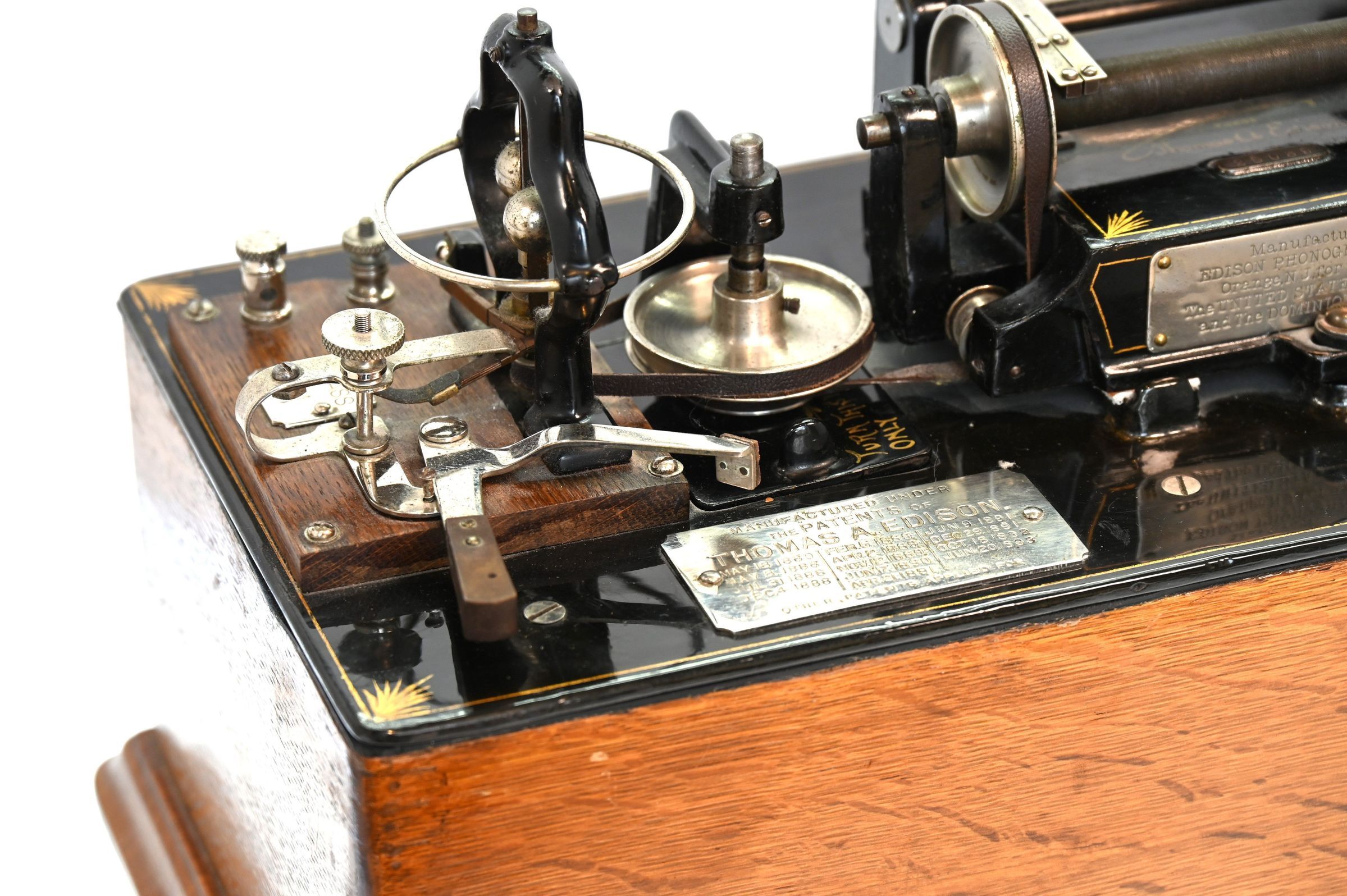
Drive: Electric motor powered by 2.5 volts DC / 3 amperes
Mechanism: Classic Edison cylinder movement with guide bearing, eccentric drive, and automatic feed
Diaphragm: Type C with glass or mica membrane
Cabinet: Finely finished solid oak with built-in drawer
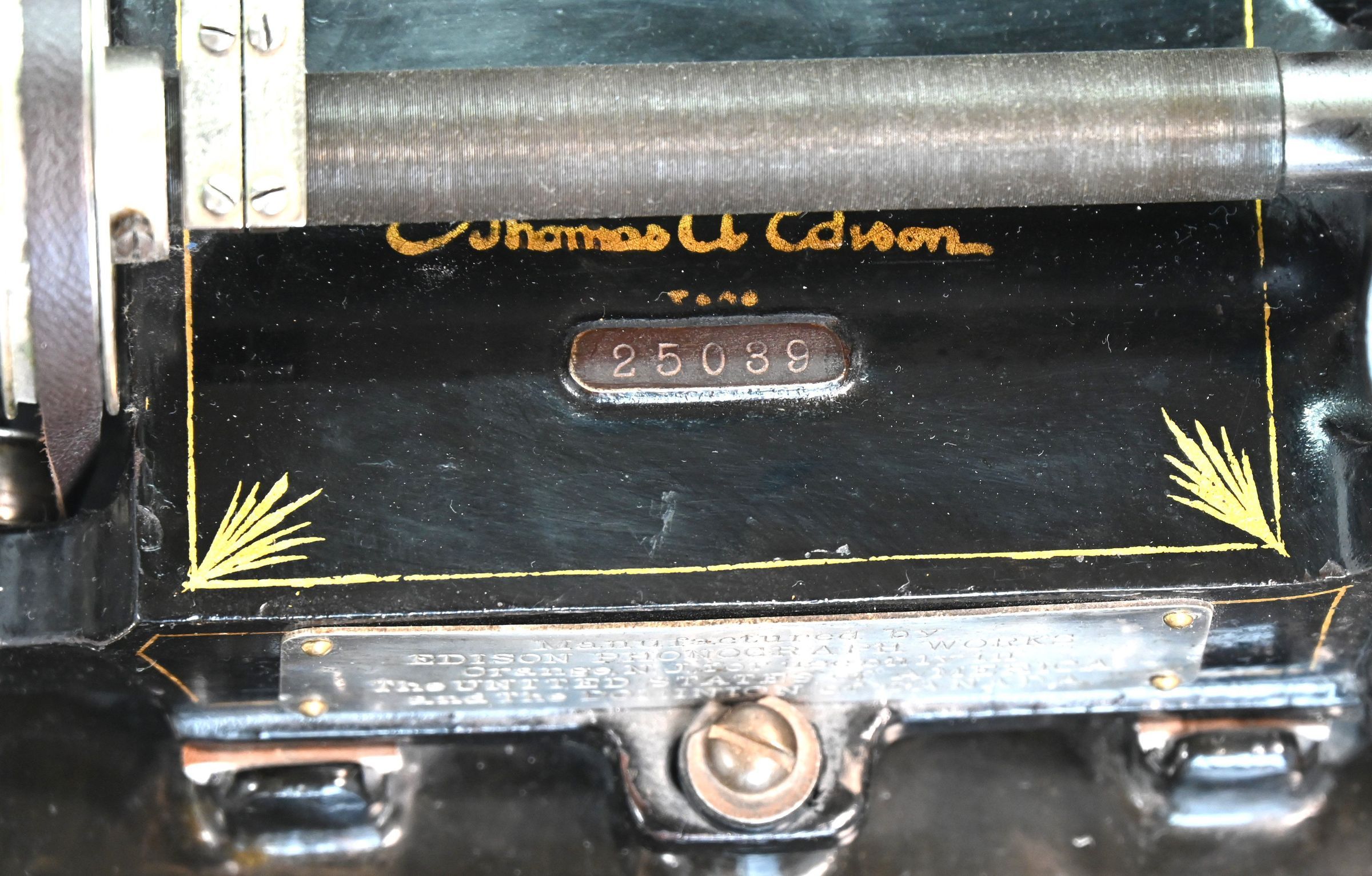
Decorative elements: Black enamel nameplate with gold trim, serial number: 25039
Differences from the Early Class M
The earlier Class M featured a mahogany base with a built-in compartment for wax shavings produced during cylinder recording or playback.
While the original model was primarily marketed as a dictation machine, the later Balmoral version evolved into a phonograph designed for musical playback—suitable for both private and commercial use.
Historical Context
The Edison Class M marked the beginning of electrically powered sound recording devices—making it the direct predecessor of office dictation machines, archival recorders, and eventually, magnetic tape systems.
This particular version was marketed under the name “Balmoral” in the USA, the UK, and Germany—likely named after the Scottish royal residence to evoke prestige and quality.
Rarity
Compared to more common models like the Edison Triumph or Standard, the Class M is extremely rare—especially in this late “Balmoral” configuration.
The specimen on display at the Edisonium, bearing serial number 25039, is fully original—retaining all labels, finishes, and technical components. It stands as an outstanding example of Edison’s engineering excellence and design aesthetics at the close of the 19th century.