Name/Title
Lioret “Eureka” Skelett PhonographEntry/Object ID
166Description
Henri Lioret, Paris, ca. 1898–1899
Historical Background
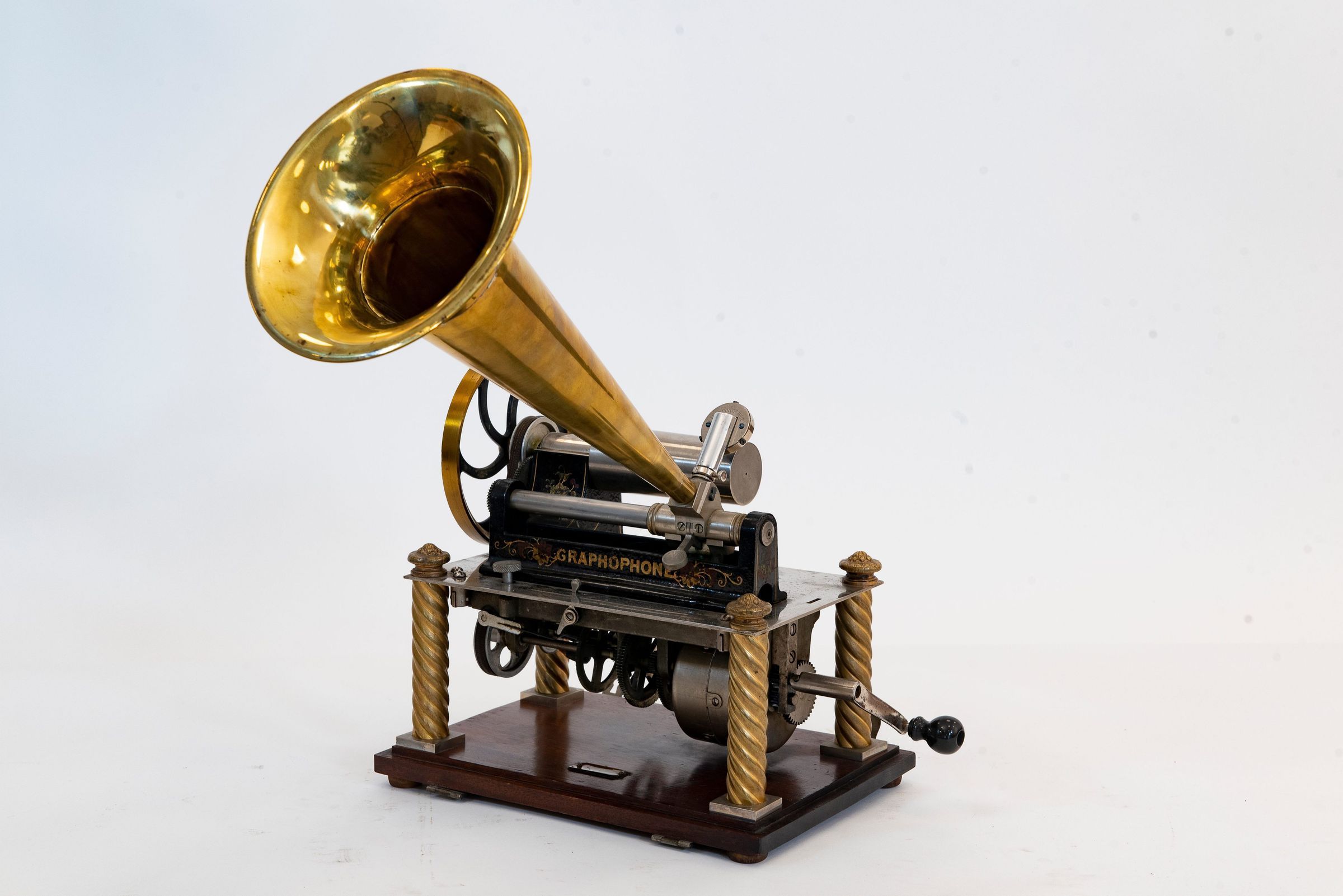
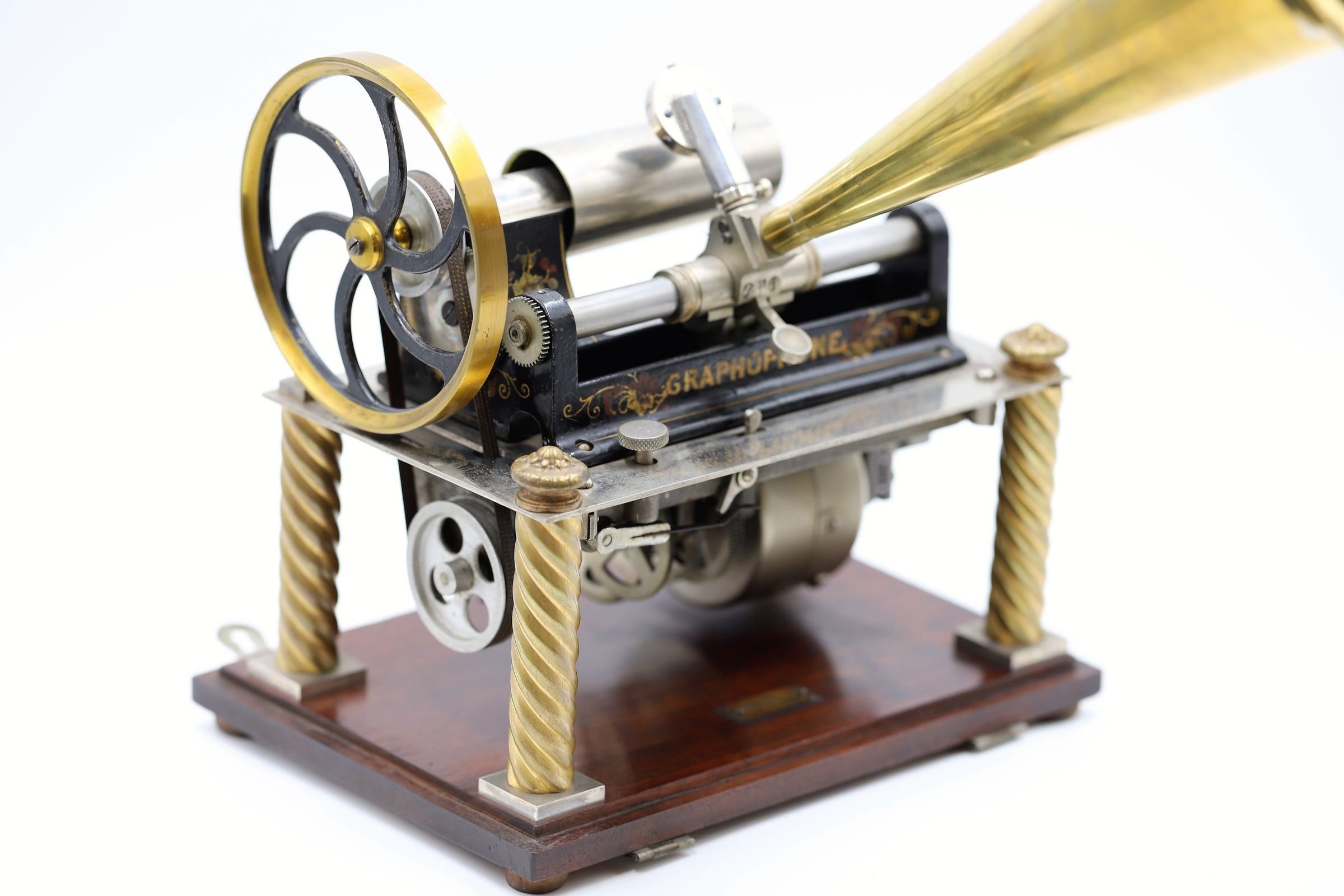
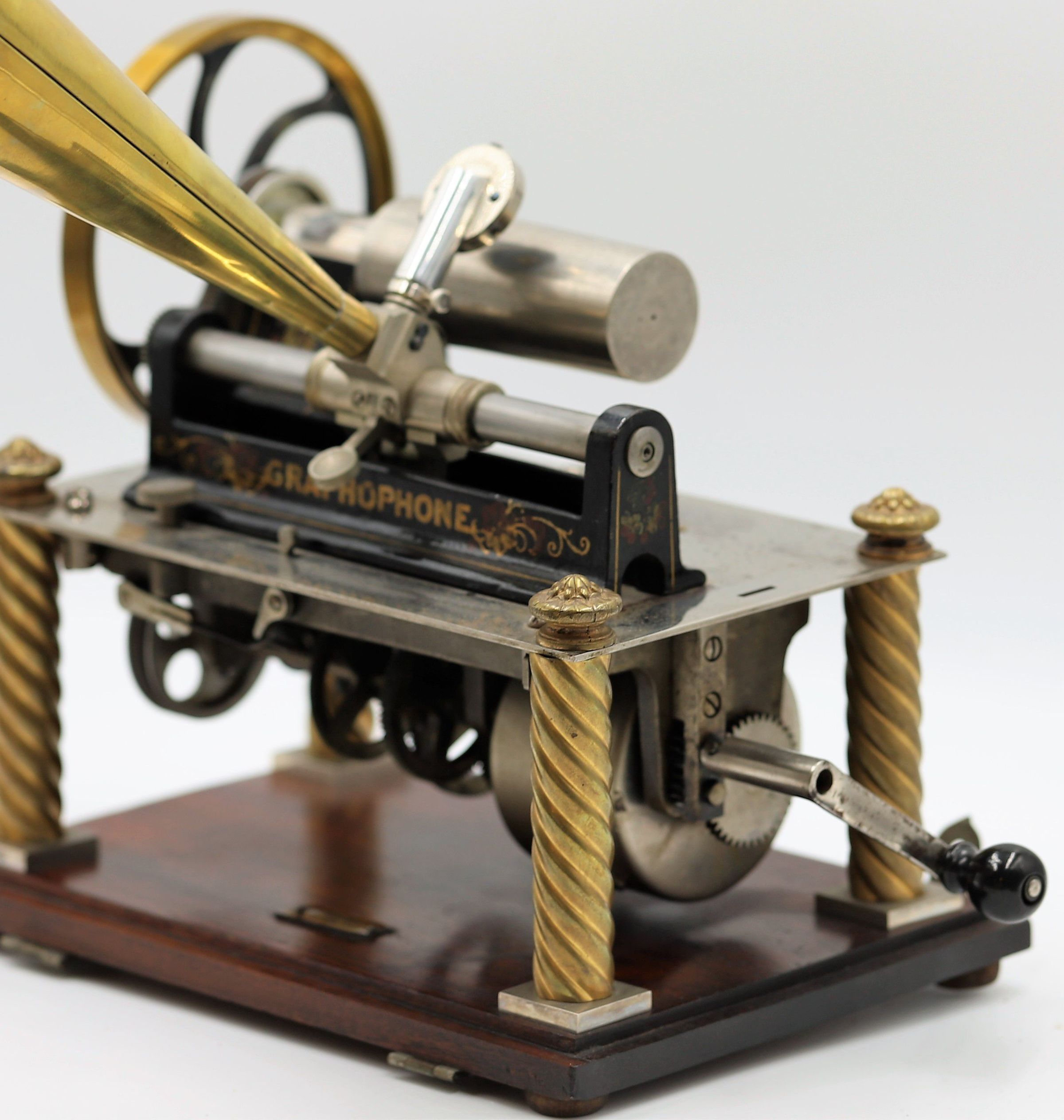
Henri Lioret (1848–1938), originally a clockmaker in Paris, ranks among the most creative and independent inventors of early phonography. He was the first to introduce celluloid cylinders on an industrial scale – robust, durable, and dimensionally stable. With the “Eureka,” introduced around 1898, Lioret presented his most advanced spring-driven model. It combined technical precision with the refined elegance of the fin de siècle: twisted columns, a solid wooden base, and finely crafted metalwork.
The “Eureka” was initially produced in limited numbers but was already featured prominently in the 1899 catalog as a flagship model. Because of its high price and luxury finish (around 400–500 francs), however, it was commercially unable to compete with the more affordable Pathé or Edison machines.
Technology and Features
Drive: powerful spring motor with a large flywheel, exceptionally smooth and quiet, providing up to 15 minutes of play on a single winding.
Cylinders: capable of playing both Lioret’s own celluloid “Eureka” cylinders (over 4 minutes playing time) as well as standard wax cylinders from 1899 onward.
Reproducer & Horn: special Lioret reproducer; often paired with a two-piece aluminum horn or, as in the Edisonium example, with a Columbia brass horn.
Construction: distinctive twisted (torsaded) columns, wooden case with oval maker’s plate, and finely adjustable governor.
Rarity and Significance
The Lioret “Eureka” is regarded as one of the rarest French phonographs of the turn of the century. Because of its high cost, only a few units were ever sold. Contemporary sources praised it as “the most perfect device of its era.”
Today only a very small number of original “Eureka” phonographs survive worldwide, mostly in museums or major private collections. The example on display at the Edisonium is a second version (“à ressort”) with the characteristic twisted columns – an authentic document of Lioret’s pioneering role in the development of durable celluloid sound carriers and luxurious talking machines.
Rarity and Significance
The Lioret “Eureka” is regarded as one of the rarest French phonographs of the turn of the century. Because of its high cost, only a few units were ever sold. Contemporary sources praised it as “the most perfect device of its era.”
Today only a very small number of original “Eureka” phonographs survive worldwide, mostly in museums or major private collections. The example on display at the Edisonium is a second version (“à ressort”) with the characteristic twisted columns – an authentic document of Lioret’s pioneering role in the development of durable celluloid sound carriers and luxurious talking machines.