ca. 1908. Prototype with Higham Reproducer – Only Known Example Worldwide
Historical Background
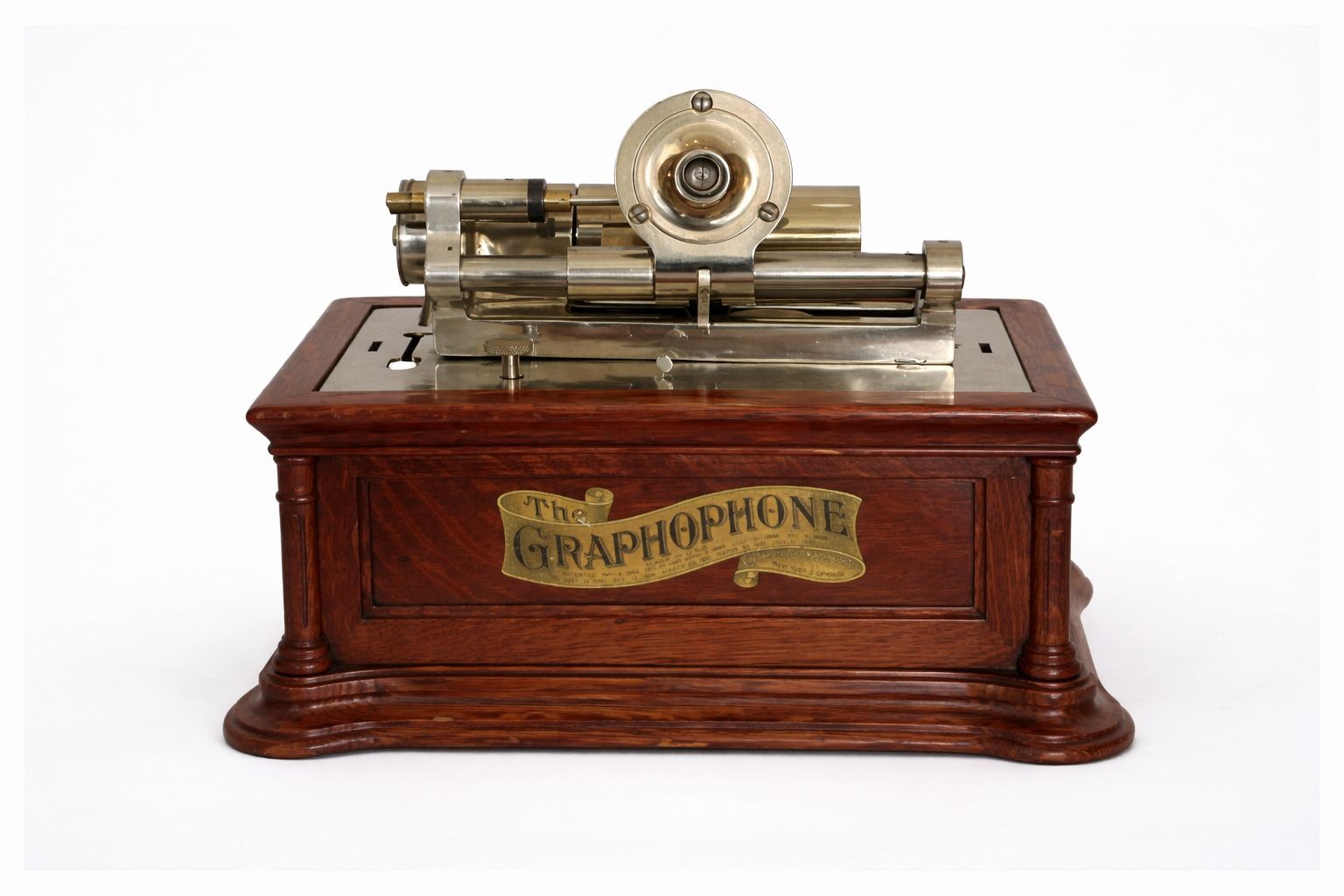
This device was developed around 1908 in the laboratories of the American Graphophone Company as a prototype. It was likely intended as a more affordable and compact alternative to the well-known but heavy and expensive Graphophone "BC."
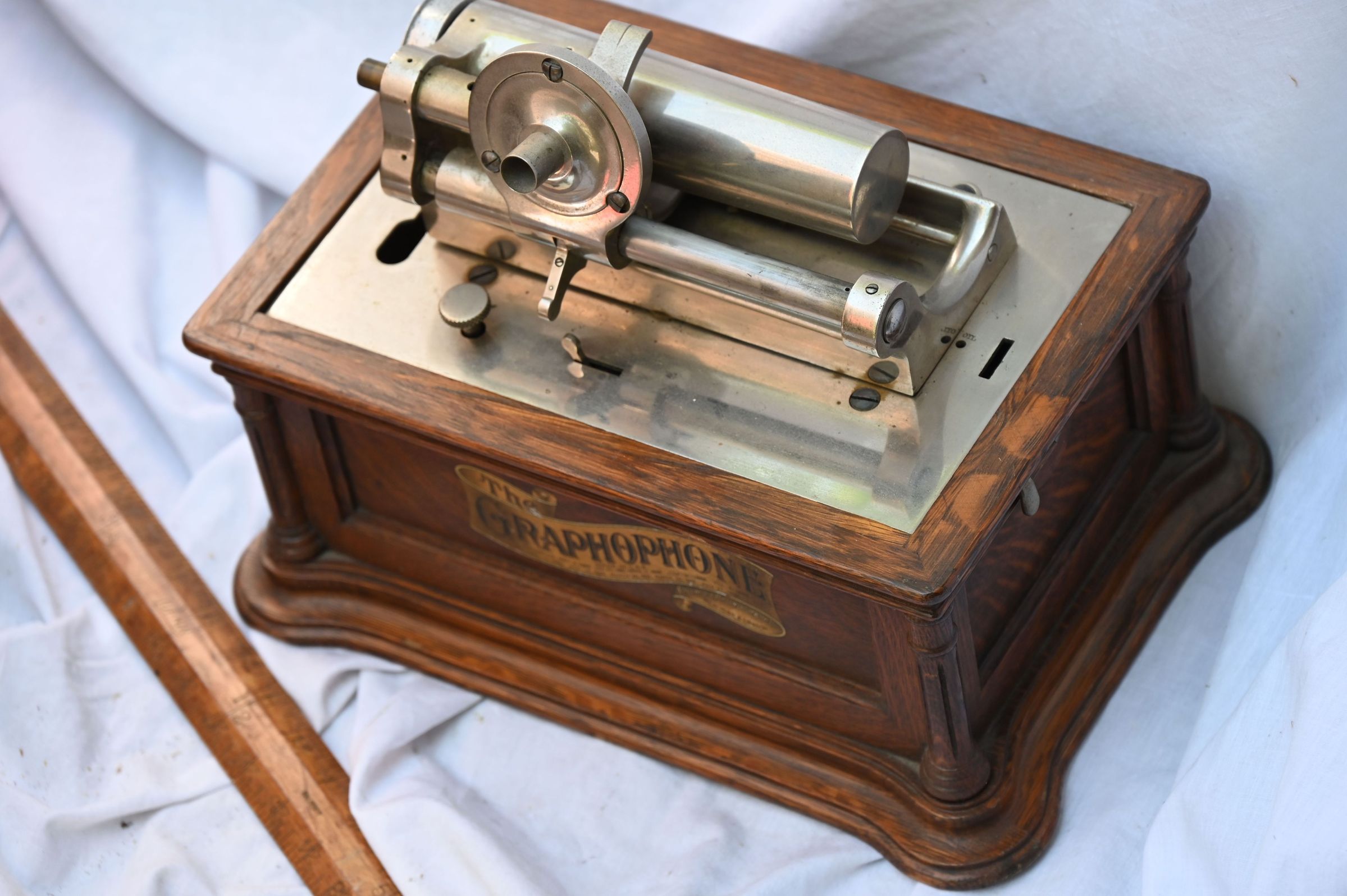
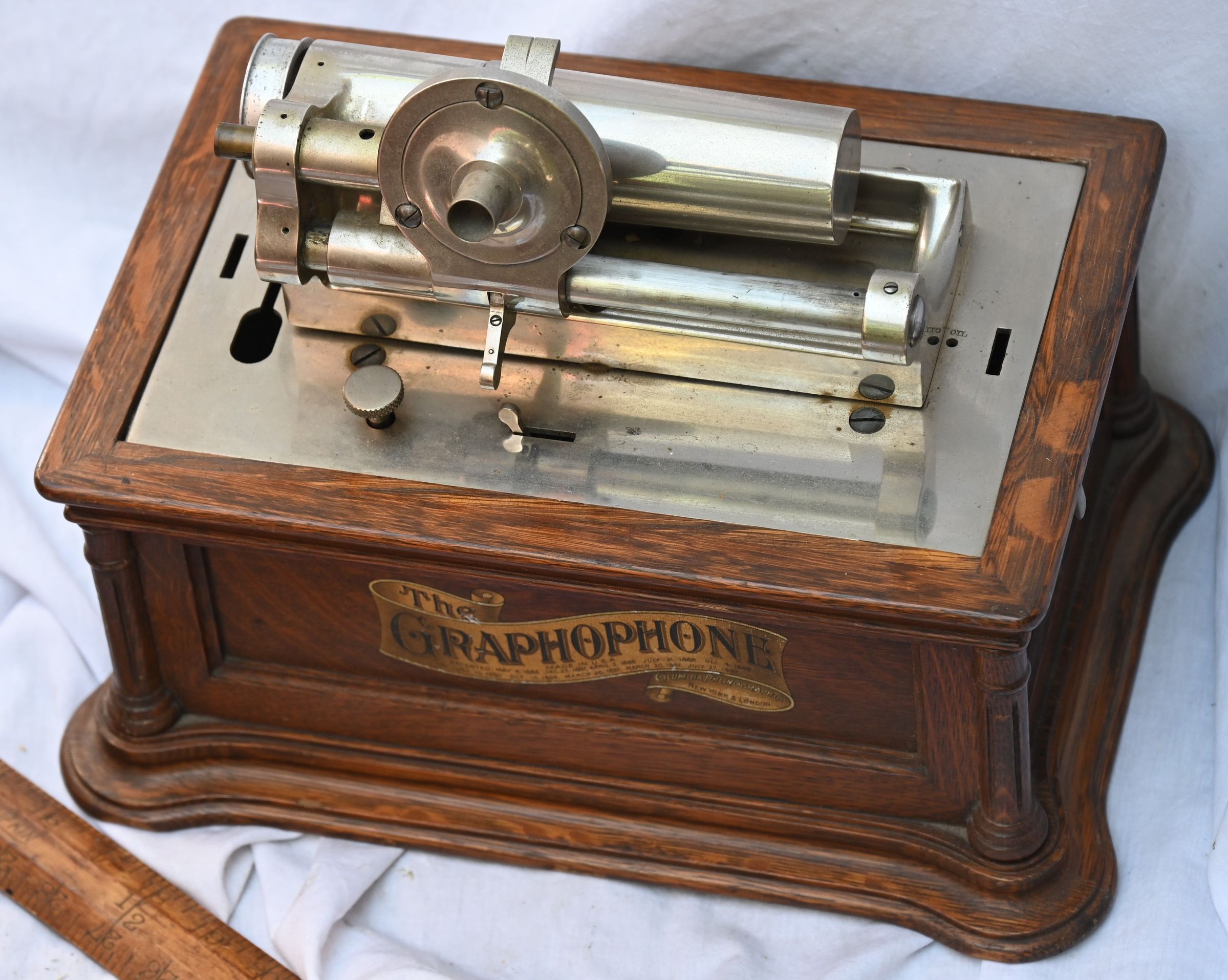
The "Mini BC" combines the technical features of the larger Higham machines in a much smaller format – mechanically sophisticated, yet clearly more compact. The model never went into production, as Columbia ultimately decided on the larger Graphophone "BM," which was officially marketed.
Only this one example is known to exist – a true laboratory piece.
Technical Features
Chassis: Fully nickel-plated construction, highly polished, with a solid front plate.
Mandrel: Extra-long mandrel for 6-inch cylinders, suitable for both 2- and 3-minute recordings.
Motor: Triple-spring drive mechanism, likely identical to that of the “BE” model, with a runtime of approximately 8 minutes.
Reproducer: Modified Higham reproducer with a 2¼ inch diameter – a mechanically amplified sound system for improved volume and clarity.
Mechanism: All gears and screws fully enclosed beneath the baseplate for quiet and protected operation.
Cabinet: Oak wood cabinet styled after the “BF” model, with a beveled base, inset side panels, and turned corner columns.
Classification & Significance
The "Mini BC" could have filled a market gap: a lighter machine with high-end technology at a lower price – presumably around $50. However, both technical and strategic market shifts prevented its commercial release:
The introduction of the 4-minute Amberol cylinder (by Edison)
Columbia’s acquisition of the entire cylinder stock of the Indestructible Phonograph Company (eliminating the need for Higham-based systems)
Growing focus on new disc-based phonographs
This model stands as a fascinating bridge between the classic wax cylinder era and the innovations emerging around 1908. The example on display at the Edisonium Mariazell is a technological artifact from a transitional moment in phonographic history – precisely crafted, yet never commercially released.
A true one-of-a-kind – unmatched anywhere in the world.