Name/Title
Graphophone Multiplex Grand – Carriage from the 1904 ModelEntry/Object ID
189Description
Graphophone Multiplex Grand – Carriage from the 1904 Model
American Graphophone Company, Bridgeport, Connecticut, USA – exhibited at the St. Louis World’s Fair 1904
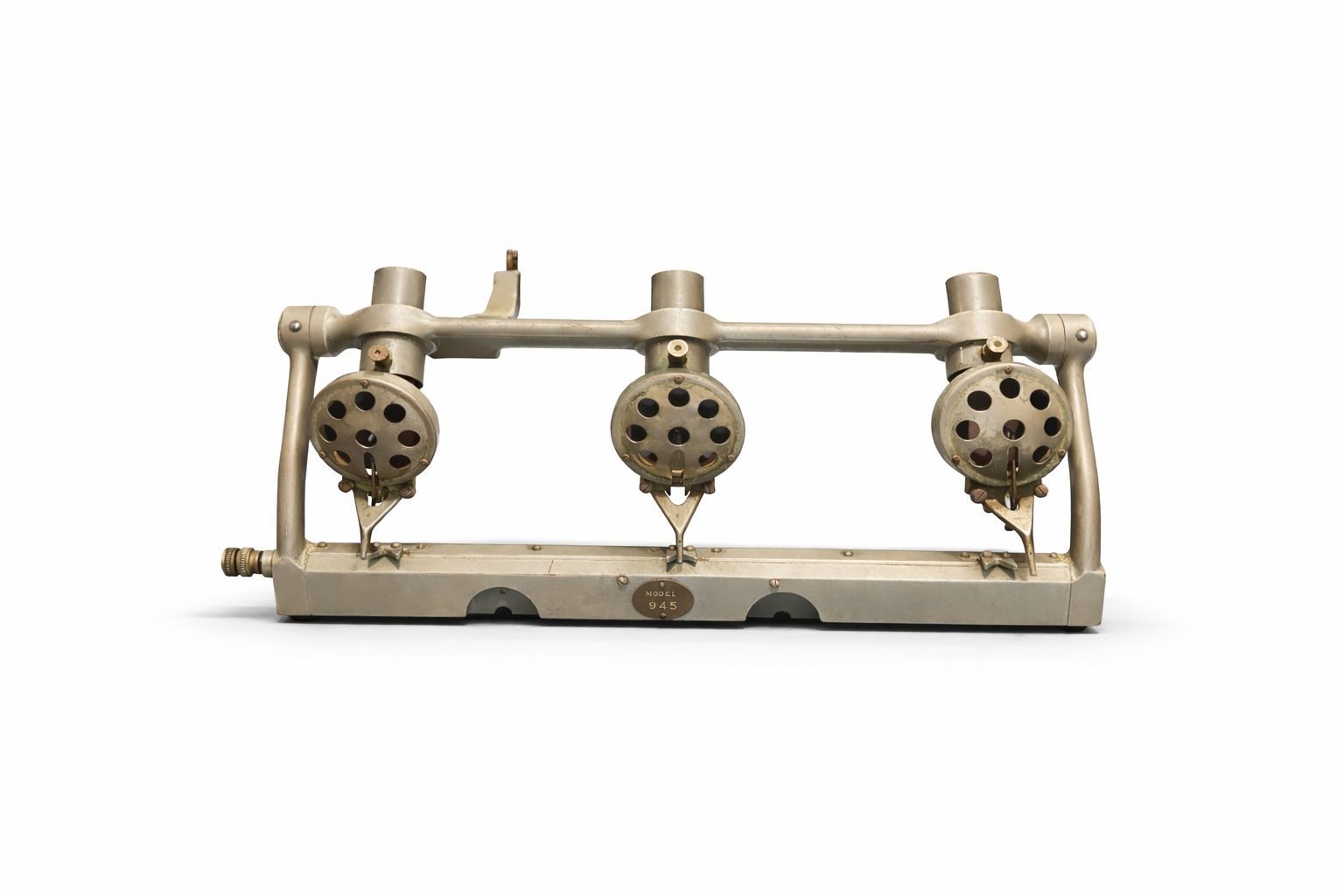
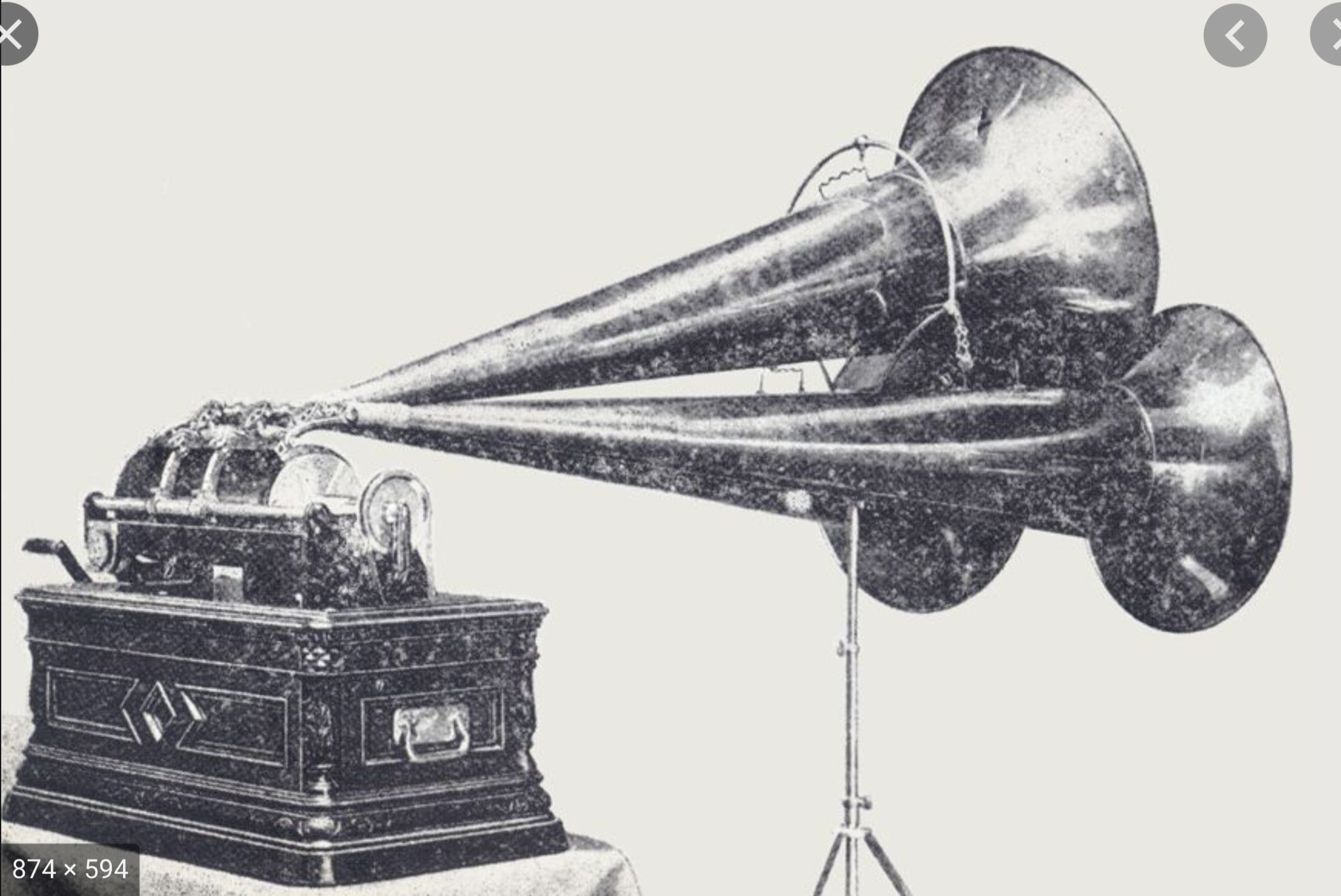
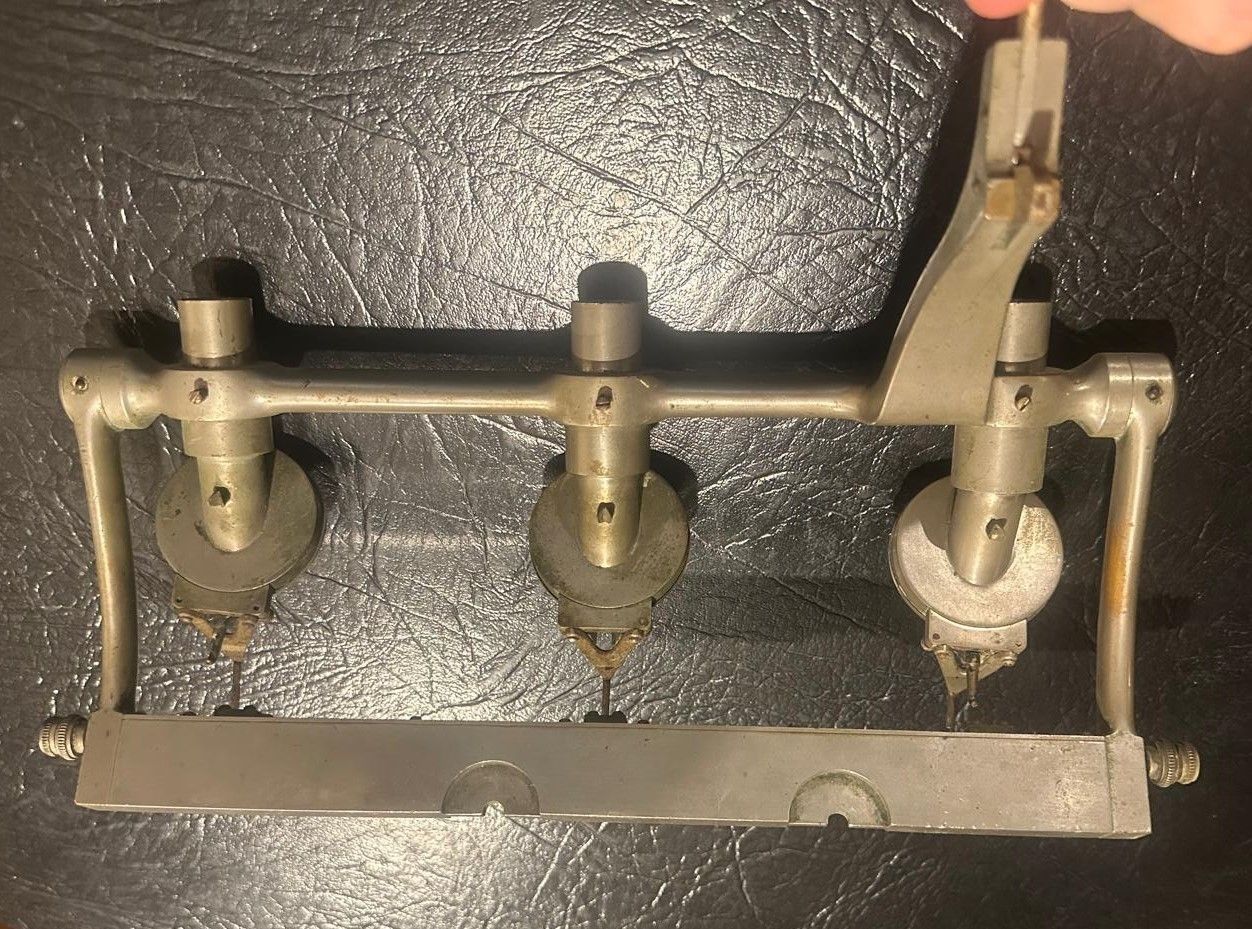
This unique component is the only known surviving remnant of the monumental Graphophone Multiplex Grand of 1904. The machine was developed by the American Graphophone Company specifically for the St. Louis World’s Fair and was an advanced successor to the 1900 Multiplex Grand, an example of which is on display here at the Edisonium.
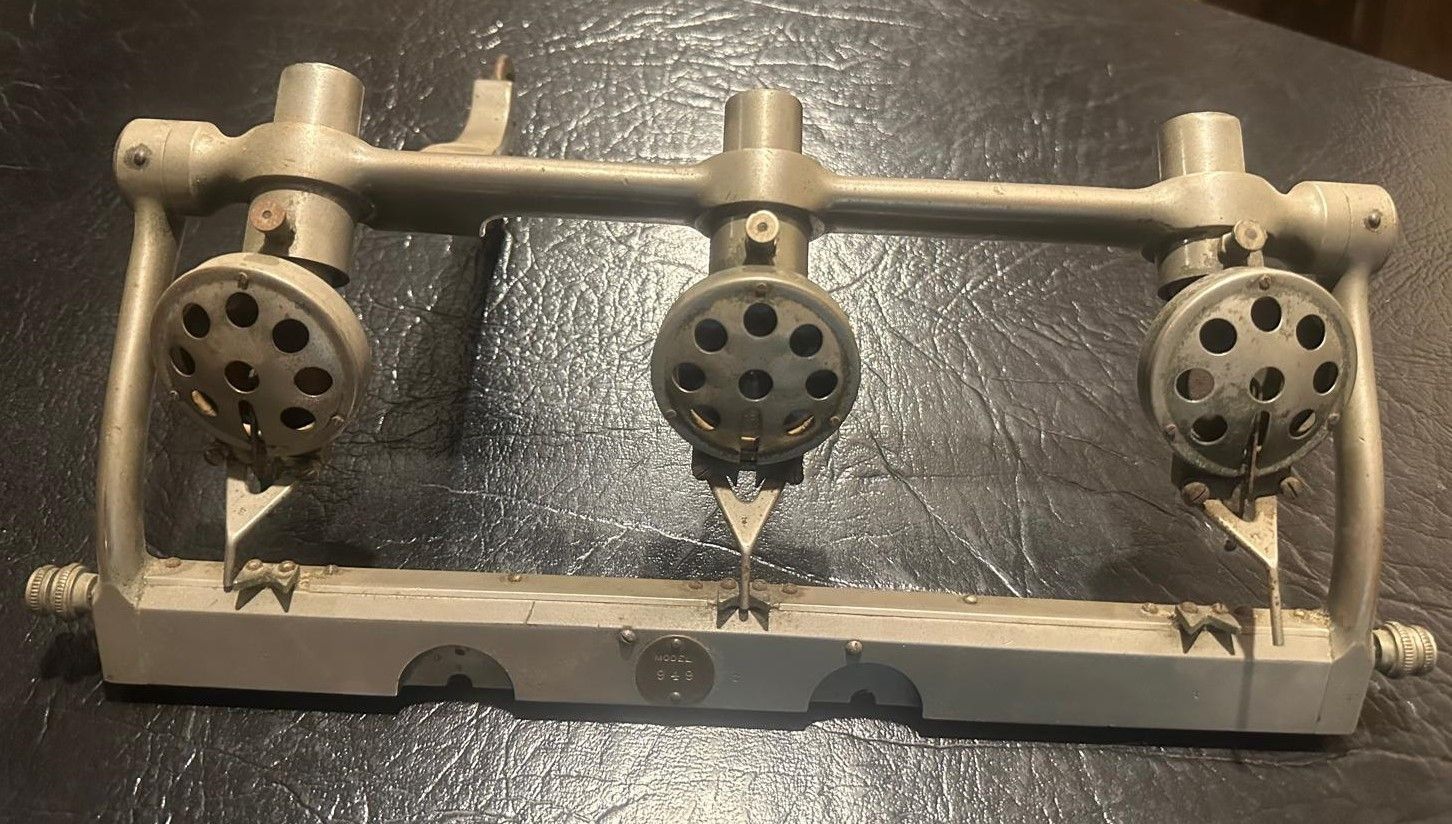
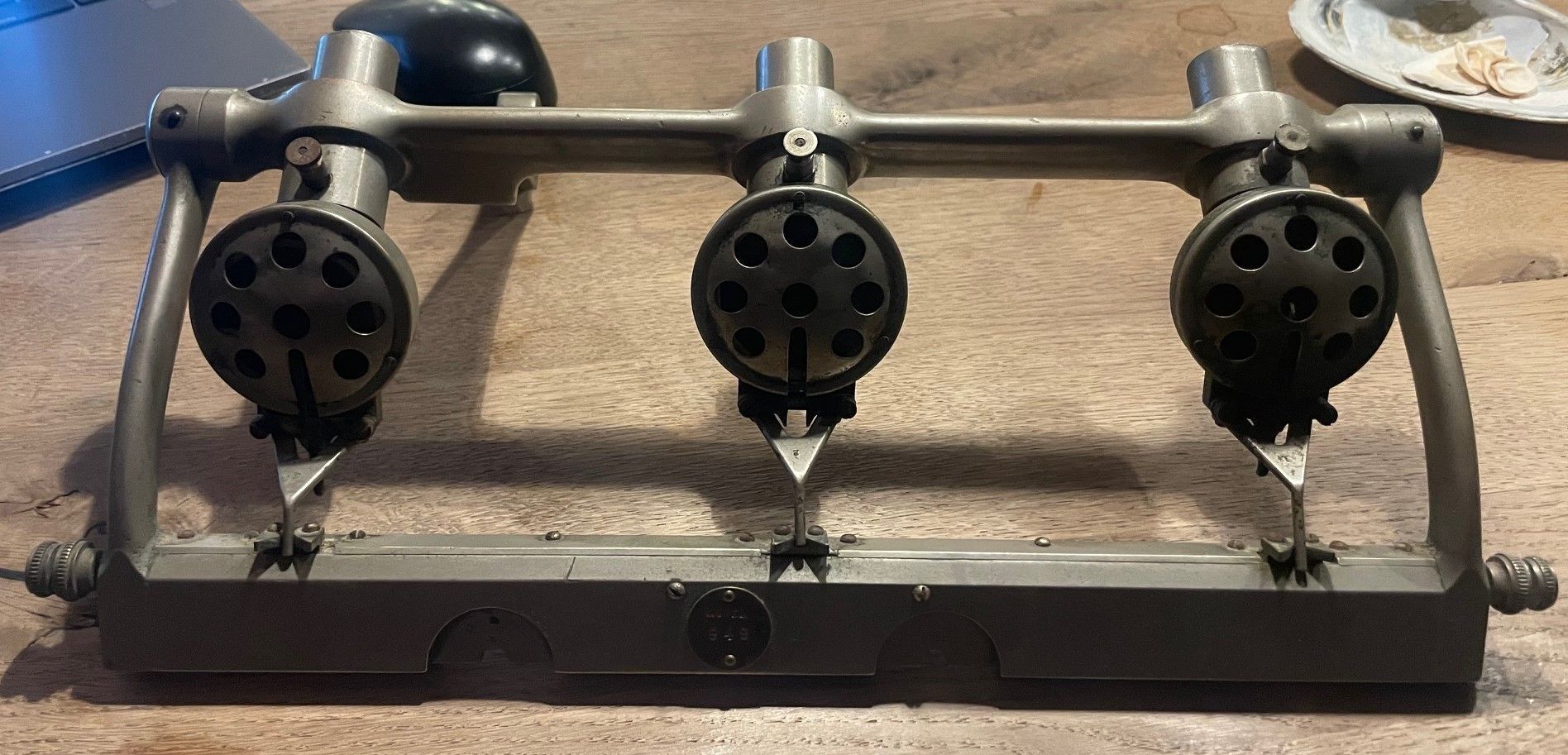
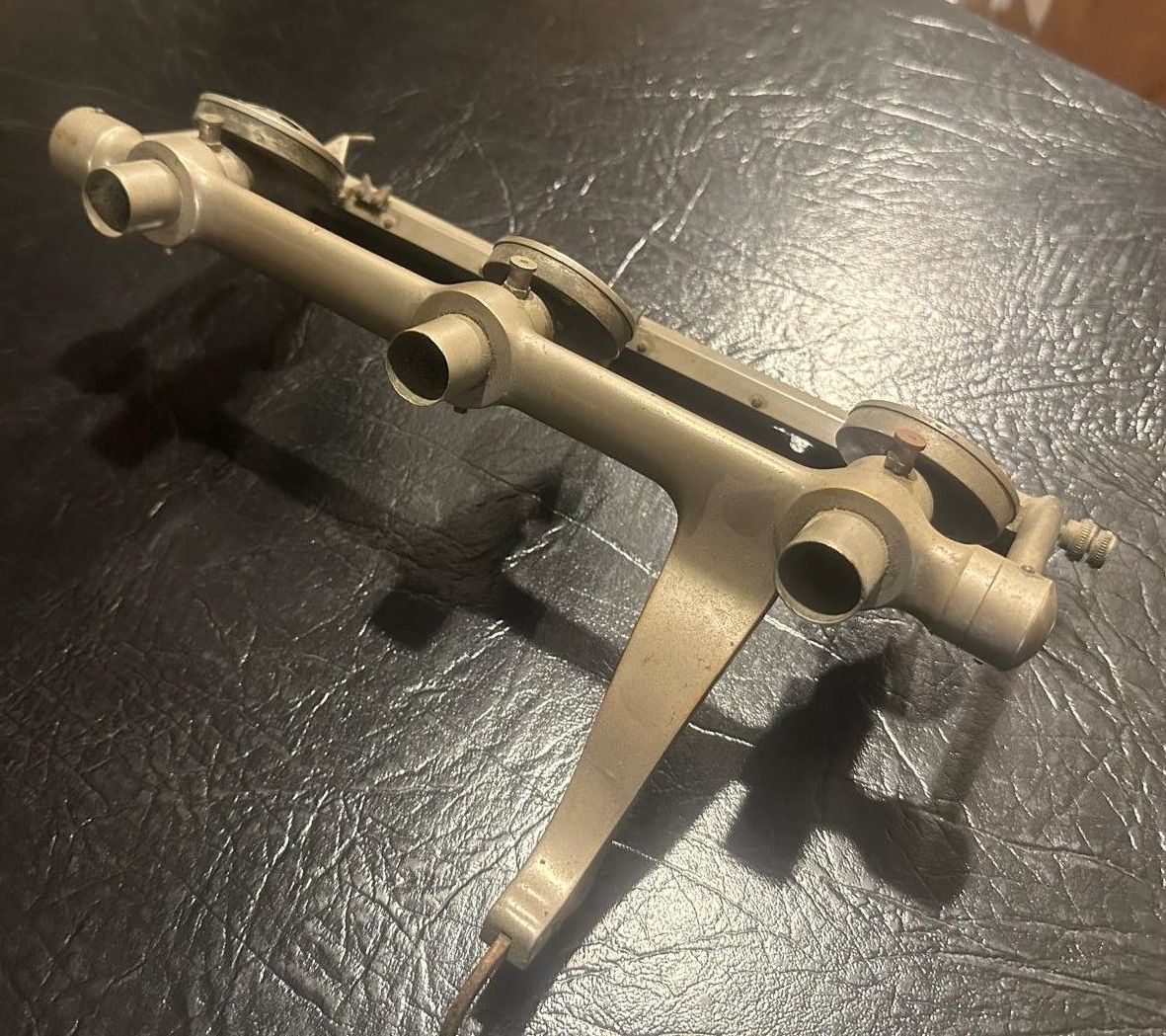
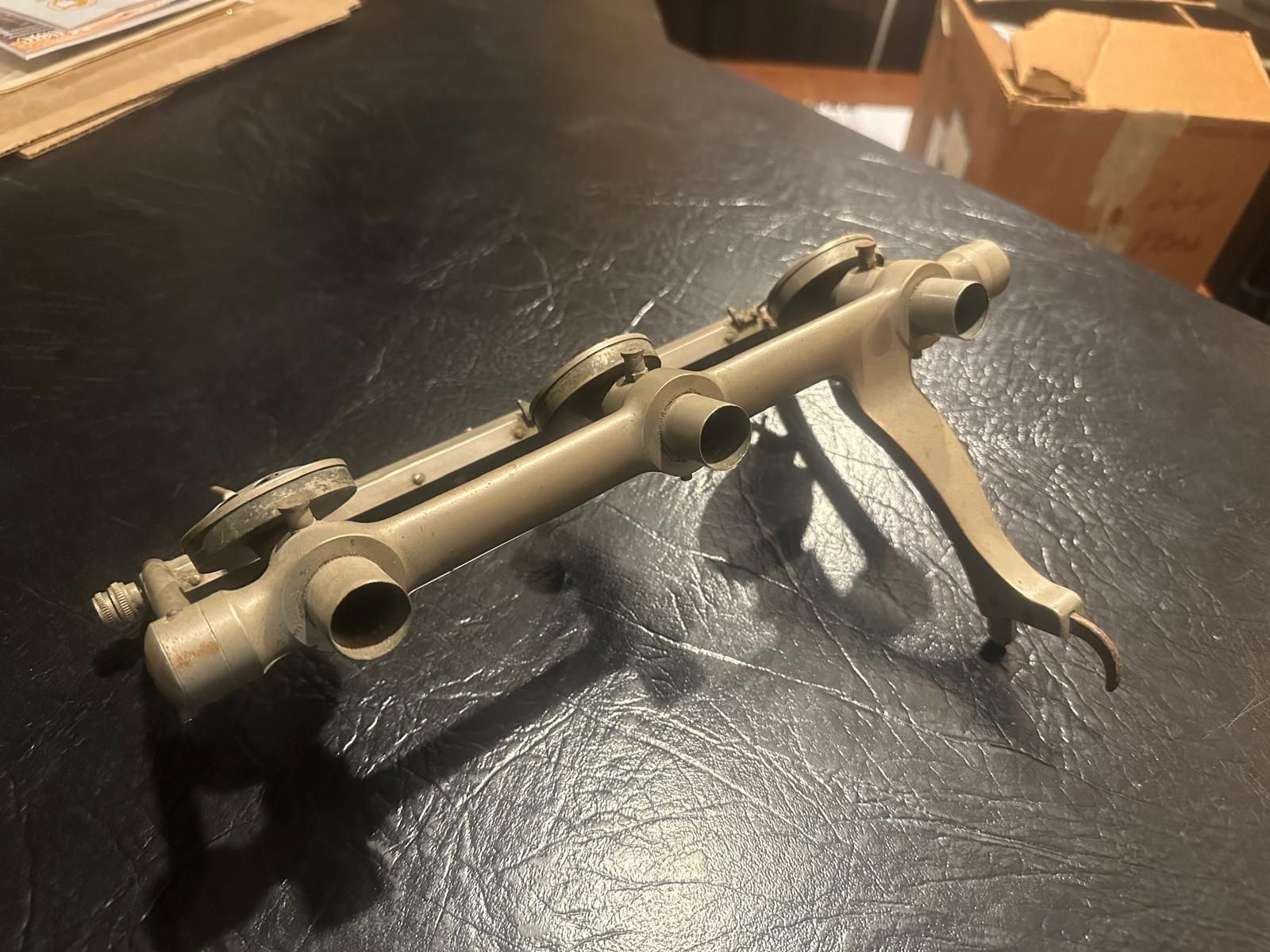
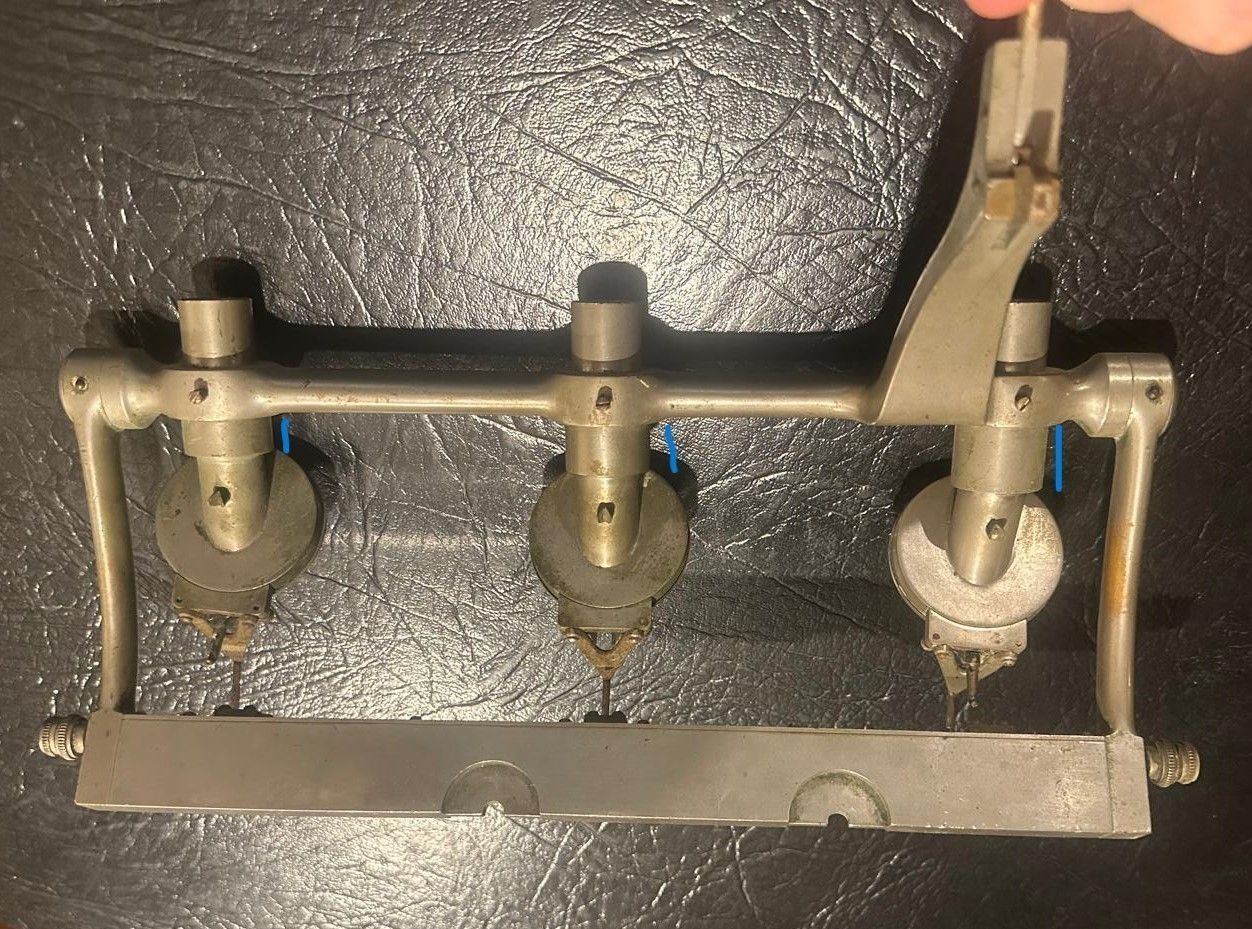
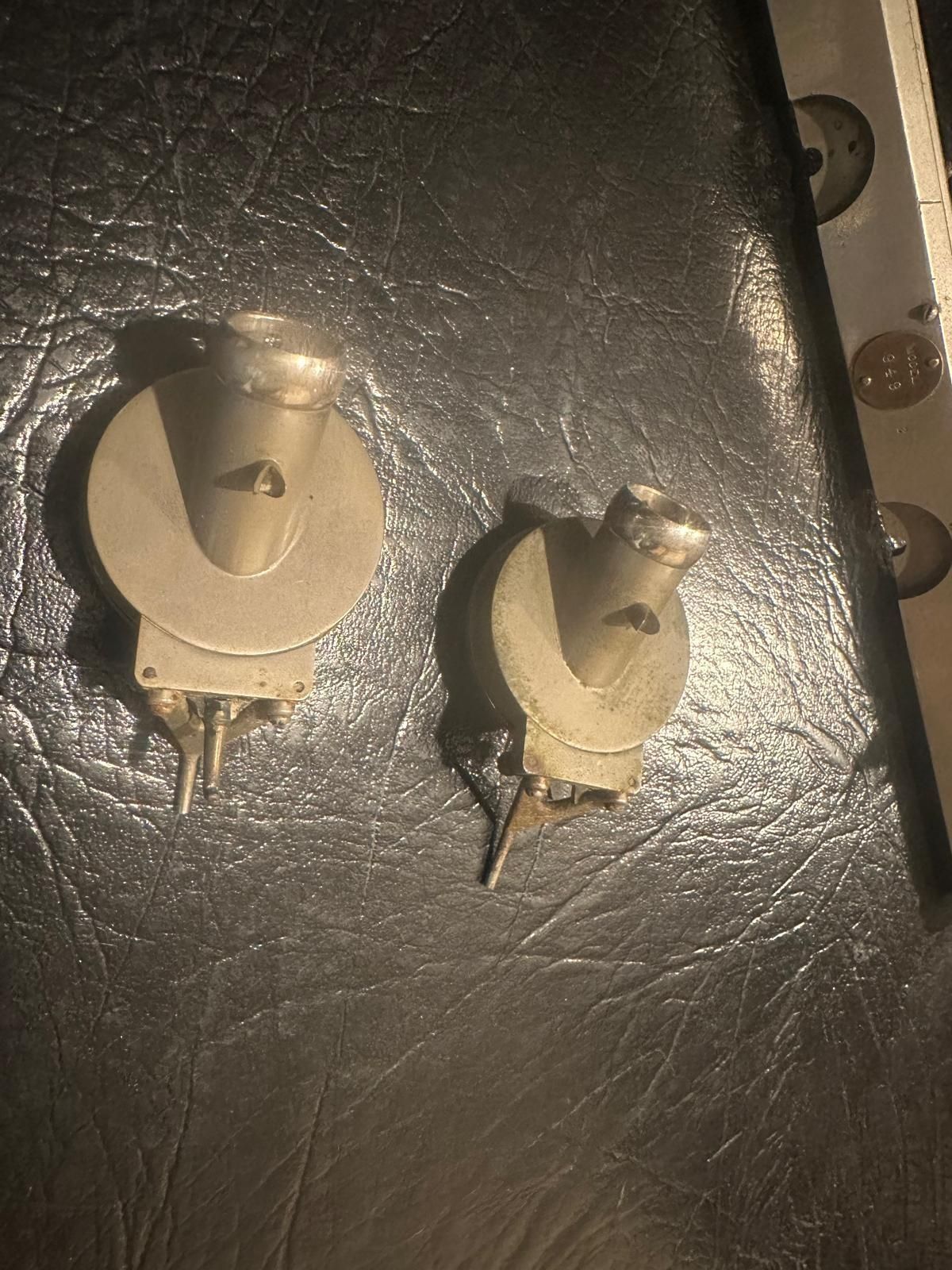
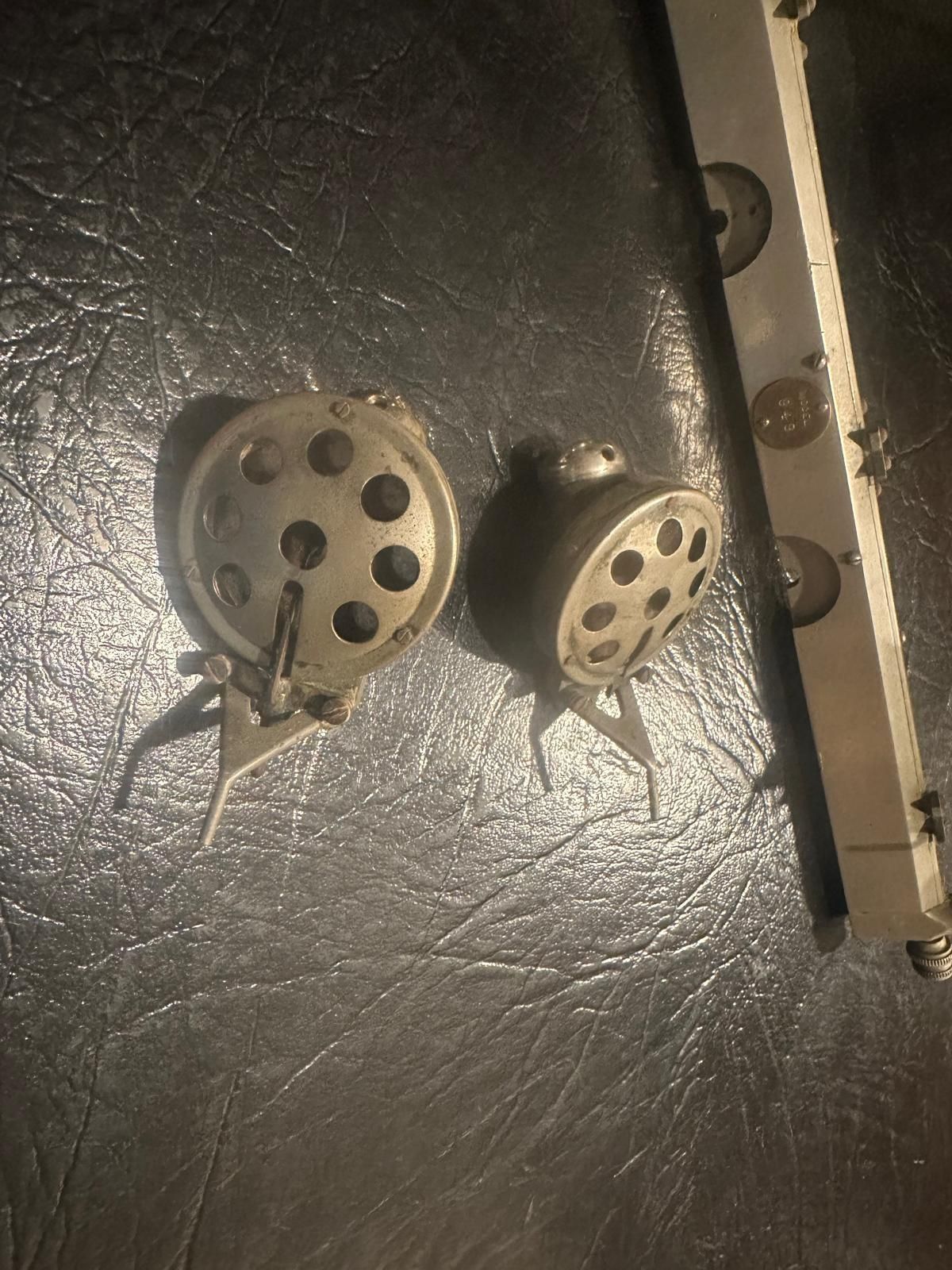
The “Carriage” shown here is the moving sled assembly that carried three AW reproducers simultaneously across the entire length of a 14‑inch long, 5‑inch (12.7 cm) diameter cylinder. This assembly embodied the central principle of U.S. Patent No. 711,706 by Thomas H. Macdonald (filed 1898, granted 1902): the ability to record or reproduce multiple sound tracks on the same cylinder at the same time.
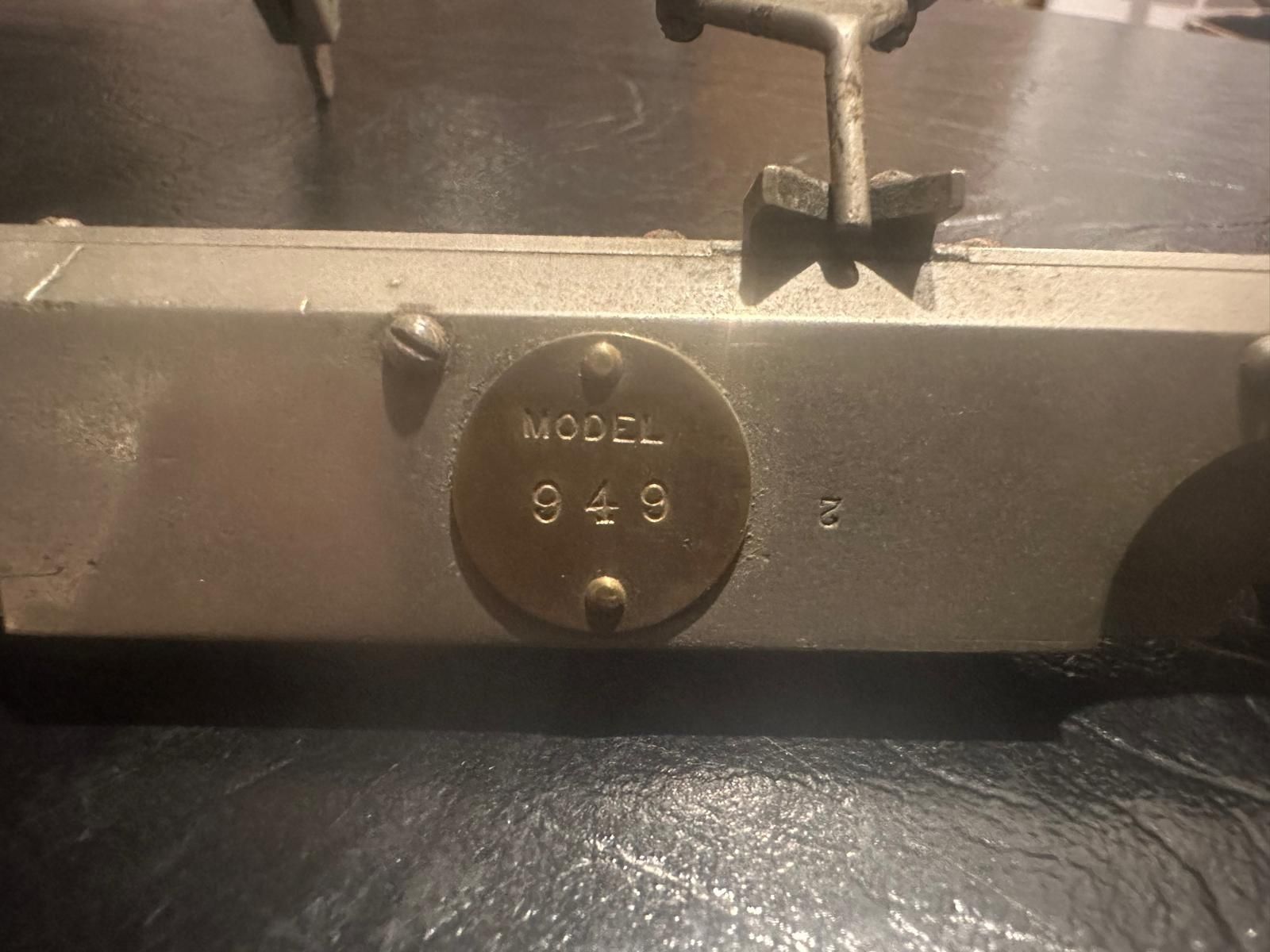
The surviving carriage bears an original brass plate from the Graphophone Laboratories engraved “Model 949” – a clear laboratory identifier proving that this was an original development and exhibition piece from the company’s in‑house experimental inventory.
The Key Idea of the Patent
Macdonald’s patent describes a multi‑track Graphophone with several parallel‑operating soundboxes, each with diaphragms differing in diameter and thickness, optimized for specific frequency ranges:
High frequencies: small, thin diaphragms
Mid frequencies: medium‑sized diaphragms
Low frequencies: large, thicker diaphragms
Each reproducer cut or read its own separate sound track. This approach significantly enhanced tonal color, dynamic range, and spatial depth in the recording.
The 1904 model’s carriage carried three such reproducers side‑by‑side and moved them in perfect synchrony over the cylinder – a mechanical tour de force requiring precision guides, adjustable mountings, and coupling mechanisms.
Historical Significance
The multi‑track technology of this carriage was far ahead of its time. It allowed music or speech to be recorded simultaneously in three frequency bands, creating a sound image that was remarkably full and rich for the period. In this way, the 1904 Multiplex Grand was a direct precursor to modern stereo and multi‑channel recording – decades before these techniques were officially introduced.
The original 1904 model is believed lost. This carriage is therefore the only known physical relic of that technical and acoustic milestone.
Significance in the Edisonium Mariazell
Together with the exhibited 1900 Multiplex Grand, this rare component documents the complete development line of Macdonald’s visionary multi‑track concept – from laboratory experiment to world‑stage presentation. The sheer size of this carriage alone hints at the dimensions and acoustic power the original machine must have possessed. It stands as a unique testament to one of the boldest attempts in phonograph history to bring the “sound of the future” to life as early as 1900.