Name/Title
Hyman E. Markle’s Multiplex Graphophone (USA, 1906)Entry/Object ID
143Description
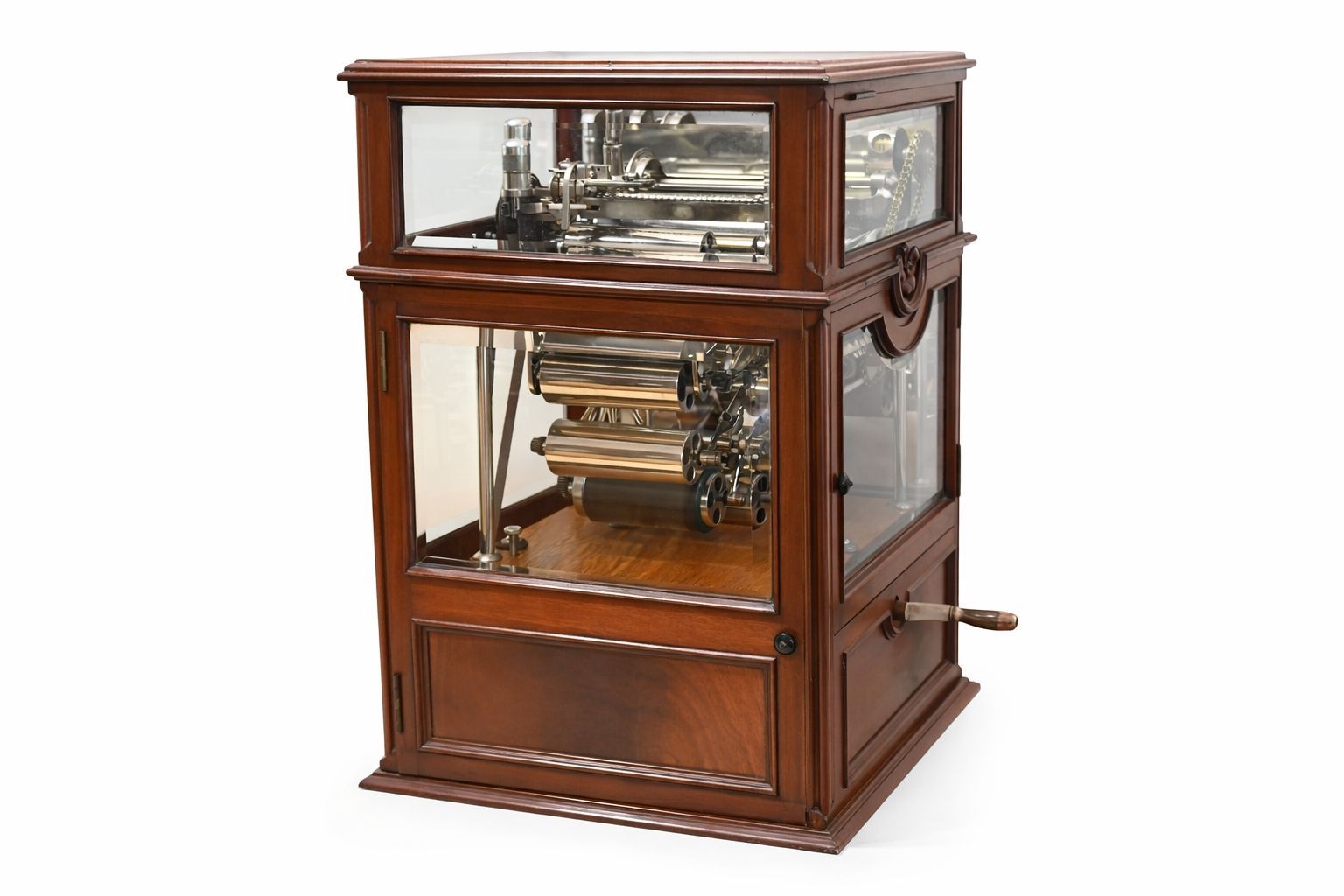
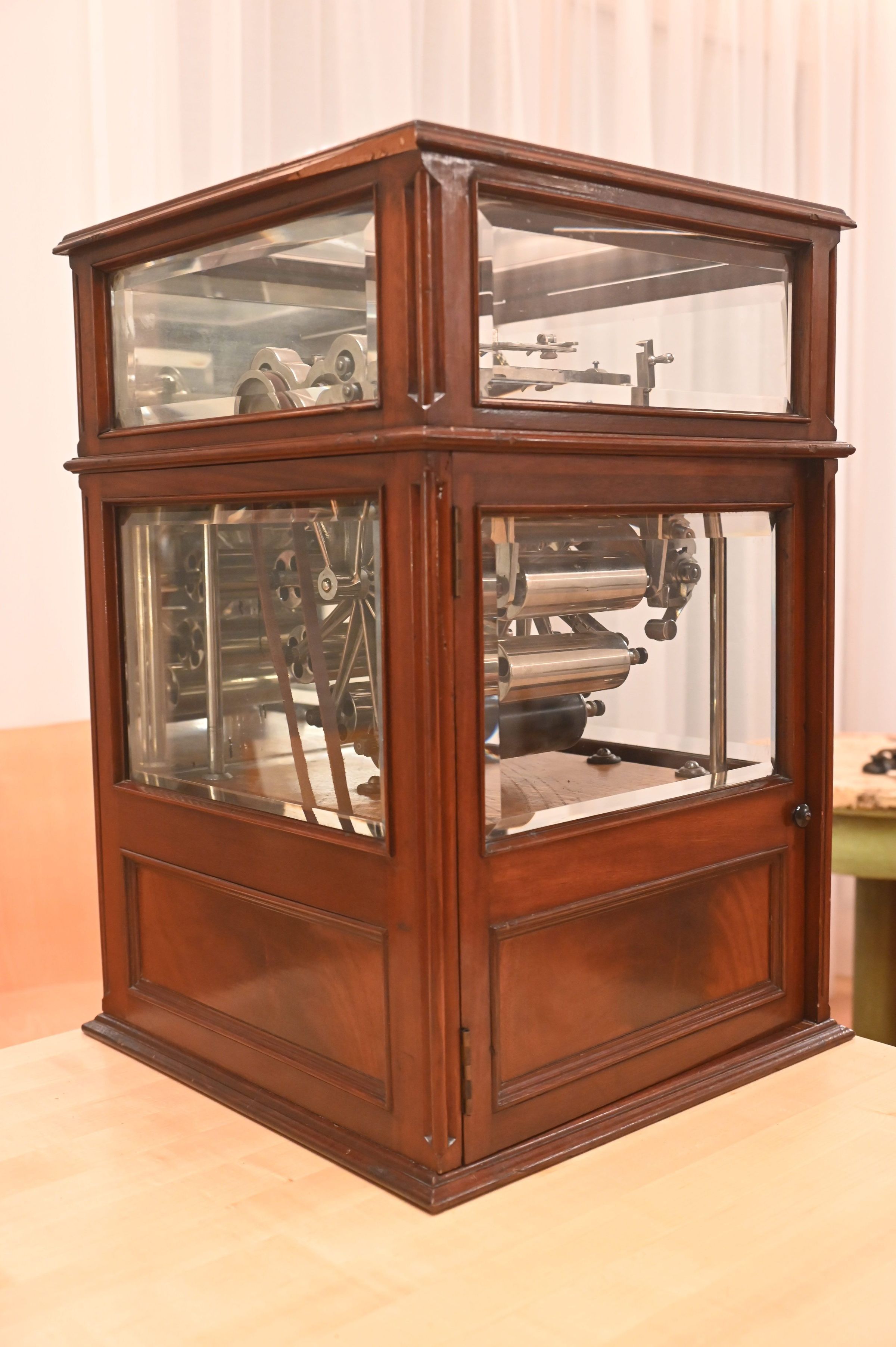
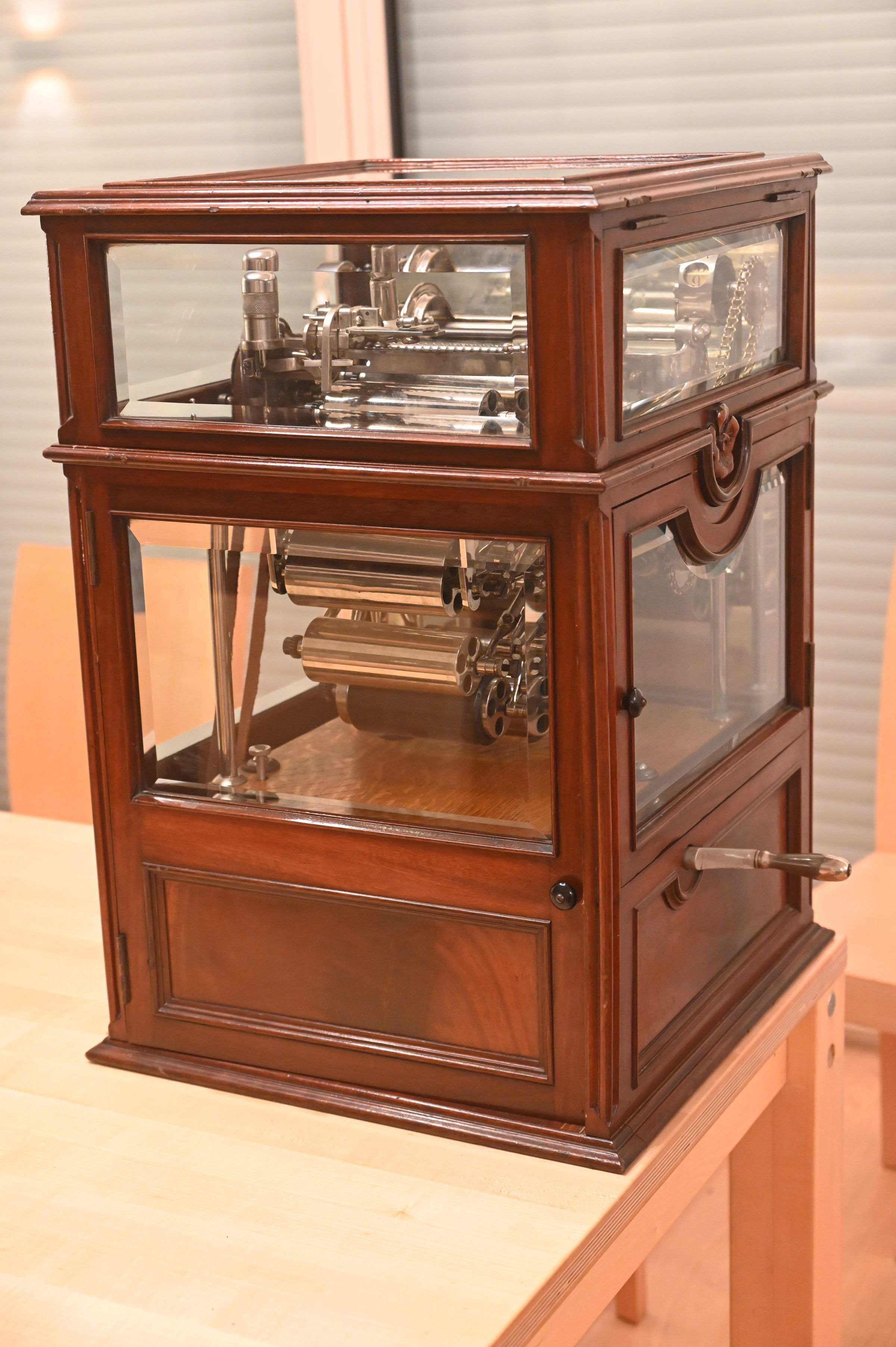
Hyman E. Markle’s Multiplex Graphophone (USA, 1906)
One-of-a-kind – an early jukebox prototype for home use
This monumental machine was developed in 1907 by inventor Hyman E. Markle of Nashville, Tennessee – a man who believed he could revolutionize the “talking machine.”
Today, the Edisonium in Mariazell is home to the only known surviving example worldwide – a piece of audio-technical utopia that never reached production.
Concept and Technology
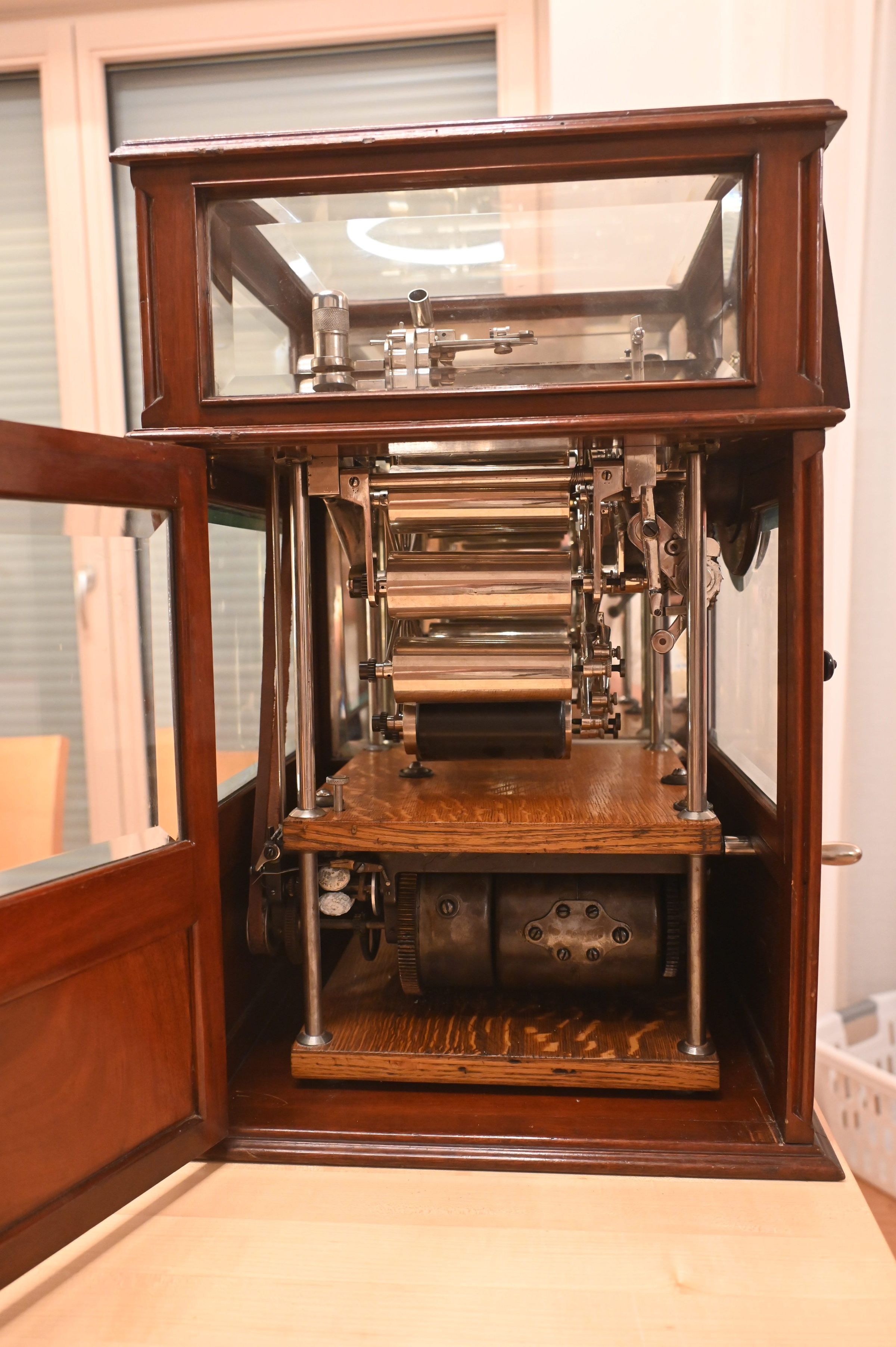
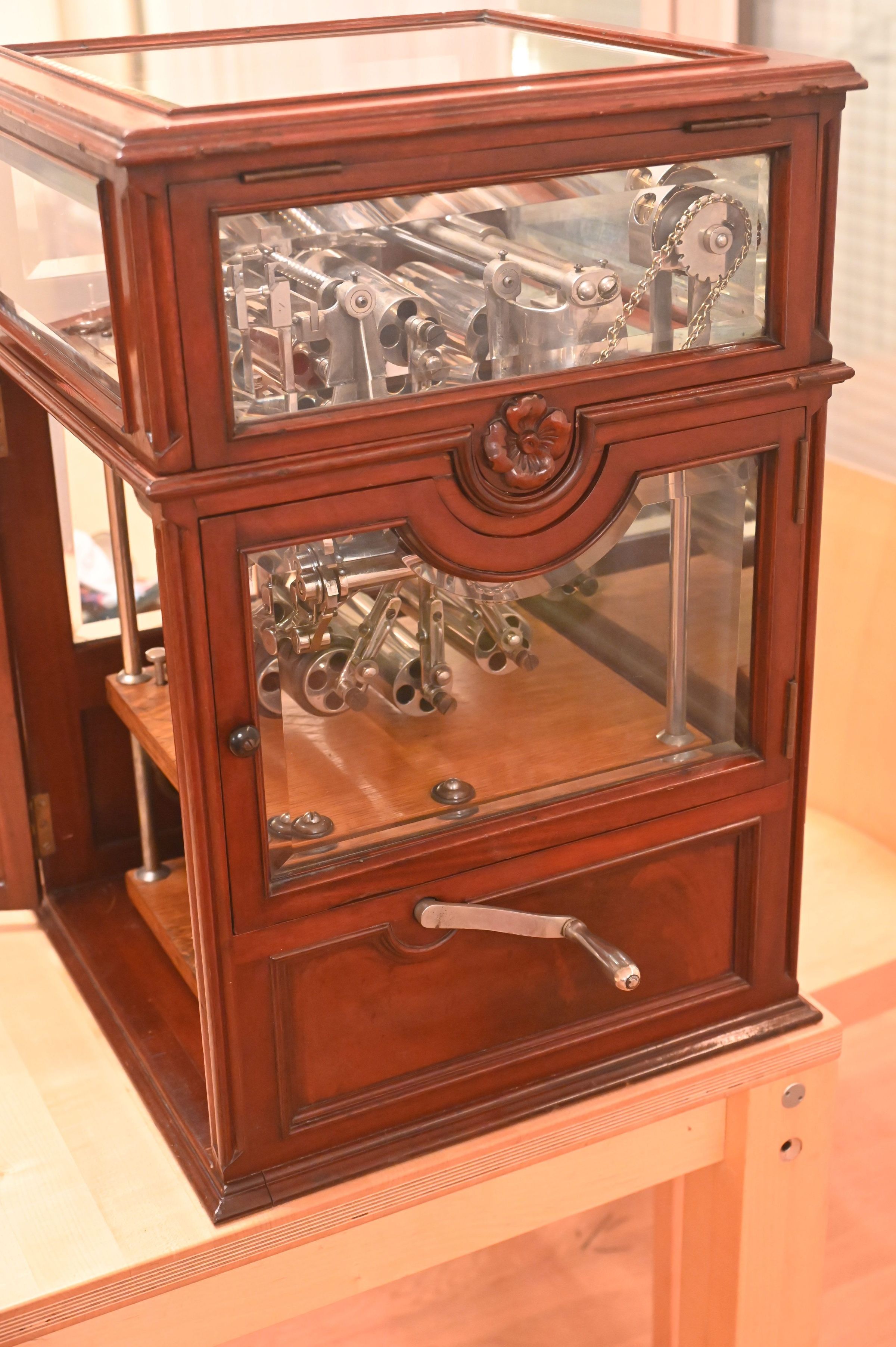
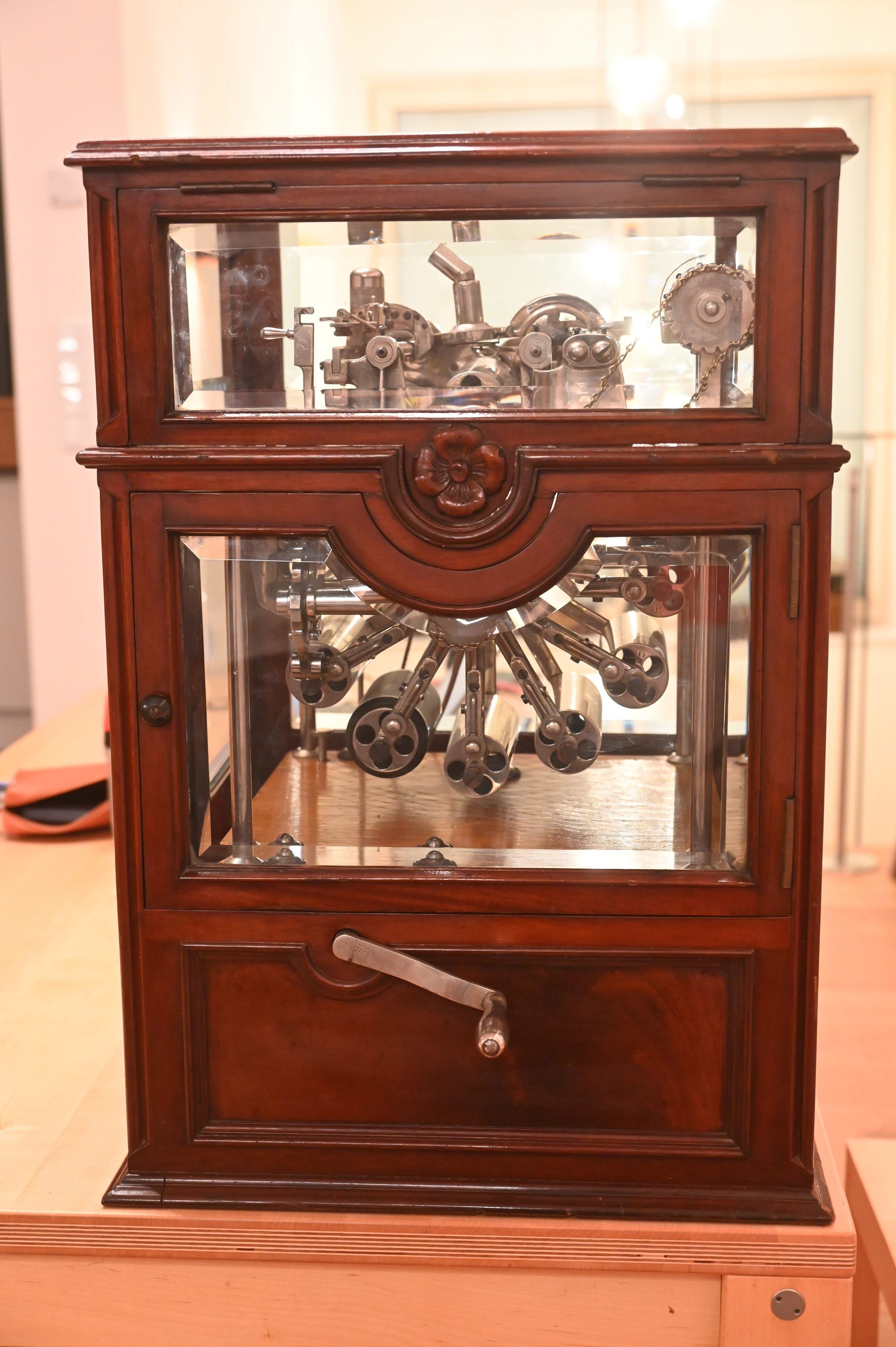
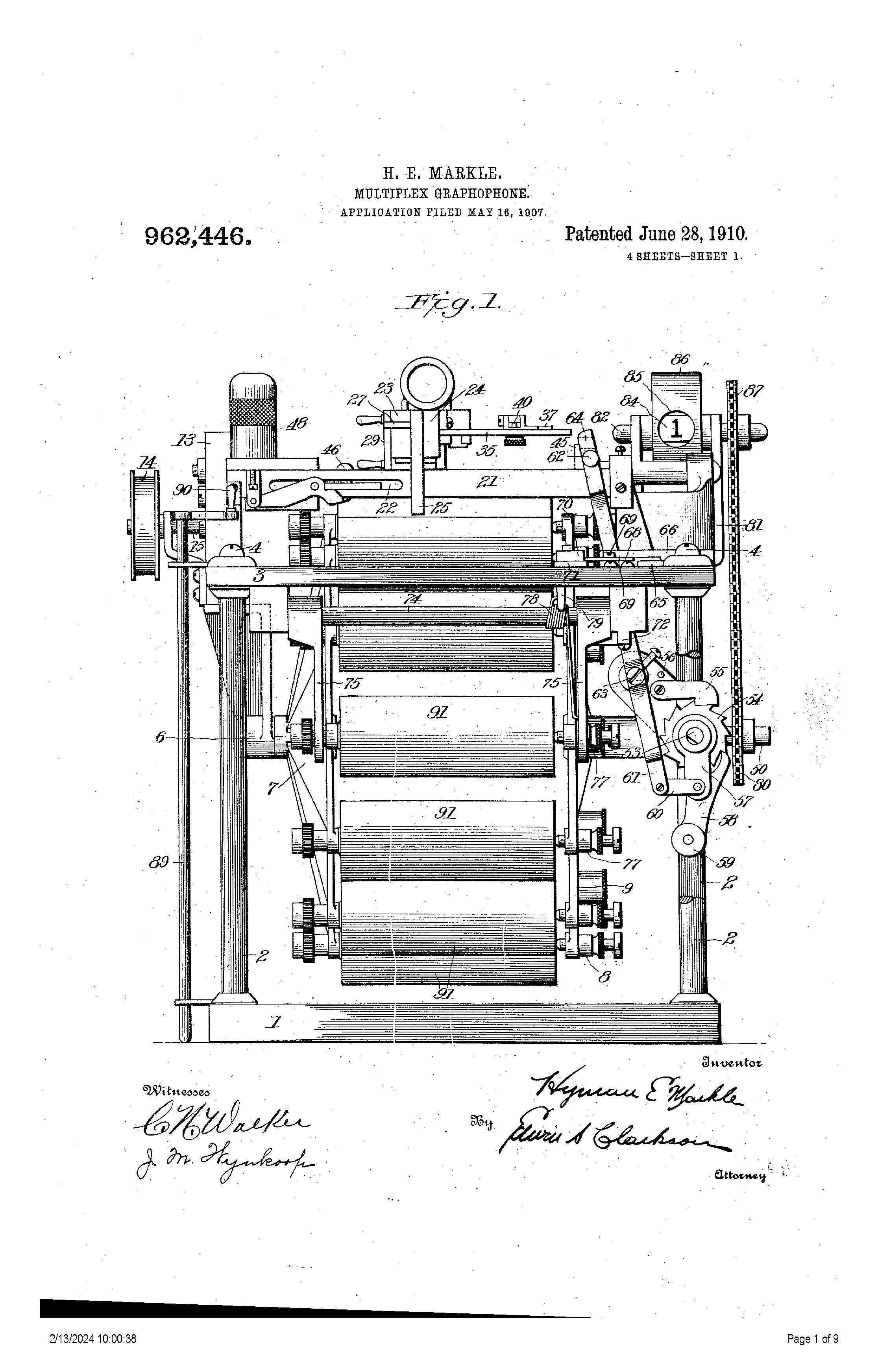
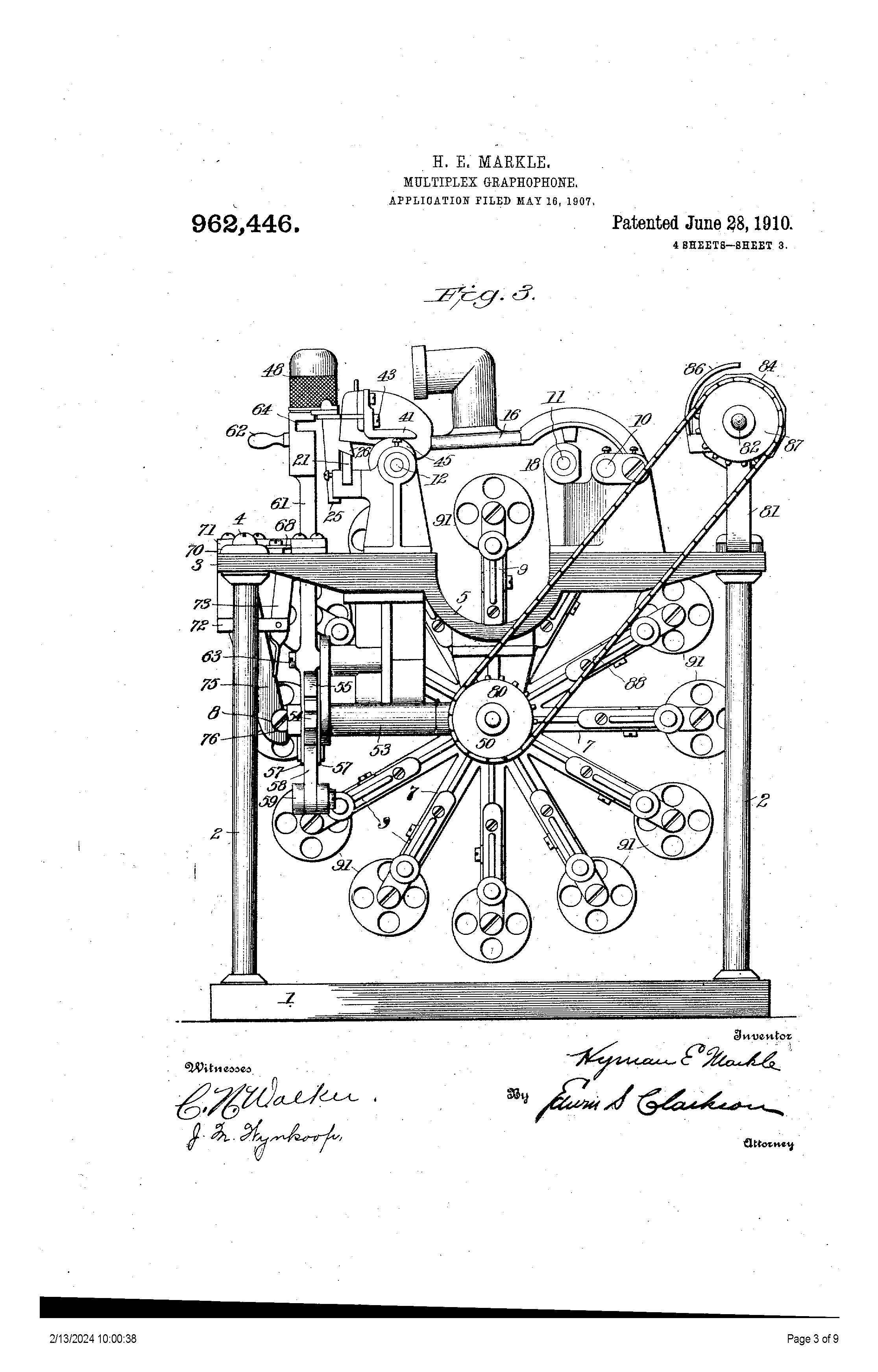
Markle’s vision was a novel type of “Graphophone” capable of holding up to twelve wax cylinders, mounted on a large rotating wheel – somewhat like a Ferris wheel.
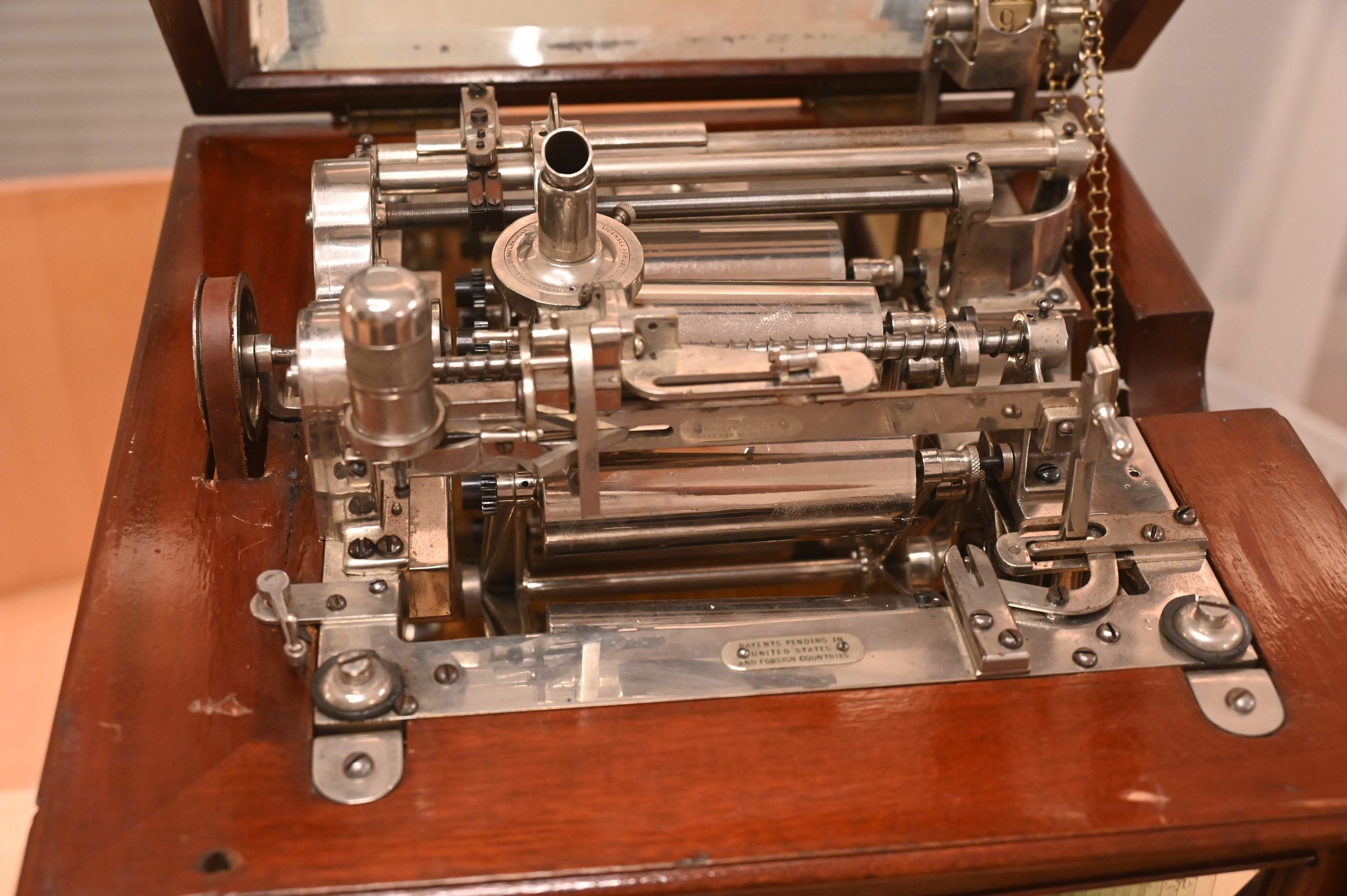
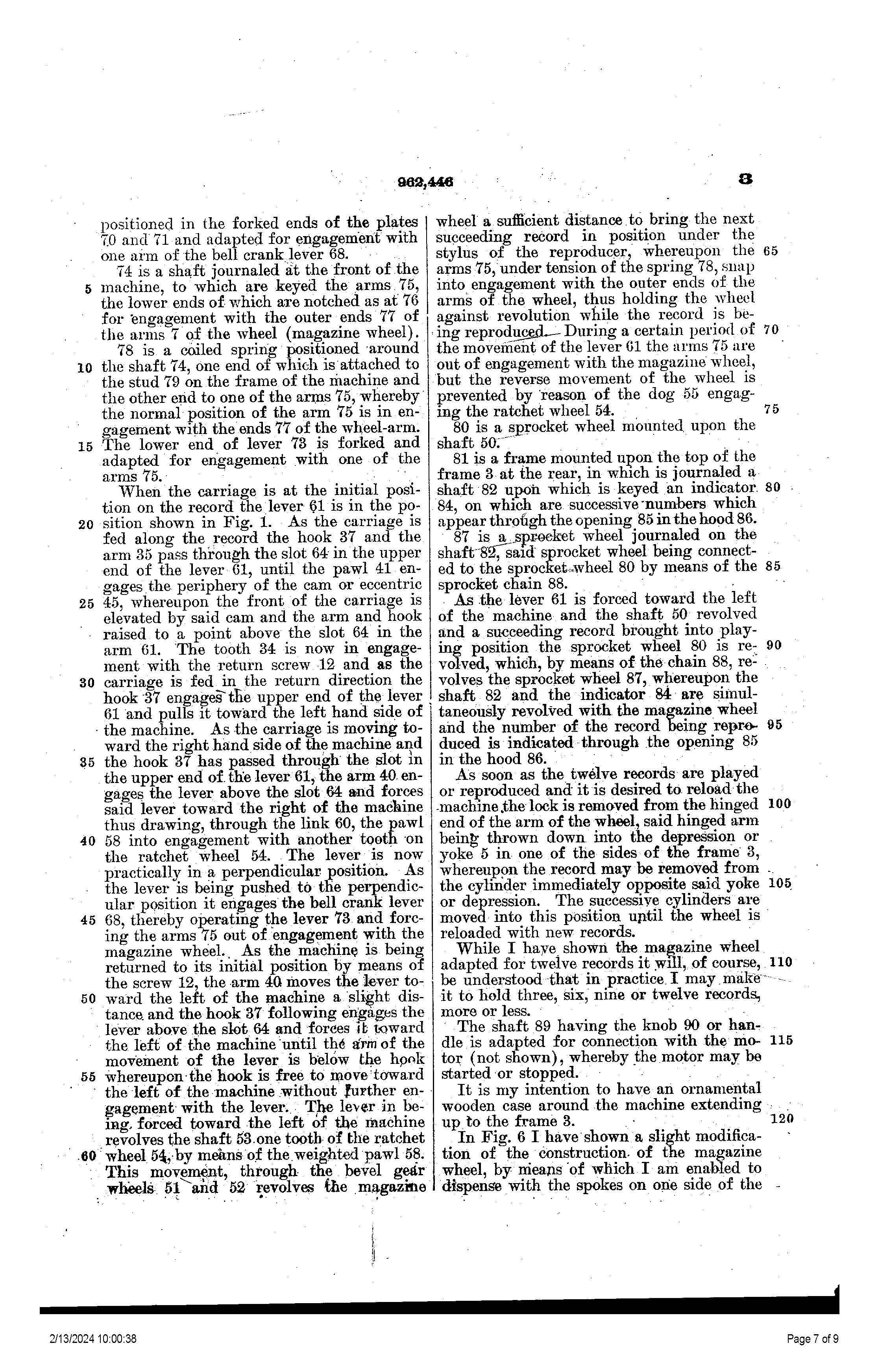
Playback was intended to be fully automatic, managed by a sophisticated array of mechanical levers, gears, ratchets, return spindles, and delicately timed tracking movements.
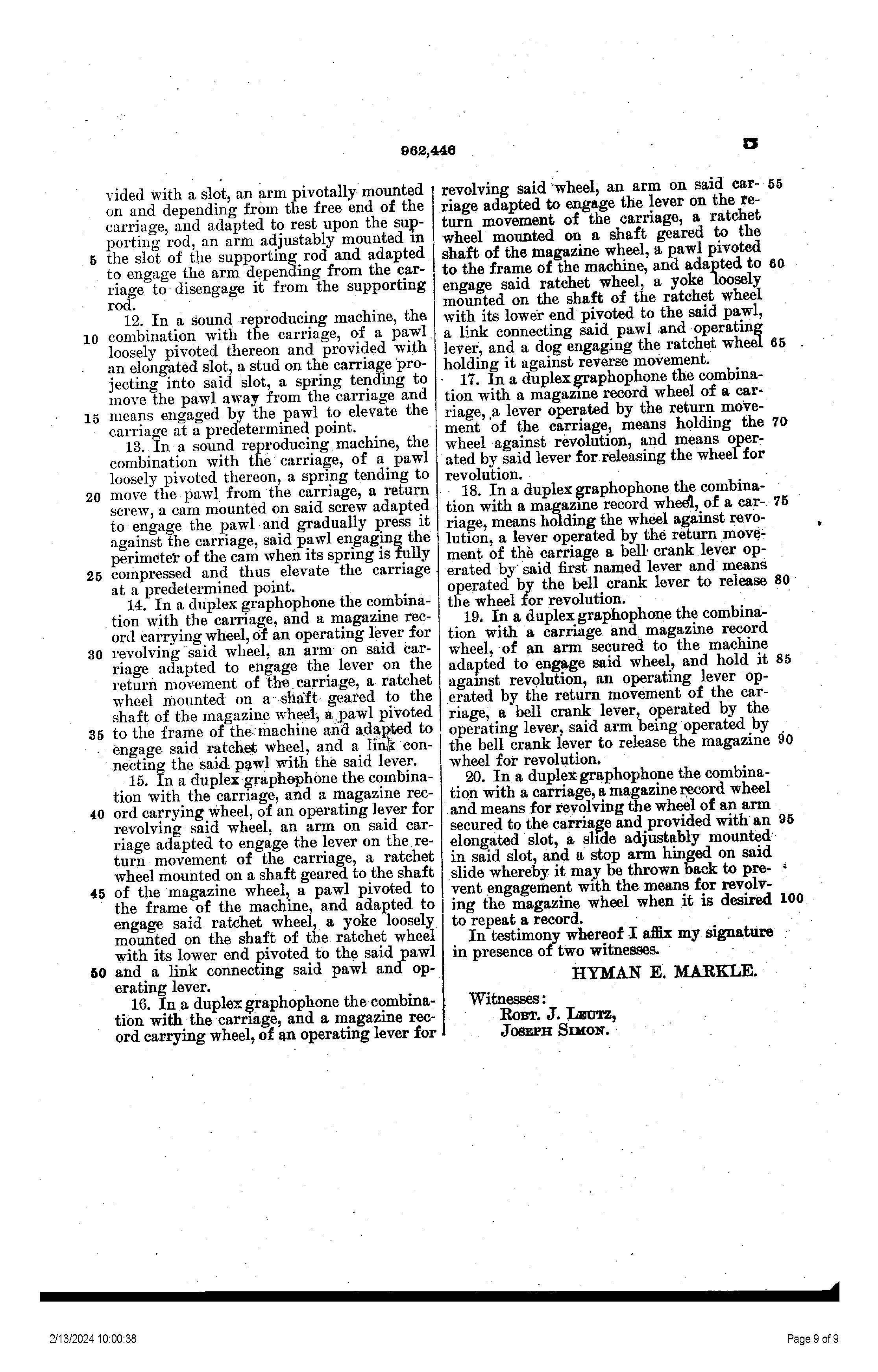
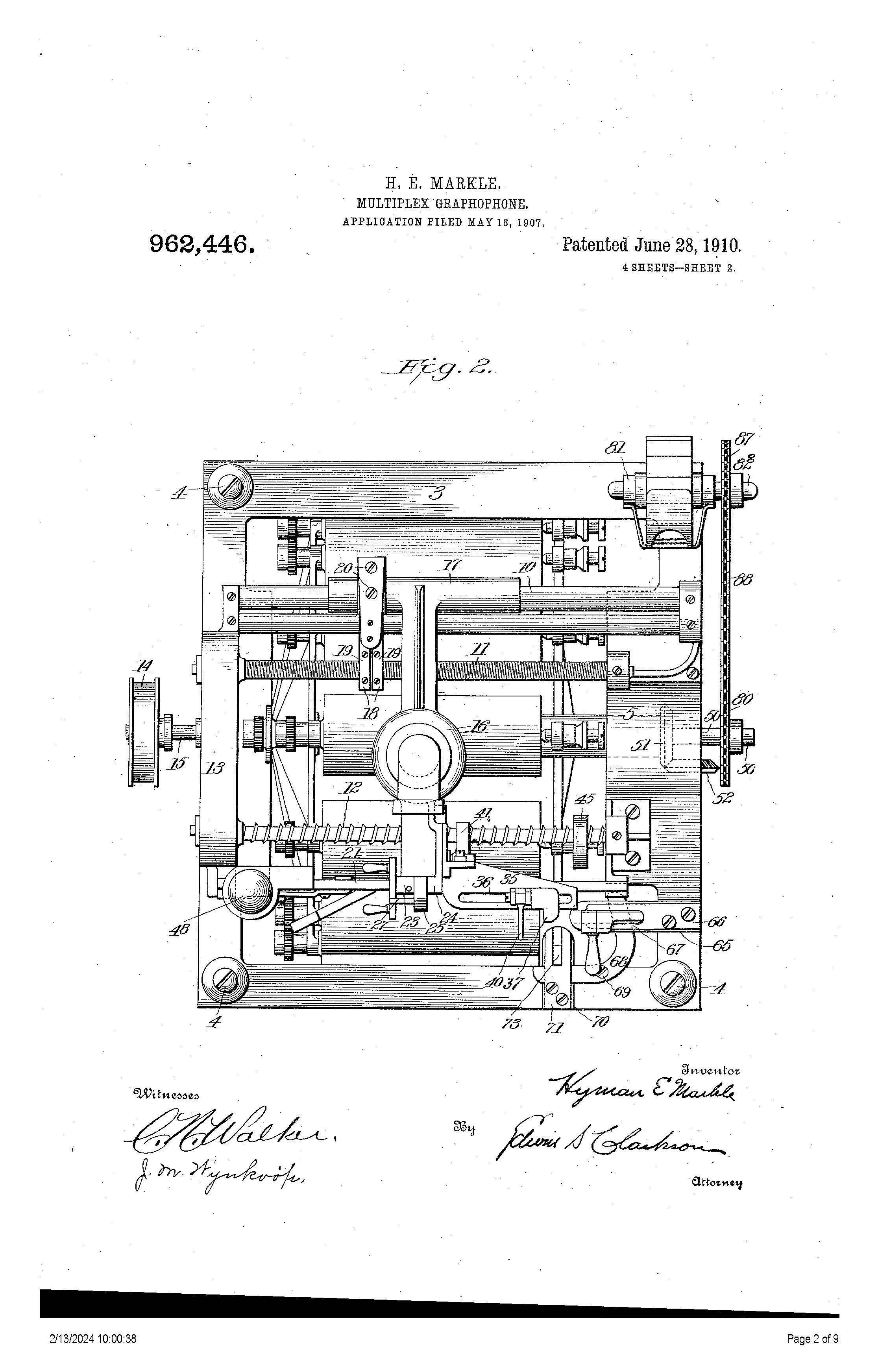
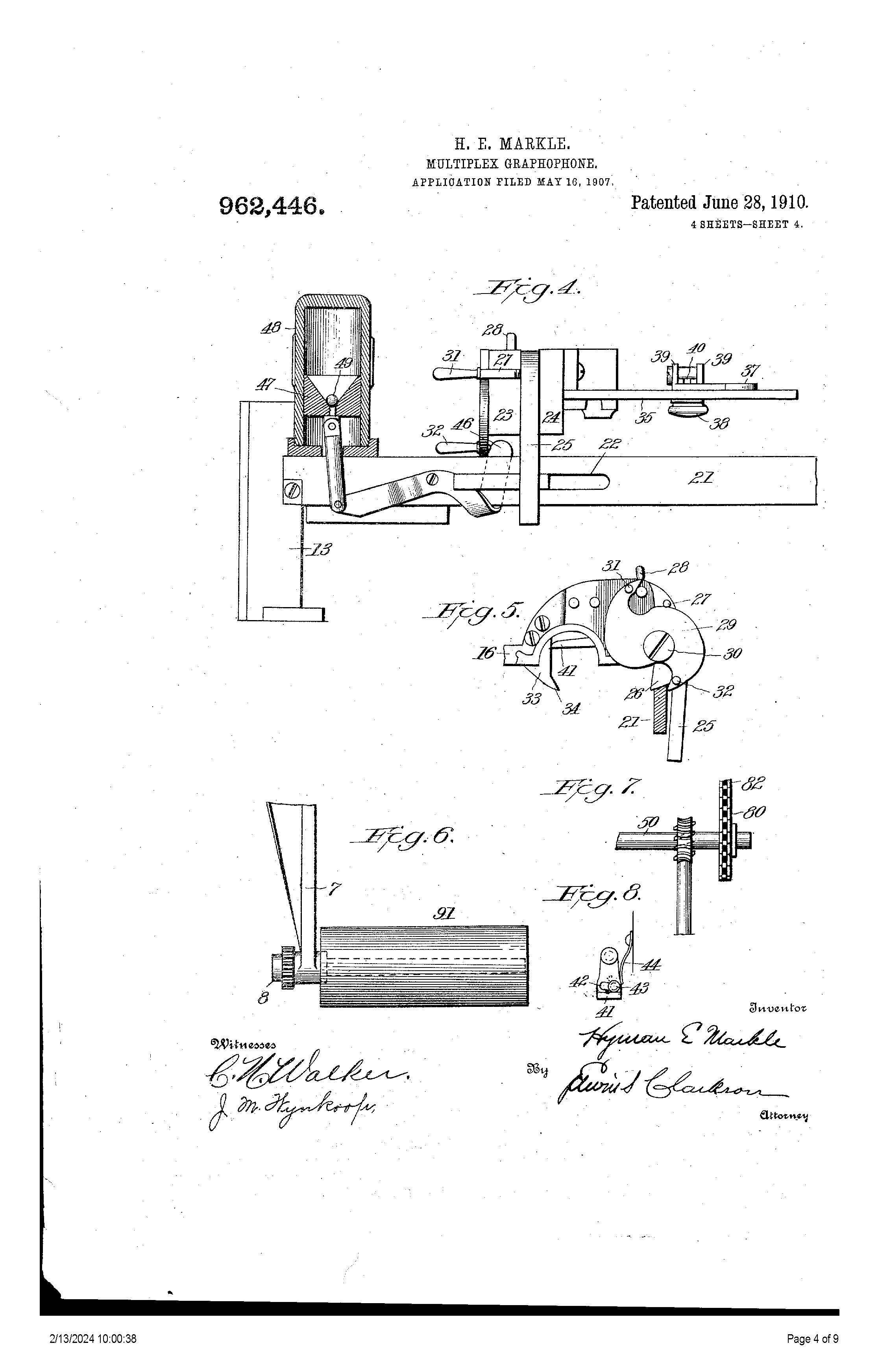
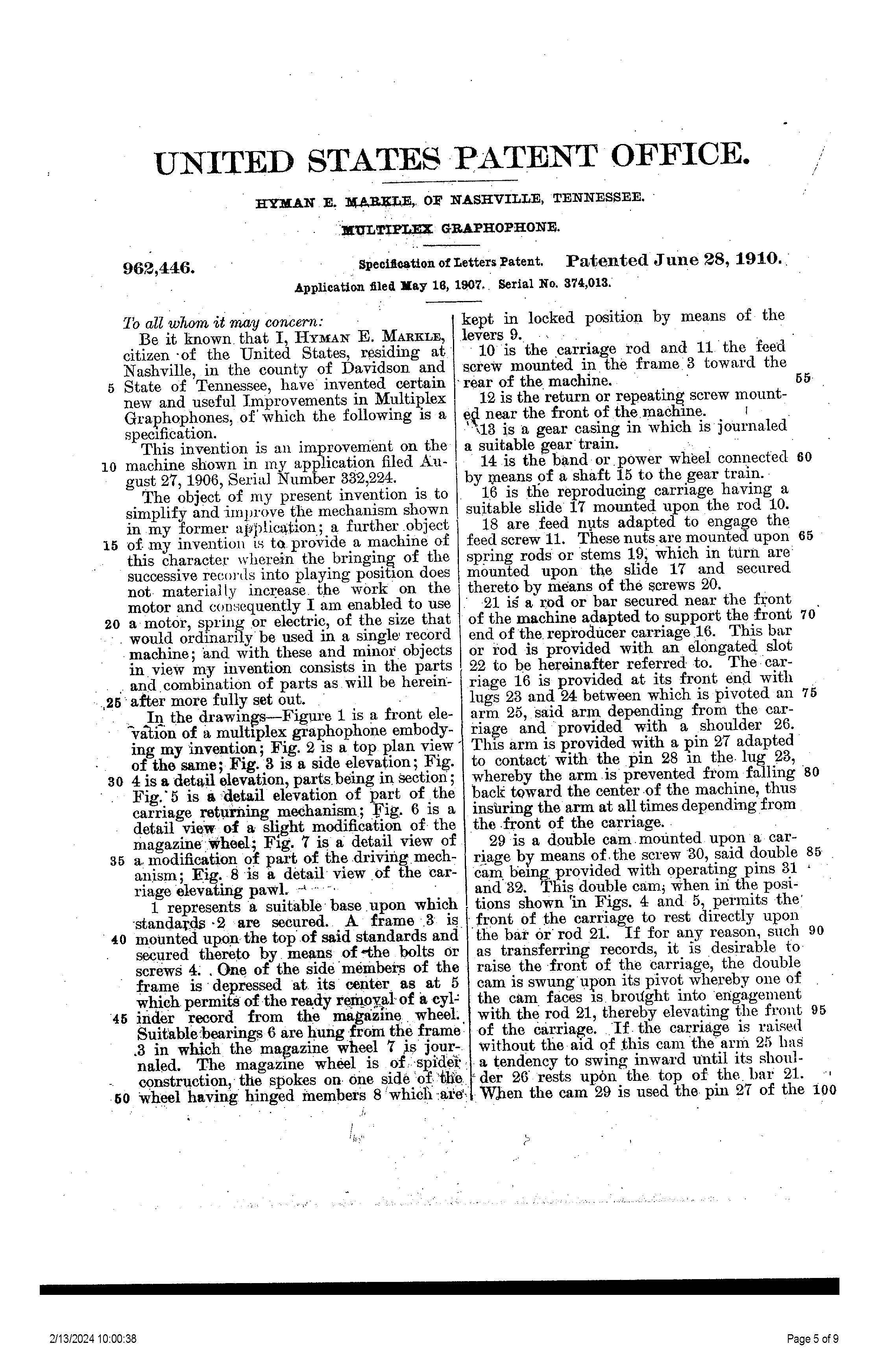
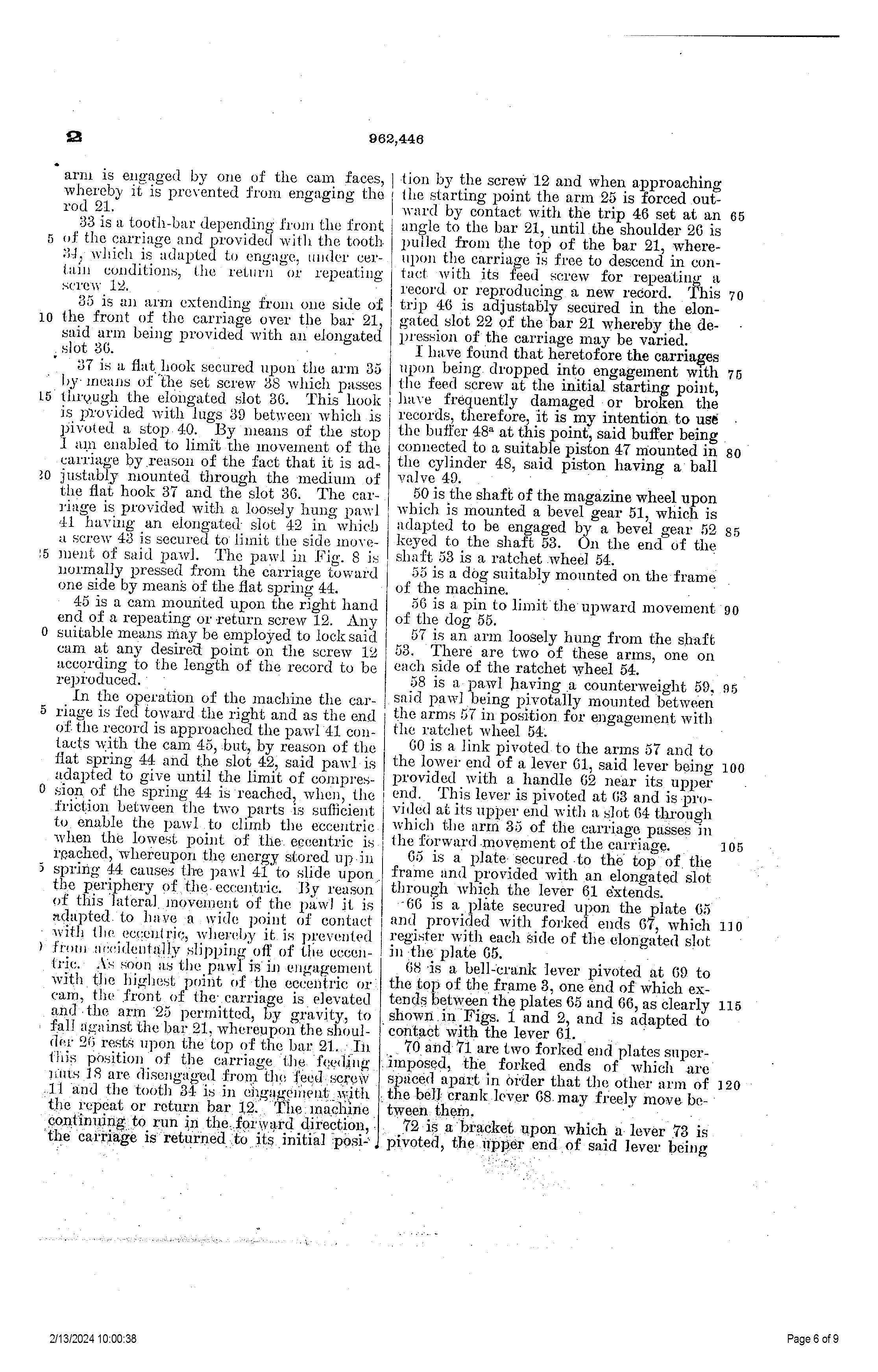
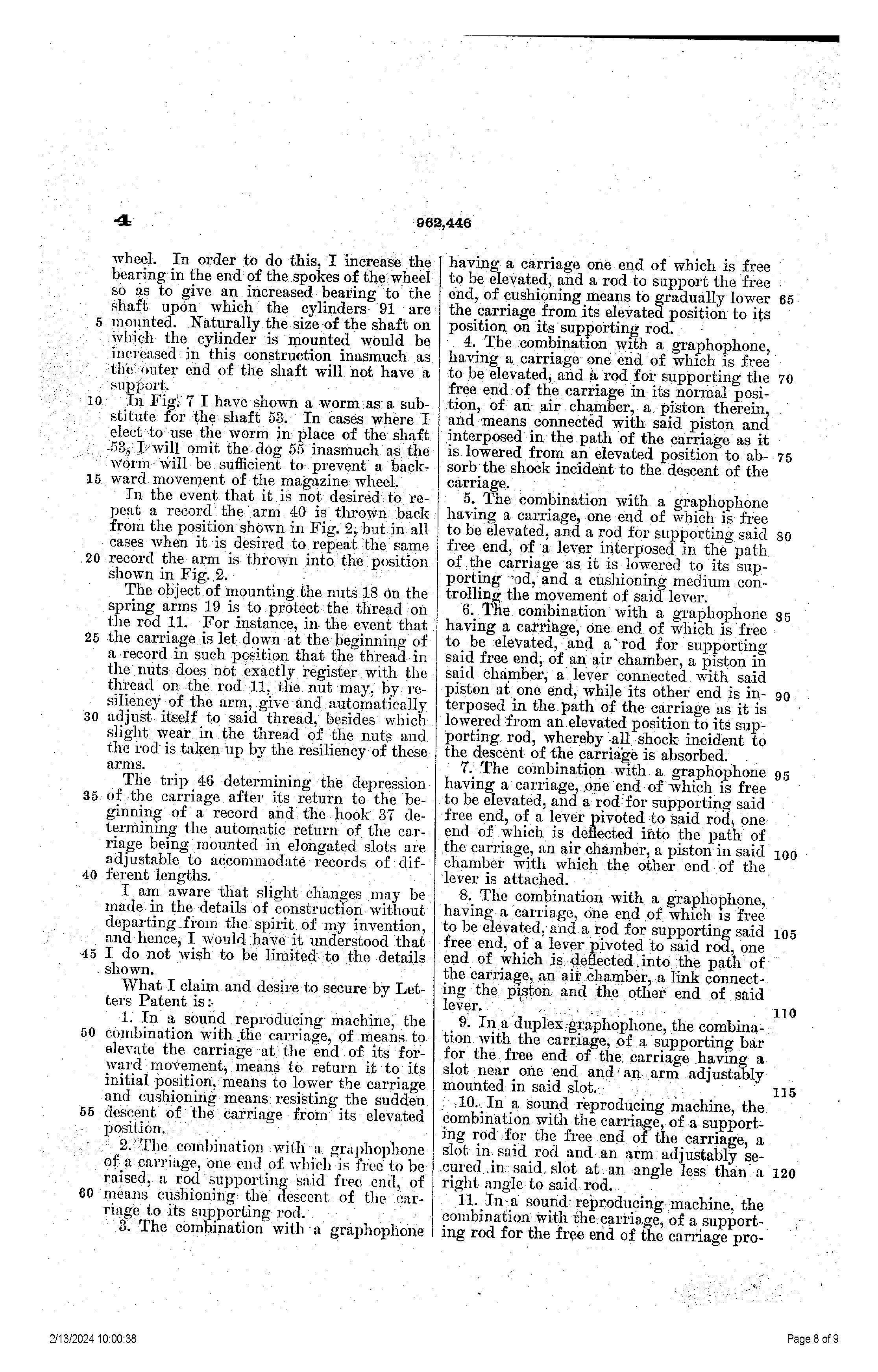
The main patent (US962446) was filed on May 16, 1907, and granted on June 28, 1910. It describes a phonograph in which a movable playback carriage automatically travels to each of the twelve cylinders, plays it, returns to its starting position, and triggers the carousel to advance one slot.
Fine control is achieved through precision spindles and a buffer cylinder that absorbs the carriage’s motion to prevent shock.
Markle’s earlier patent application dates back to August 27, 1906 (US Patent 1,111,716, granted in 1914), which laid the mechanical foundation for the more advanced 1907 device.
Why the Name “Graphophone”?
Although the term “Graphophone” was originally coined by Alexander Graham Bell and Charles Tainter, Markle adopted the name “Multiplex Graphophone”, likely because the machine incorporates a motor from a Columbia Graphophone.
Whether Columbia was directly involved in the development remains unknown – but the name suggests a possible connection.
Why Did It Fail?
Despite its ingenious design, the project ultimately failed for several reasons:
Complexity: The mechanism was far too intricate for mass production.
Cost: The estimated manufacturing cost of the prototype exceeded $1,250, while the target retail price was $25 – a gap that proved impossible to bridge.
Technological shift: By 1907, cylinder recordings were already being phased out in favor of disc records.
Market failure: No commercial production followed, and no manufacturing partner emerged.
A Treasure from Charley Hummel’s Collection
This exceptional prototype comes from the personal collection of legendary phonograph historian Charley Hummel – and was one of his favorite items.
Today, it is proudly displayed at the Edisonium Mariazell as a unique testament to the innovative spirit of early sound technology.
A Future That Never Happened
Markle’s Multiplex Graphophone was a visionary jukebox, created for an audience that didn’t yet exist.
It stands as a monumental tribute to technical imagination – and a quiet memorial to ideas that were too far ahead of their time.