Name/Title
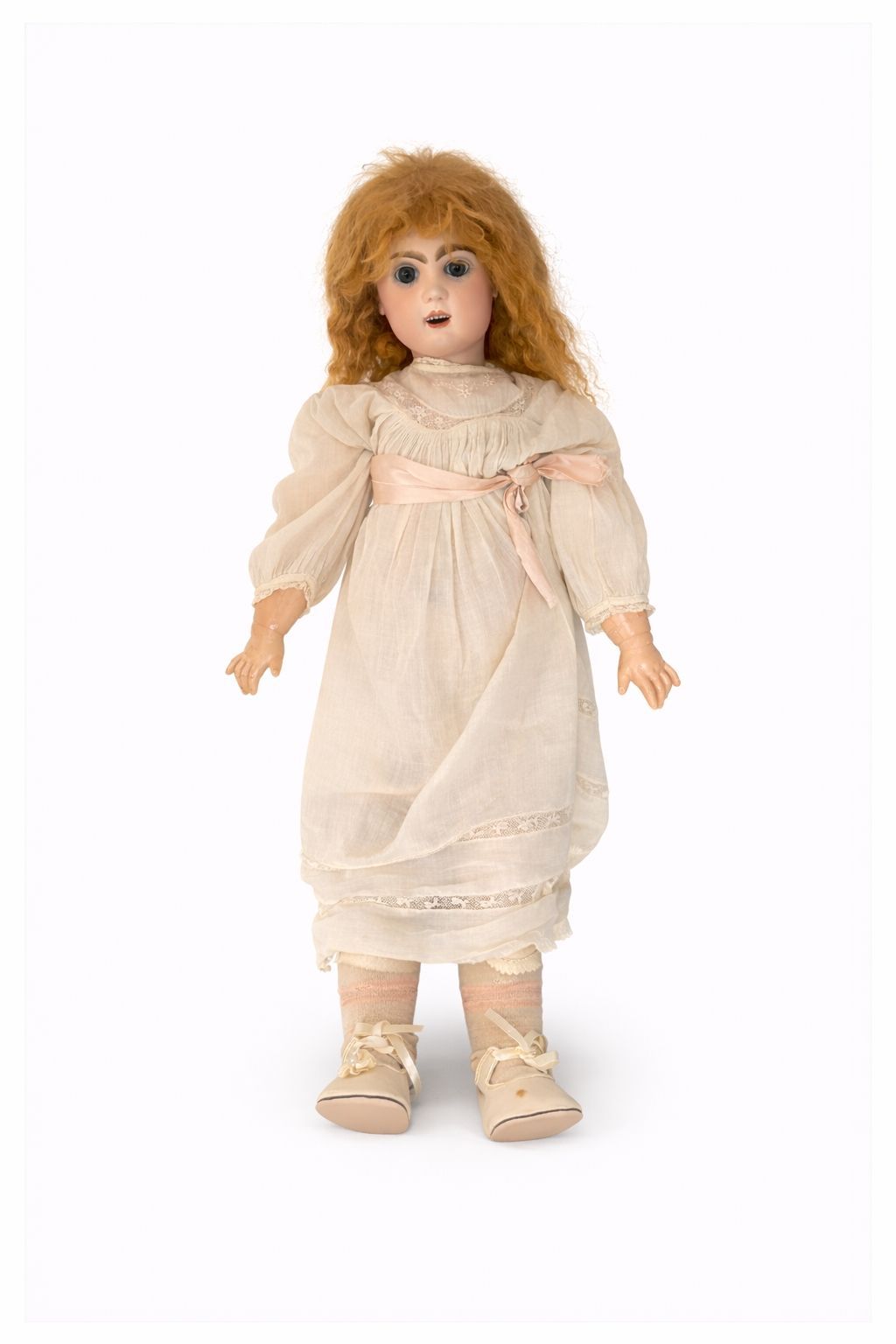
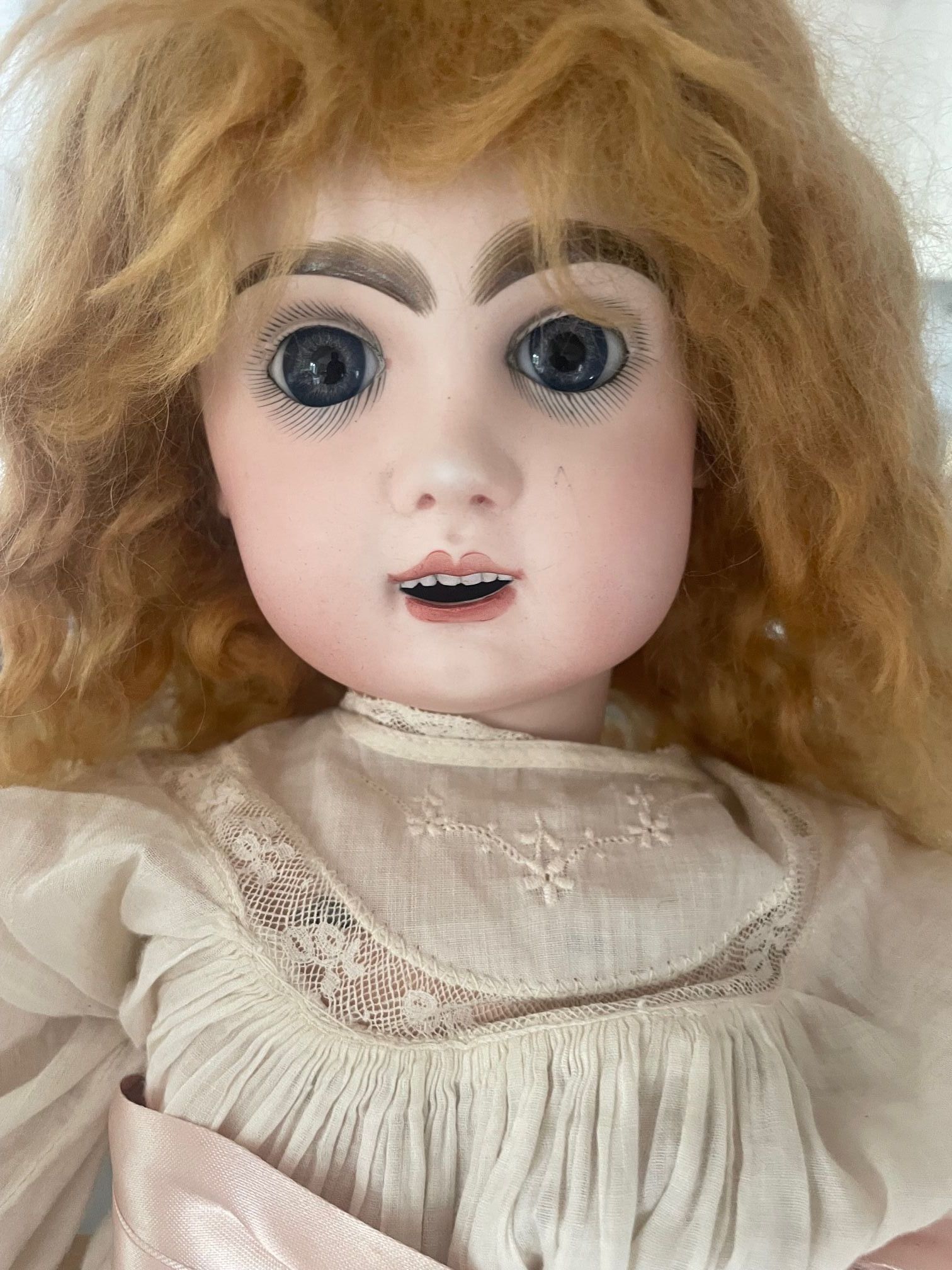
Lioretgraph Bébé JumeauEntry/Object ID
199Description
France, ca. 1893–1896
The first truly functional talking doll – born from the magic of clockworks, celluloid, and childhood dreams
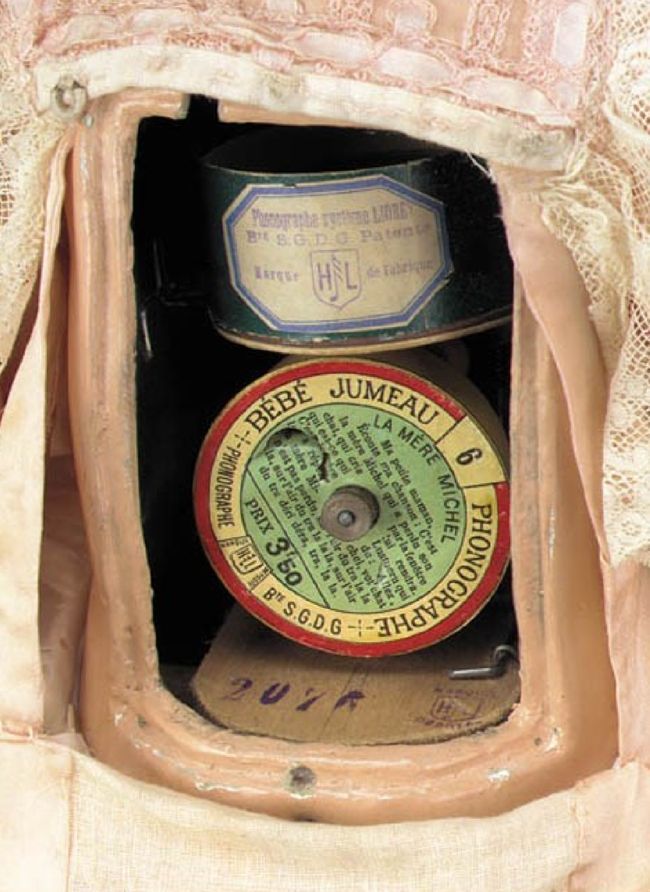
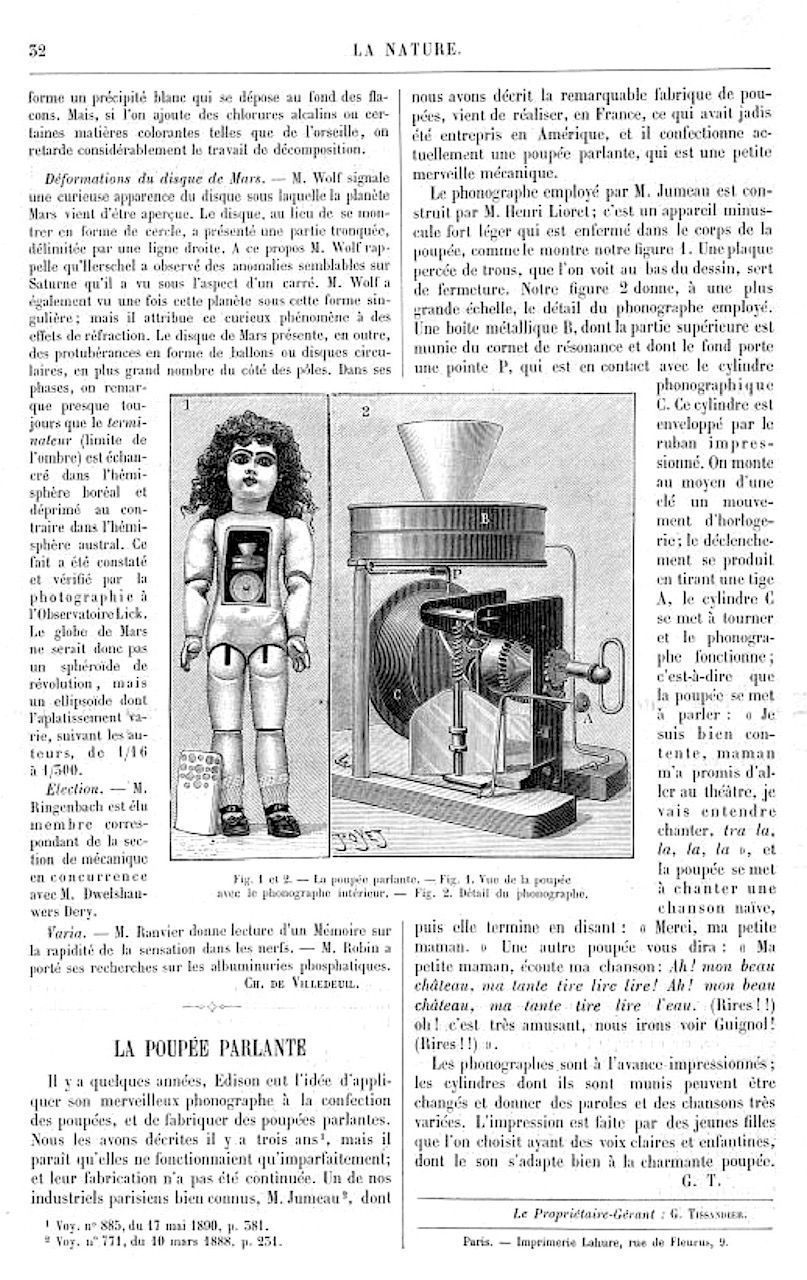
Henri Lioret, a renowned Parisian watchmaker and creator of mechanical music devices, was commissioned in 1893 by the prestigious dollmaker Jumeau to design a talking doll for the daughter of the Russian Tsar. The result was nothing short of a cultural and technical sensation: the Bébé Jumeau with a built-in Lioretgraph phonograph.
Historical Context
Lioret was no newcomer to invention – he had already received a bronze medal at the Paris World's Fair in 1878 and was likely familiar with Edison’s phonograph, which had caused a sensation in European scientific circles. But Lioret went further. While Edison relied on delicate wax cylinders, Lioret chose the newly developed material celluloid, which was far more robust and better suited for use in children’s toys.
The Mechanics Inside the Doll
Size: Approx. 63.5 cm (25 inches), with an open mouth and a composition body
Drive mechanism: A wind-up clockwork motor ensured smooth and consistent playback
Cylinders: Interchangeable white celluloid cylinders, running at approx. 100 RPM; each cylinder contained a song or poem – at least 12 titles were available
Reproducer: A metal stylus transmitted the groove modulation to a diaphragm – no feedscrew was used, making the system more compact
Care instructions: Lioret recommended regular application of olive oil to the cylinders to reduce wear – a charming and practical maintenance tip
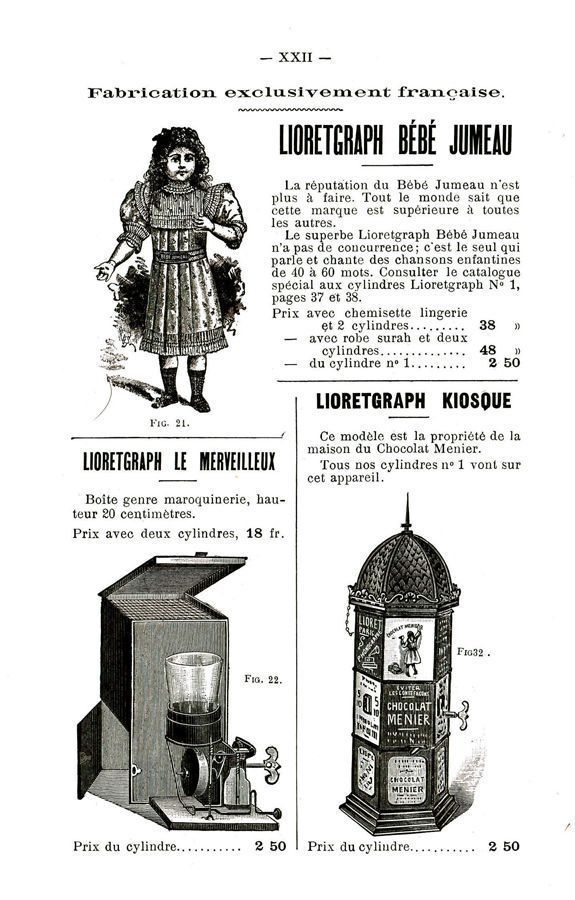
Mechanism name: The playback system was marketed by Lioret as “Le Merveilleux” (“The Marvelous”)
Invention and Patent
Lioret’s technical achievement was patented on December 8, 1893, under German Patent No. M79479. The patent describes:
A threaded cylinder made of celluloid or metal with a triangular cross-section, allowing precise inscription and guiding the stylus naturally
A combined stylus and diaphragm system, suspended with a spring and wire structure, enabling sound reproduction with minimal components
A stylus holder that allowed smooth tracking of the grooves without additional mechanical feed – the rotation of the cylinder alone advanced the playback
An innovative, modular system enabling easy cylinder exchange and minimal mechanical complexity
This invention laid the groundwork not only for the talking doll, but for a wide range of mechanical playback systems in toys, clocks, and even advertising machines.
Cultural Impact
The Bébé Jumeau with Lioretgraph was the first truly functional talking doll to reach the market. Released in 1896 at a price of 58 Francs, it was a luxury item, reflecting the prestige of the Jumeau brand. Its success is widely regarded as the birth of the French phonograph industry.
Lioret’s “Le Merveilleux” mechanism was later integrated into other devices, including tabletop phonographs, speaking clocks, and vending machines like those distributed by Chocolat Menier.
Conclusion
Lioret’s talking doll was far more than a toy – it was a masterpiece of mechanical ingenuity, educational thought, and poetic charm. It made language audible and imagination tangible – all without electricity, batteries, or electronics. A true mechanical marvel crafted from celluloid, steel, and French genius.