Name/Title
Mills "Fortune Teller" Coin-operated cylinder phonograph with built-in fortune-telling functionEntry/Object ID
229Description
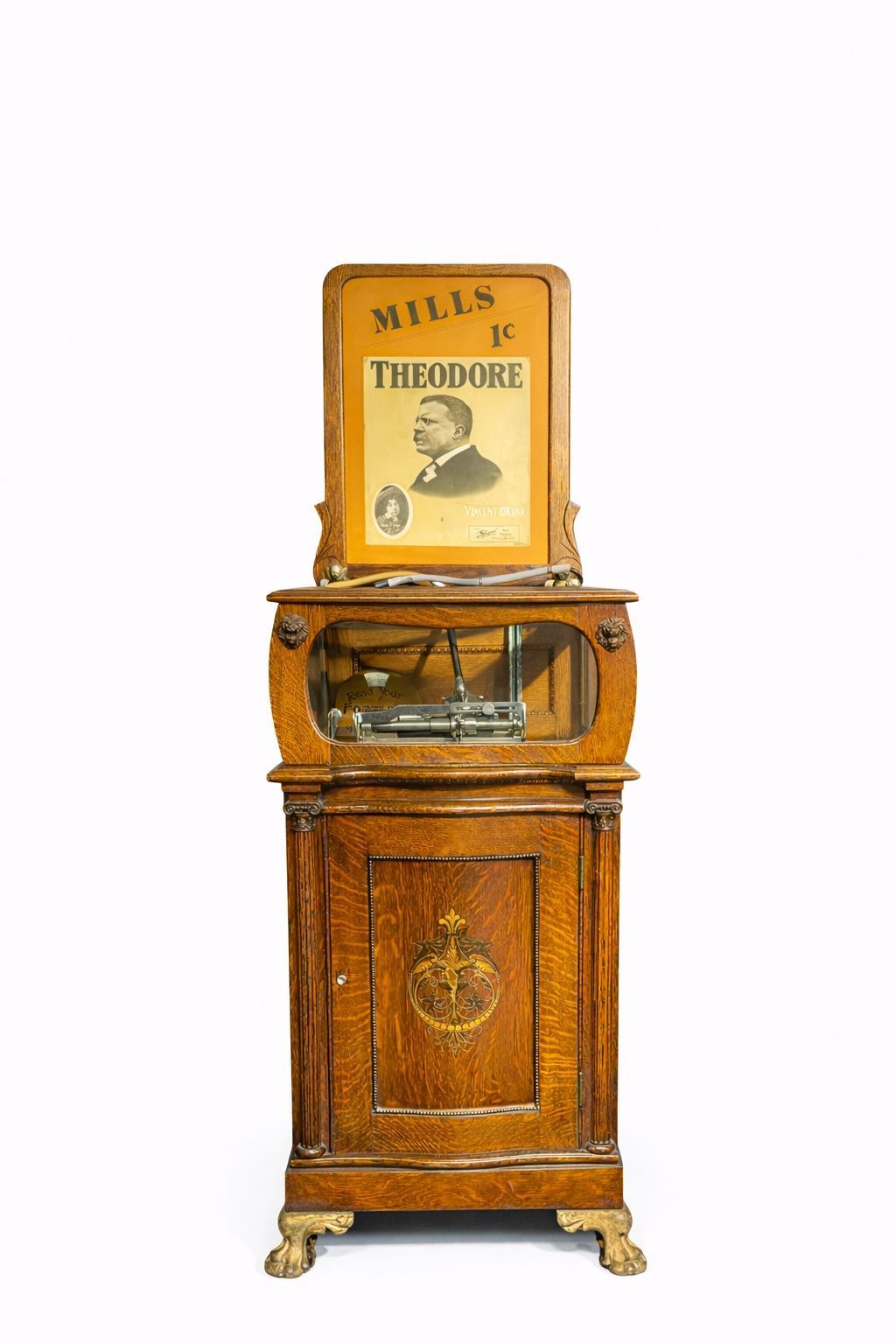
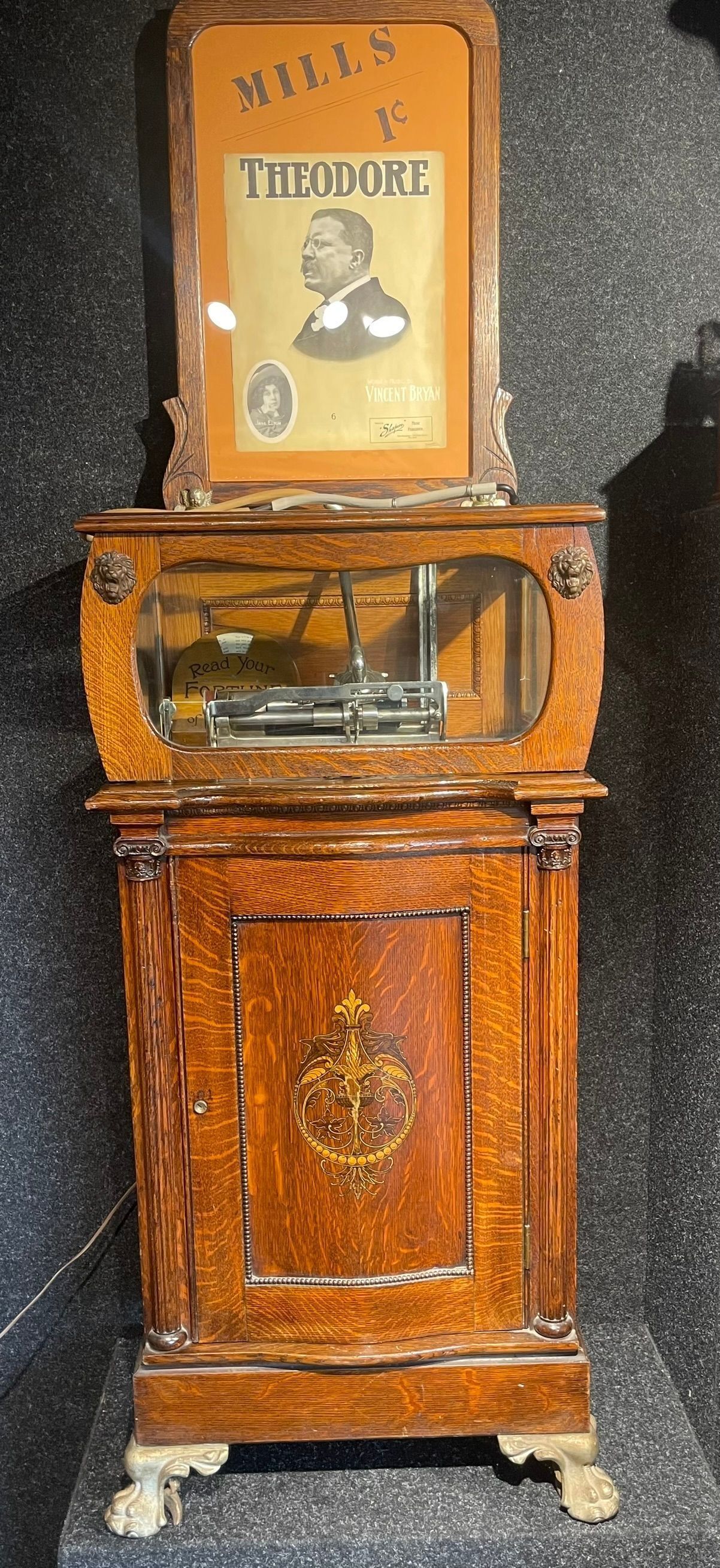
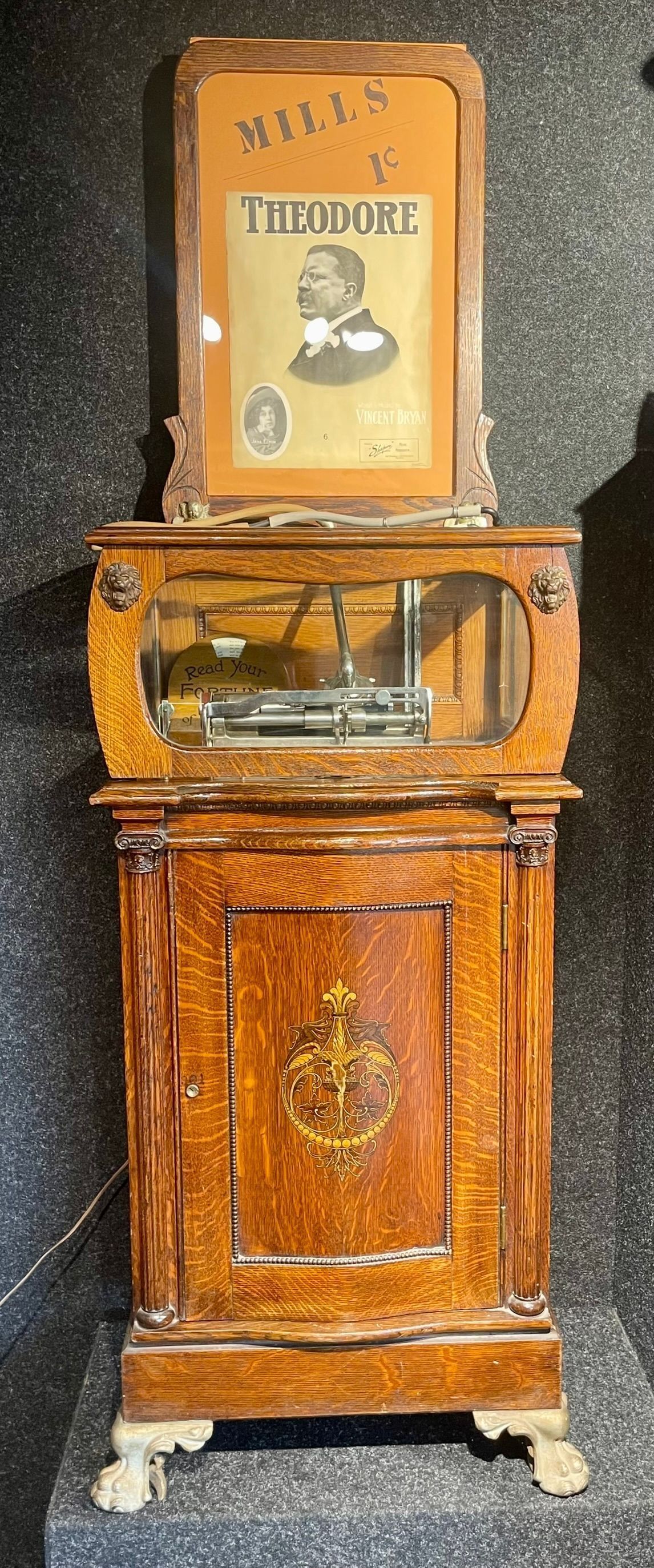
Mills "Fortune Teller" Phonograph
Mills Novelty Company, Chicago, Illinois – ca. 1907–1908
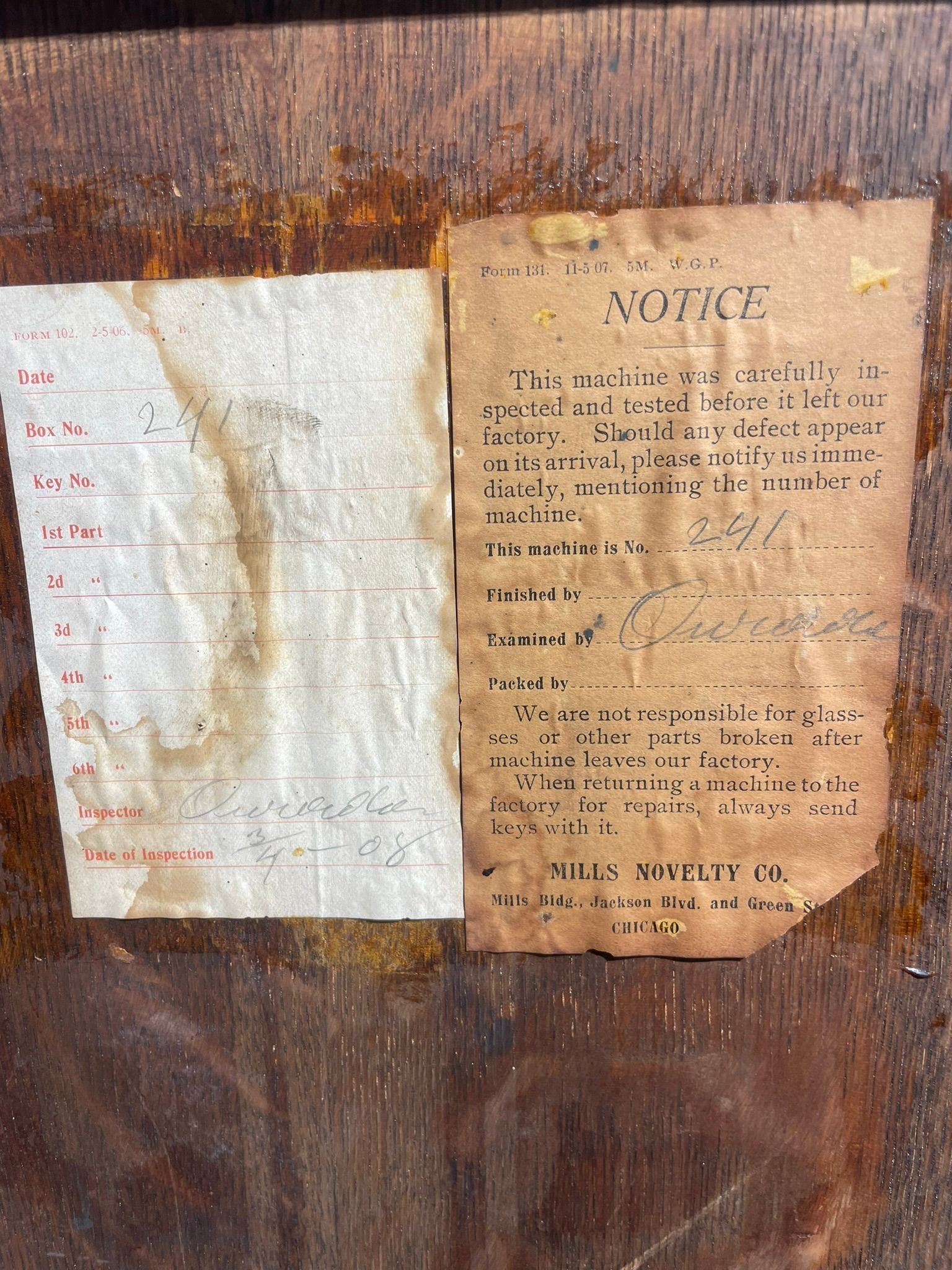
Model No. 241 – Inspected April 1908
One of only two known surviving examples worldwide
Historical Background
At the beginning of the 20th century, the Mills Novelty Company was the world’s largest manufacturer of coin-operated machines. Around 1907, they developed a unique entertainment device that combined music playback with fortune-telling: the "Fortune Teller Phonograph."
The concept was simple and clever: after inserting a coin (1 penny or 5 cents), the phonograph would not only play a cylinder record—it would also reveal a fortune to the customer via a mechanical mechanism.
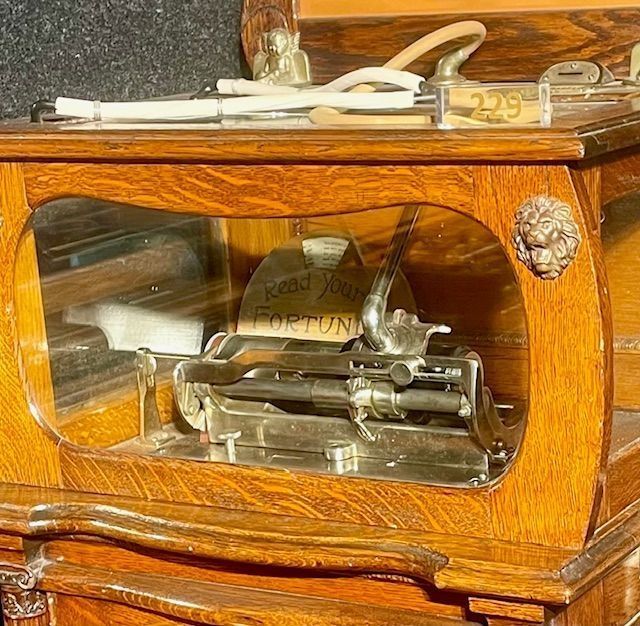
Unlike competing machines that dispensed printed fortune cards (which had to be regularly refilled), the Mills machine used a rotating metal disc featuring multiple printed fortunes. With each play, the disc would advance automatically, presenting a new fortune in a viewing window—no consumables required.
The device appeared in Mills’ catalogues beginning in 1907 and was offered until approximately 1913. Today, only two complete examples are known to exist.
Technical Features
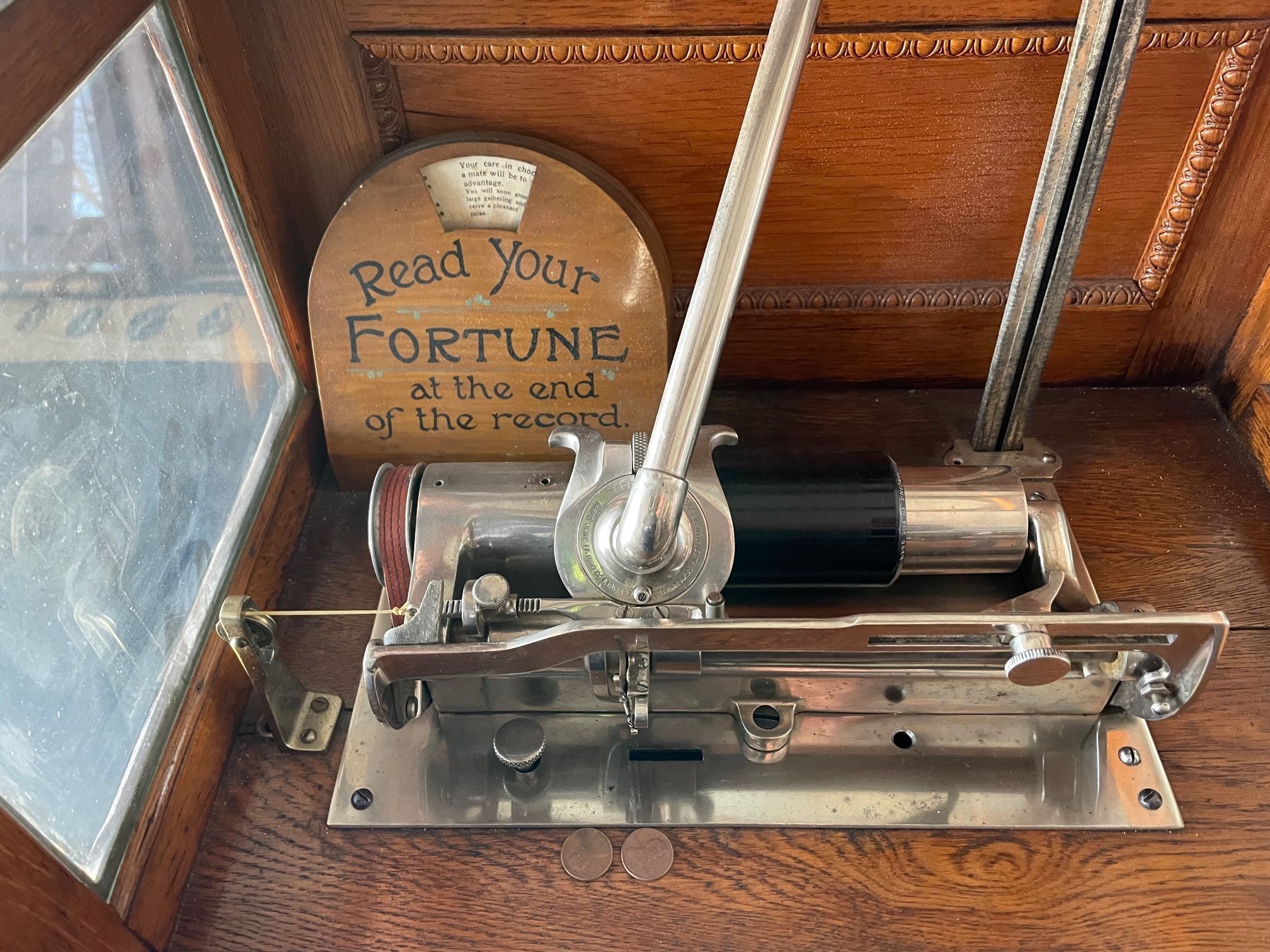
Phonograph Base: Columbia Graphophone Type "BG" (also called “Sovereign”)
Cylinder Formats:
– Standard 2-minute cylinders
– Columbia 6" “Twentieth Century” cylinders (3 minutes)
Reproducer: Columbia Model #12 (front-mounted)
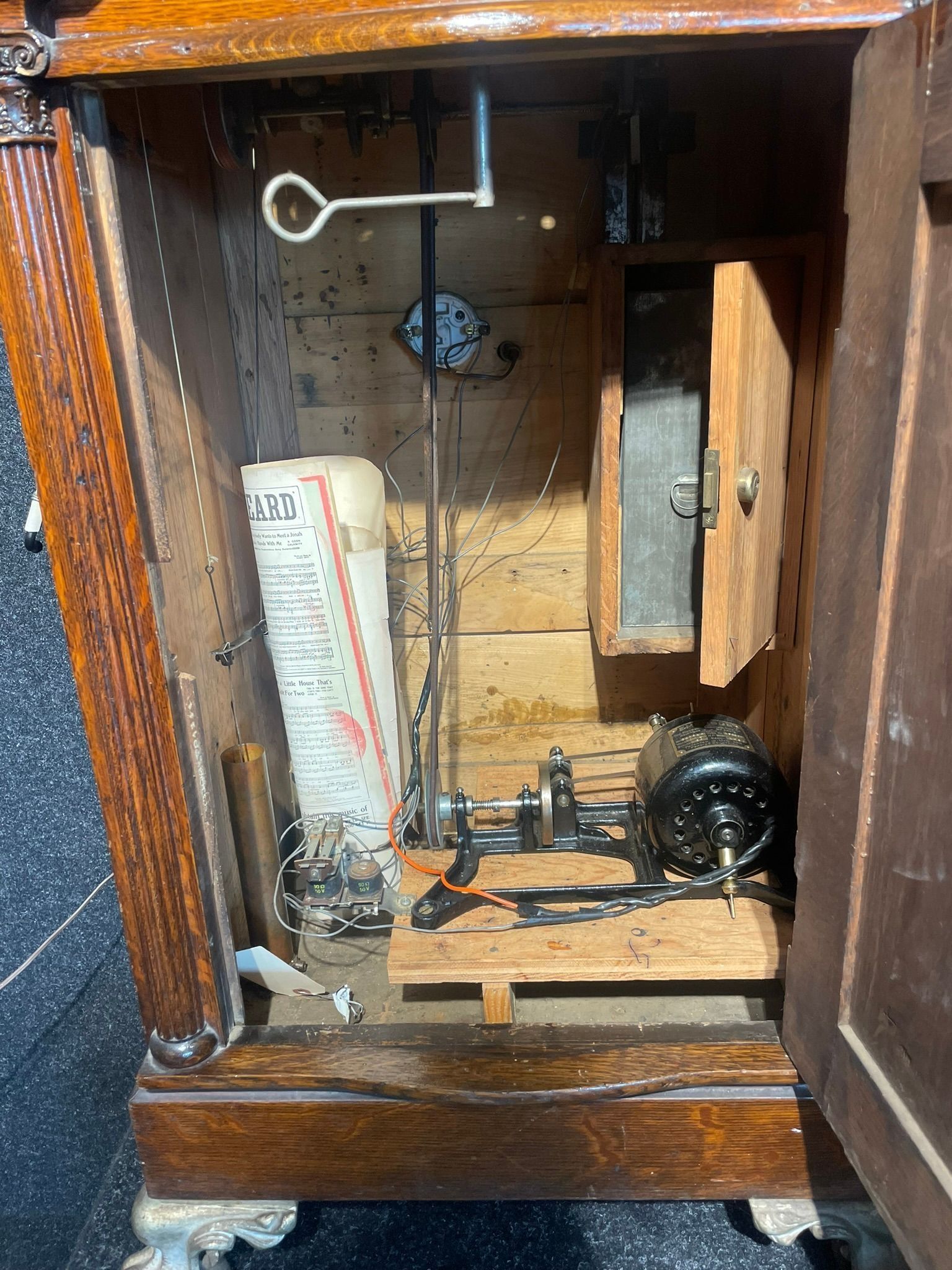
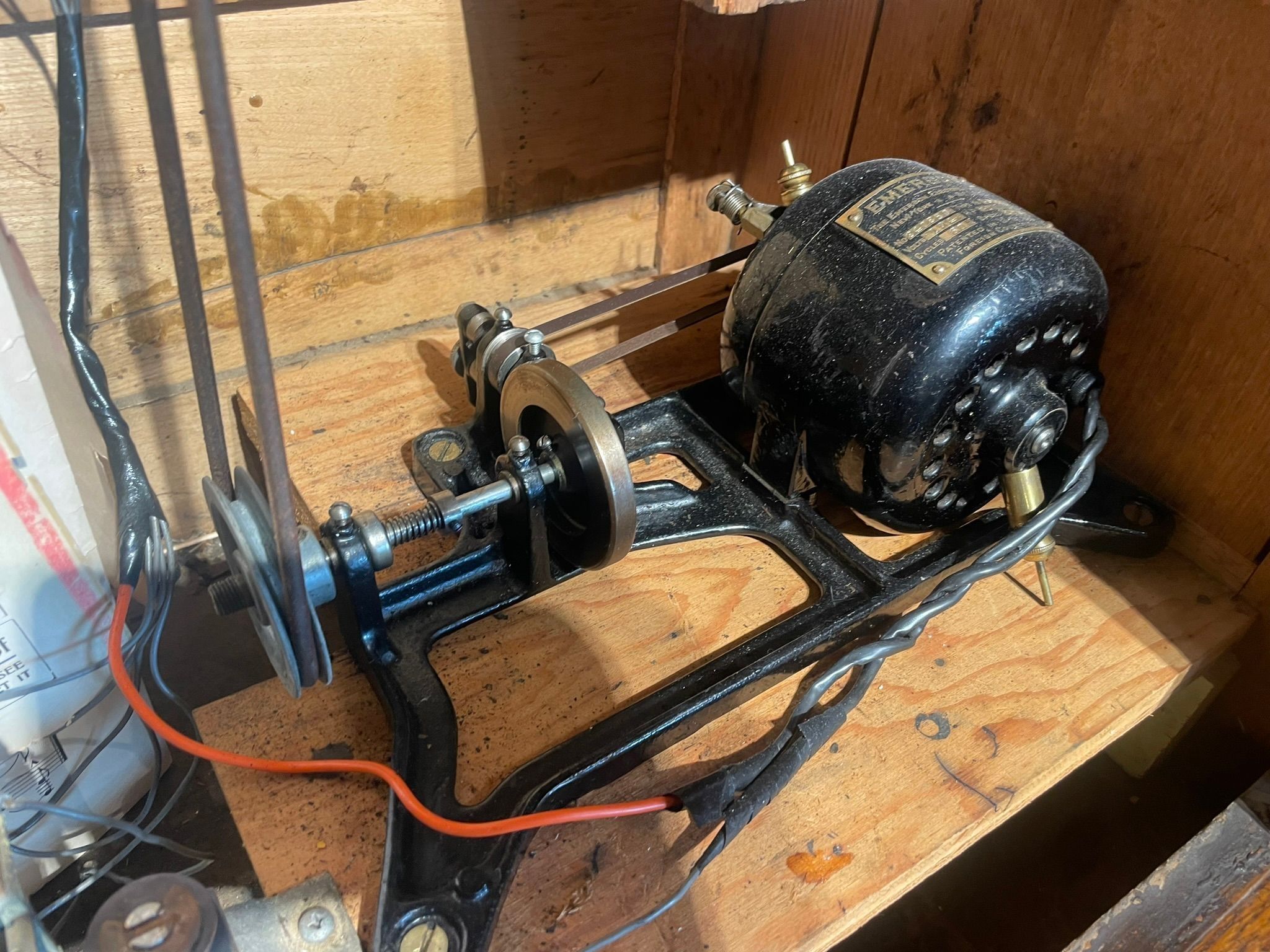
Motor: Emerson electric motor, 104 Volt AC
Carriage Mechanism: Weight-driven return via cord-pulley system
Fortune Mechanism:
– Hidden metal disc with 9 fortunes
– Viewing window reveals one fortune at a time
– Mechanically advanced after each play
Cabinet:
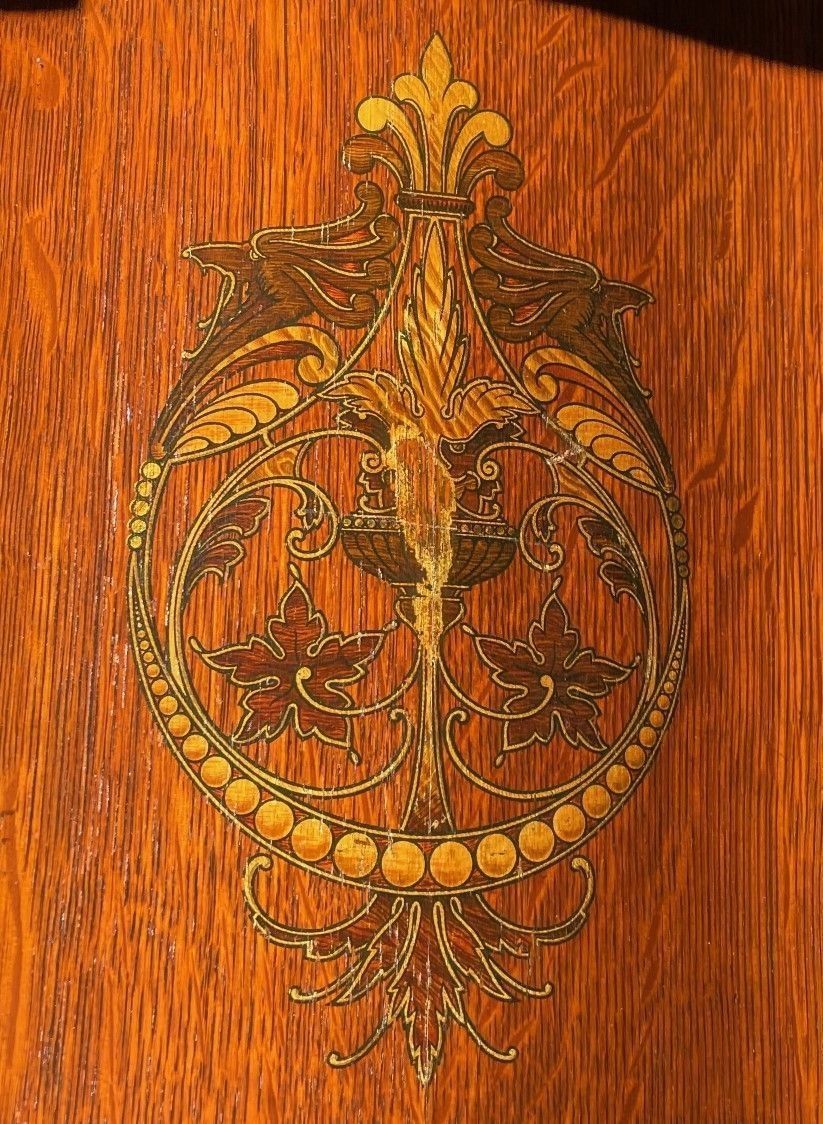
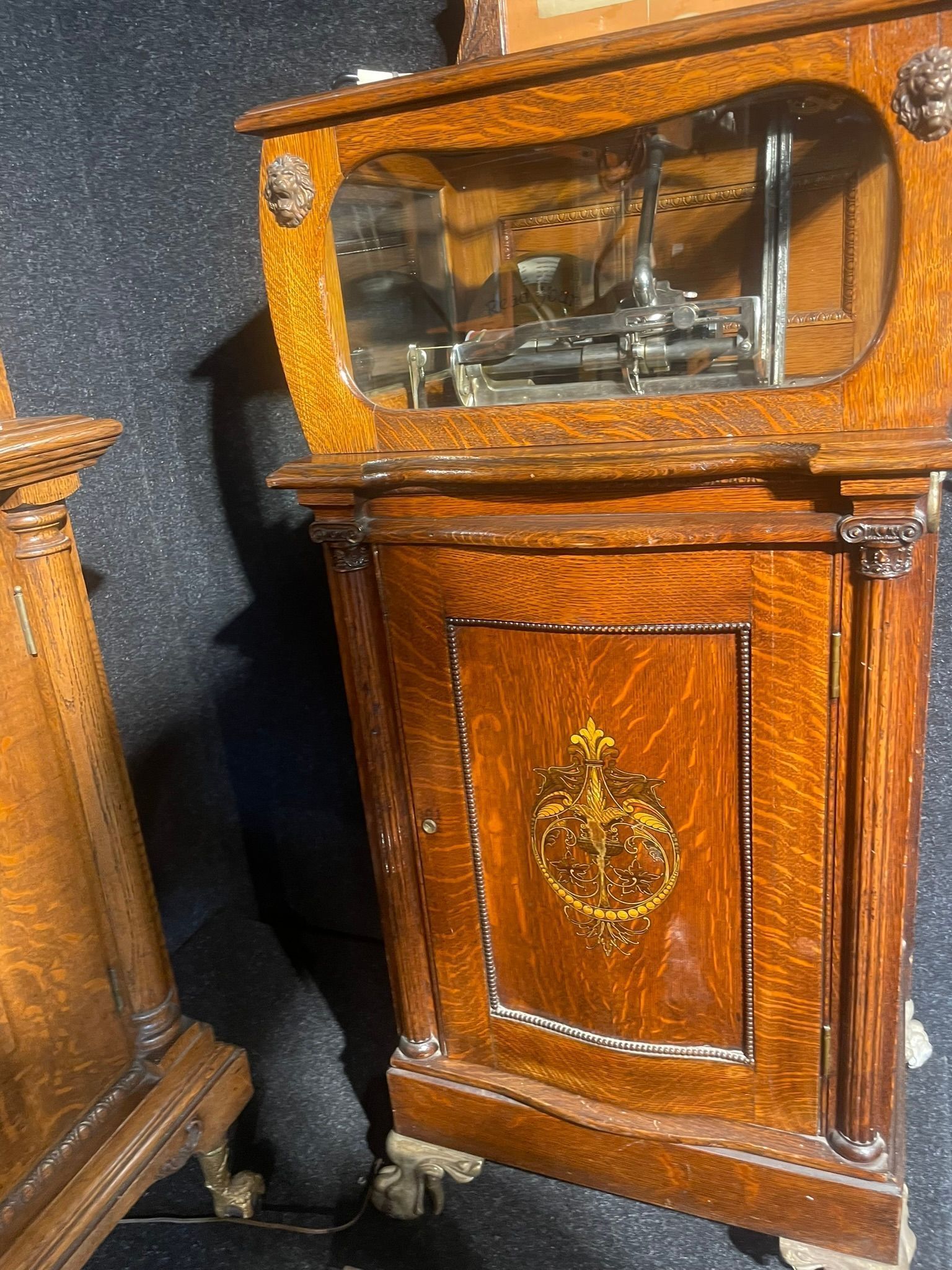
– Solid oak with bombé-style front panel
– Decorated with cast iron lion’s paw feet
– Hinged glass window showcasing internal mechanism
– Black and gold signage: “Read your Fortune at the end of the Record”
Dimensions: 54.5 cm wide × 42 cm deep × 175 cm tall (incl. display board)
How It Works
A coin is inserted, activating the motor and starting cylinder playback.
The carriage moves automatically across the mandrel.
At the end of the record, a mechanical contact lifts the reproducer off the cylinder.
At the same time, a string pulls the fortune disc, advancing it to the next position.
A new fortune appears in the display window.
The carriage returns to the start position automatically.
Significance
The Mills Fortune Teller was one of the earliest examples of immersive mechanical entertainment. By blending music, mechanics, and mysticism, it captured the public’s fascination with both novelty and the supernatural. It was particularly popular in arcades, vaudeville halls, and amusement parlors.
Its clever design—eliminating the need for paper fortunes—made it cost-effective for operators.
Today, the Mills Fortune Teller is an extreme rarity. The example shown here at the Edisonium (Box No. 241, inspected in April 1908) is one of only two known surviving original machines in the world.