Name/Title
Pathé “Le Céleste” Phonograph (France, ca. 1900)Entry/Object ID
238Description
The largest, heaviest, and most exclusive cylinder phonograph ever made in Europe
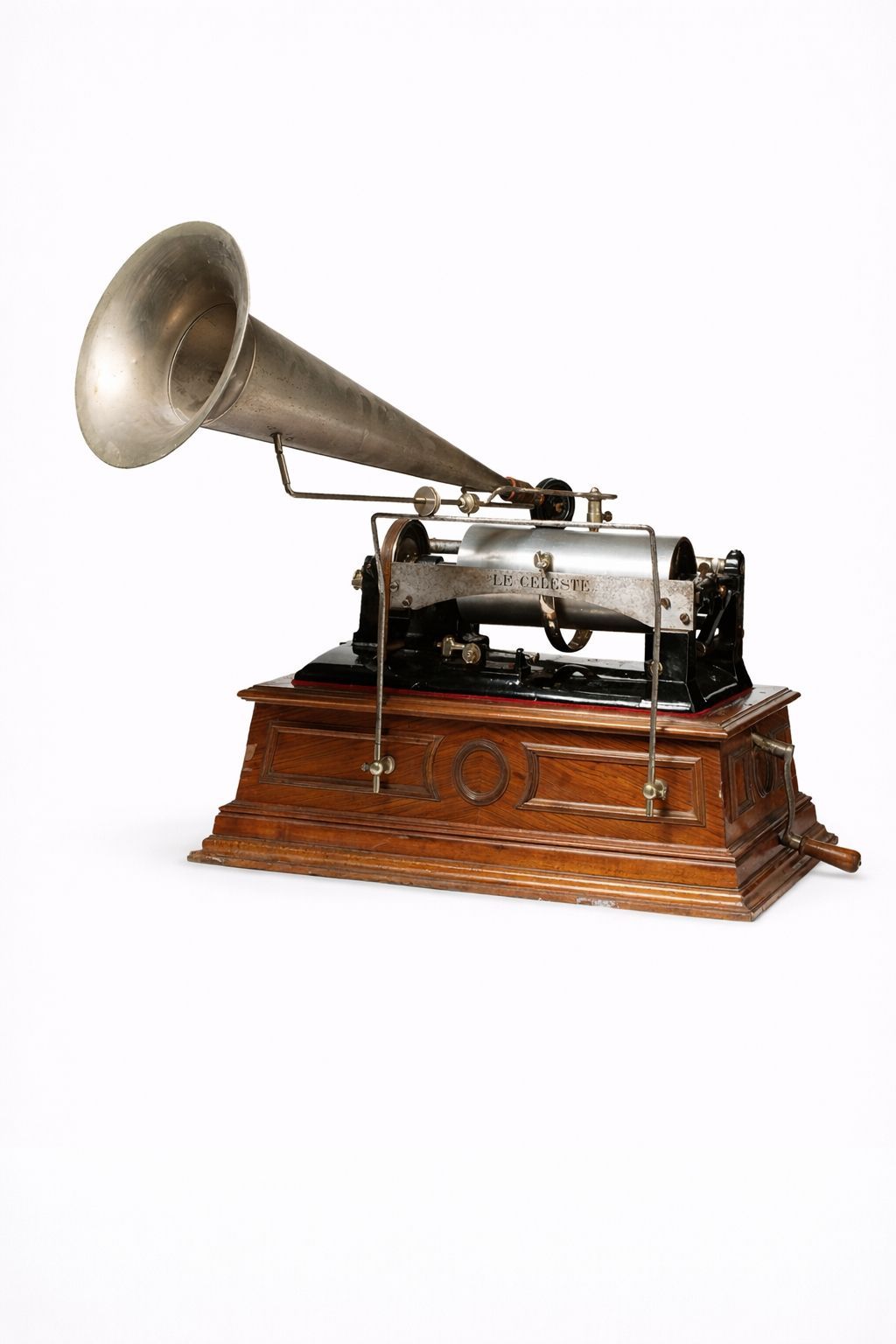
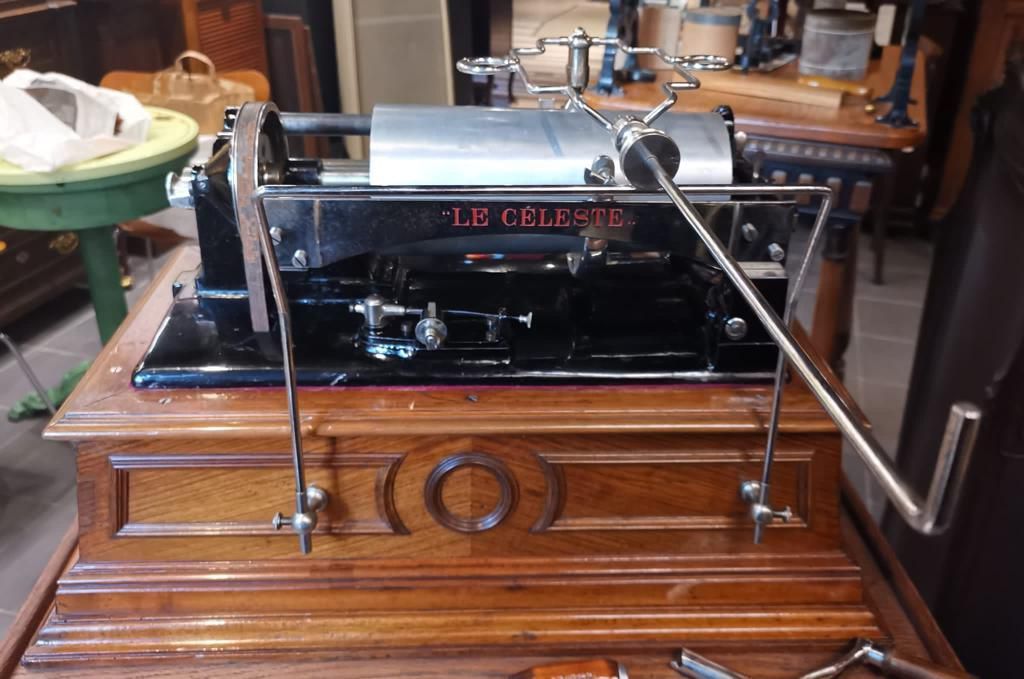
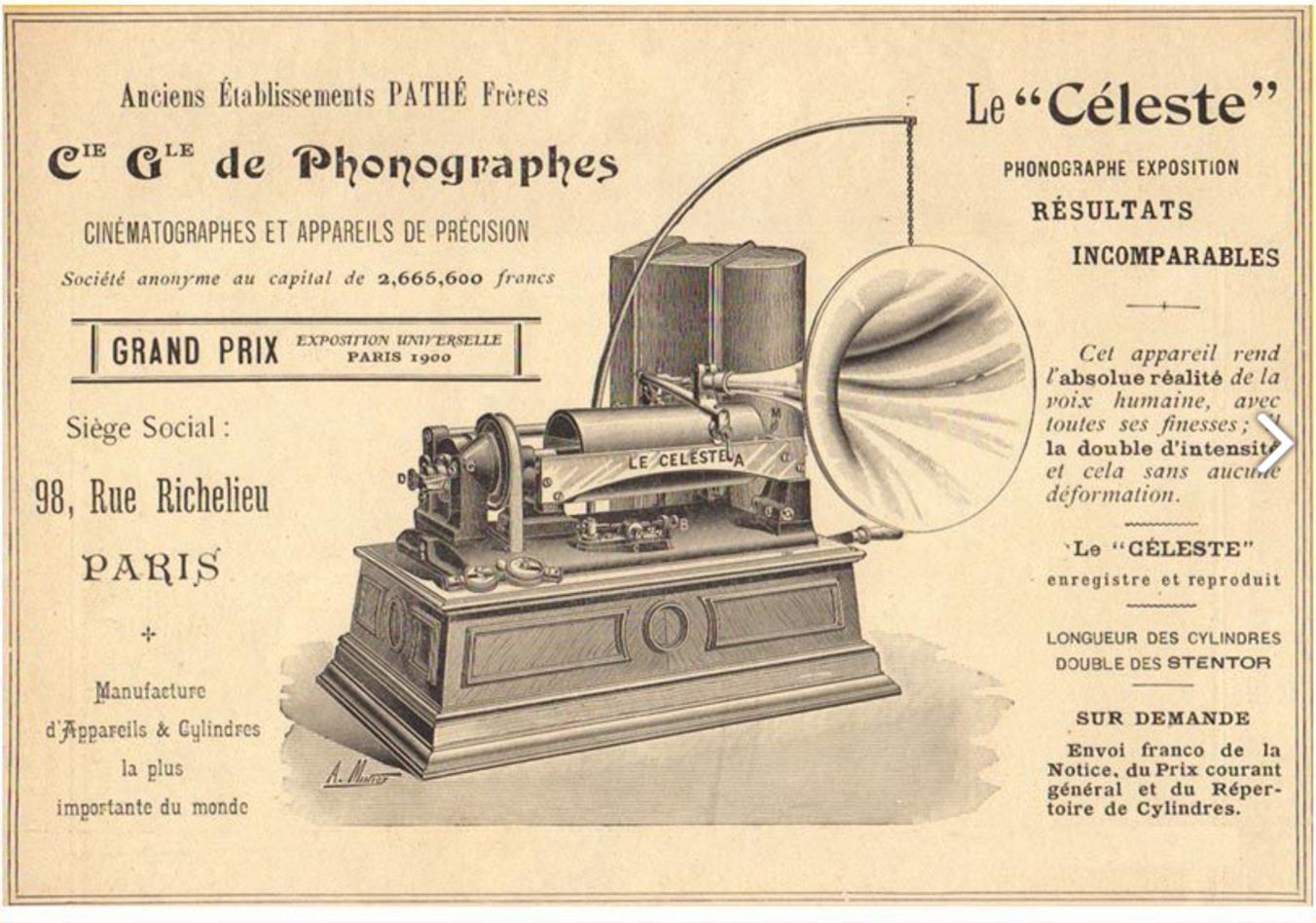
The “Céleste” by Pathé Frères ranks among the most impressive phonographs ever manufactured in Europe. As the company’s flagship model, it combined technical precision, exceptional sound quality, and luxurious design at the highest level.
Two formats – double the sonic power
The machine is capable of playing two types of cylinders:
Stentor cylinders with a diameter of 12.7 cm and a length of 10.2 cm – also known as “Concert Cylinders”
Céleste cylinders with the same diameter but an extended length of 23.9 cm – the largest commercially produced cylinders in Europe
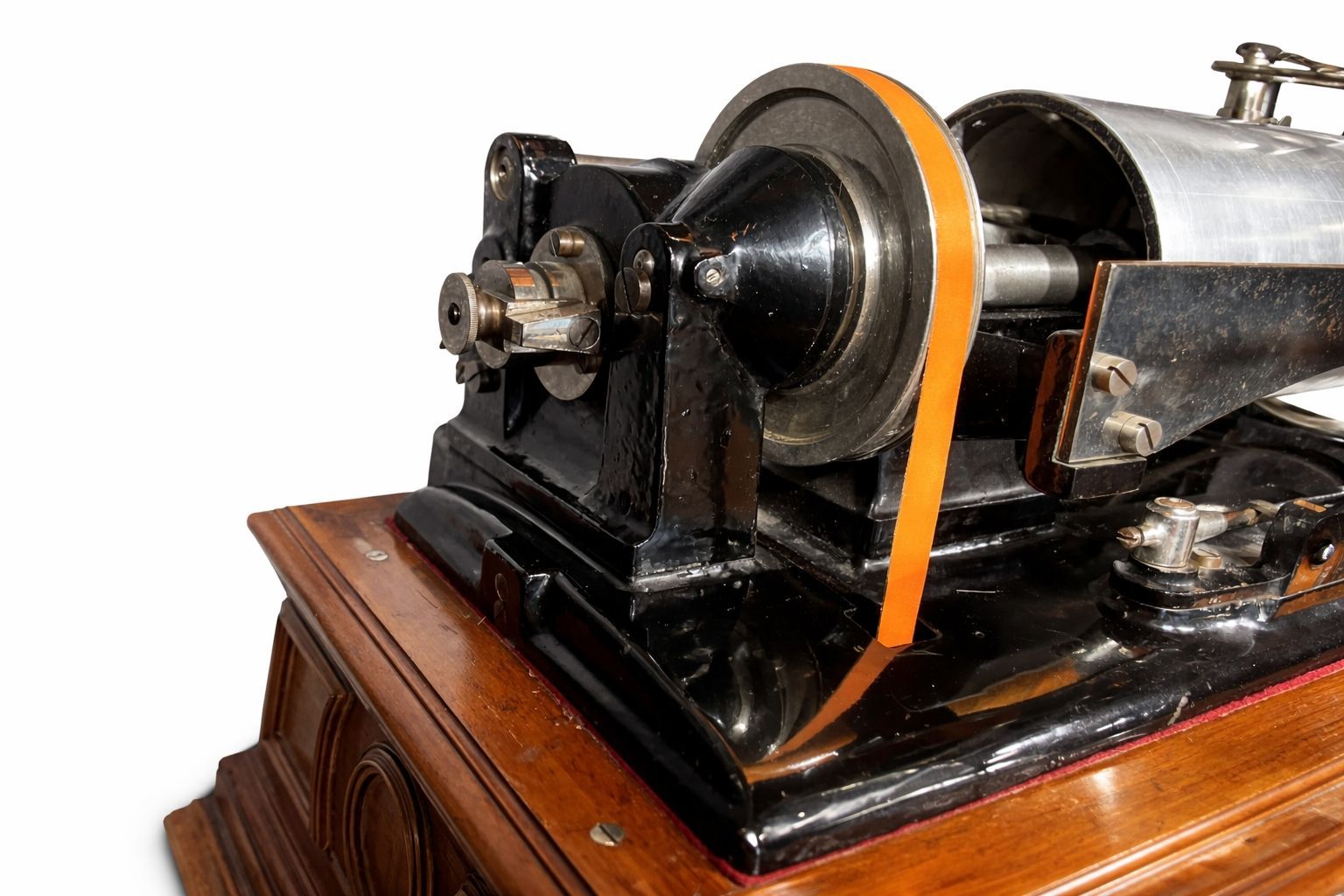
A built-in transmission system allows precise switching of playback speed depending on the selected cylinder type.
Sound quality and usage
The “Céleste” produced powerful volume and remarkable clarity. It was therefore used not only in private settings but also prominently in silent film cinemas to provide musical accompaniment during screenings. Its construction allowed for sound projection across large rooms – a notable achievement in an era without electronic amplification.
A luxury device for the few
The price of the “Céleste” was roughly equivalent to the cost of a small apartment in Paris at the time. Only wealthy individuals or professional institutions could afford such a device. Consequently, very few units were produced – today, only around eight examples are known to exist worldwide.
Technical and historical significance
The “Céleste” represents the peak of European cylinder phonograph technology. Shortly thereafter, the disc format took over the market, and cylinder machines rapidly fell out of favor. As the final major attempt to elevate the cylinder format to a new level, the “Céleste” is a rare and precious relic from the early days of recorded sound.
Conclusion
The Pathé “Céleste” is a true milestone in the history of sound reproduction – powerful, majestic, and exceedingly rare. It exemplifies the ambitious craftsmanship of early French engineering and the cultural value of sound in the pre-electronic era. The example on display at the Edisonium Mariazell is one of the finest surviving specimens and stands as a crowning achievement of European phonograph development.