Name/Title
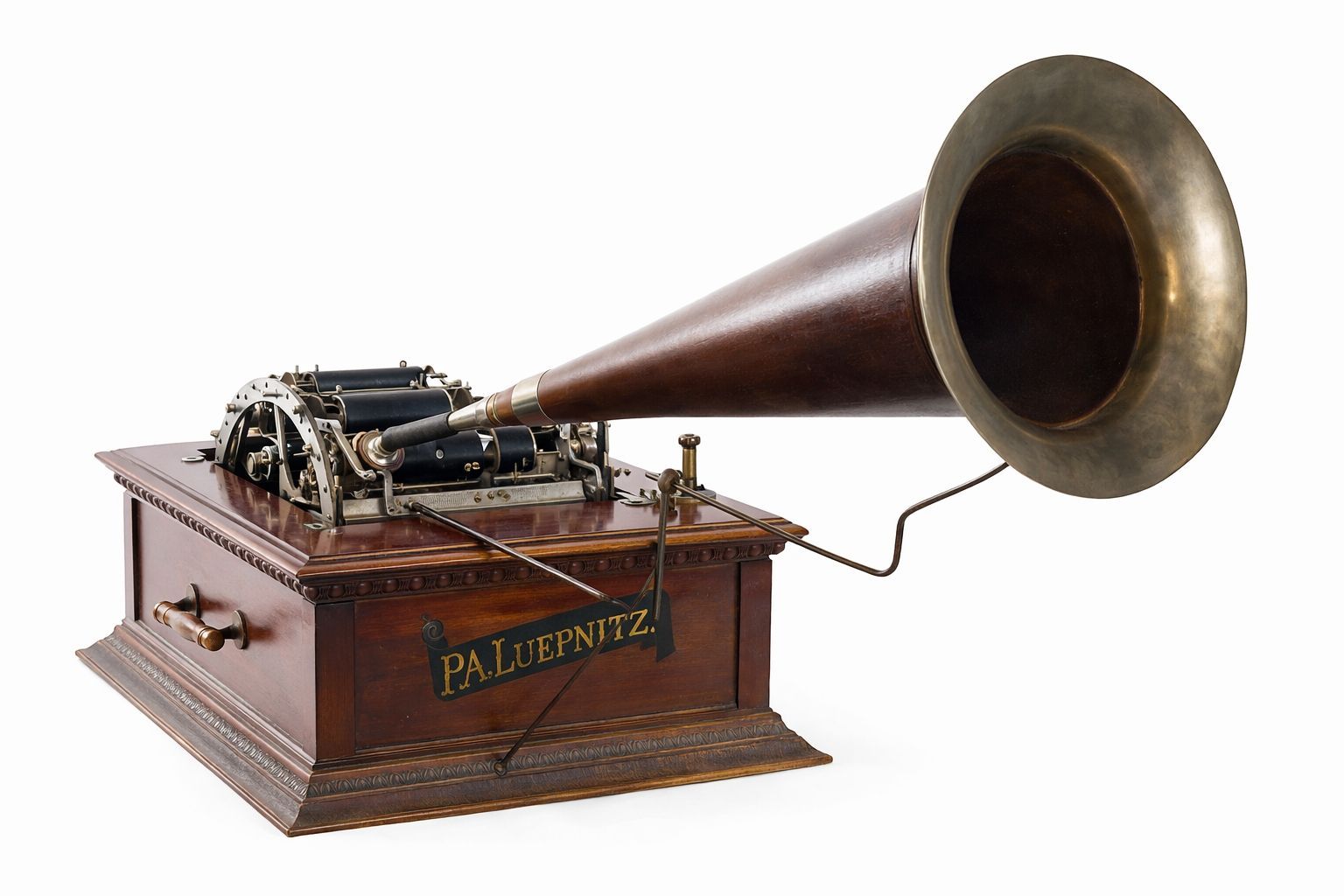
Paul August Luepnitz – Multi‑Cylinder Phonograph 1908Entry/Object ID
196Description
American / French Patent Model – ca. 1908
Weight: approx. 45 kg – Only Known Example Worldwide
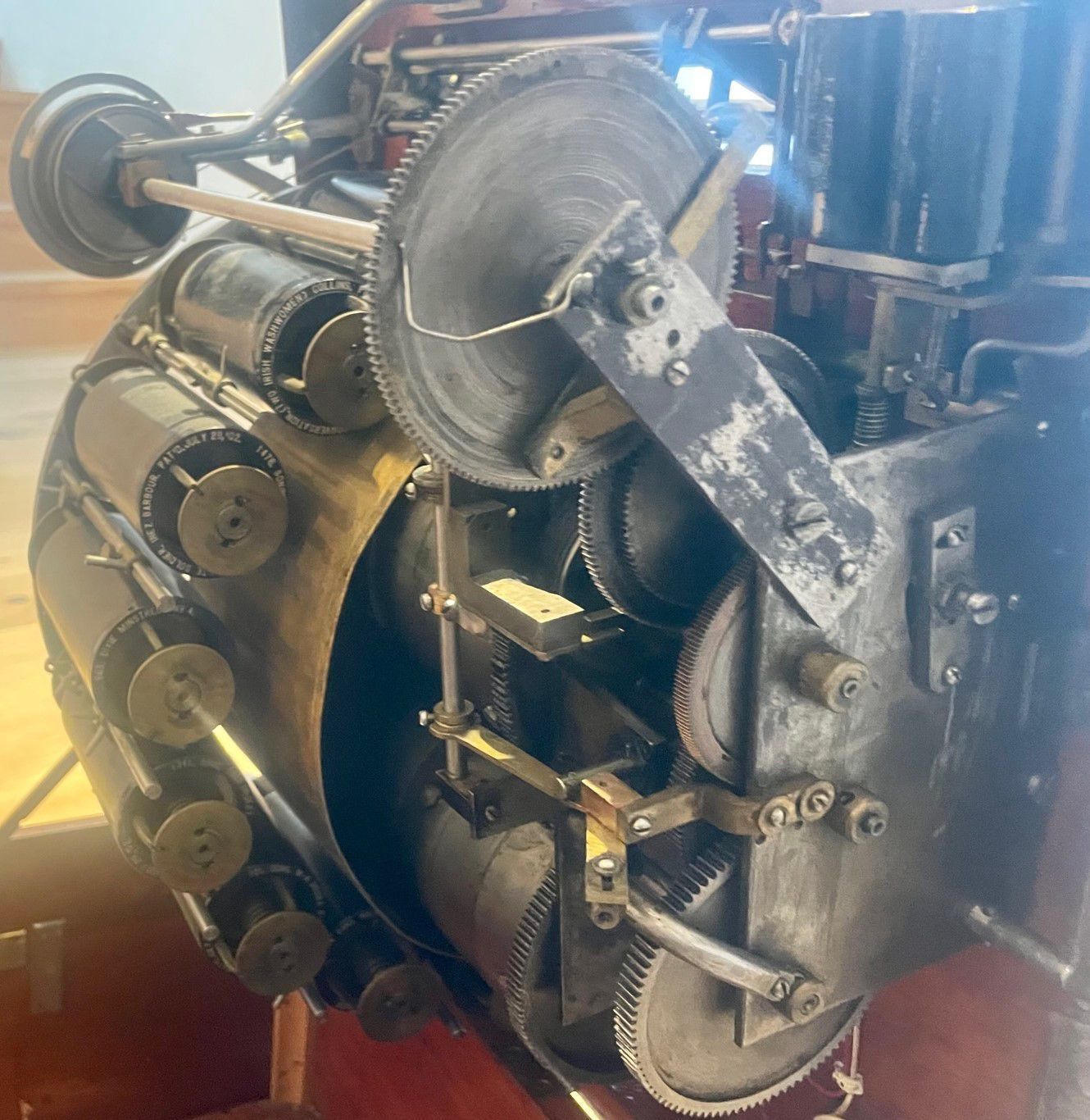
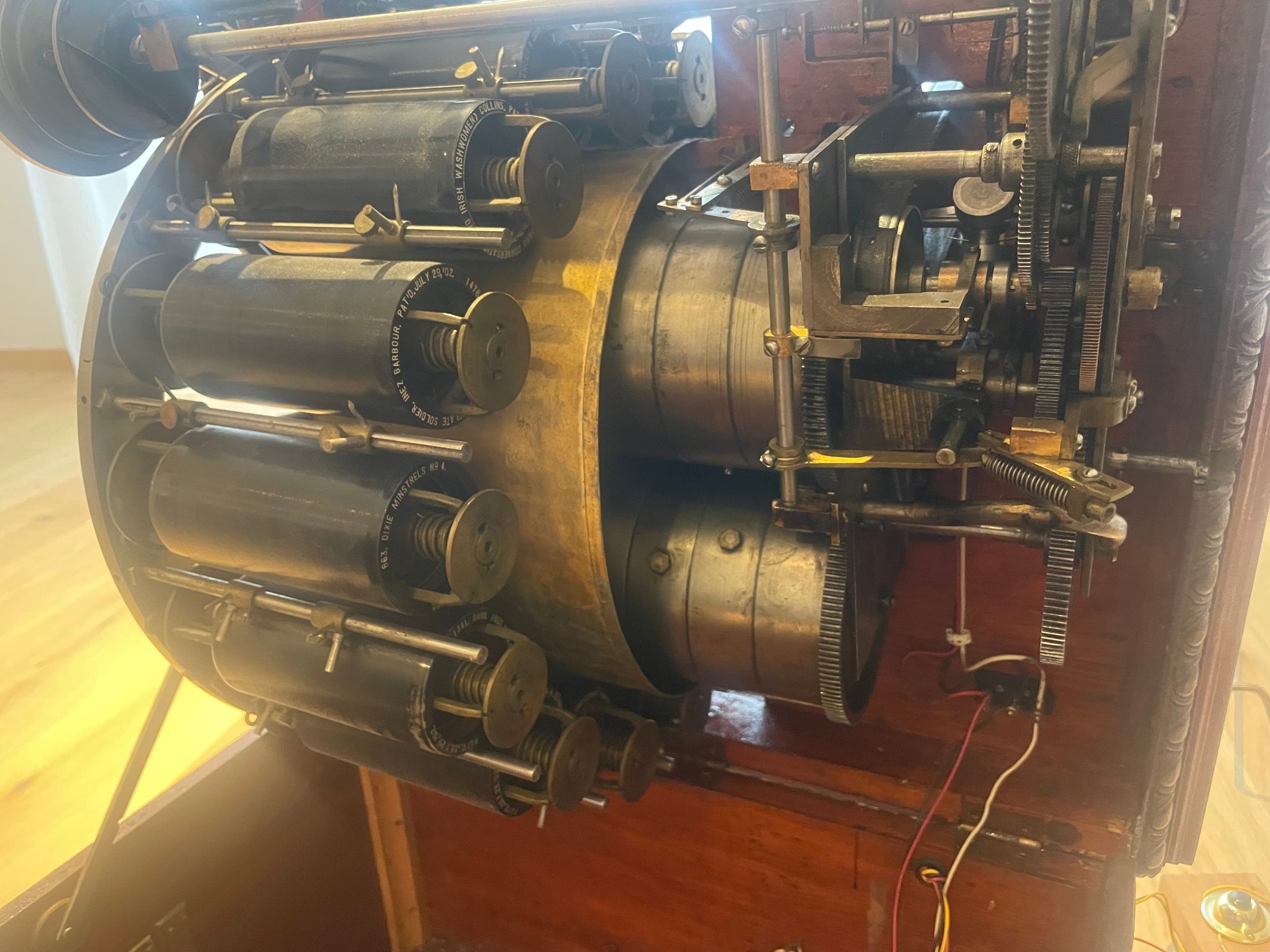
This extraordinary and extremely rare machine is the only known surviving example of the patented multi‑cylinder phonograph invented by Paul August Luepnitz, a telegraph operator from Allenville, Michigan (USA). It is based on:
British Patent No. 901, filed January 14, 1908, granted January 14, 1909
French Patent No. 386.218, filed January 14, 1908, granted April 7, 1908
A Revolutionary Concept
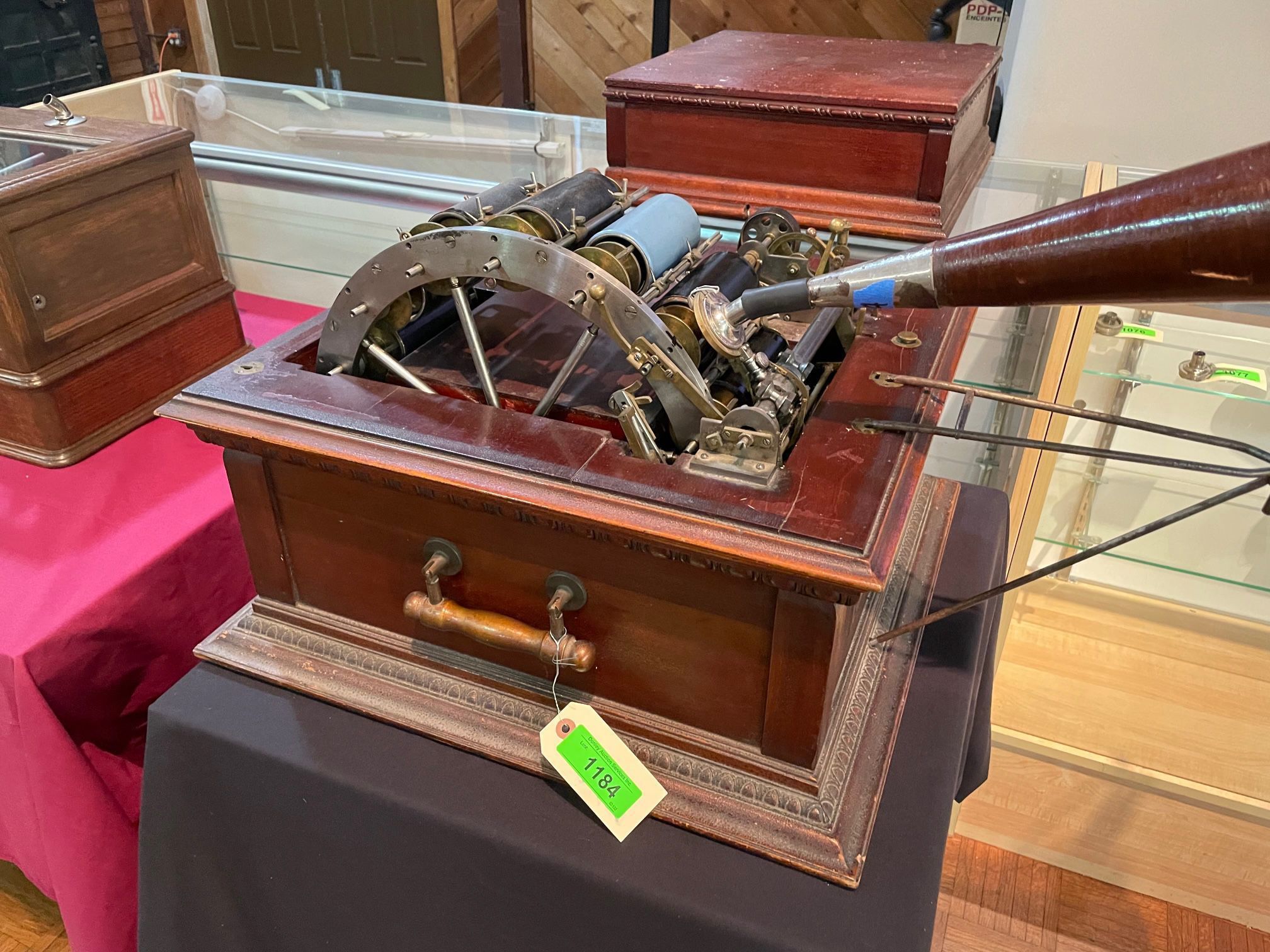
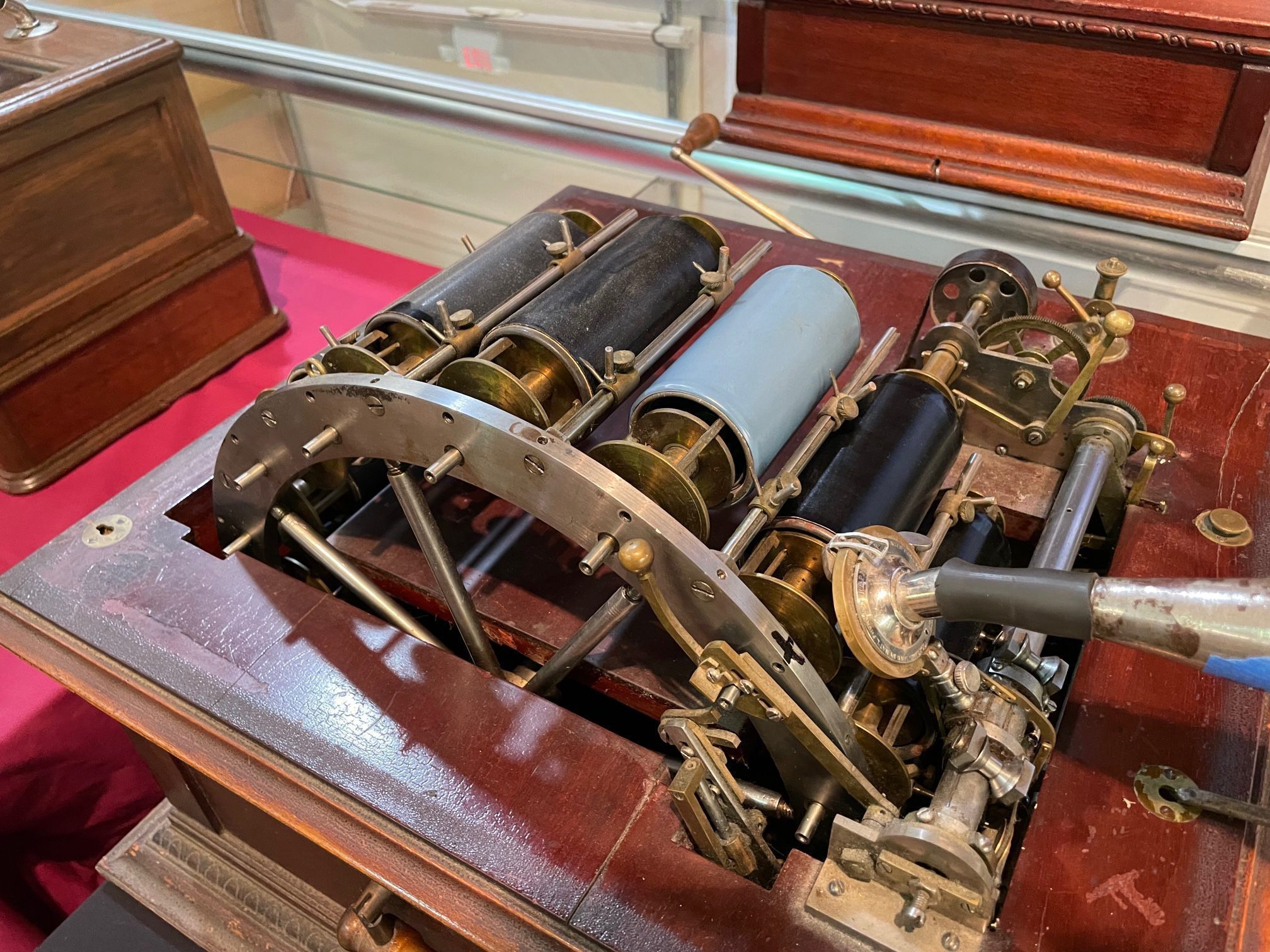
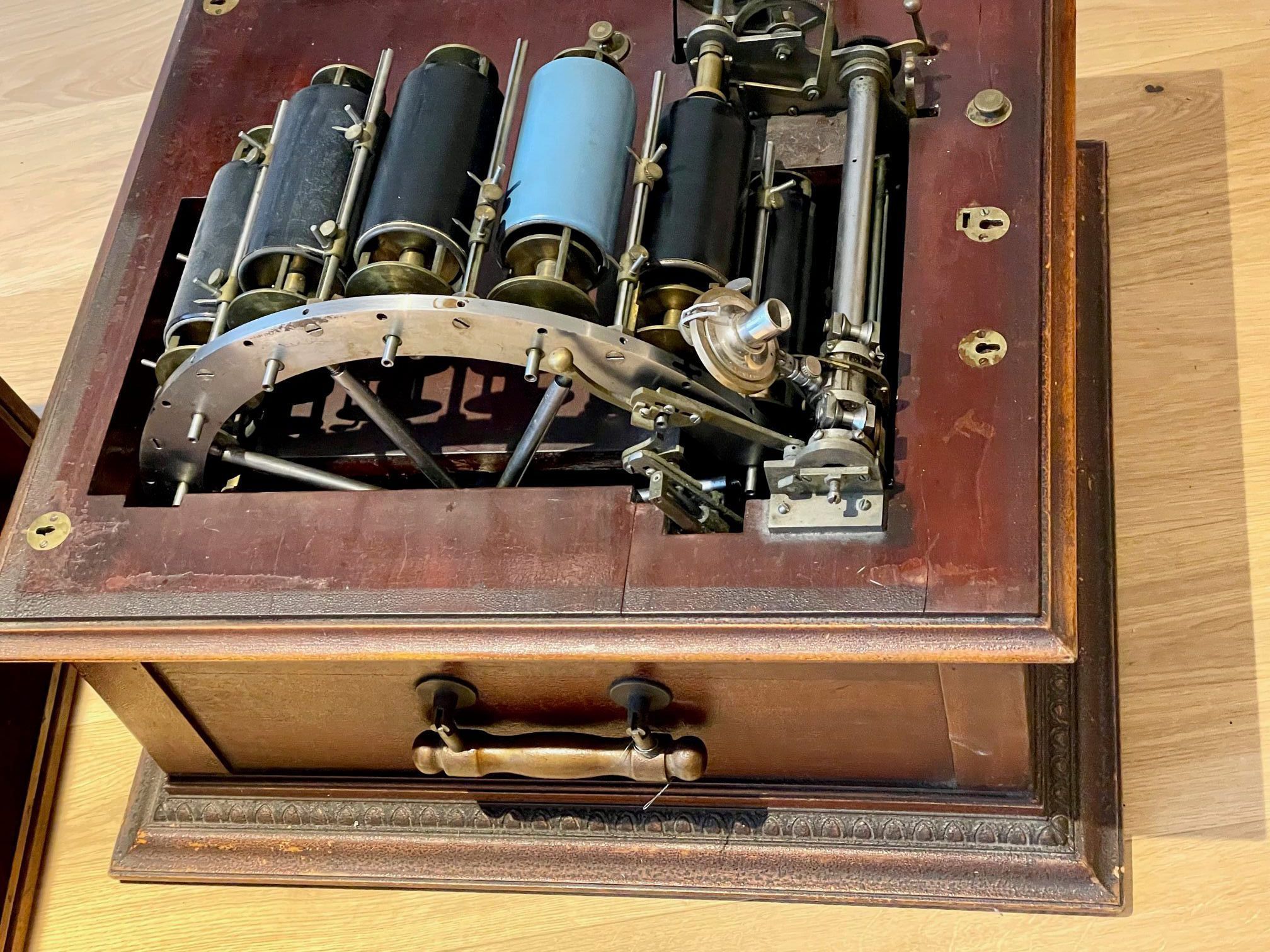
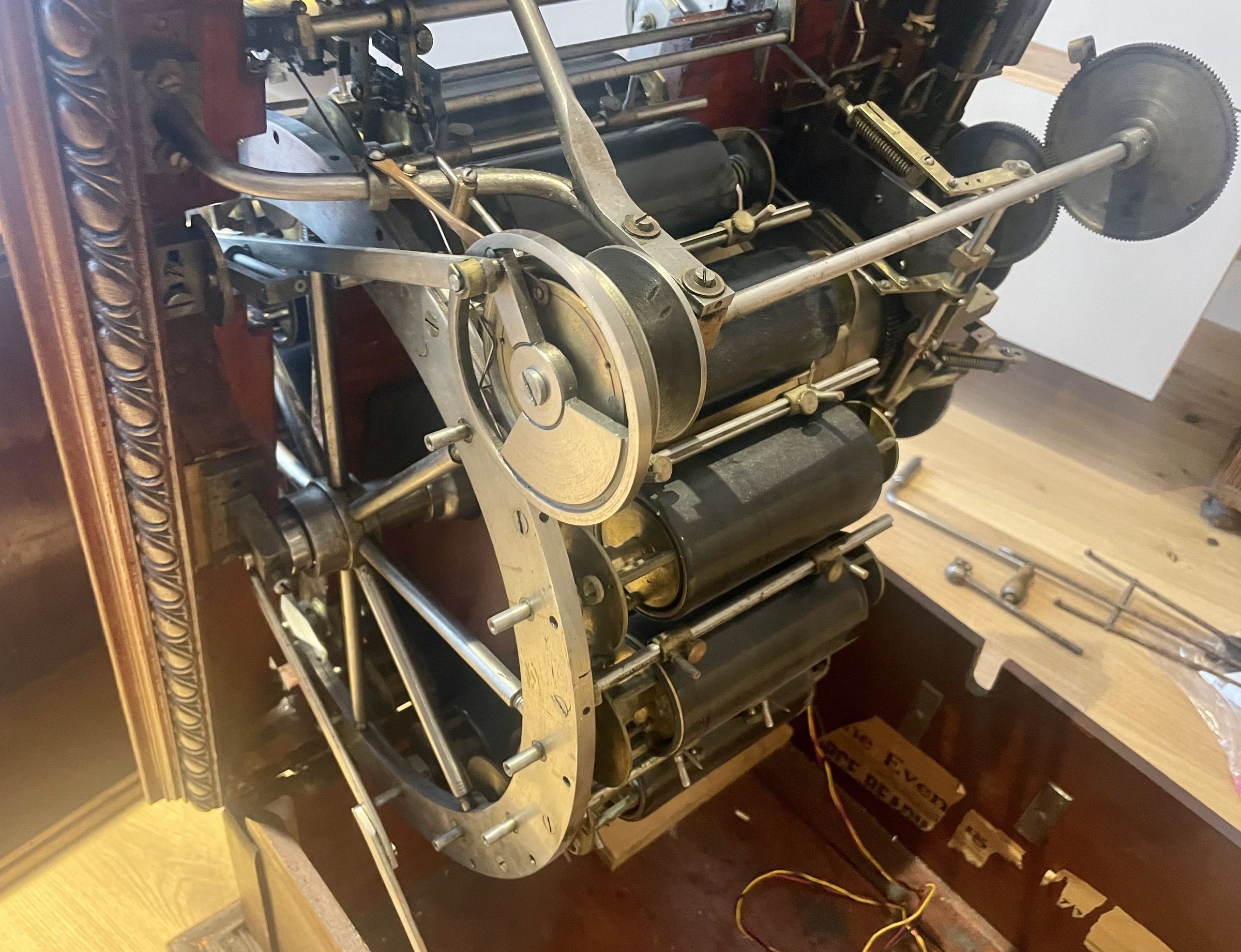
Luepnitz’s invention was a multi‑cylinder phonograph designed to hold twelve separately mounted mandrels, arranged radially on a large, vertically mounted, rotating wheel. Each cylinder could be automatically positioned in front of a single reproducer carriage for playback. After one cylinder finished, the device – controlled by an electro‑mechanical system – would automatically switch to the next.
Key Technical Features from the Patents
Rotating Cylinder Wheel: Vertically mounted wheel with up to 12 horizontal mandrels.
Indexing Mechanism: Spring‑loaded detent for precise alignment of each mandrel.
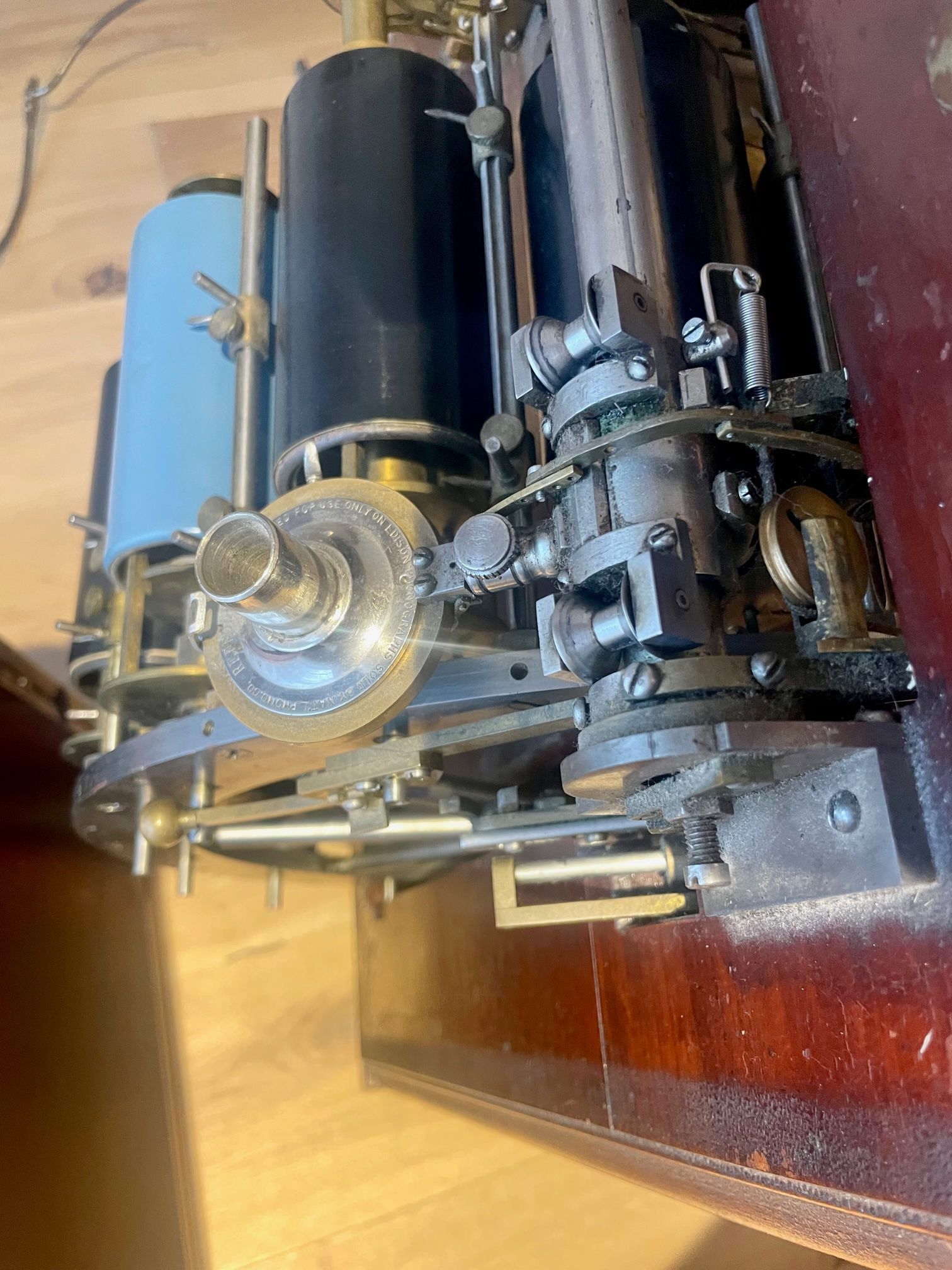
Reproducer Carriage: Runs on a guide rail, engaging a threaded feedscrew via a half‑nut coupling.
Electromagnetic Control:
Two electromagnets triggered by contact fingers at the start and end of carriage travel.
Operated clutches, lifted the reproducer, rotated the wheel to the next cylinder, and lowered the reproducer back into position.
Drive System: Large, heavy coiled springs similar to those used in polyphons, powering both cylinder rotation and wheel indexing via clutches and belts.
Dual‑Cord Return: Cord system returned the carriage and rotated the wheel simultaneously.
Heavy‑Duty Construction: Approx. 45 kg, robust cast‑ and machined‑metal framework, built for long service life.
Electro‑Mechanical Innovation
Unlike earlier purely mechanical multi‑cylinder designs, Luepnitz combined mechanical engineering with electrical switching and electromagnets, enabling a fully automated sequence:
Stop playback
Lift the reproducer
Rotate the cylinder wheel
Lower the reproducer onto the next cylinder
The result was near‑continuous playback of multiple recordings without manual intervention.
Historical Significance
This was one of the earliest serious attempts to build an automatic multi‑record phonograph. Due to its mechanical complexity and likely high production cost, it appears to have remained a prototype.
Provenance
From the collection of noted phonograph historian Howard Hazelcorn. A unique and irreplaceable artefact of experimental sound reproduction technology.