Name/Title
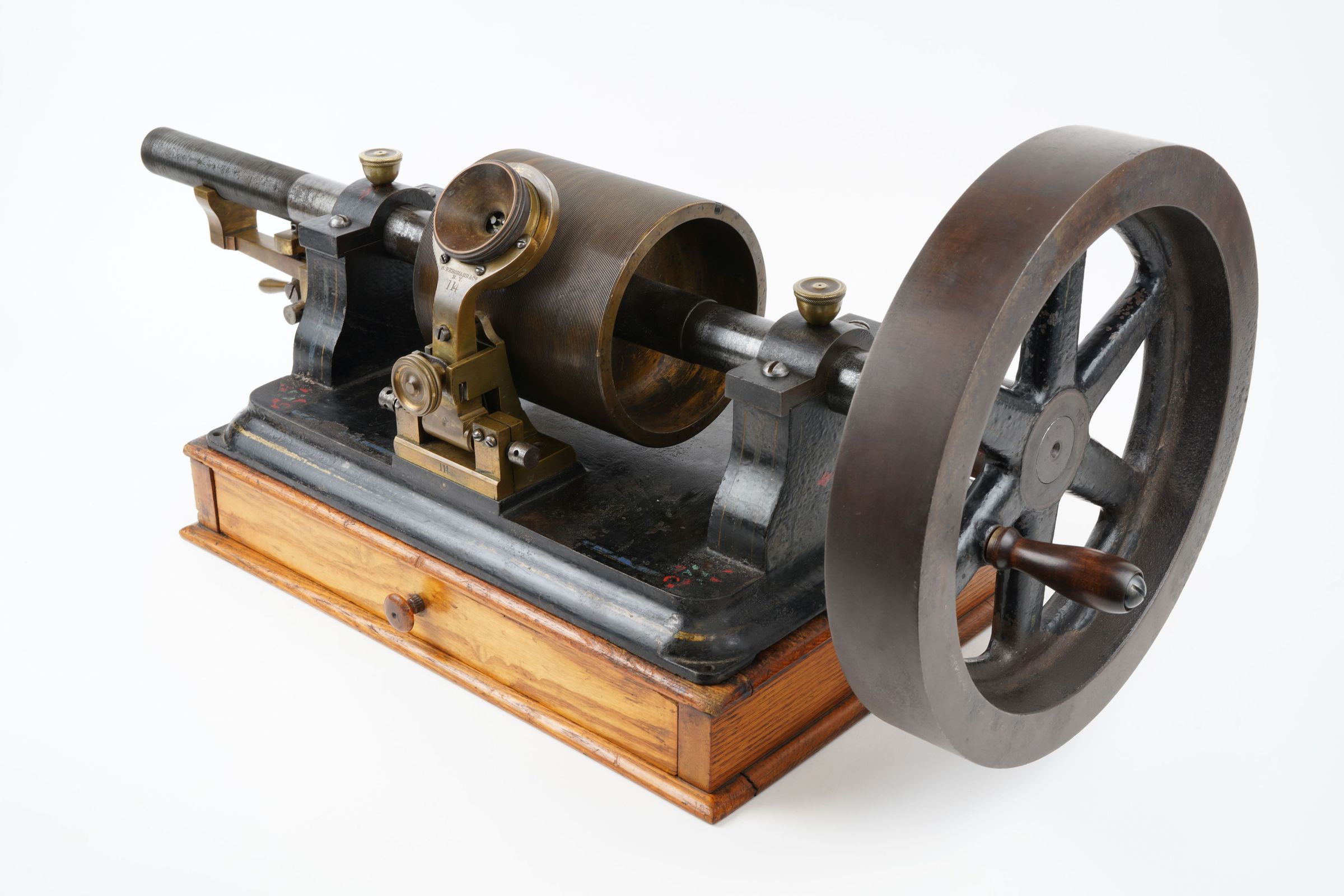
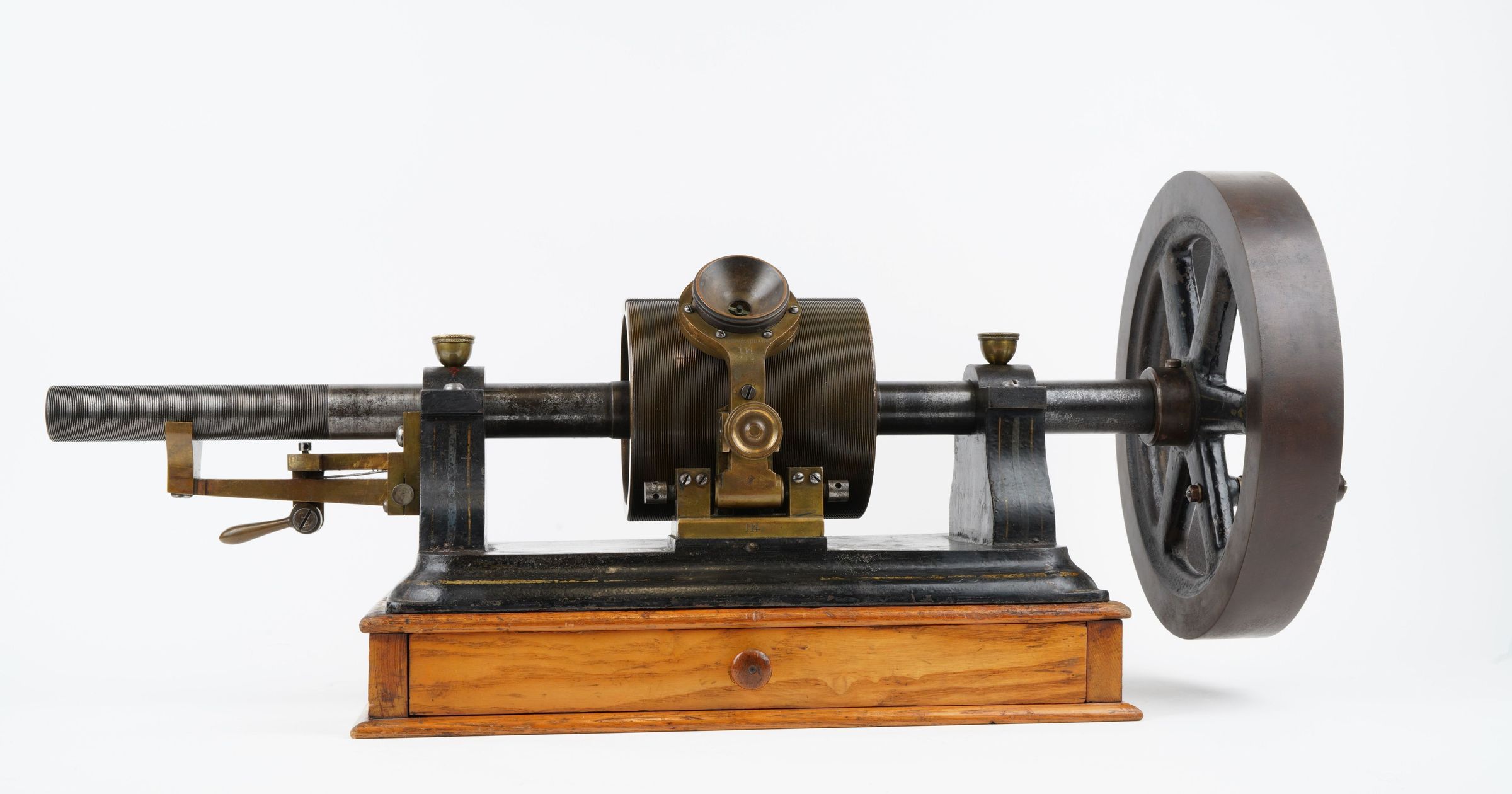
Bergmann Exhibition TinfoilEntry/Object ID
101Description
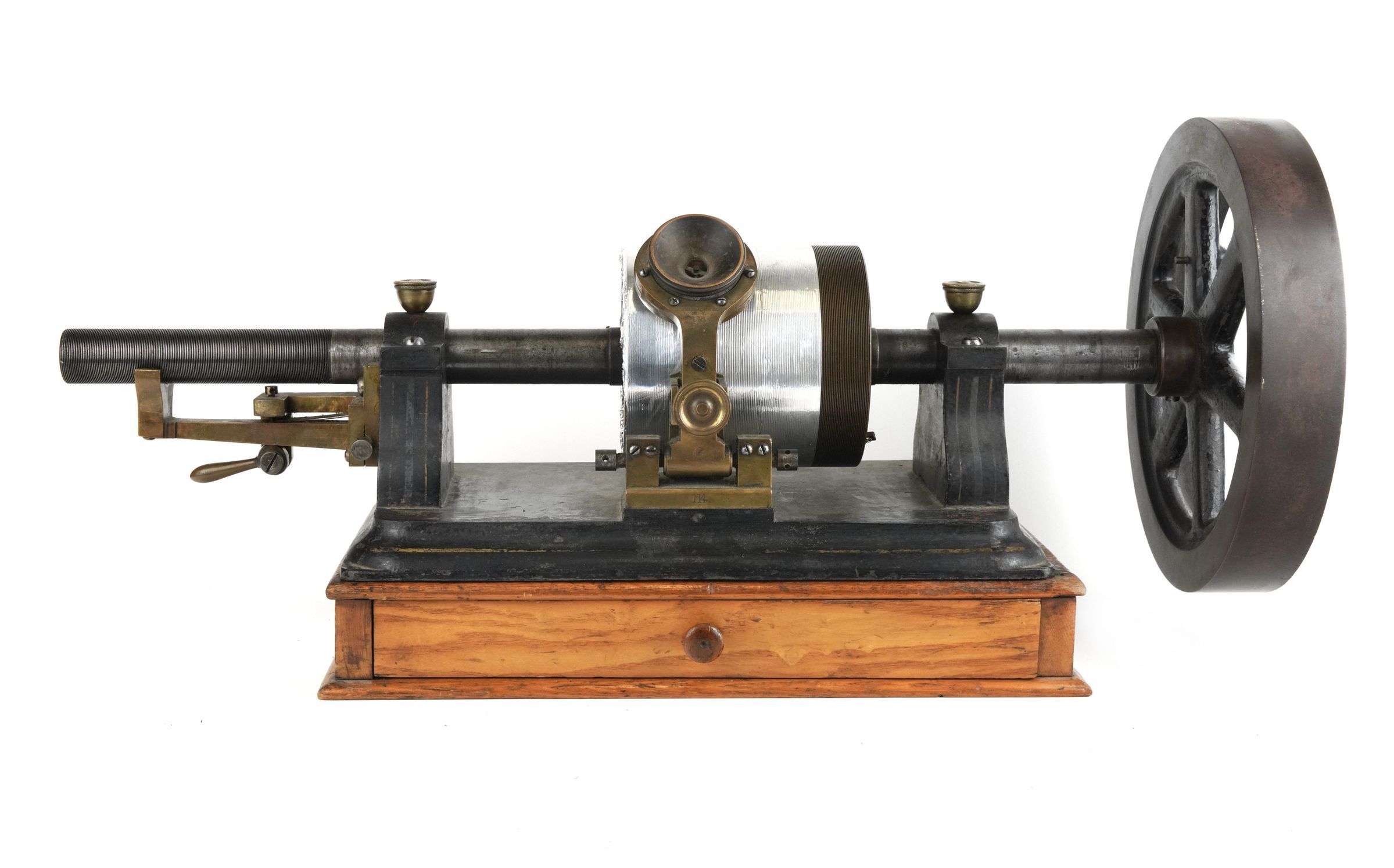
S. Bergmann & Co., New York, USA – ca. 1878
On display at the Edisonium – one of only six known original examples worldwide
Historical Significance
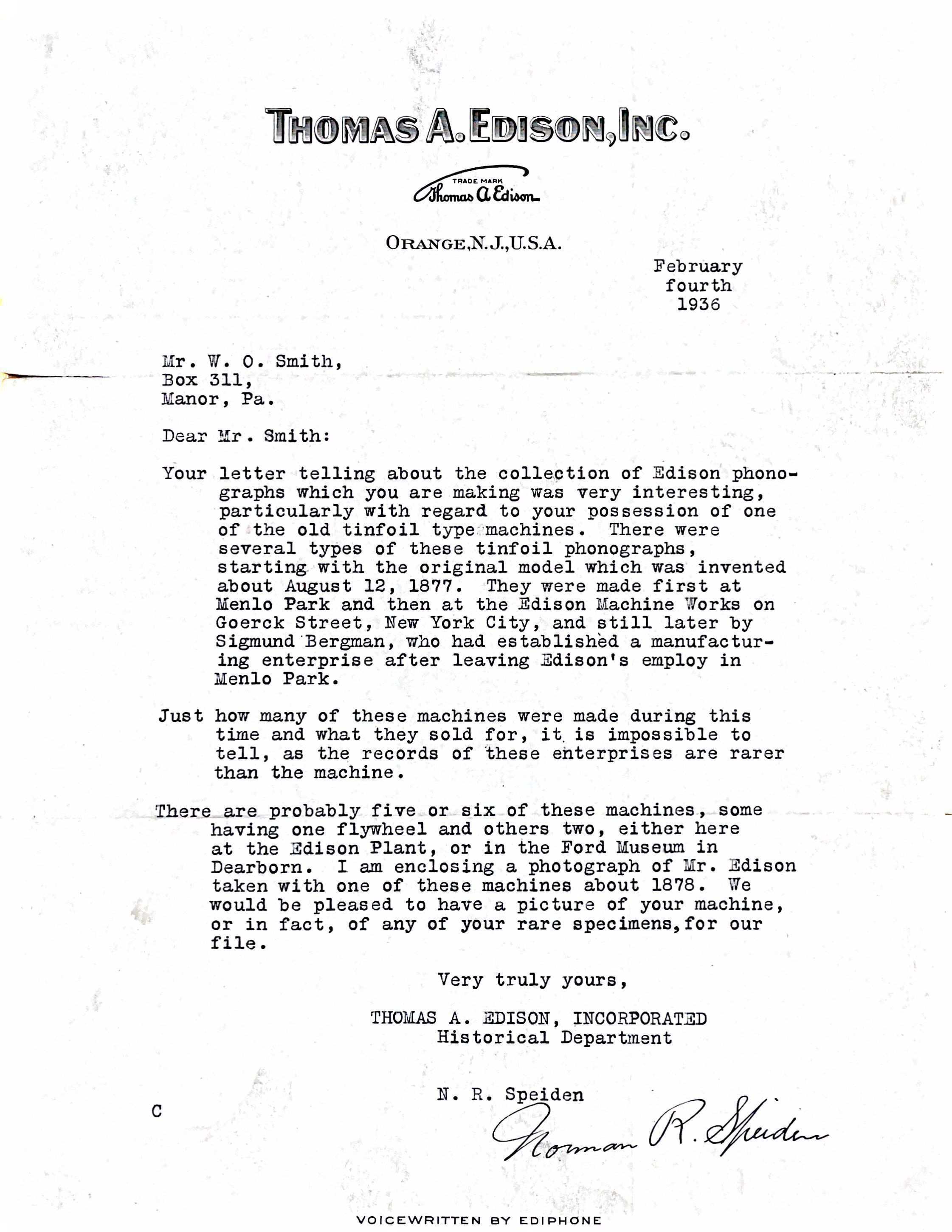
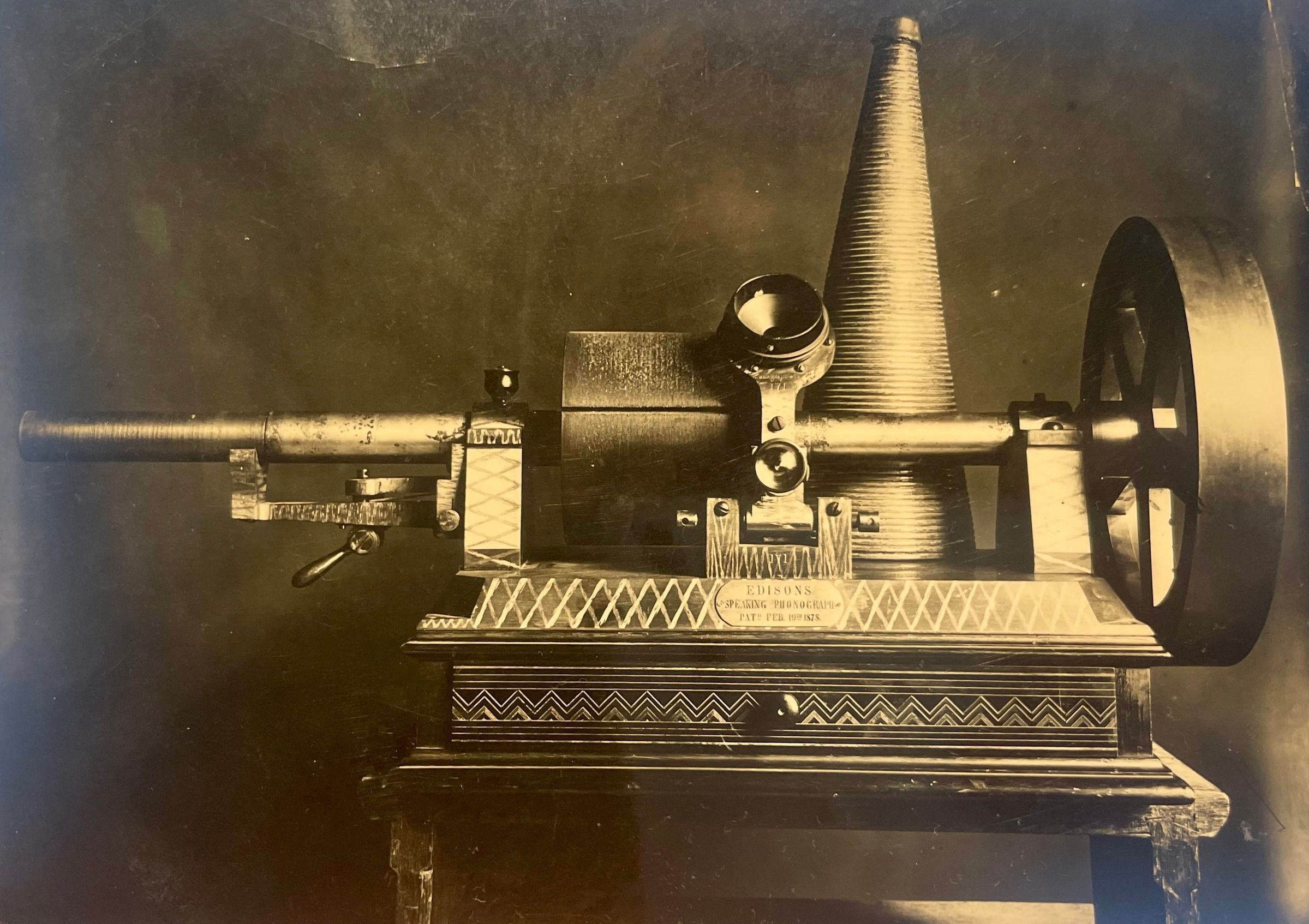
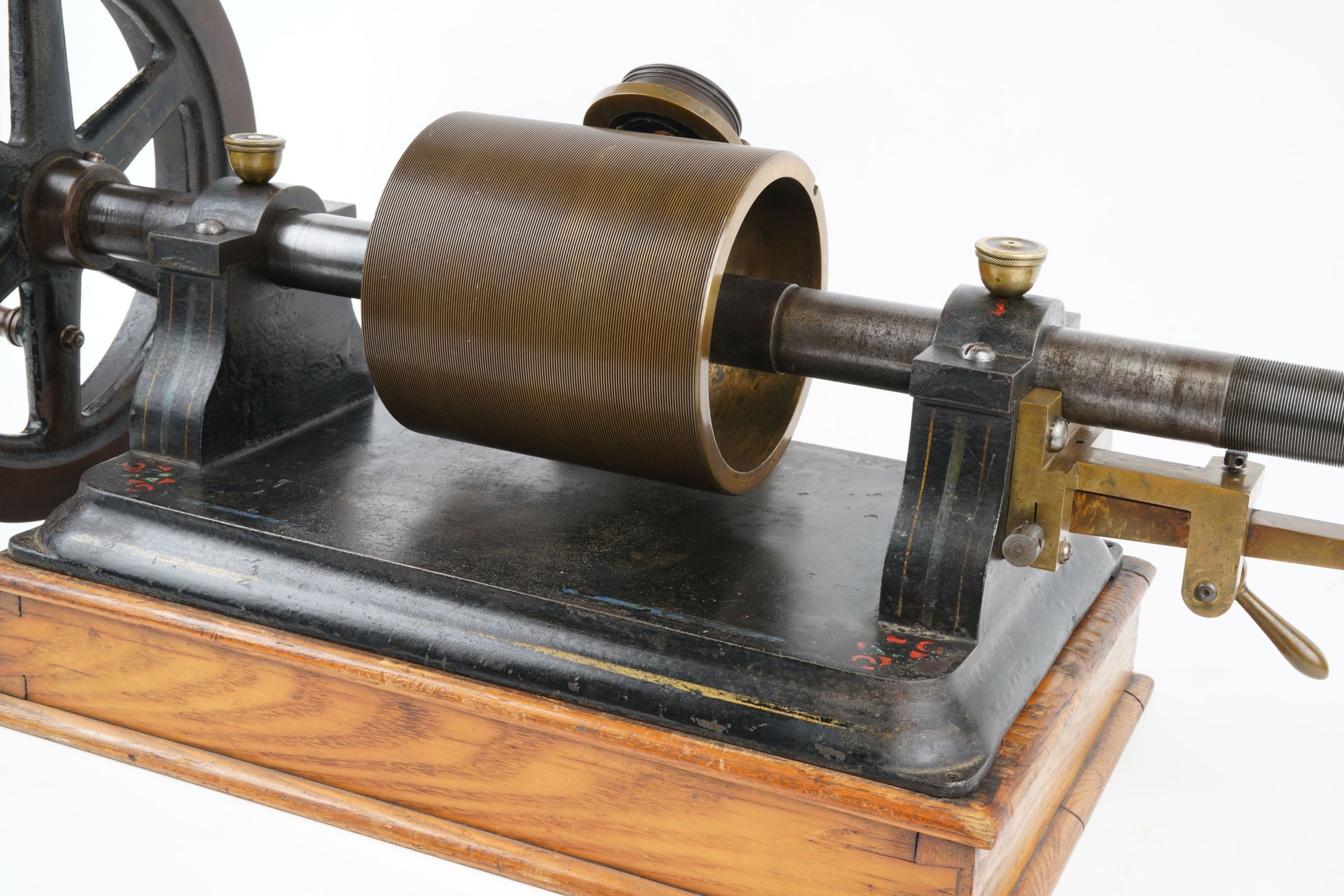
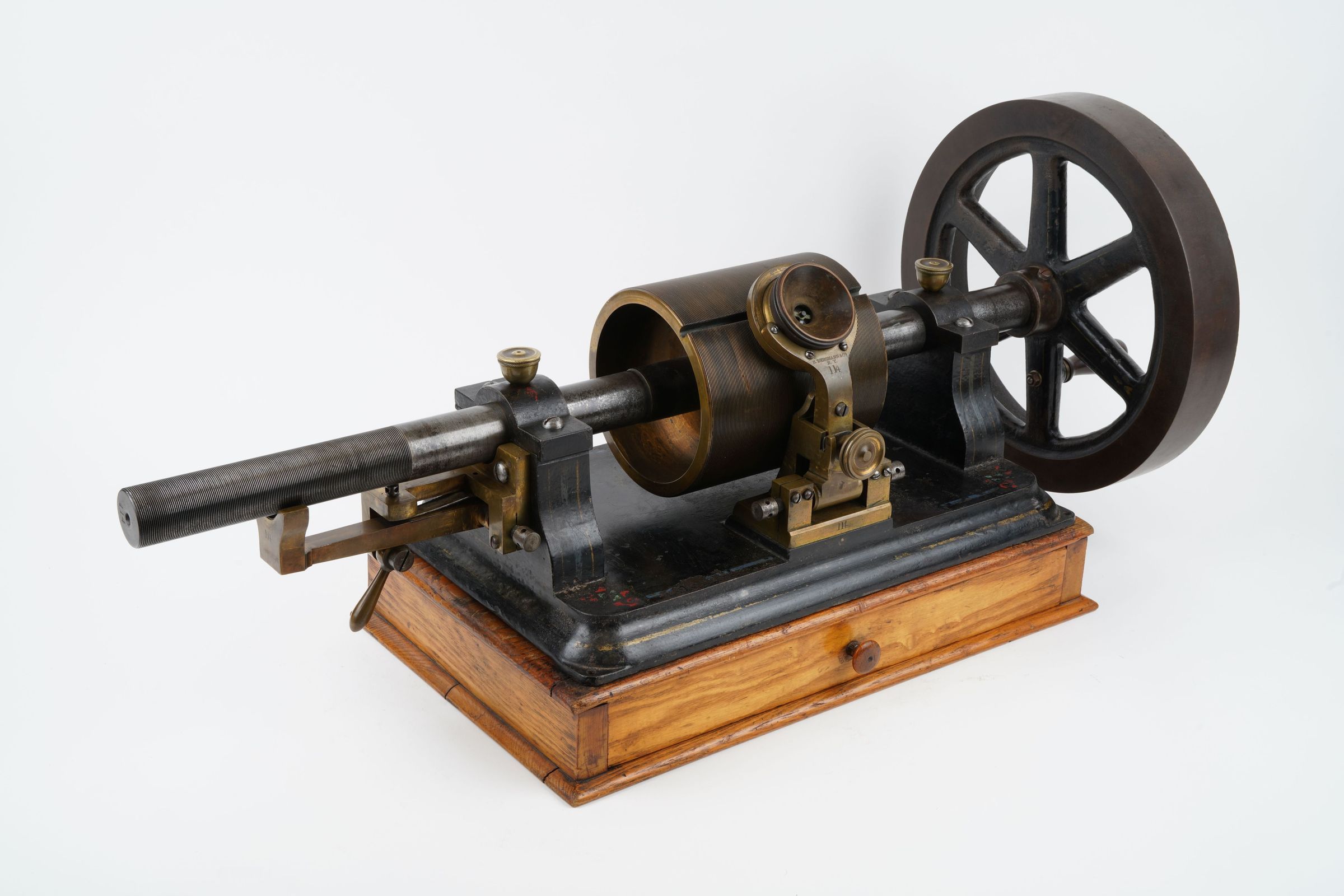
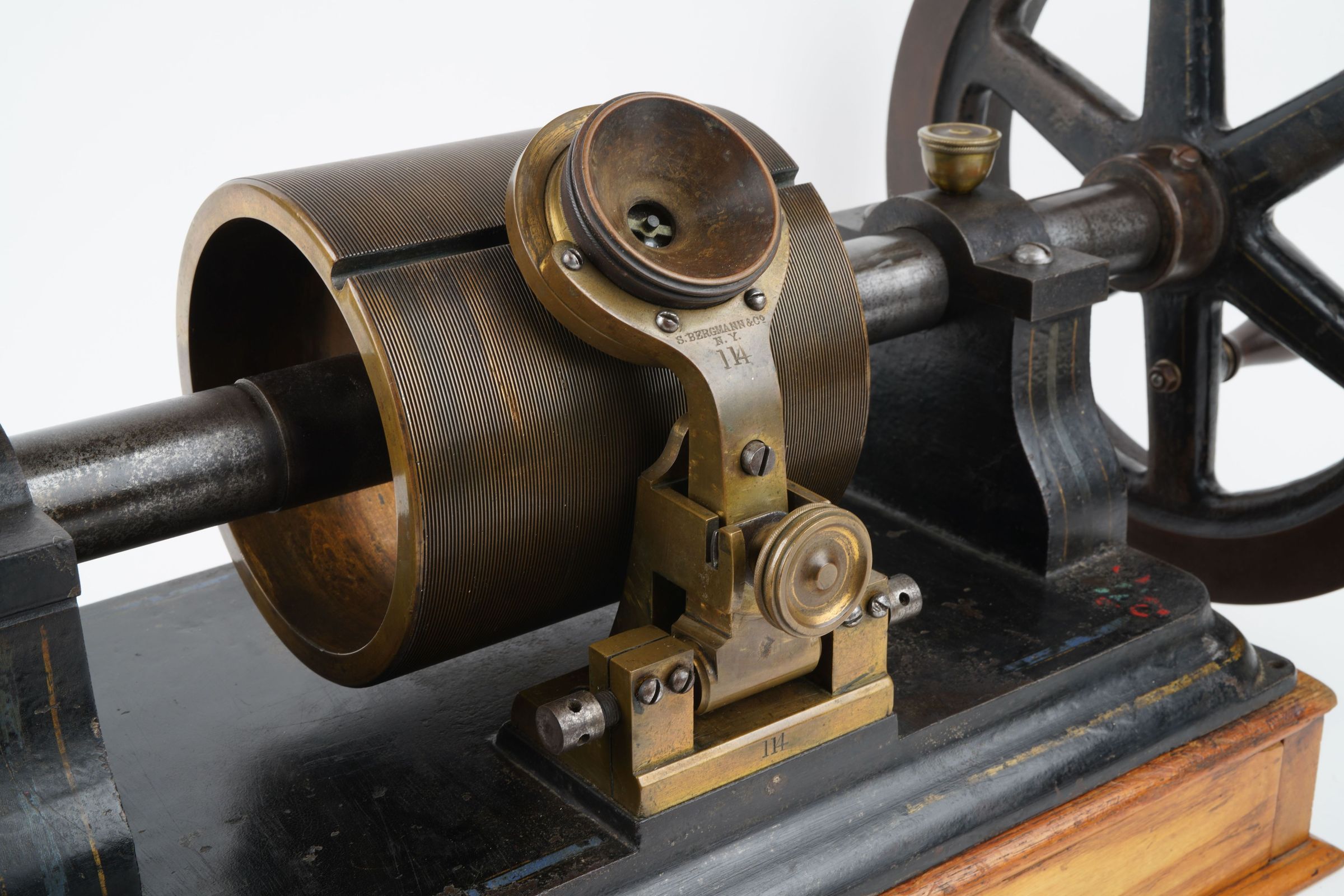
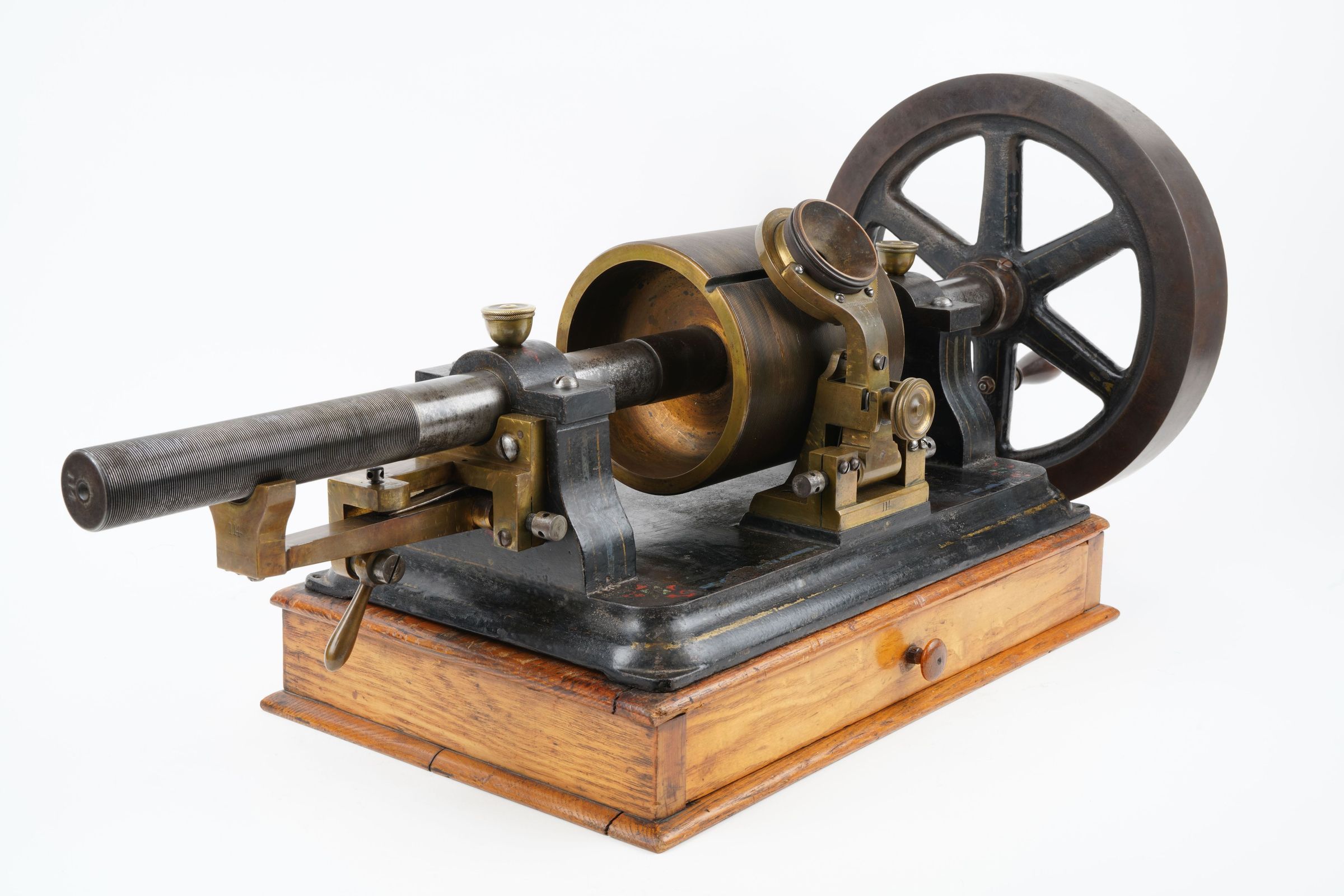
The Bergmann Exhibition Tinfoil Phonograph is one of the most iconic and historically important sound machines ever built. Developed by Sigmund Bergmann in New York in collaboration with Thomas A. Edison, it marked the transition from Edison's lab prototypes to practical devices used for public demonstrations of sound recording and playback.
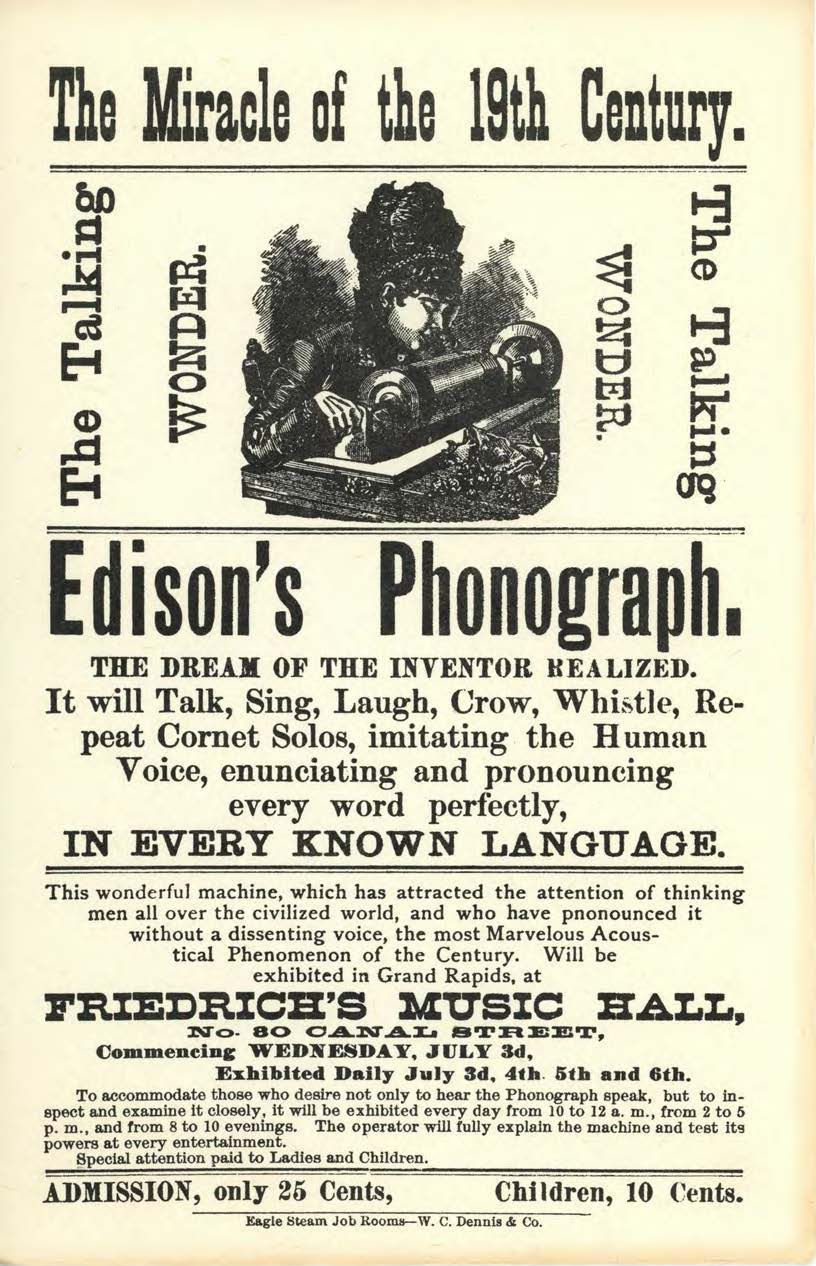
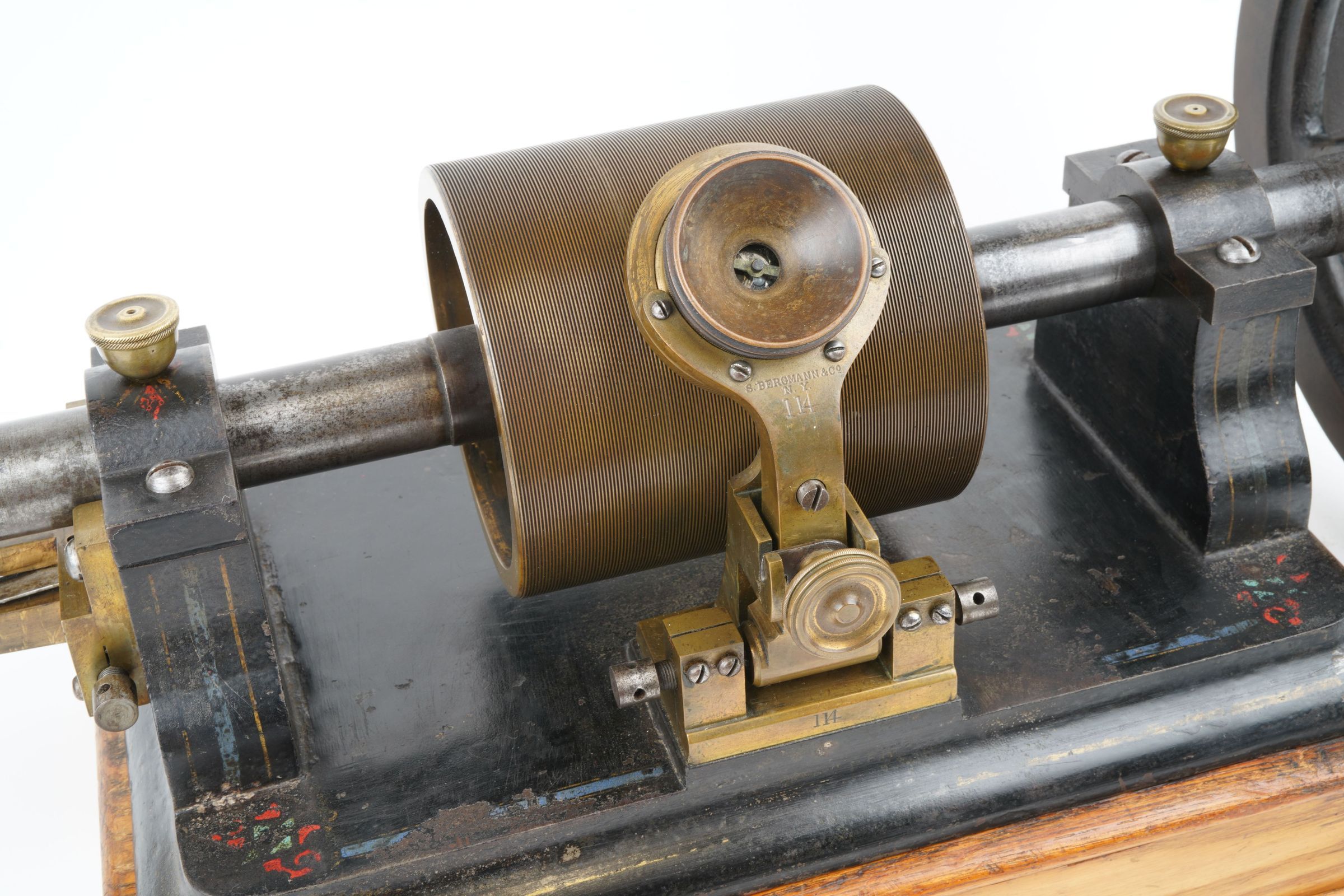
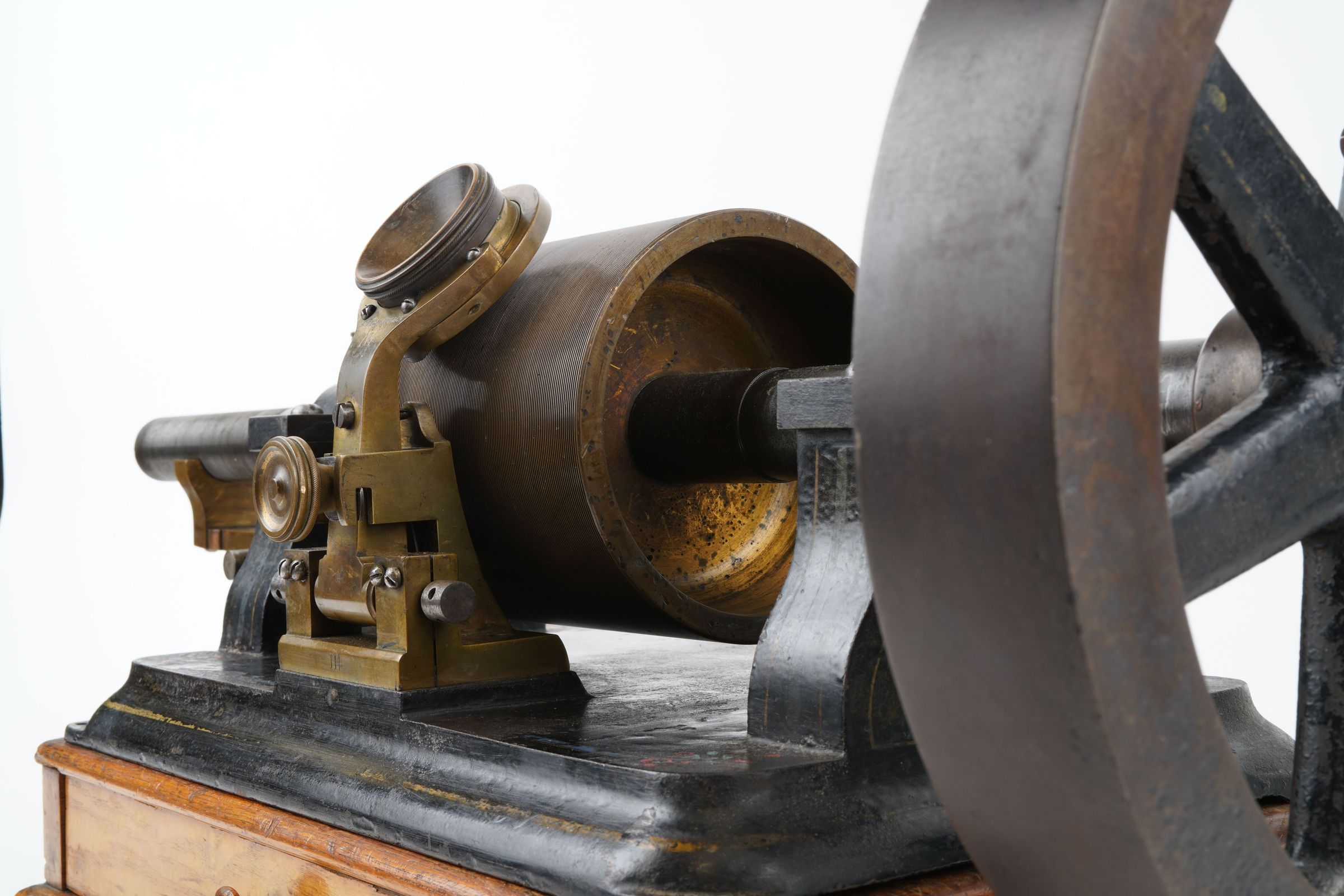
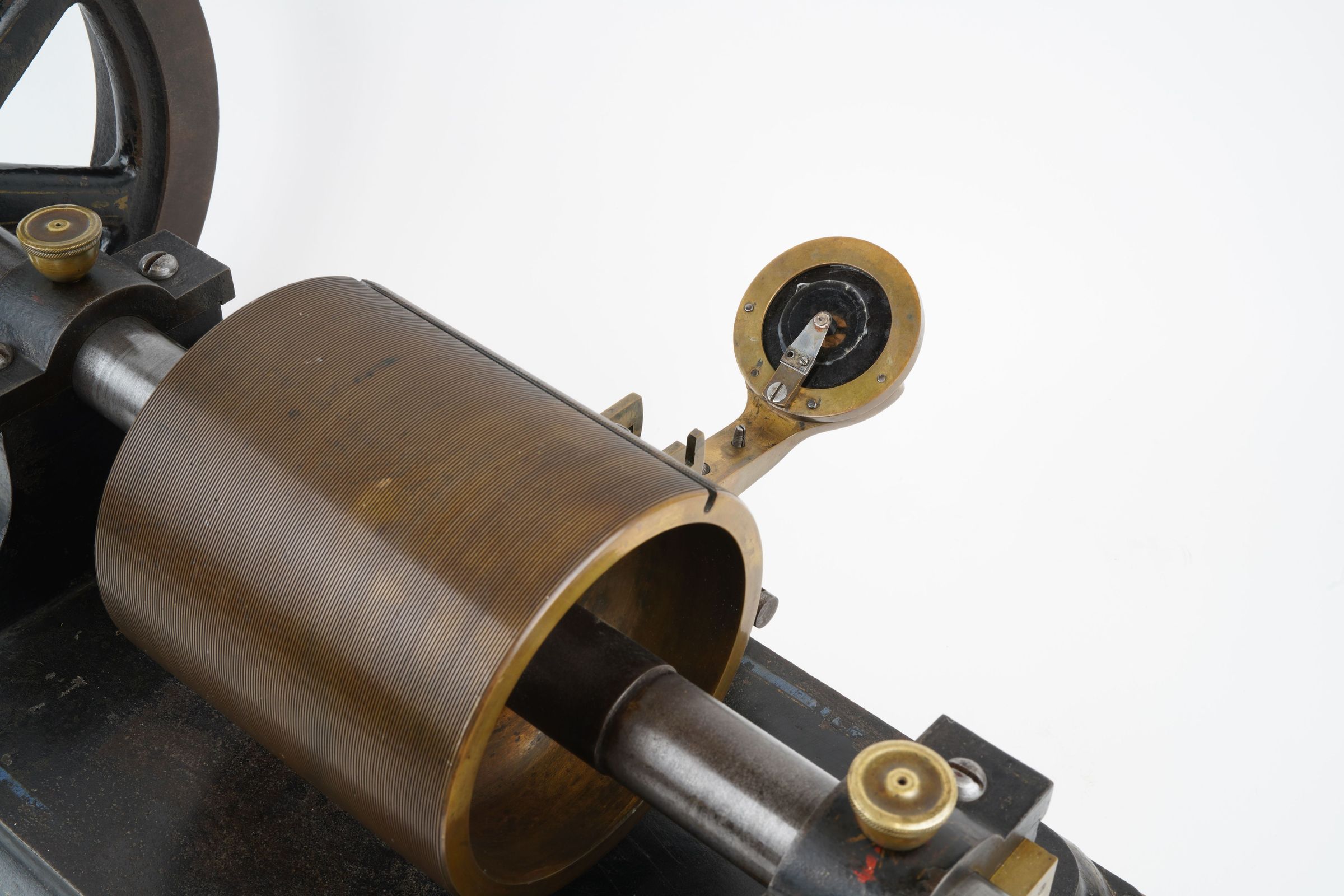
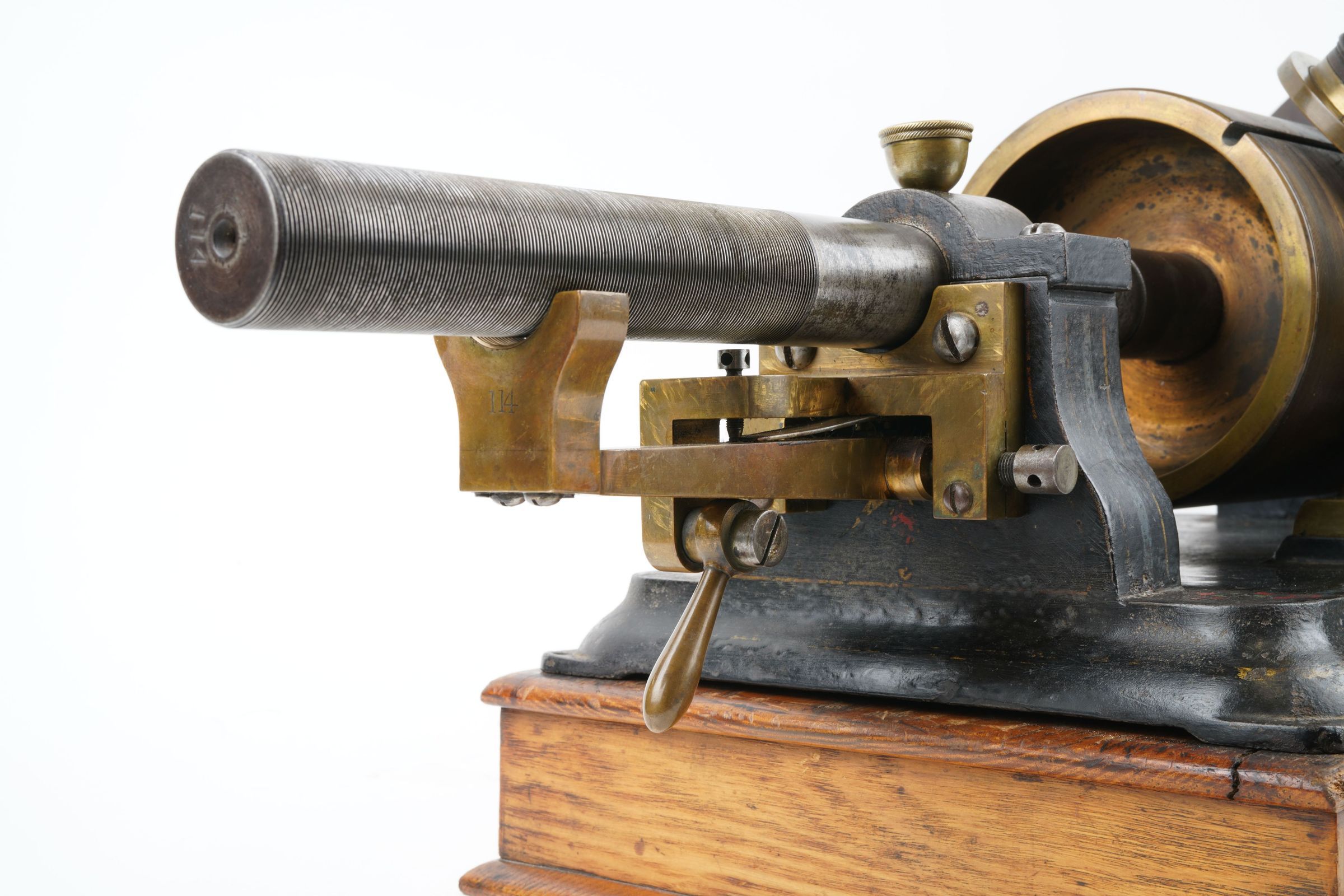
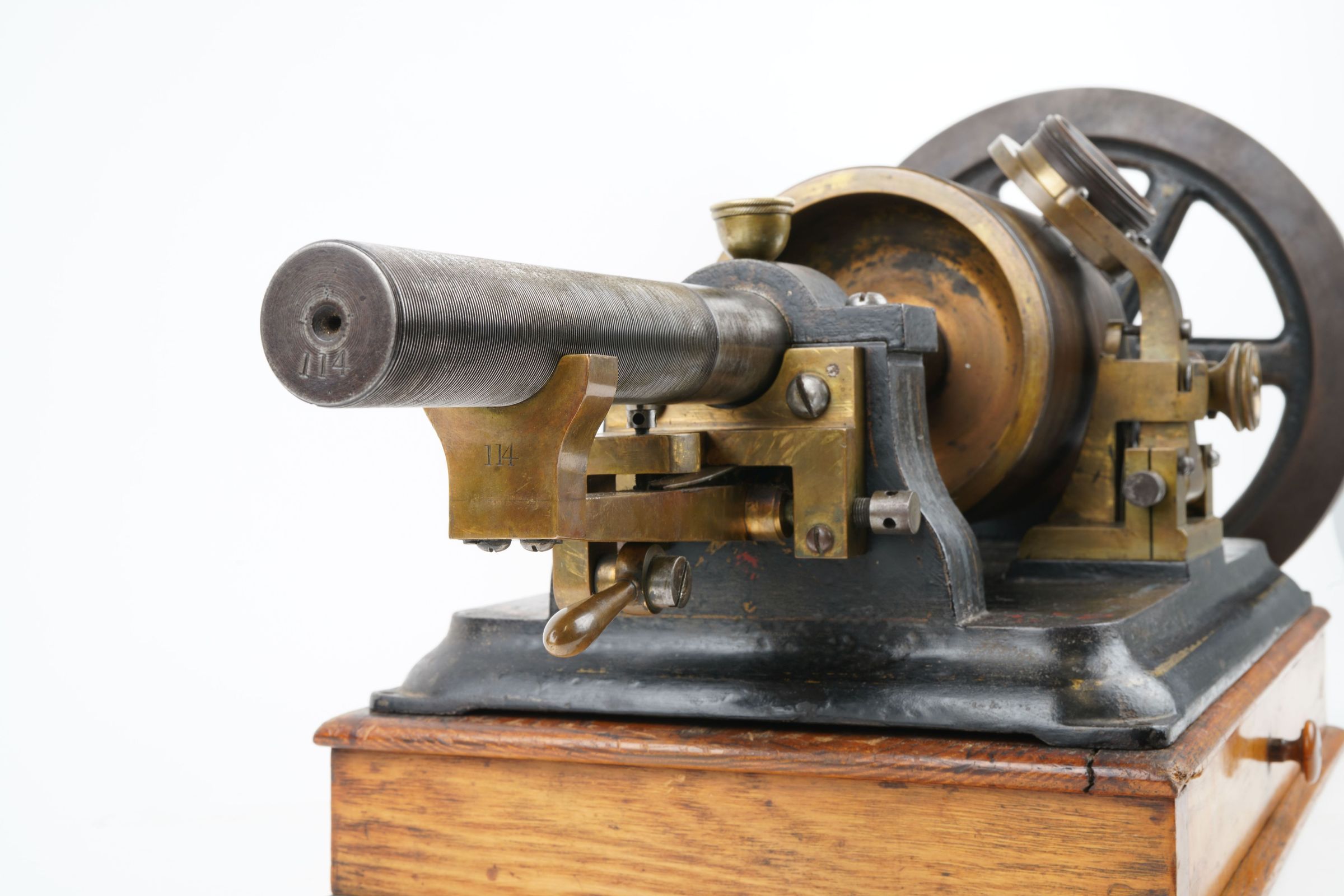
First produced in late 1878, this phonograph was designed specifically for lectures and exhibitions. It incorporated every significant innovation of the time: robust construction, easy foil-cylinder exchange, finely adjustable stylus settings, and a disengaging lever for repositioning the mandrel. It was not a toy, but a full-scale scientific apparatus that introduced the magic of recorded sound to the public for the very first time.
Technical Features
Cast entirely from metal and mounted on a fine wooden base with integrated drawer, the machine is as mechanically complex as it is beautiful.
Key specifications:
Flywheel: Ø 300 mm, weighing over 13 kg (30+ lbs)
Mandrel shaft: 775 mm long, Ø 35 mm
Foil cylinder size: Ø 140 mm, 140 mm wide
Mica diaphragm: Ø 50 mm
Dimensions: 775 × 300 × 335 mm (L×W×H)
Total weight: approx. 42 kg
Tilting speaker arm, forward-leaning for playback
Throw-out lever for feed disengagement
Stylus adjustment screws for depth and position
Original inscription on the bedplate:
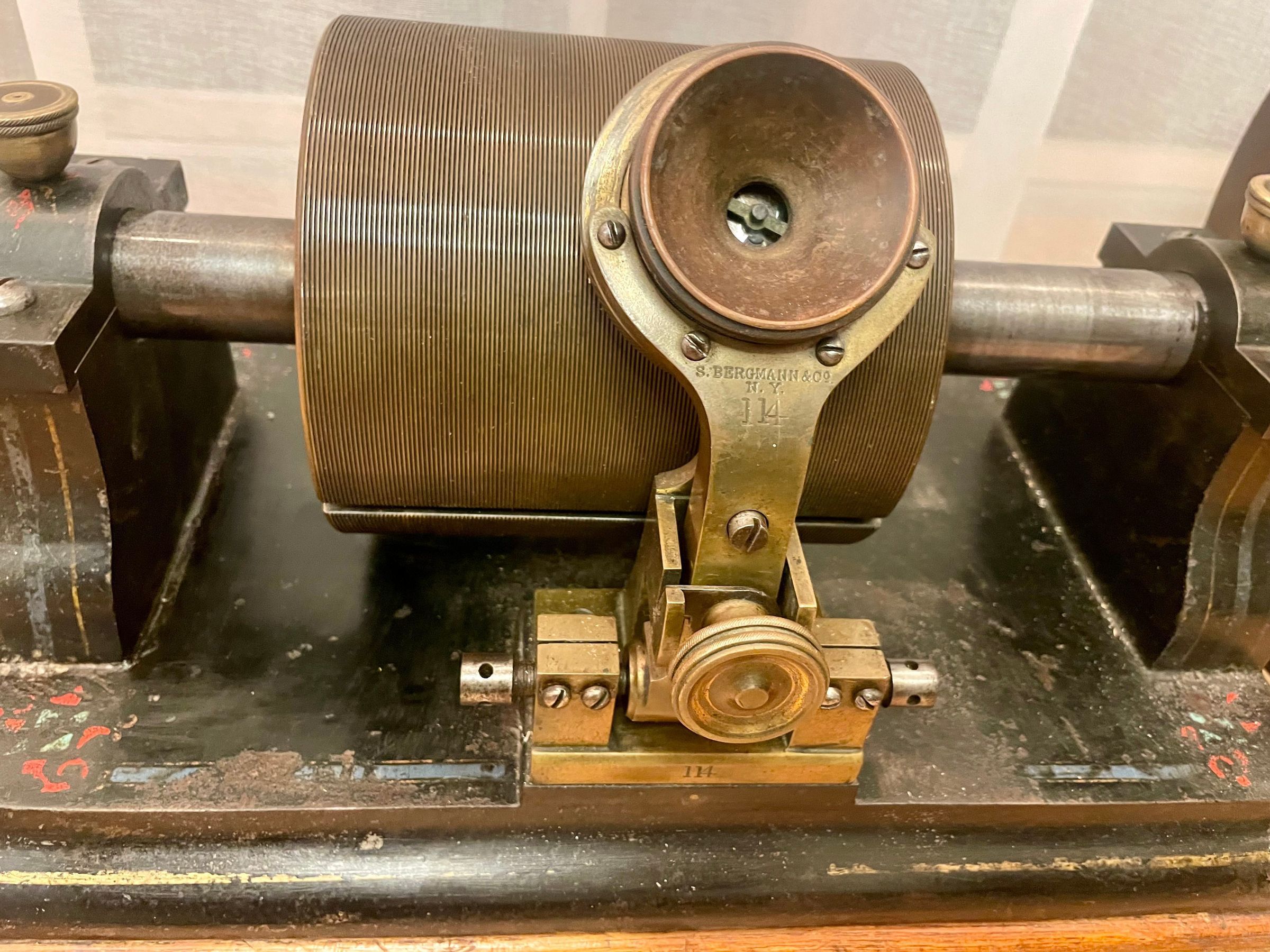
“Manufactured by S. Bergmann & Co., 104 Wooster St. N.Y.”
as well as:
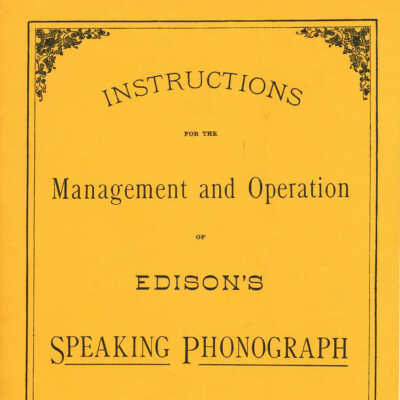
“Experimental Apparatus for Illustrating the Principle of Edison’s Speaking Phonograph, Pat. Feb. 19th, 1878” (in hand-painted script).
Provenance and Rarity
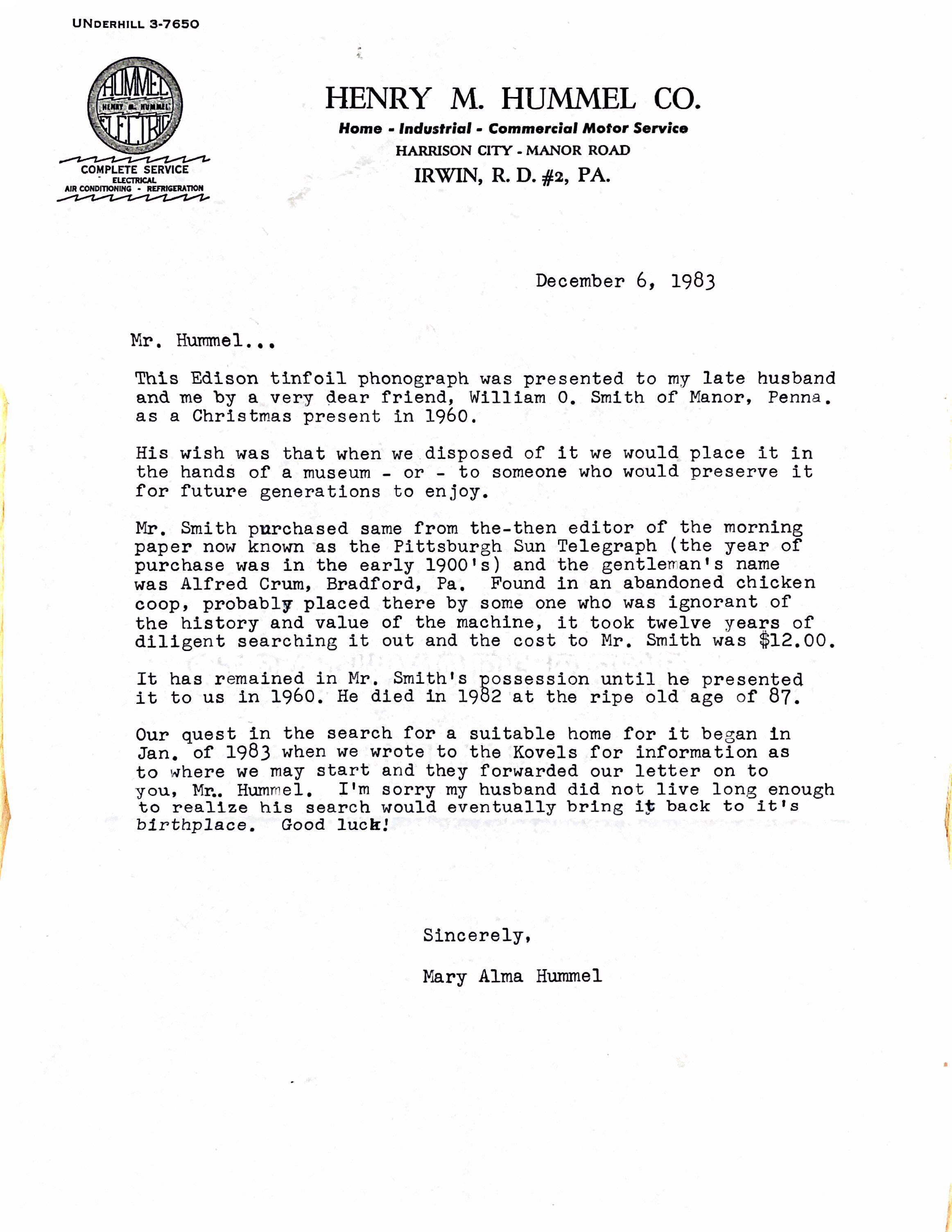
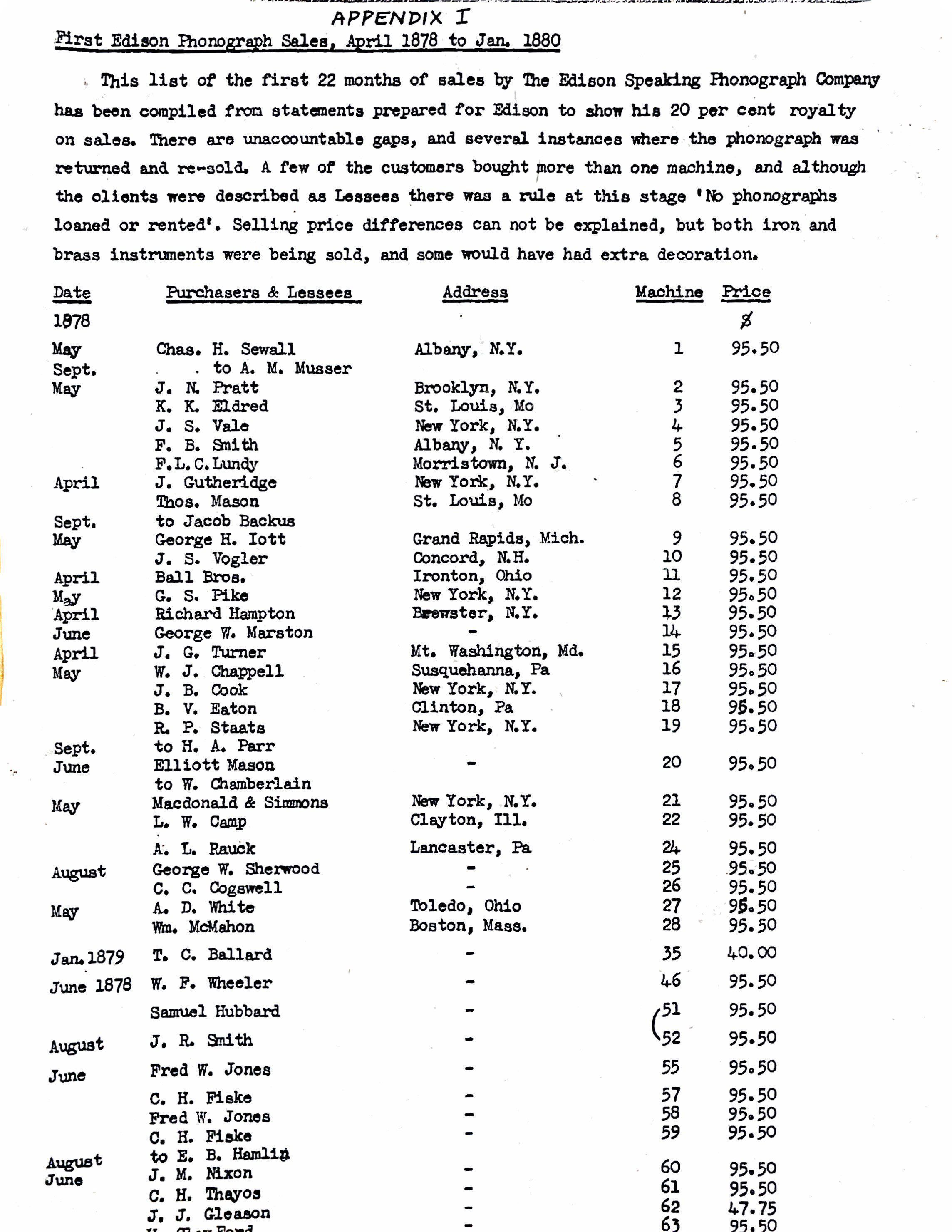
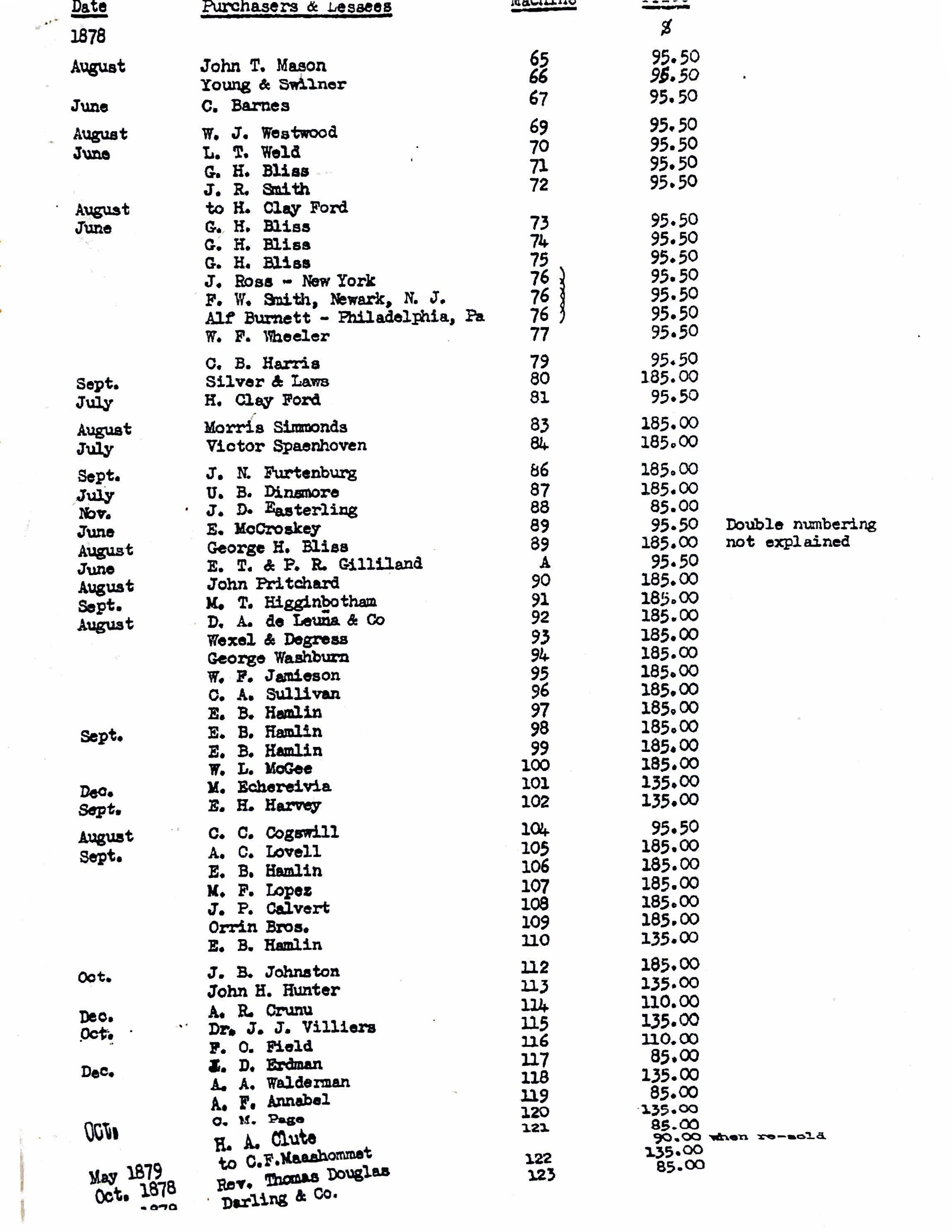
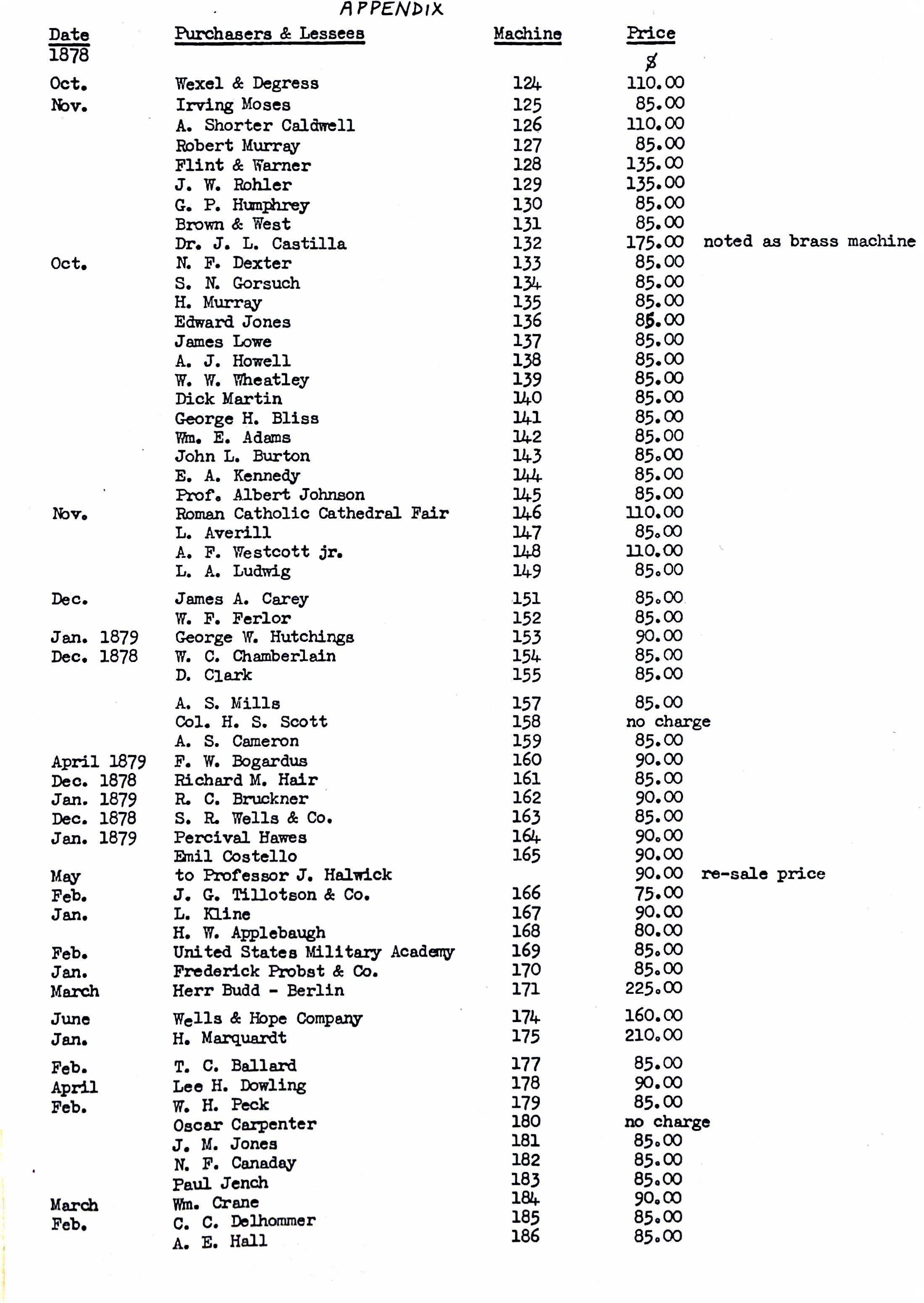
The Edisonium’s unit bears serial number 114 and is among only six surviving original examples worldwide. It was once owned by legendary American collector Charley Hummel, and its complete chain of custody is fully documented – a rare distinction in the world of historic media artifacts.
These machines are not available on the open market. The few that survive are housed in leading museums or national collections, and their historical significance far exceeds any possible monetary value.
Role at the Edisonium
This phonograph is one of the most important treasures of the Edisonium. It represents the very origin of recorded sound technology – the first commercially built machine capable of recording and playing back the human voice. With its size, craftsmanship, and technical ingenuity, it stands as a monument to the birth of audio media. A truly irreplaceable piece of world heritage – and the pride of the collection.