Name/Title
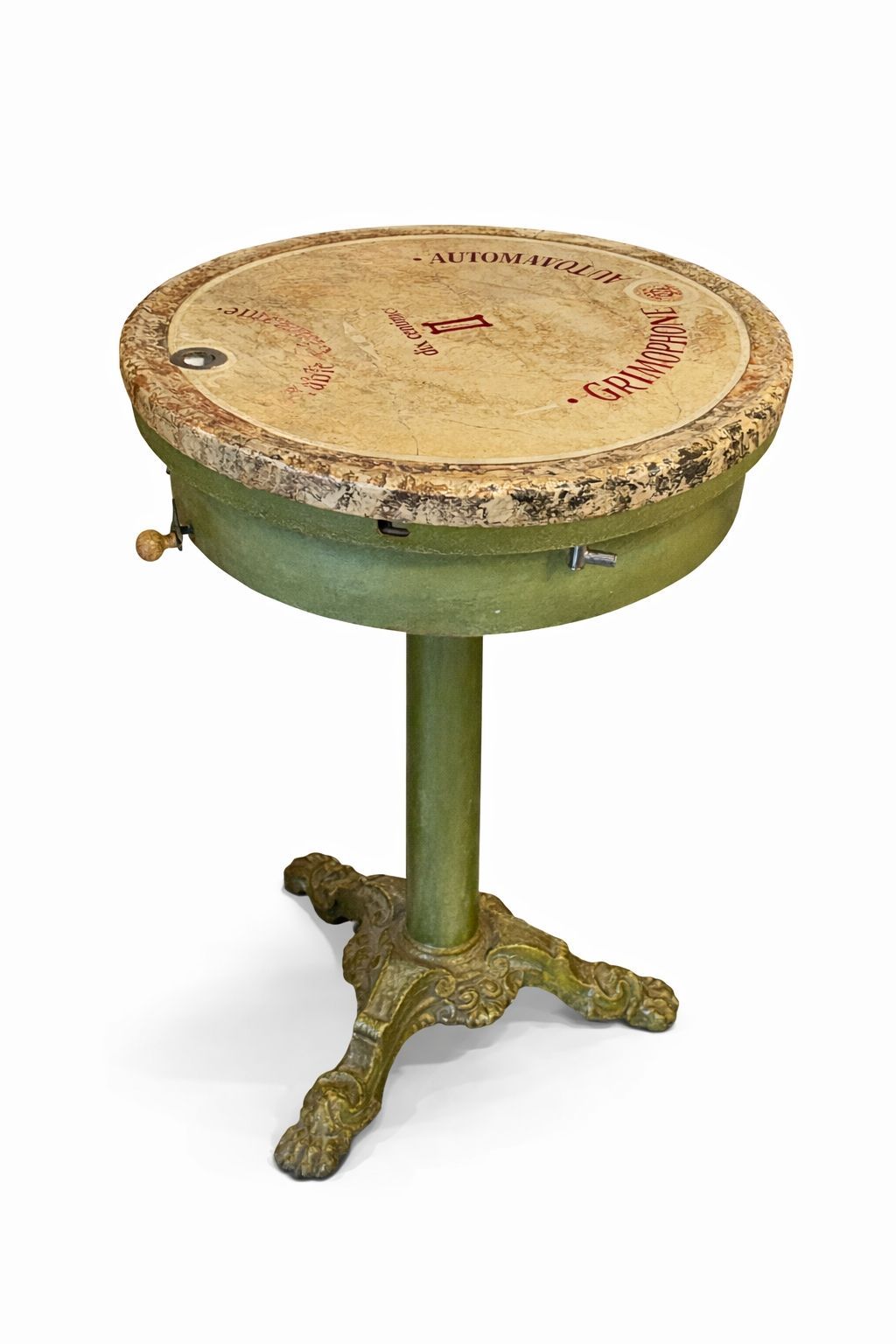
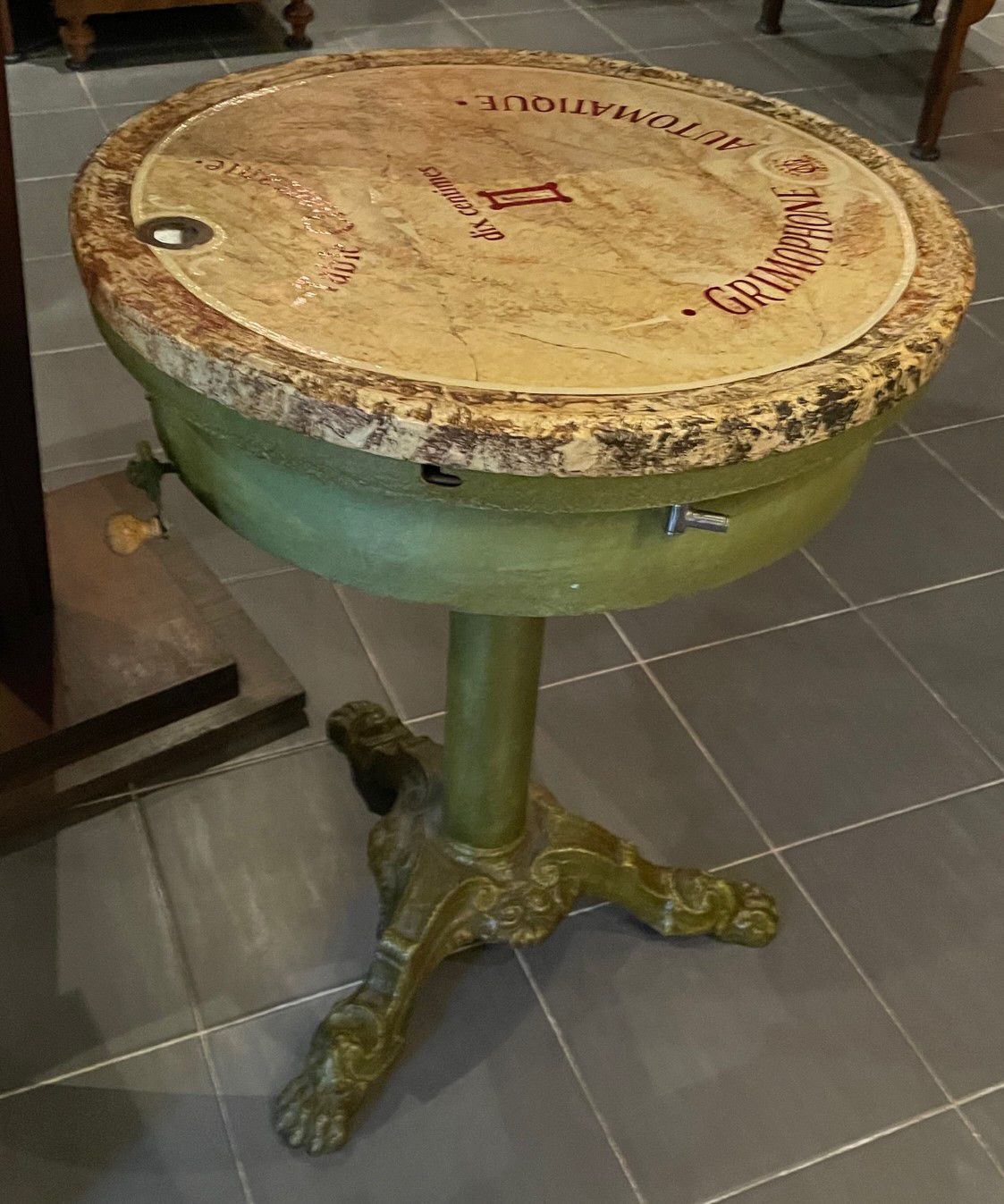
Phonograph Grimophone – The Singing TableEntry/Object ID
140Description
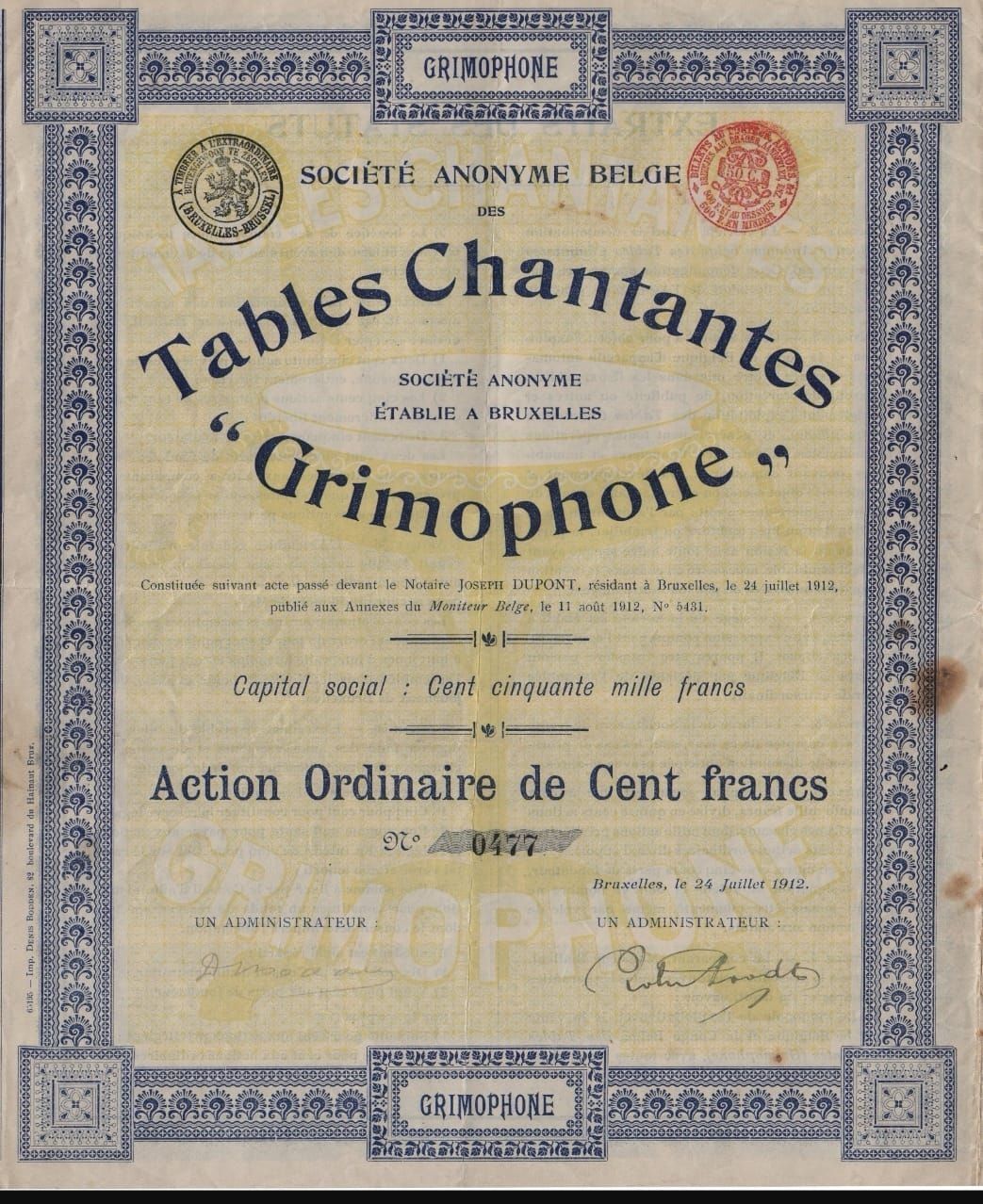
This extraordinary device was patented in 1912 by the Belgian inventor Monsieur Grimo in Brussels. In the same year, the Société Anonyme Belge des Tables Chantantes “Grimophone” was founded with a share capital of 150,000 francs, reflecting the commercial ambition behind the invention.
The machine was conceived for use in cafés, restaurants, and public venues—particularly in Paris—where it offered guests the possibility to actively select and listen to music. This represents a significant step in the evolution from passive to user-controlled sound reproduction.
The “Grimophone” table belongs to a rare class of early coinless automatic music machines and can be considered a precursor to the later jukebox.
Concept and Design
The device is constructed as a heavy, round cast-iron café table, combining furniture design with sound technology.
Its central idea is the integration of a mechanical phonograph system into an everyday object, allowing music to become part of a shared social environment rather than a private listening experience.
Users select a piece of music via a mechanical lever system. The selected number is displayed visibly on the tabletop—an early form of track indication and user interface.
Technical Construction
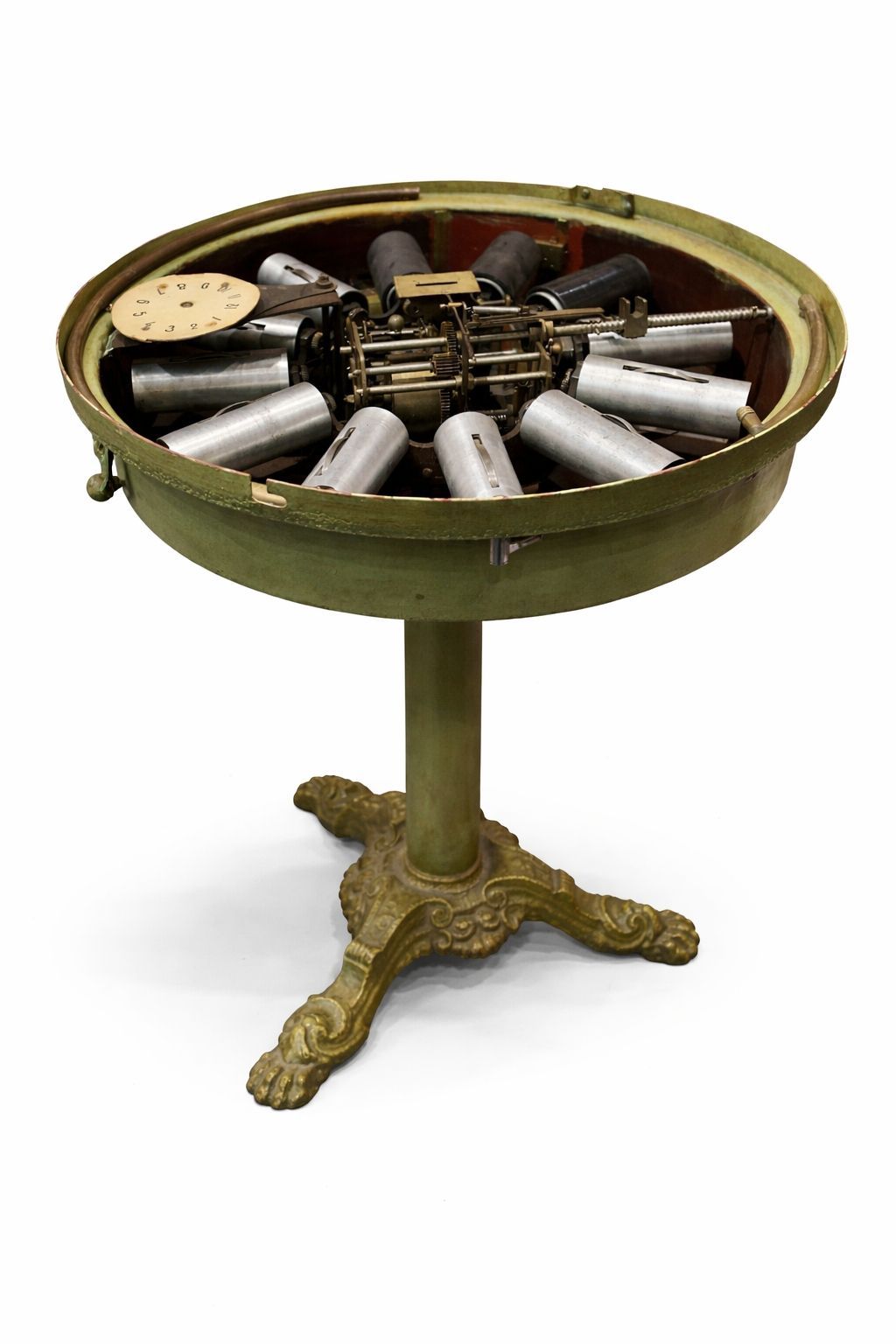
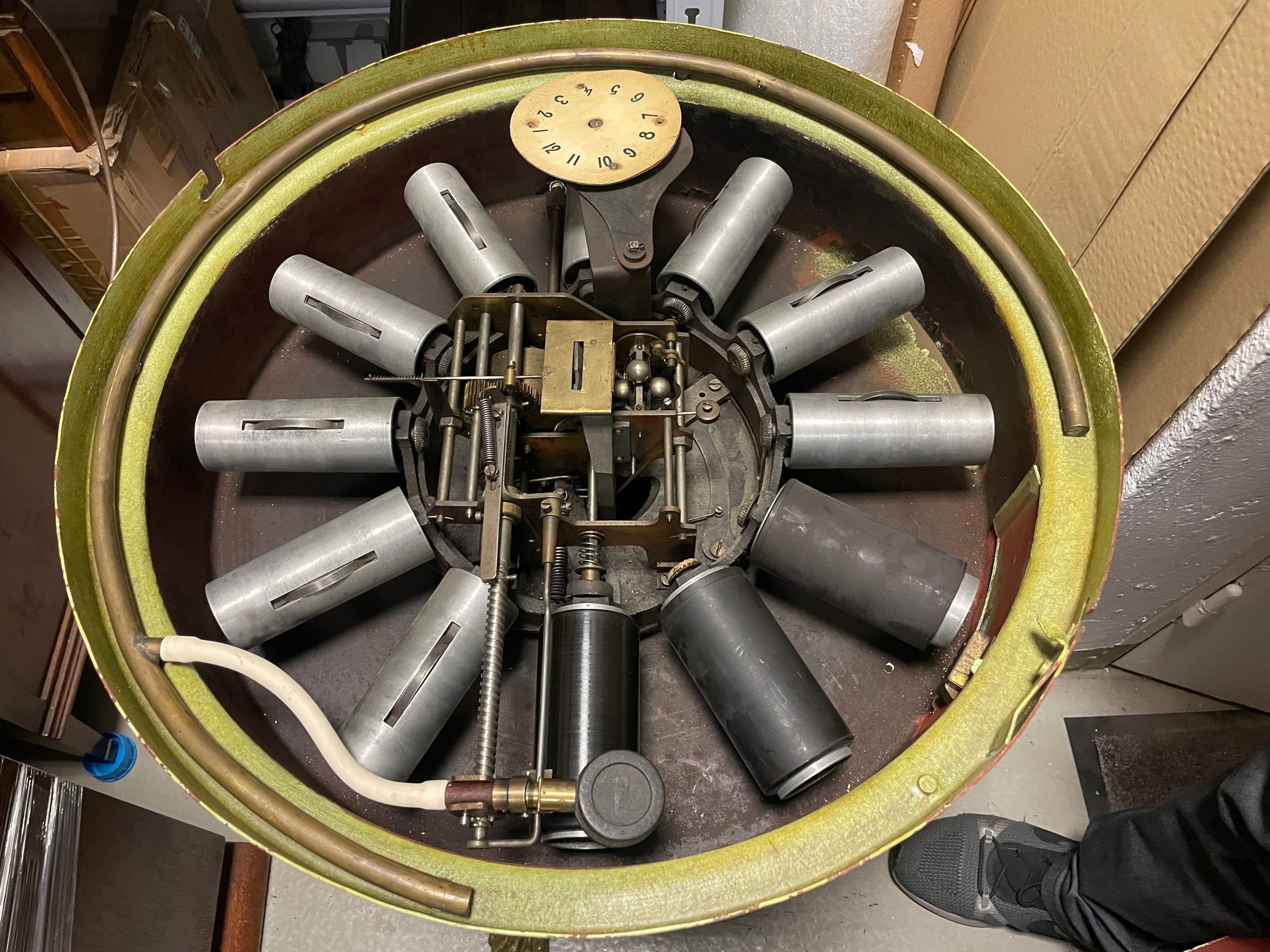
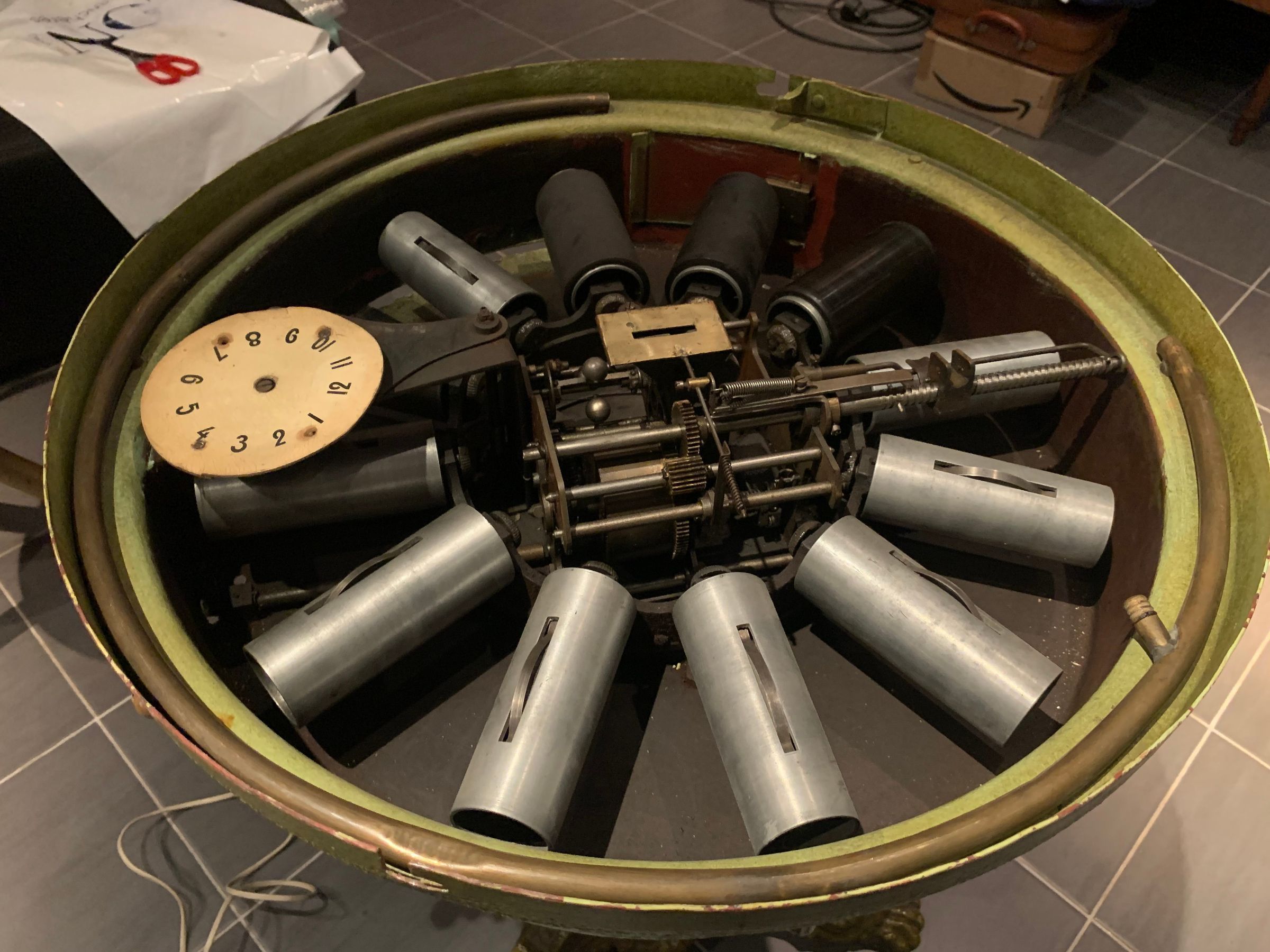
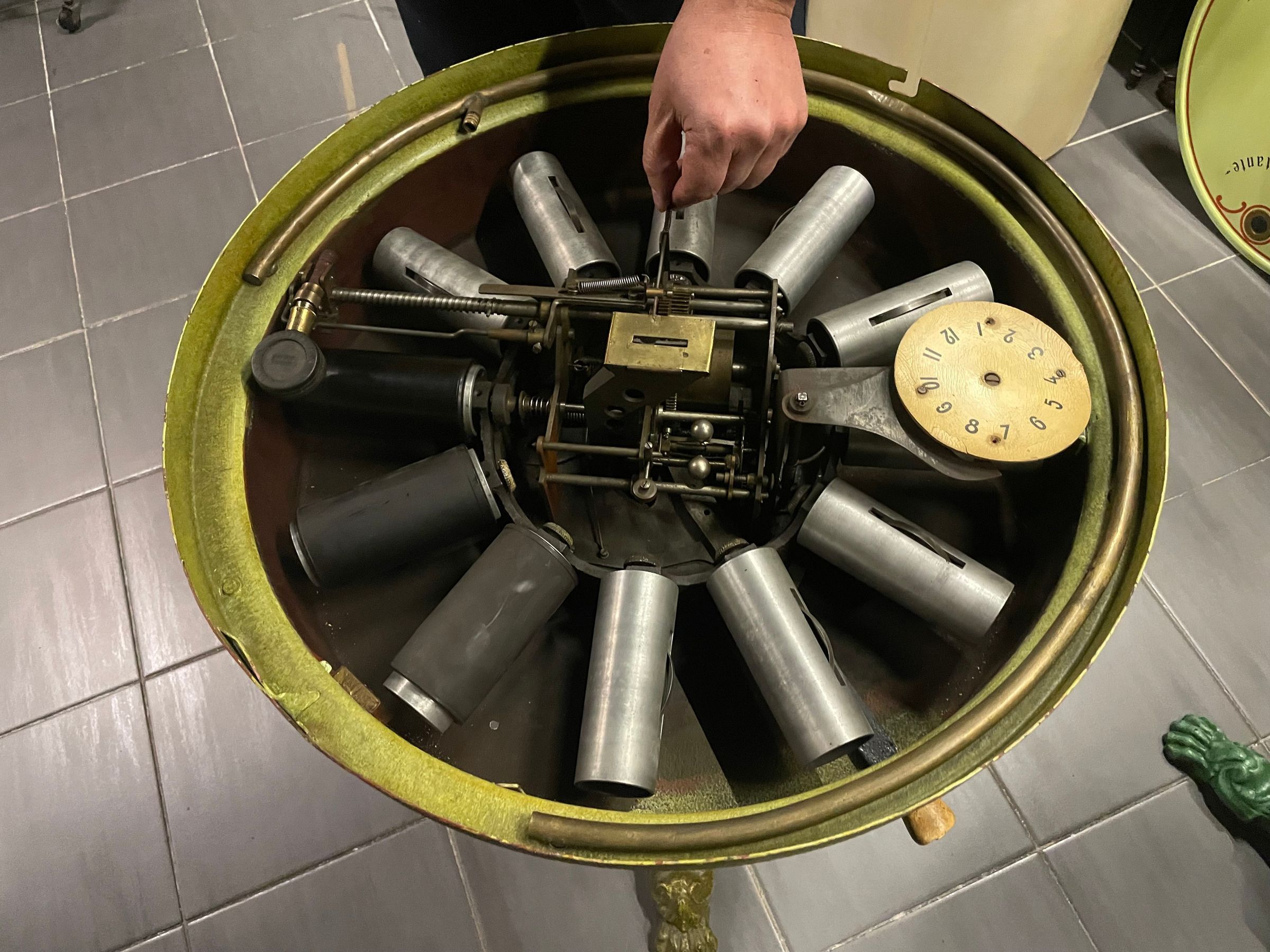
At the core of the machine is a complex internal carousel mechanism:
up to twelve wax cylinders are mounted in metal carriers
a rotating system positions the selected cylinder
a mechanical transfer system moves it into playback position
the entire process is controlled by a system of gears, levers, and cams
Playback is driven by a spring motor, making the device entirely independent of electricity.
A particularly remarkable feature is the listening system:
up to four listeners can simultaneously enjoy the recording
sound is transmitted via individual listening tubes
this creates a shared yet personal acoustic experience
Innovation and Patent Significance
The 1912 patent covers a highly innovative combination of features:
a multi-cylinder automatic selection system
a visible track display
a user-controlled mechanical interface
integration into a functional piece of furniture
This combination represents a forward-looking concept that merges entertainment, technology, and social interaction.
Rarity and Survival
Only a very small number of these machines are known today. Current research suggests that approximately five original examples have survived worldwide.
The present table is among the best-preserved specimens and provides rare insight into a largely forgotten branch of early sound technology.
Significance
This device occupies a unique position in the history of sound reproduction.
It demonstrates:
the transition from private to public listening
early forms of user-controlled music selection
the integration of phonograph technology into social environments
the experimental diversity of early 20th-century sound machines
Significance within the Edisonium
Within the Edisonium collection, this “Grimophone” table represents one of the earliest known attempts to transform recorded sound into a shared, interactive experience.
In functional terms, it can be regarded as one of the earliest jukebox concepts—decades before the widespread adoption of coin-operated machines.
It stands as a remarkable example of innovation at the intersection of mechanics, design, and social culture.