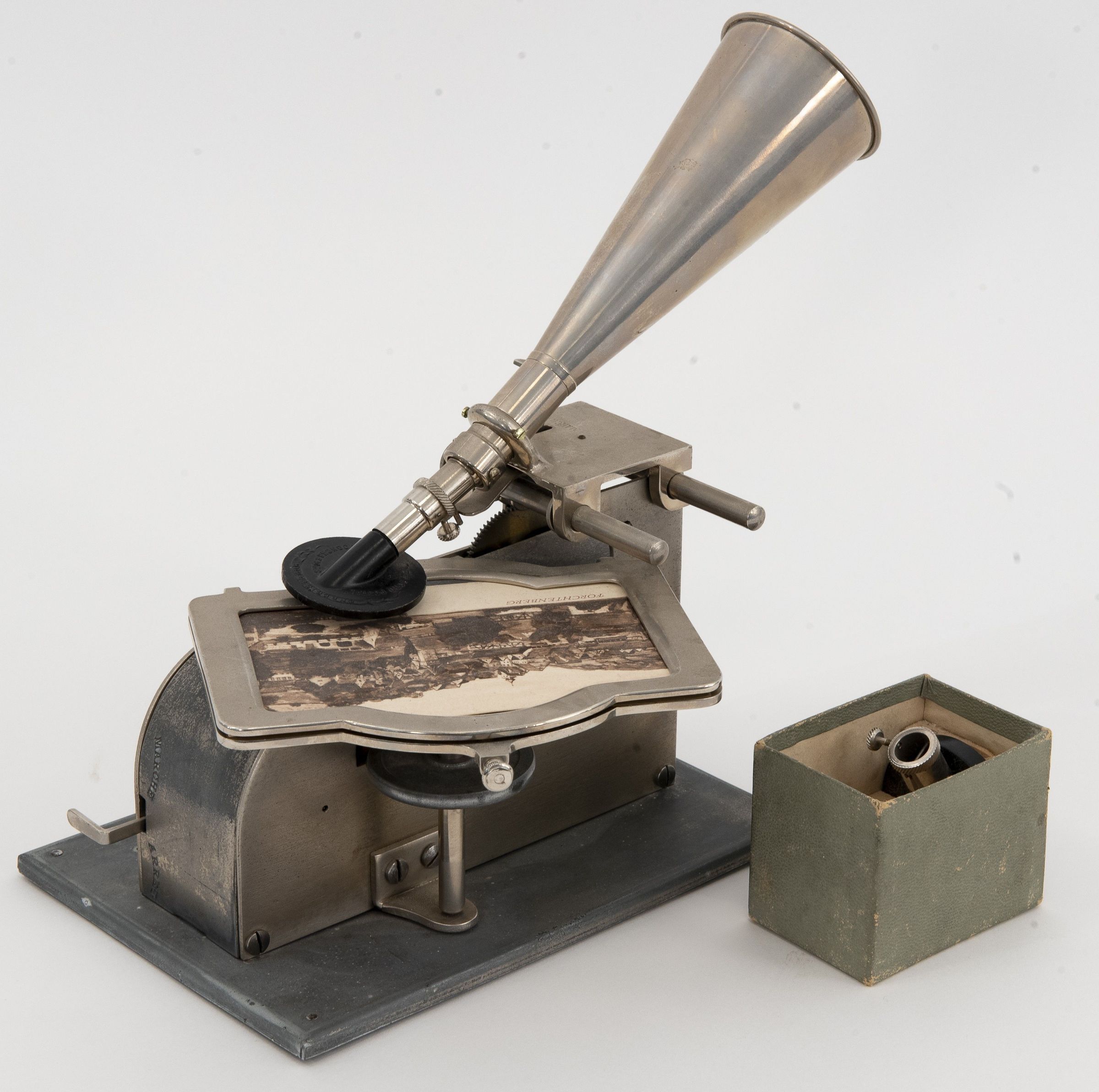
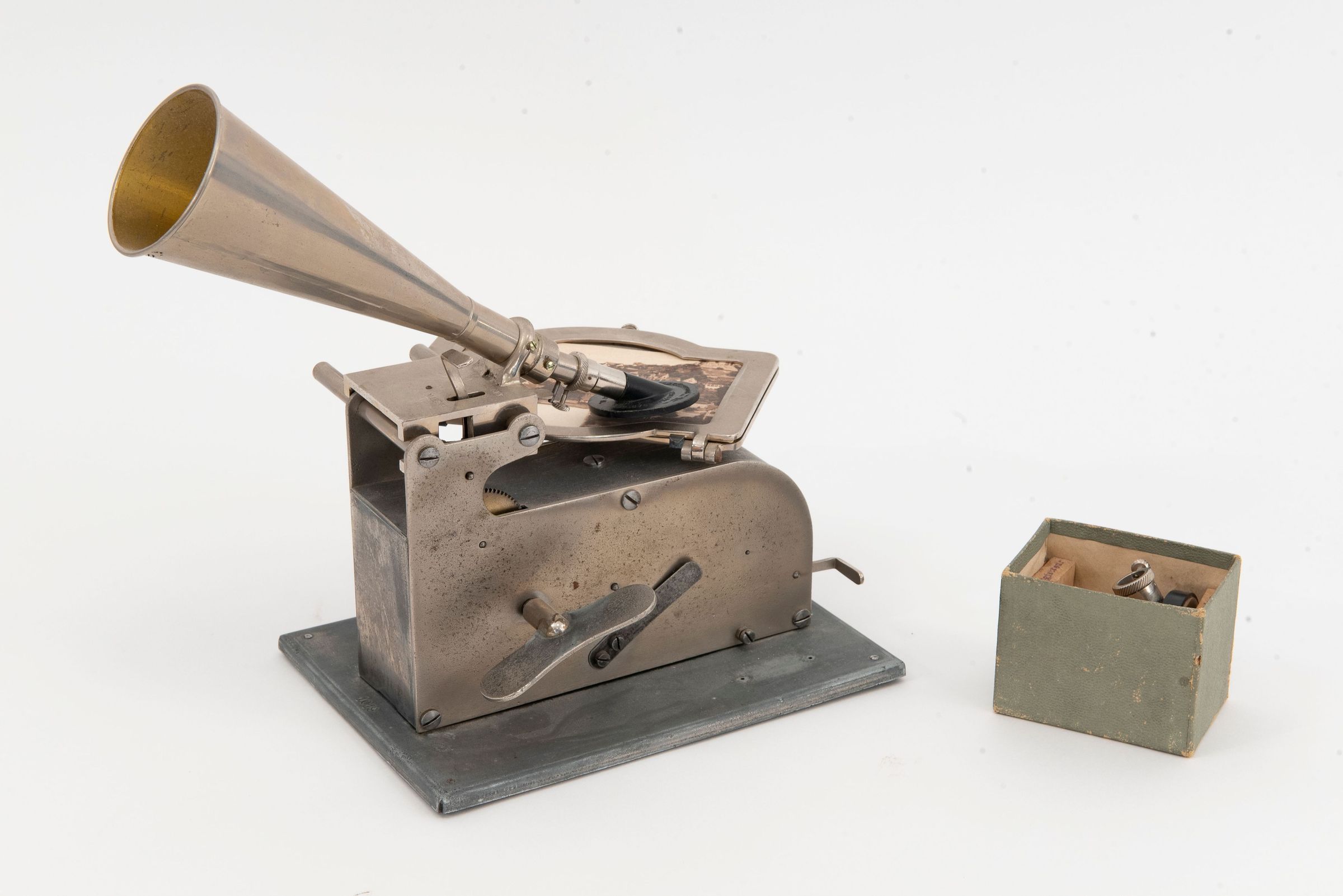
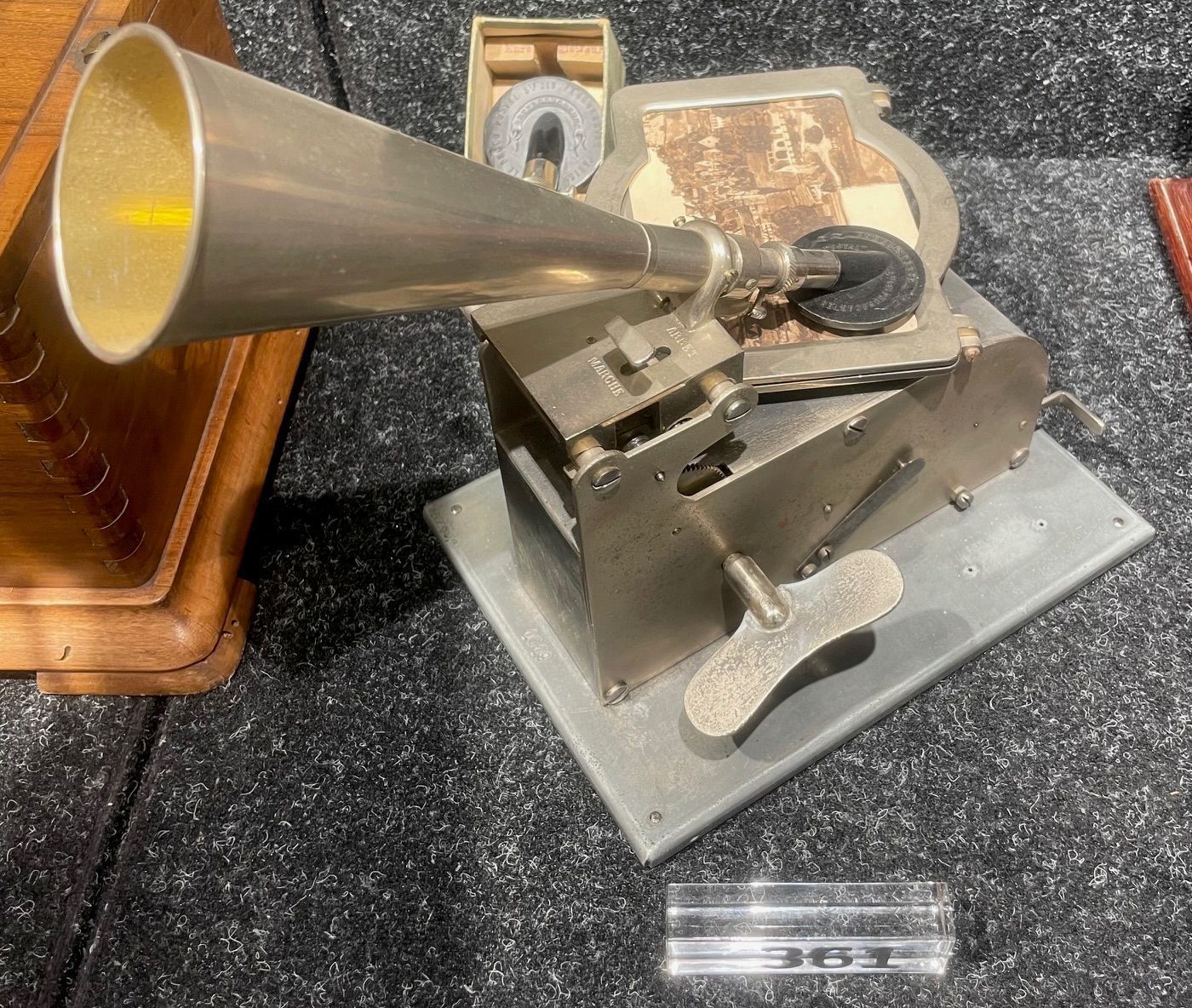
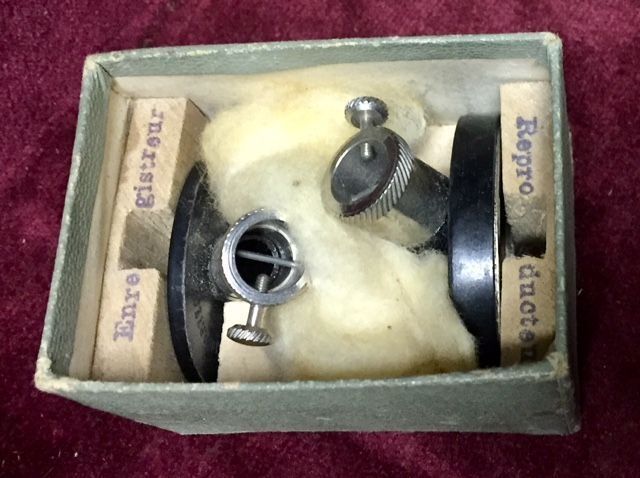
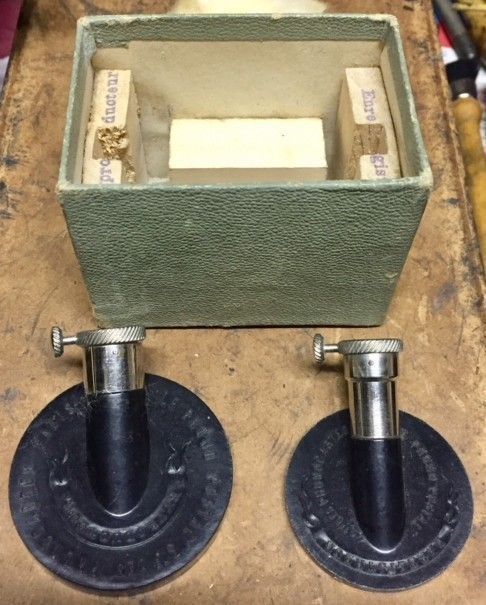
Phonographe Beau – “Le Phonopostal”, Device for recording and playing talking postcards
Entry/Object ID
361
Description
Name: Le Phonopostal
System: Talking postcard (carte postale parlante)
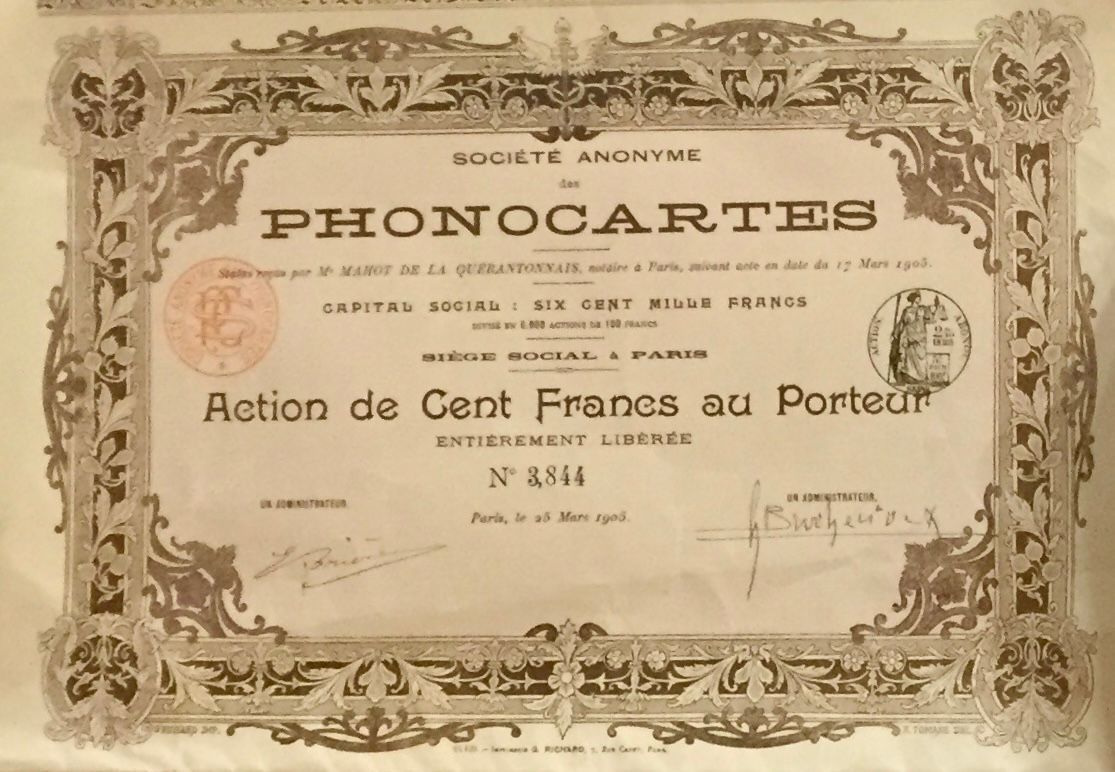
Company / Operator: Société anonyme des Phonocartes, Paris
Date: c. 1904–1908
Origin: France
Technology: Mechanical recording and playback device for talking postcards (Carte Postale Parlante)
Historical Background
The Phonopostal is one of the most unusual applications of early sound recording.
It was developed to transmit spoken messages instead of written text, thereby adding an acoustic dimension to the traditional postcard.
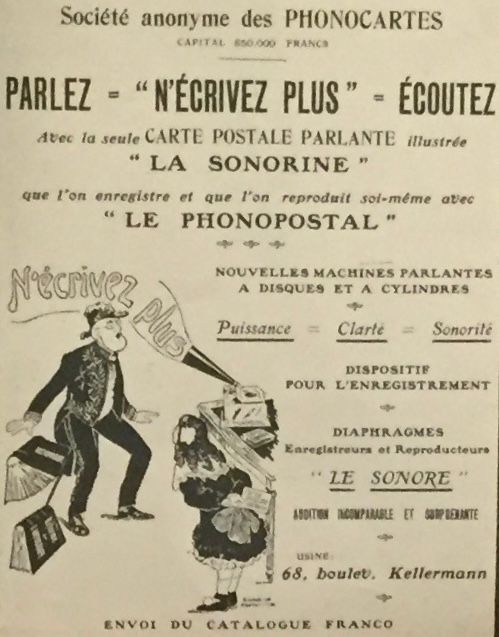
Around 1905, the Société anonyme des Phonocartes in Paris experimented with this innovative form of communication. Contemporary advertising summarized the idea in a striking slogan:
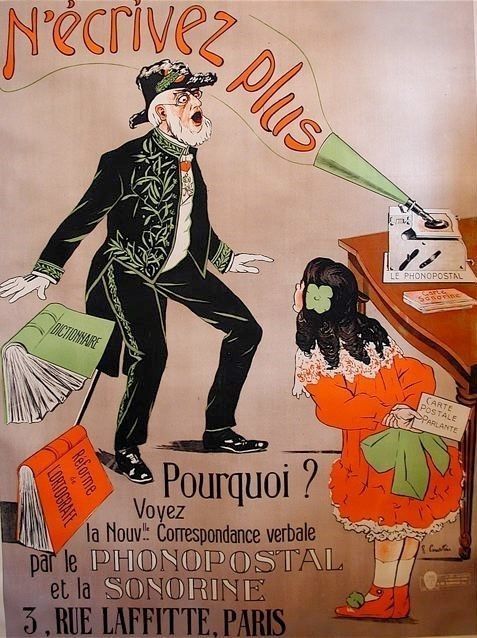
“Parlez – n’écrivez plus – écoutez !”
(Speak – do not write anymore – listen!)
Principle of Operation
The Phonopostal is not a conventional phonograph for loose cylinders.
It is a specialized device designed exclusively for the “talking postcard”.
The postcard itself serves as the recording and playback medium.
There is no separate sound cylinder and no additional recording carrier.
Contemporary printed material describes the system explicitly:
With the only illustrated talking postcard “La Sonorine”,
which one records and plays back oneself – using the “Phonopostal”.
Writing is thus replaced by speaking.
Social Context
The Phonopostal emerged at a time when:
illustrated postcards were a mass medium,
sound recording was perceived as a technical marvel,
the human voice was considered especially personal and emotional.
Spoken greetings made it possible to transmit voice, intonation, and emotion—elements that written correspondence could not convey.
Technology and Use
The Phonopostal is a compact mechanical recording and playback device, specifically designed for spoken messages rather than music.
It was intended for use in shops, arcades, or other public spaces, as part of a commercial communication service.
The device represents a period of intense experimentation, during which new applications of sound recording were explored far beyond musical entertainment.
Significance
The Phonopostal is an early forerunner of modern voice messages.
It represents one of the first attempts to directly link sound recording with postal communication and demonstrates how early the desire existed to send voices across distance.
Within the context of the Edisonium, this object documents the creative and experimental phase of early sound media, in which human communication, rather than entertainment, stood at the center.