Name/Title
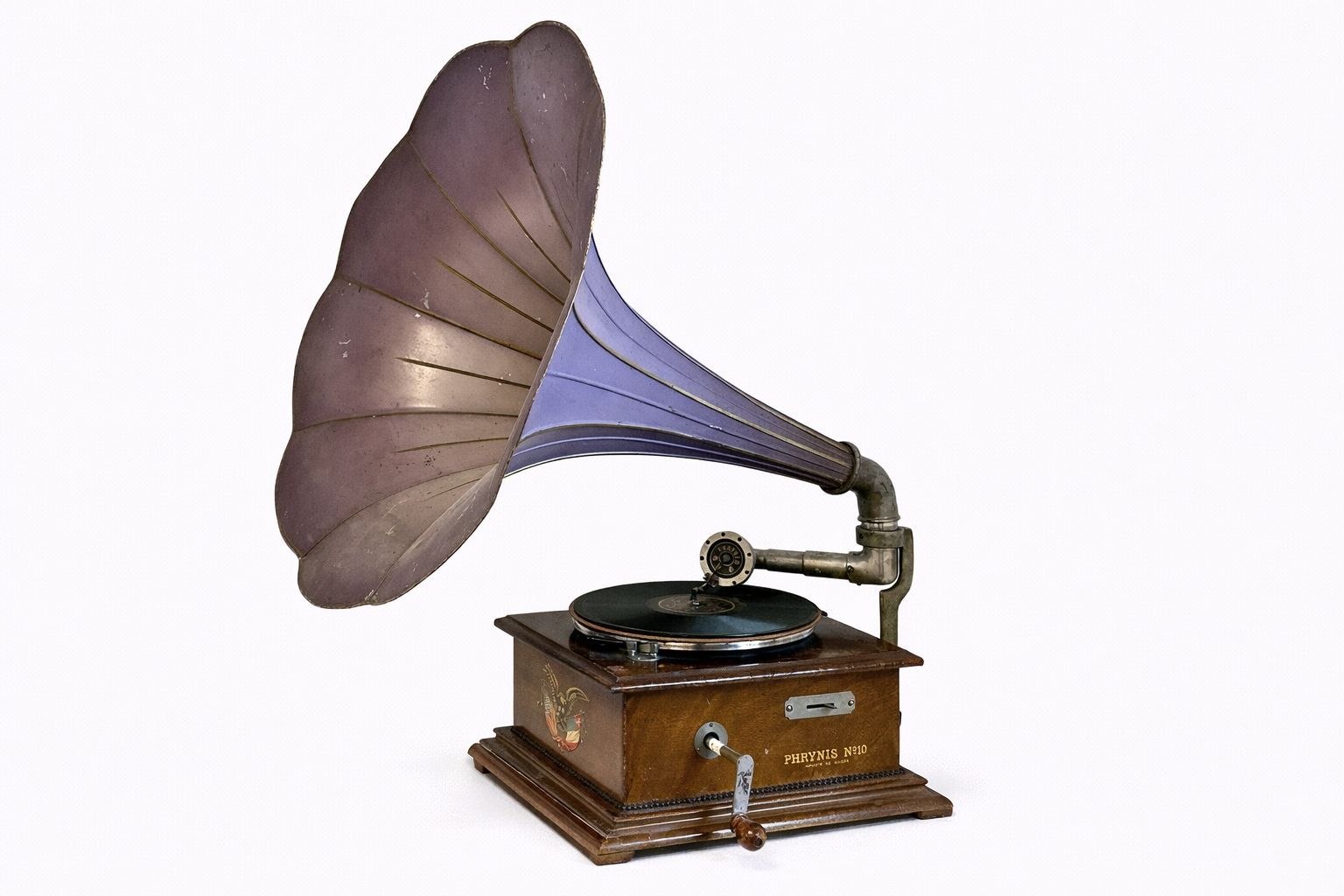
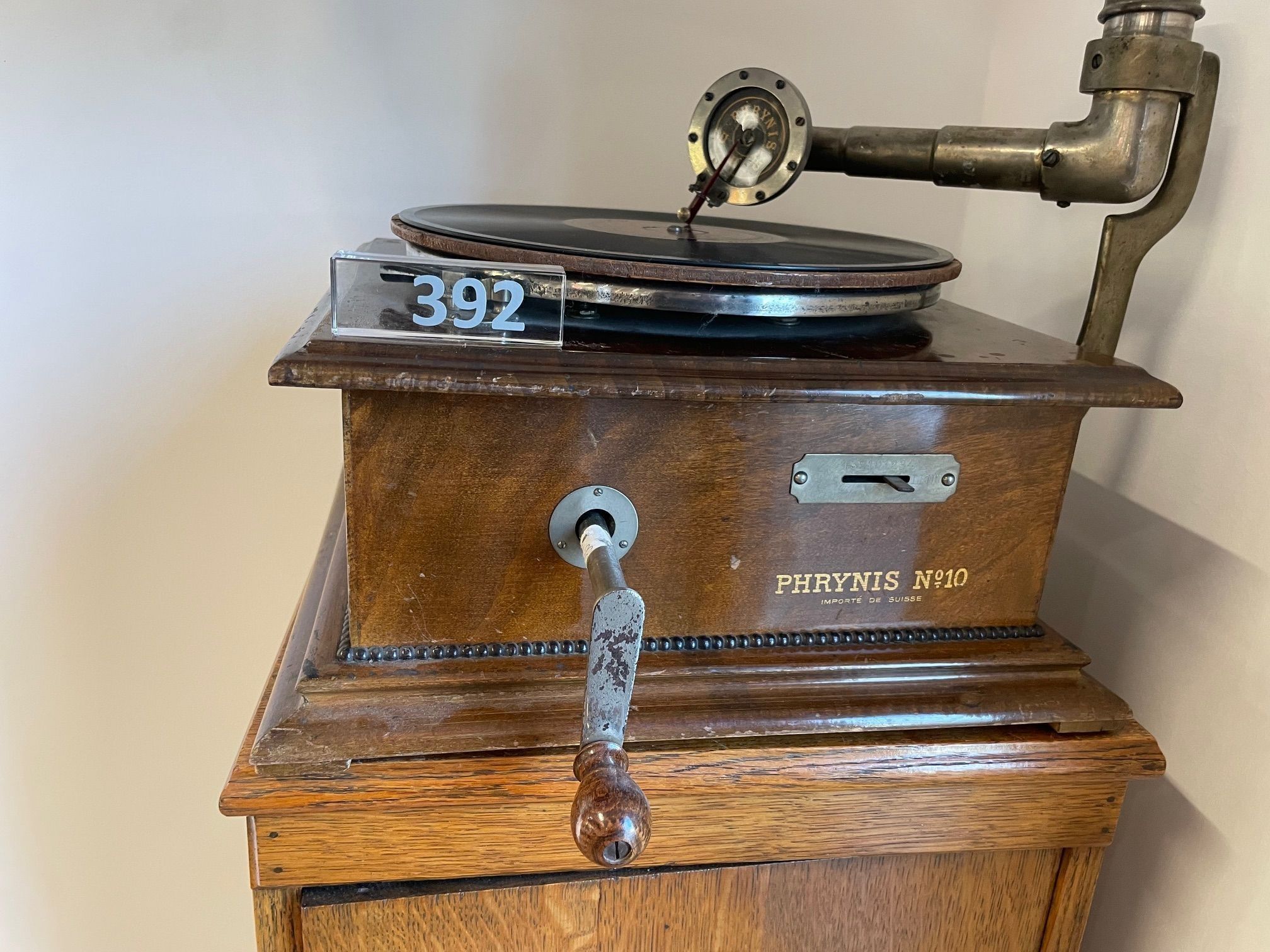
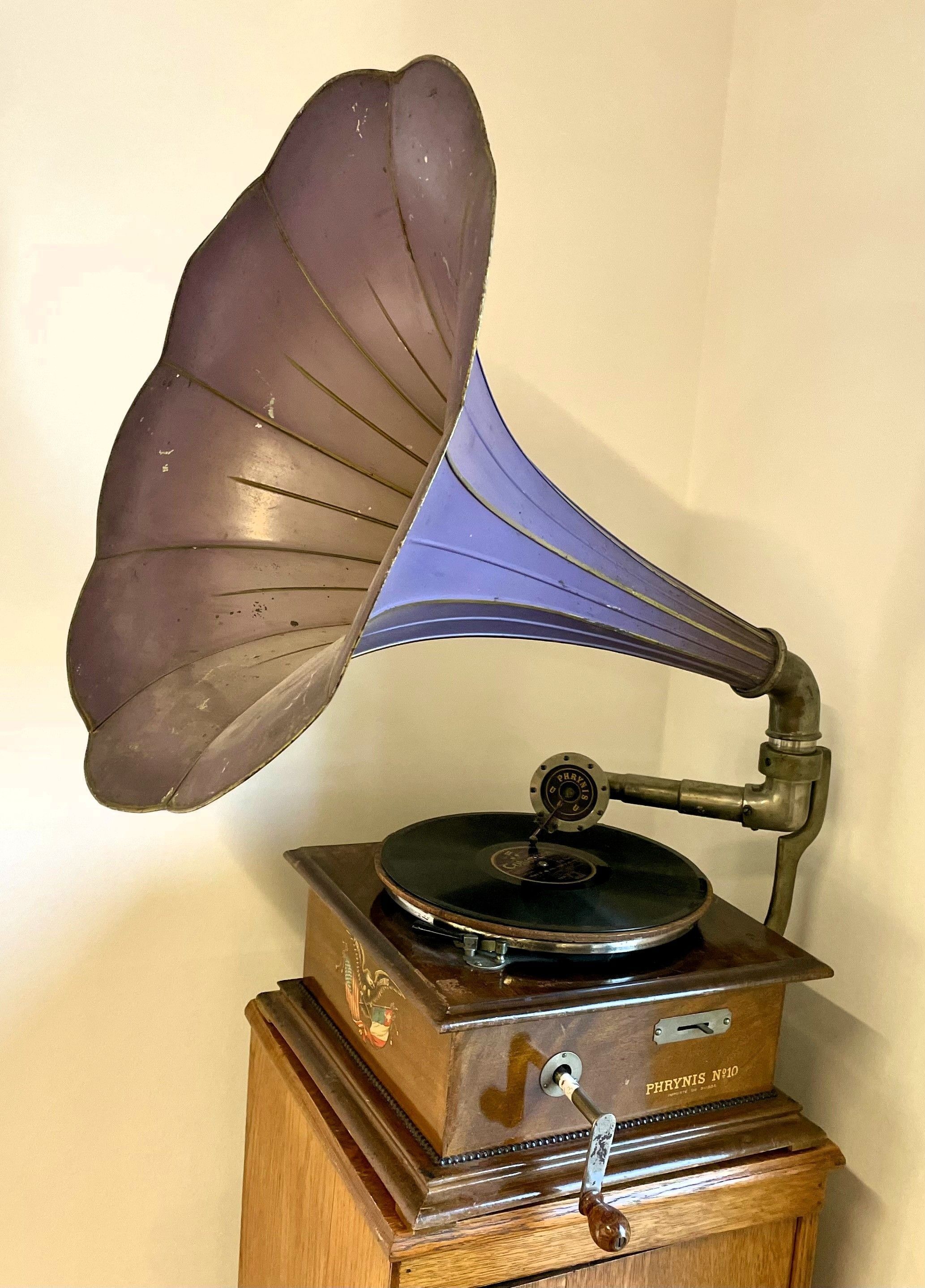
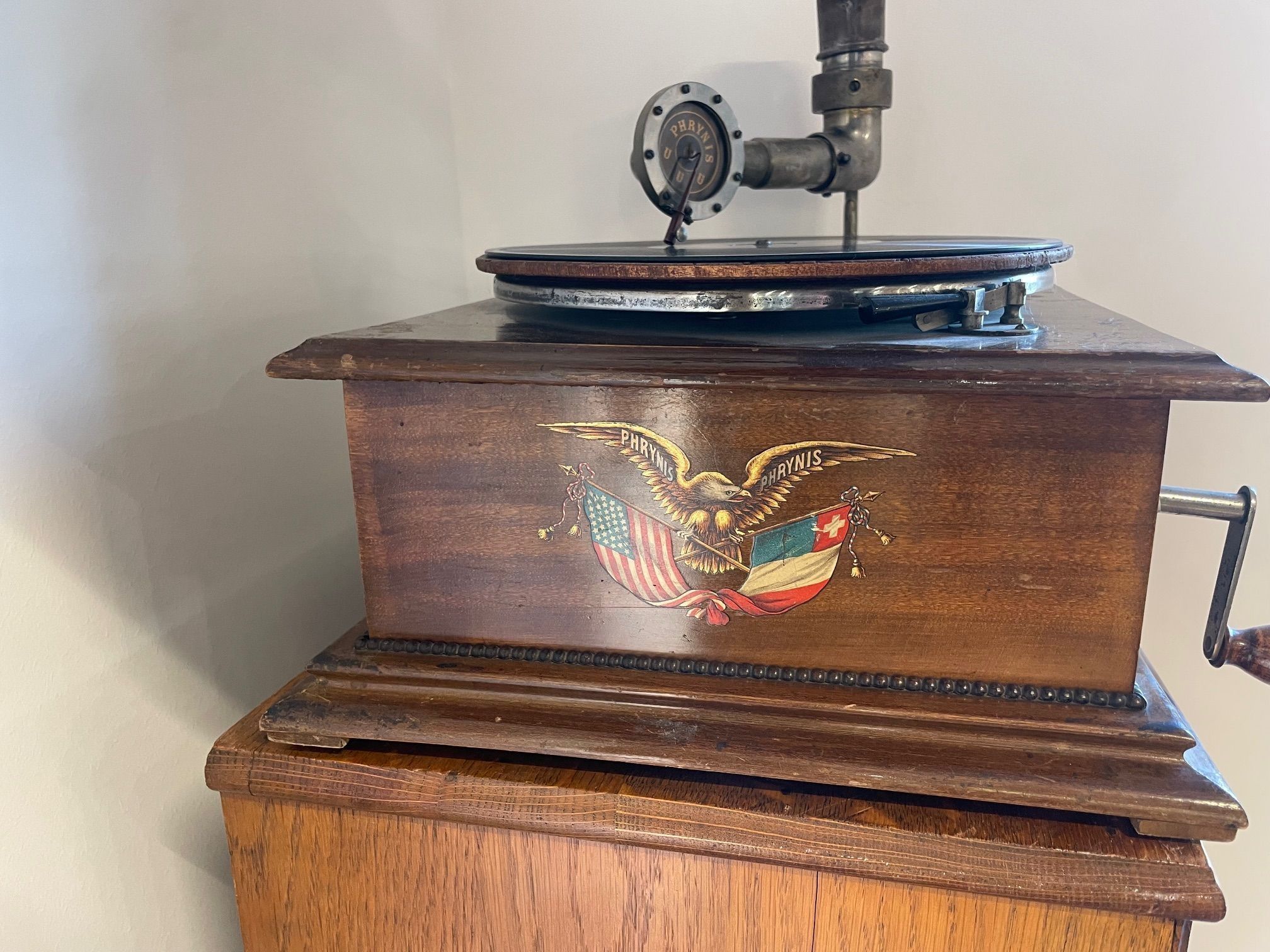
Phrynis No. 10, Disc gramophone with violet sheet-metal hornEntry/Object ID
392Description
Brand: PHRYNIS
Manufacturer / Brand owner: Charles & Joseph Ullmann, Switzerland
Date: c. 1909
Type: Acoustic disc gramophone
Case dimensions: approx. 33 × 33 cm
Height of the machine: approx. 16 cm
Horn: violet lacquered sheet-metal horn
Soundbox: marked with three stamped “U” symbols (Ullmann hallmark)
Historical Background
The PHRYNIS No. 10 belongs to a high-quality and today comparatively rare group of continental European disc gramophones from the peak period of acoustic sound reproduction immediately before the First World War.
The PHRYNIS brand was created by the brothers Charles and Joseph Ullmann in Switzerland and stands for solid mechanical construction, independent design, and a clear orientation toward the Franco-Swiss market.
By around 1909, the disc gramophone had reached a high level of technical maturity. Manufacturers increasingly focused on sound volume, mechanical reliability, and representative appearance. The Phrynis No. 10 is a typical example of this stage of development: a compact cabinet combined with a generously dimensioned external horn for effective sound projection.
Design and Technology
The most striking feature of this machine is the large violet lacquered sheet-metal horn, with its distinctly curved, calyx- or flower-like form. Around 1908–1910, such colored horns were deliberately used as design elements, giving the gramophone not only technical presence but also an aesthetic status as a piece of furniture and a display object.
The soundbox, identified by three stamped “U” marks, is a key identifying feature of Ullmann production.
The machine is equipped with a spring-driven motor operated by hand crank, typical of high-quality continental European gramophones of this period. Despite its compact construction, the Phrynis No. 10 delivers a clear and assertive acoustic performance, the result of careful coordination between motor, tonearm, soundbox, and horn.
Context According to Daniel Marty – Ullmann and ODEON
In his standard reference work “Grammophones – History in Pictures” (1981), Daniel Marty explicitly mentions the PHRYNIS No. 10 and places it, on page 140, within the context of European gramophone manufacturers. Marty points out that the Swiss manufacturing firm appears to have been associated with the ODEON brand.
He further emphasizes the soundboxes bearing the three “U” marks, which clearly indicate Ullmann—a name that Marty also connects with Odeon and Fonotipia. These references illustrate the close interconnections between manufacturers, brands, and distribution networks within the European gramophone market around 1909.
Daniel Marty and the Iconic Significance of This Particular Example
This specific instrument possesses exceptional scholarly and documentary significance.
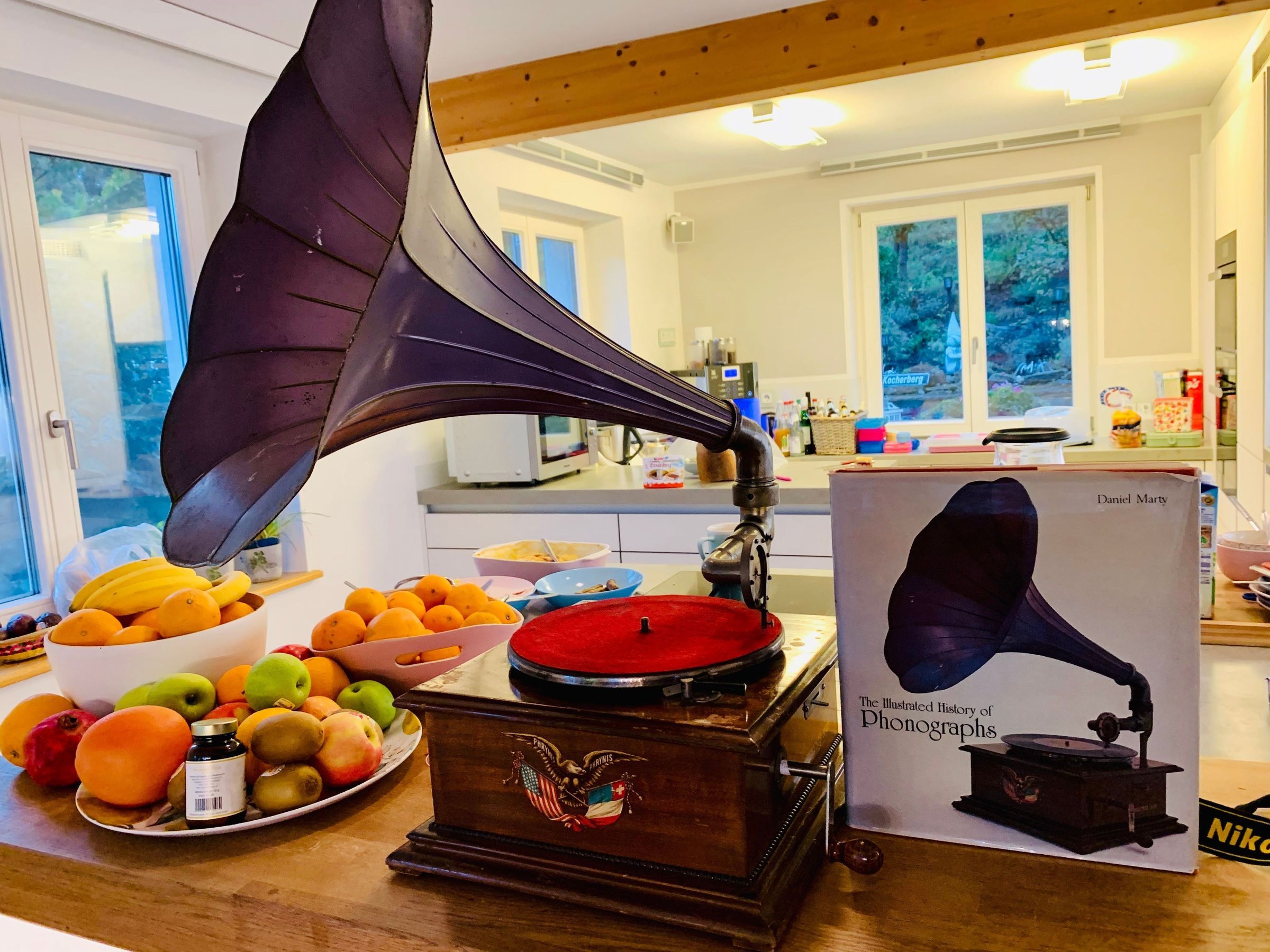
The PHRYNIS No. 10 displayed at the Edisonium is identical to the gramophone chosen by Daniel Marty as the cover image of his book.
The machine formed part of Marty’s personal collection and was sold during the auction of his estate in Paris.
It is therefore not a comparable or similar example, but the very gramophone that served as the iconic visual reference for one of the most important works on the history of the gramophone.
Its selection as a cover image underscores its representative character for the late acoustic era and the continental European gramophone tradition.
Significance within the Edisonium
Within the Edisonium collection, the PHRYNIS No. 10 holds an outstanding position. It brings together:
a characteristic example of European gramophone design around 1909,
the technical maturity of acoustic sound reproduction,
a direct link to international scholarship through Daniel Marty,
and a documented connection to Ullmann and the ODEON milieu.
As a sound-producing machine, a design object, and a historical reference piece, this gramophone combines technology history, aesthetics, and scholarship in an exceptionally dense and meaningful way and ranks among the most important individual objects in the Edisonium in Mariazell.