Name/Title
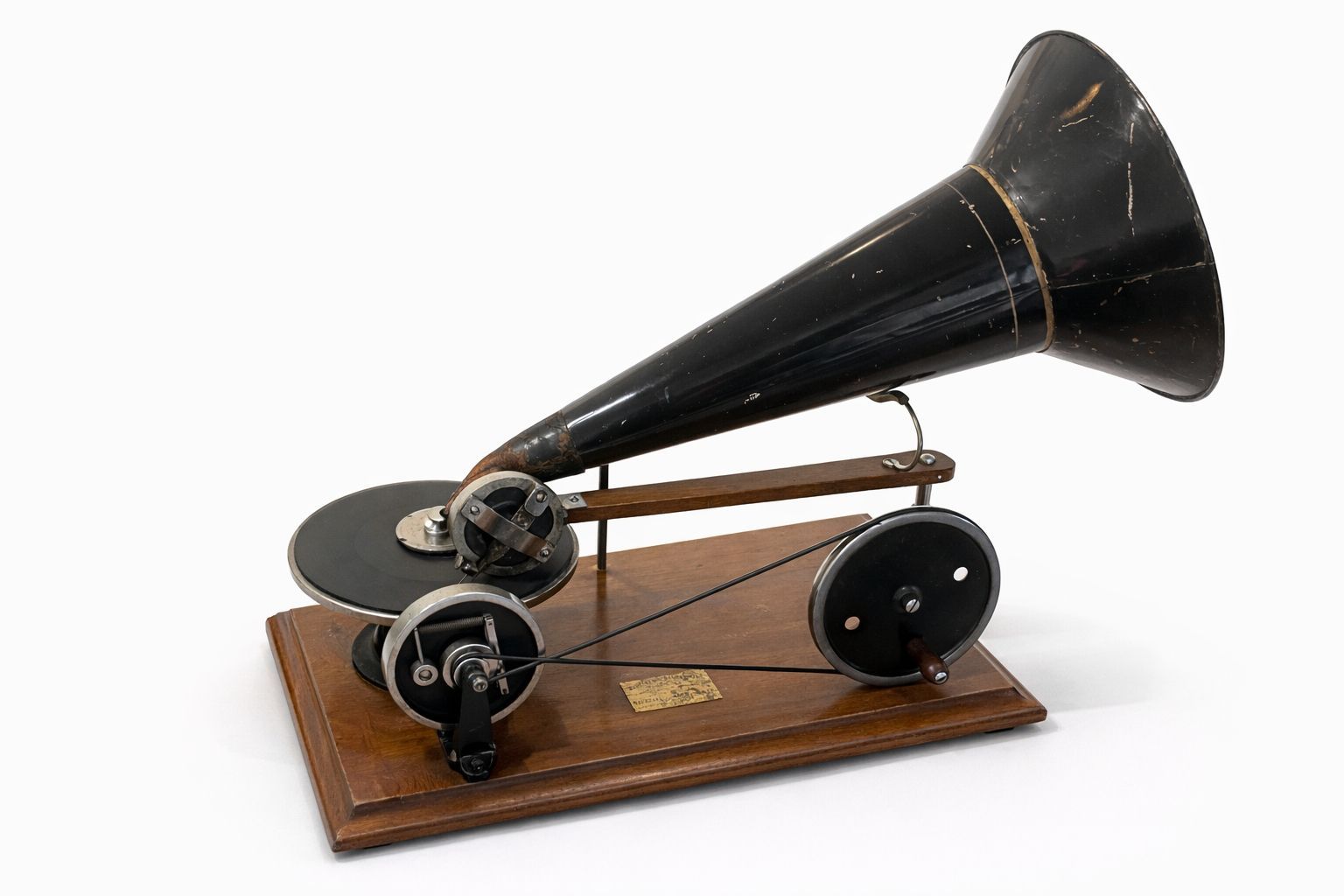
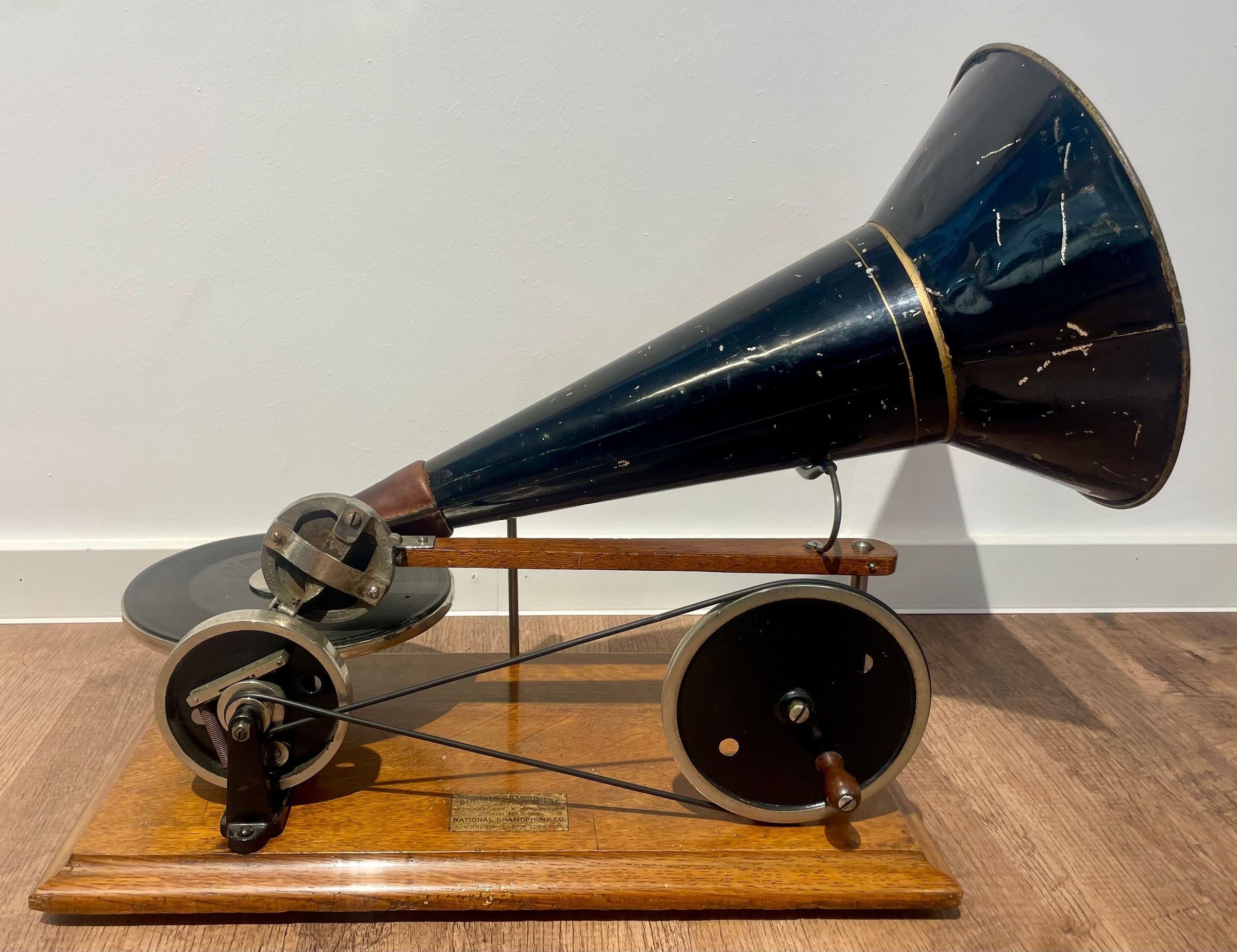
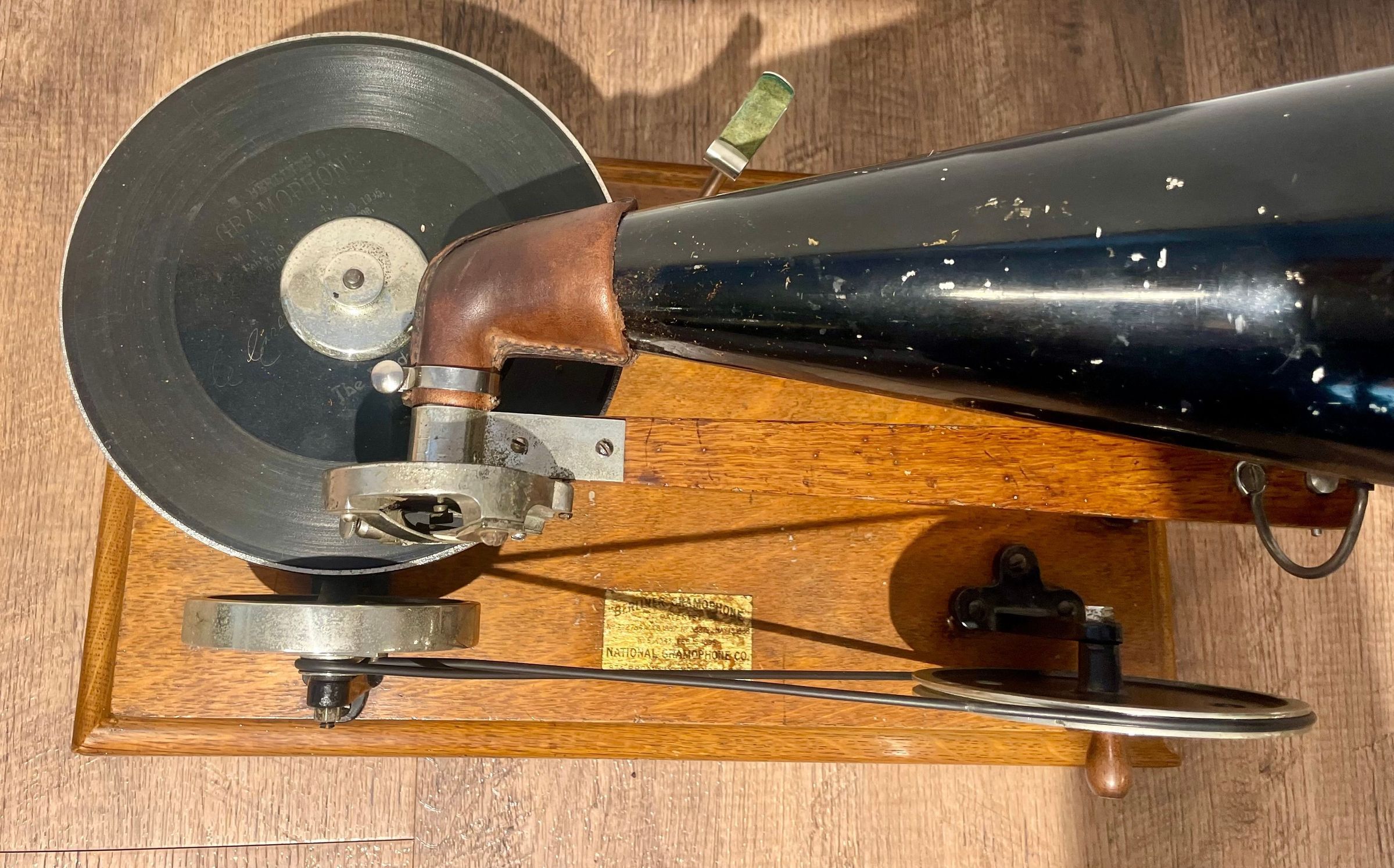
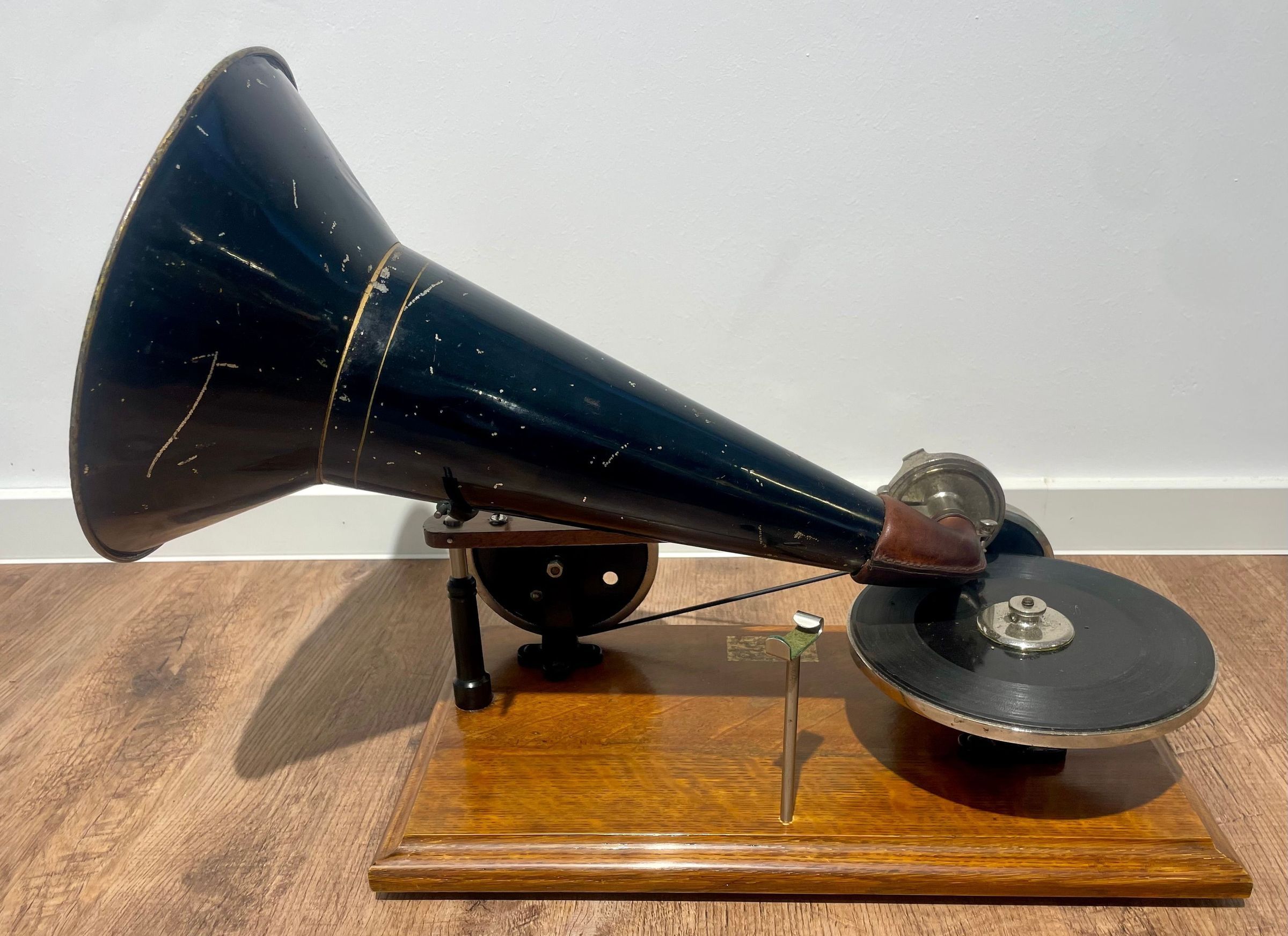
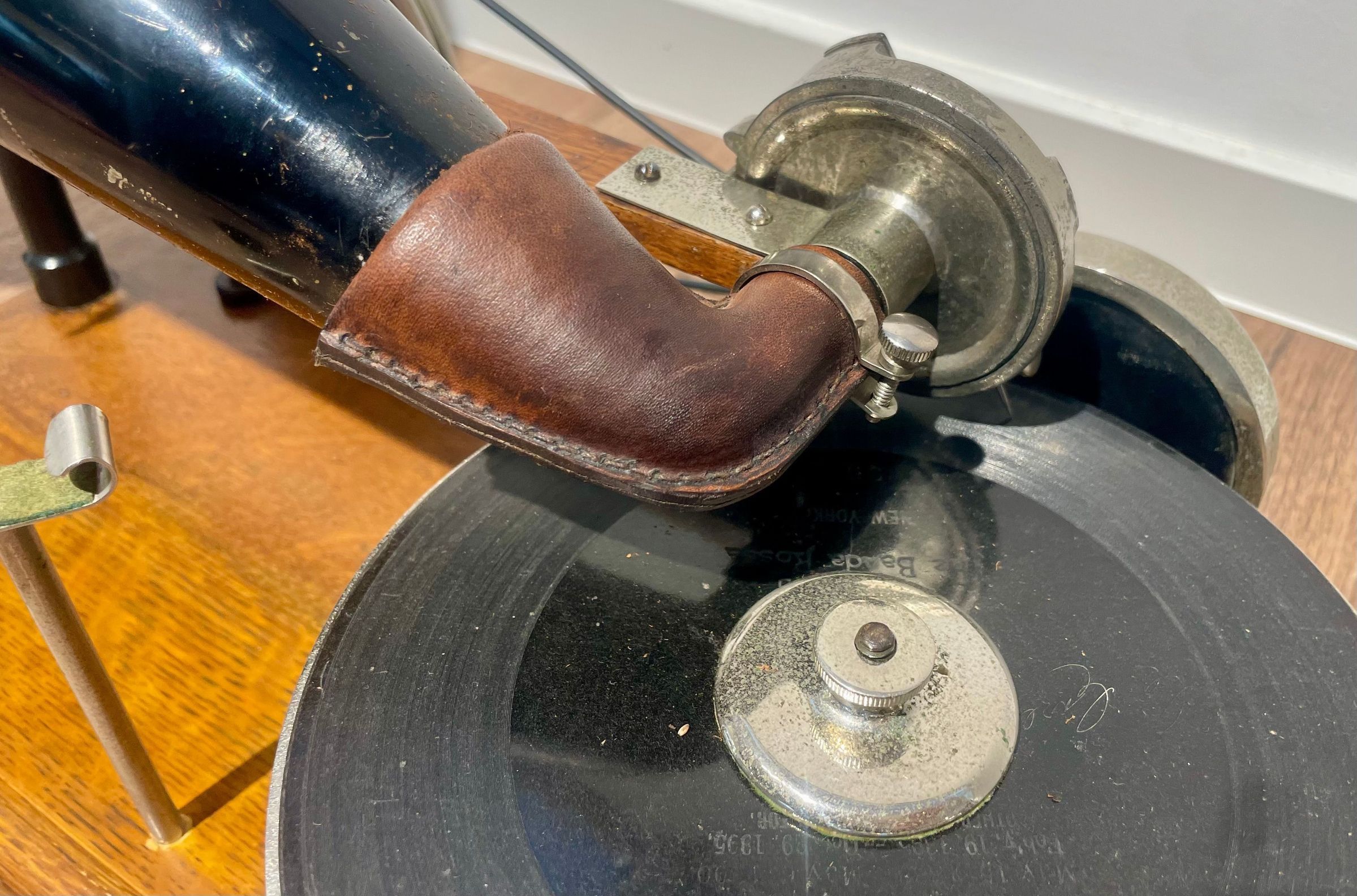
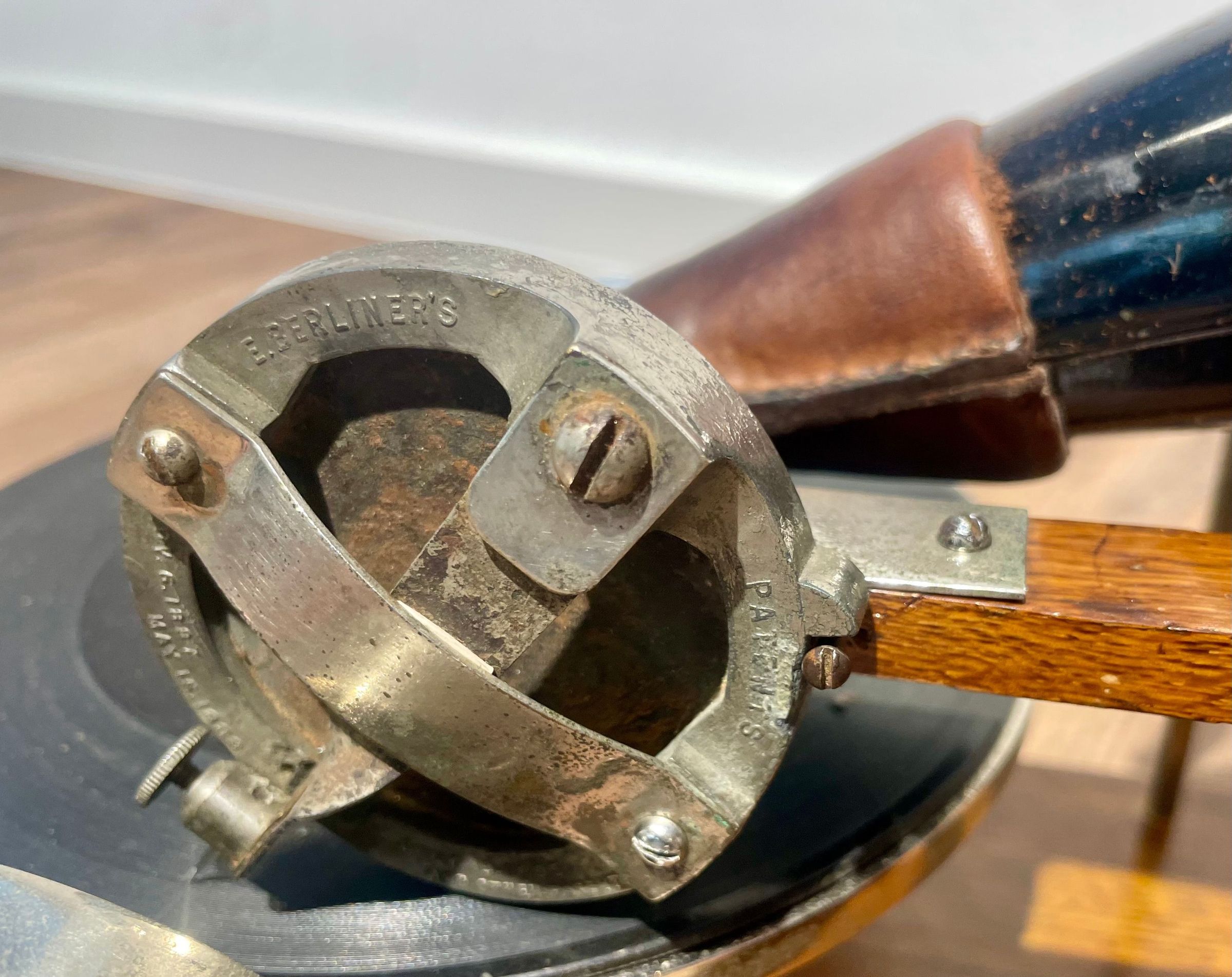
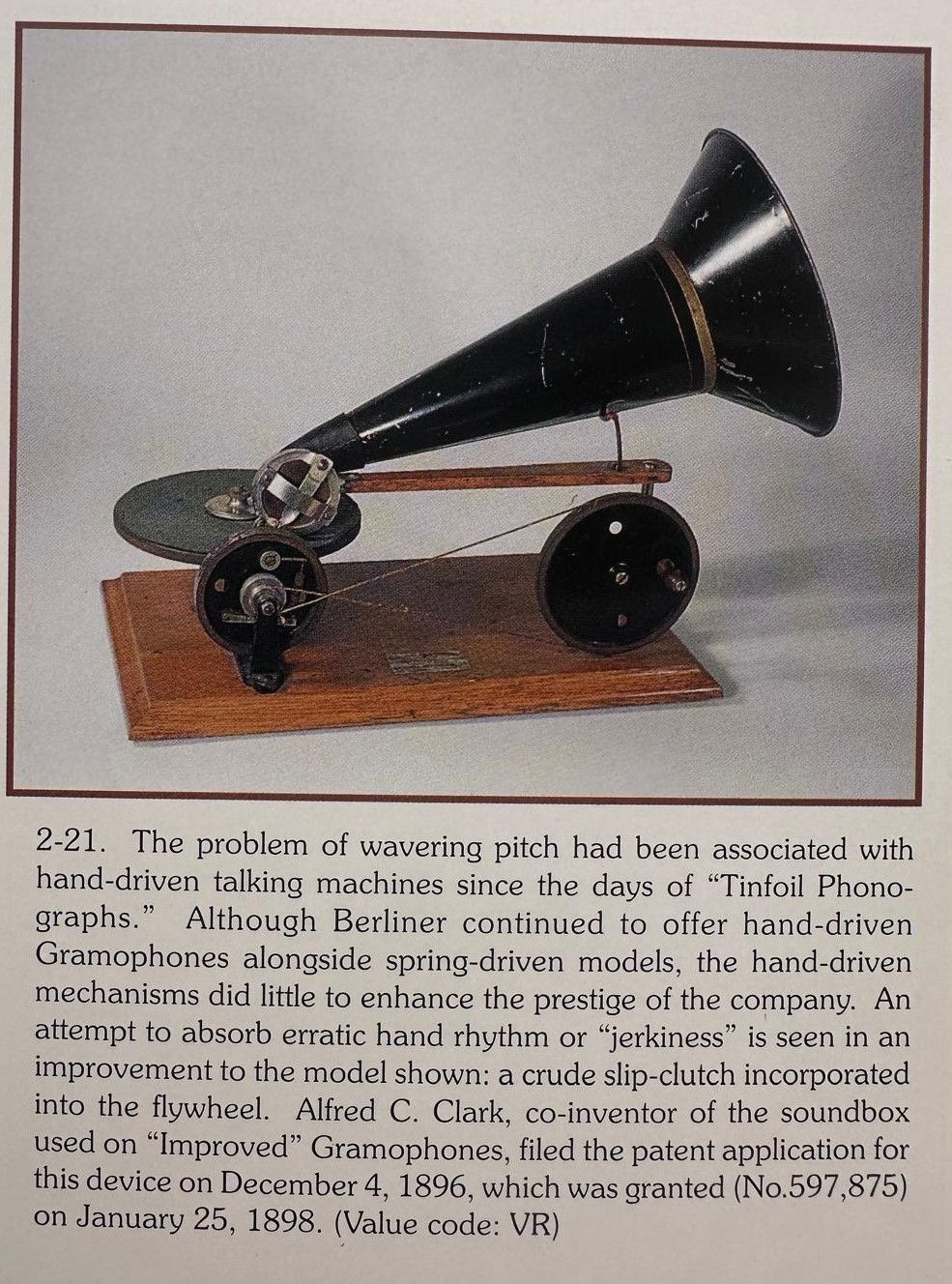
String-Wind Berliner Gramophone with Clark ClutchEntry/Object ID
390Description
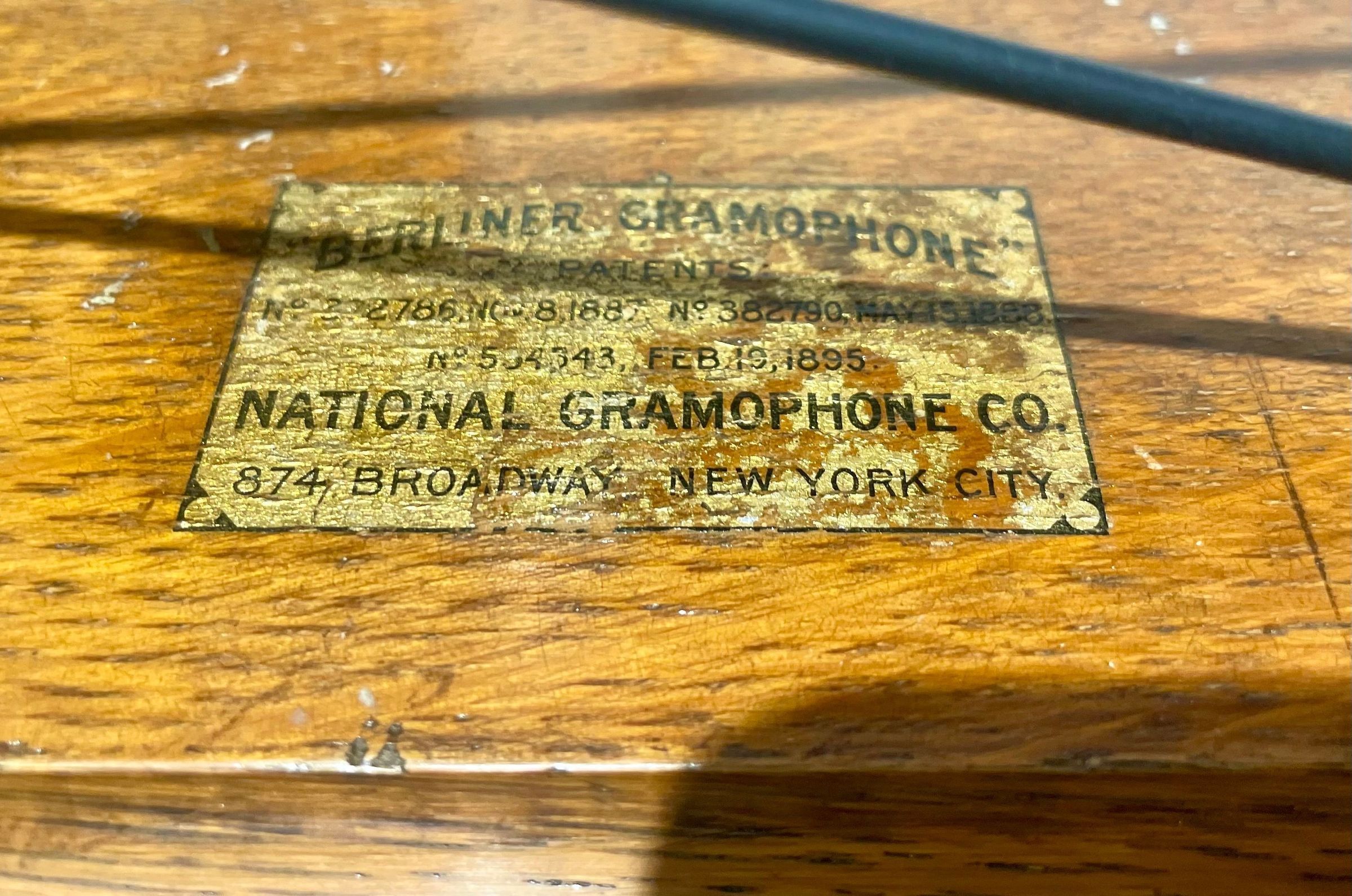
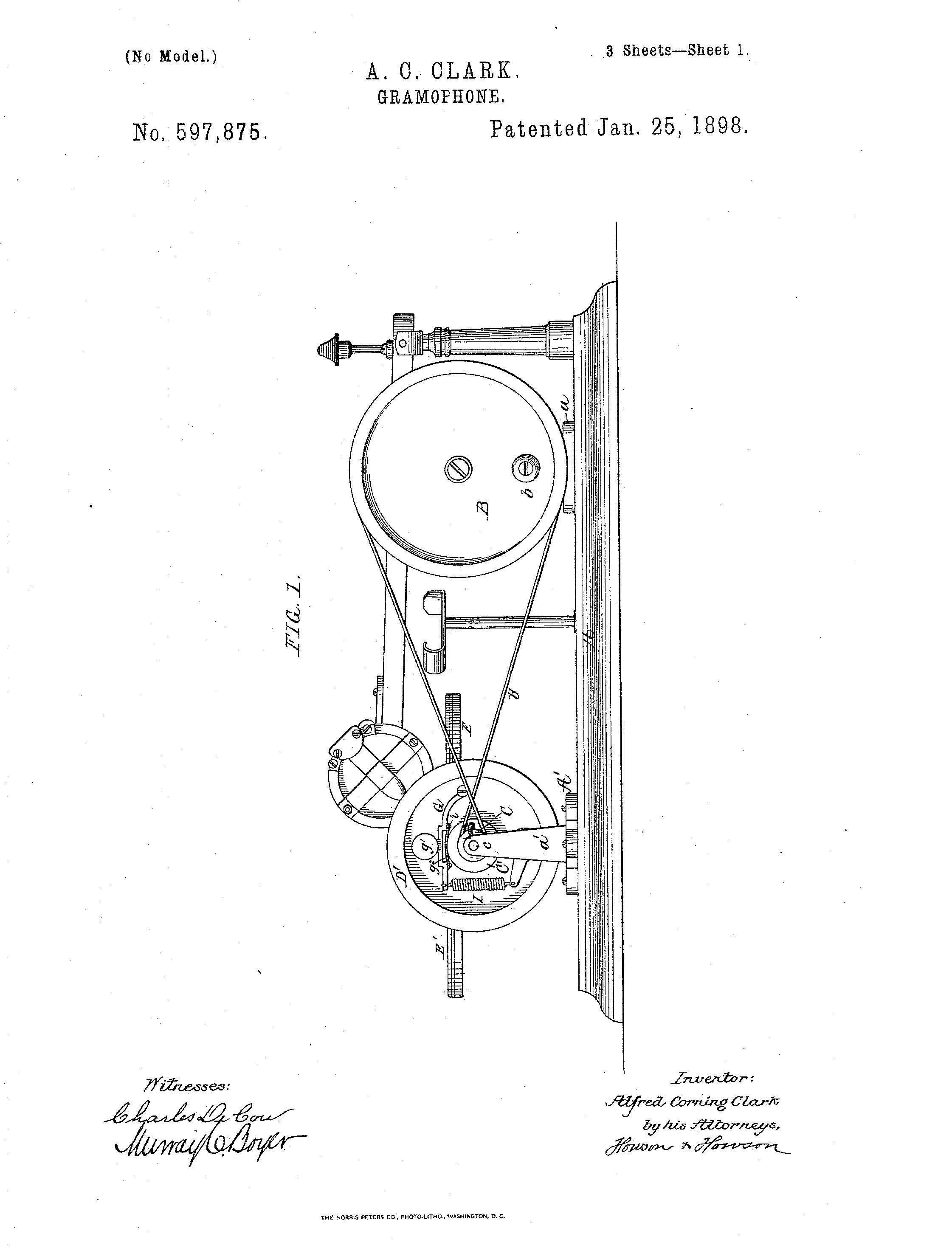
USA, ca. 1896/1897 | Patent US-597,875 (Clark, 1898)
One of only two known surviving examples worldwide
Historical Background
The first hand-driven Berliner gramophones manufactured in the United States were derived from the earlier Kämmer & Reinhardt toy gramophones made in Waltershausen, Germany. While the German models were sold mainly as novelties or children’s toys, the United States Gramophone Company attempted to refine the concept and elevate it into a proper demonstration machine.
A major problem of all hand-cranked gramophones was the unstable rotational speed:
Turning the crank by hand caused fluctuations of up to 20–30 rpm, producing audible “wobble,” pitch instability, and irregular sound reproduction. This issue had persisted since the era of the tinfoil phonograph and remained the central technical obstacle for hand-driven talking machines.
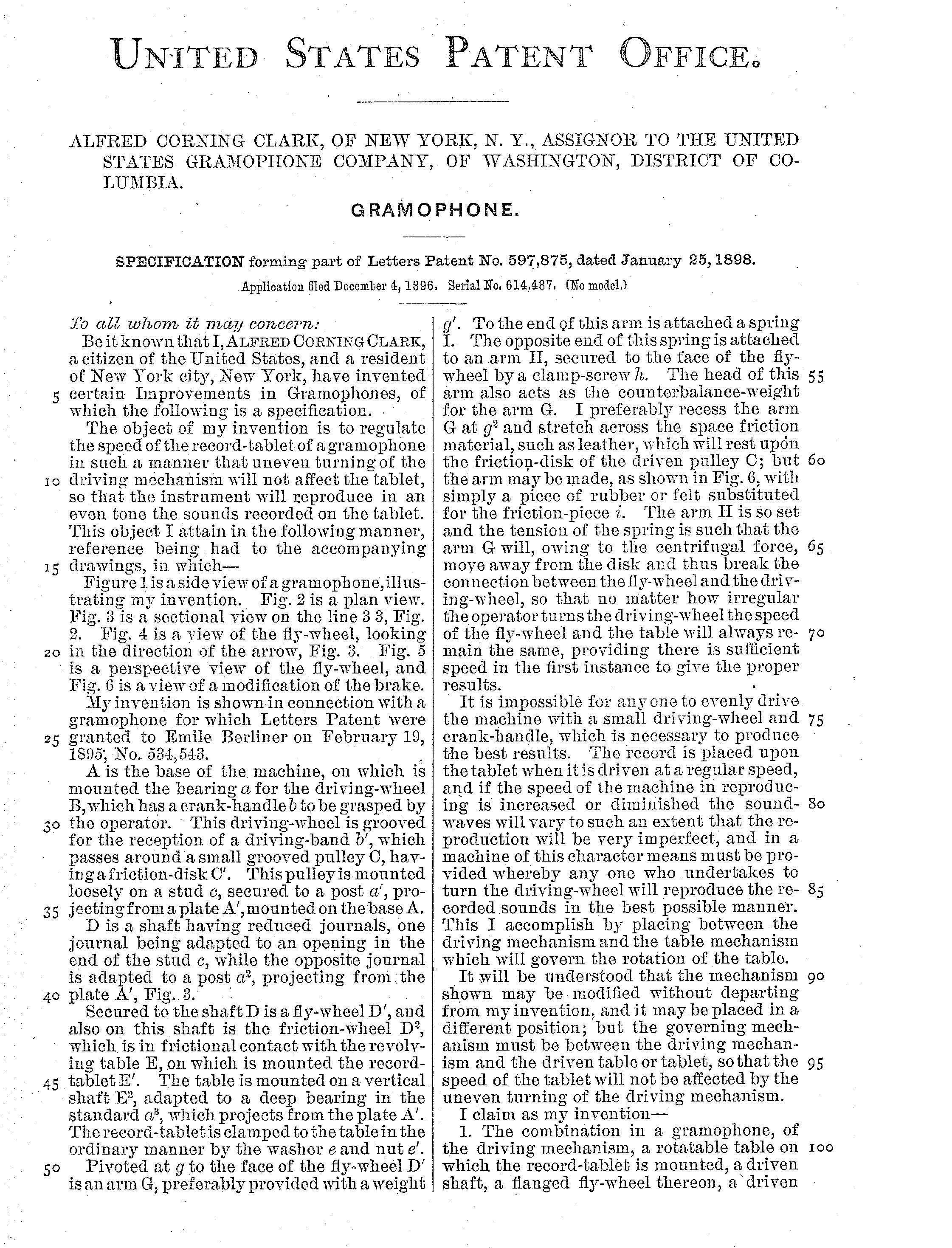
To address this problem, Alfred Corning Clark—the same engineer who later co-patented the famous “Improved Soundboxes” with Eldridge Johnson—developed a clutch and speed-stabilizing mechanism specifically for hand-driven Berliner machines.
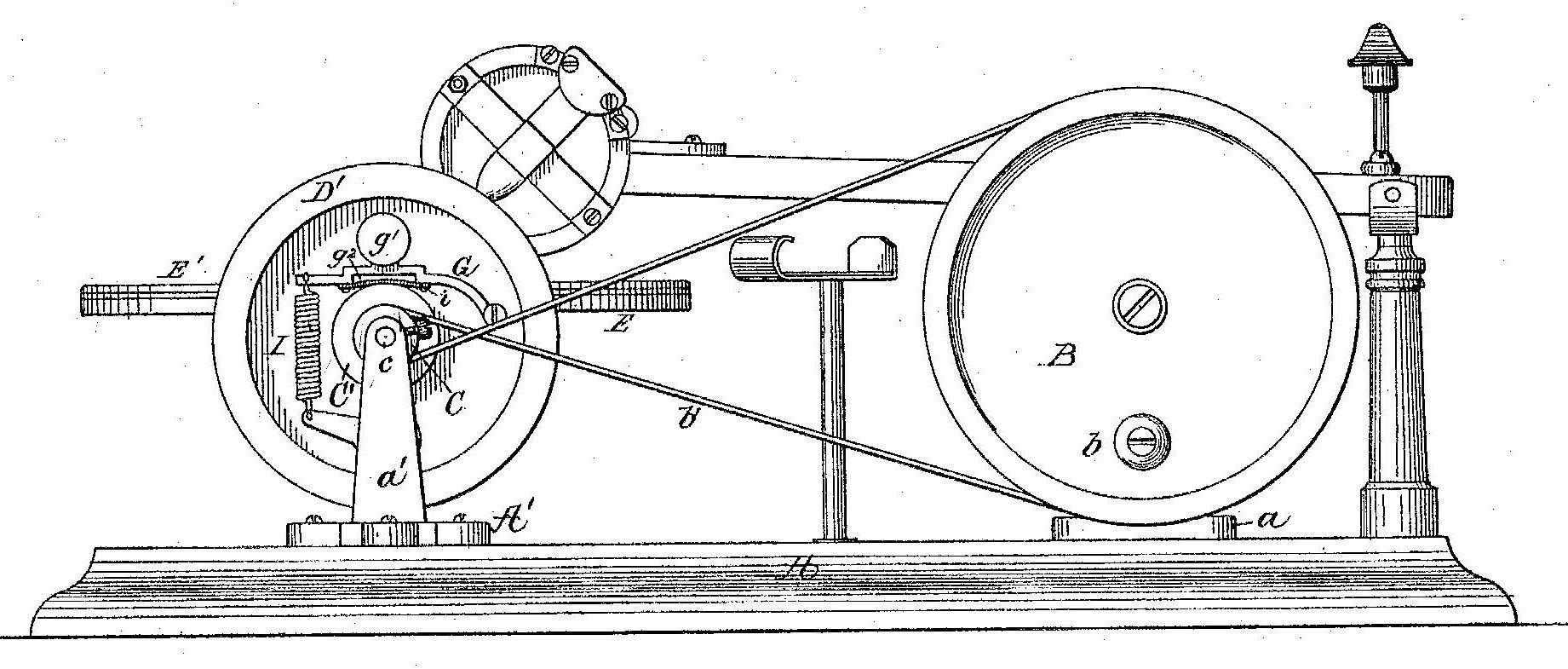
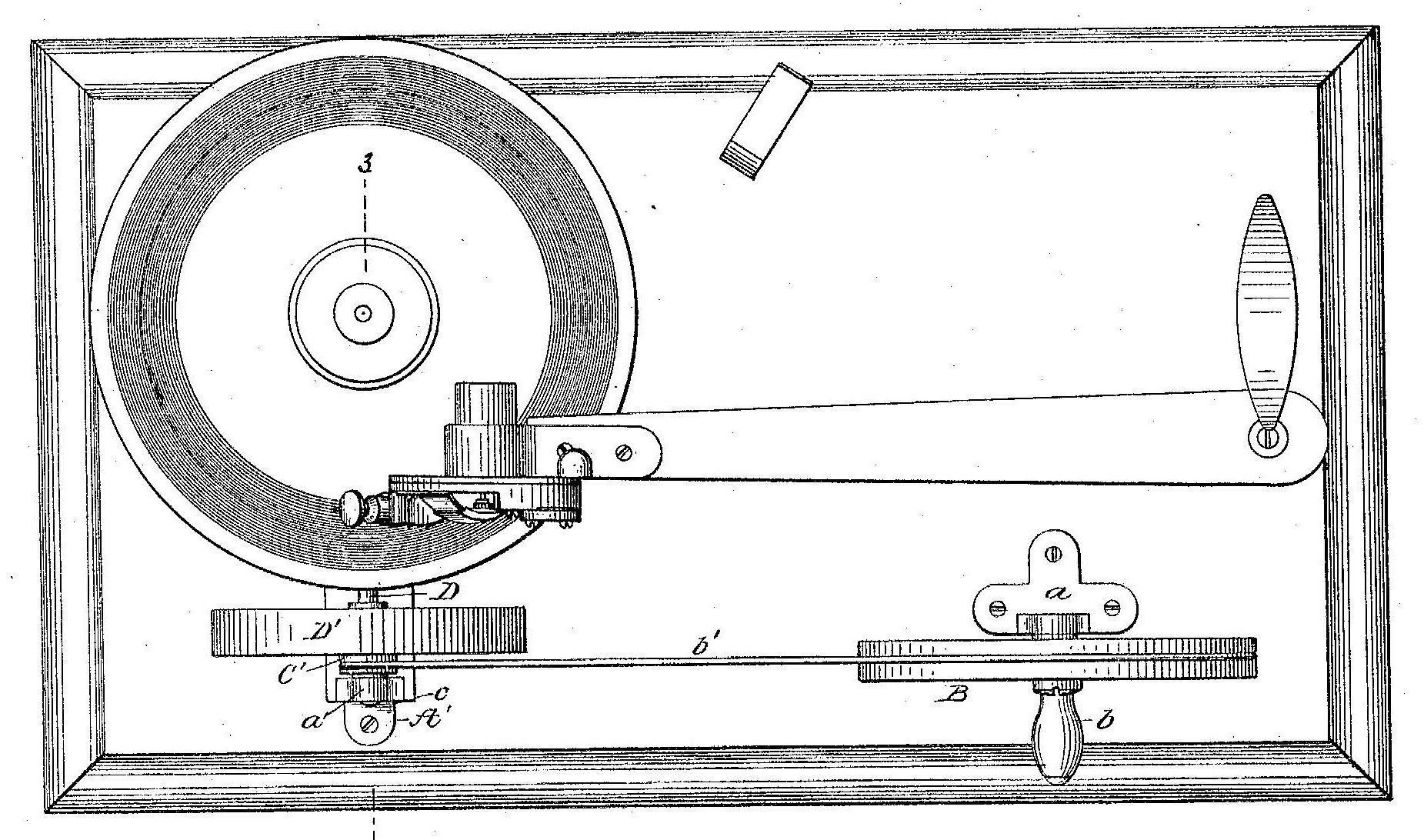
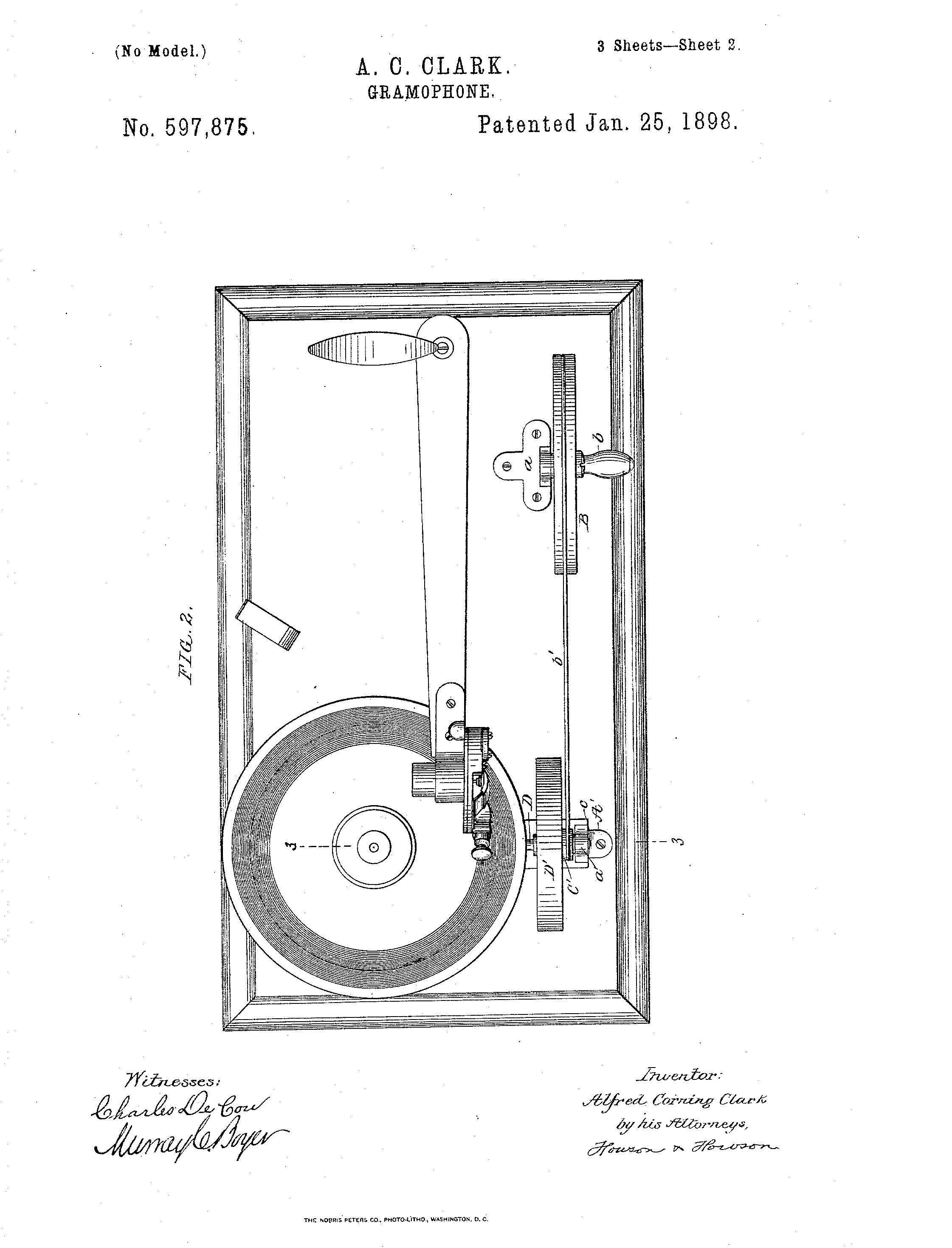
This mechanism was filed for patent on December 4, 1896 and granted as US Patent 597,875 on January 25, 1898.
The instrument displayed here is one of the very few machines on which this mechanism was actually installed.
Only two examples of this special type are known to exist worldwide.
Technical Features
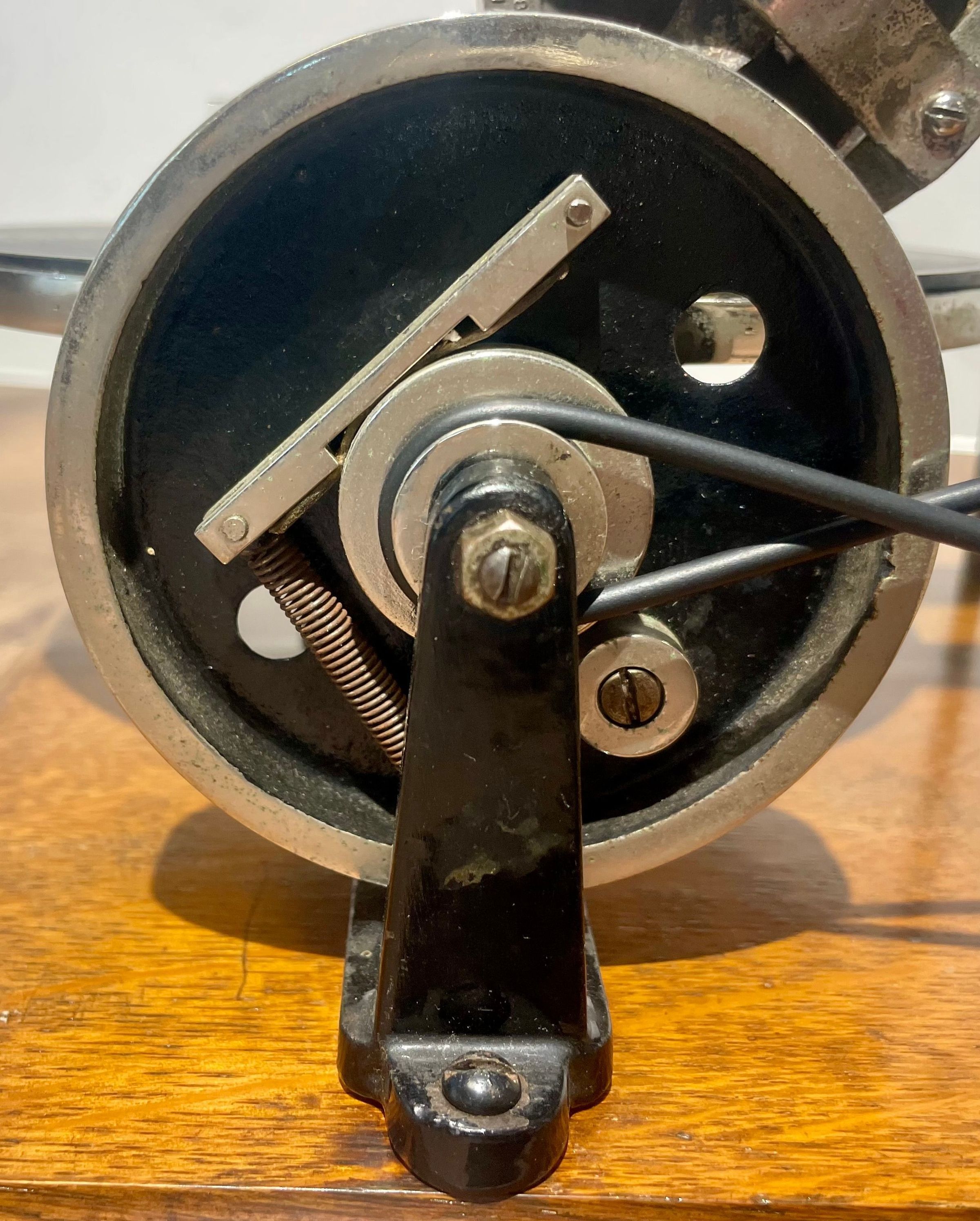
1. Speed Regulation via the Clark Clutch (Patent US-597,875)
This mechanism is the heart of the machine — an innovation far ahead of its time.
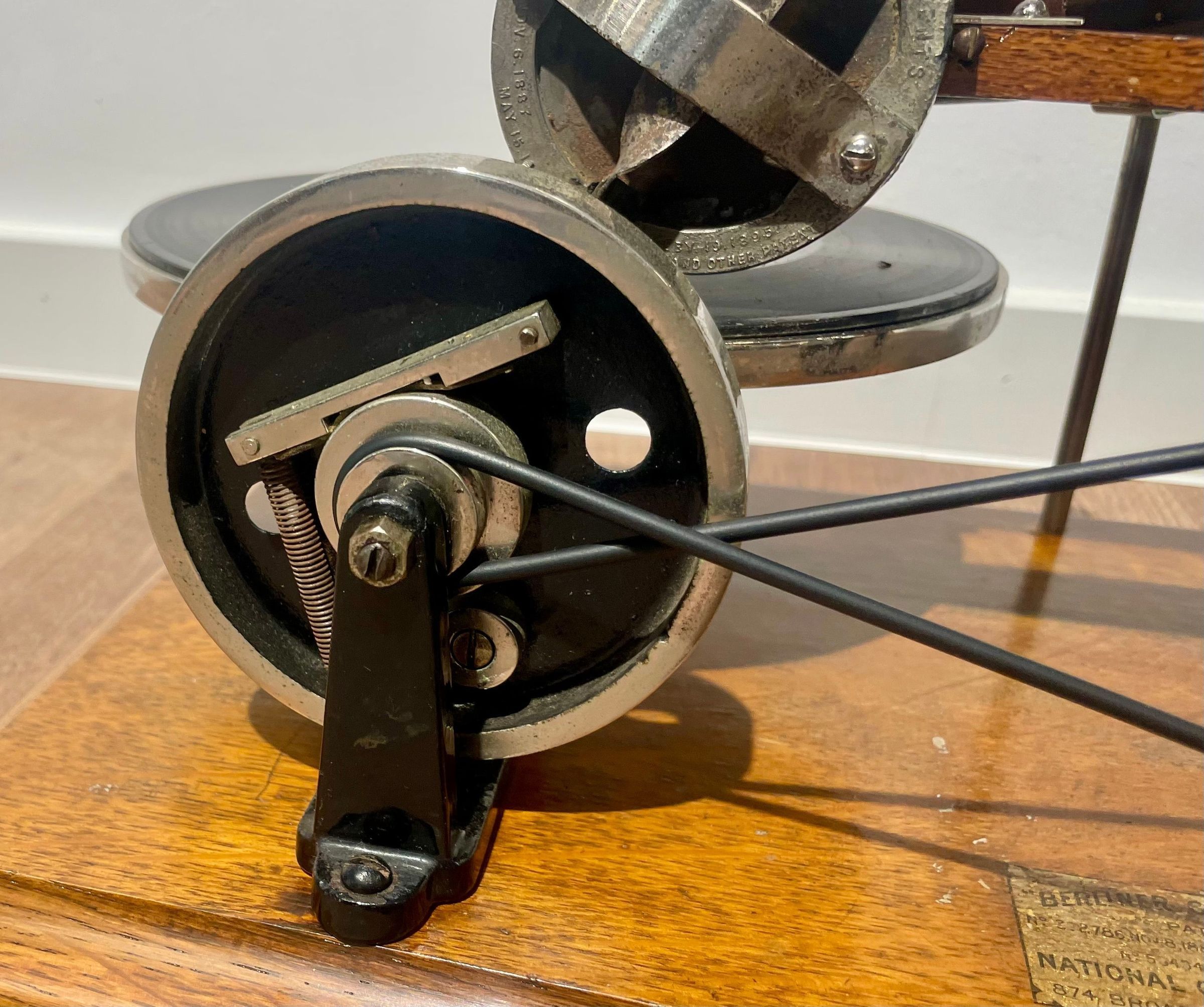
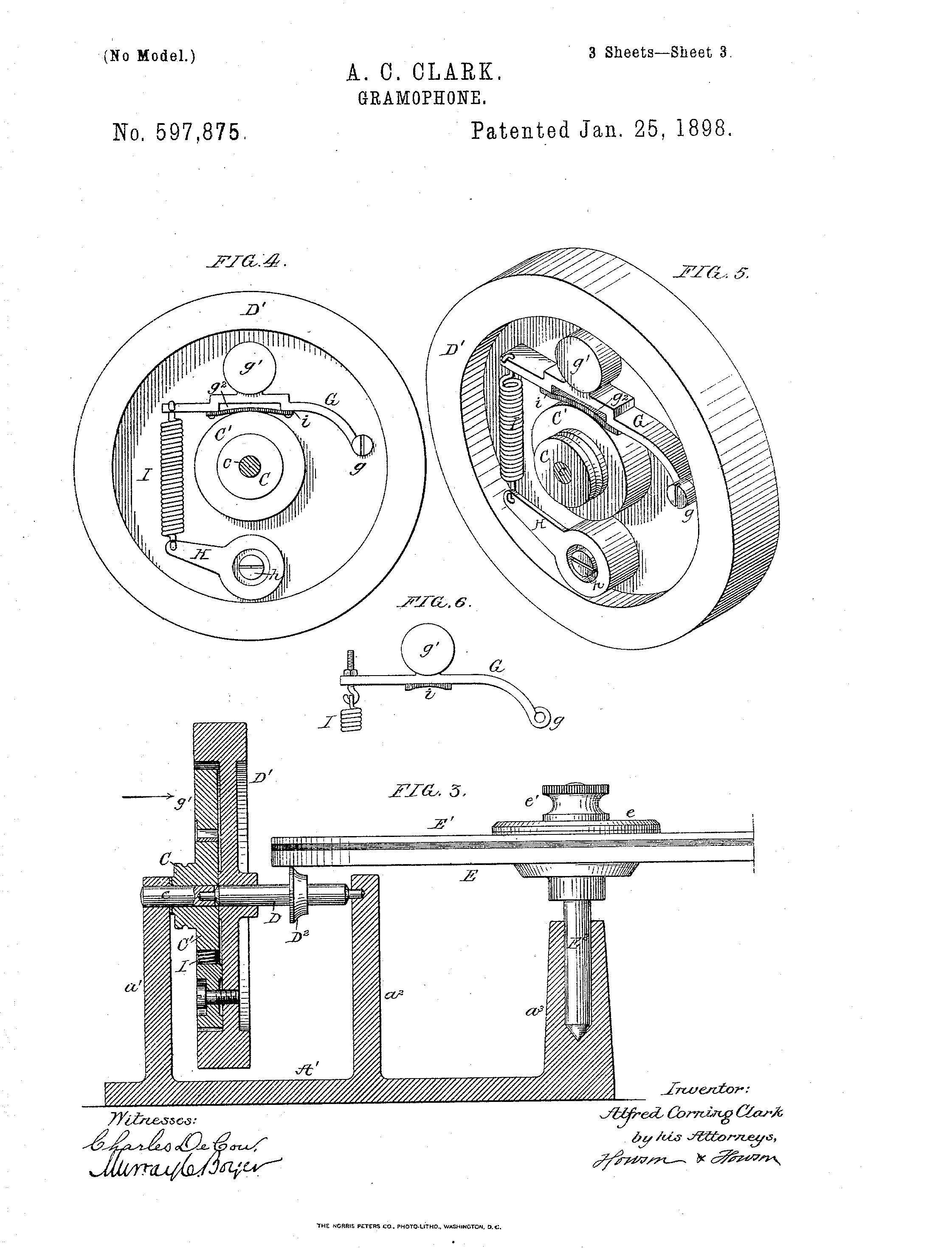
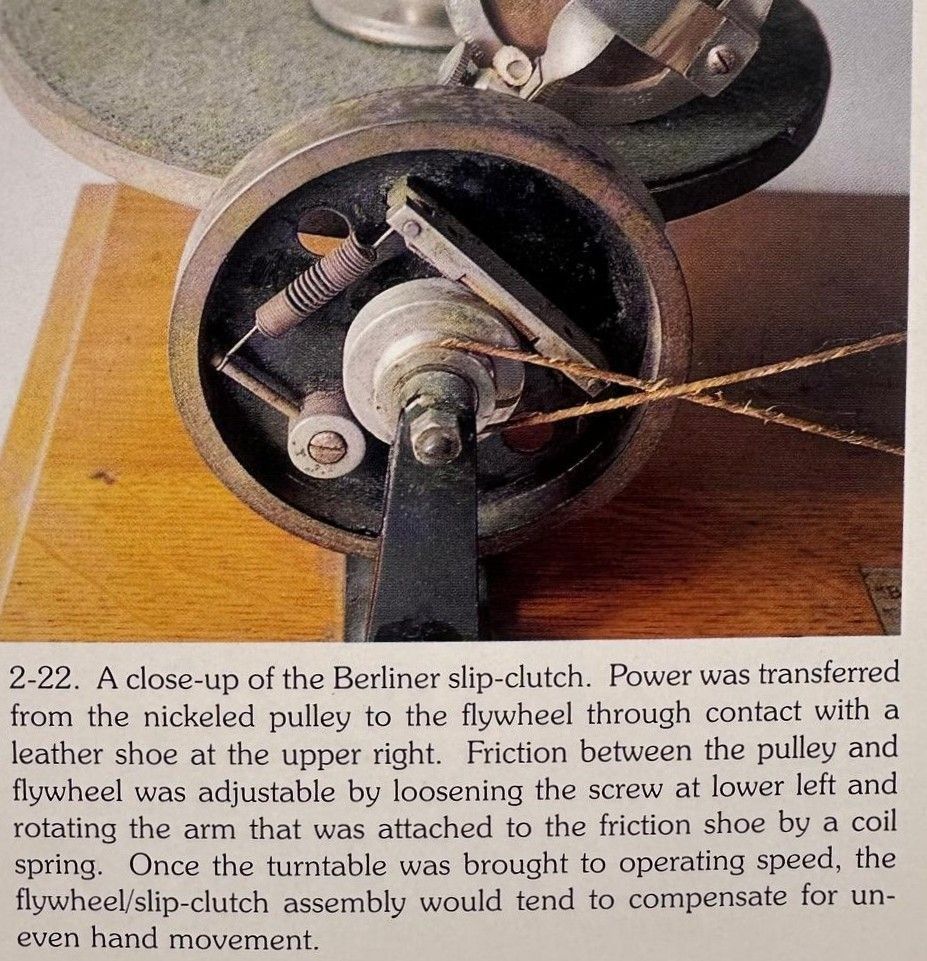
The clutch consists of:
a large flywheel mounted on the drive shaft
a spring-loaded slip clutch
a friction pad (leather or felt) mounted on a swinging arm
an adjustable counter-spring
a small hand-cranked pulley that provides the driving force
Purpose of the mechanism:
Irregular hand motion is not transmitted directly to the turntable.
Instead, the slip clutch ensures that the flywheel runs at nearly constant speed.
At excessive speed, centrifugal force lifts the clutch arm away from the friction surface — a primitive but functioning early centrifugal governor or slipping clutch.
At low speed, the spring forces the arm to re-engage, increasing drive.
Result:
Greatly improved speed stability, reduced “wow” and “wobble,” and noticeably steadier pitch.
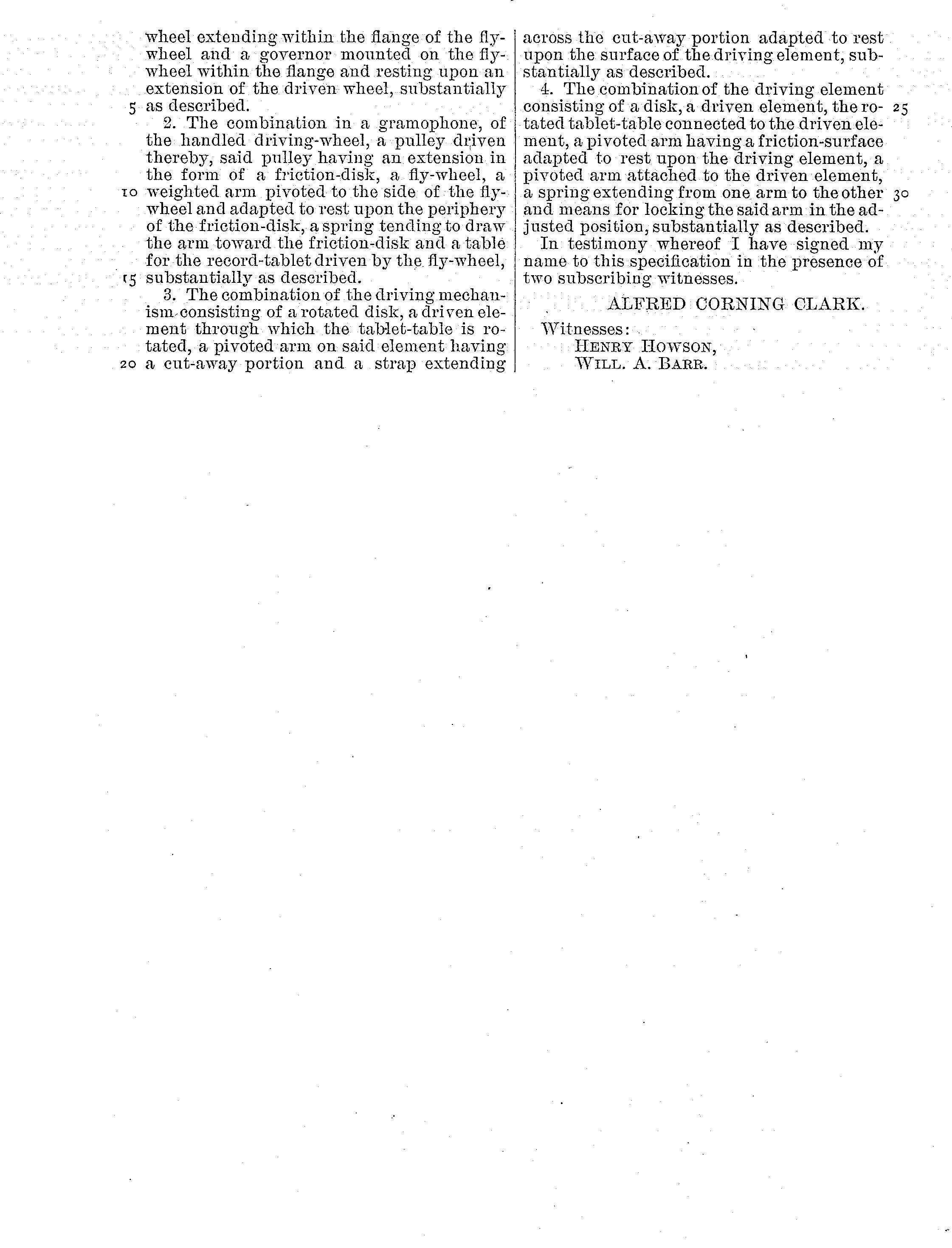
The patent explicitly states that its purpose is:
“…to prevent uneven turning of the driving-wheel from affecting the speed of the record-tablet…”
Although ingenious, the mechanism was mechanically delicate and never adopted into regular production — explaining its extreme rarity today.
2. Differences Compared to Standard “String-Wind” Models
Typical American hand-driven Berliner gramophones (often called “string-wind” models) were:
mechanically simpler
built without any clutch or governor
driven directly by a cord or string
prone to severe speed instability
mounted on simple wooden or small metal bases
closely related in design to German Kämmer & Reinhardt machines
The Clark version, however:
incorporates a true mechanical speed regulator
is markedly more complex
was likely produced only for testing and demonstration
is therefore an extreme rarity (2 known)
represents the first serious attempt to create a hand-driven gramophone capable of stable playback
It stands between a toy machine and a professional demonstrator — a unique technical intermediate step that would otherwise have been lost to history.
Significance
This instrument is a key artifact in the early history of the gramophone:
older and rarer than the early Eldridge Johnson models
a genuine prototype of the American Berliner line
the only known model incorporating Clark’s complex speed-regulating mechanism
a direct technological predecessor of the revolutionary Johnson spring motor (from 1897/98)
— the motor that made the gramophone commercially viable
Within the developmental lineage, this machine stands between:
Kämmer & Reinhardt – simple, toy-like devices
American string-wind Berliners – early hand-driven machines
Clark-regulated Berliner (this machine) – the first attempt at precision hand drive
Johnson’s spring motor – the arrival of true technical maturity
Why this Example is a World-Class Unique Object
Only two machines with Clark clutch known worldwide
Contains one of the rarest mechanical innovations of early gramophone engineering
Sits historically between experimental patent development and later commercial success
A vivid document of the phase in which Berliner desperately tried to improve sound quality — just before Victor took over the patents
Conclusion
The Clark-Regulator String-Wind Berliner Gramophone is one of the most important, rarest, and technically fascinating artifacts of early gramophone history. It illustrates how incredibly inventive and experimental the engineers of the 1890s were in their attempts to make this brand-new medium of recorded sound truly functional.
The example displayed at the Edisonium is unquestionably one of the most significant surviving gramophones in the world.