Name/Title
The Duplex Phonograph – Double the Horns, Double the SoundEntry/Object ID
106Description
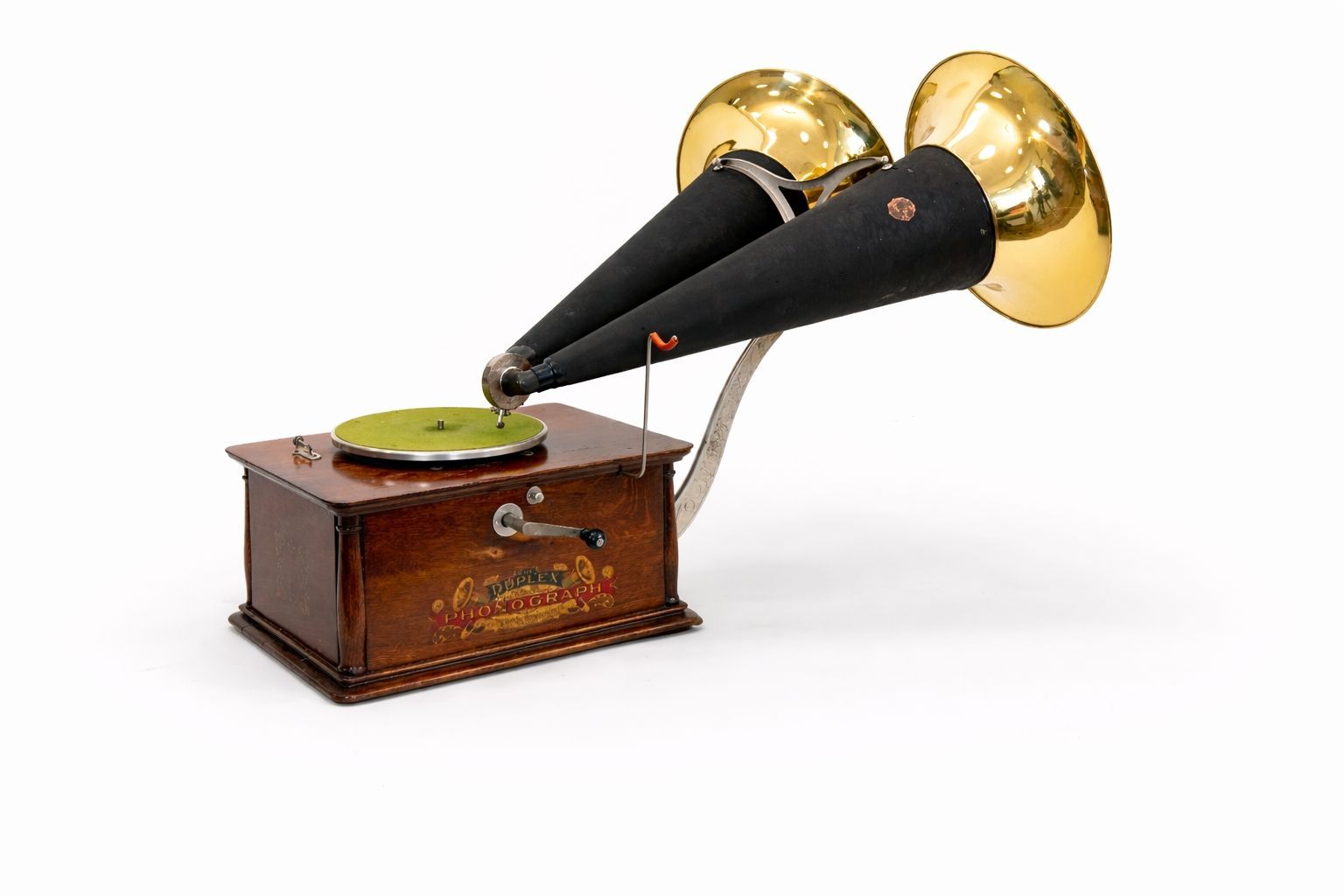
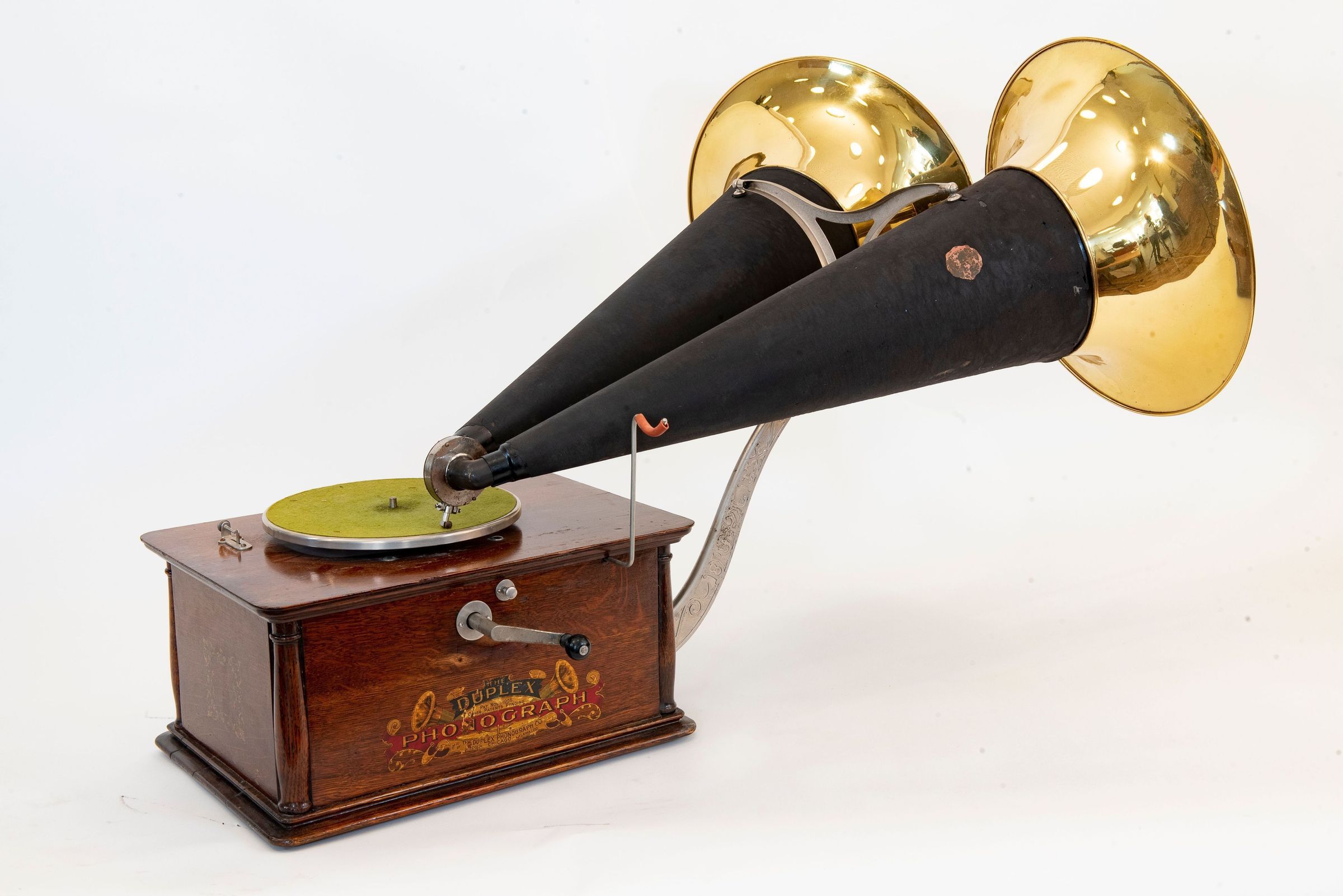
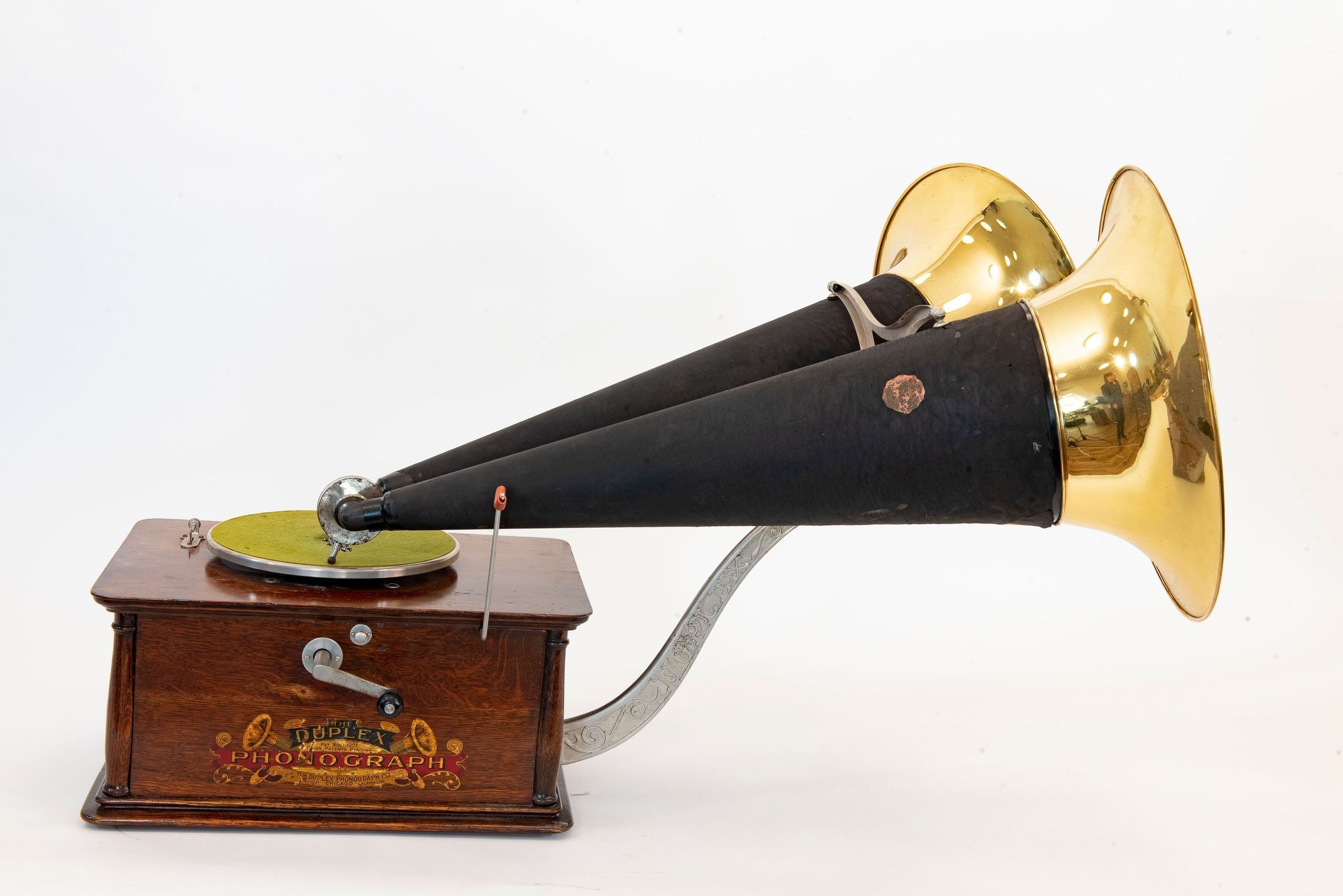
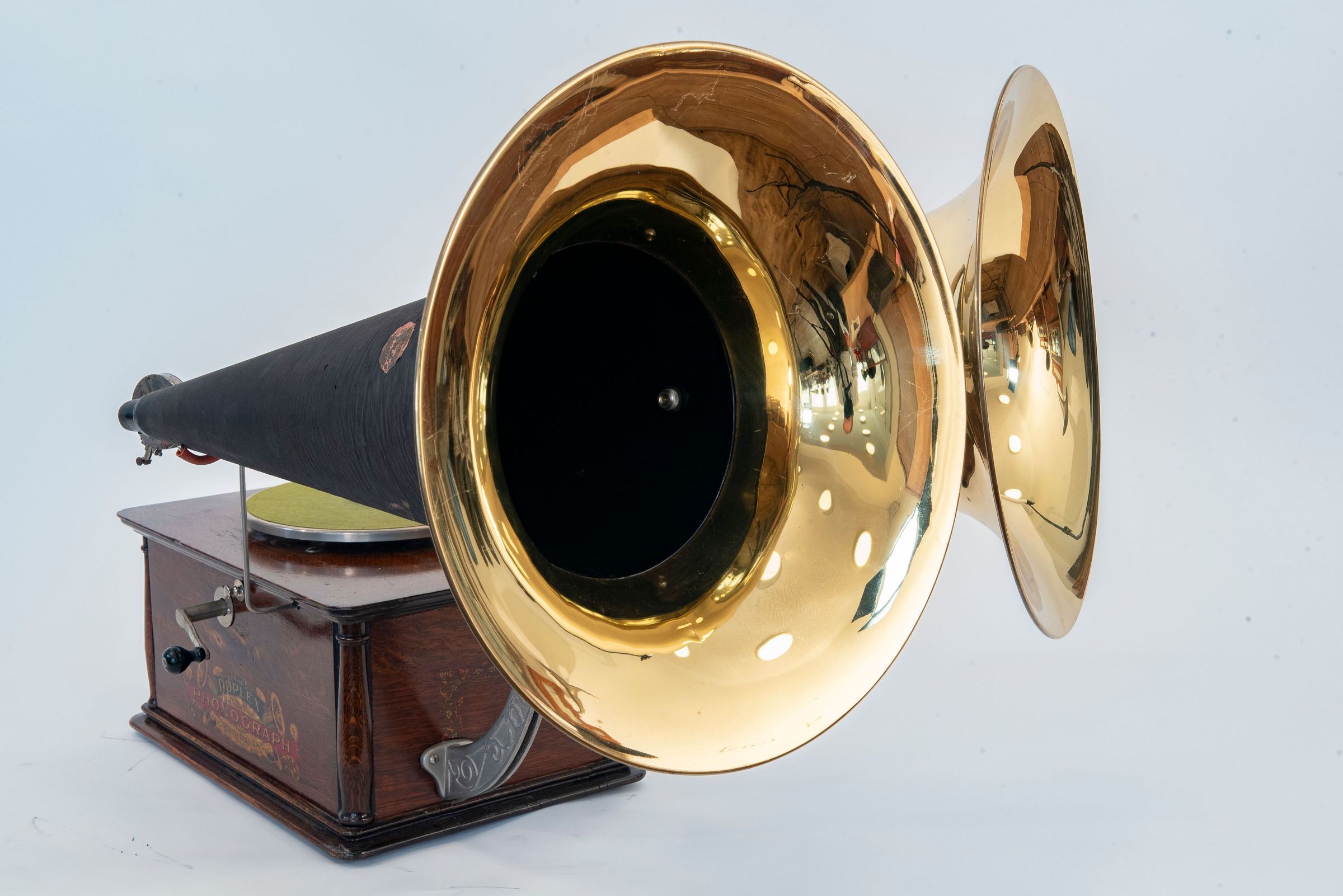
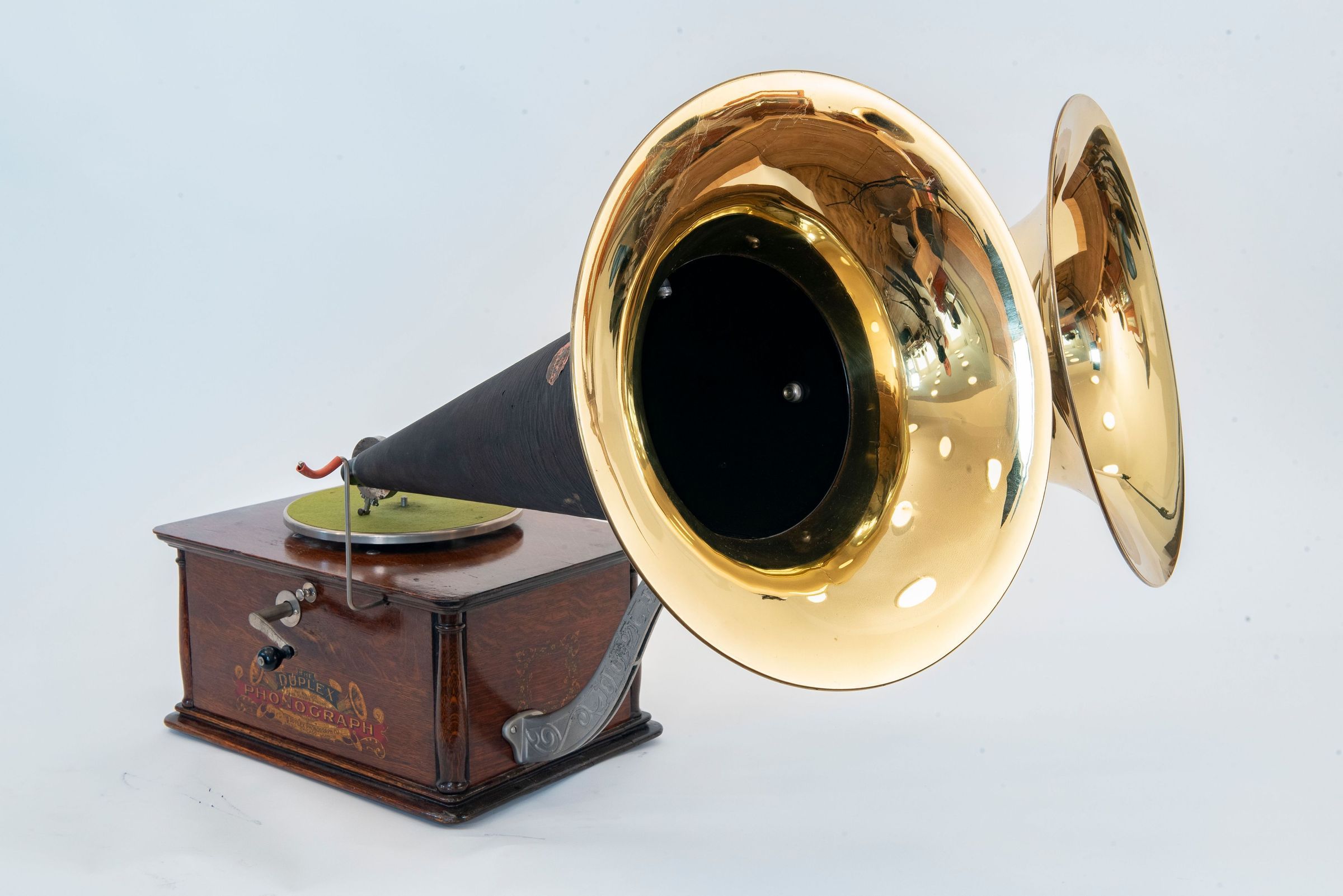
The Duplex Phonograph stands as one of the most striking and technically ambitious sound reproduction devices of the early 20th century. Its unique construction with two large horns and dual diaphragm reproducer was designed to deliver greater volume and improved sound clarity—a true innovation in the world of talking machines.
Two Diaphragms, Two Horns – One Bold Idea
The concept was developed by Charles E. Hill, a Canadian-born tinkerer and self-taught expert who had worked in the phonograph industry since the 1890s. Hill patented his "Phonograph Reproducer Attachment" in 1904, which utilized two diaphragms operating simultaneously, each connected to its own horn. The goal: to harness both sides of the diaphragm’s vibrations, unlike standard phonographs which wasted half of the acoustic energy.
As the company boldly advertised:
“Other machines waste half the sound – Duplex gives you both sides!”
From Nebraska to Michigan – A Rocky Path
In April 1905, Hill and several partners founded the Duplexophone Manufacturing Company in Lancaster County, Nebraska, capitalized at an impressive $300,000. They set up shop in a former woodworking factory in Lincoln, aiming to produce 50,000 units within a year. However, despite strong marketing, large-scale manufacturing never fully materialized in Nebraska.
Seeking more reliable production, Hill moved operations to Kalamazoo, Michigan, partnering with the Kalamazoo Novelty Company (KNC)—a specialist in custom mechanical components. By the end of 1905, the collaboration produced the first functioning Duplex prototypes.
Official Incorporation and Expansion
In March 1906, a new entity, the Duplex Phonograph Company, was incorporated back in Nebraska, now without Hill or his original colleagues. By this time, the company's true operations had shifted fully to Kalamazoo, where demand and output were quickly growing. A new factory opened on Paterson Street, with a reported daily capacity of 150 machines by September 1906.
A Bold Marketing Strategy: Direct-to-Consumer
Rather than relying on traditional dealers, the company pioneered direct marketing via magazine ads and mail order. The Duplex Phonograph was offered at $29.85—a fraction of typical retail prices—and came with a no-risk trial:
“We ask only that you test the Duplex in your home—at our expense. If you’re not satisfied, send it back!”
Advertisements proudly claimed:
“Double Volume – Sweeter Tone – No harsh spring noise – No dealer markup – Save $70!”
Their argument was not just commercial but technical: that by eliminating the jerking motion of spring-tensioned reproducers, the Duplex delivered smoother, more natural sound reproduction. Their “Double Diaphragm” system was marketed as a scientific breakthrough in fidelity.
Legal Trouble and the Company’s Decline
Despite early promise, the company faced pressure from Victor Talking Machine Company, which sued for patent infringement. After a series of legal battles and costly litigation, the Nebraska-based firm was dissolved around 1910. Later ads from 1914 and 1915 show the remaining stock being liquidated, along with offers to repair and retrofit older Duplex units.
A Rare Survivor of Acoustic Imagination
Today, the Duplex Phonograph is a sought-after rarity and a symbol of innovation, perseverance, and clever marketing. It represents not just a technical experiment, but a moment in history where inventors truly believed they could outplay the giants of sound—with nothing but wood, brass, and brilliant ideas.