Name/Title
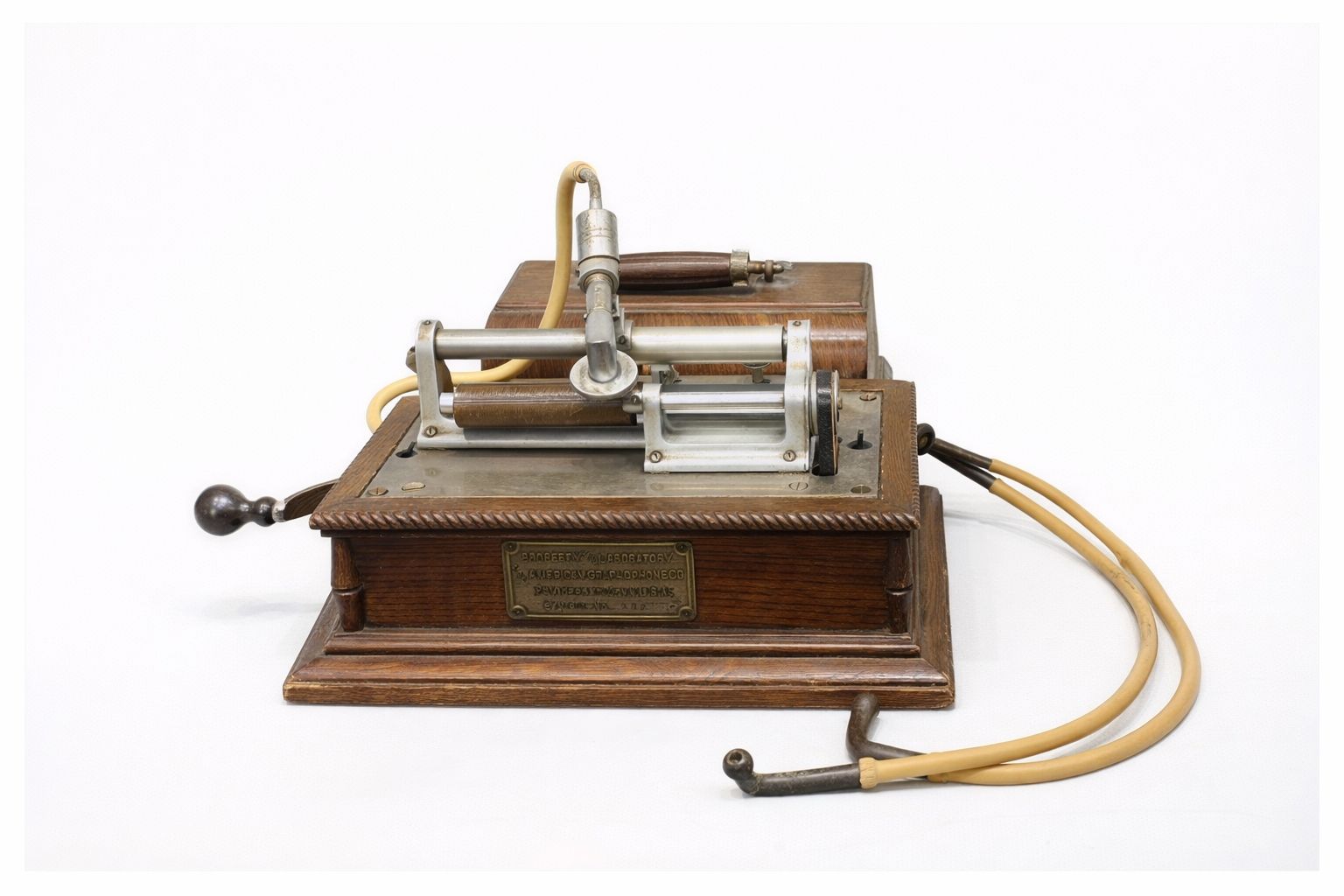
The Smallest Cylinder Phonograph in the World, LaboratoryEntry/Object ID
108Description
American Graphophone Company, Bridgeport, Connecticut, c. 1900
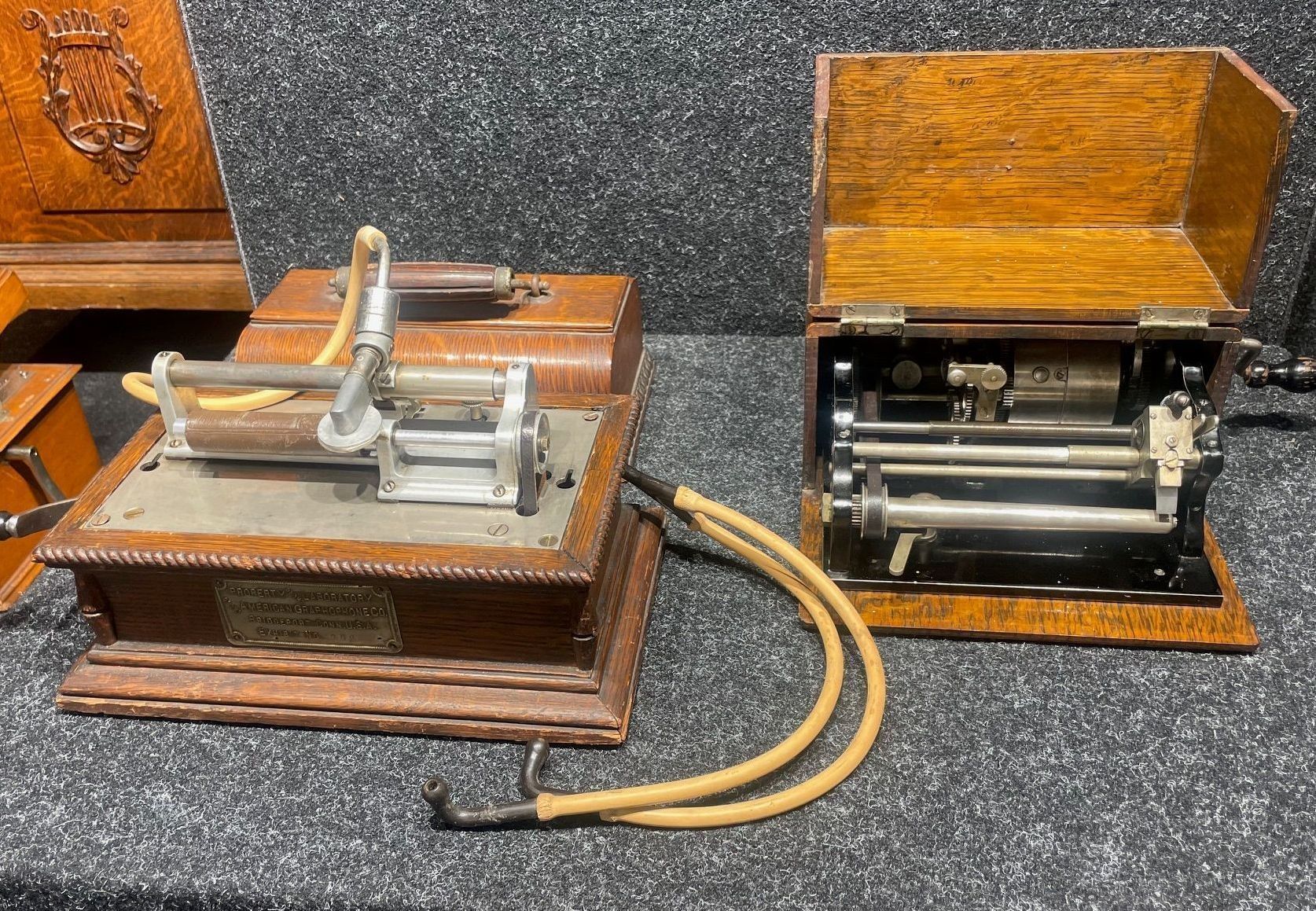
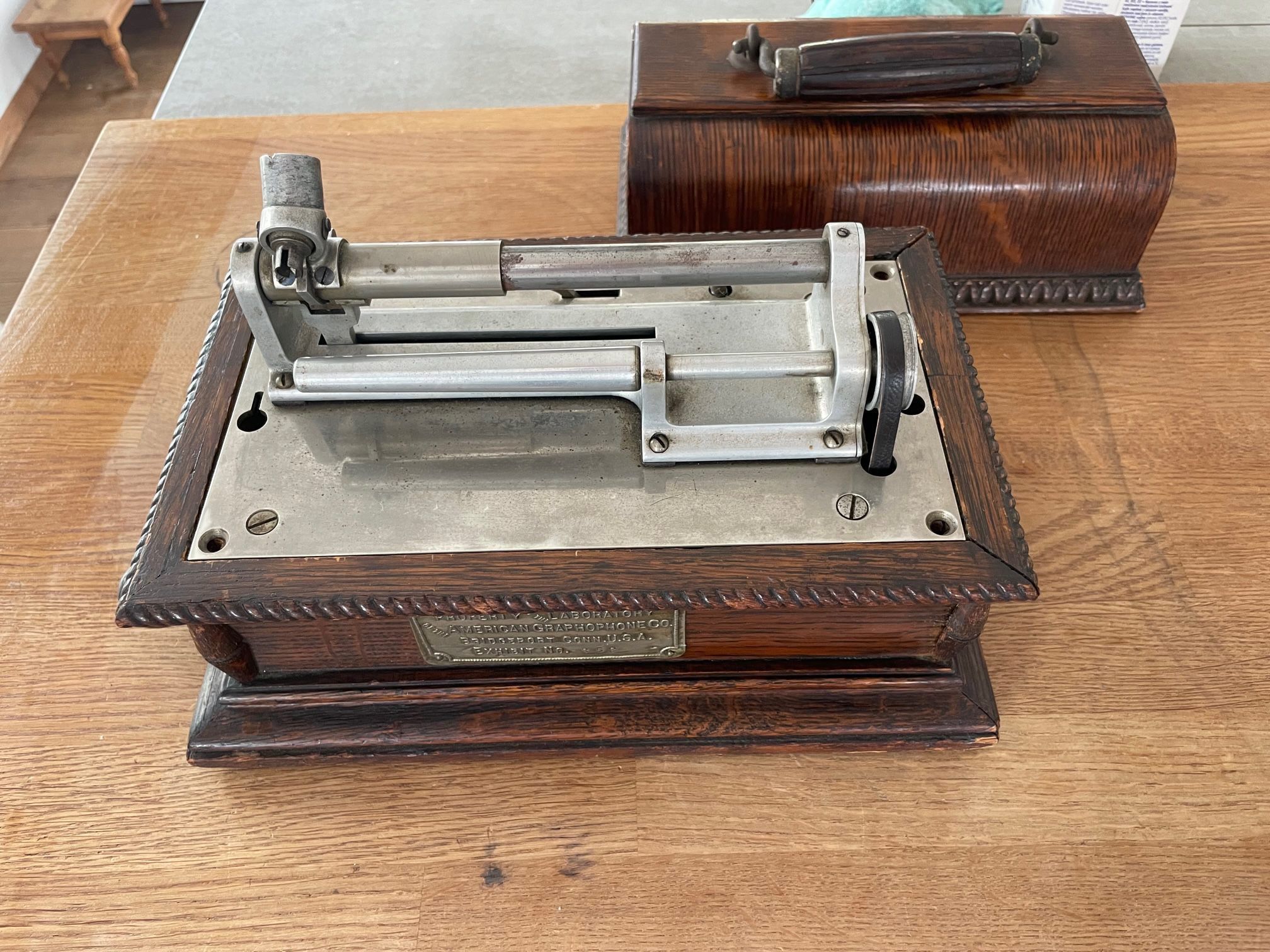
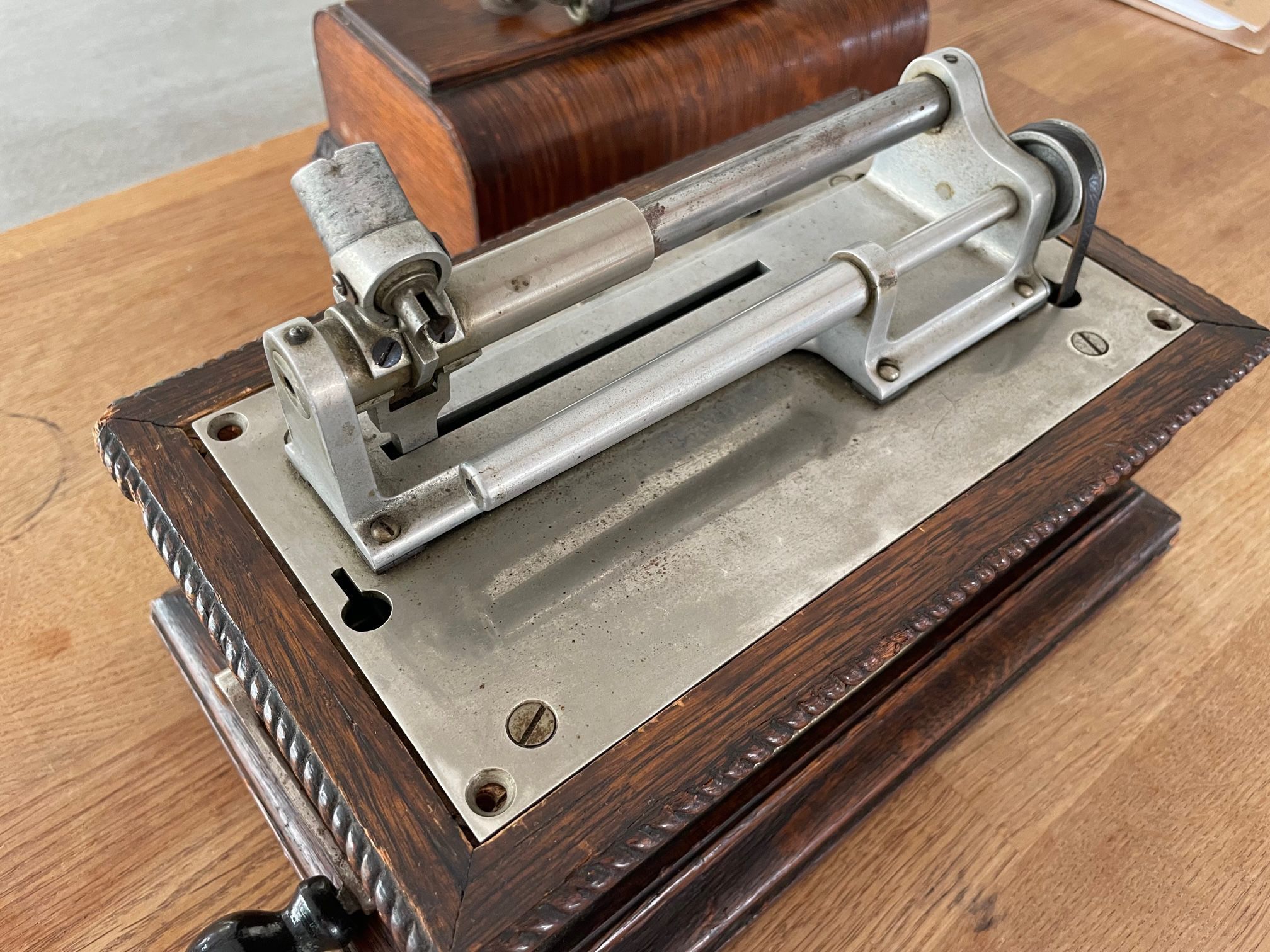
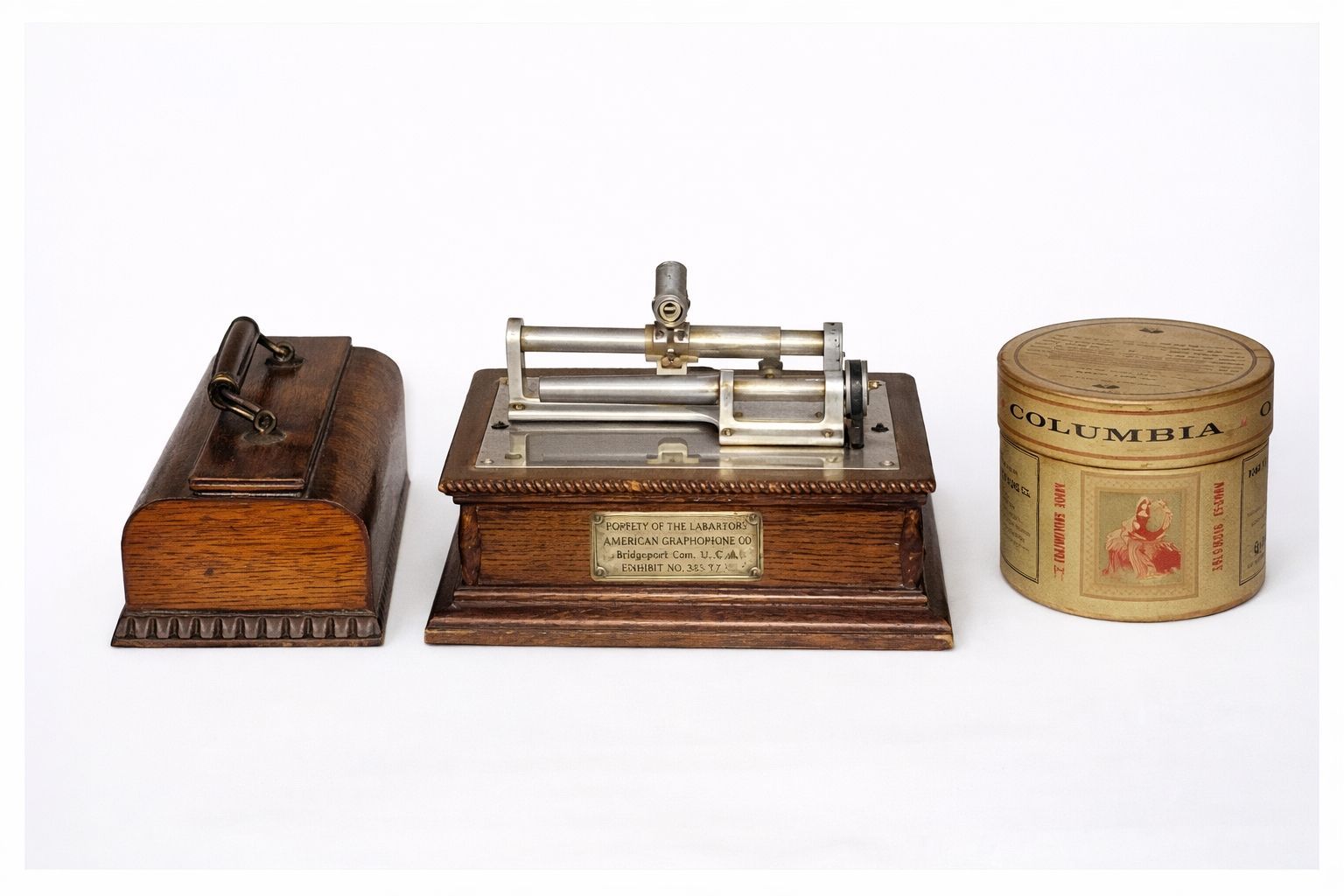
This exceptional device is considered the smallest cylinder phonograph ever built, measured by the diameter of the wax cylinder it was designed to play. While even smaller speaking mechanisms existed—such as those hidden inside Edison’s talking dolls—this model is a fully functional tabletop phonograph, crafted for miniature custom-made cylinders. It features a case, spring motor, and tonearm in an extremely compact configuration.
Showcased at the 1900 and 1904 World’s Fairs
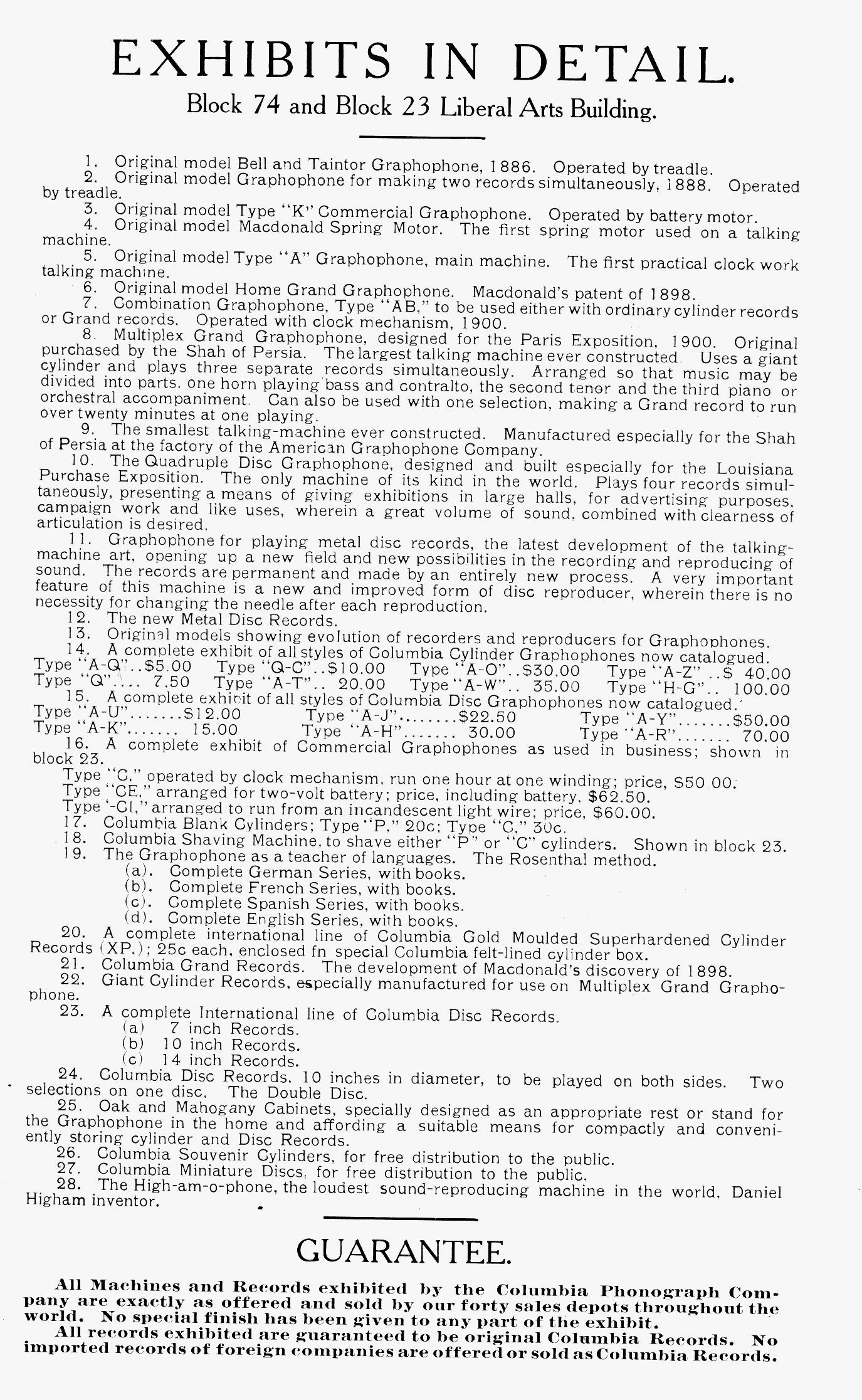
The machine was presented by the American Graphophone Company as “Exhibit No. 9” at the 1904 St. Louis World’s Fair, alongside the technically elaborate Multiplex Grand phonograph. (See the official exhibitor list shown here.) While the Multiplex was considered the largest sound playback device of its time, this miniature model served as a deliberate technological and aesthetic counterpoint.
Purchased by the Shah of Persia
Both machines—the Multiplex Grand and the smallest cylinder phonograph—were purchased by Mozaffar ad-Din Shah of Persia during his visit to the 1900 Paris World’s Fair. The total purchase price was 1,000 US dollars, and the machines were delivered in 1901 by camel caravan to Tehran.
Adjusted for inflation, 1,000 USD in 1900 equals approximately 100.000 USD today—a considerable sum at the time, roughly the cost of a small house. This made the combined ensemble one of the most expensive and exclusive talking machines in the world.
Construction and Mechanism
The model features a finely crafted oakwood cabinet with profiled trim and chamfered edges, a three-spring motor with a traditional 3-ball governor, and a particularly narrow mandrel measuring just 9/16 inch (approx. 1.4 cm) in diameter. The base of the machine measures only 10½ × 6½ × 3½ inches—about the size of a small book. The only known surviving example lacks its reproducer; a related shaving machine (Model 1005) was reportedly displayed alongside it.
A Unique Artifact with Global Significance
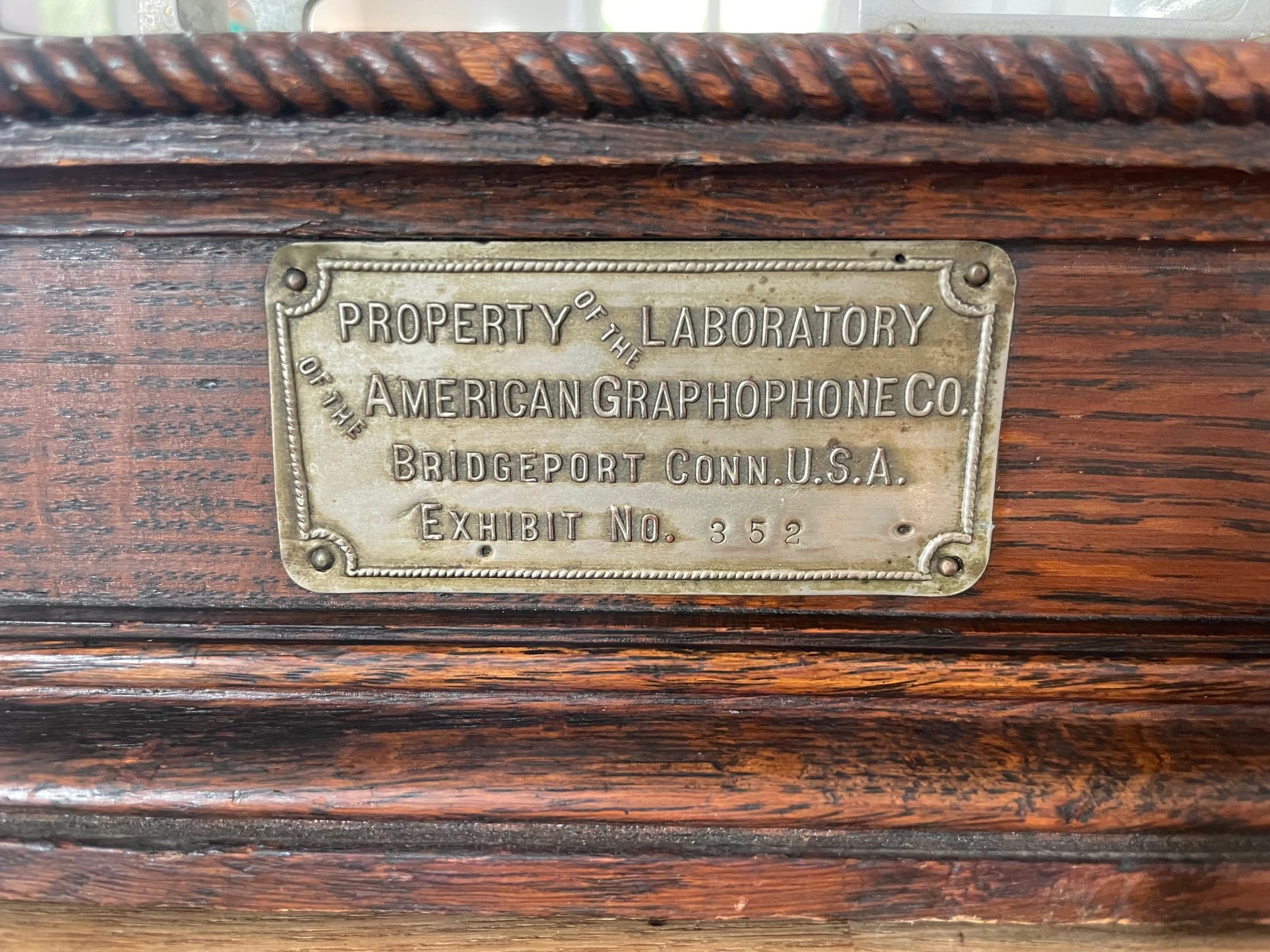
Only one example of this model is known to exist worldwide. It bears the original brass nameplate:
“Property of the American Graphophone Company, Bridgeport, Conn. – Exhibit No. 352”
Its exceptional construction, fine detailing, and extreme miniaturization suggest that it was never intended for commercial sale. Most likely, it was created exclusively as an exhibition piece—to showcase the company’s engineering capabilities and design prowess.
Some collectors believe that this miniature model may have inspired the design of the later Columbia Graphophone Type AA.
Provenance
This one-of-a-kind machine comes from the renowned collection of Charles Hummel, one of the most respected collectors of early phonographs in the United States.