Name/Title
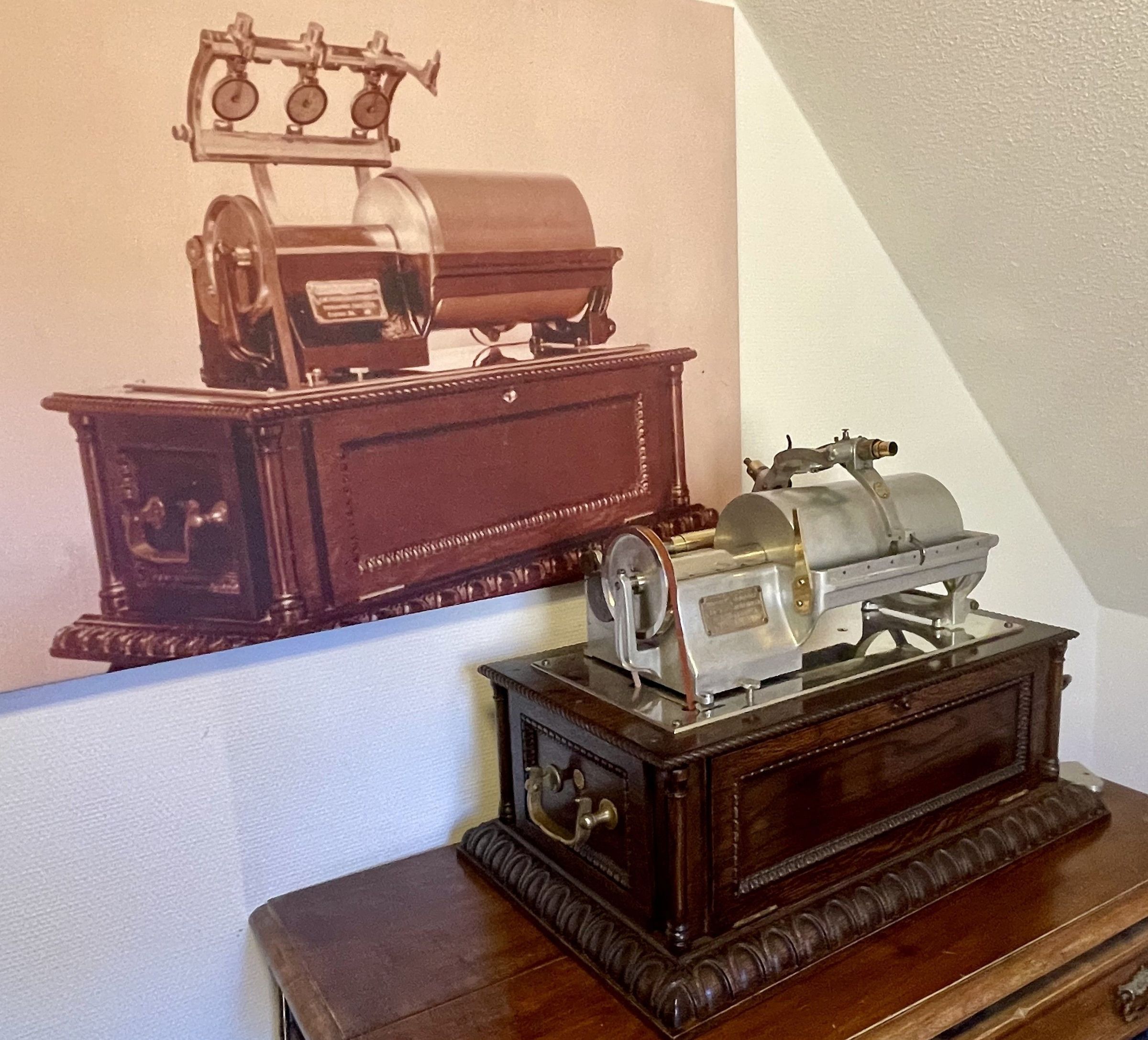
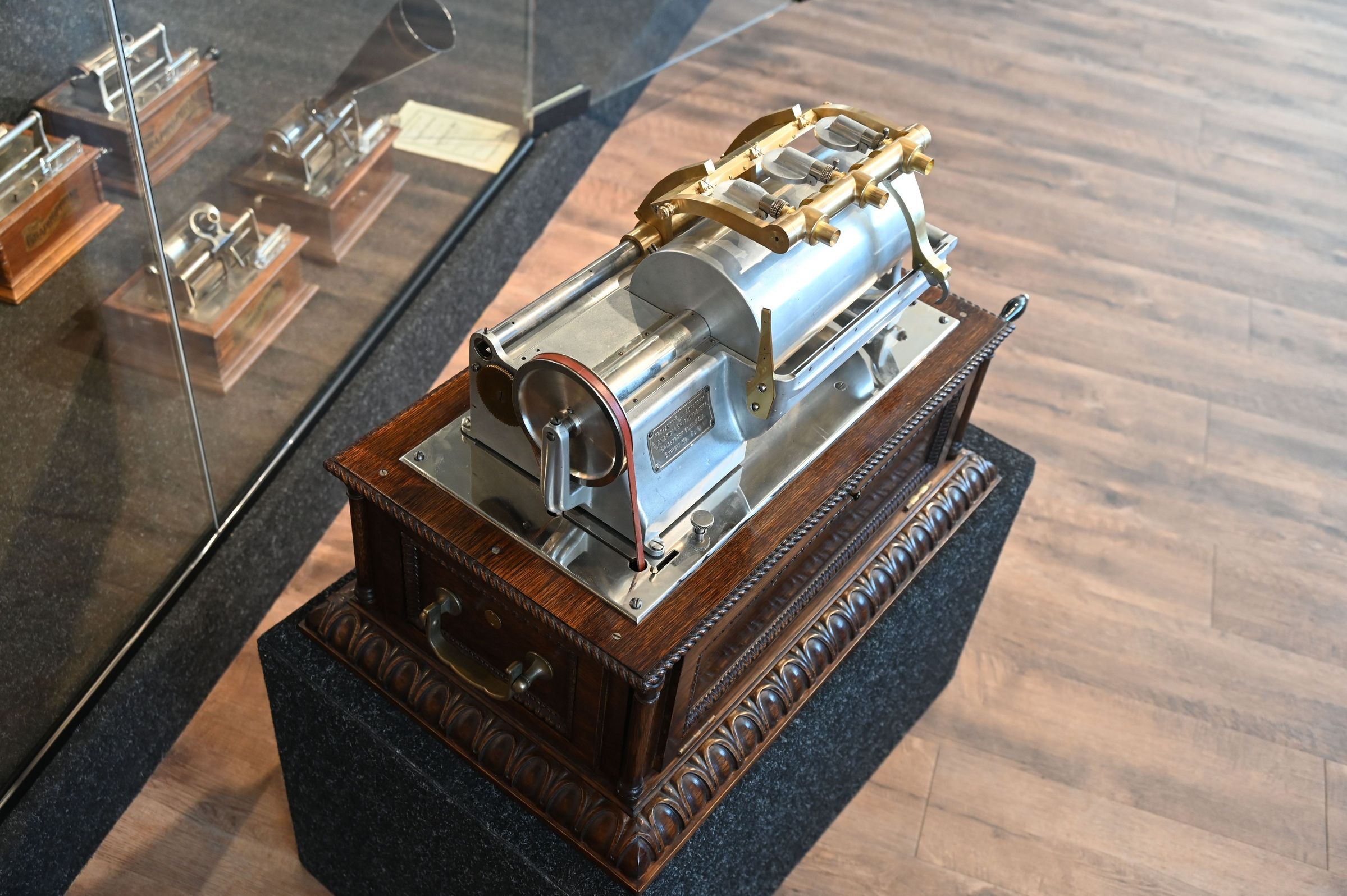
Graphophone Multiplex Grand – 1900 ModelEntry/Object ID
109Description
Columbia Phonograph Company, USA, 1900–1904
The largest wax-cylinder playback machine ever built
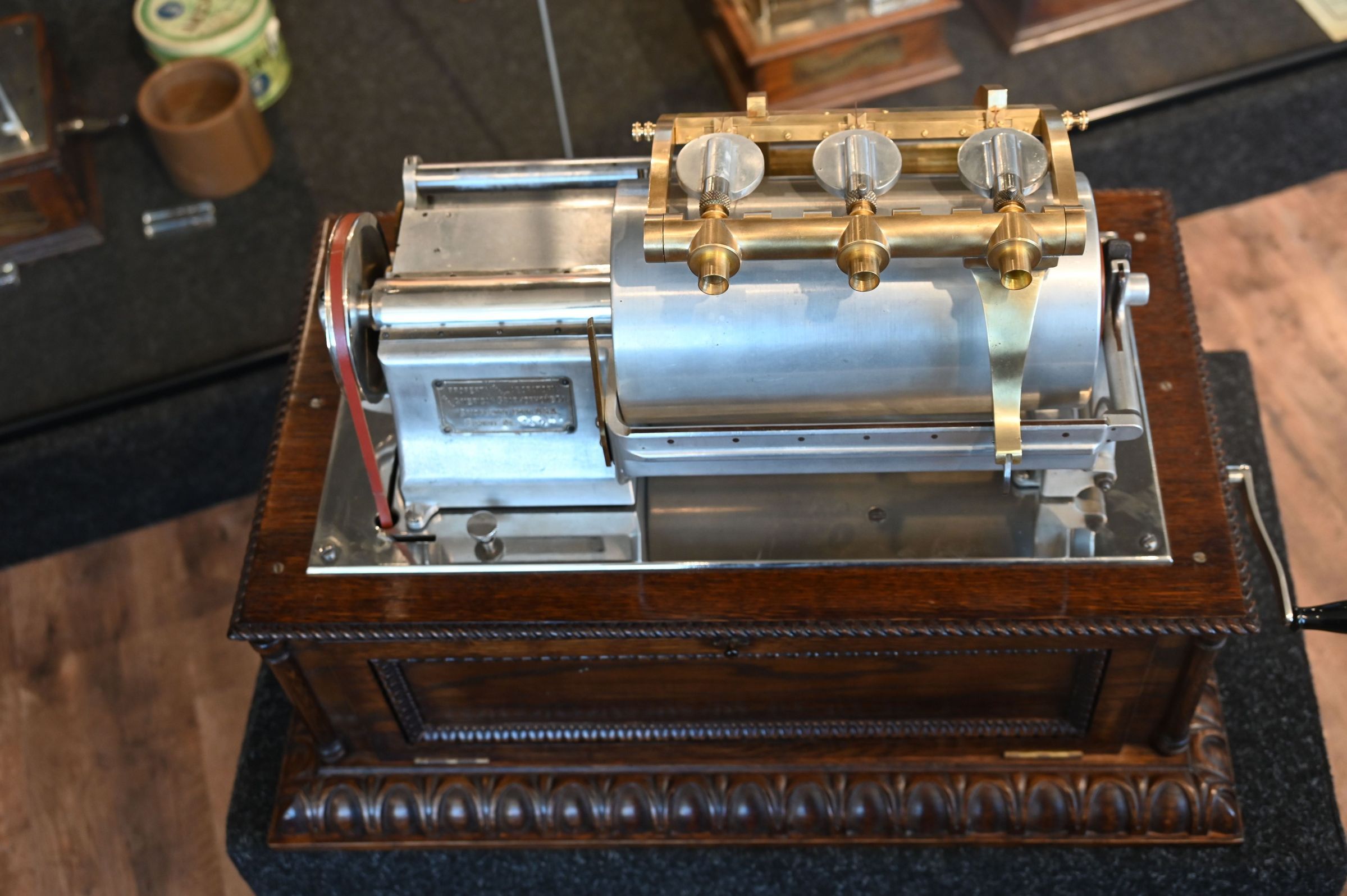
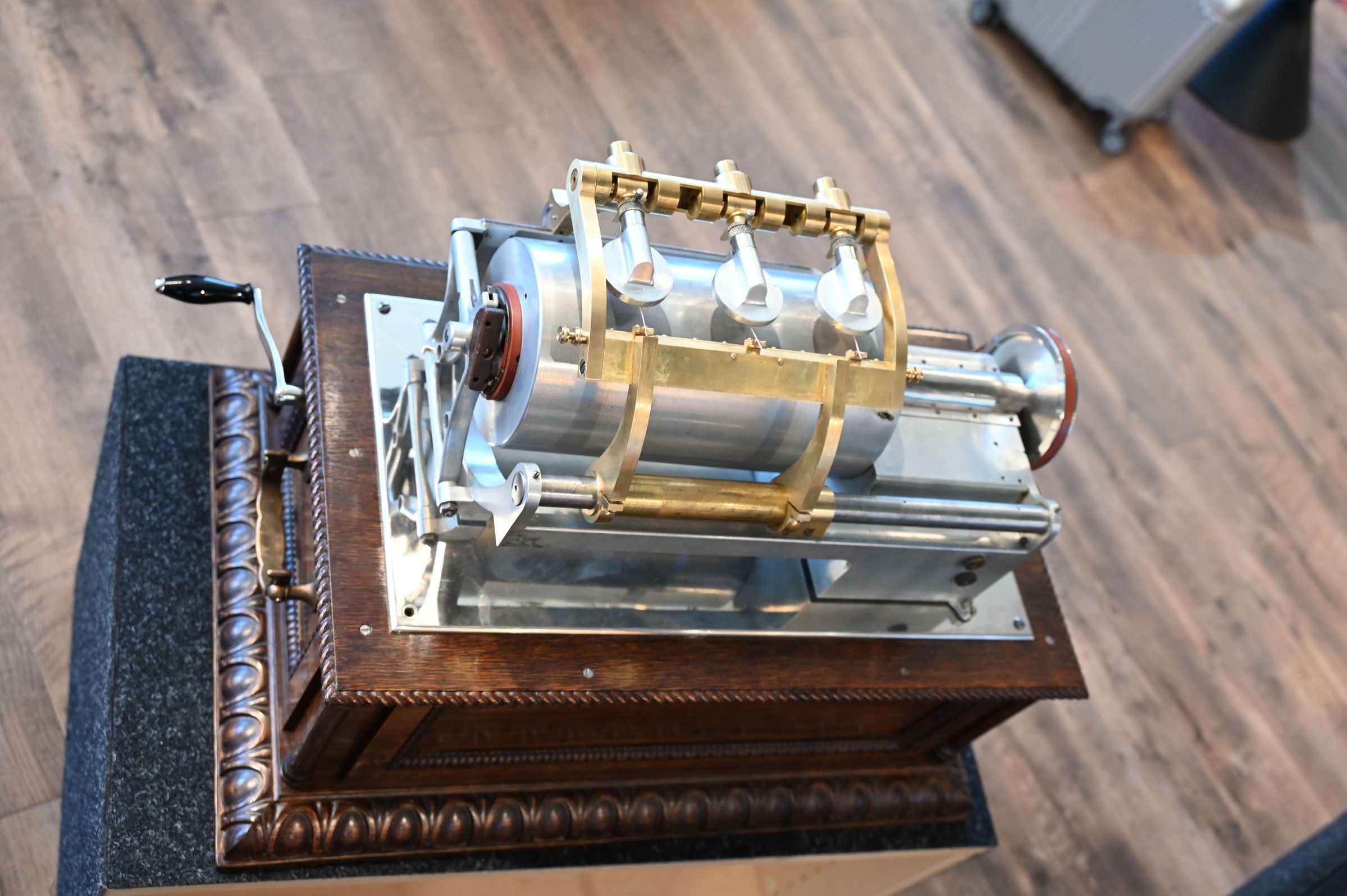
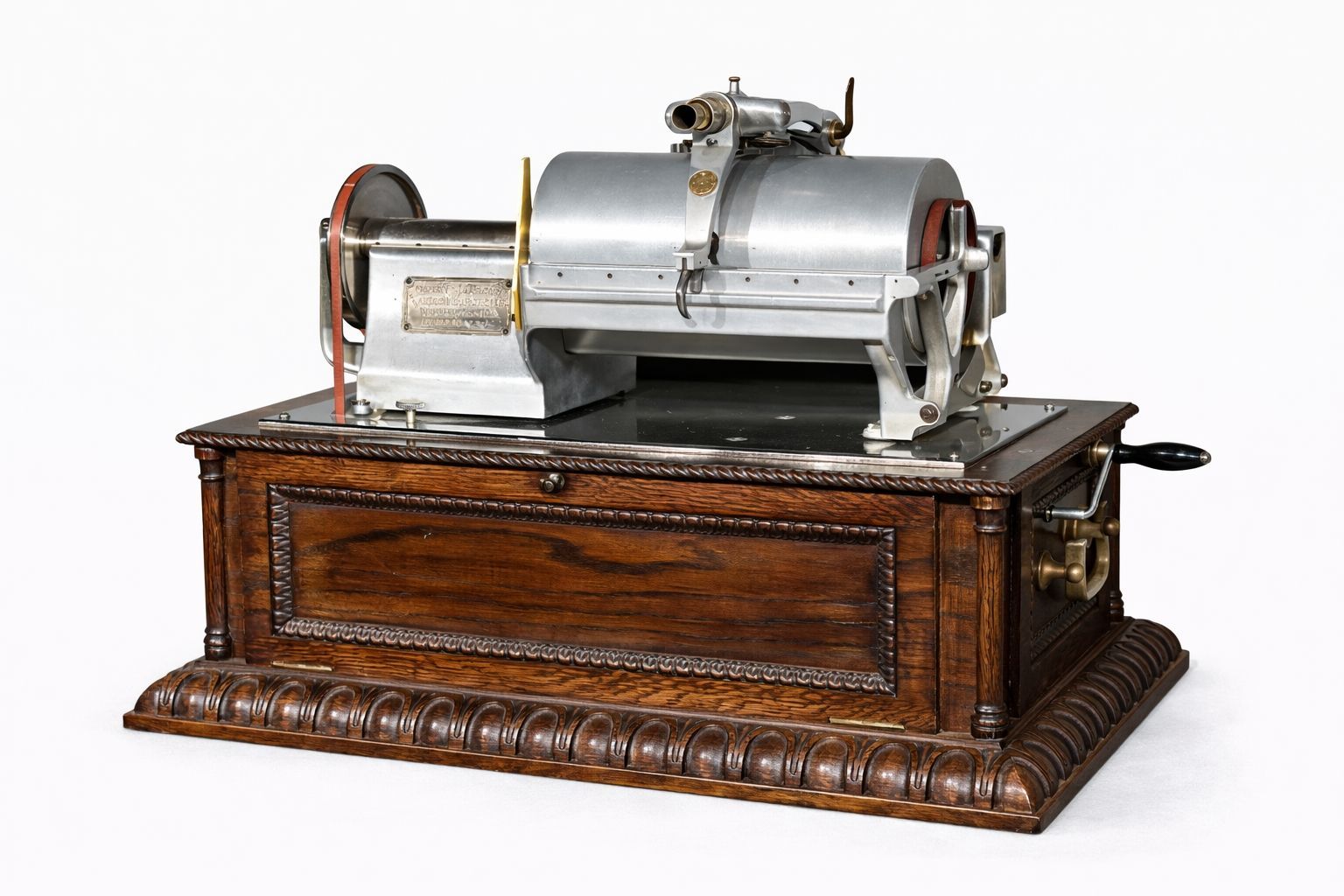
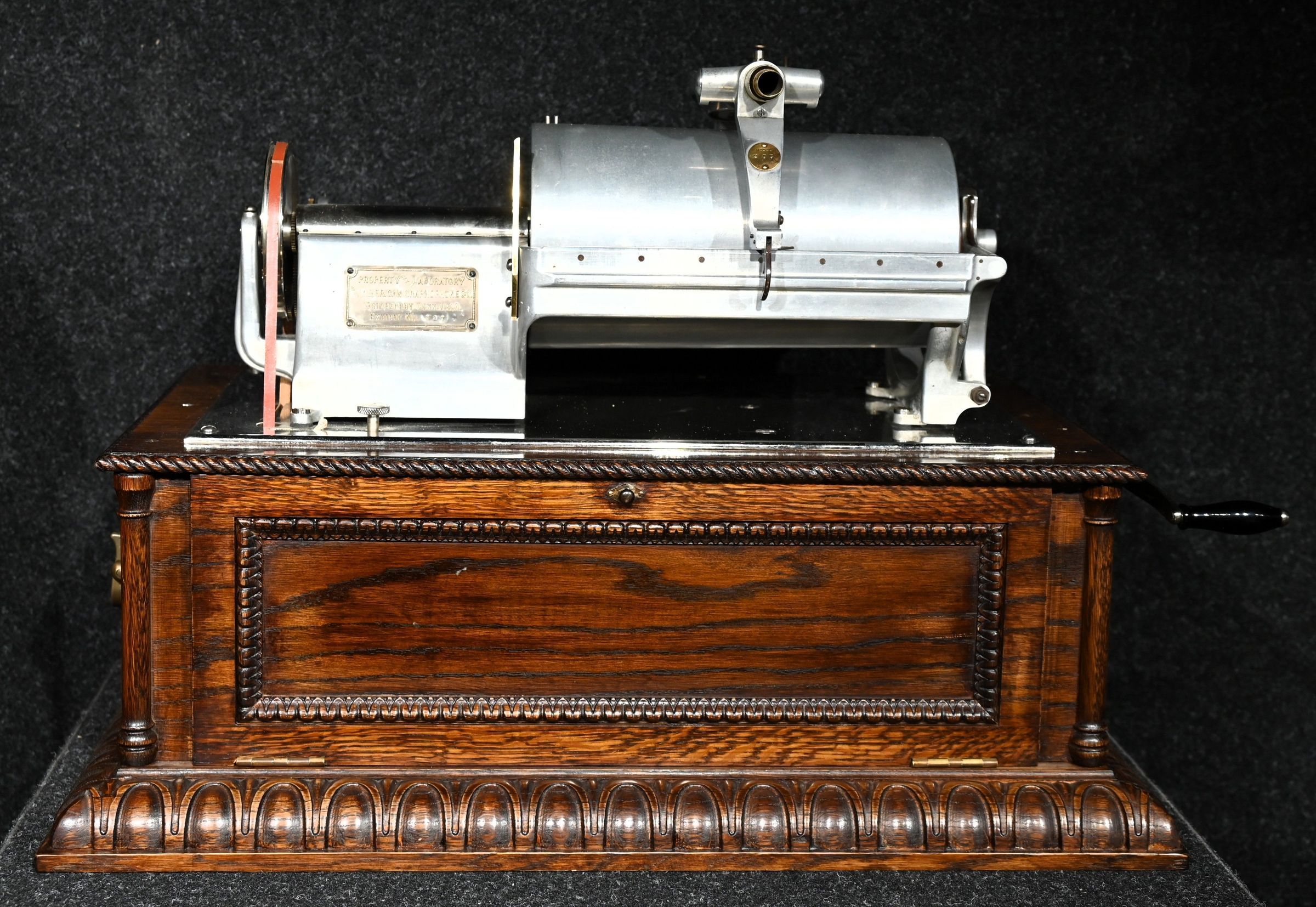
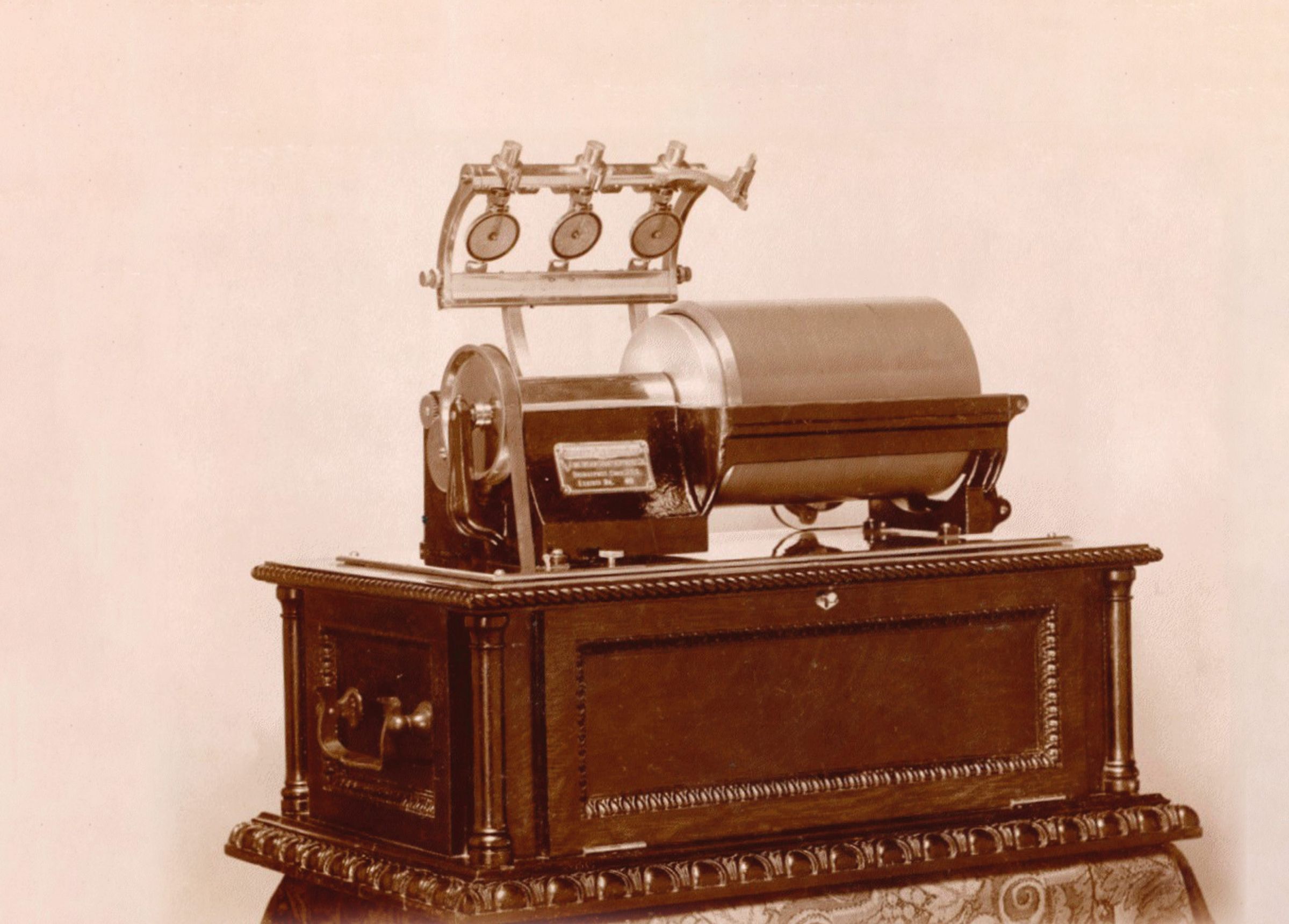
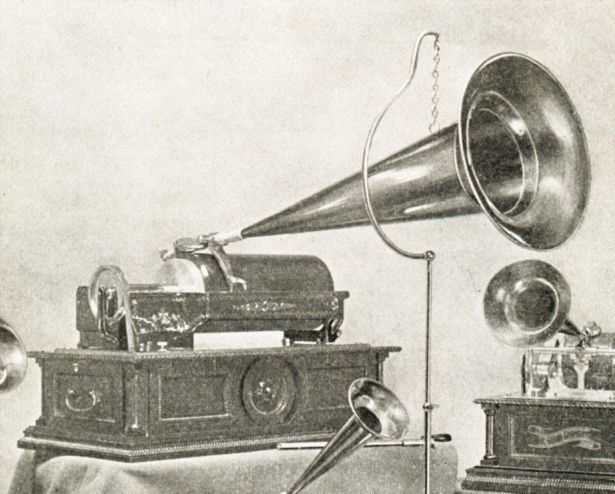
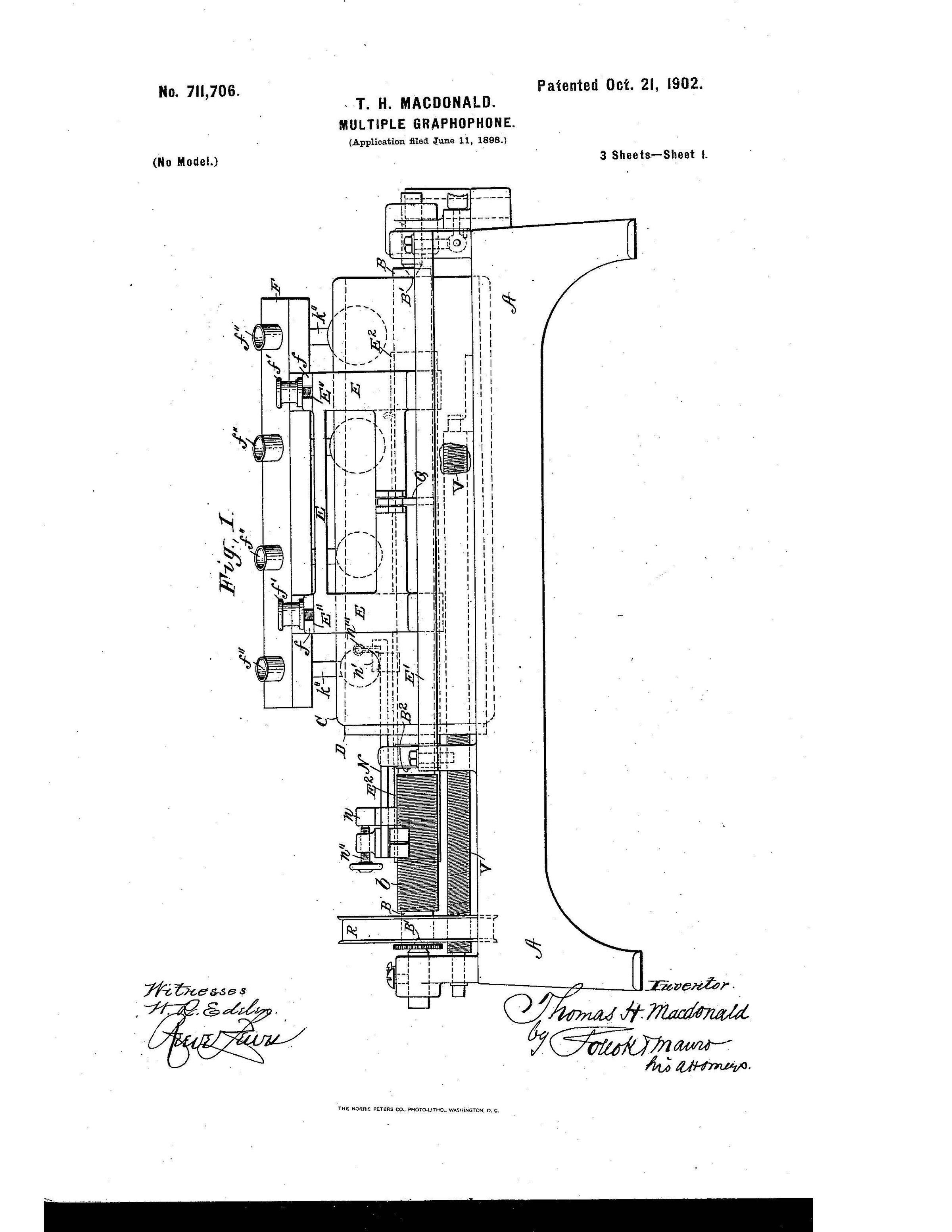
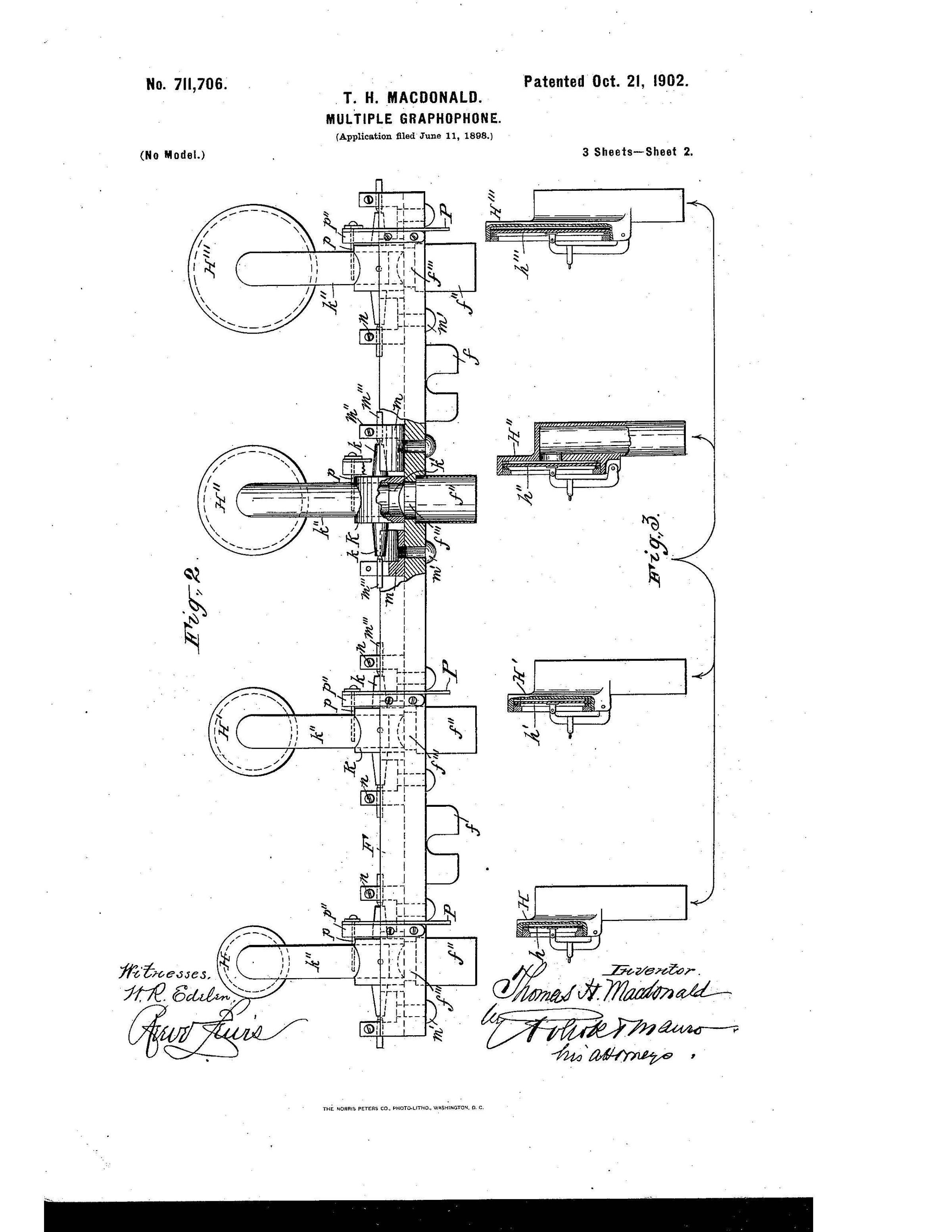
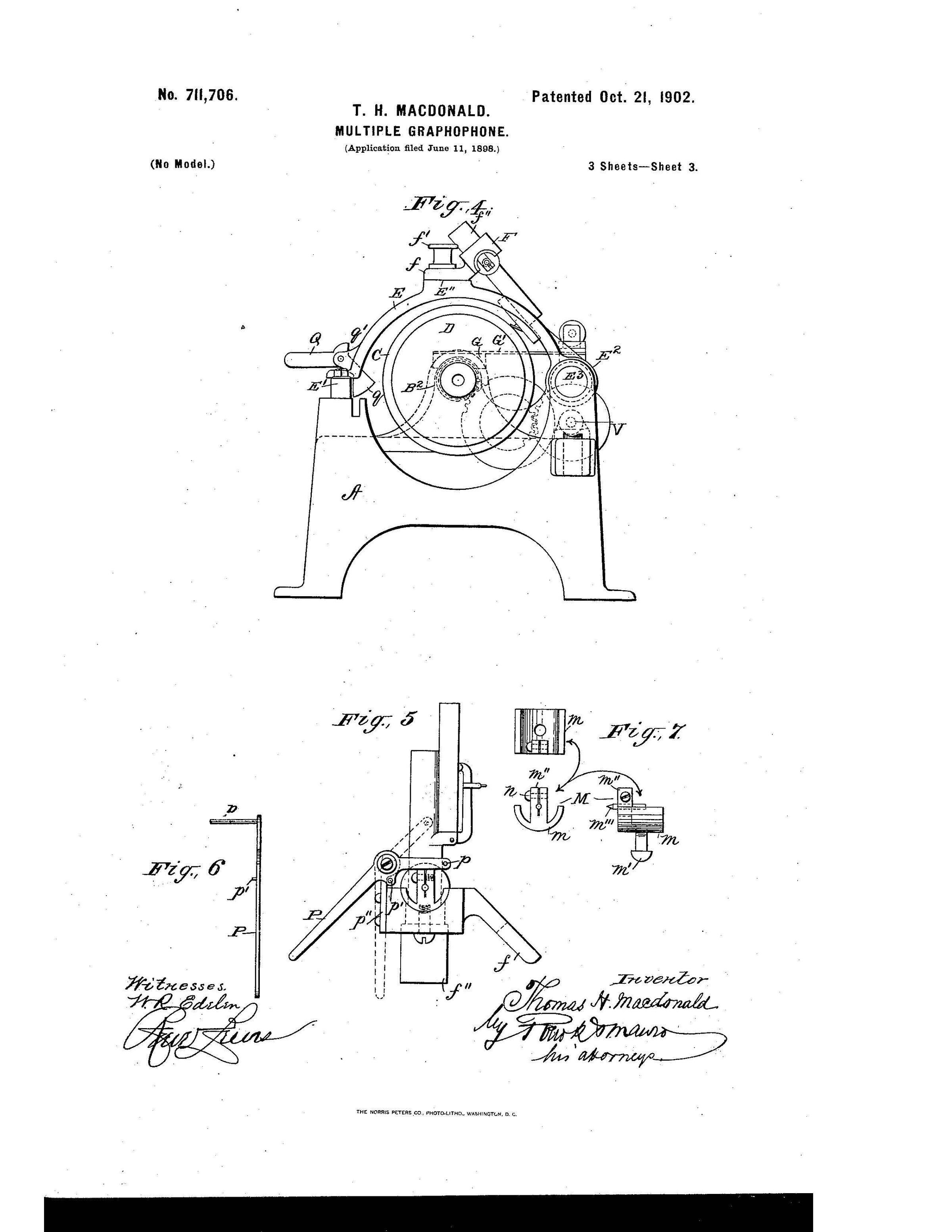
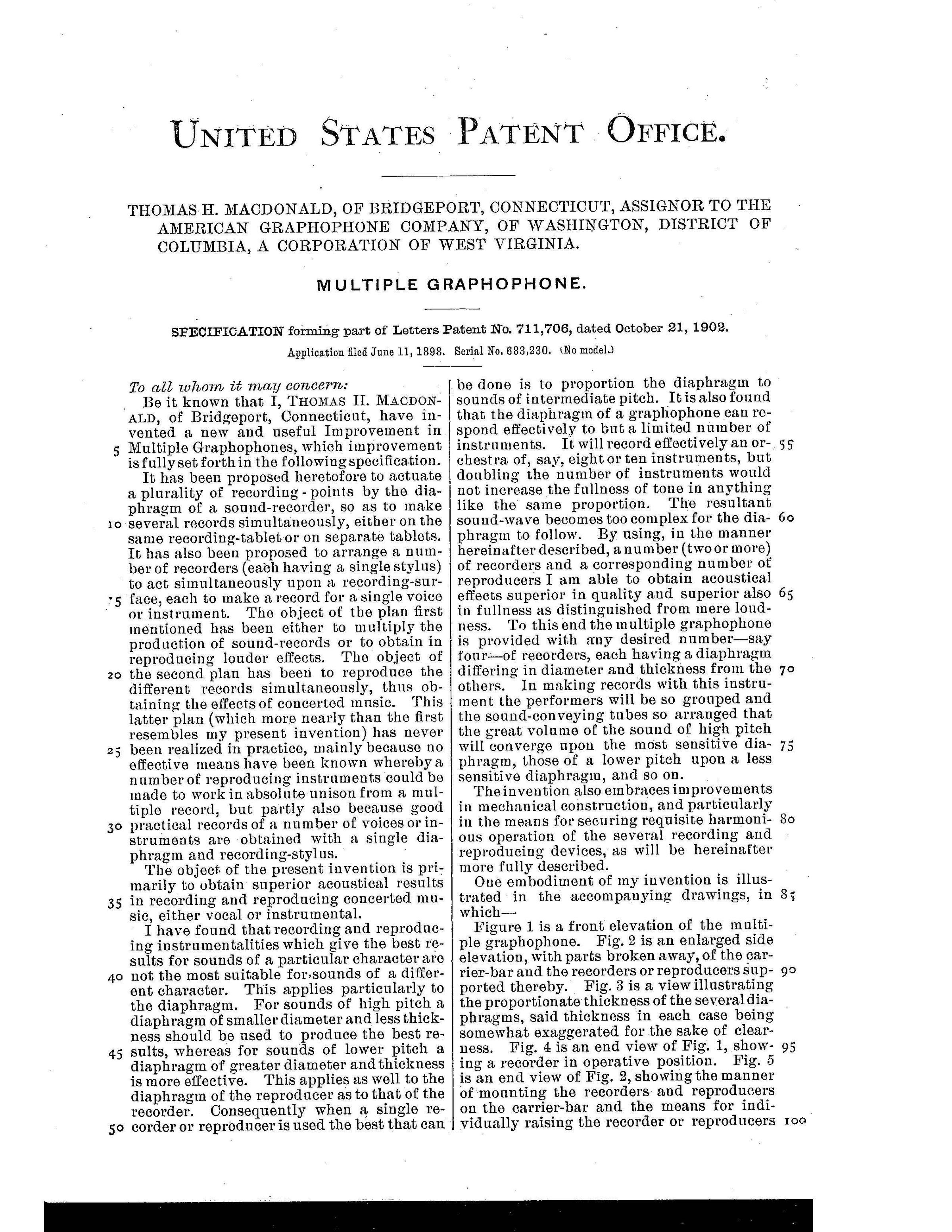
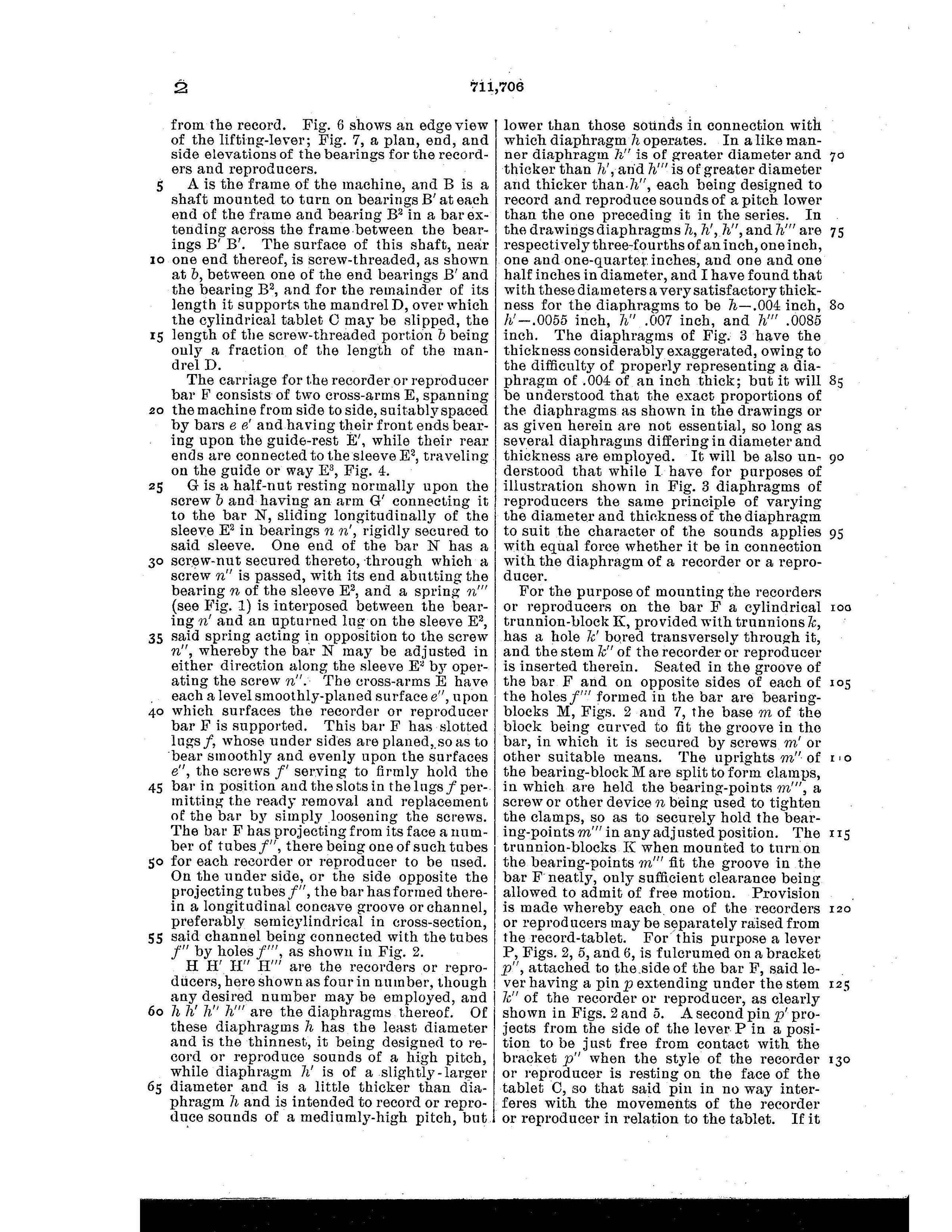
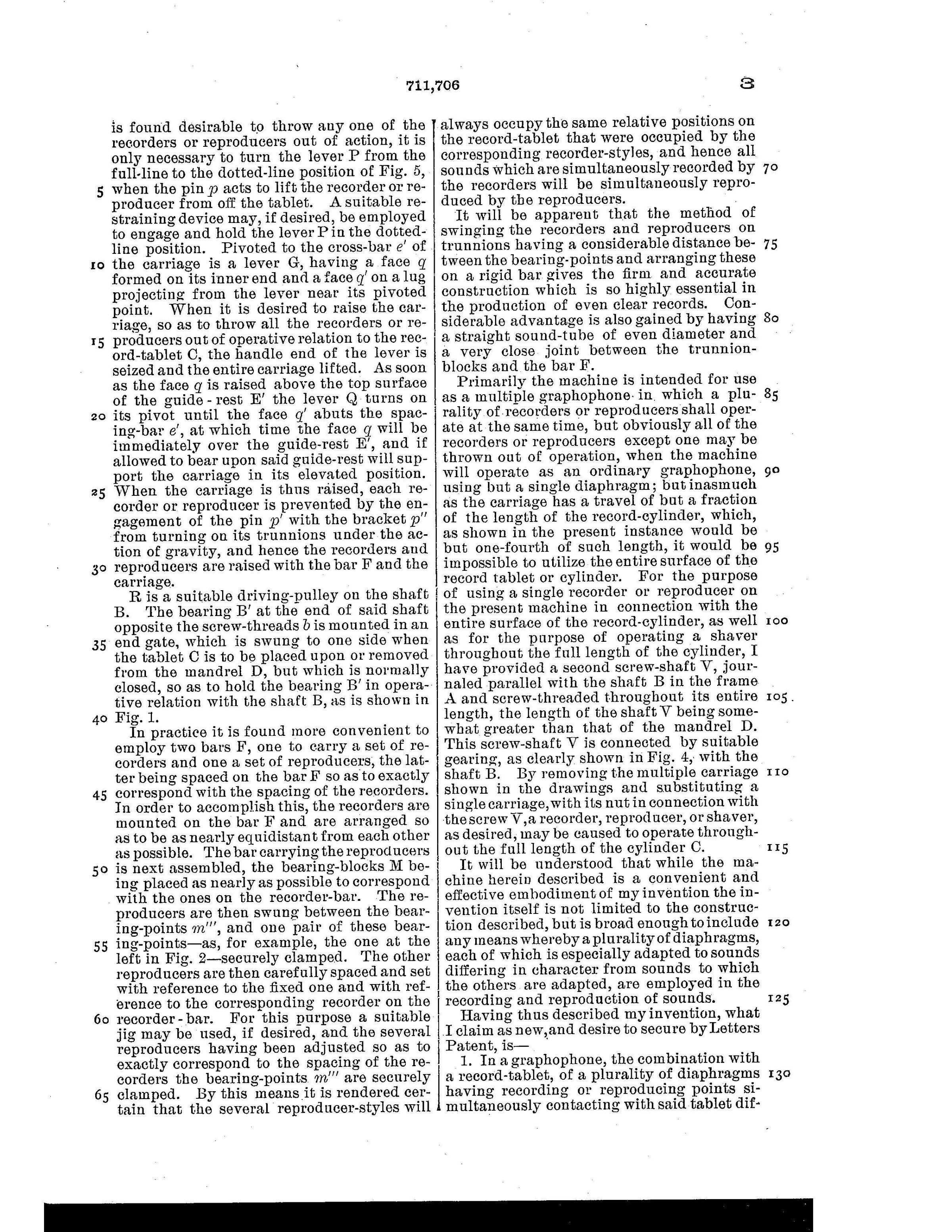
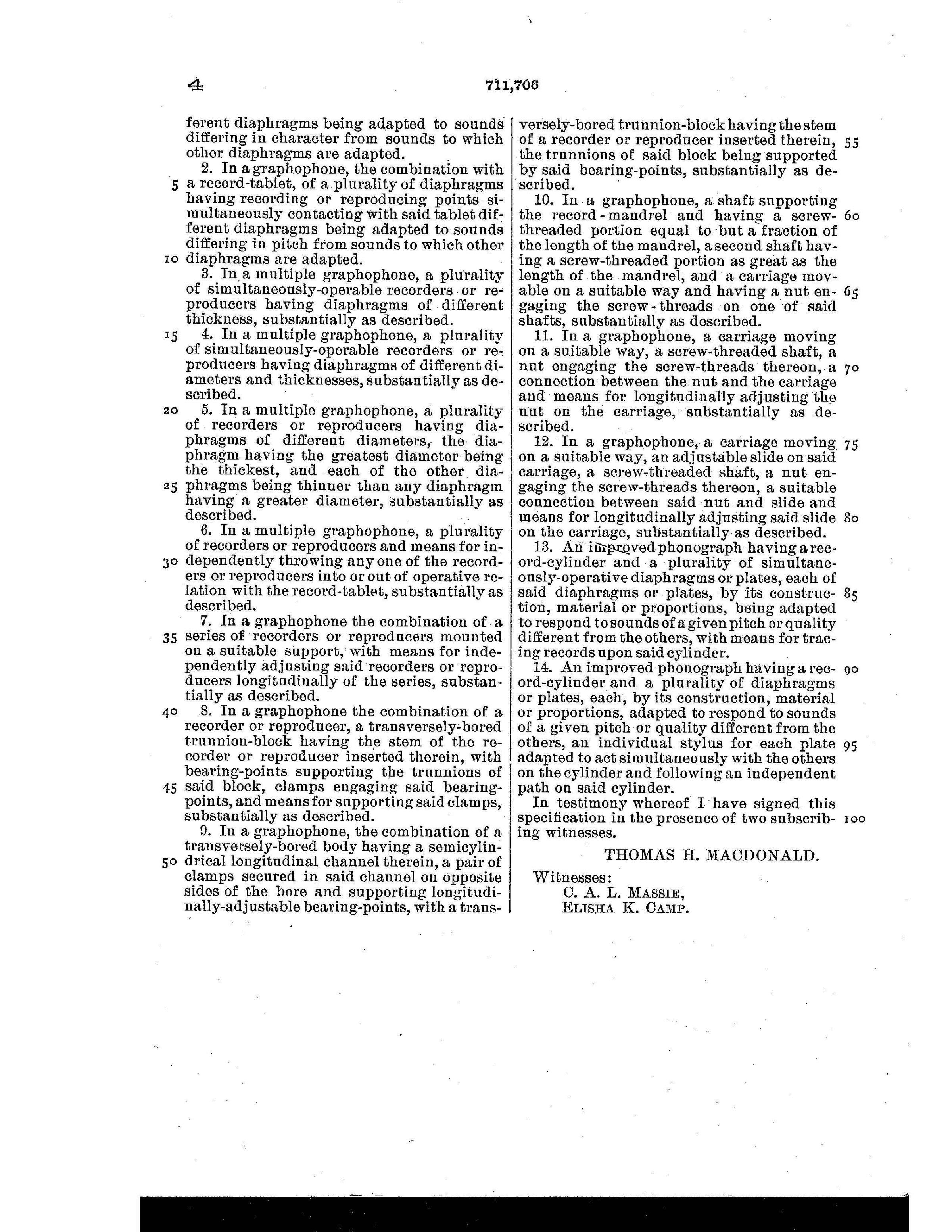
This monumental sound reproduction device, developed by Thomas H. Macdonald, was the largest and most technically ambitious talking machine of its time. It marks a milestone in the history of recorded sound and is considered the first multi-track playback device ever built. The underlying U.S. Patent No. 711,706, filed by Macdonald, describes a complex mechanical system for the simultaneous playback of multiple audio tracks on an oversized wax cylinder.
Development and Exhibition
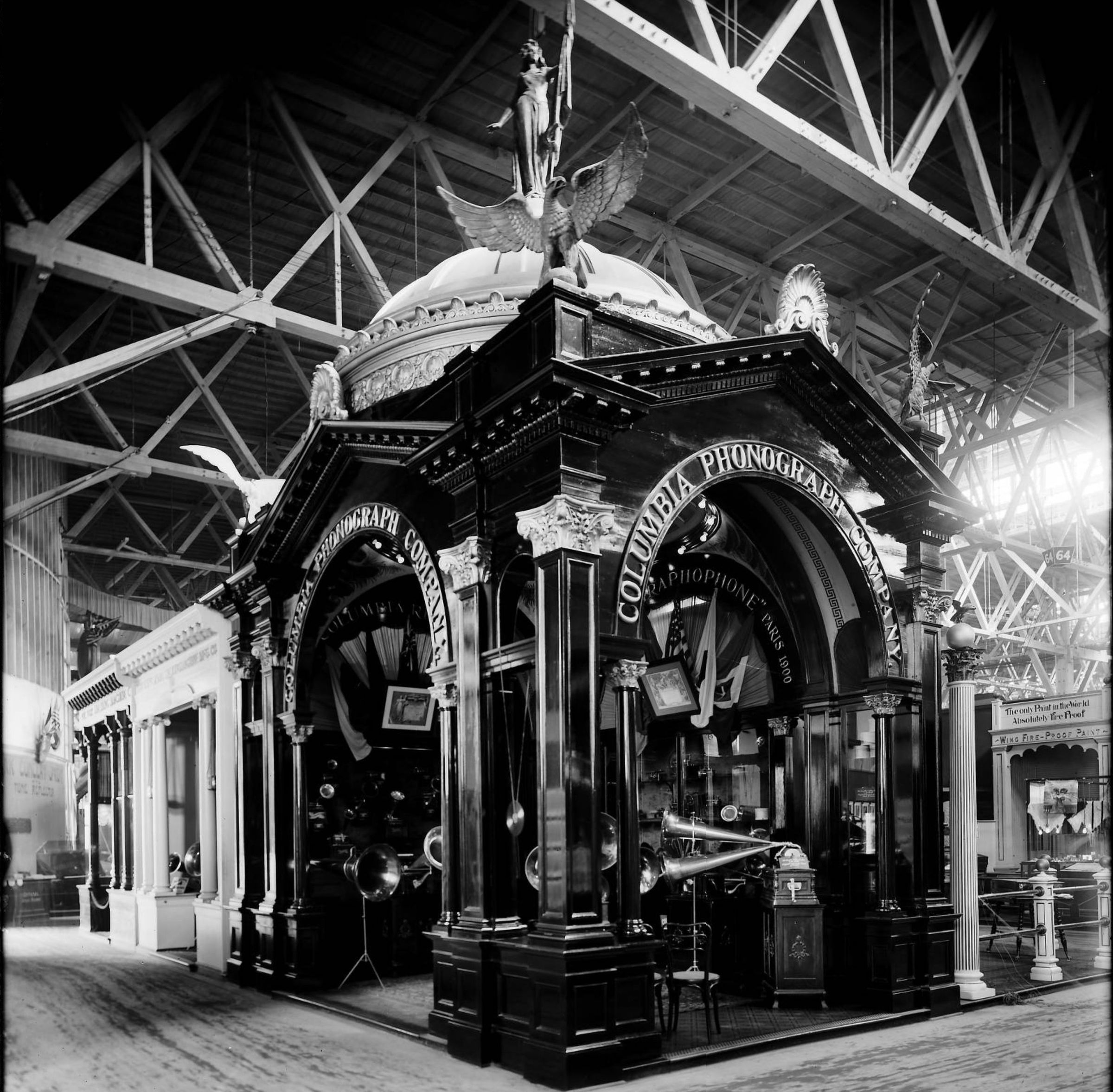
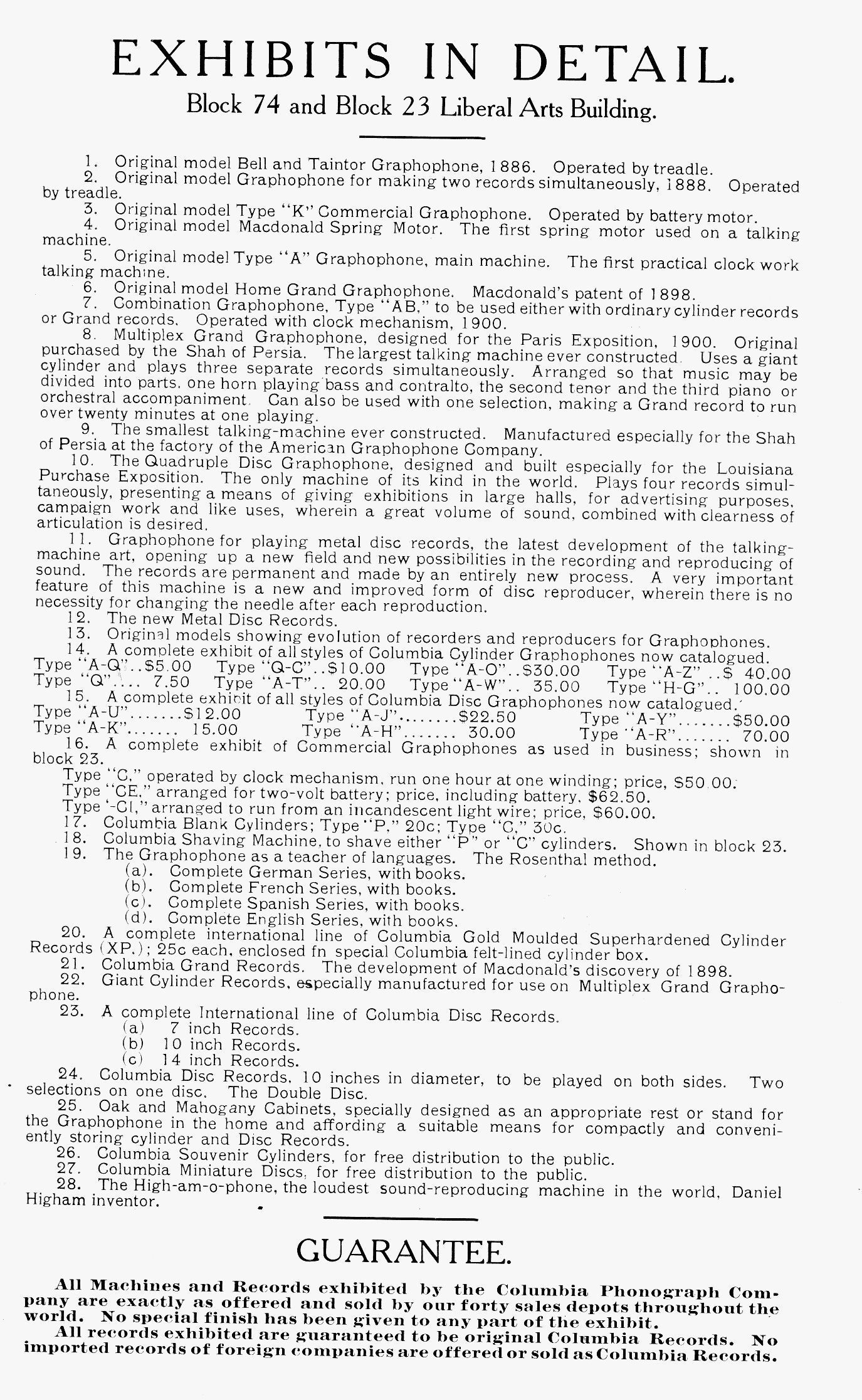
The Multiplex Graphophone Grand was designed for the 1900 Paris Exposition Universelle, where it caused a sensation. In 1904, an enlarged and refined version was showcased at the St. Louis World’s Fair, listed as Exhibit No. 8. A copy of the St. Louis exhibit list is preserved alongside the machine. The Multiplex used three parallel tracks on a massive wax cylinder, each playable simultaneously or individually.
The 1900 Paris version featured three large aluminum #4 Grand reproducers, while the 1904 version used three modernized #8 AW reproducers.
Technical Specifications
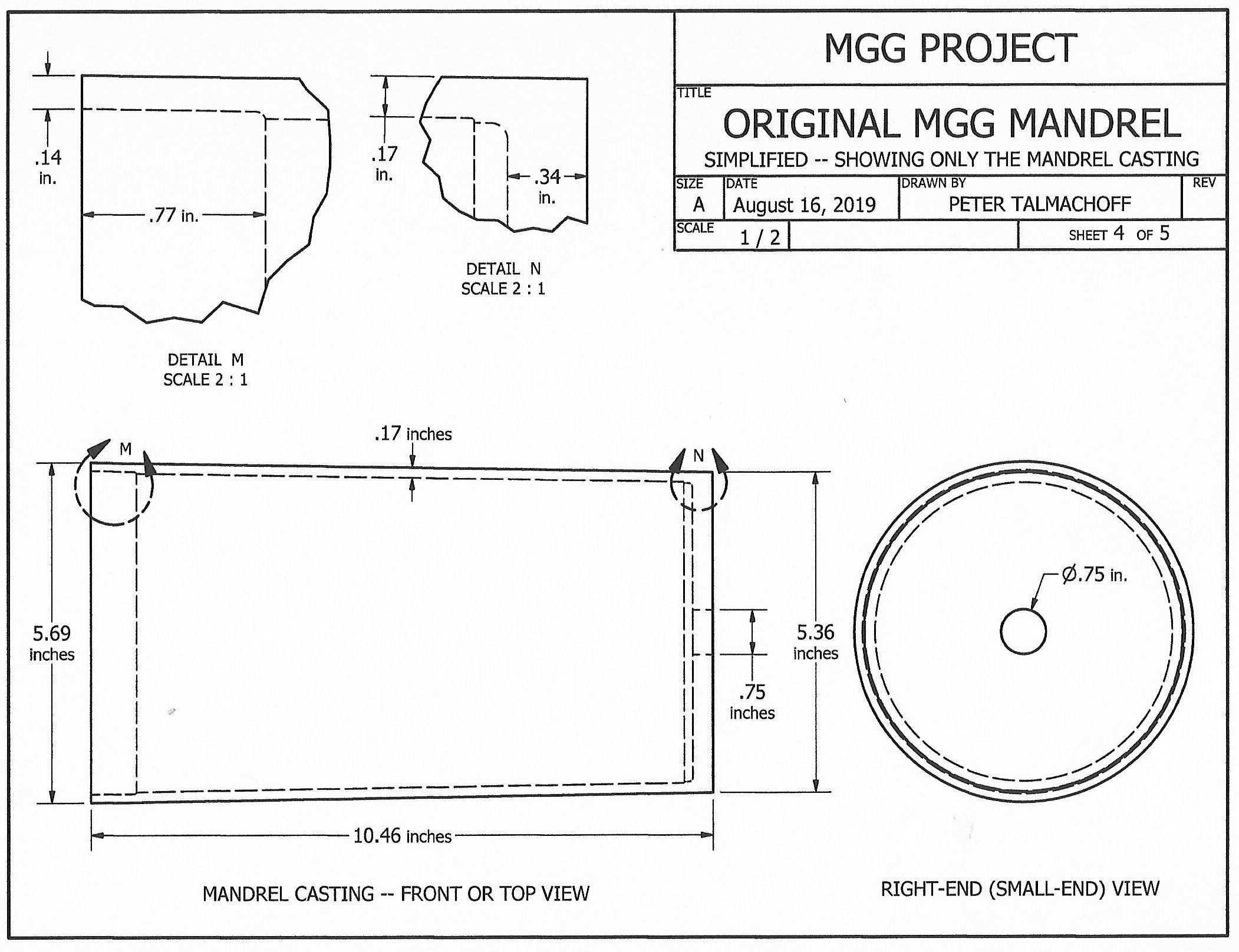
Mandrel (Cylinder Core) Dimensions:
Approx. 10.5 inches (26.6 cm) long,
tapered diameter from approx. 5.36 to 5.69 inches (13.6–14.5 cm)
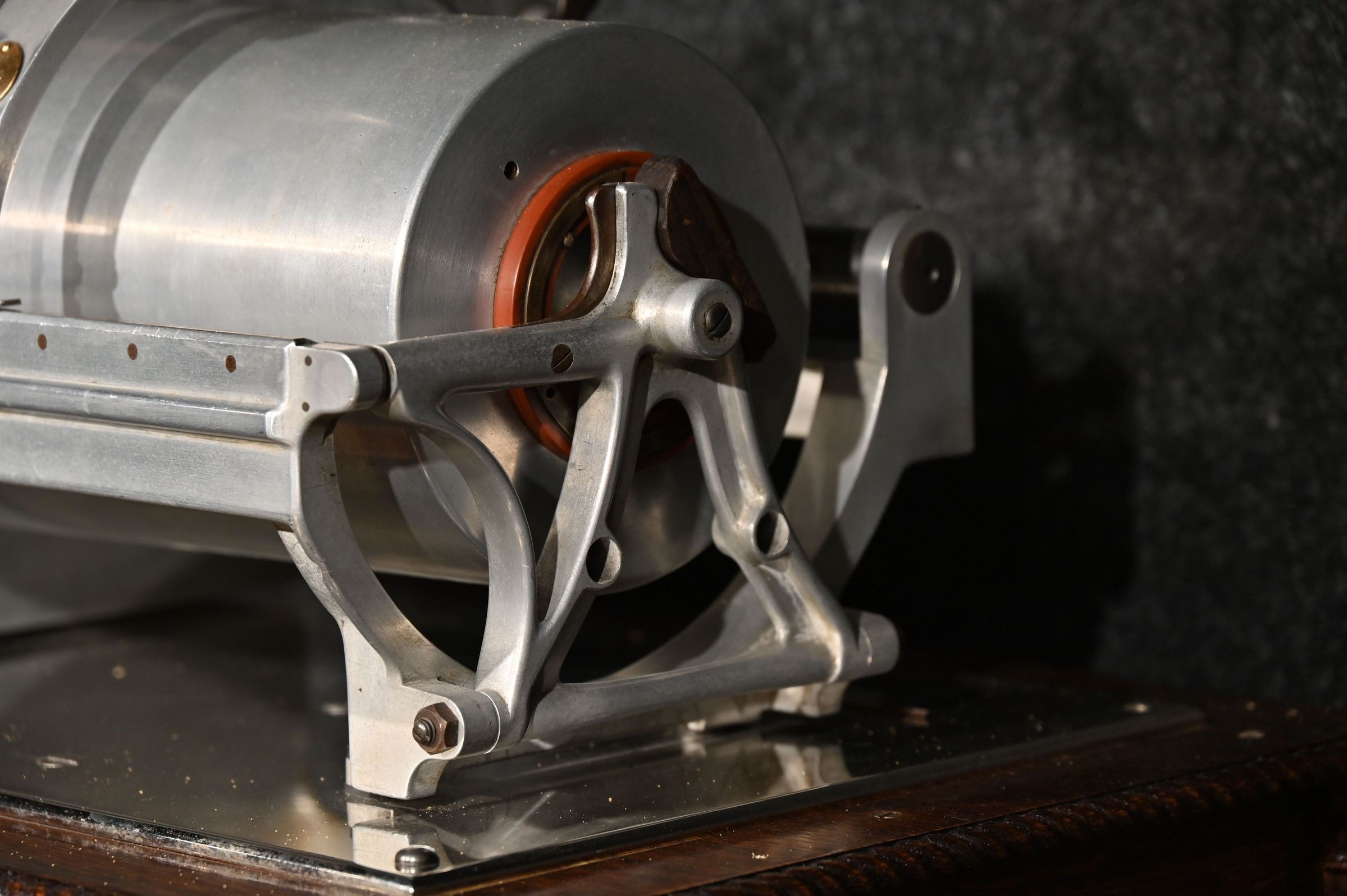
The mandrel is conical in form and designed to carry an oversized wax cylinder with three parallel recording tracks.
Tracks: Three parallel grooves – the earliest known multi-track audio system
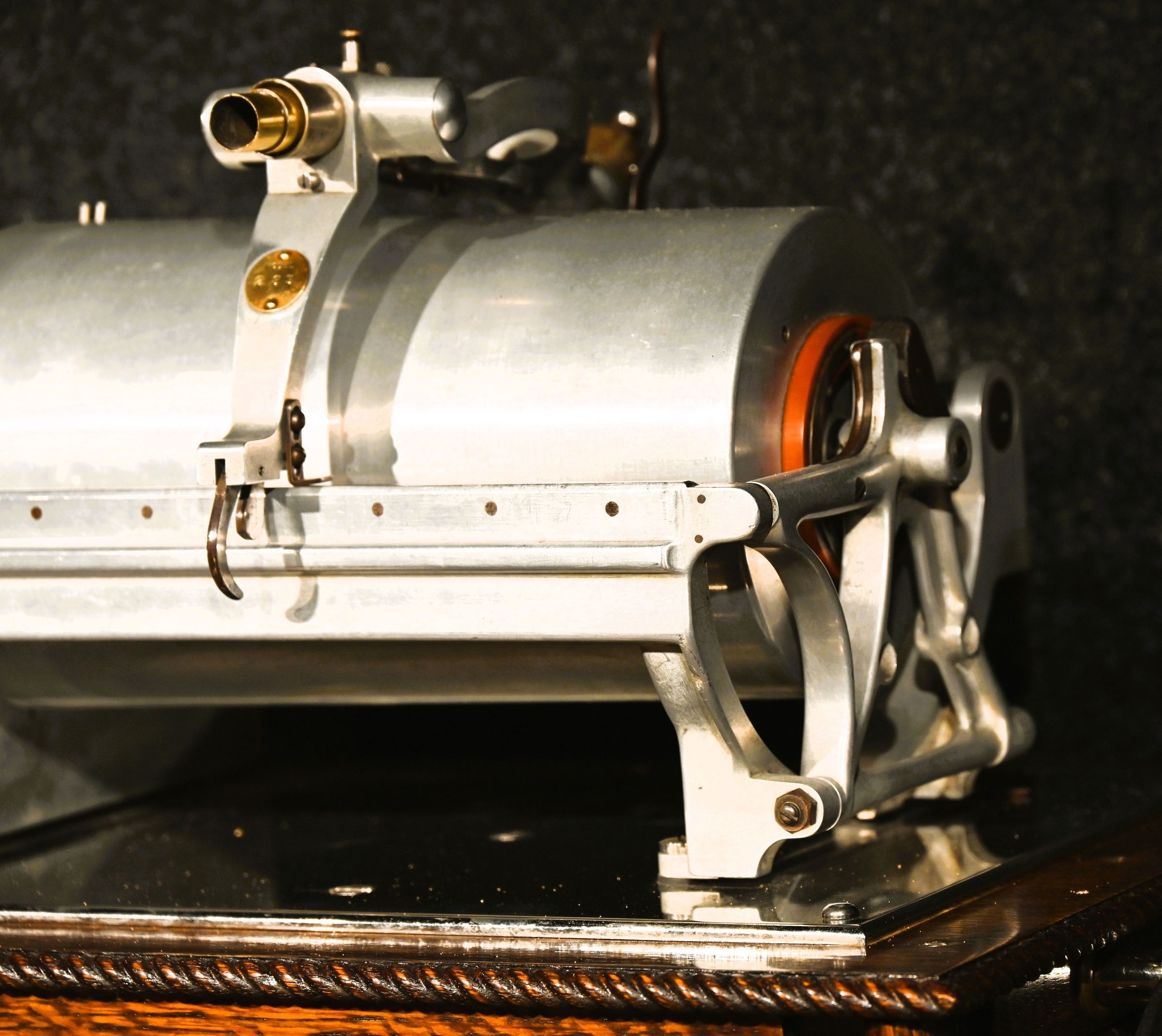
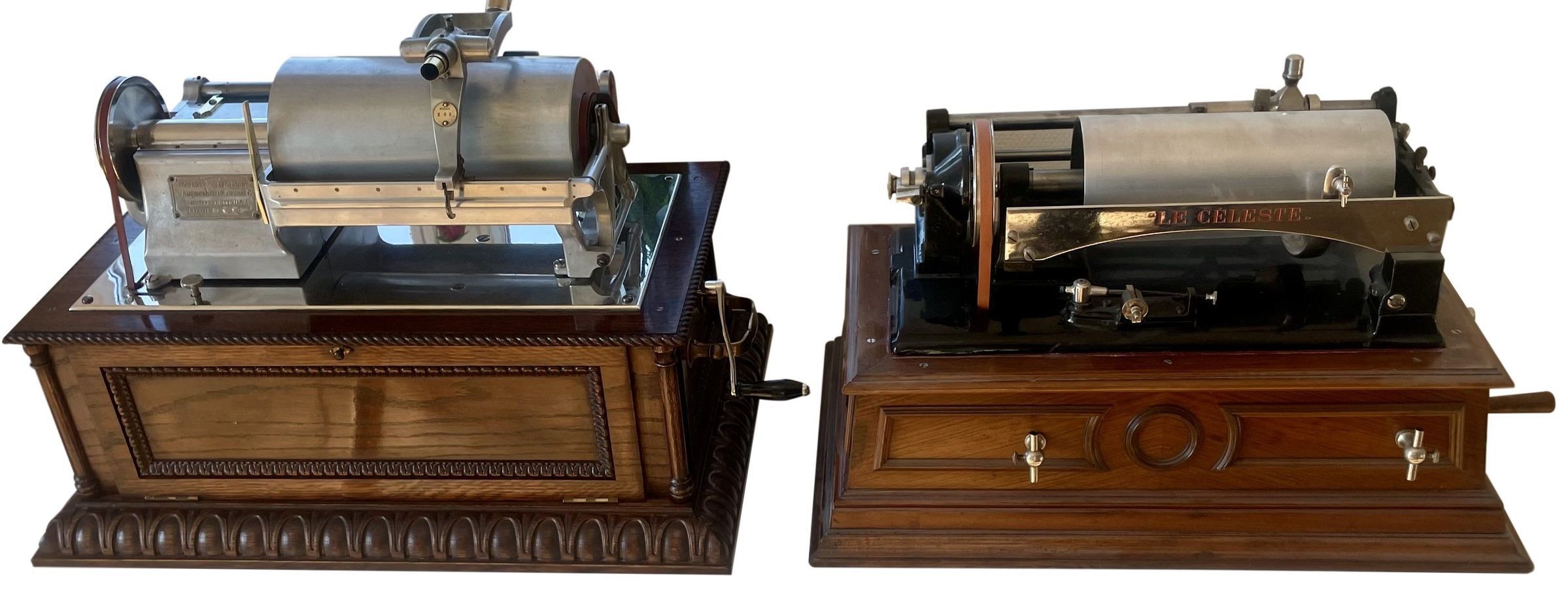
Reproducers: Three originally; one reproducer used in the Edisonium display version
Playback time: approx. 6 minutes with three reproducers; up to 20 minutes with single-reproducer configuration
Motor: Heavy-duty three-spring motor, identical in construction to the high-power motor used in the Columbia Graphophone Grand (GG) and Graphophone Type C.
This powerful spring-driven motor was Columbia’s strongest standard motor of the period and was designed to drive large, mechanically demanding machines with high rotational inertia.
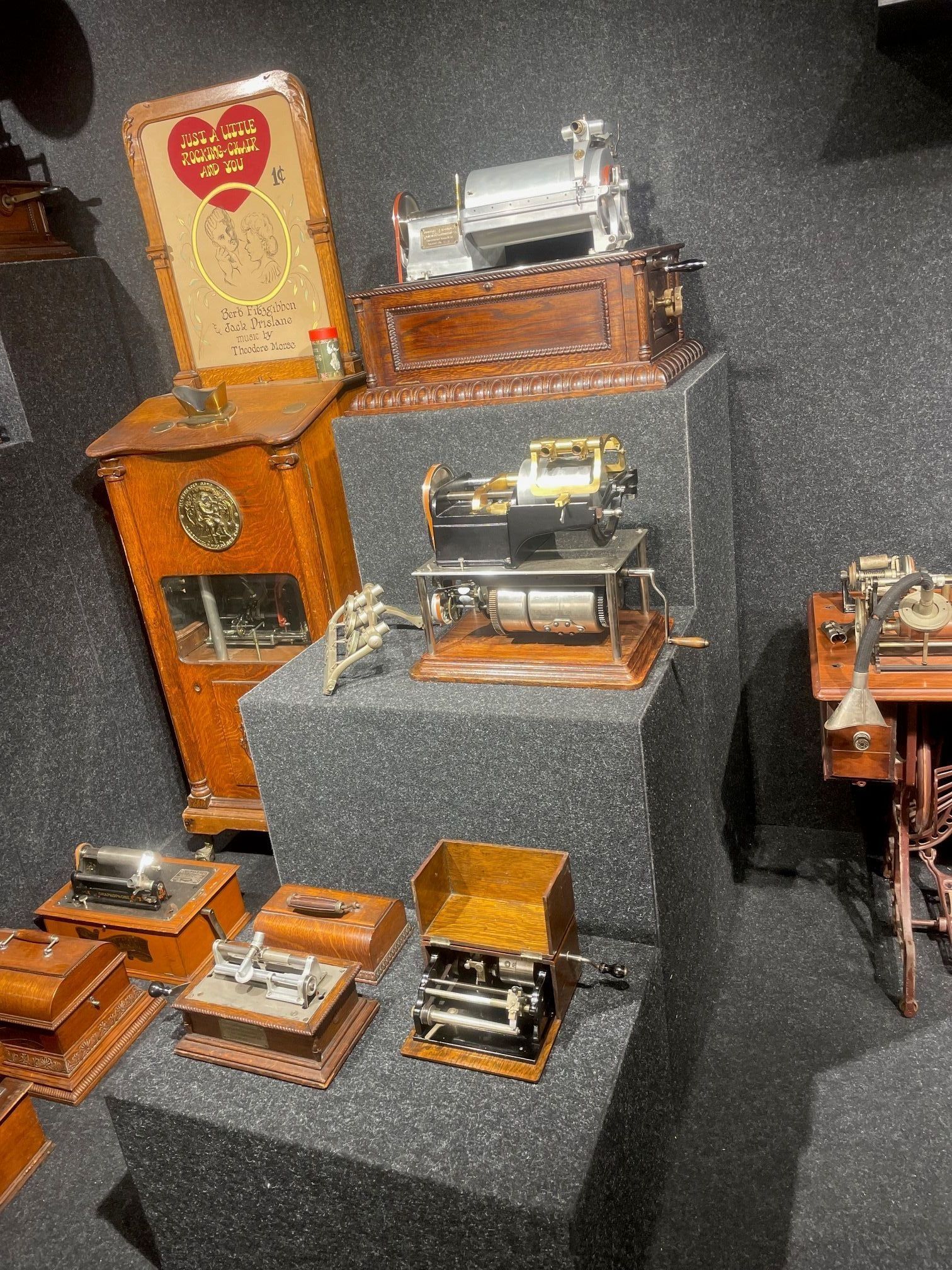
The same motor type is installed in the Multiplex Graphophone Grand preserved at the Edisonium, allowing direct comparison with other Columbia flagship machines of the era.
Due to its substantial torque and efficient gearing, a single full winding is sufficient to play the oversized Multiplex cylinder approximately one and a half times, despite its exceptional length and mass.
Period photographs of the 1904 configuration show this motor already in use, strongly indicating that the Multiplex relied on proven Columbia production components rather than experimental or improvised mechanisms.
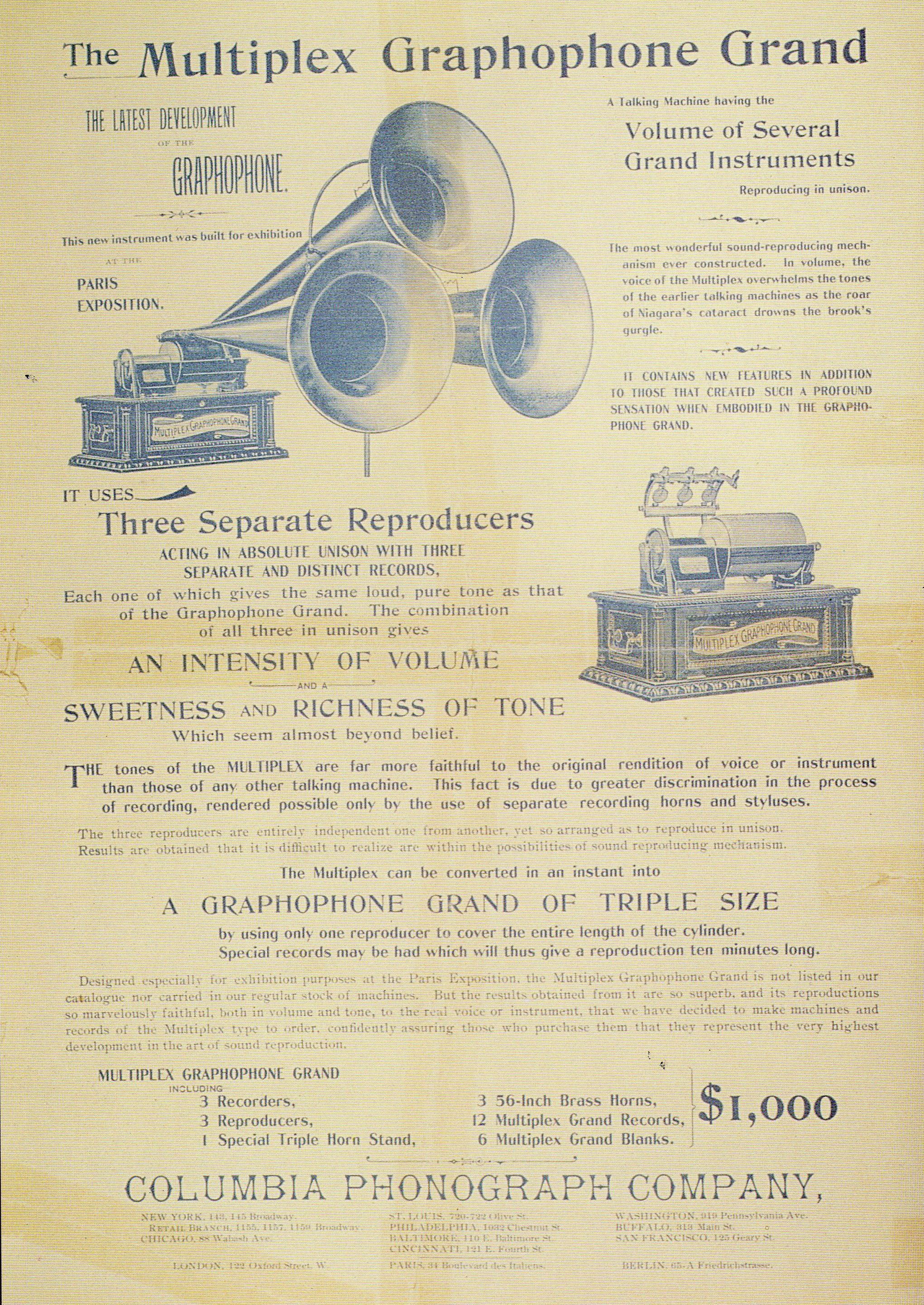
Horns: up to three 56-inch brass horns
Cabinet: solid oak housing with decorative molding
Original price: $1,000 in 1900 – equivalent to approx. $150,000 today
Preserved Cylinder & Reproducer
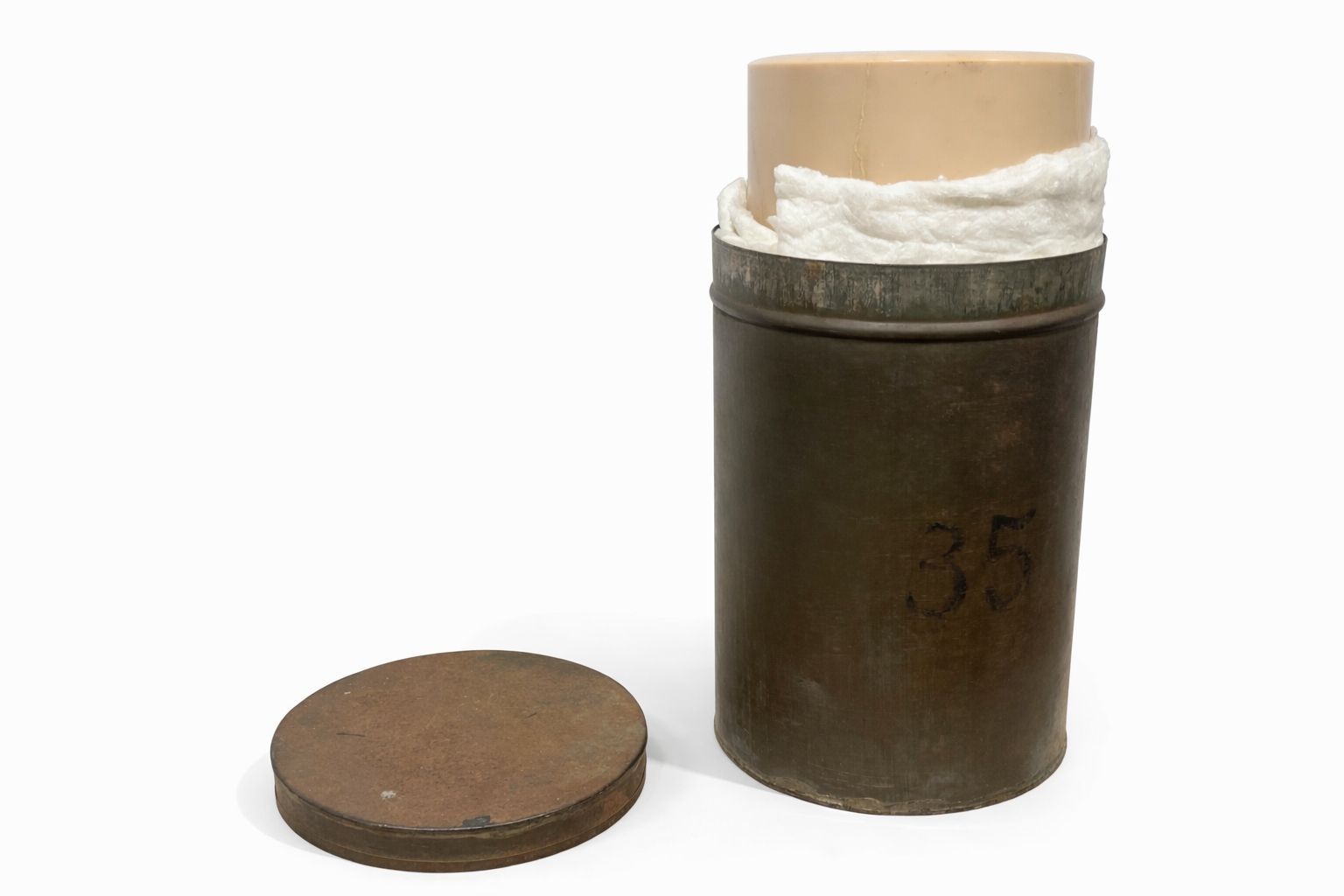
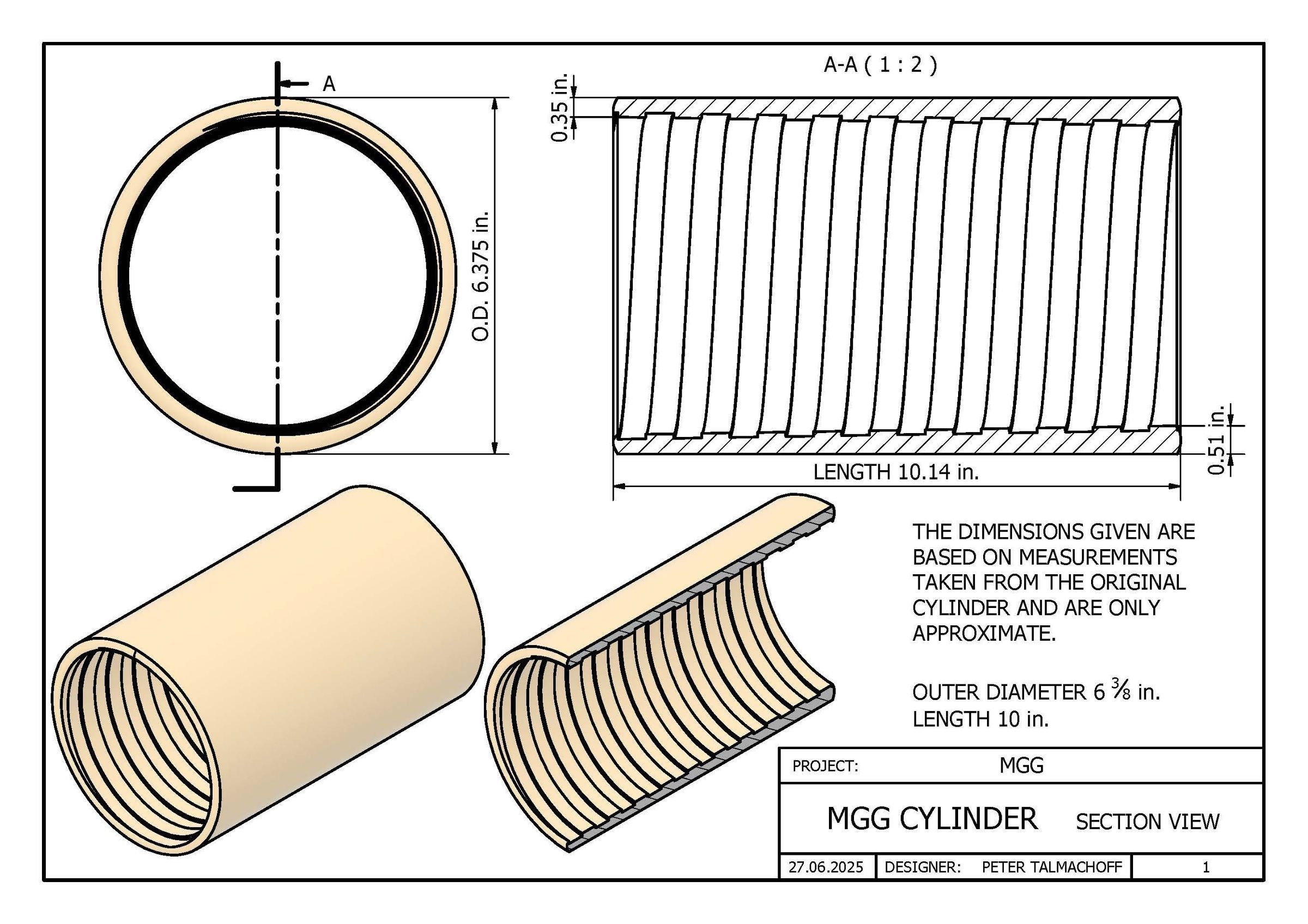
A remarkable feature of this exhibit is the surviving original giant wax cylinder, along with an original reproducer. The version on display at the Edisonium uses only one reproducer, allowing for extended playback of up to 20 minutes per cylinder. In the original three-reproducer setup, all tracks could be played simultaneously – but with a reduced runtime of approx. 6 minutes.
A Royal Customer: The Shah of Persia
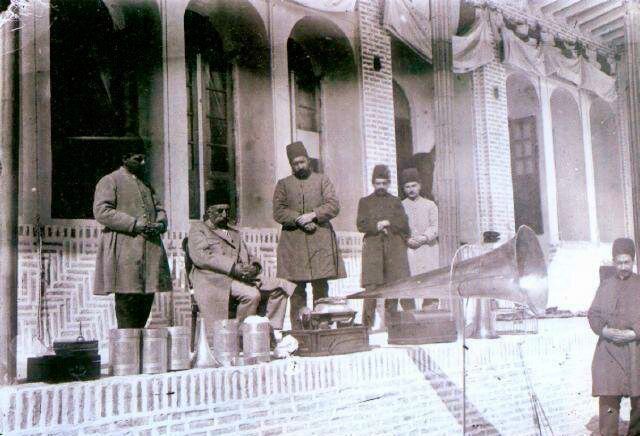
During the 1900 Paris Exposition, Mozaffar ad-Din Shah of Persia was so impressed by the Multiplex Grand that he ordered it along with the smallest wax-cylinder phonograph ever built by Columbia (Exhibit No. 352). Both devices were delivered by camel caravan to Tehran in 1901 – one of the most extraordinary deliveries in the history of audio technology.
At a cost of $1,000, the Multiplex Grand was one of the most expensive phonographs ever sold. Adjusted for inflation, that amount is roughly equivalent to $150,000 today.
Historic Promotion & Public Image
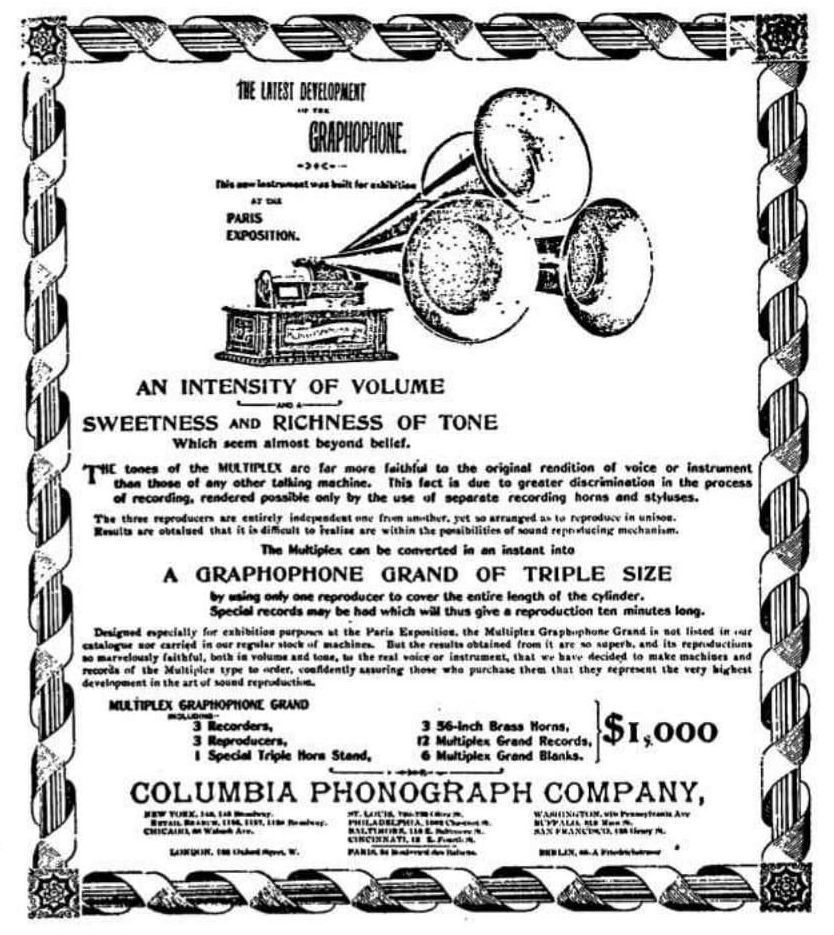
The Columbia Phonograph Company promoted the Multiplex as a technical showpiece rather than a commercial product. In catalogs and trade press, the company highlighted its acoustic superiority:
“The sweetness and richness of tone, the strength and clearness of reproduction are qualities which seem almost beyond belief.”
The Multiplex Grand was designed exclusively for exhibitions, to demonstrate Columbia’s technological leadership in a time when phonographs were still novelties to most of the public.
Provenance and Uniqueness
The displayed machine comes from the renowned collection of Charles Hummel, one of the world’s foremost collectors of early talking machines. It is believed to be the only surviving original example of this type worldwide – complete with its original brass “Graphophone Laboratory Exhibit” plate, functioning reproducer, and preserved cylinder.