Name/Title
AssuitEntry/Object ID
1987.1.1Context
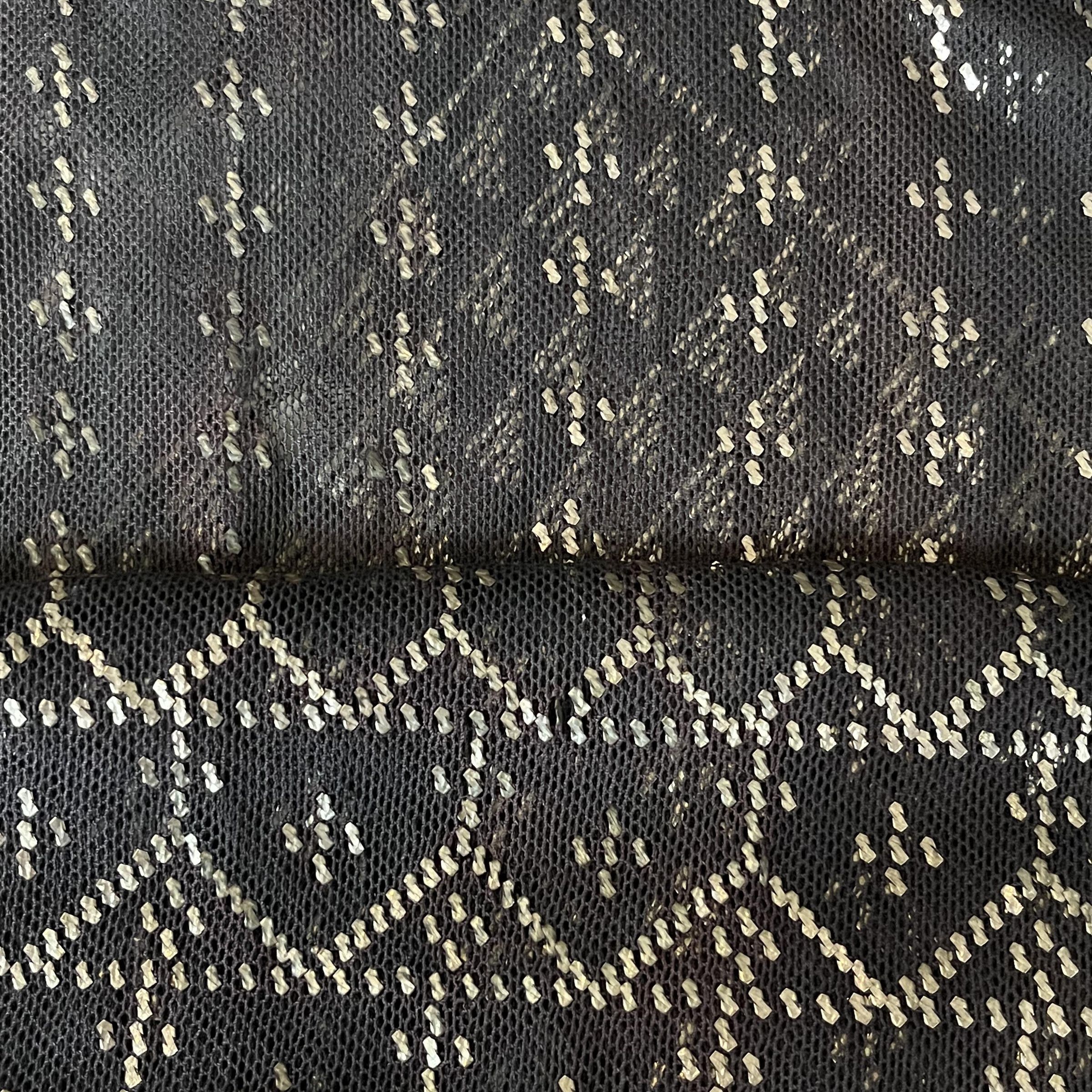
‘Assuit’ is an Egyptian netting fabric embroidered with real metal and named after its city of origin, Asyut ~ a region of Upper Egypt at the heart of the textile industry during the 19th century. Known as ‘tulle bi telli’ or ‘al tally’ throughout Egypt (Arabic for ‘net with metal’), its alternative spellings (due to its transliteration from Arabic to English) are many.
Assuit is created by threading wide needles with flat strips of metal (such as nickel, silver, copper or brass) through cotton or linen netting, then flattening and rolling, or hammering, the metal to achieve the most exquisite and distinctive effect through impeccable craftsmanship and expertise. Patterns formed by this unique embroidery include geometric figures as well as plants, birds, people and camels ~ symbols heavily depicted in Egyptian iconography.
The concept of metal embroidery dates back to ancient Egypt (as well as other areas of the Middle East, Asia, India and Europe) ~ a very sheer fabric is shown in Ancient Egyptian tomb paintings and the metallic embroidery is referenced in Exodus 29: “...And they did beat the gold into thin plates and cut it into wires, to work it in the blue, and in the purple, and in the scarlet, and in the very fine linen, with cunning work.” However, the bobbinet machine (invented in 1807 and introduced to the Asyut region during the French Protectorate) led to machine-made netting and the subsequent production of Assuit
Shawls began appearing in the last quarter of the 1800s and were first made as tourist art for European and American travelers, with the fabric later described in Edwardian era travel literature as ‘spangled mosquito netting’ (to be worn over hats as protection). Their popularity soared in the 1920s at the height of the rush to uncover the ruins of ancient Egypt ~ culminating in the discovery of Tutankhamun’s tomb in 1922 ~ incorporating the requisite motifs and symbols representative of hieroglyphics, Egyptian iconography and ancient art. Shawls then began to be made into garments, a fashion that neatly juxtaposed the geometric designs and motifs, influenced by the ancient world, with the modern Art Deco sensibilities of the time. Suddenly, everything Egyptian was desirable and its influence permeated dance, fashion and film.