Label
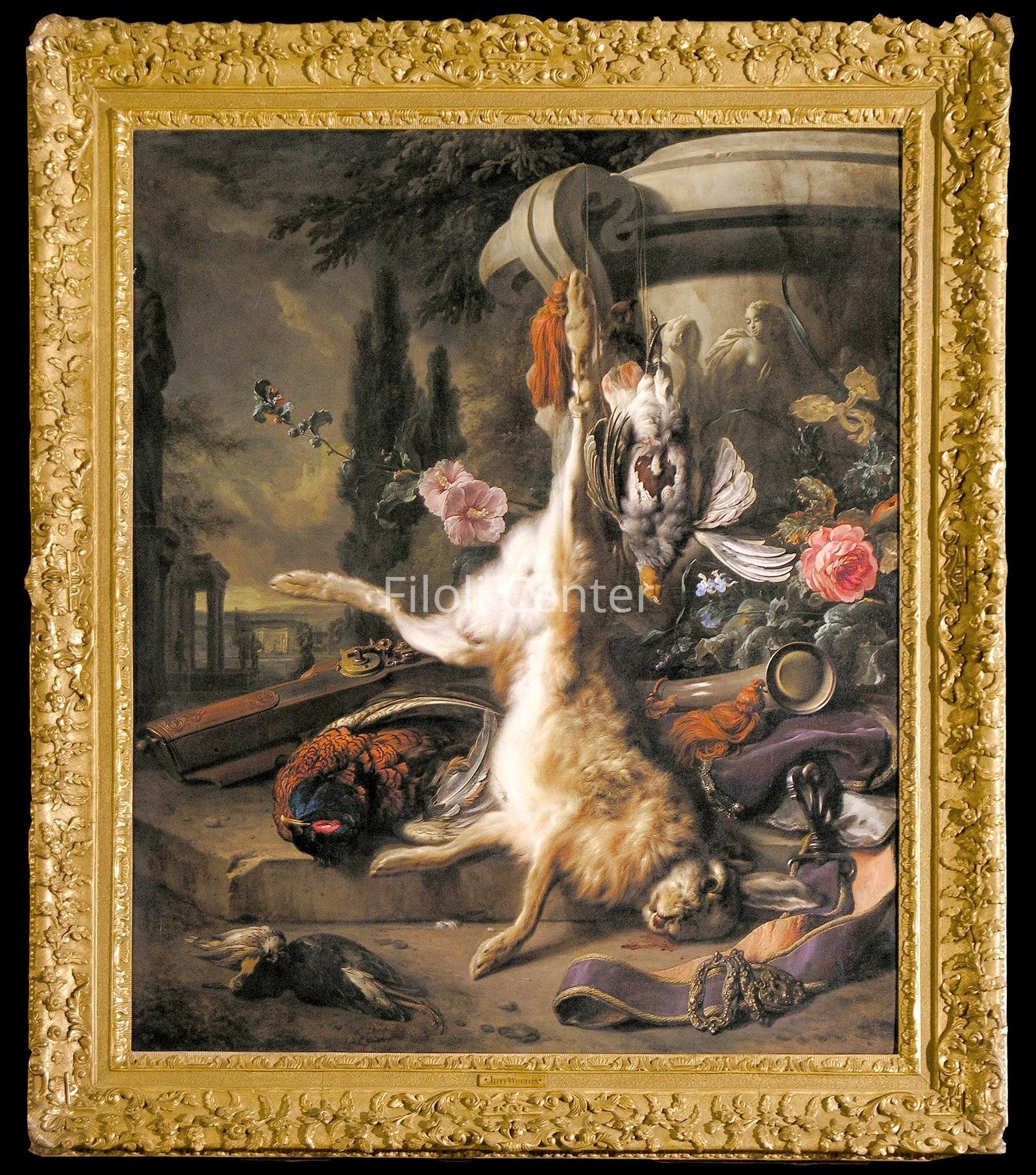
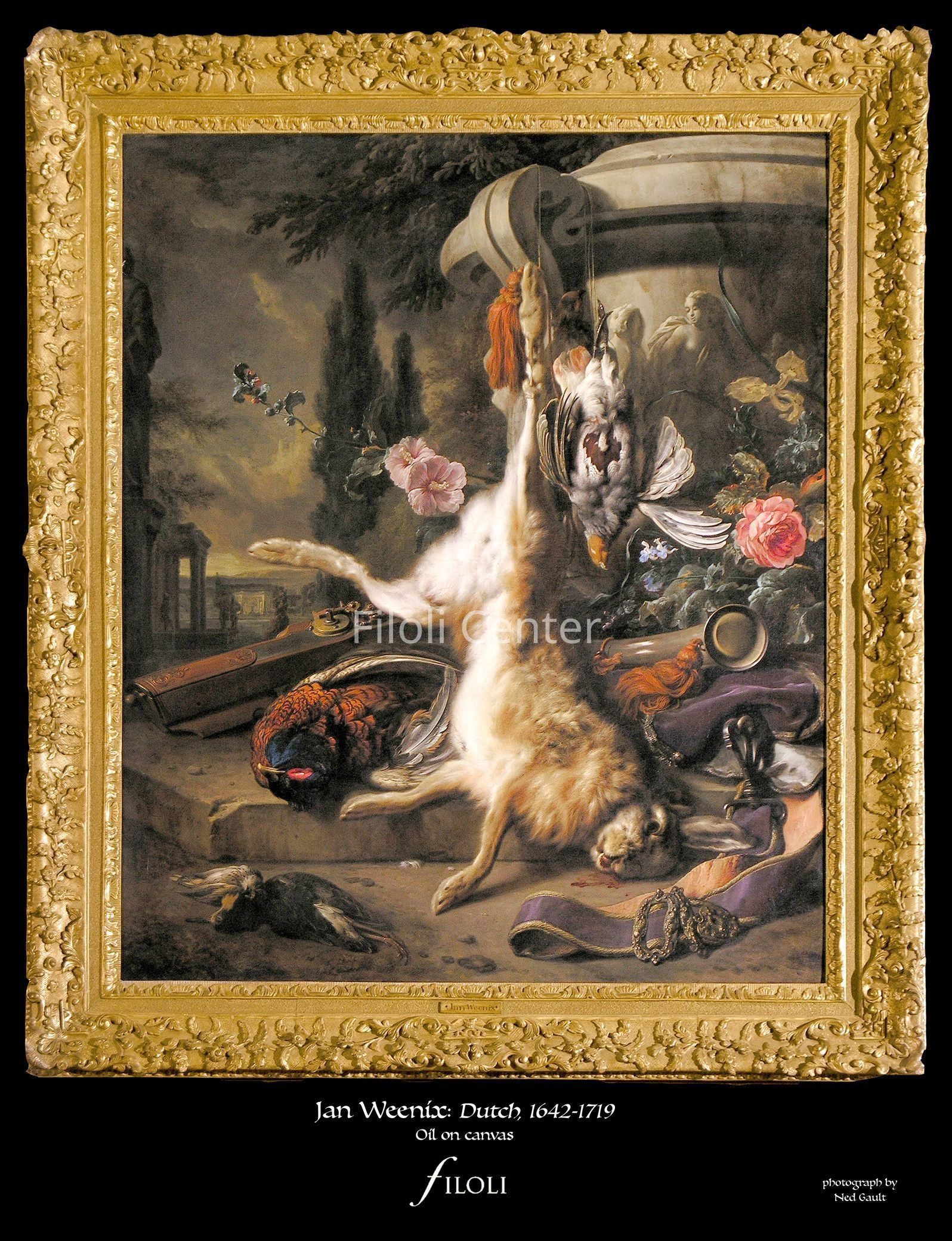
Still life paintings depicting hunting scenes were popular among the aristocratic class in the late 17th to early 18th centuries as they showcased wealth and abundance. This painting, purchased by the Bourn family and hung in their Dining Room, is thought to be one of twelve paintings commissioned by a German nobleman. The Bourns may have purchased this piece as they wanted Filoli to be reminiscent of the grand country estates of Europe.Label
Paintings depicting hunting were popular among aristocrats, as they advertised their wealth, the abundance of flora and fauna on their property, and the exclusivity of hunting, an activity restricted to the nobility. This still life is by Dutch painter Jan Weenix, best known for his paintings depicting “Dead Game and the Implements of the Chase”. In 1702, Weenix was hired as a court painter by the Elector Palatine Johann Wilhelm of Düsseldorf, where he produced a series of twelve hunting paintings for the Elector’s hunting lodge, Schloss Bensberg. This piece is thought to be one of those twelve.
The Bourns purchased this piece for their Dining Room (see photo), and it remained there after Filoli was purchased by the Roth Family. The Bourns may have purchased it wanting to emulate the grand country estates of Europe. Today, it still hangs in the Dining Room above the fireplace.