Note
James Gibson (1938-2017)
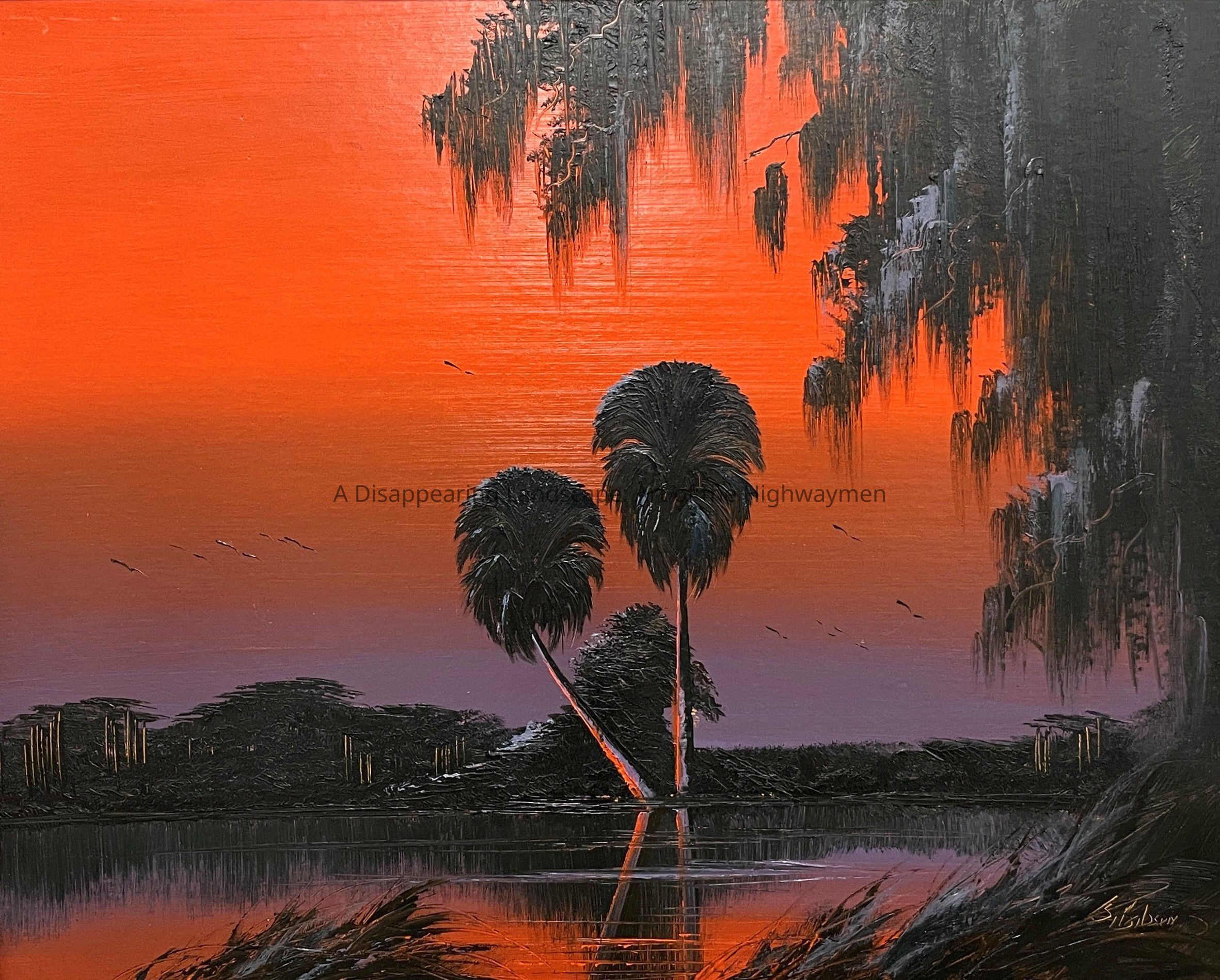
Devil Palms #1
Oil on Upson Board circa the early 1960s
Image size 24" X 30"
James Gibson's school friend Alfred Hair wrote to James while he was at Tennessee State University, telling him of a promising new entrepreneurial venture as an artist and that James should try it. Soon, James was back in Fort Pierce, learning all he could about art from Alfred and Harold Newton, Roy McLendon, and occasionally Bean Backus. James and Alfred were extremely competitive in a friendly way; they would work out and lift weights to get stronger so they could paint faster and longer. James Gibson boasted he once made 100 paintings in a day to win a bet. He painted for all his adult life, changing his style and methods over time. A consummate gentleman, snappy dresser, and with a kind heart, he was a genuine soul and became known as the Ambassador of Art for Florida. His style and body of work are distinctive within the group, as is his personality.
Gibson was known for his "monochrome" paintings of the early '60s. Usually, they were blue/black, yellow/black, or red/black; the scenes varied slightly, but this particular one with twin "devil palms" and a large hanging reverse "C" and a distant treeline backdrop with a "fast grass" foreground are typical of this genre. He may have painted hundreds, if not thousands, of these during the 60s and even occasionally later in his career. One can imagine him tacking ten or more boards onto a fence line of trees and going hurridly from painting to painting, doing the skies, the trees, foregrounds, or what have you. It is easy to see the fast "speed painting" brush strokes he used to develop these paintings. James was the only one who did these "monochrome" works; he must have been successful with them, as they appear frequently in his work. They venture far from his much more realistic later works. They have a raw sensuality, unlike the tranquillity of the majority of the Highwaymen's works.