Note
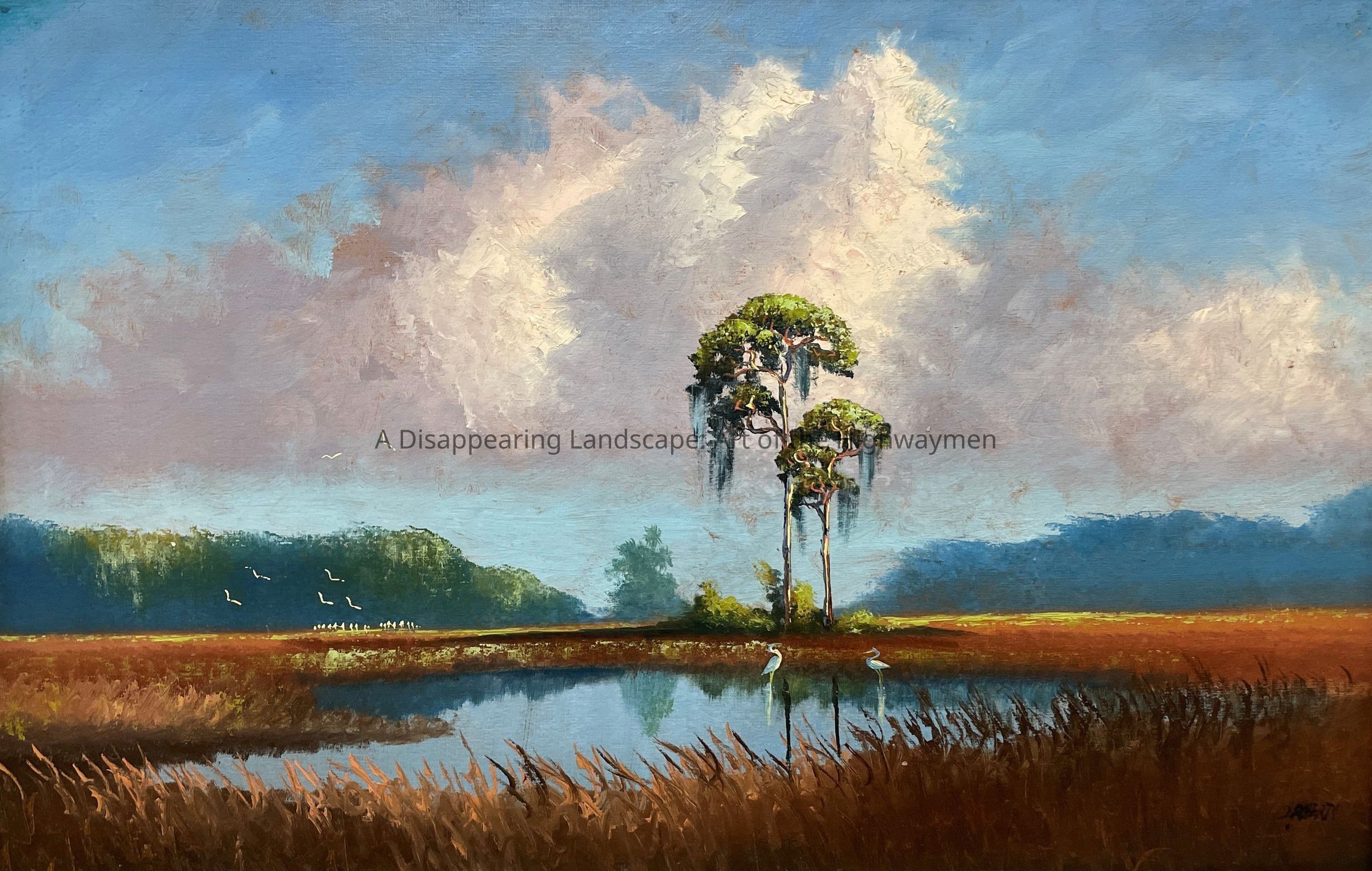
Livingston "Castro" Roberts (1942-2004)
Savanna Pines
Oil on Upson Board circa mid-1960s
Image size 24" X 36"
The early members, thanks in large part to Alfred Hair, were close-knit and helped mentor each other. They shared a friendly competitiveness that edged them all toward success. Often, they would gather painting in a group, fueled by fun, laughter, a beer, barbecue, music, and a smoke, gravitating to "Castro's" close friend Alfred Hair in those formative nascent days. Although Hair advocated painting fast, Livingston understood that painting fast was not necessarily the route to being the best he could be. Like the other artists, he would paint in his yard, imaging the scene he was painting, not in the "en plein air", outdoor painting method adopted by the French Impressionists, who transcribed the scene from what they saw in front of them, but rather as Highwaywoman Mary Ann Carroll would describe as "backyard shade-tree mechanics". Although they became a collective, a group, and a movement, it is noteworthy to acknowledge the individual styles of each artist; in Castro's case, he was constantly working to improve; he was serious and cared about his craft and the quality of the works he produced. "Castro" Roberts wanted to be the very best artist he could be; his inspiration was Harold Newton.
There are various adaptations of a "lone pine tree stand" in the savanna or backwater by Roy McLendon, Sam Newton, and Alfred Hair throughout the exhibit. It was a theme that sold well but was rendered differently by each artist. This impressive offering by Livingston "Castro" Roberts reverberates thoughts of the French Impressionists. Confident in his mastery of the palette knife, Castro sculpts massive, pastel-colored candyfloss clouds that fill the sky, providing the perfect backdrop for the central pine stand. Meanwhile, two herons focus on the potential meal in the wetlands below their slender legs. Paintings like these are a treasure that represents Florida's natural beauty, which is becoming harder and harder to find.