Note Type
Antony Hayton, Exhibit DirectorNote
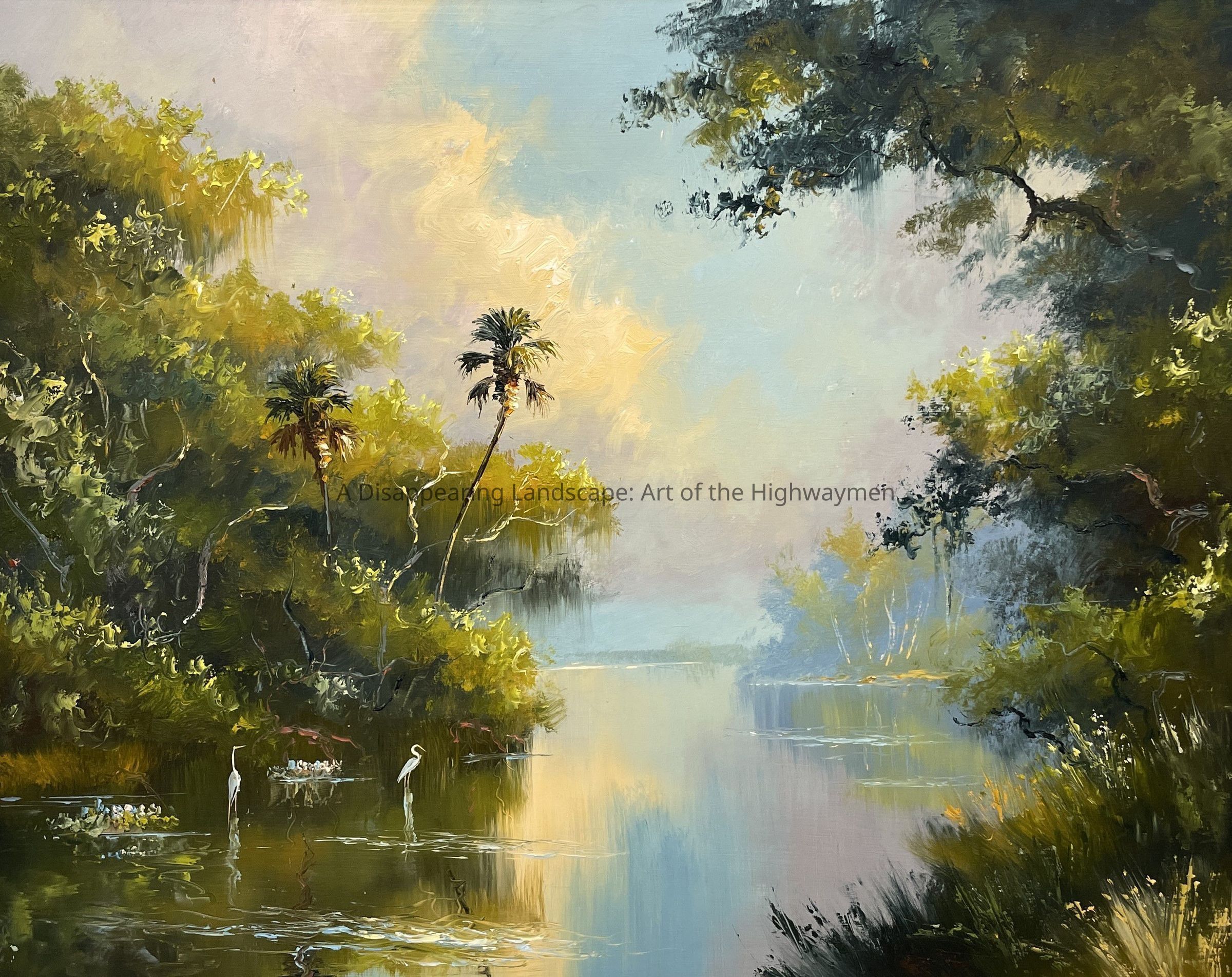
Harold Newton (1934-1994)
St. Lucie River Bend (Study)
Oil on Masonite circa 1980s
Image size 24" X 30"
Harold Newton painted until a debilitating stroke left him unable to work. He died a year later on June 27, 1994, at the young age of 59. He never lived long enough to reap the benefits of the Highwaymen Renaissance that began in 1994 when Jim Fitch, an art historian began researching the group and chose to give them the name, "Highwaymen." The individual that the group owed its beginnings, painting template, and artistic style to had passed without knowing that the group he founded even had a name. Today his works are considered the standard for the group. Harold Newton's creative impulse to assert his independence during racist times shines a fresh new light on the Florida of the 1960s. He and Alfred were the creators of "The last great American Art Movement of the 20TH Century". Sadly neither of them lived long enough to enjoy their many accolades.
Harold Newton's talents as one of Florida's most illustrious landscape artists are displayed in this dreamy treatment of a "St. Lucie River Bend". Soothingly tranquil and still, the mirror-like river shimmers at the bend of St. Lucie River, which is often the treatment of Newton and other artists in the group. His subtle brushwork and gentle pastels echo the French Impressionists. Harold Newton's color sense was intuitive, and his emotional range was varied and well-communicated. He looked at the world around him and envisioned how to construct a landscape scene that wasn't readily visible to an ordinary observer. He showed Florida's grand scenery in a new way. This expressive piece by Harold Newton traveled to Africa as part of a U.S. Embassy exhibit in the Democratic Republic of the Congo, organized by the U.S. State Department—a remarkable and inspiring journey for art by an African American painter.