Note Type
Antony Hayton, Exhibit DirectorNote
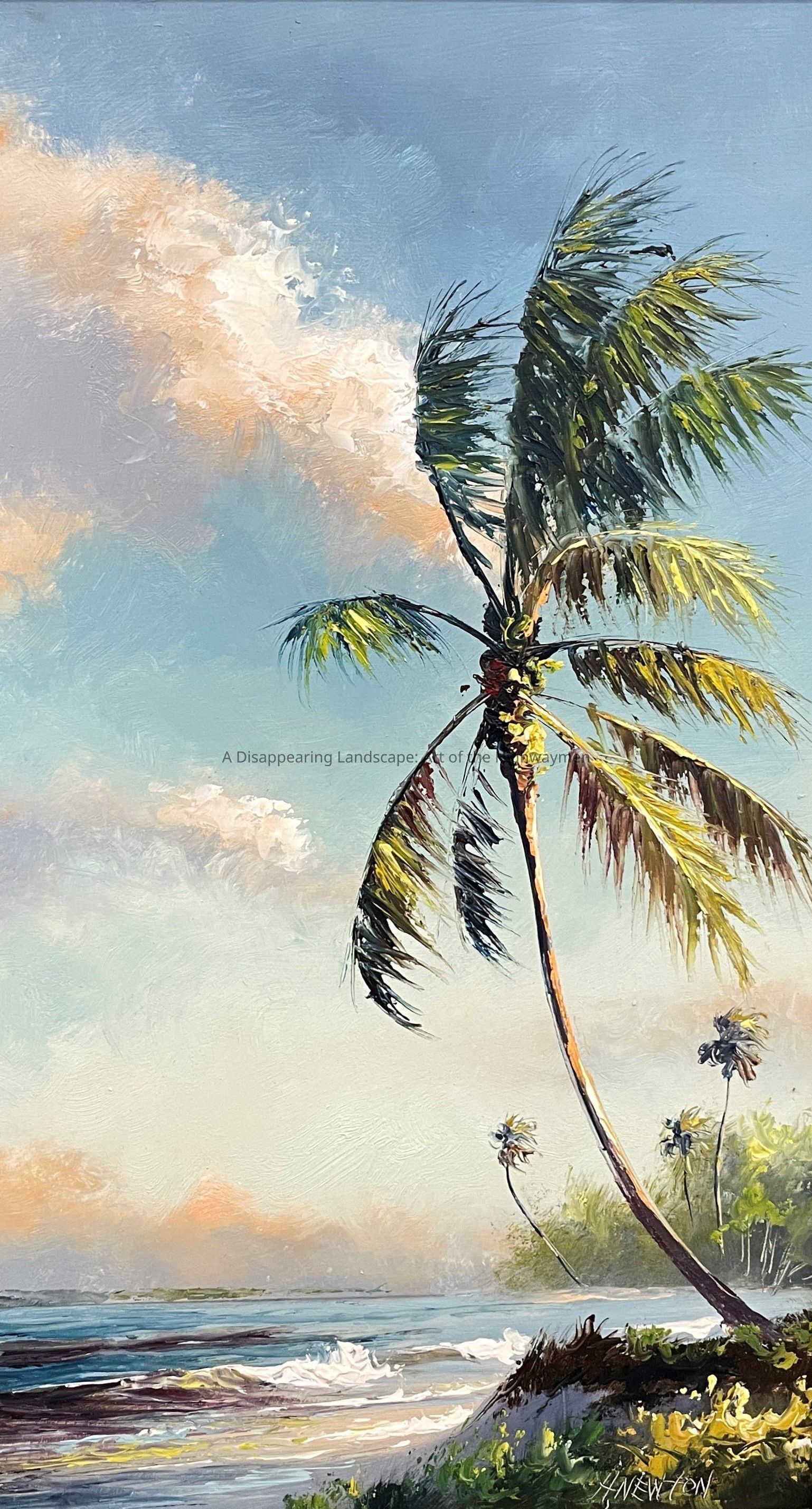
Harold Newton (1934-1994)
Rio Mar (Vertical)
Oil on Masonite circa the late 1960s
Image size 16" X 24"
From an early age, Newton was interested in art and was described as an industrious child artist. He drew and painted portraits and religious scenes, which he sold to churches and community members. His pivotal meeting with A. E. Bean Backus in 1954 inspired Newton to paint landscapes. Although never formally taught by Backus, unlike Alfred Hair, Newton spent time in Backus's studio studying his techniques. He would return home and replicate that knowledge using house paint and inexpensive brushes. Backus was impressed by his talents, and from then on, Newton dedicated himself to painting masterful artworks of Florida, capturing its panoramic natural beauty in thousands of seminal paintings, preserving an image of the state before it was laid waste by development.
Harold Newton's artwork set a standard that the other Highwaymen artists aspired to achieve. His remarkable talent lay in his ability to capture the nuances of light and the subtleties of color throughout the day. While it is tempting to compare his creative mastery to that of the Hudson River School of American landscape artists from the 19th century or the French Impressionists who followed, it is more accurate to say that Newton developed his own unique style of impressionistic realism that celebrated the stunning variations and subtleties of Florida's unique luminescence and spectrum. He was an opportunist, and his artistic creativity served as a metaphor for freedom, independence, and self-determination. He was a master of the craft; his work is integral to the American aesthetic.