Name/Title
Blow Pipe torchEntry/Object ID
6701Description
More Than a Lamp — The Ingenious Story of Item 6701
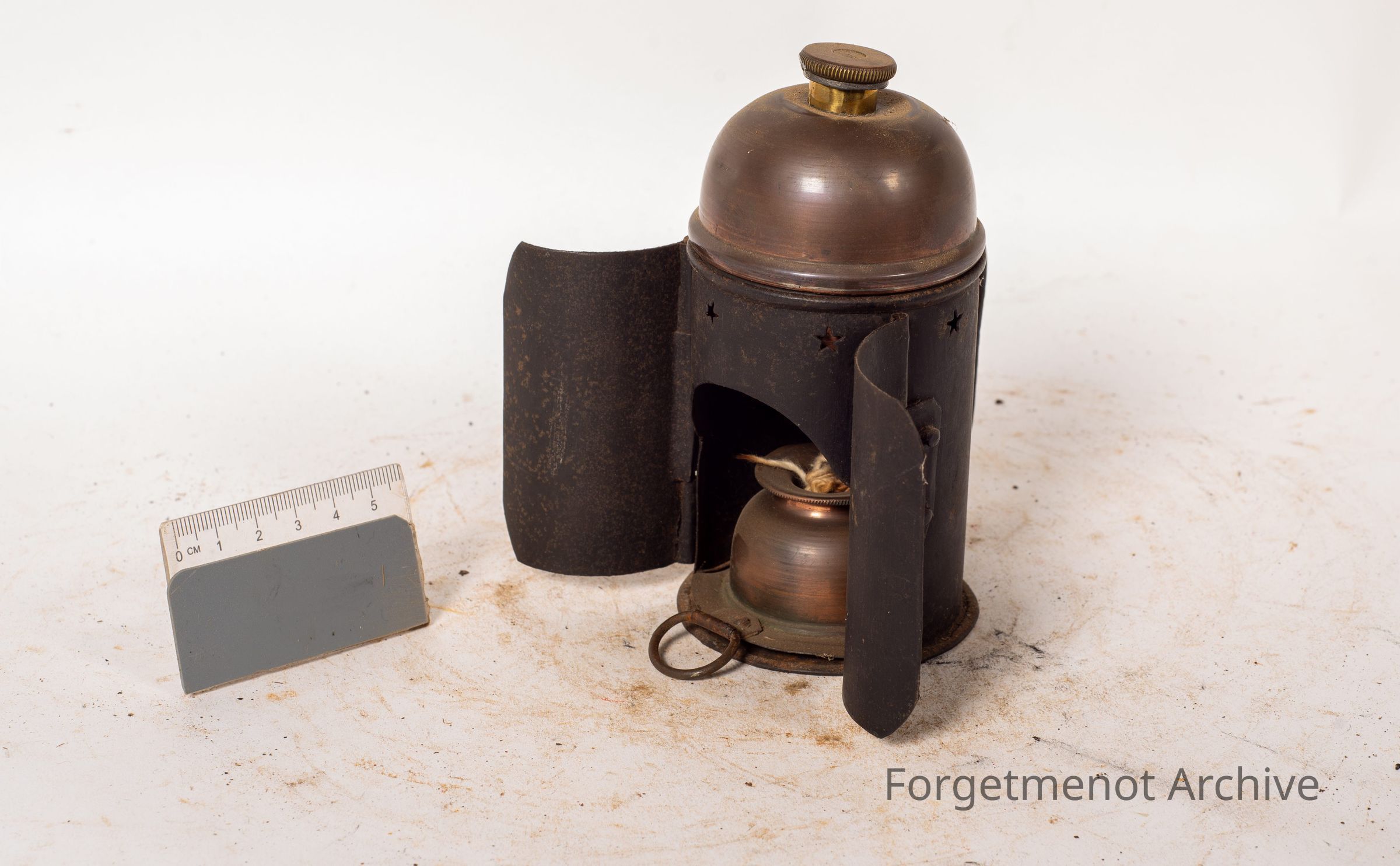
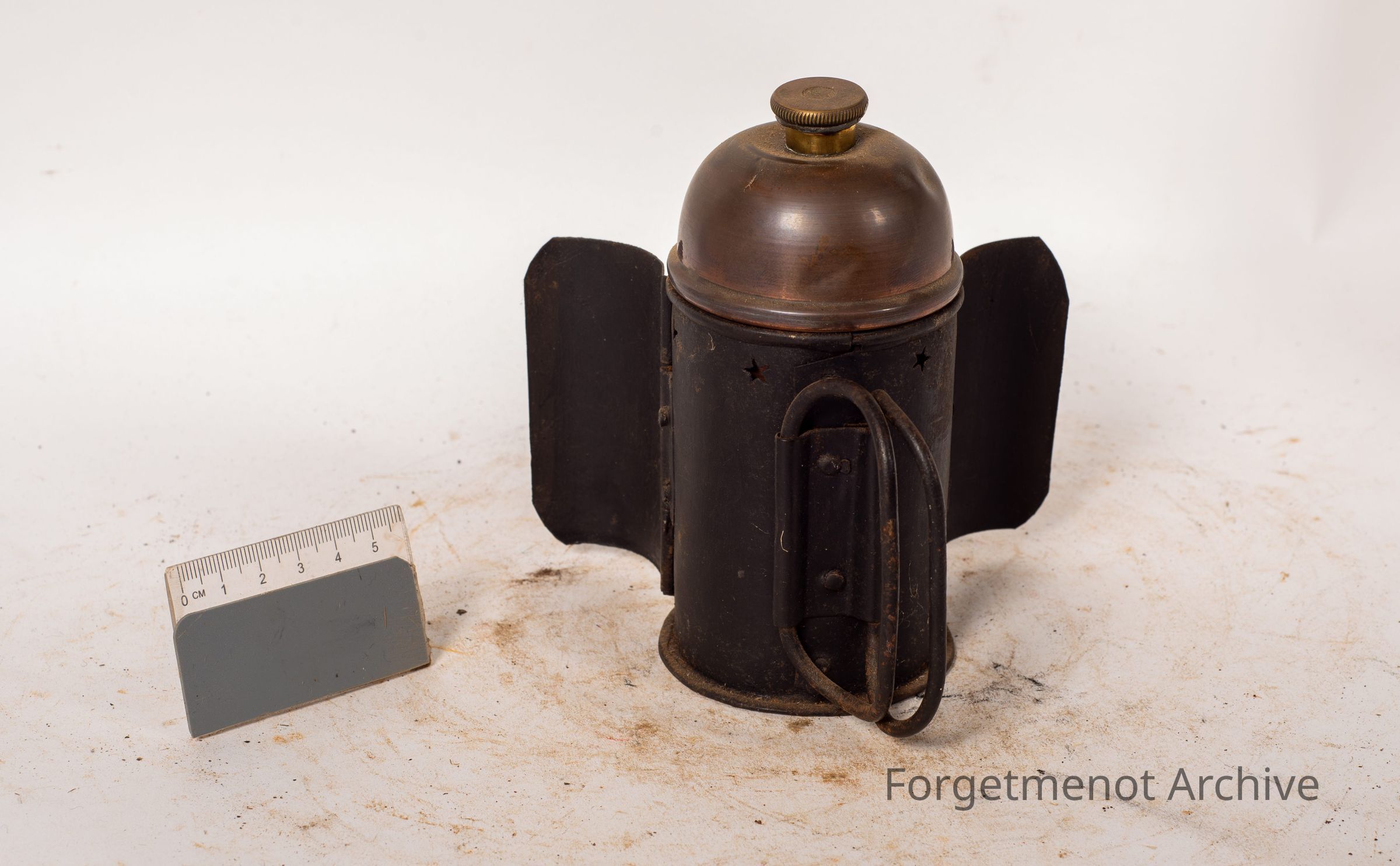
At first glance, item 6701 in the Forget-Me-Not Archive appears to be an unusual old lamp.
It has a cylindrical metal body, a handle, a rounded top and what appears to be a small wick burner concealed inside. But when the object is taken apart, its true purpose begins to emerge.
This was almost certainly more than a lamp.
Item 6701 appears to belong to a fascinating family of nineteenth and early twentieth-century devices known as self-acting spirit blowpipes or brazing lamps. These ingenious machines used the heat from a small spirit flame to create a much hotter and more concentrated source of heat.
A mystery inside a metal cylinder
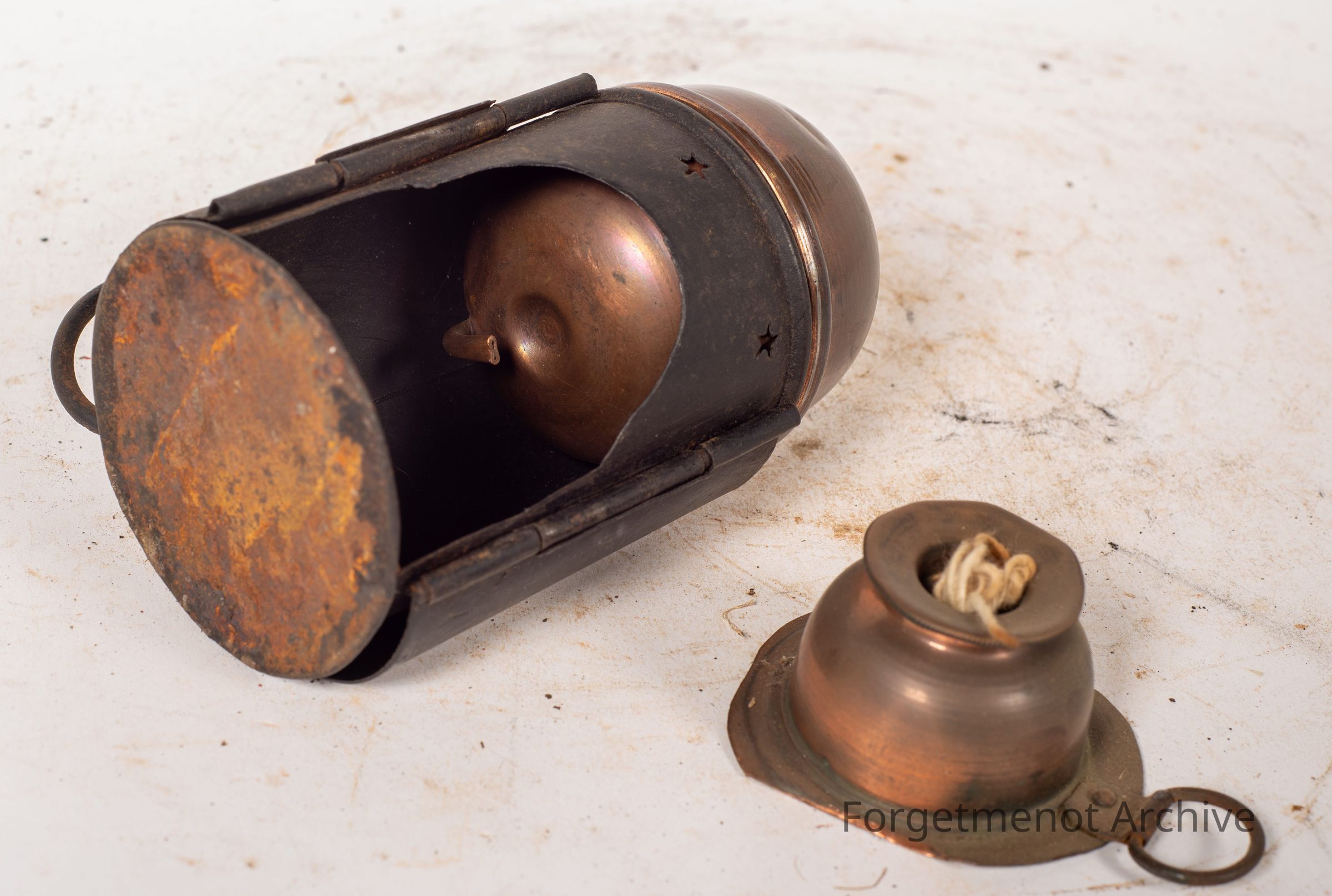
The first photograph gives little away. The object could easily be mistaken for an unusual lantern.
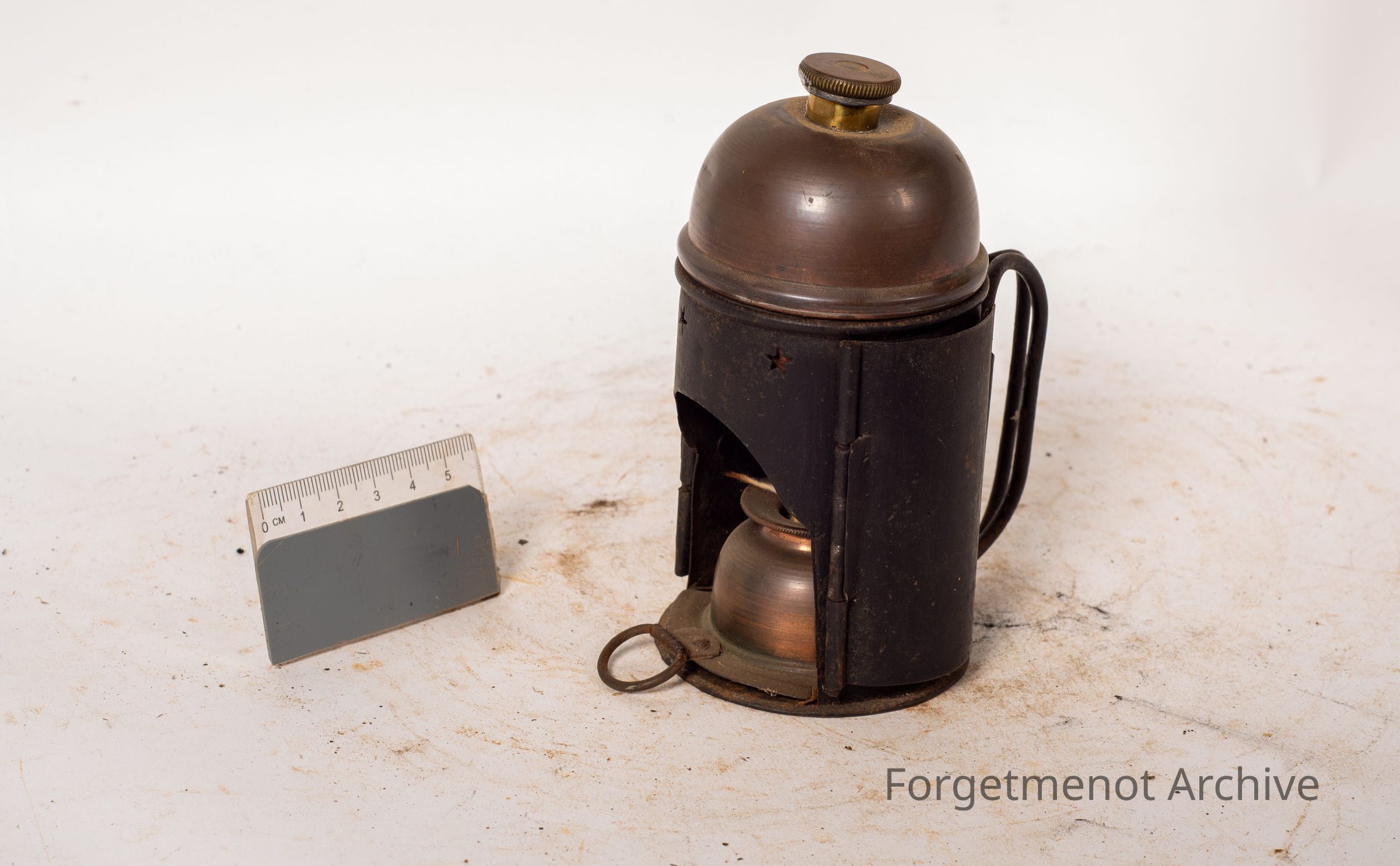
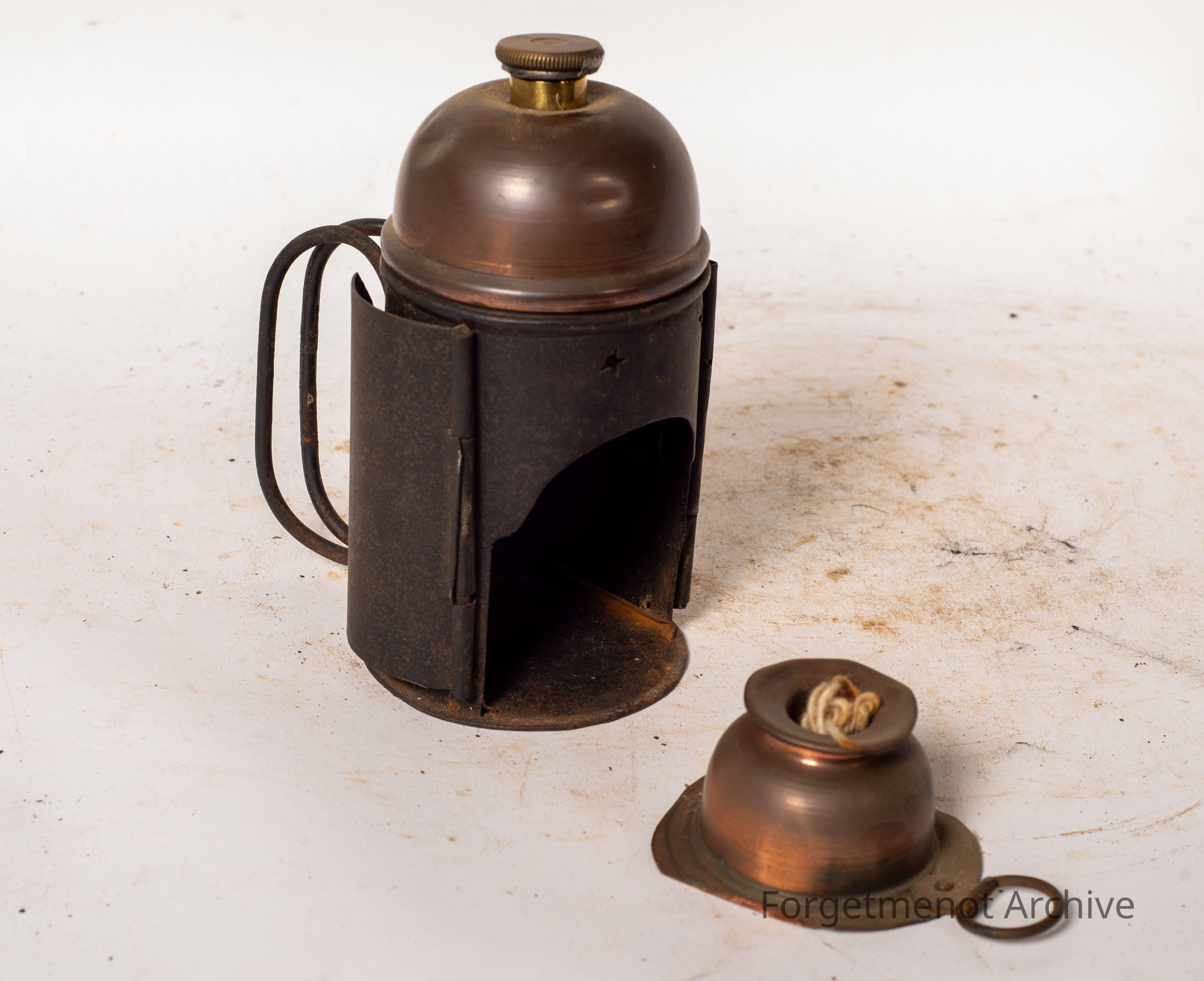
However, when the outer metal casing is removed, its construction becomes much more interesting.
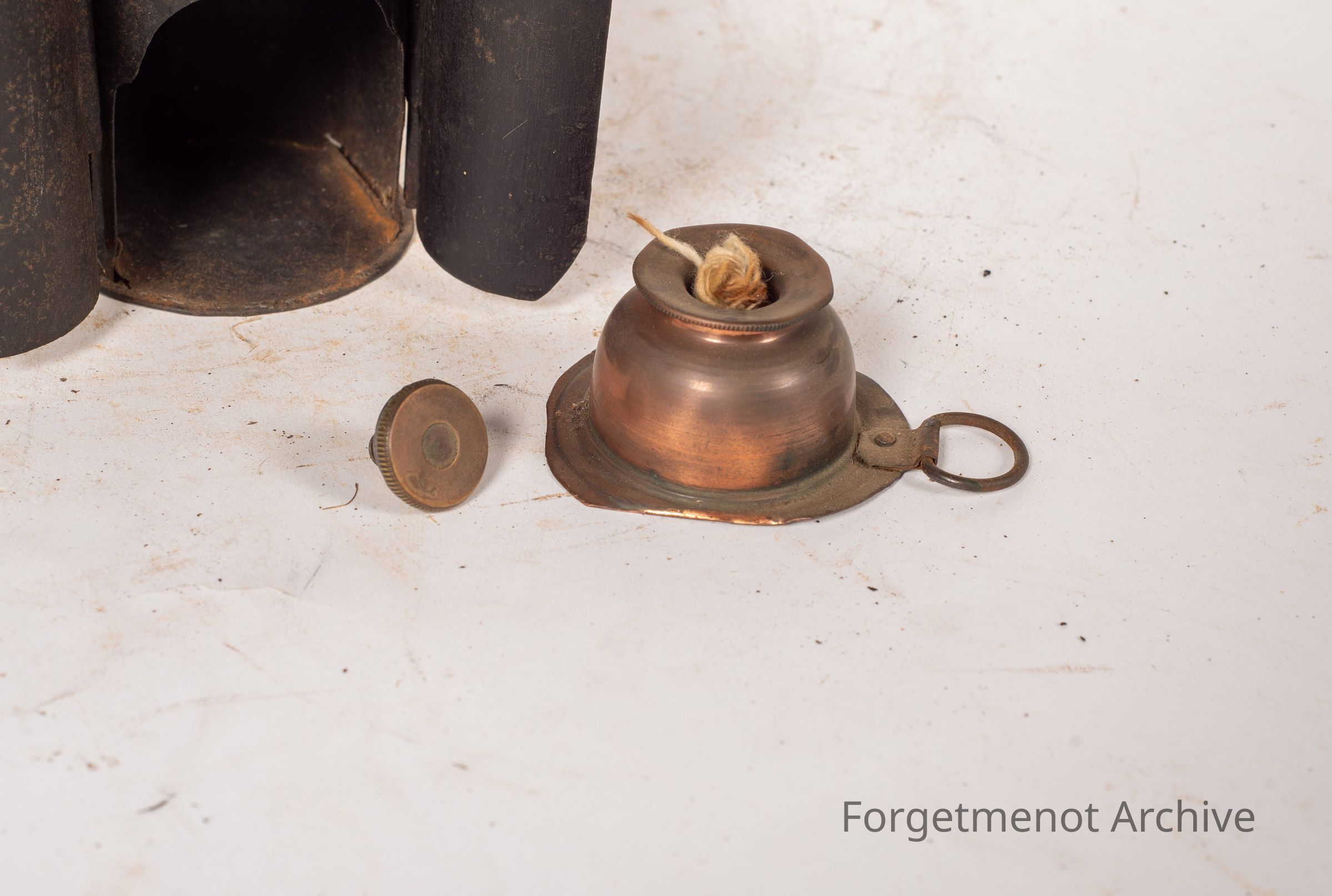
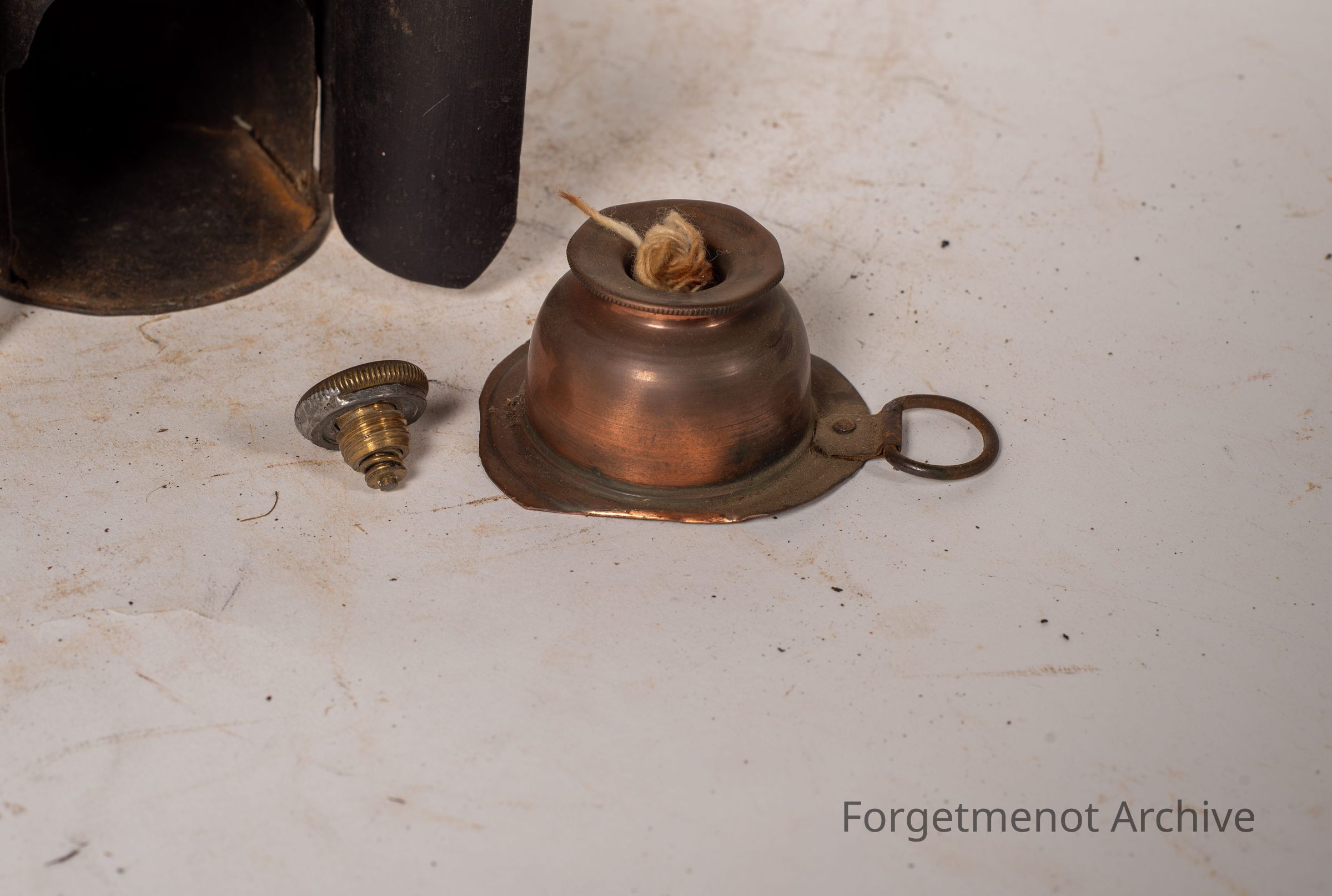
Inside is a small wick-fed spirit burner. Above it sits a copper vessel or chamber, while a pipe appears to lead from the upper part of the apparatus.
It is this arrangement that provides the clue to how the object worked.
Rather than simply burning fuel through a wick to provide light, the small flame appears to have been used to heat fuel contained within the apparatus.
As the fuel became hot, some of it would turn into vapour. The expanding vapour created pressure and was forced through a pipe towards a small outlet or jet.
The vapour was then directed into the flame, creating a much stronger and hotter source of heat than an ordinary wick lamp could produce.
In simple terms, this little machine used a flame to help create a more powerful flame.
An ingenious nineteenth-century invention
The principle behind item 6701 was not unique.
During the nineteenth century, inventors and manufacturers developed a variety of self-acting spirit blowpipes and brazing lamps.
These devices were designed for people who needed more concentrated heat than could be obtained from an ordinary lamp.
A particularly interesting comparison appeared in Scientific American in November 1869. The publication described “A Useful Brazing Lamp”, which used a cylindrical outer case, a spirit lamp in the lower section and a reservoir above.
The flame heated the fuel in the upper chamber until it vaporised. The resulting vapour was then forced through a pipe and into the flame, producing what was described as a strong and fierce flame.
Although we cannot yet say that item 6701 is exactly the same model, the principle and construction are remarkably similar.
More than just a source of light
This is what makes item 6701 particularly interesting.
At first glance, it looks like a lamp.
But it was probably designed primarily as a source of concentrated heat.
Devices based on this principle were used in a variety of occupations, including:
metalworking;
soldering and brazing;
jewellery work;
laboratories;
glass work;
and other specialised trades.
Before bottled gas and modern blowtorches became common, producing a powerful flame was not always straightforward.
Inventors had to find ways to get more heat and greater efficiency from fuels such as alcohol or methylated spirits.
The answer was often ingenious.
Instead of relying entirely on the flame produced by a wick, fuel could be heated until it turned into vapour. That vapour could then be directed into the flame to produce a hotter and more concentrated source of heat.
Self-acting spirit blowpipes were already being sold as scientific equipment during the nineteenth century, including examples used for specialised work such as bending glass tubes.
A small machine from an age of invention
What makes this object appealing is that so much technology is hidden inside such a simple-looking form.
The cylindrical metal casing initially disguises the mechanism within.
But inside are several carefully designed components working together:
a small wick burner, a heated copper chamber and a system for directing vapour back towards the flame.
It represents a period when inventors were constantly experimenting with ways to make everyday technology more efficient.
A small flame heated a reservoir.
The reservoir produced vapour.
The vapour created pressure.
And that pressure helped create a more powerful flame.
Today we can turn on a gas torch or use electric equipment without giving much thought to how heat is produced.
But objects such as item 6701 remind us that the technology we now take for granted developed through countless ingenious experiments and inventions.
The mystery remains
There are still questions surrounding this particular example.
We have not yet identified its manufacturer, exact date or original owner.
Nor can we yet say with certainty whether it was used in a workshop, laboratory, jewellery business, dental practice or another specialised occupation.
That mystery is part of what makes it such an interesting object in the collection.
At first glance, item 6701 looks like an old lamp.
But a closer look reveals something much more intriguing — a compact piece of engineering designed to transform the modest heat of a spirit flame into something far more powerful.
Sometimes the most interesting objects are those that refuse to reveal their purpose at first glance.
Item 6701 is certainly one of them.
Item 6701 — Forget-Me-Not Archive
Probable identification: Self-acting spirit blowpipe or brazing lamp
Purpose: Producing a concentrated, high-temperature flame for specialised heating work
Date: Currently unknownCollection
Lamps