Label
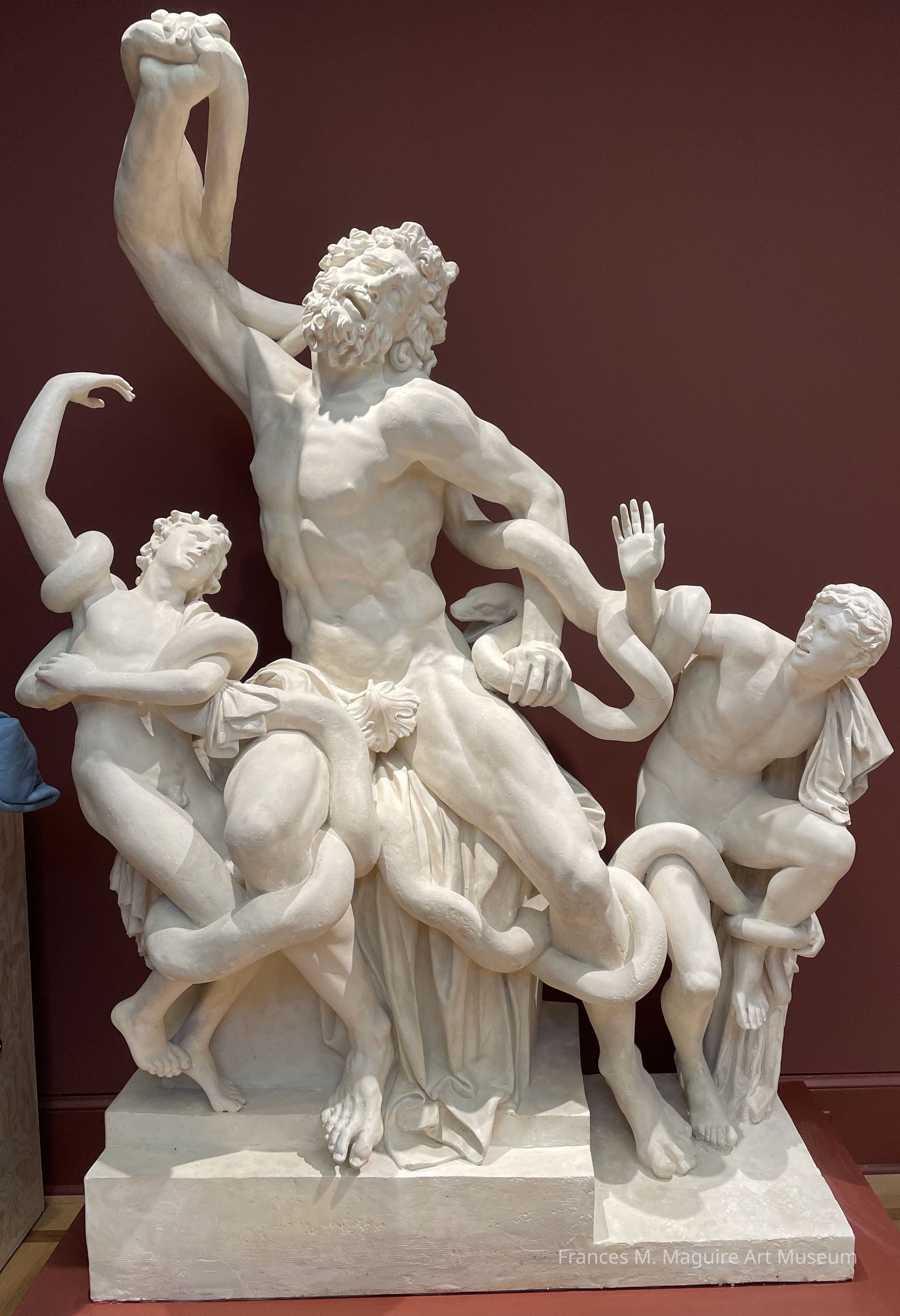
Agonizing death inflicted by two massive serpents—how did this come about? Laocoön, a Trojan priest, tried to convince his fellow Trojans that the wooden horse gifted by the Greeks was a trick and should be destroyed. The priest and his two sons writhe in unison at this harrowing moment. Who did Laocoön antagonize? Ancient literary sources suggest Athena, Apollo, or Poseidon. The original marble or bronze sculpture (now lost) may match a description by Pliny the Elder, who tells us that the Rhodian sculptors Agesander, Athenodoros, and Polydorus made a copy of it. The ancient copy was found in Rome in 1506. Very soon after, the sculpture greatly informed the work of Michelangelo and later artists.
¿Por qué dos enormes serpientes castigan a sus víctimas con una muerte terrible? Laocoonte fue el sacerdote troyano que intentó convencer a sus conciudadanos de que el caballo de madera obsequiado por los griegos era una trampa y debía destruirse. La escultura muestra al sacerdote y a sus dos hijos retorciéndose en esta desgarradora escena. Cabría también preguntarse quién orquestó el castigo. Fuentes literarias de la Antigüedad sugieren que podría tratarse de Atenea, Apolo o Poseidón. La escultura original - en mármol o bronce y hoy perdida – podría coincidir con una descripción de Plinio el Viejo en la que indica que los escultores rodiotas Agesandro, Atenodoro y Polidoro hicieron una copia del original. Esta copia antigua se halló en Roma en 1506 y en poco tiempo se convirtió en referente para Miguel Ángel y artistas posteriores.Label Type
Credit LineLabel
Label written by Katherine Schwab and translated by Sagrario A. RosarioLabel Type
Credit LineLabel
On loan from the Metropolitan Museum of Art