Label
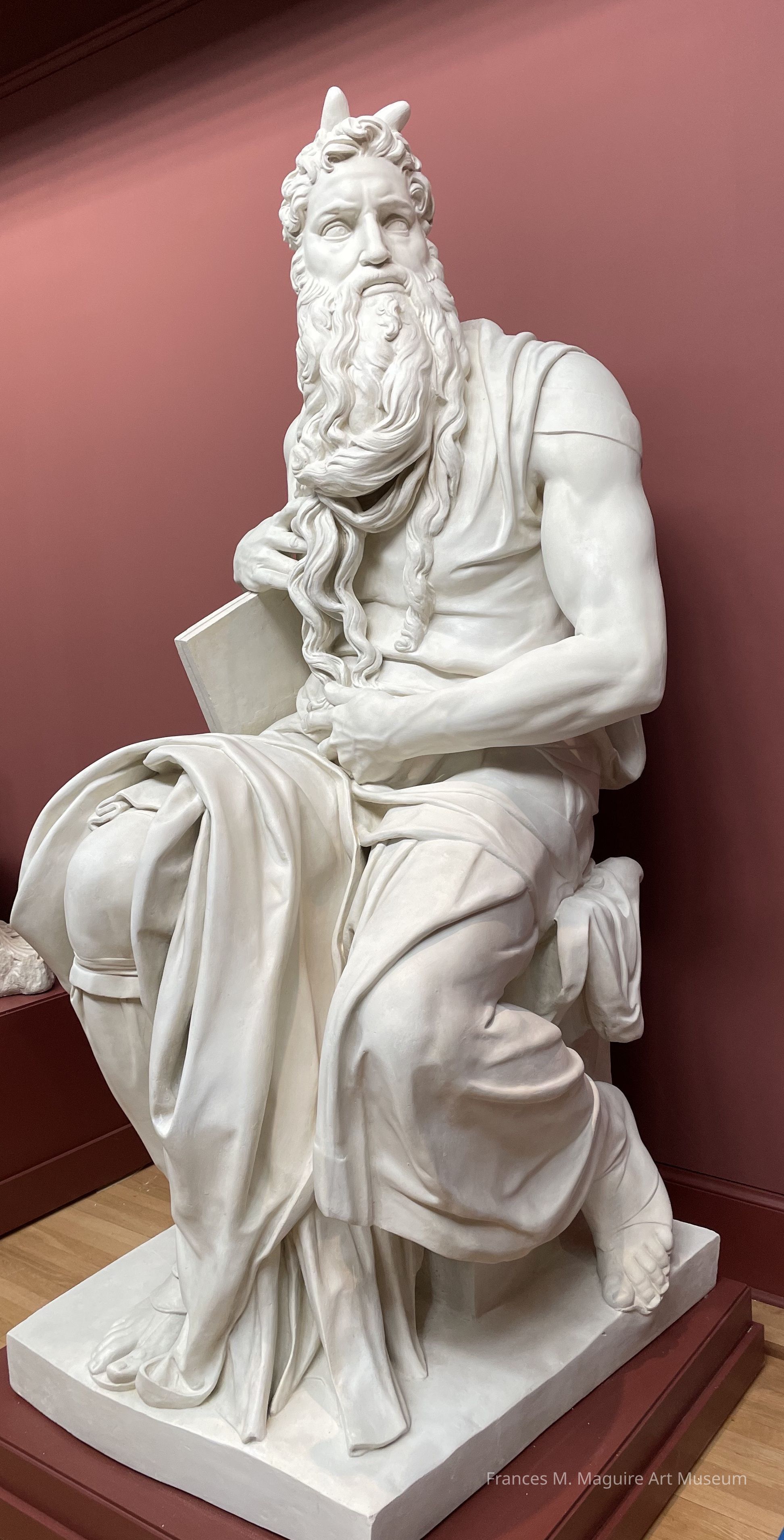
Moses stares beyond us, holding the Ten Commandments. The unattainable gaze, massive height (over 8 feet), and powerful musculature capture the Hebrew Prophet’s extraordinary role as the person who beheld God and led the Israelites to the Promised Land. Despite being seated, Moses is anything but static. The long, heavy beard–which he gathers with his fingers–deeply carved folds of drapery, and intense facial expression lend Moses a sense of barely restrained energy. Michelangelo designed the original sculpture as part of a monumental tomb for Pope Julius II (r. 1503-13). The tomb–now located in the Cathedral Basilica of Saint Peter in Chains in Rome–was completed over 40 years later in a much-altered form.
The horns on Moses’ head stem from St. Jerome’s 4th-c. Latin translation of the Hebrew word qaran (Exodus 34:29), the interpretation of which has been debated at least since the Middle Ages. Although the term relates to horns, it can also mean “shining,” or “radiant.” In the Vulgate Bible, St. Jerome used the Latin word “cornuta,” which translates literally as “horns” but implies power, courage, and perhaps radiance. Cornuta later was simplified in some vernacular translations as “horned,” from which the visual trope depicting Moses with horns emerged. Although early portrayals of a horned Moses were clearly honorific, around this time Christians began to negatively associate Jews with demonic horns. This harmful stereotype has persisted into the 21st c.
Michelangelo’s intentions in this piece remain unclear, though there are suggestions of common antisemitic views of his era in other examples of his work. His source may have been Niccolò Malermi’s Italian translation of the Latin Bible published in Italy during the late 15th c., which includes images of Moses with horns.Label Type
Credit LineLabel
On loan from the Metropolitan Museum of Art