Label
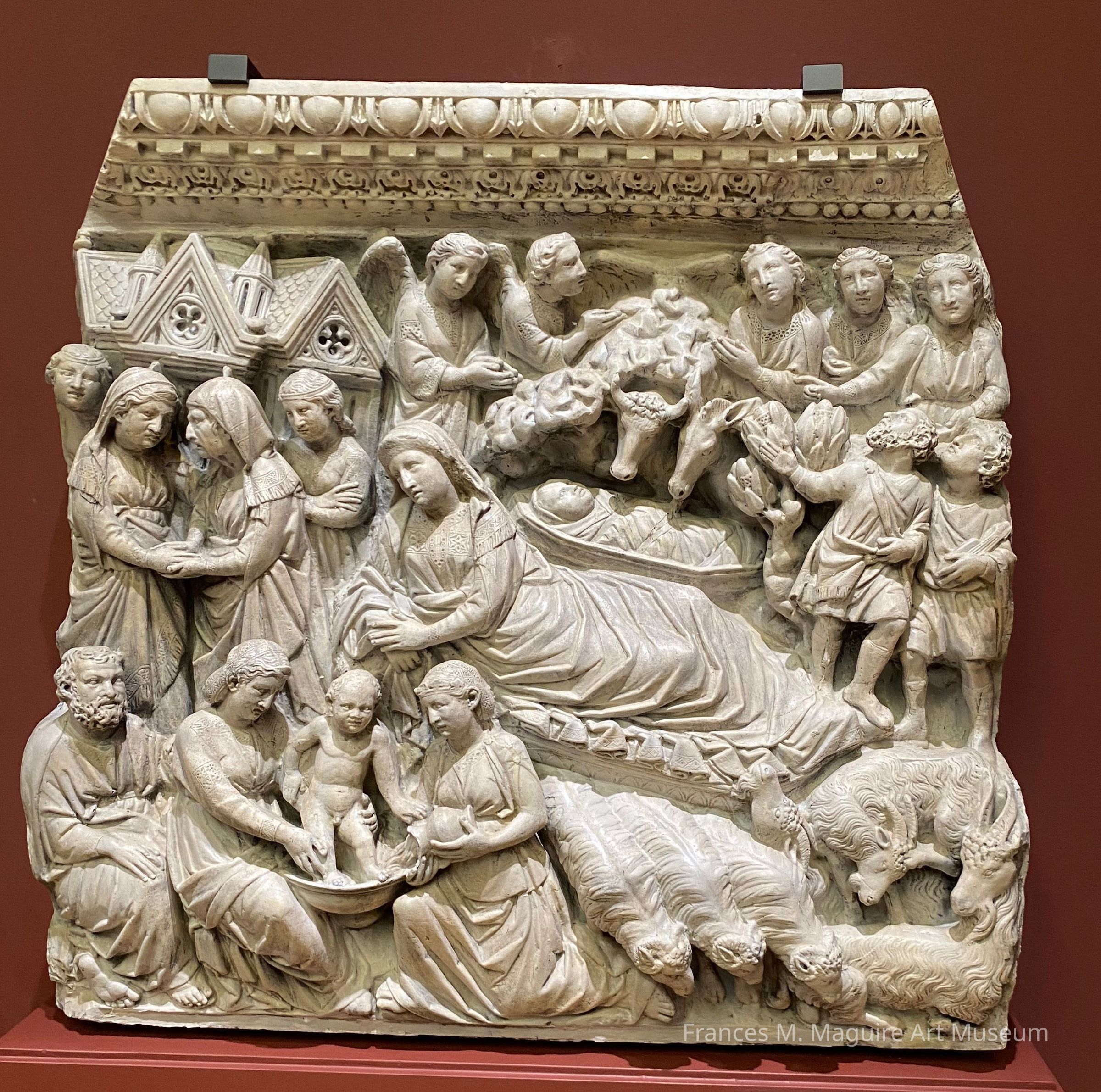
Early Christian churches featured raised wood platforms for liturgical readings, which eventually evolved into permanent, highly embellished, often monumental pulpits. This cast is a relief panel from the octagonal pulpit by Nicola Pisano with assistance from his son, Giovanni, for the Siena Cathedral. It depicts several Christological scenes, including the Visitation, Nativity, Bathing of the Christ Child, and Annunciation to the Shepherds. The naturalism and depth of the sculpture’s undercutting recalls ancient Roman sarcophagi, anticipating the classicism that would flourish in Italy during the Renaissance. Yet there is an emotional sensitivity and a narrative realism that departs from ancient antecedents. Also noteworthy is the importance placed on St. Joseph, which anticipates the emergence of the saint’s cult in the 15th c.
Las primeras iglesias cristianas solían tener una plataforma de madera desde la que se leían los textos litúrgicos. Esta particularidad evoluciona y se convierte en un elemento permanente, ricamente adornado y muchas veces de tamaño monumental: el púlpito. Nuestro vaciado corresponde al panel en bajo relieve del pulpito octagonal realizado por Nicola Pisano – asistido por su hijo Giovanni – para la Catedral de Siena. La pieza representa varias escenas cristológicas, entre ellas la Visitacion, la Navidad, el baño del Niño Dios y la Anunciación a los pastores. El naturalismo y profundidad del labrado recuerda a los sarcófagos romanos de la Antigüedad; claro anticipo del clasicismo que florecería en Italia durante el Renacimiento. Hay sin embargo una sensibilidad emotiva y un realismo narrativo que se aparta de sus antecesores grecorromanos. Nótese también la importancia que se le otorga a la figura de san José; antecedente del culto al santo que surgirá en el siglo XV.Label Type
Credit LineLabel
Gift of the Metropolitan Museum of Art, 2009