Name/Title
Japanese Matchlock circa 1645Entry/Object ID
FL-75-886Description
• Classification: Smoothbore Historical Military/Status Firearm
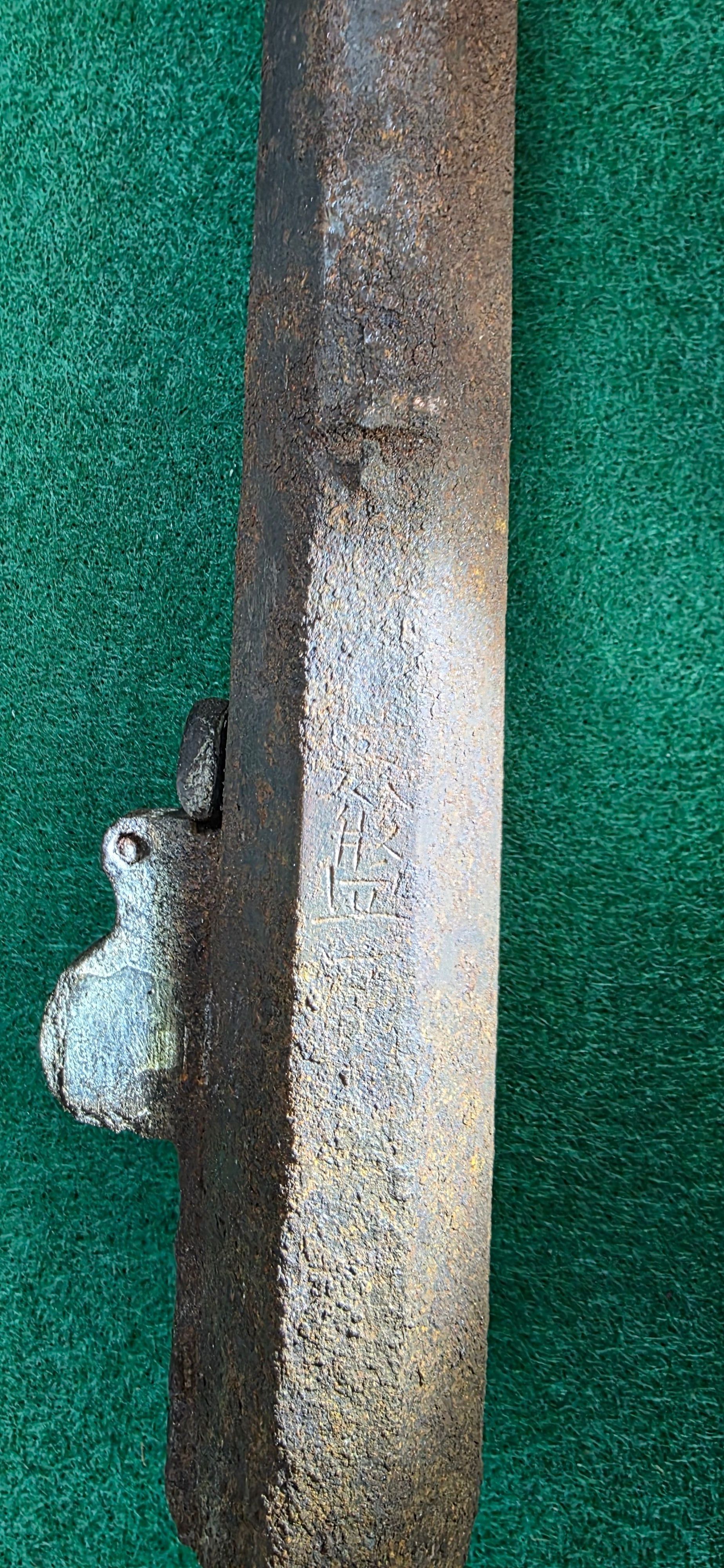
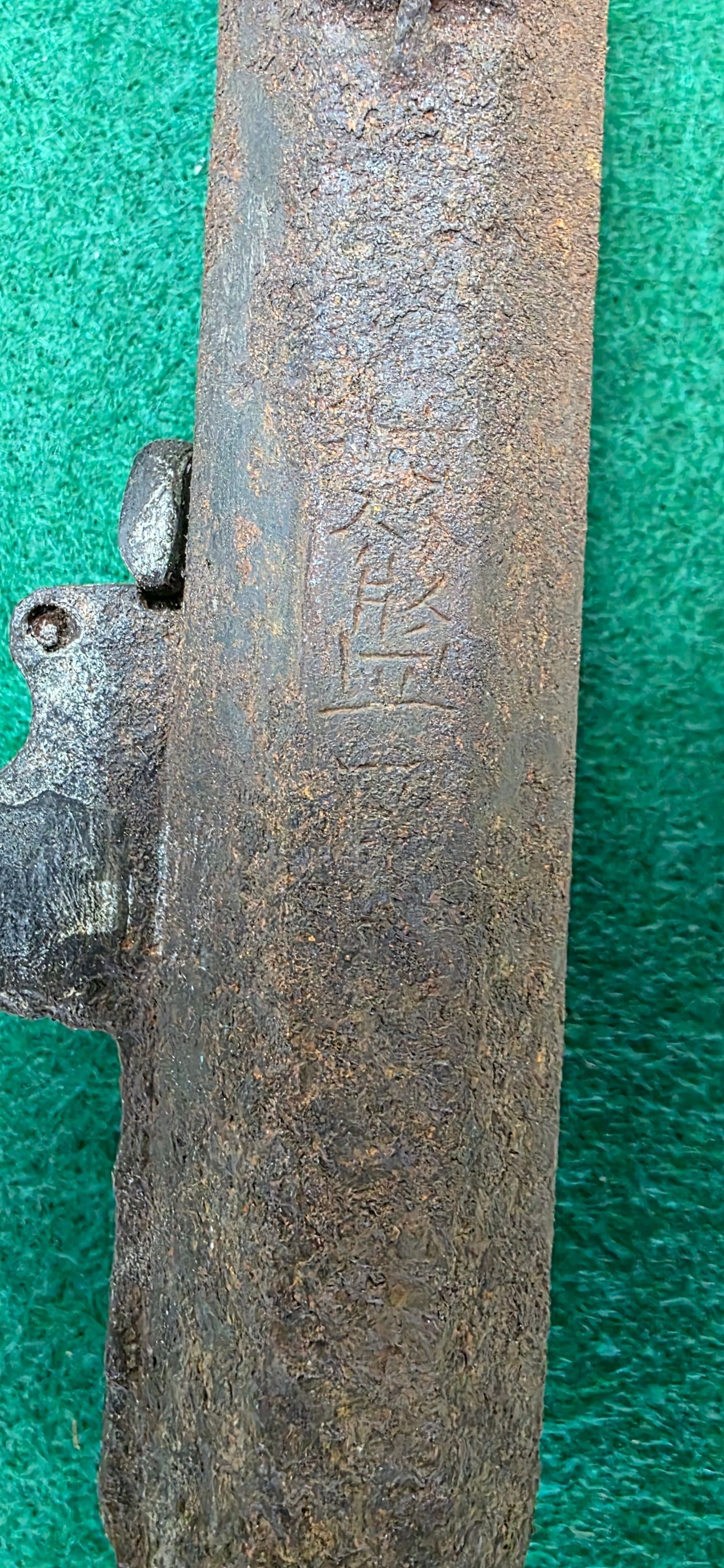
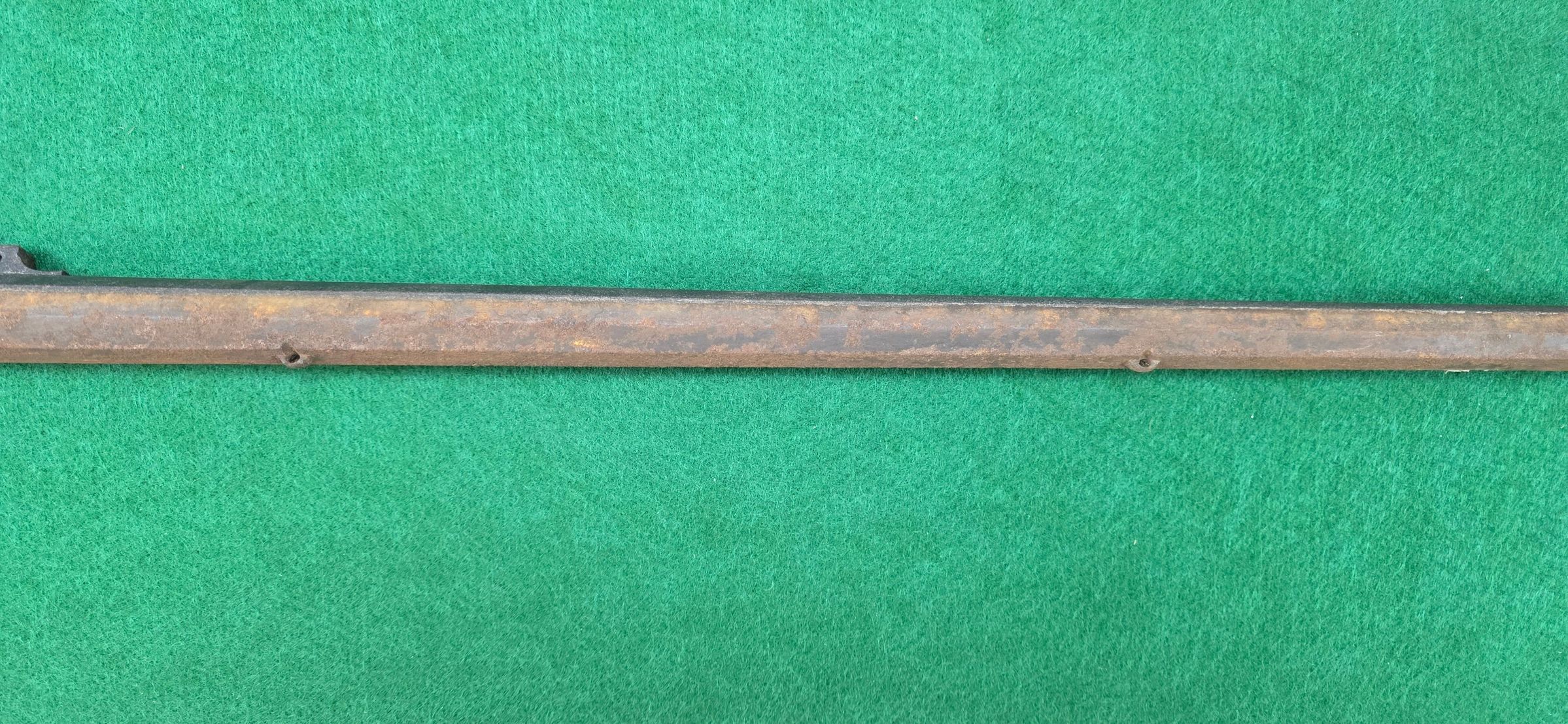
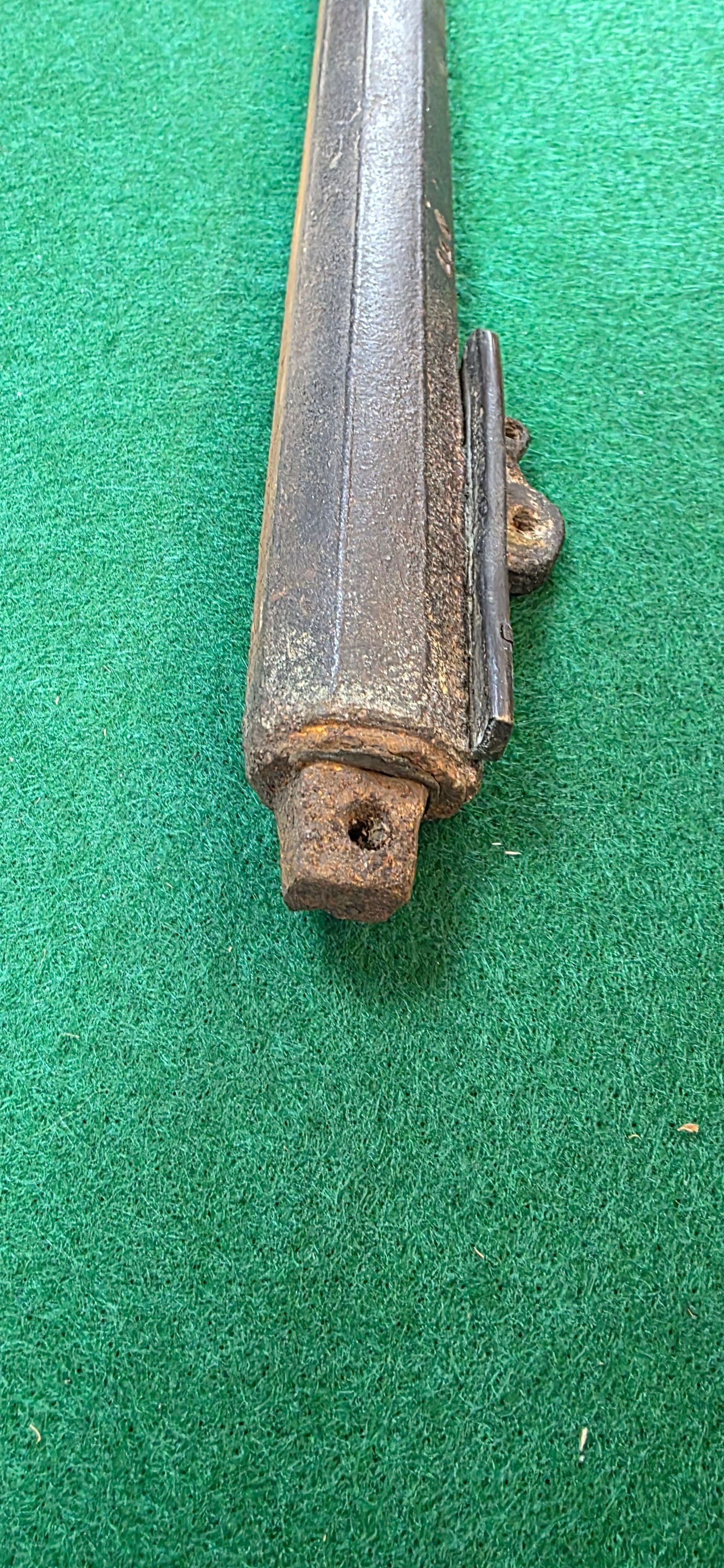
• Barrel Profile: Forged laminated iron, octagonal cross-section (Hakkaku-tsutsu)
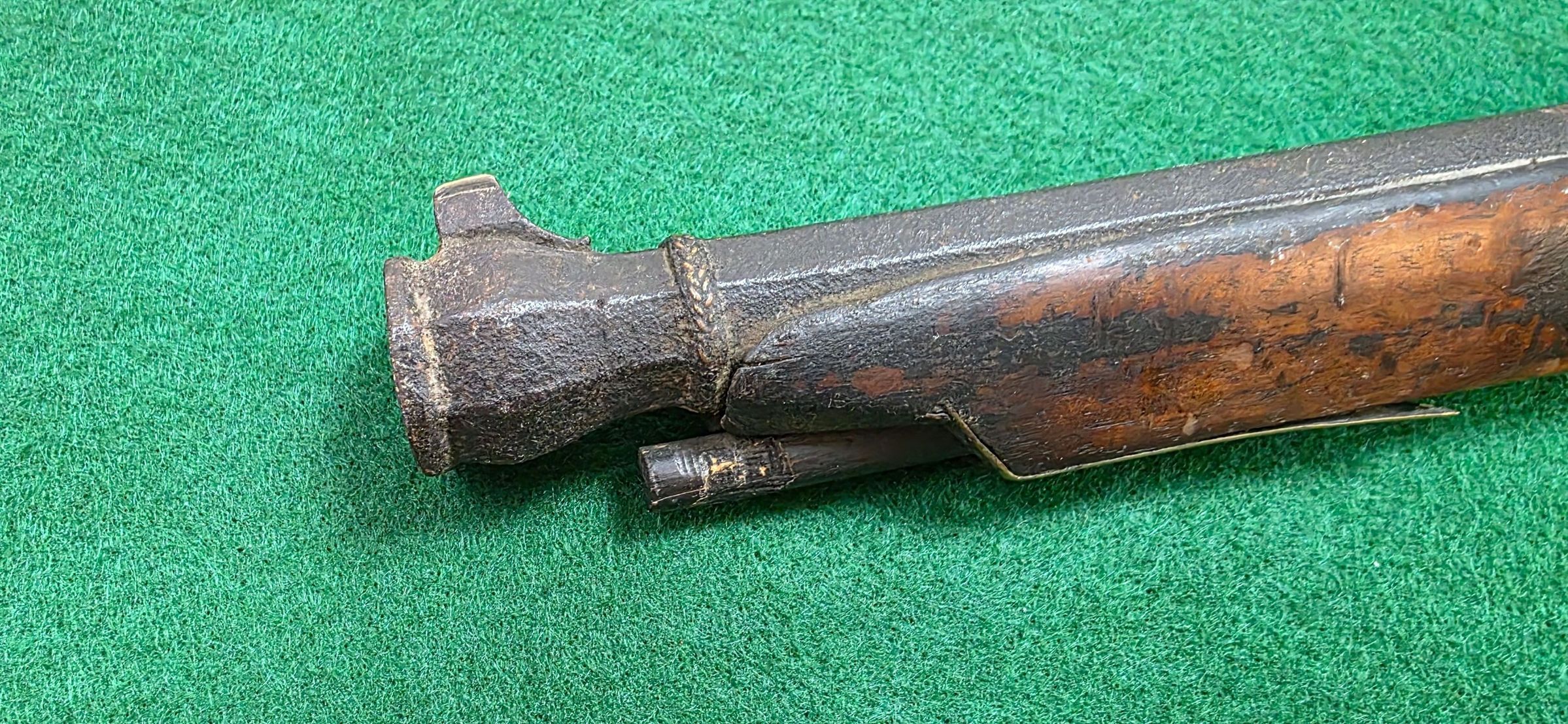
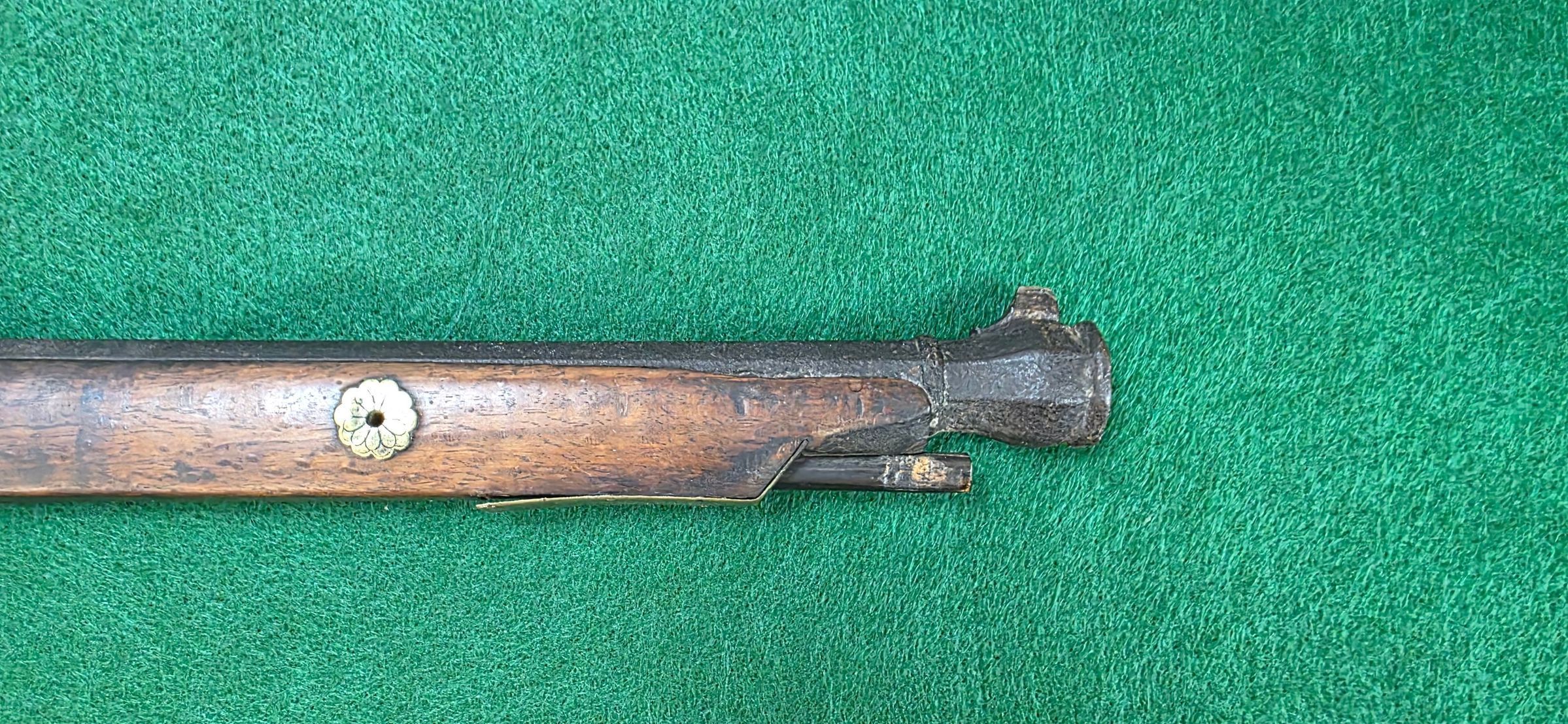
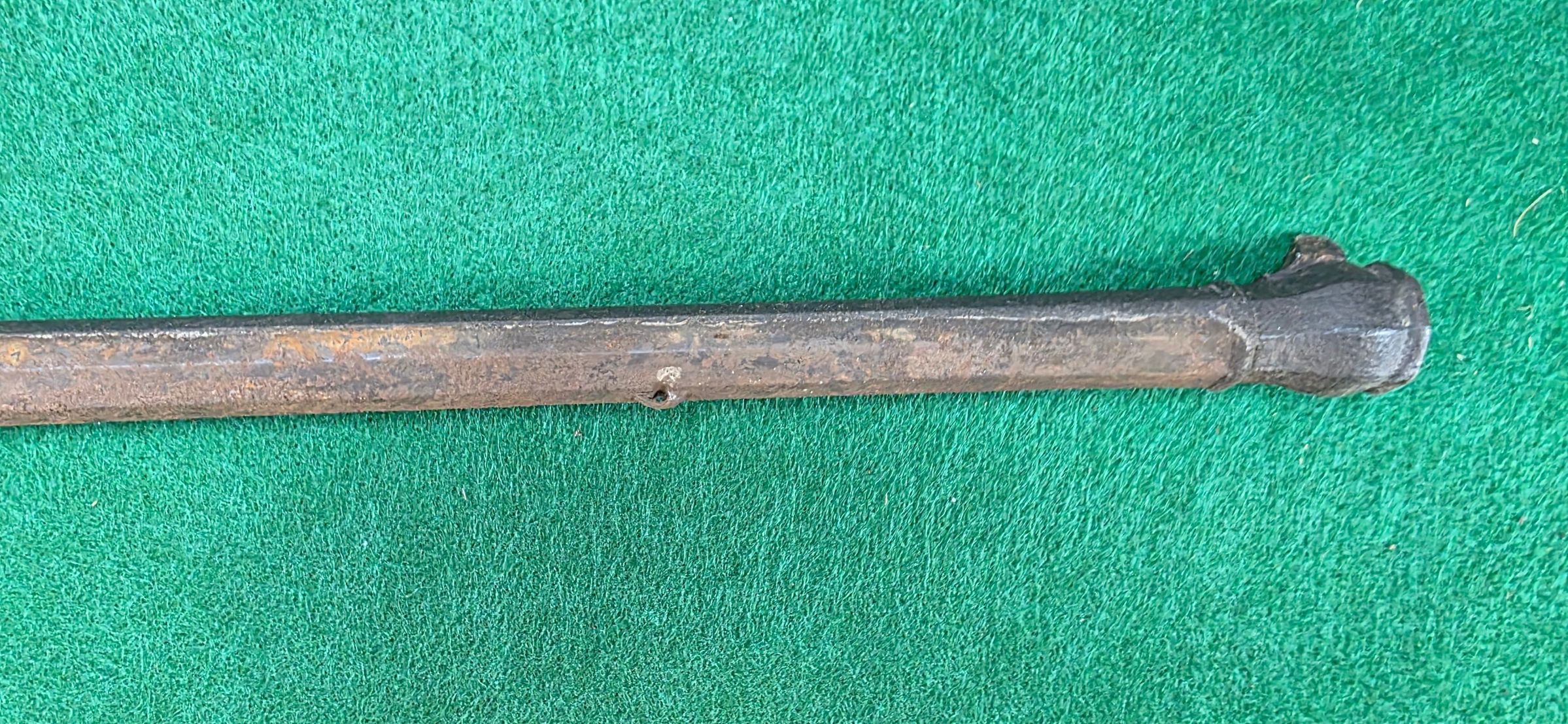
• Muzzle Configuration: Flared tulip/clove-style terminal block (Muzutsu)
• Stock Material: Hand-carved Japanese hardwood (traditionally Magnolia or Red Oak)
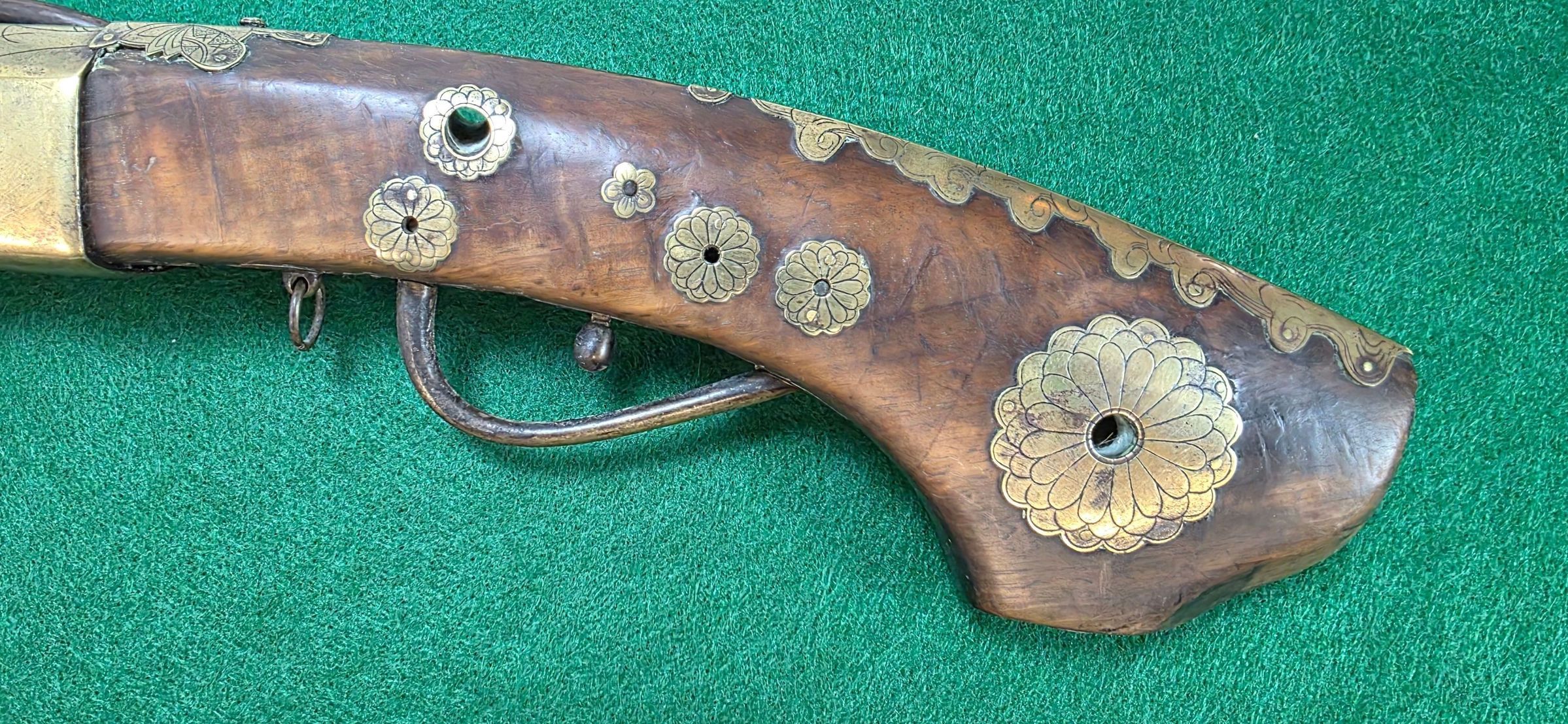
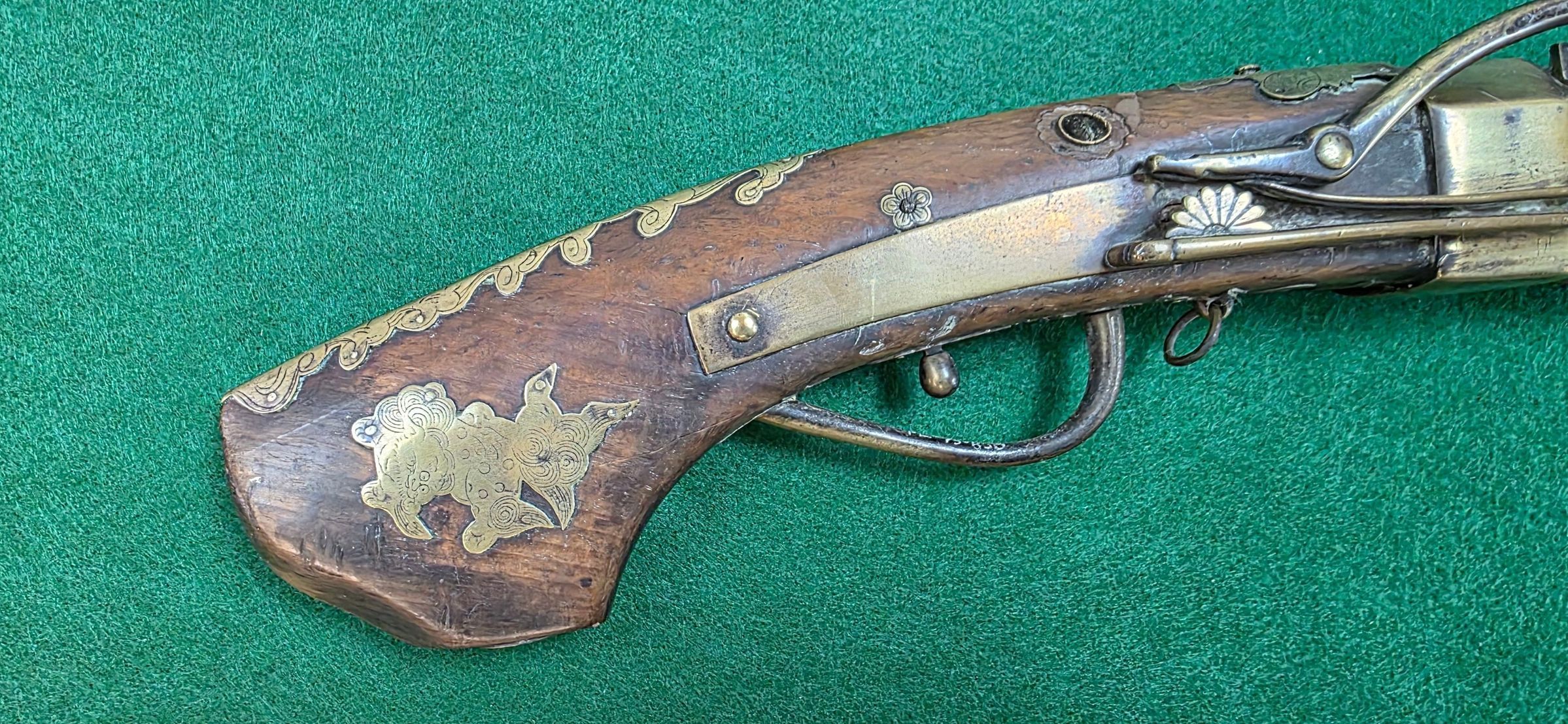
• Furniture/Inlays: Meticulously cast, chased, and flush-set chiseled brass (Zogan)
• Primary Accession Number: FL-75-886
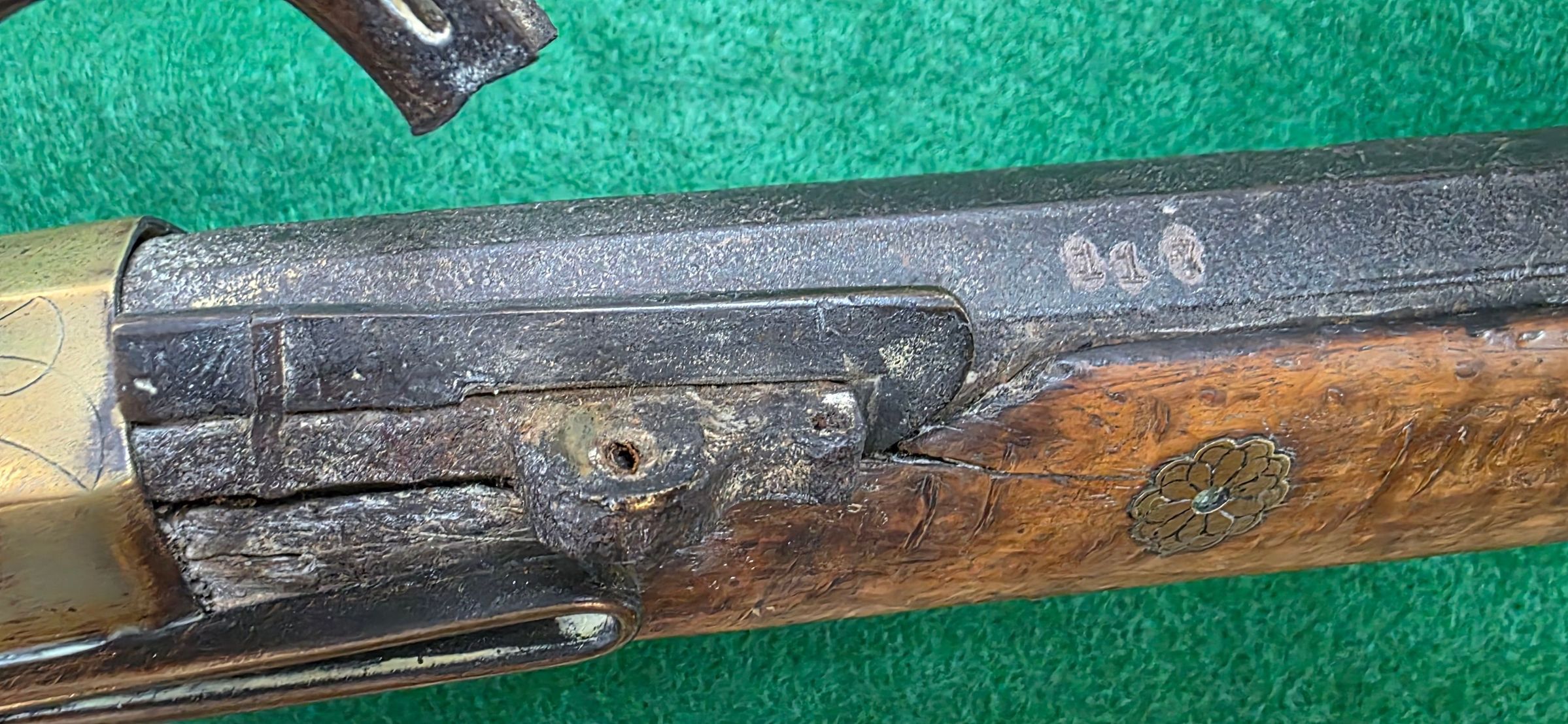
• Founding Collection Identifier: Collection No. 117 (Hand-stamped on barrel flat, c. 1950s)
• Object Name: Matchlock Long Gun / Arquebus
• Vernacular Name: Hinawajū (火縄銃) / Tanegashima (種子島)
• Estimated Production Era: Early Edo Period (circa 1643–1645)
• Reign Context: Tokugawa Shogunate (Shogun Tokugawa Iemitsu)
• Gunsmith School Affiliation: Sakai / Bizen School Traditions
• Country of Origin: JapanFirearm Type
RifleCategory
Firearms, Rifle, Muzzleloader, Matchlock
Action
Acquisition
Source (if not Accessioned)
Town of BattlefordNotes
Accession Date: 01/01/75Firearm Detail
Place Made
Region
East AsiaContinent
AsiaDate Made
circa 1645Time Period
17th CenturyFirearm Notes
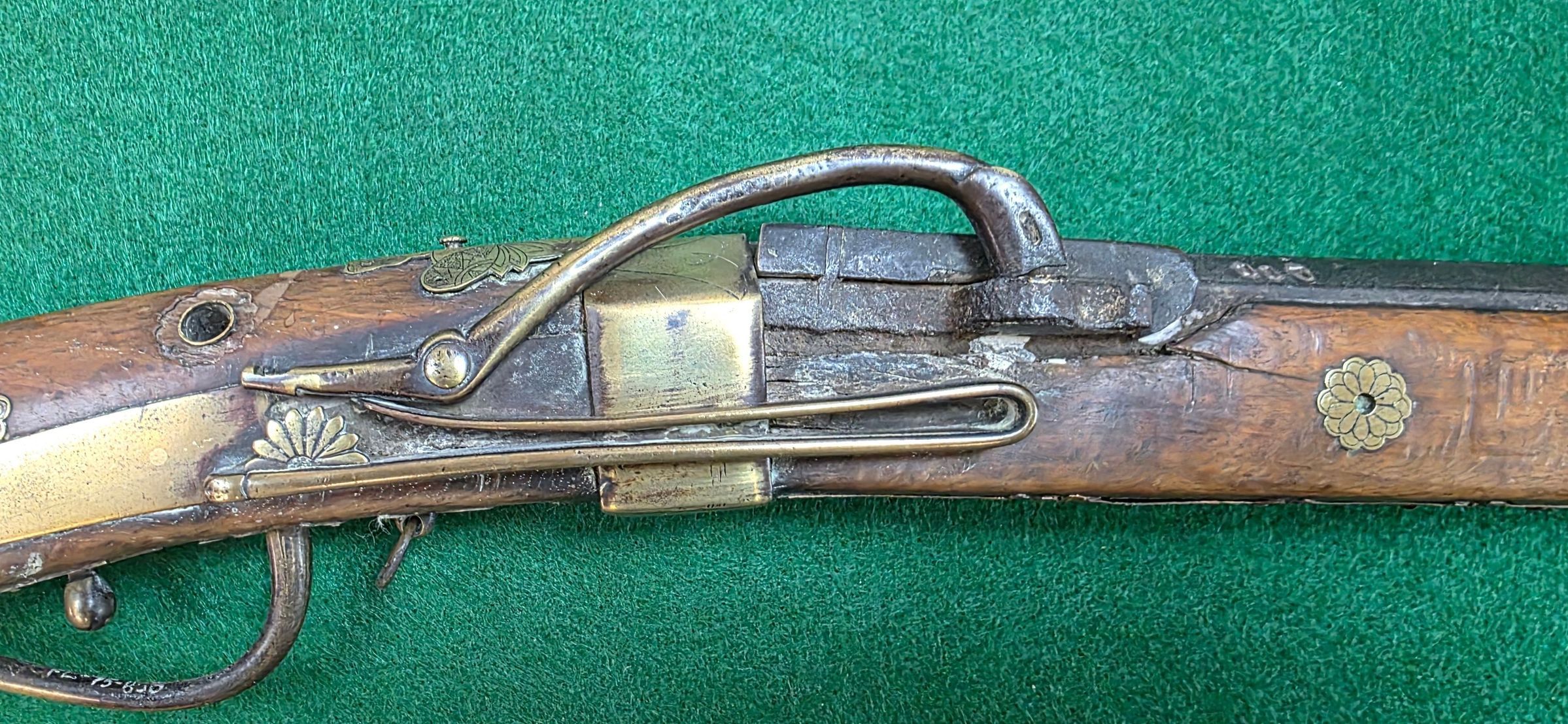
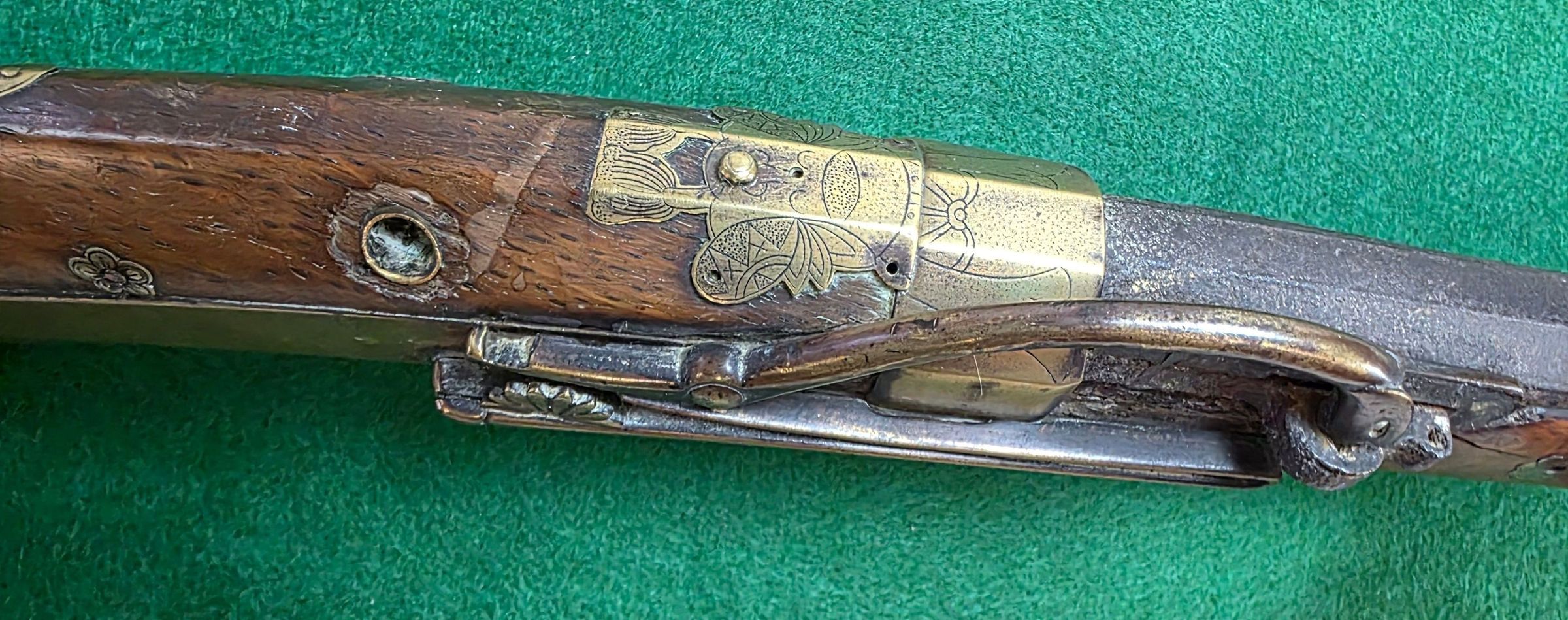
• Lock Action: Spring-loaded external serpentine matchlock system. The heavy iron serpentine arm holds the slow-burning hemp match cord (hinawa). Pulling the trigger compresses and releases the external loop mainspring, rapidly dropping the serpentine into the priming pan block.
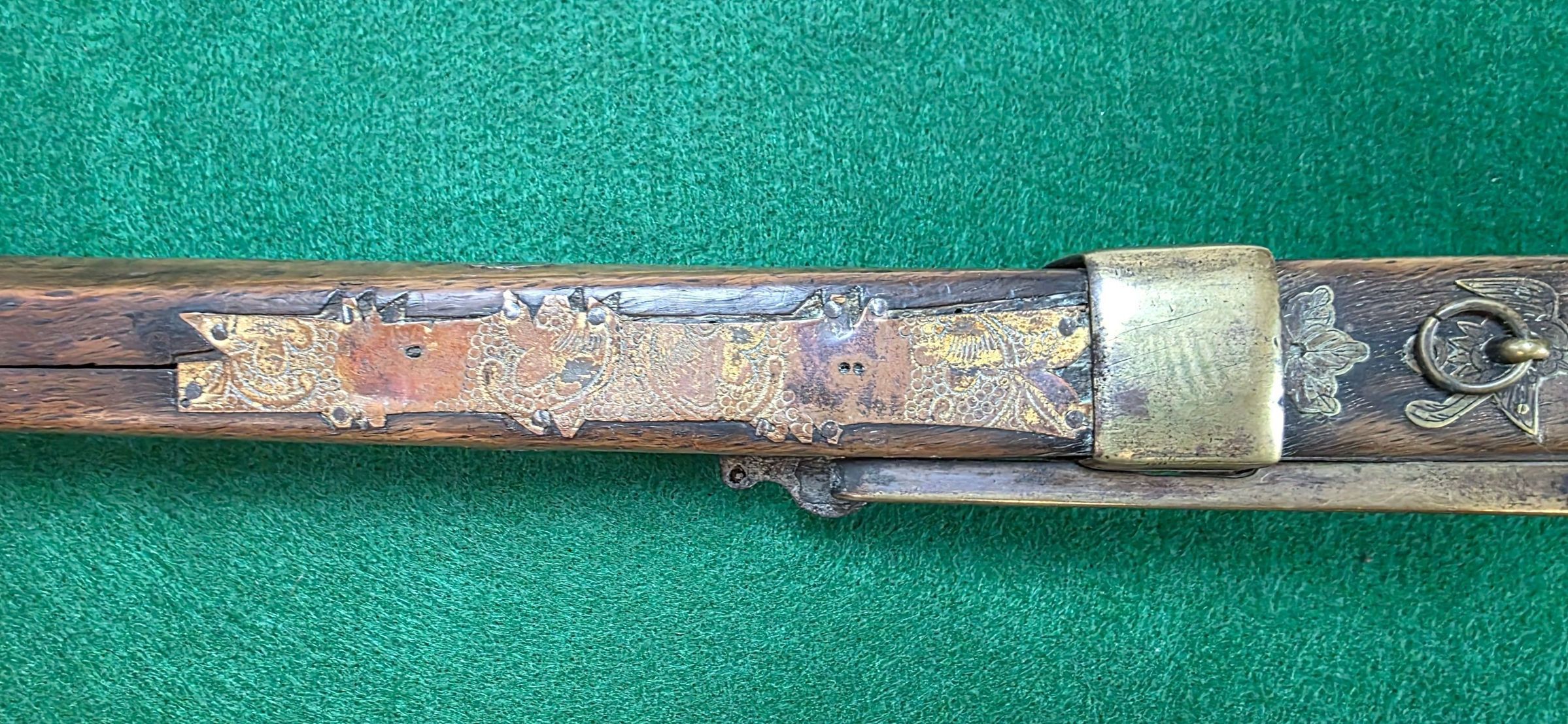
• Mainspring Type: External top-mounted brass ribbon loop spring (Hajiki-gane). Secured against the upper comb of the wood stock with specialized floral pins.
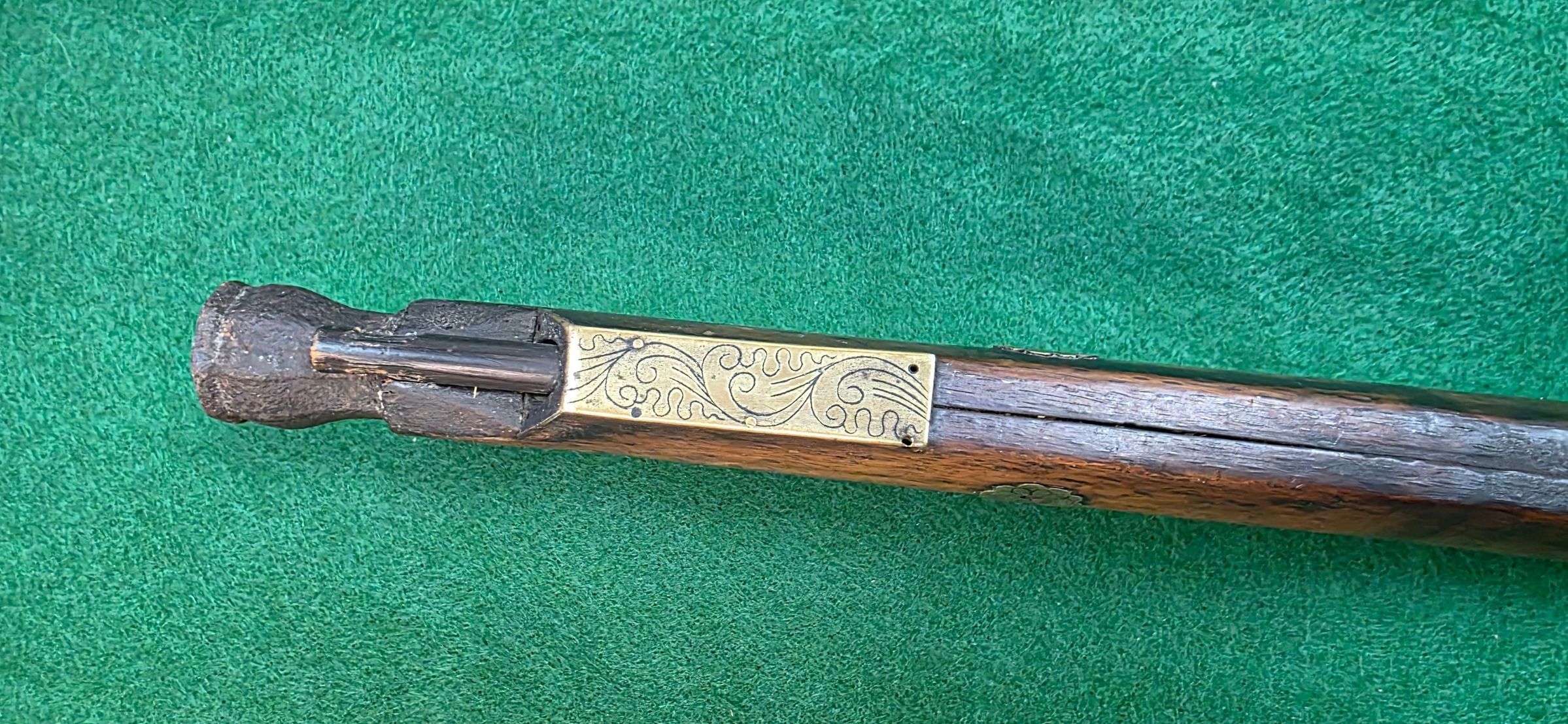
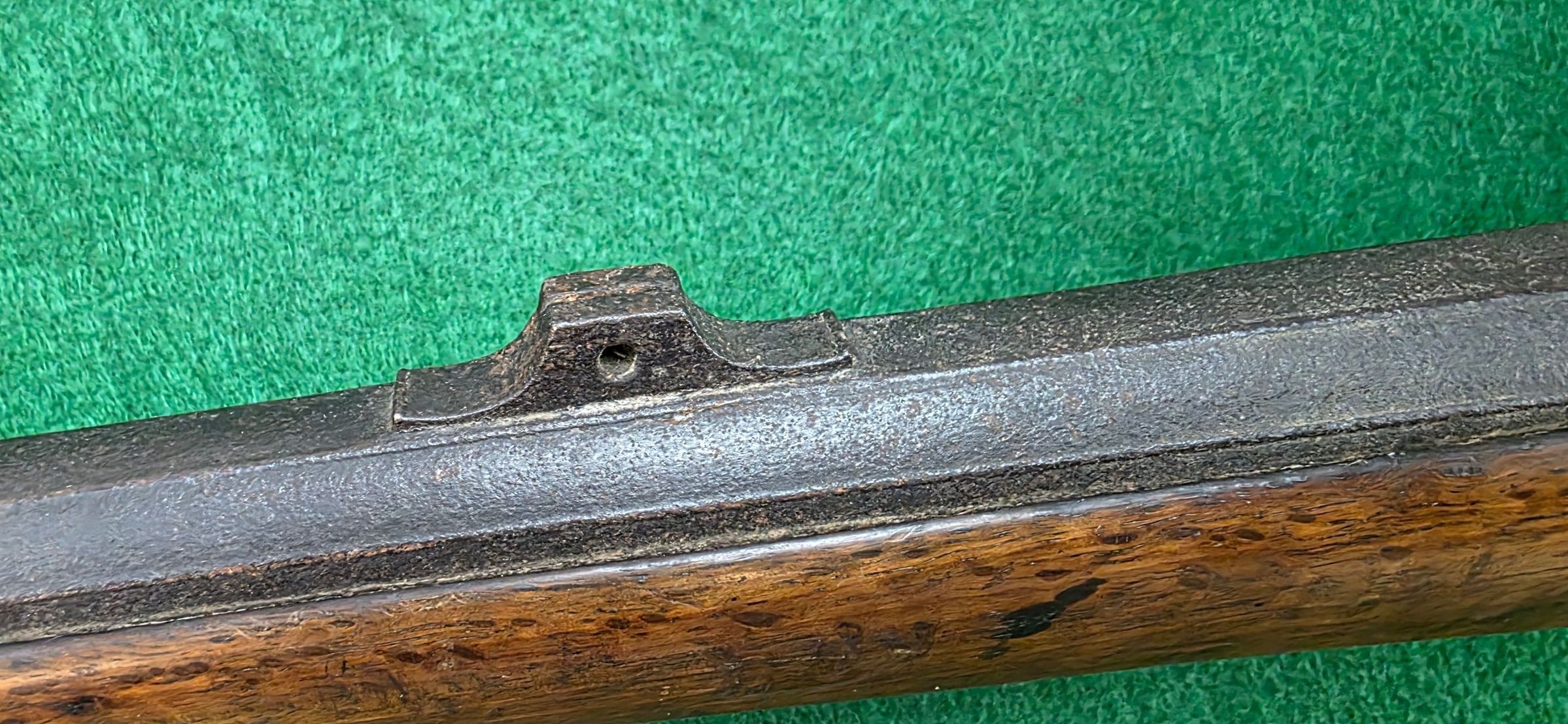
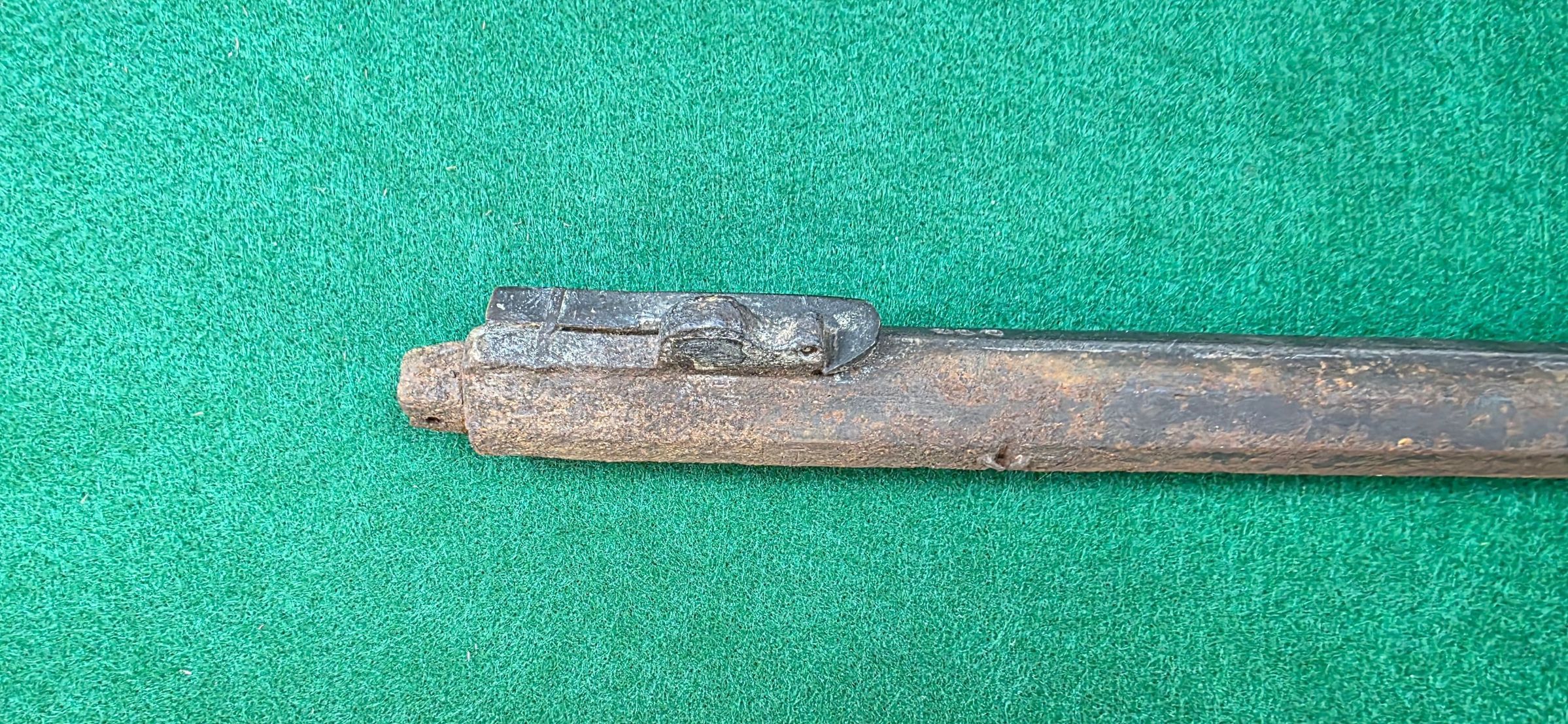
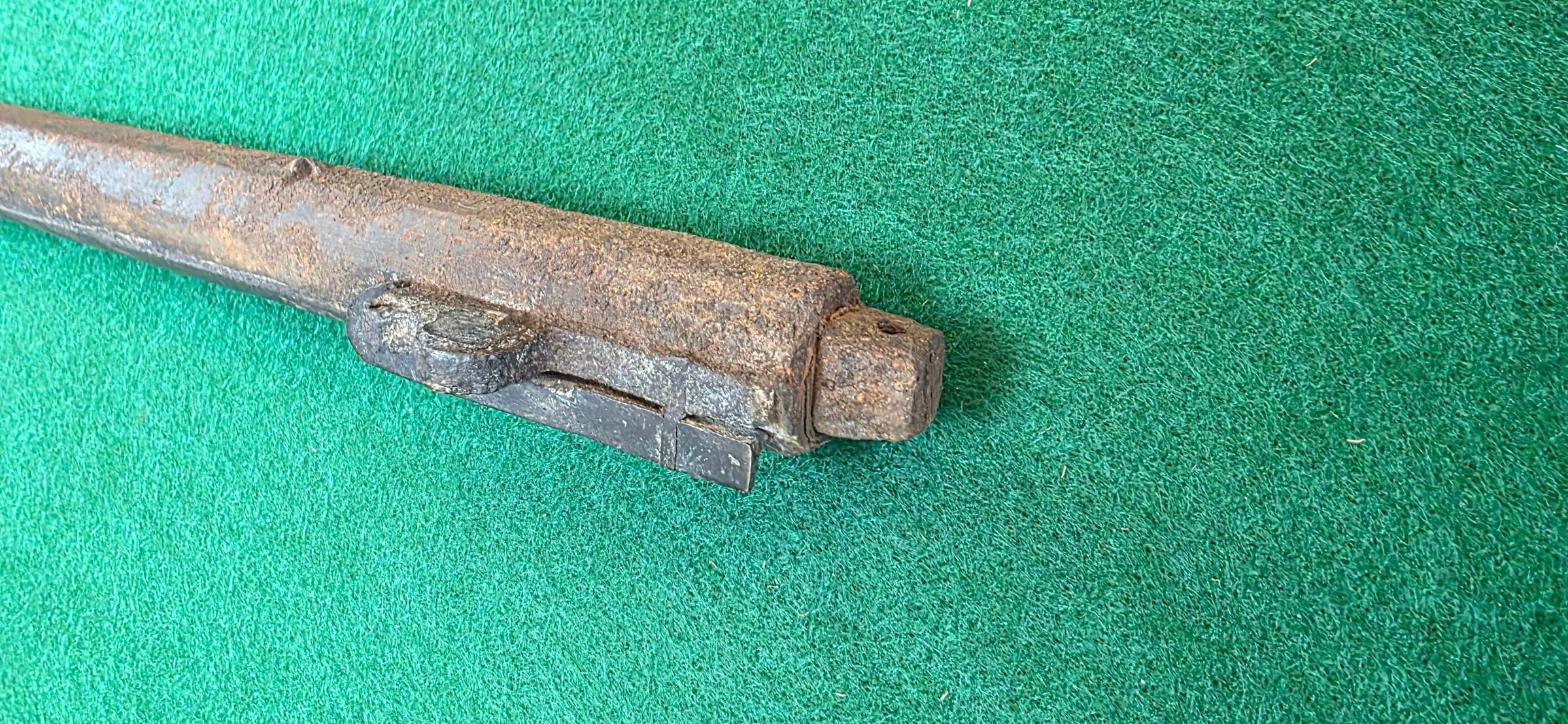
• Sighting System: High-accuracy block-style rear sight (Ushiro-me) integrated into the rear barrel flat featuring a precision peep/notch aperture. Complemented by a square front post block sight (Maeme) fixed to the muzzle block.
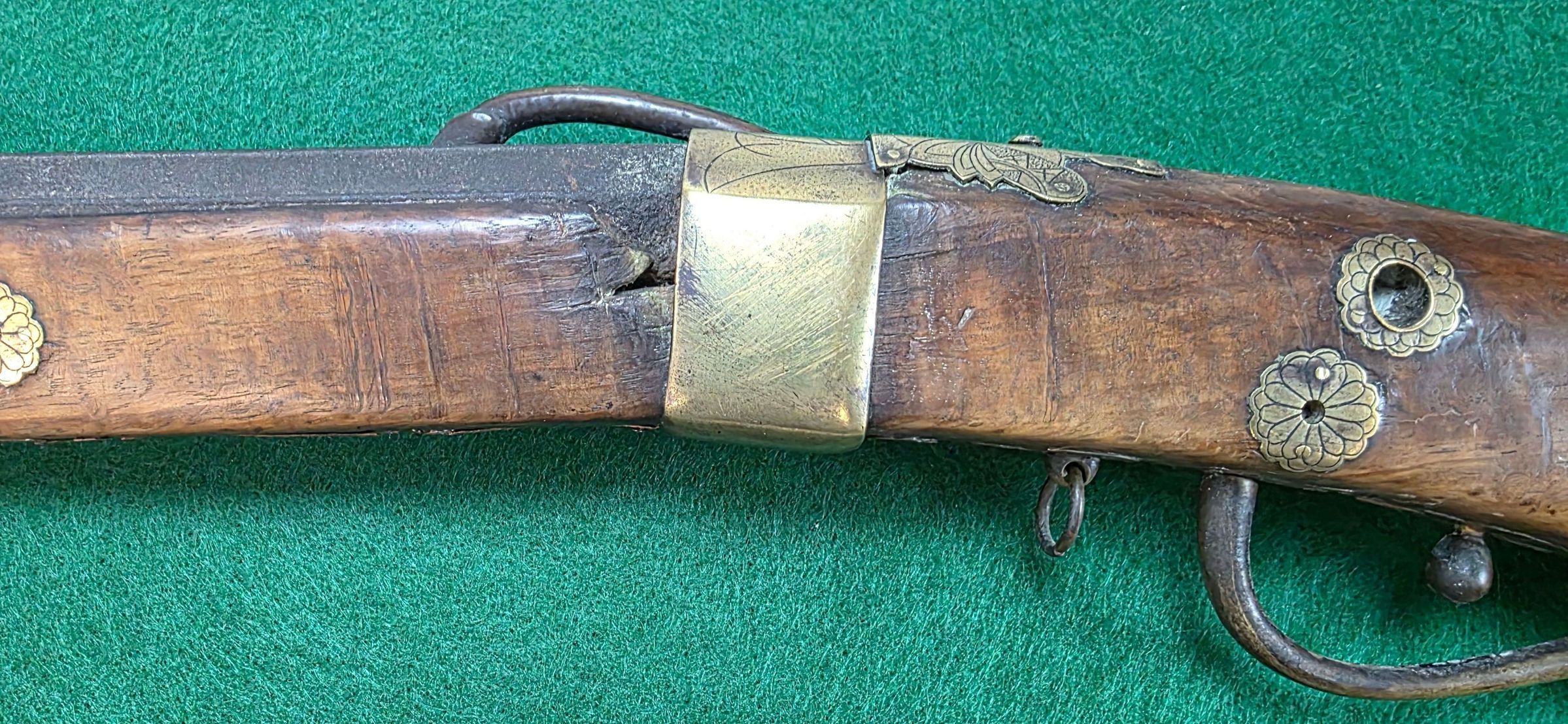
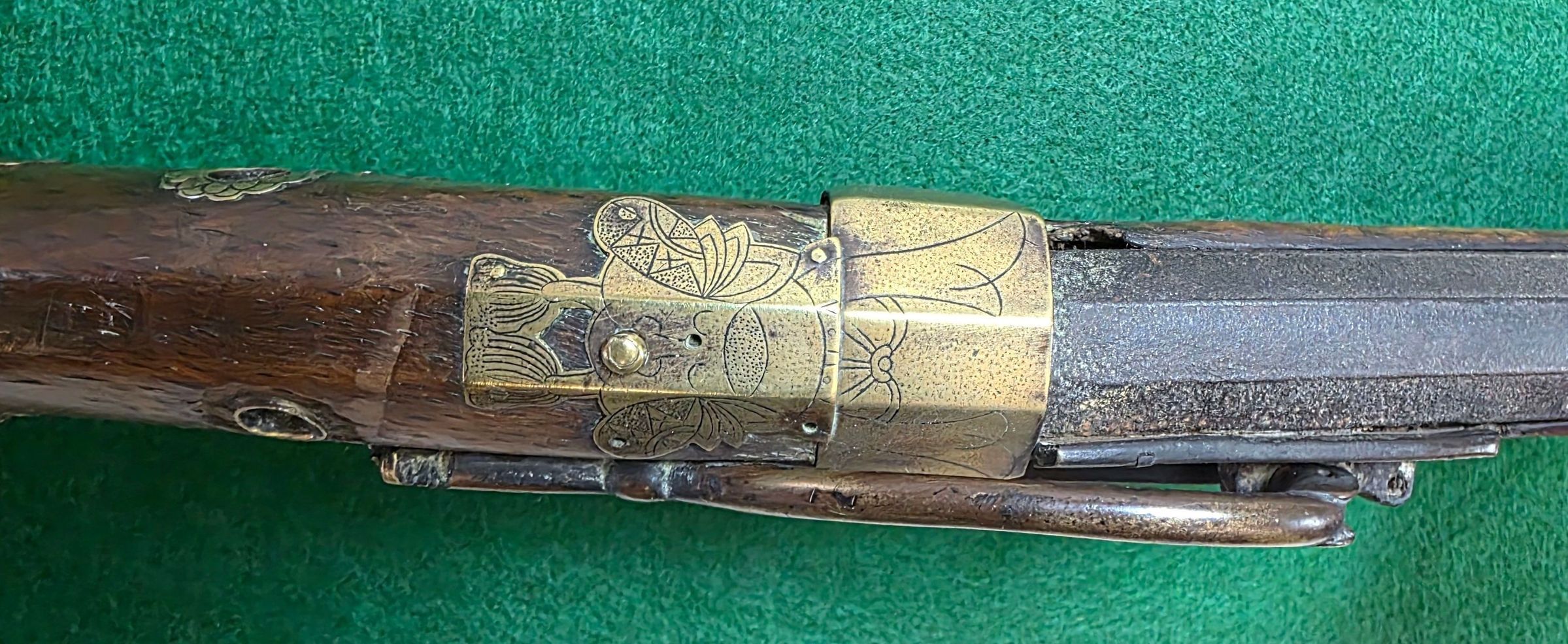
• Breech Architecture: Deeply fitted brass breech-reinforcing collar band (Ji-itabi / Ama-oi). Sleeves the stock securely to the iron barrel planes to redistribute pressure and prevent structural timber cracking under recoil.
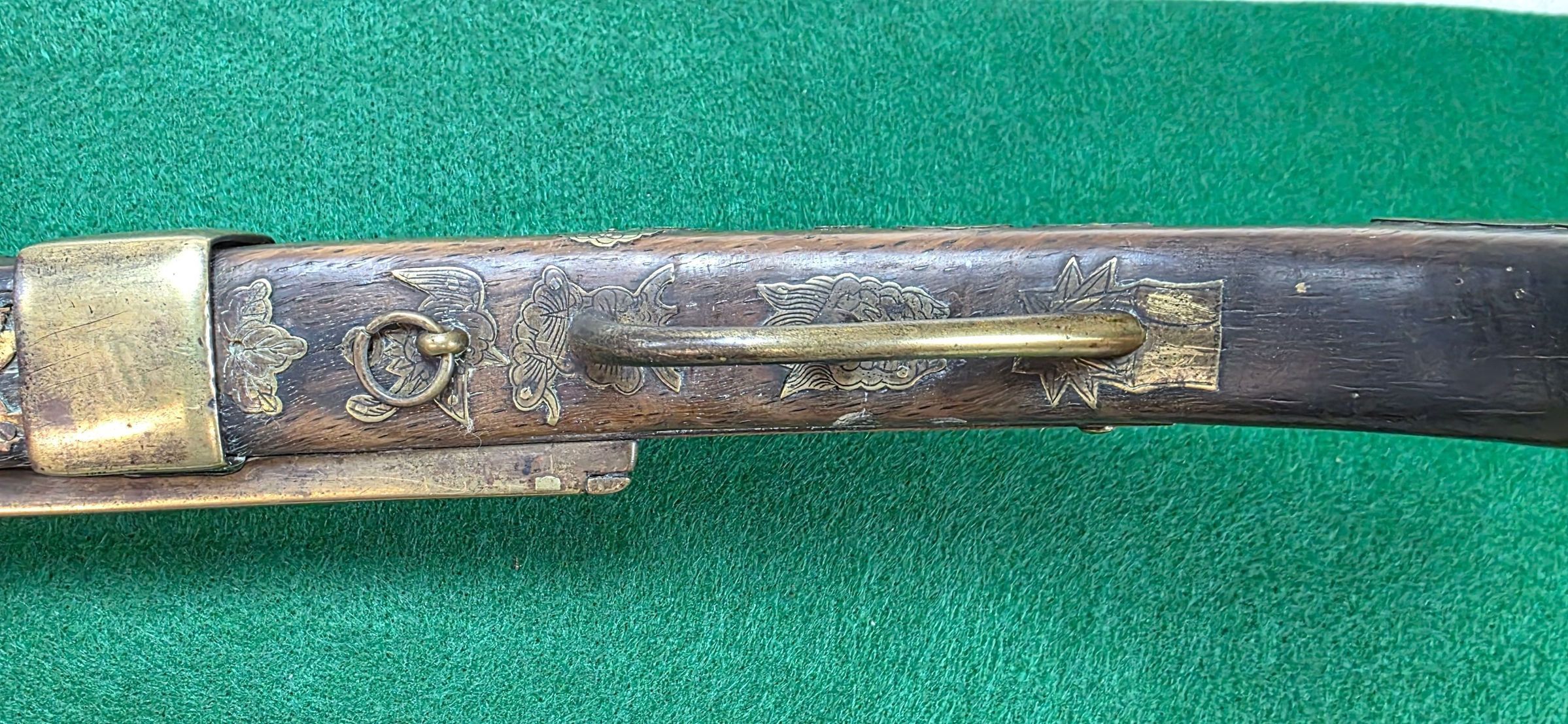
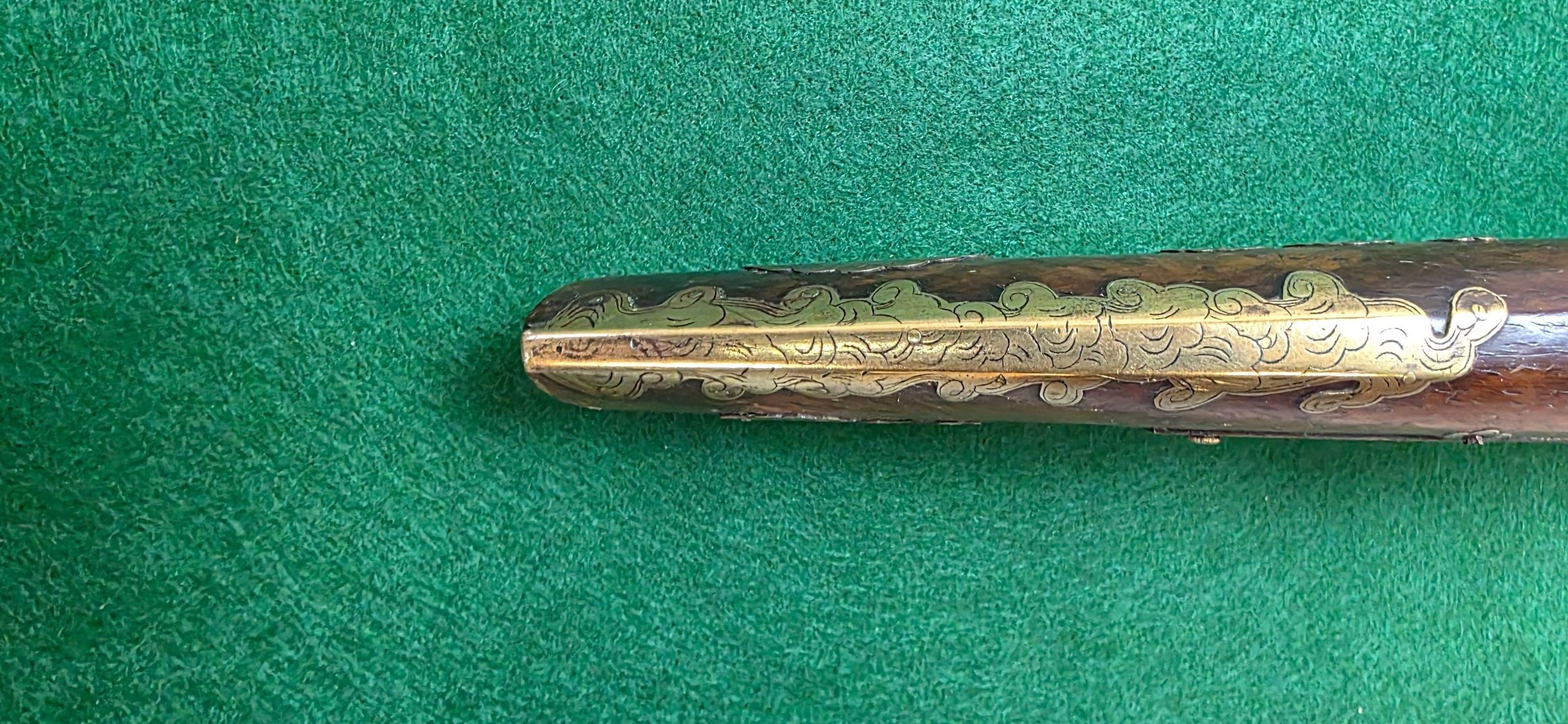
• Loading Assembly: Underside channel housing a weathered wooden ramrod (Karu-ka) tipped with a metal reinforcement band, guided by an elongated, engraved scrollwork brass plate on the fore-end stock belly.Ethnography
Cultural Region
Region
East AsiaContinent
AsiaInscription/Signature/Marks
Type
EngravingNotes
This artifact displays an exceptionally dense layout of premium decorative elements, indicating it was commissioned by or gifted to a high-ranking samurai lineage rather than deployed as a standard infantry weapon:
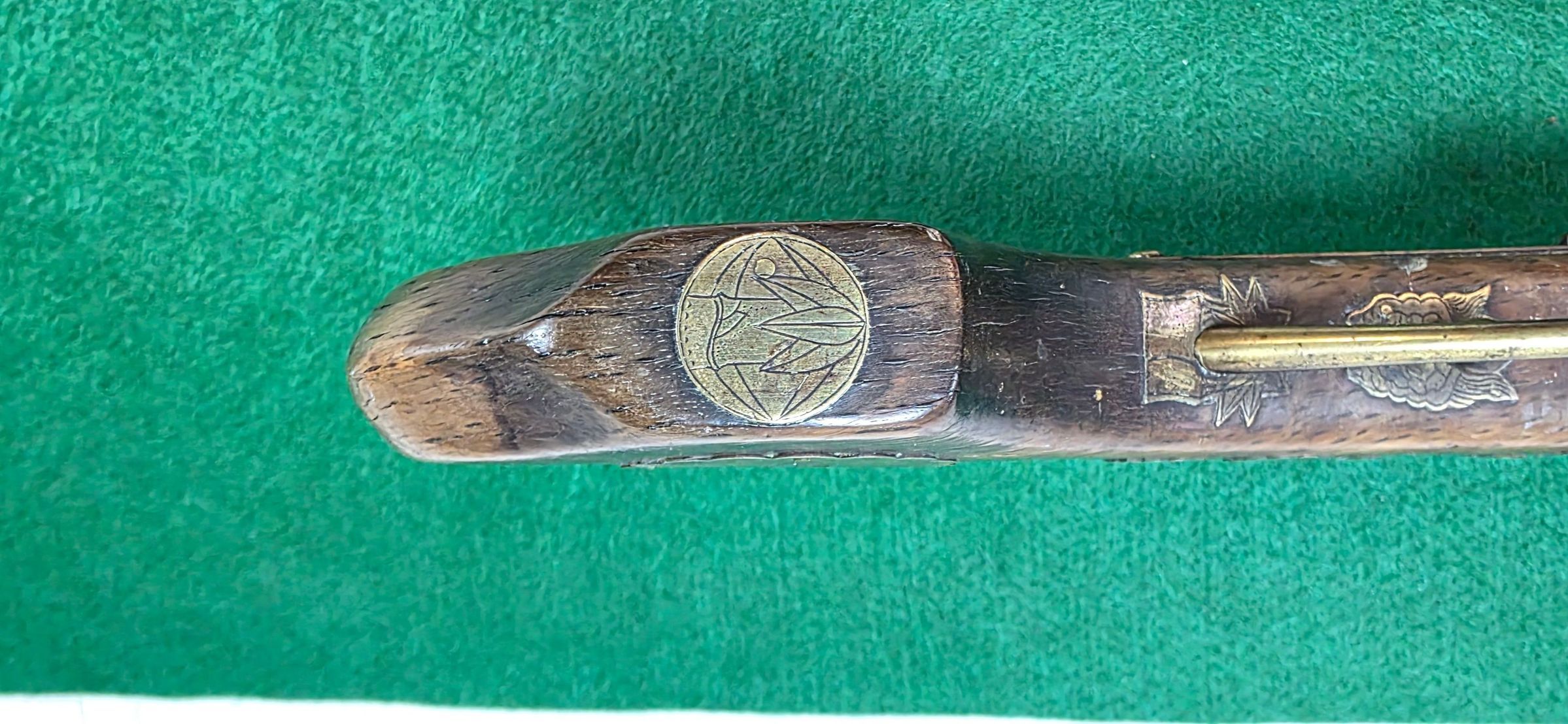
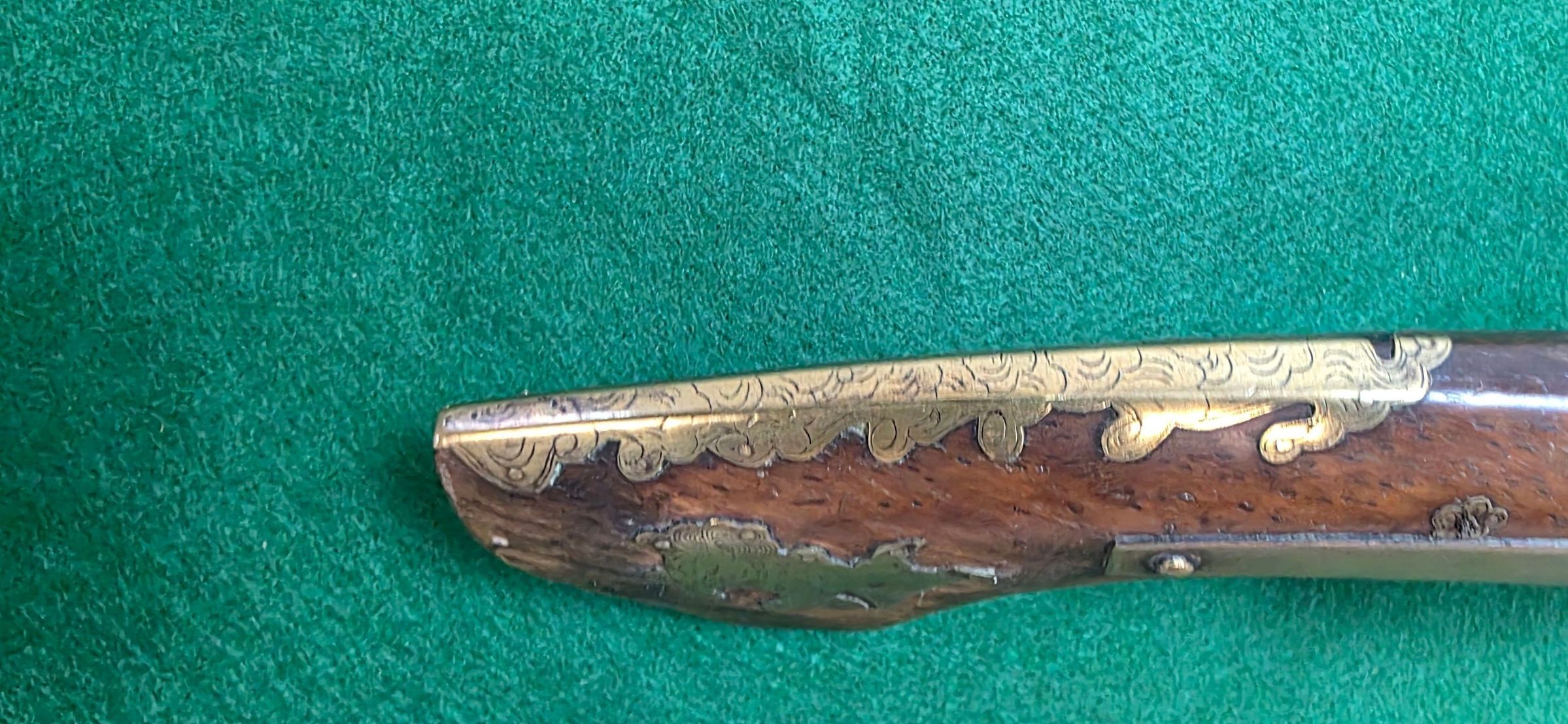
1. The Bamboo Crest (Sasa Mon / 笹紋): Positioned on the flat heel face of the buttstock. Stylized circular bamboo leaves representing strength, resilience, and unyielding loyalty. Historically tied to elite lineages including branches of the Date Clan.
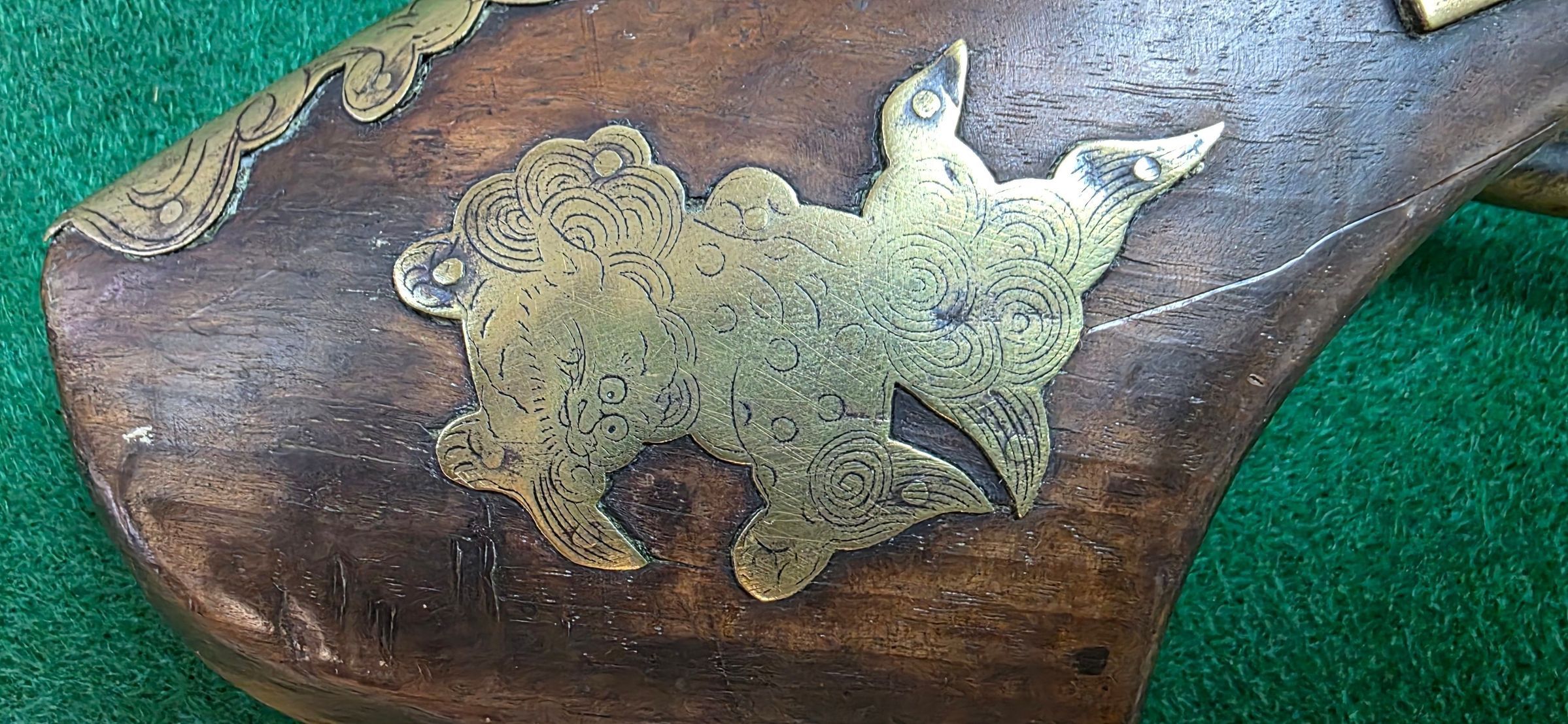
2. The Guardian Lion-Dog (Shishi / 獅子): Large brass inlay flush-fit into the primary side flat of the buttstock. Features highly intricate engraving detailing a scrolling mane, spotted body, and fierce expression. Symbolizes spiritual protection, warding of evil, and military victory.
3. The Butterfly (Chō / 蝶): Large, dual-winged brass plate installed along the top breech spine. Features hand-chiseled cross-hatching and wing venation. Represents transformation, rebirth, and a warrior's fearless approach to mortality (famously linked to the Taira Clan lineage).
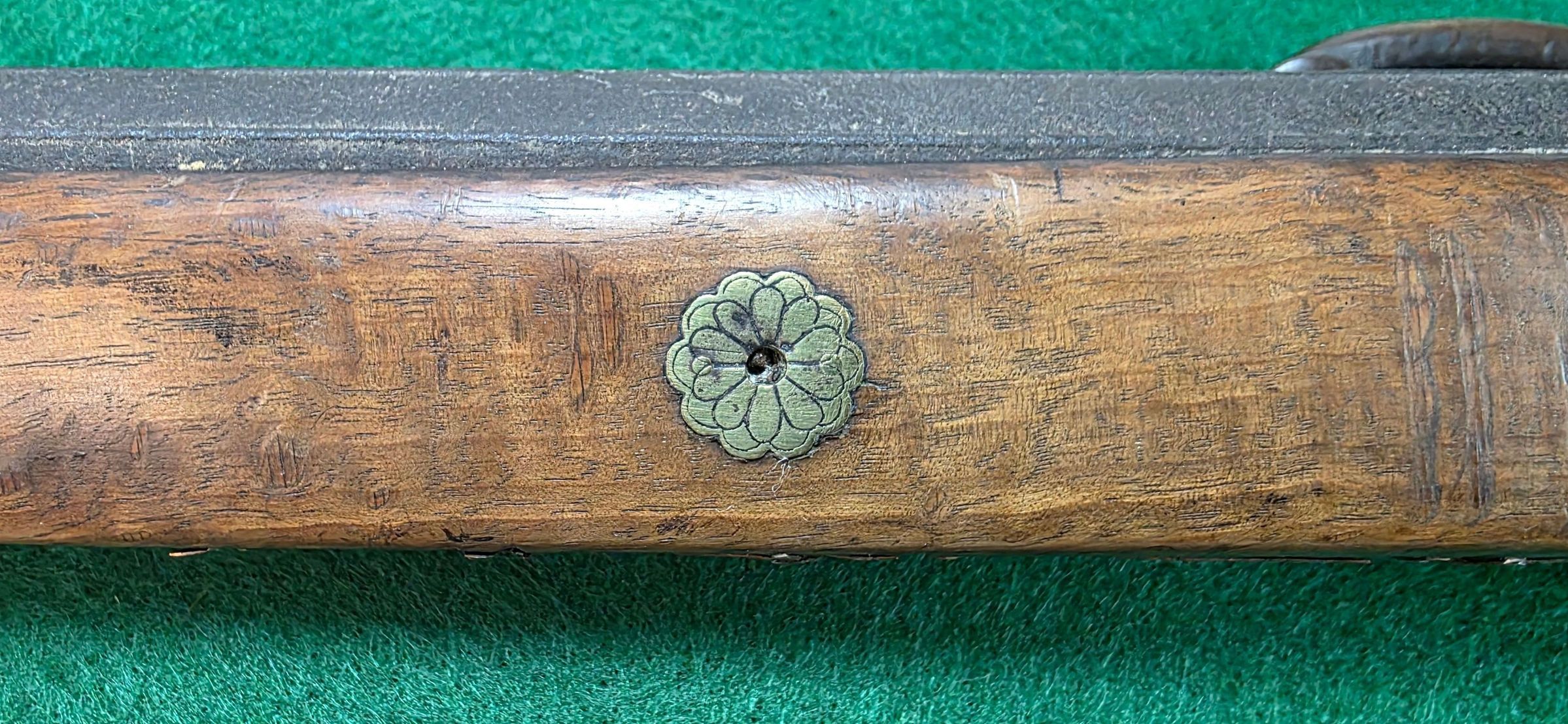
4. The Imperial Chrysanthemum (Kiku / 菊): Recurring floral rosettes serving as functional structural washers and pin-anchors throughout the pistol grip and lock assembly. Symbolizes longevity, high nobility, and prestige.
5. The Carp (Koi) & Swallow (Tsubame): Fluidly integrated down the spine of the grip. The Koi represents perseverance and courage under pressure; the flying swallow mirrors loyalty and a safe journey home.Location
Location
Display Cabinet
TF-FR-N19Room
Firearms RoomBuilding
Fred Light MuseumDate
April 28, 2026Condition
Overall Condition
GoodNotes
• Metal Components: Iron surfaces display an authentic, untouched "plum" brown oxidized patina. Minor localized surface pitting consistent with age. No evidence of destructive modern cleaning or aggressive wire brushing. Brass furniture retains a rich, warm, naturally aged golden-brown tone with minimal active verdigris.
• Timber Components: Wood stock is complete with an original oil finish showing deep grain weathering. Micro-fractures and minor wood compression are present along the forward perimeter of the rigid breech band—a natural response to centuries of atmospheric expansion and contraction.
• Markings: Features hand-painted white museum accession catalog registration (FL-75-886) on the trigger guard. Hand-stamped vintage number (117) on the right barrel flat.Provenance
Notes
• 1950s Acquisition: Acquired by pioneering Saskatchewan historic preservationist Fred Light during his mid-century collecting tenure.
• Lighthouse Service Station Era: Originally logged and tracked using the hand-stamped numeric identifier "117". The piece was prominently showcased on the interior walls/ceilings of the iconic Lighthouse Service Station in Battleford, serving as a cornerstone piece of his private weapon displays.
• Circa 1975 Public Transition: Transferred into the public trust during the establishment of the permanent Fred Light Museum collection, indexed under accession code FL-75-886. It remains a paramount example of early global arms exchange preserved within Canadian heritage collections.Create Date
April 22, 2026Updated By
Justin M. MillerUpdate Date
October 15, 2026