Abu Fatilah (Traditional Omani Pentagonal Long Musket)



Name/Title
Abu Fatilah (Traditional Omani Pentagonal Long Musket)Entry/Object ID
FL-11-26-01Tags
ResearchDescription
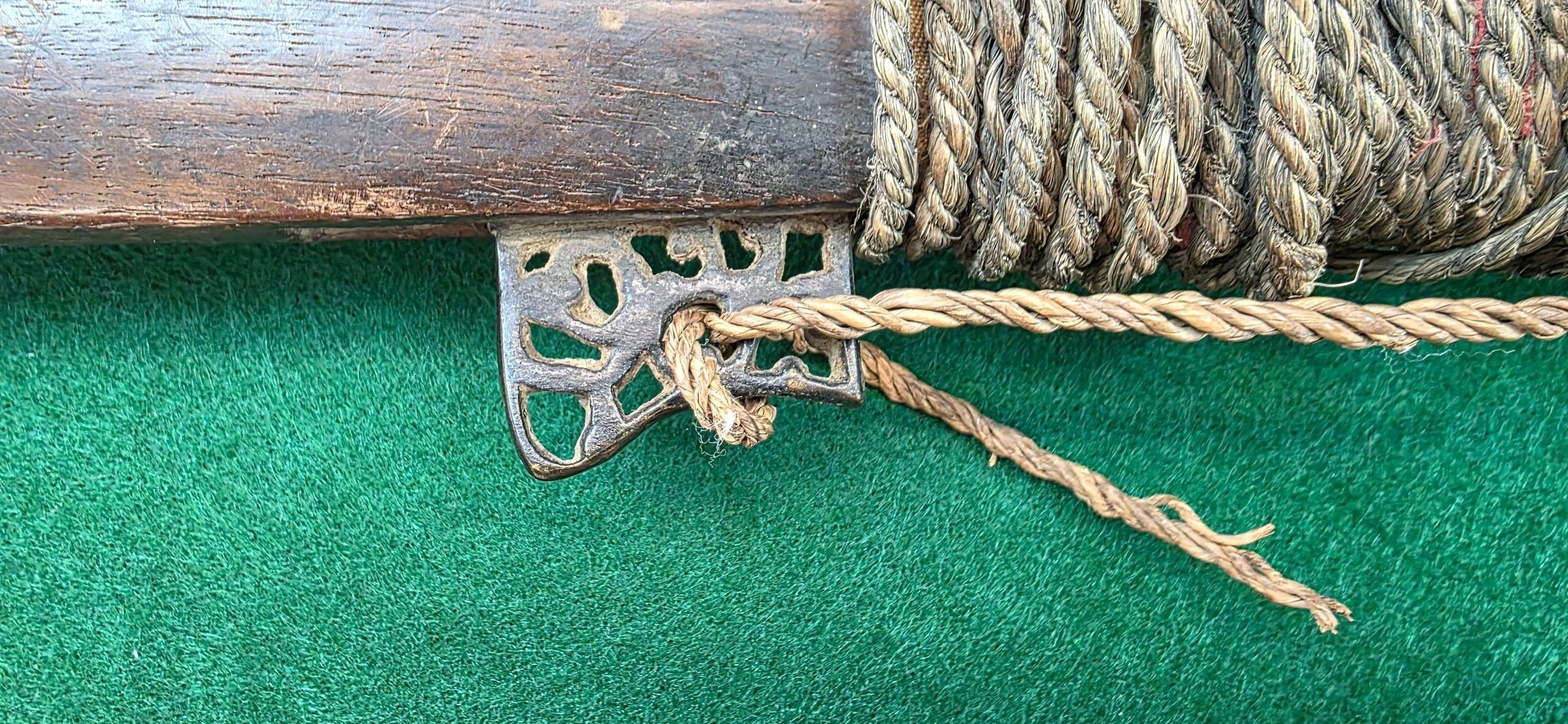
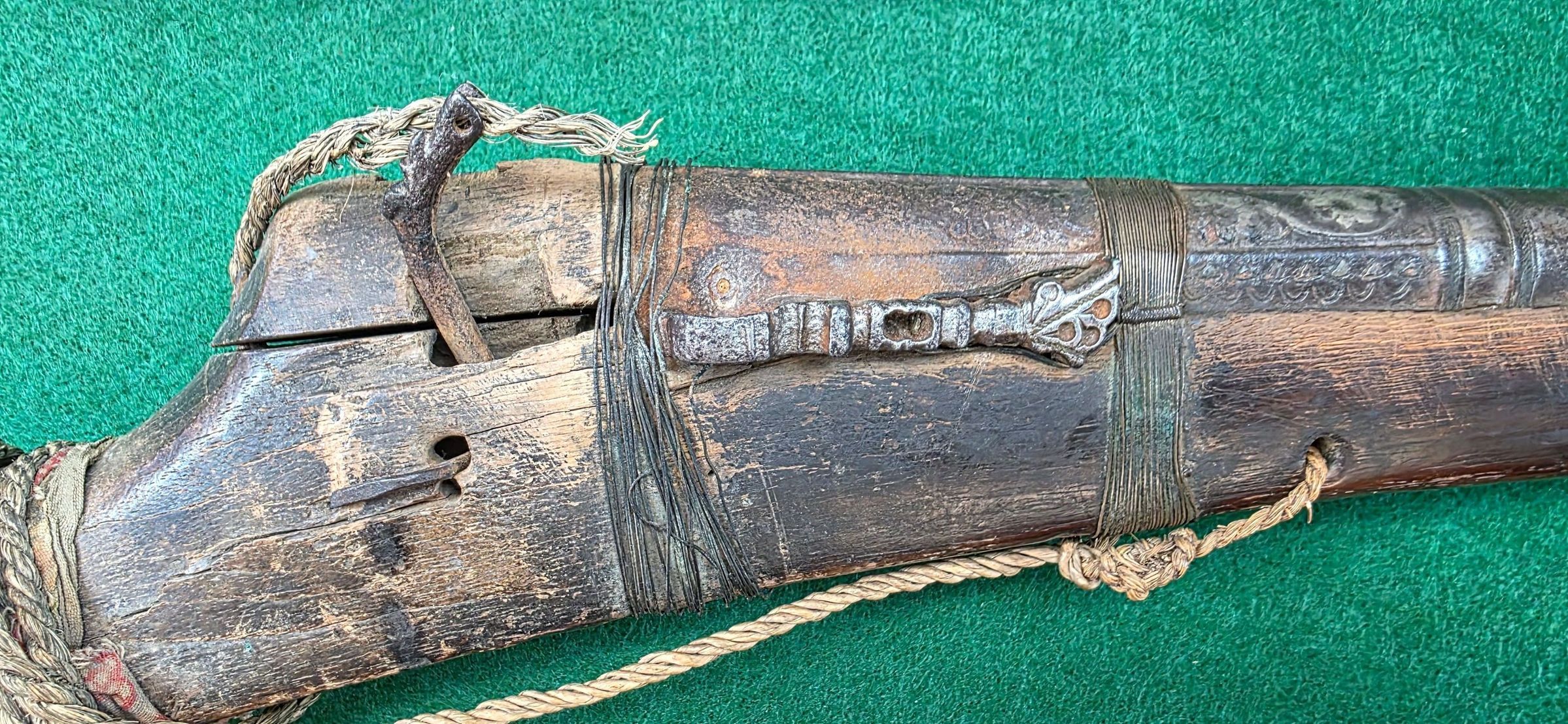
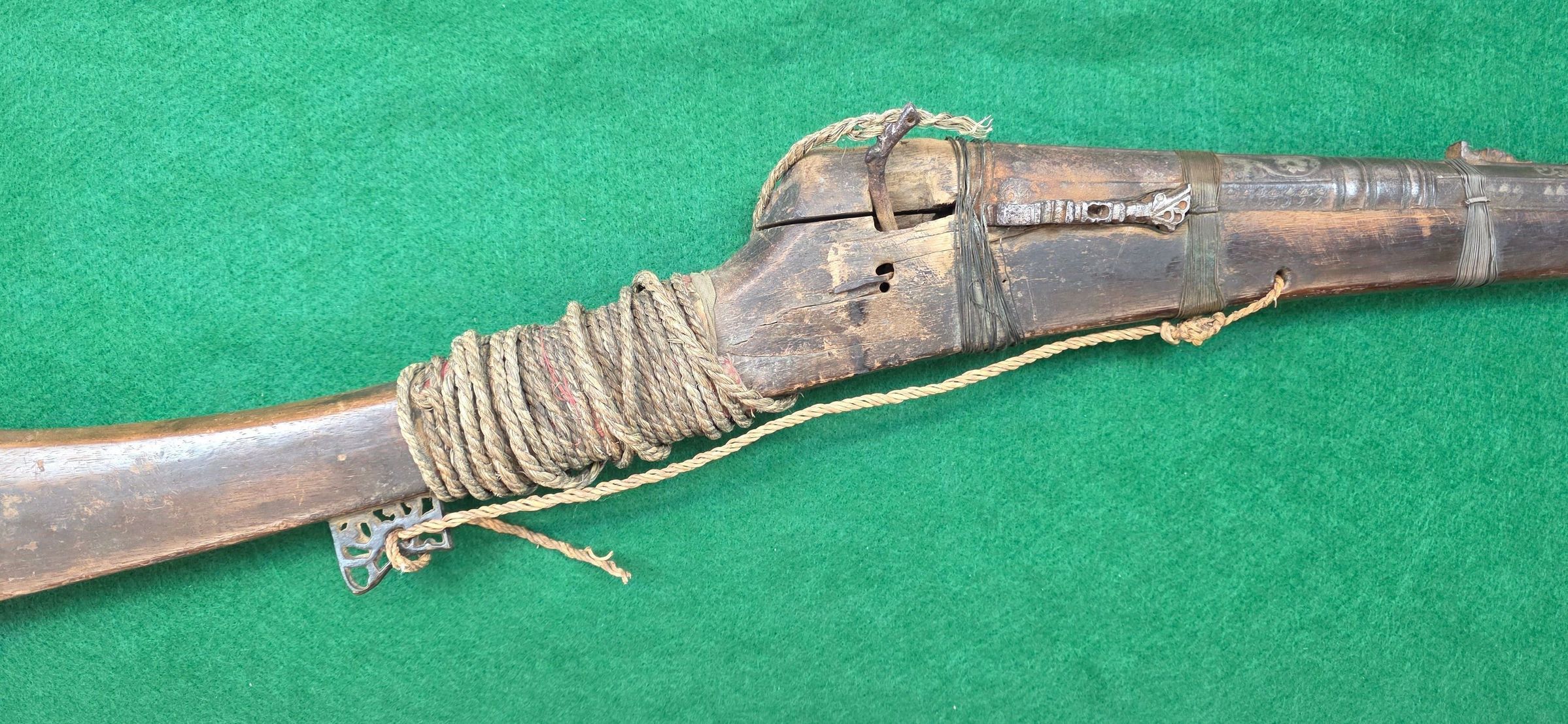
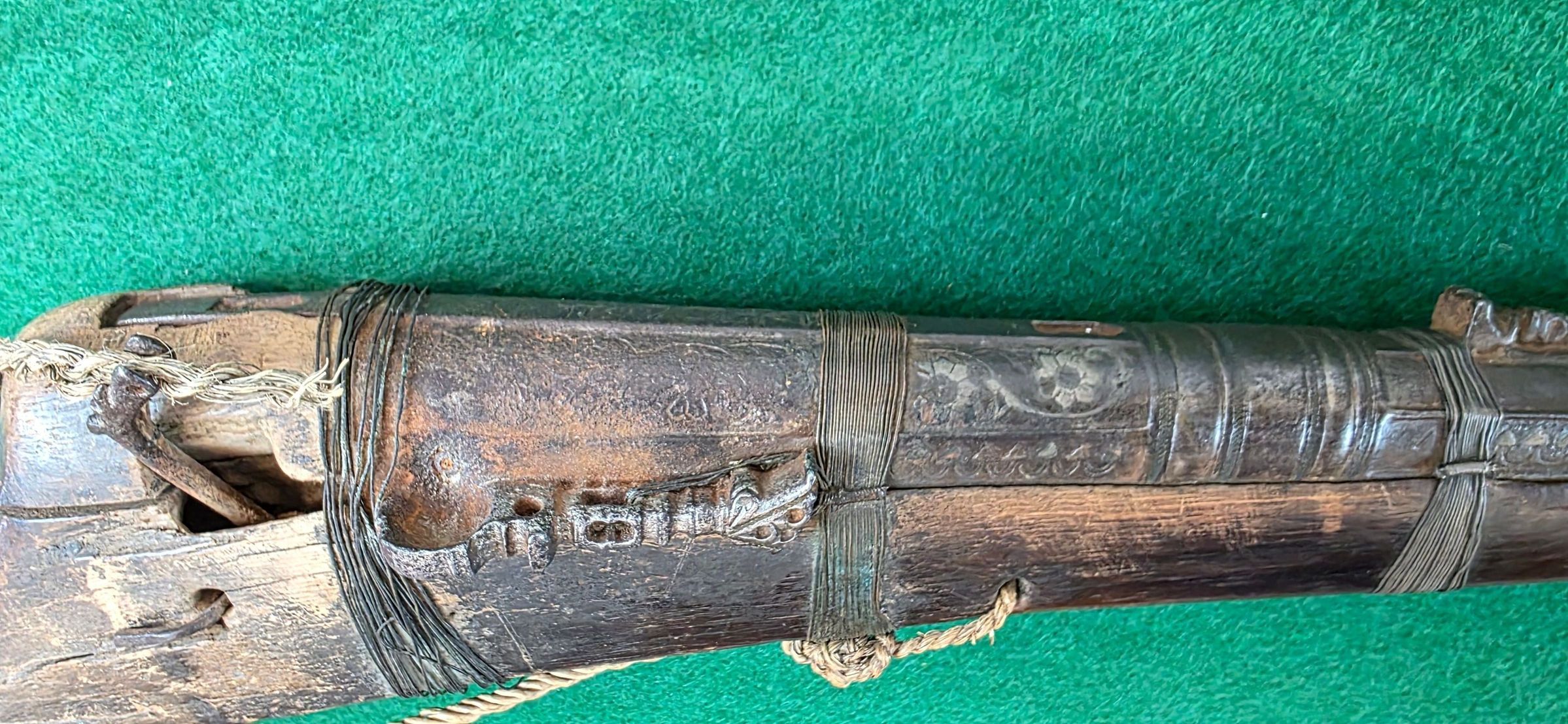
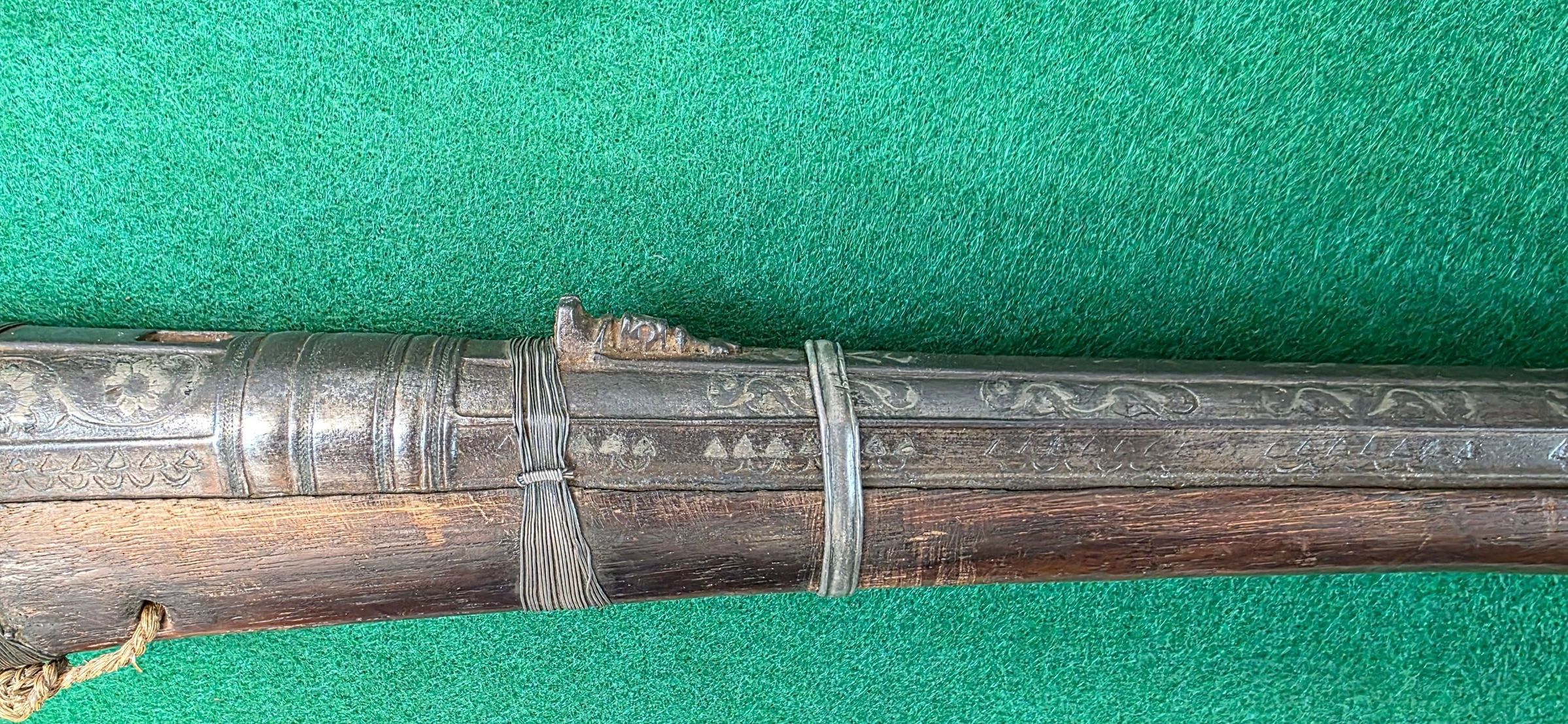
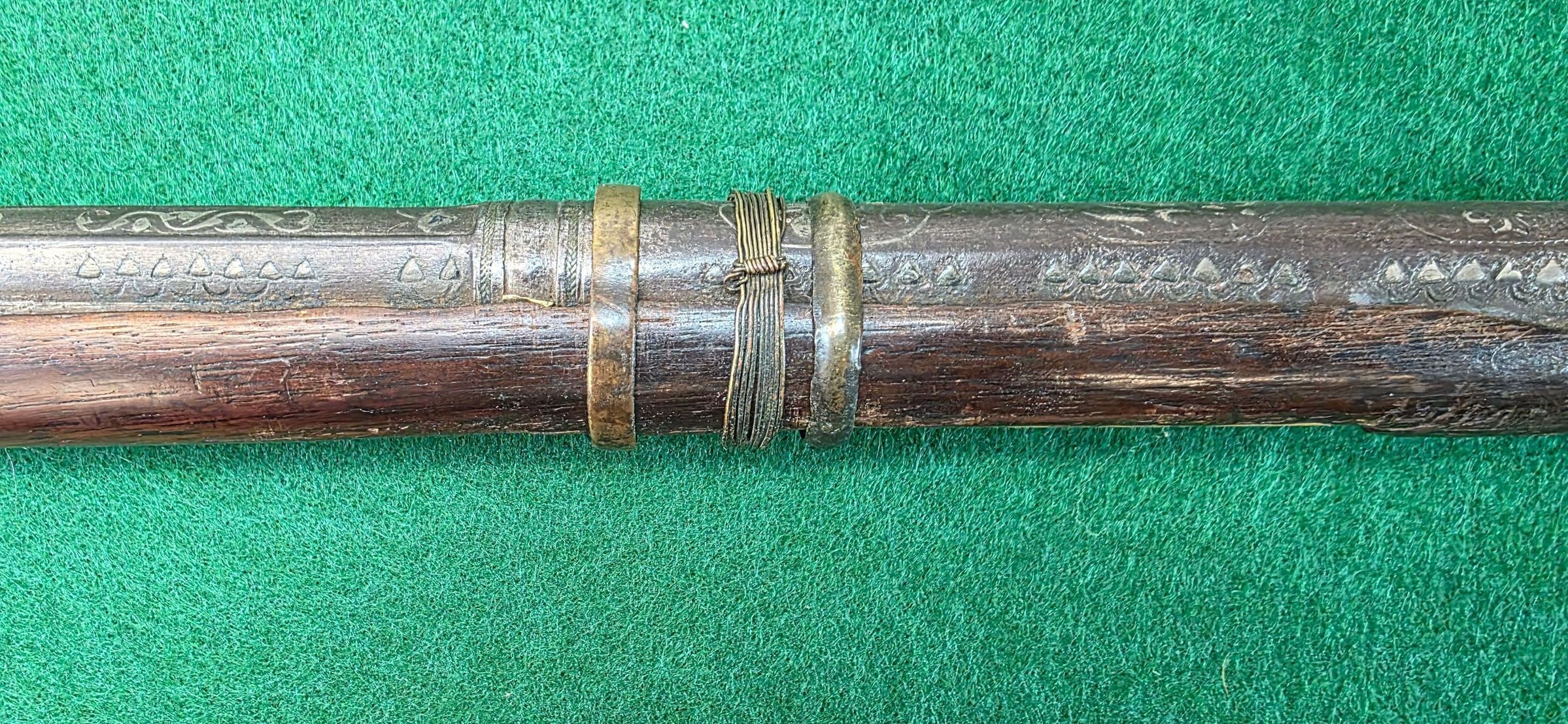
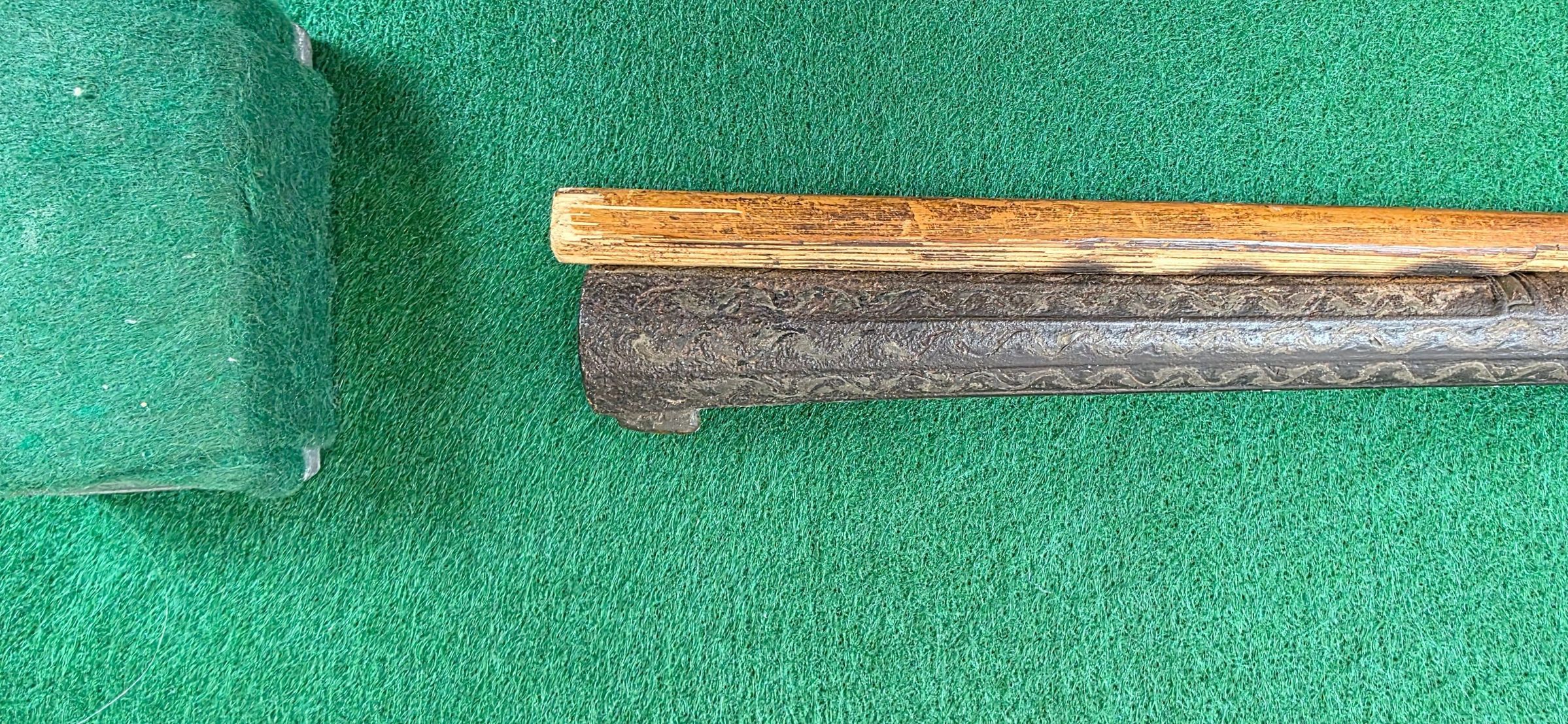
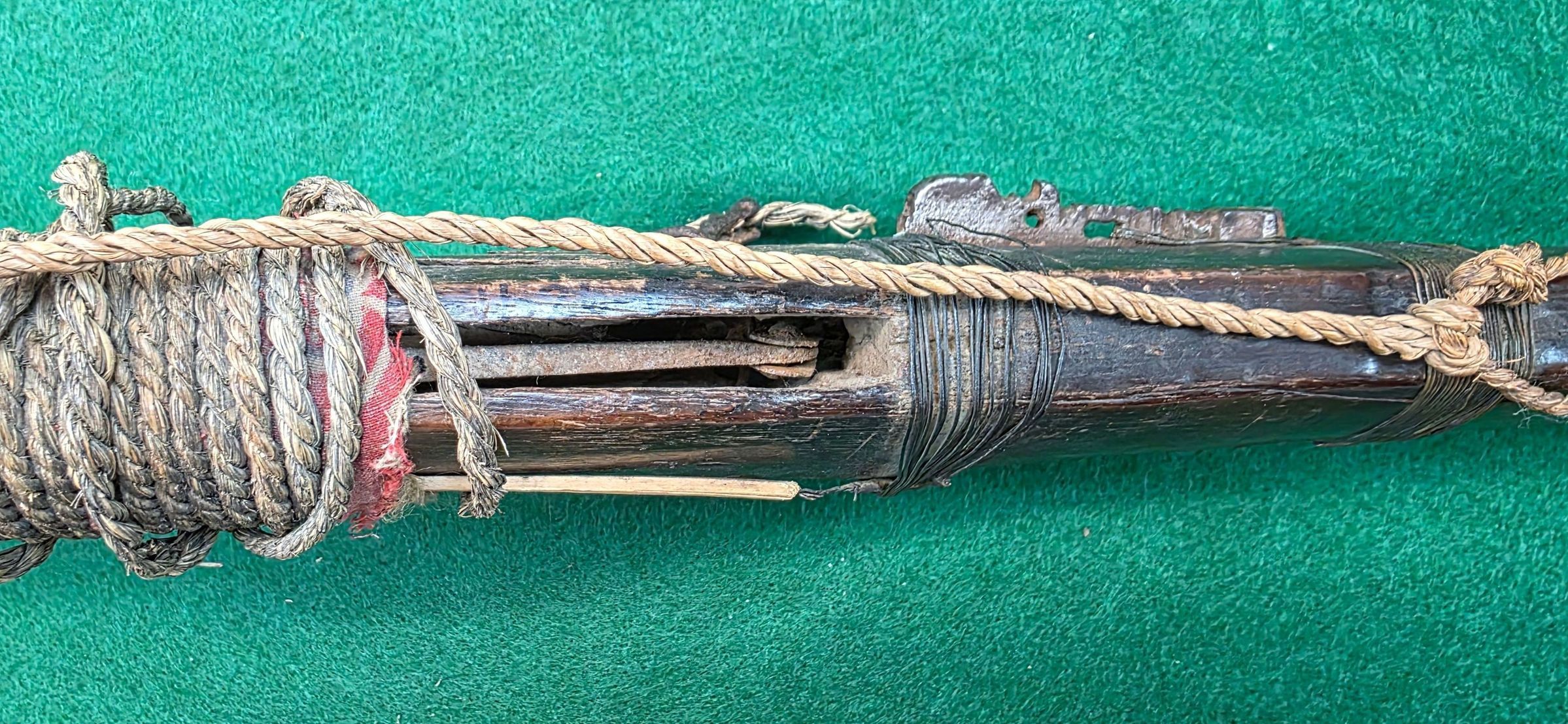
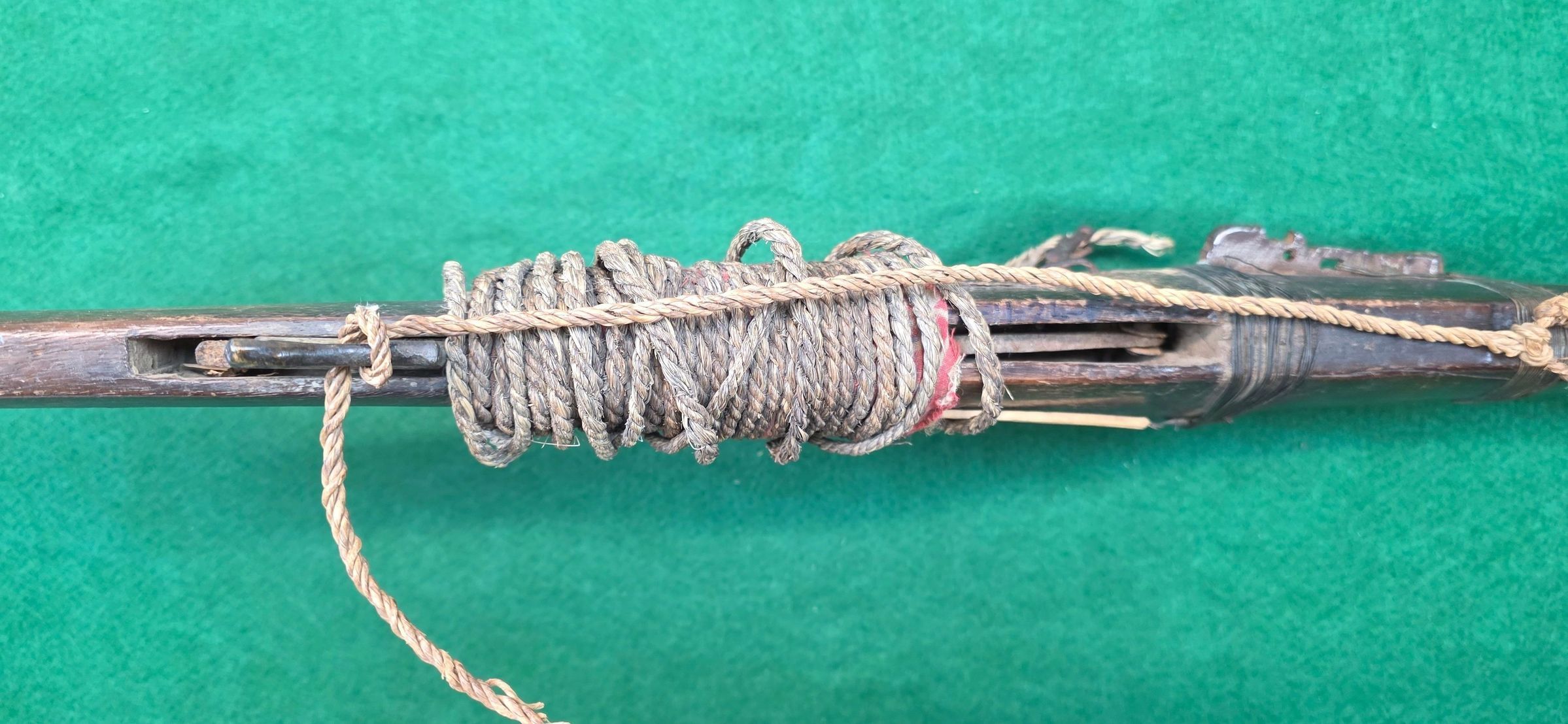
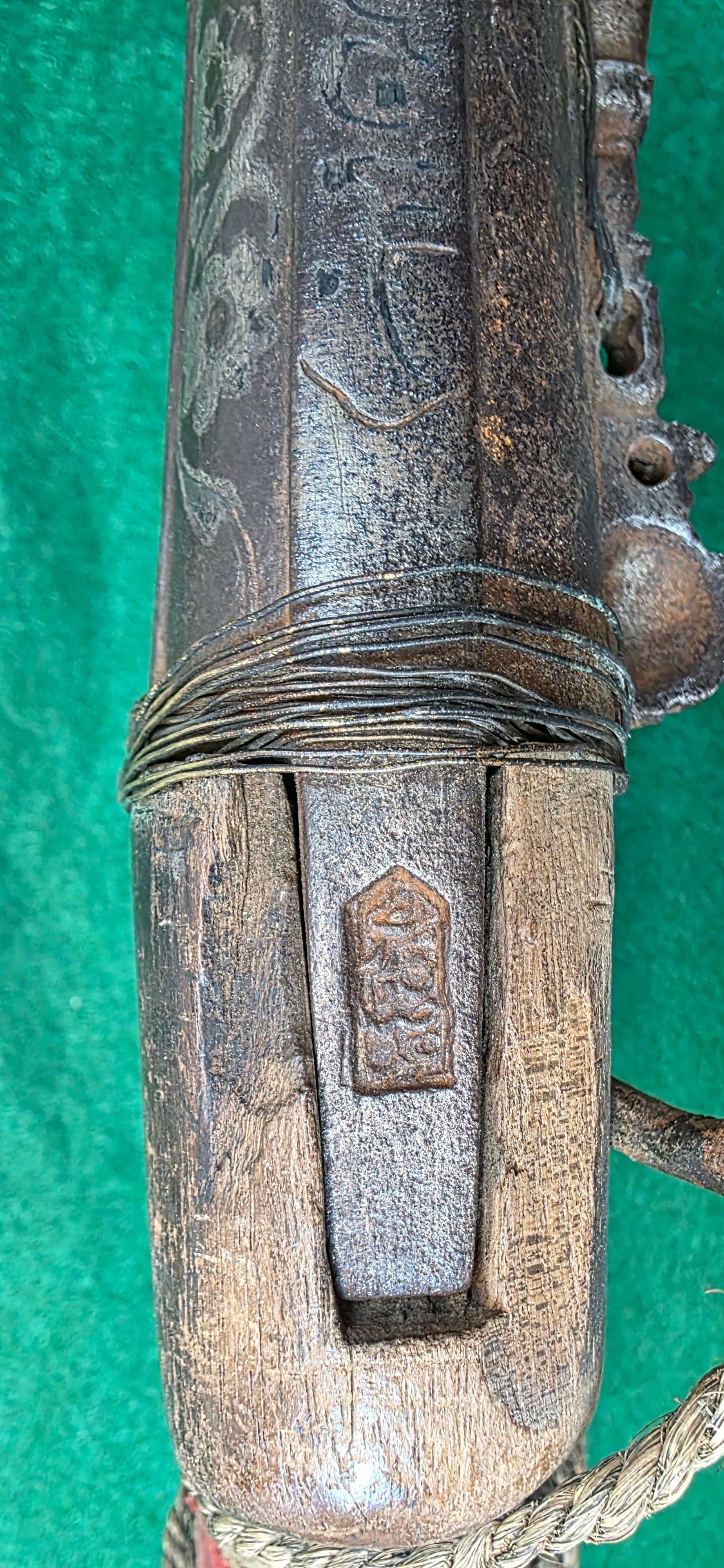
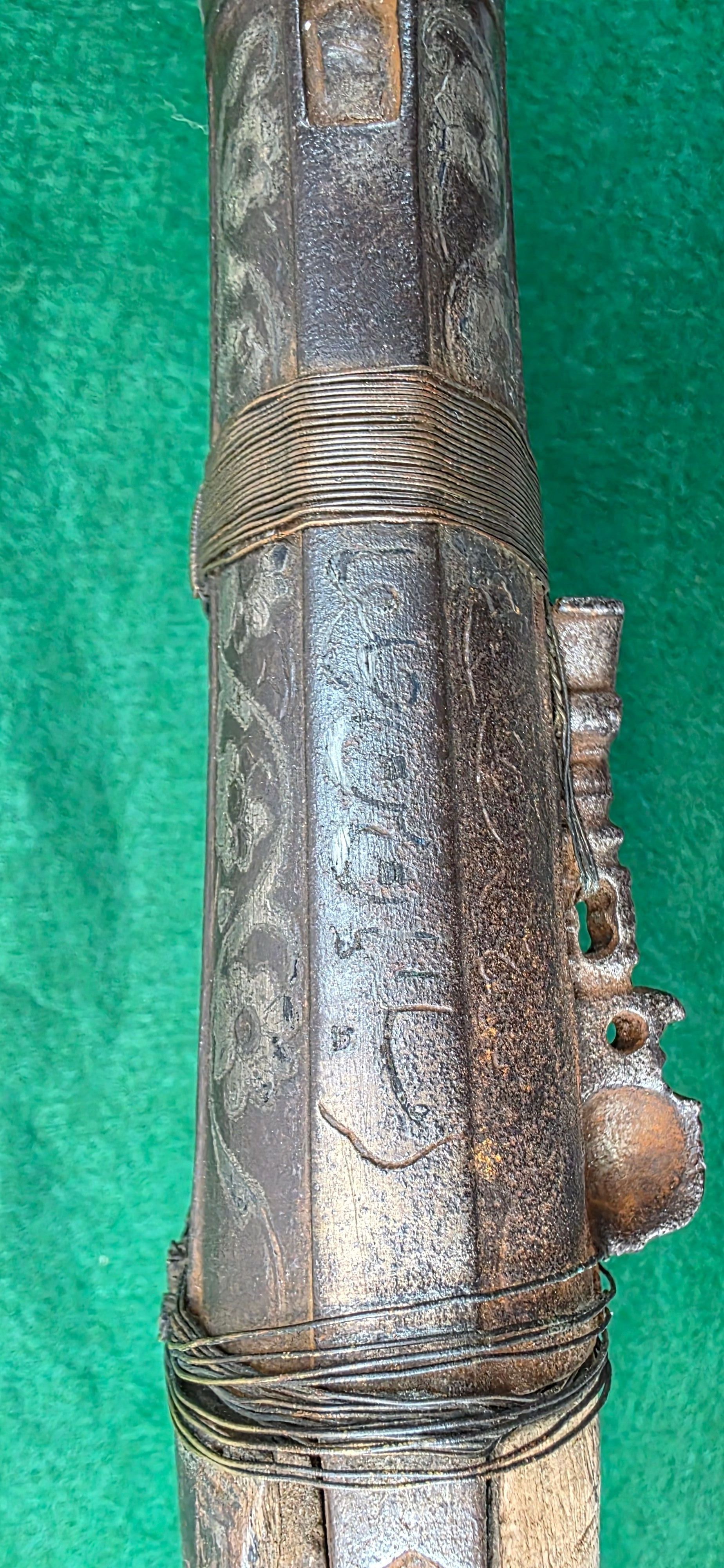
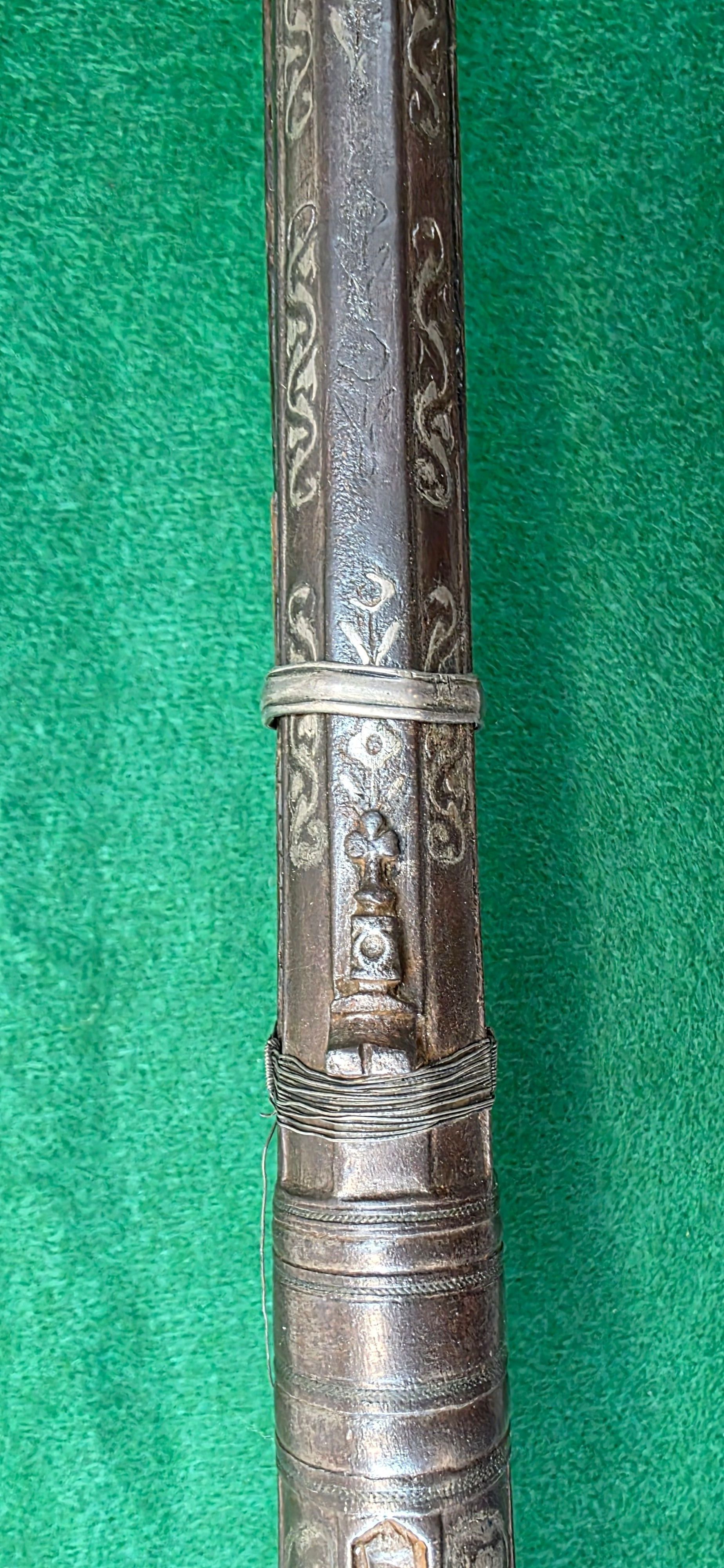
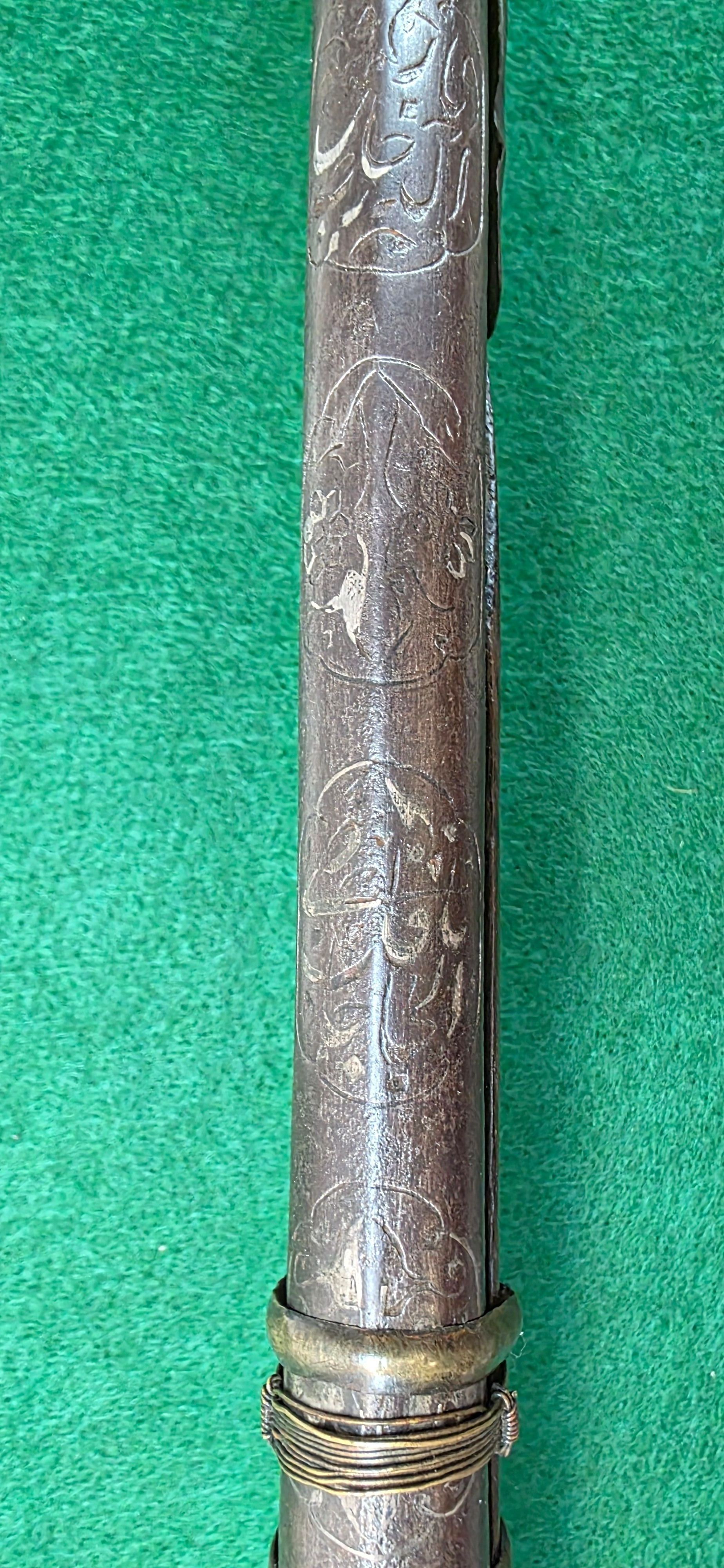
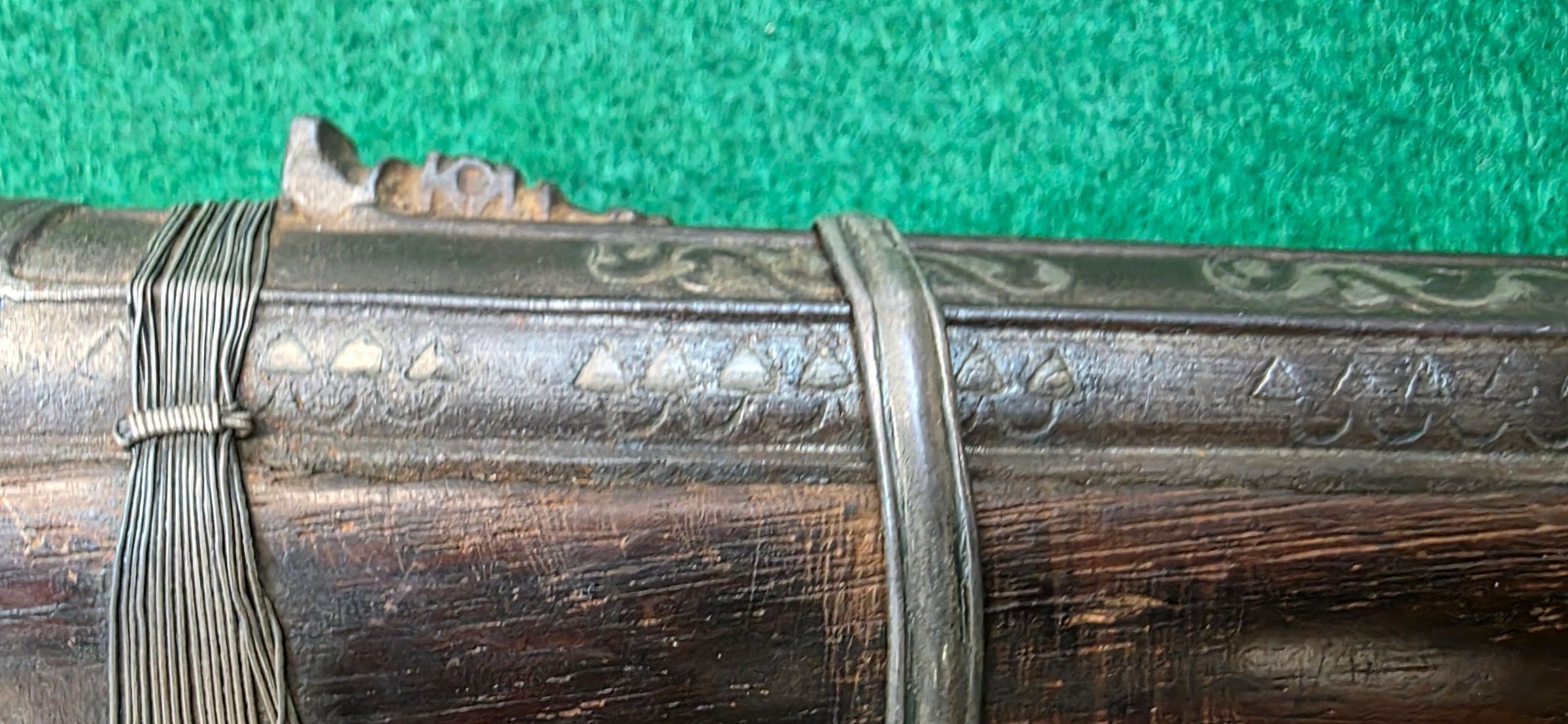
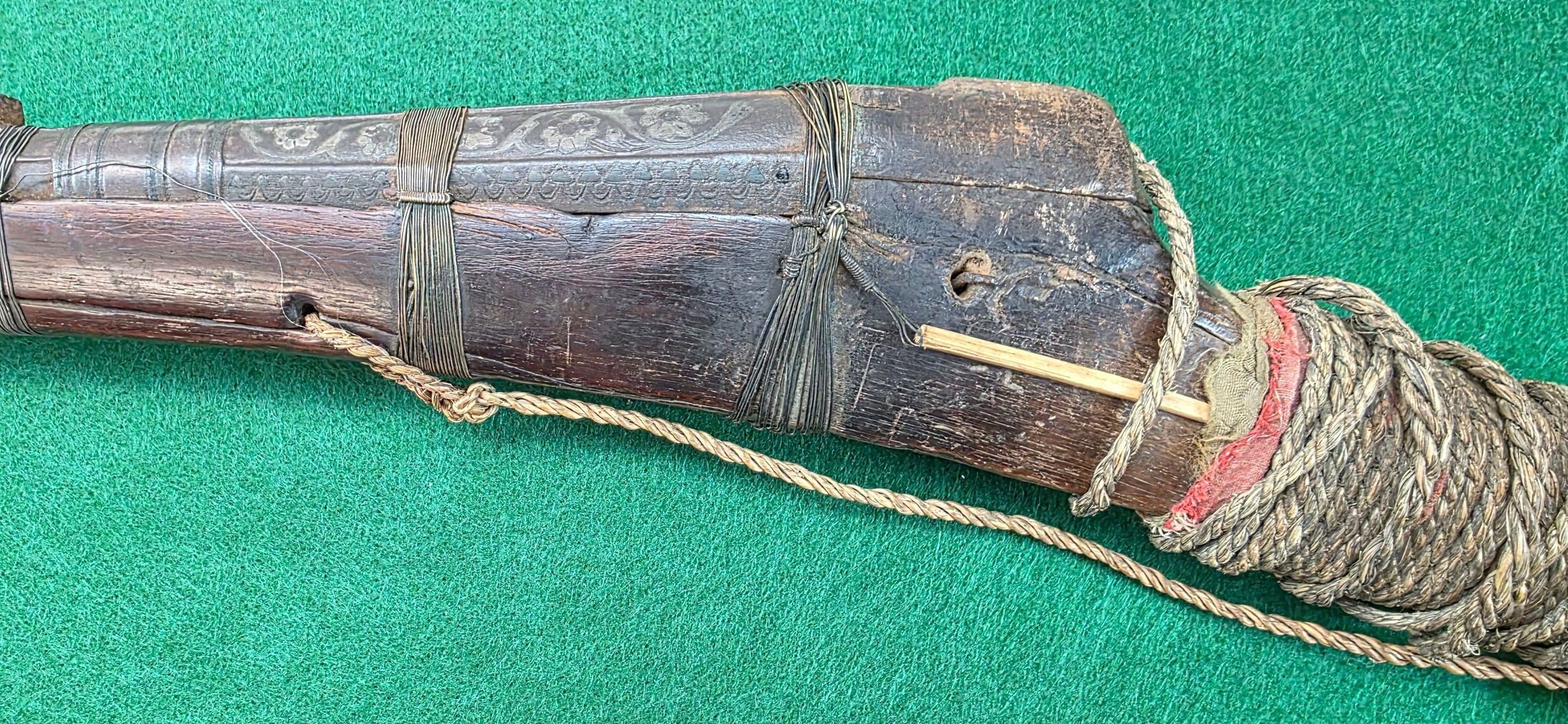
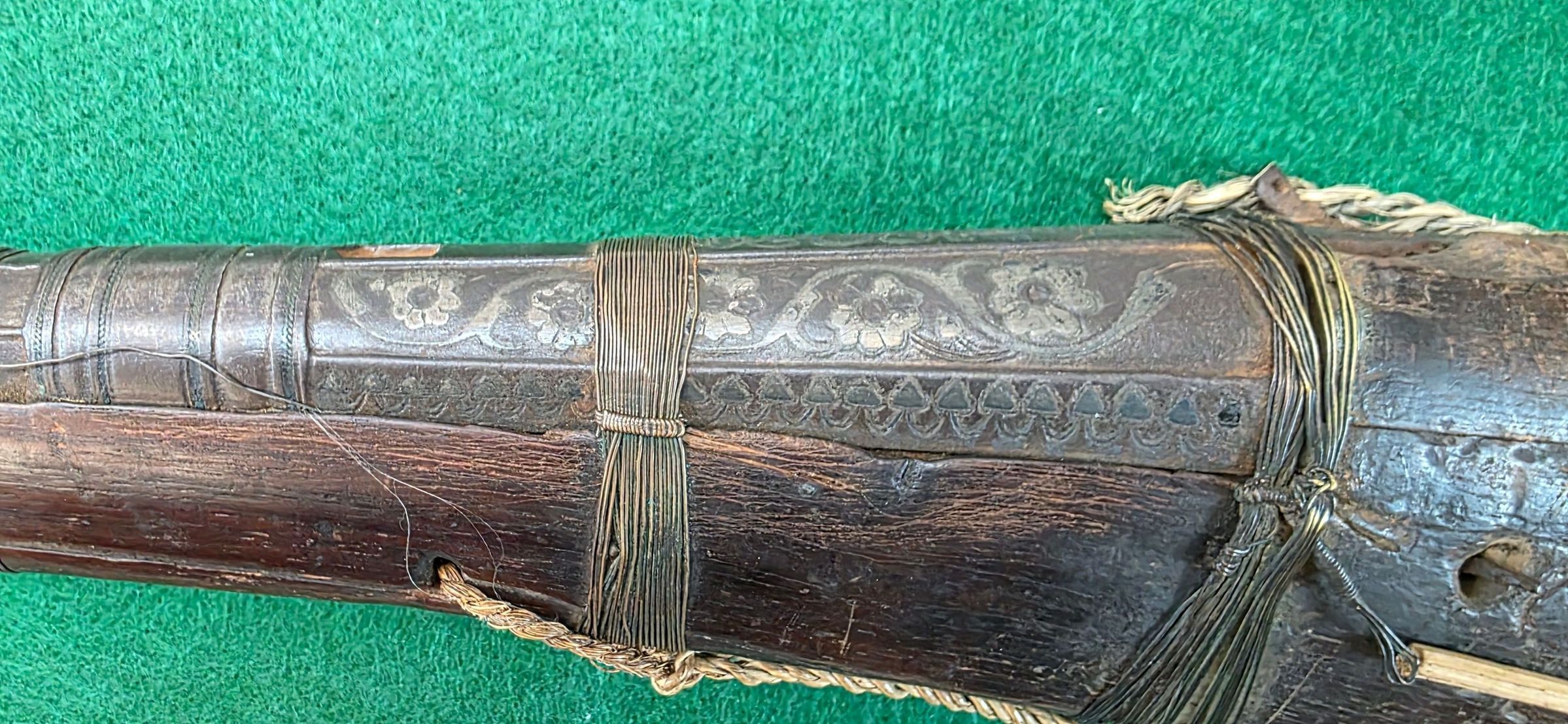
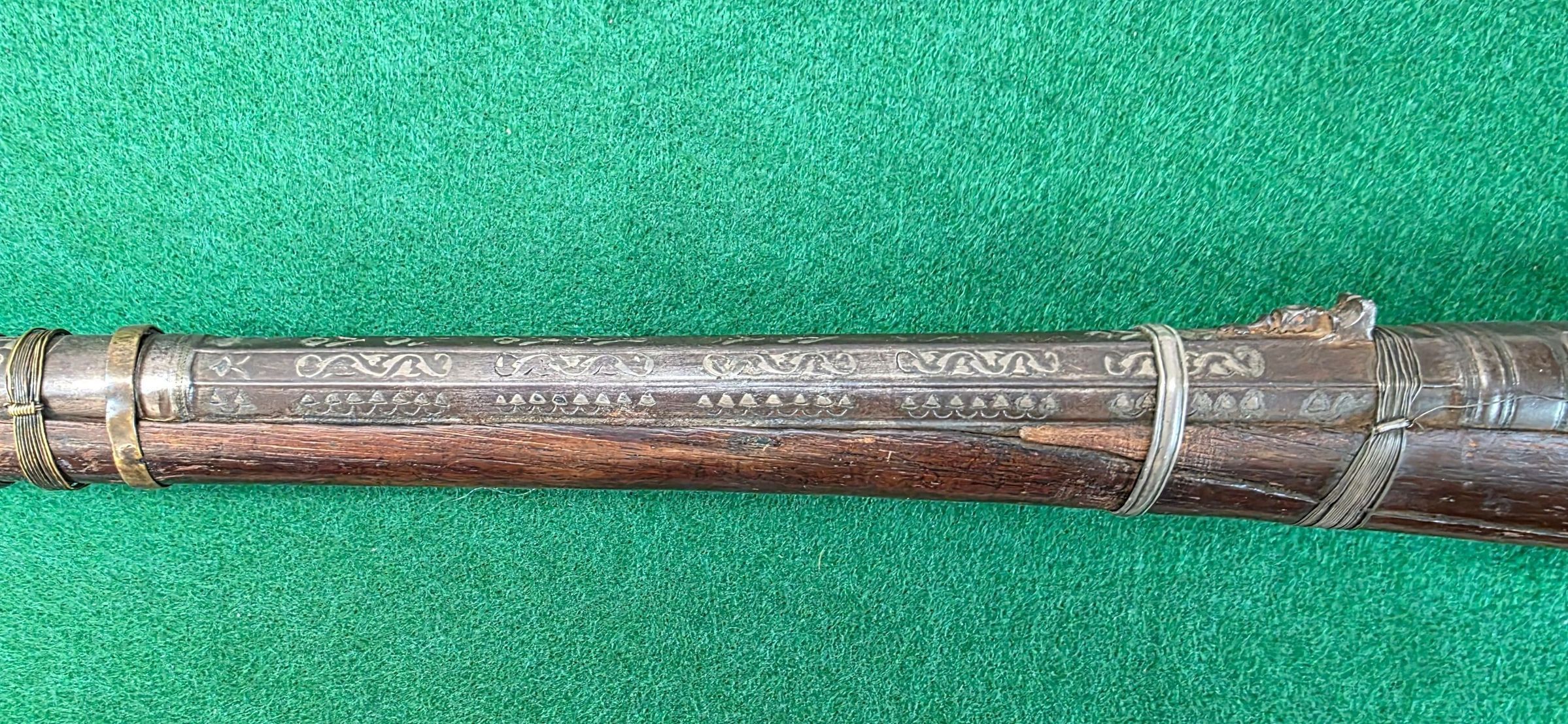
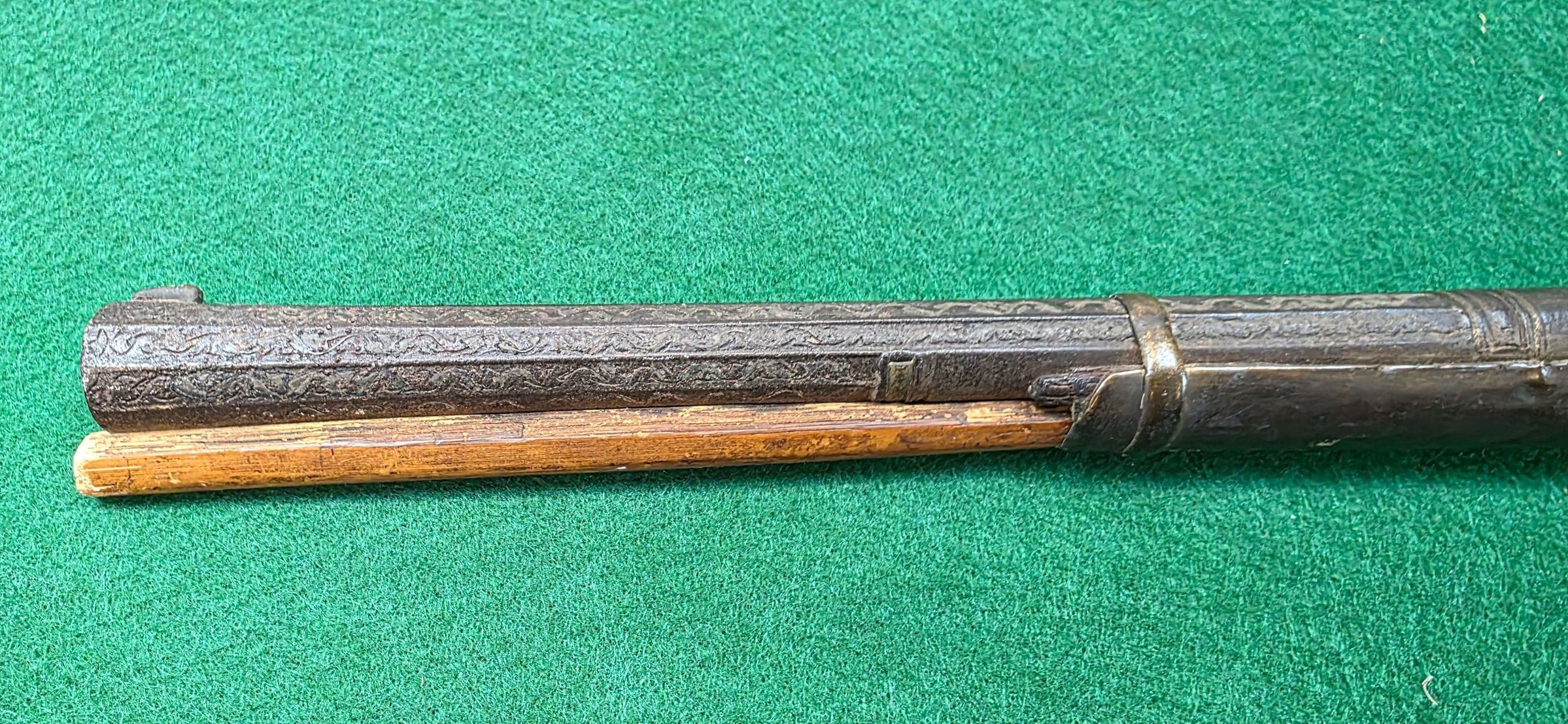
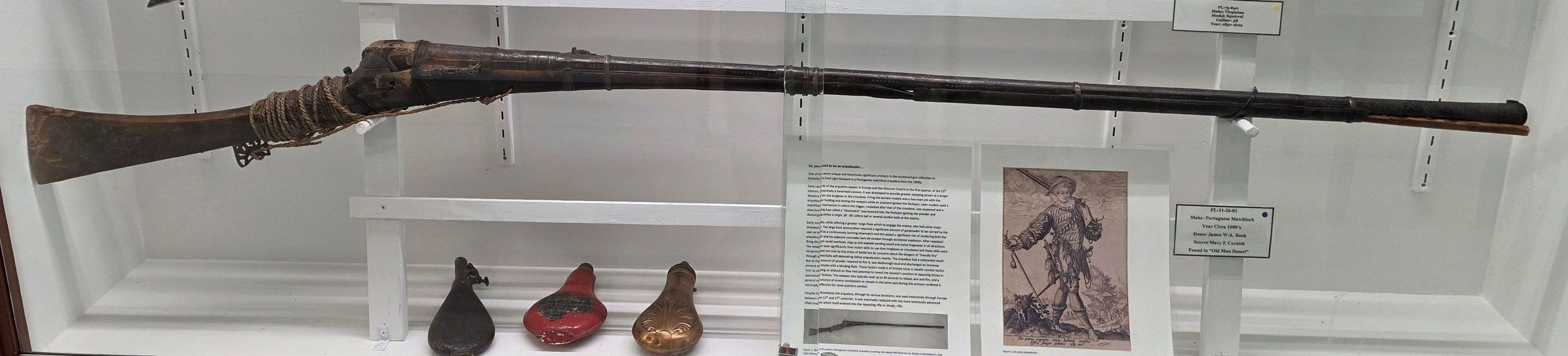
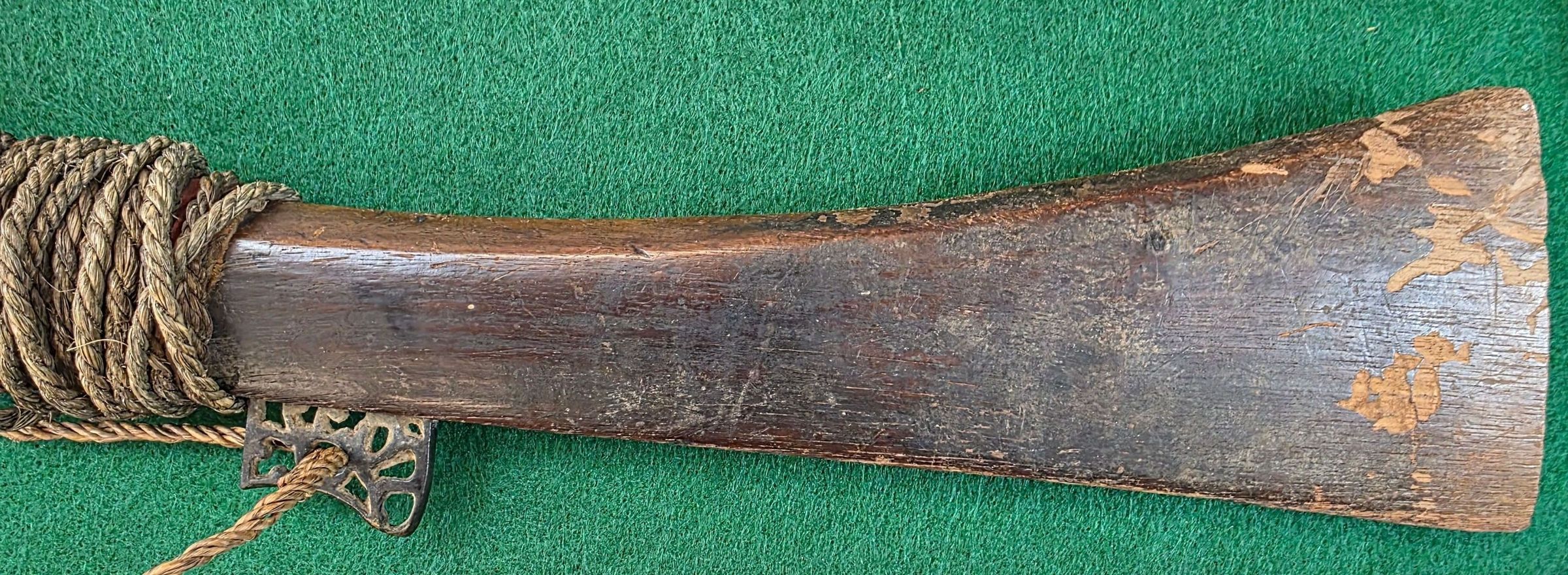
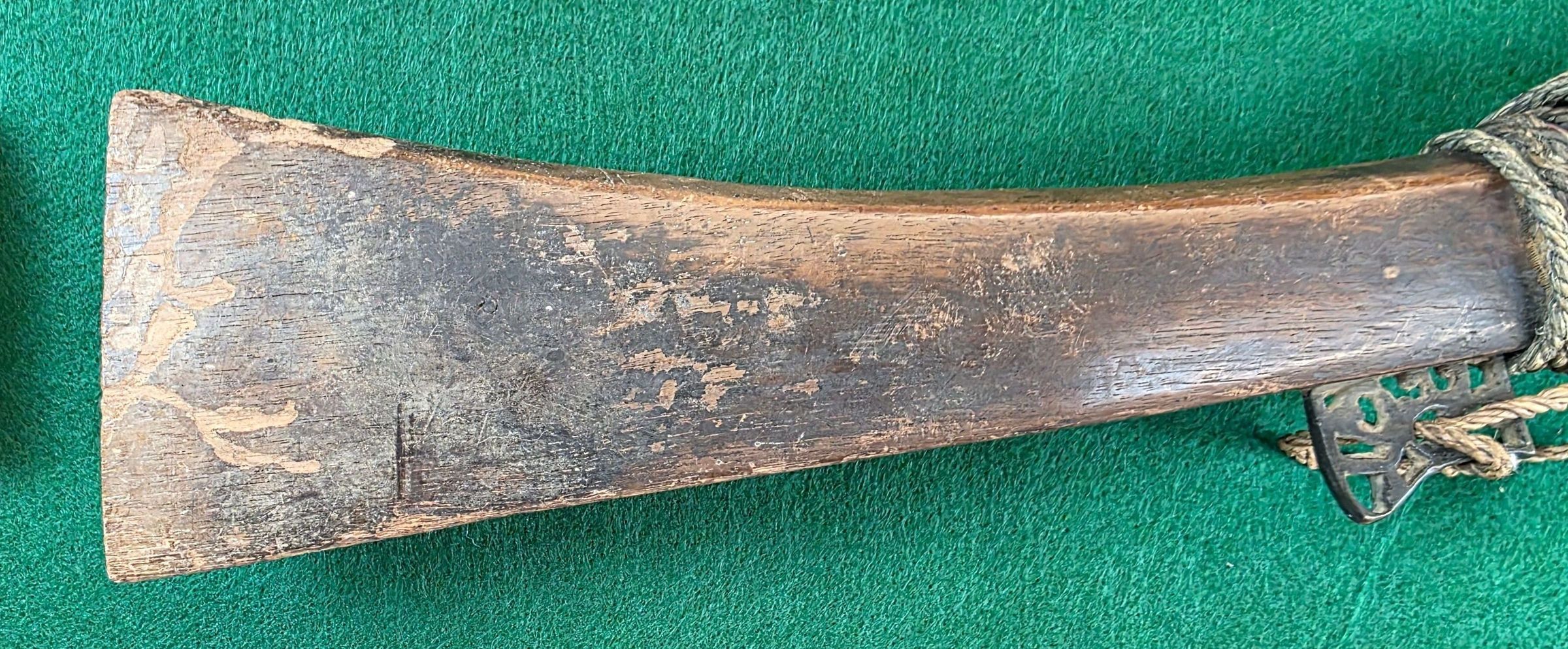
• The Barrel: A high-status, multi-staged iron barrel transitioning from a round breech section into a continuous octagonal profile. The top presentation flats feature a running vertical sequence of Islamic calligraphic cartouches (medallions) containing chiseled Arabic script. The surrounding metalwork is adorned with deep-relief floral vine and rosette patterns. Traces of historical silver wire inlay (koftgari/damascening) remain visible inside the chiseled grooves, bounded along the left lower wood line by a repeating geometric saw-tooth/serrated motif. A block-style iron rear sight and a fixed muzzle-end iron front sight are integrated directly into the barrel flats. • The Stock: Hand-carved from dense regional hardwood, finished with a deep, dark brown patina built up from layers of handling oils and organic fats applied to prevent arid wood splitting. The architecture is characterized by a straight, downward-sloping, five-sided (pentagonal) Omani profile designed to be tucked under the shooter's bicep or cheek rather than held against the shoulder. The belly of the stock houses an ornate, hand-forged open-work iron trigger fixture. • Ignition Components: Features a slender iron cock/serpentine arm designed to grip a slow-burning match cord. An authentic piece of woven match cord remains secured through the trigger framework. A hand-cast iron flashpan and vertical flash-shield fence are mounted on the right side of the breech block.Context
• Note on Historical Records: Legacy museum paperwork originally transcribed the discovery site as the "Oldman Desert" and cataloged the piece under the nomenclature of a "Portuguese Matchlock." Modern arms analysis resolves these entries as clerical/phonetic errors. The "Oldman Desert" is corrected to the Oman Desert, which perfectly aligns with the weapon's physical classification. Furthermore, while the term "Portuguese" reflects the early European maritime traders who initially introduced matchlock ignition architecture to the Indian Ocean in the 16th century, the assembly itself is an indigenous Arabian creation. • Historical Significance: This artifact beautifully documents the global firearms trade networks connecting the Ottoman Empire and the Arabian Peninsula during the 17th through 19th centuries. An elite, beautifully chiseled Ottoman or Persian imperial barrel was salvaged, transported to southeastern Arabia, and completely restocked in the iconic Omani pentagonal fashion. Kept firing via rugged local blacksmithing and cord repairs, it survived intact on the desert frontier until its 20th-century recovery by Mr. Book.*Category
Firearms, Rifle, Muzzleloader, Matchlock
Action