Name/Title
Three Ceremonial Portraits of Vijaya Kumari Ramakrishna During Coming-of-Age CelebrationEntry/Object ID
168Description
Summary
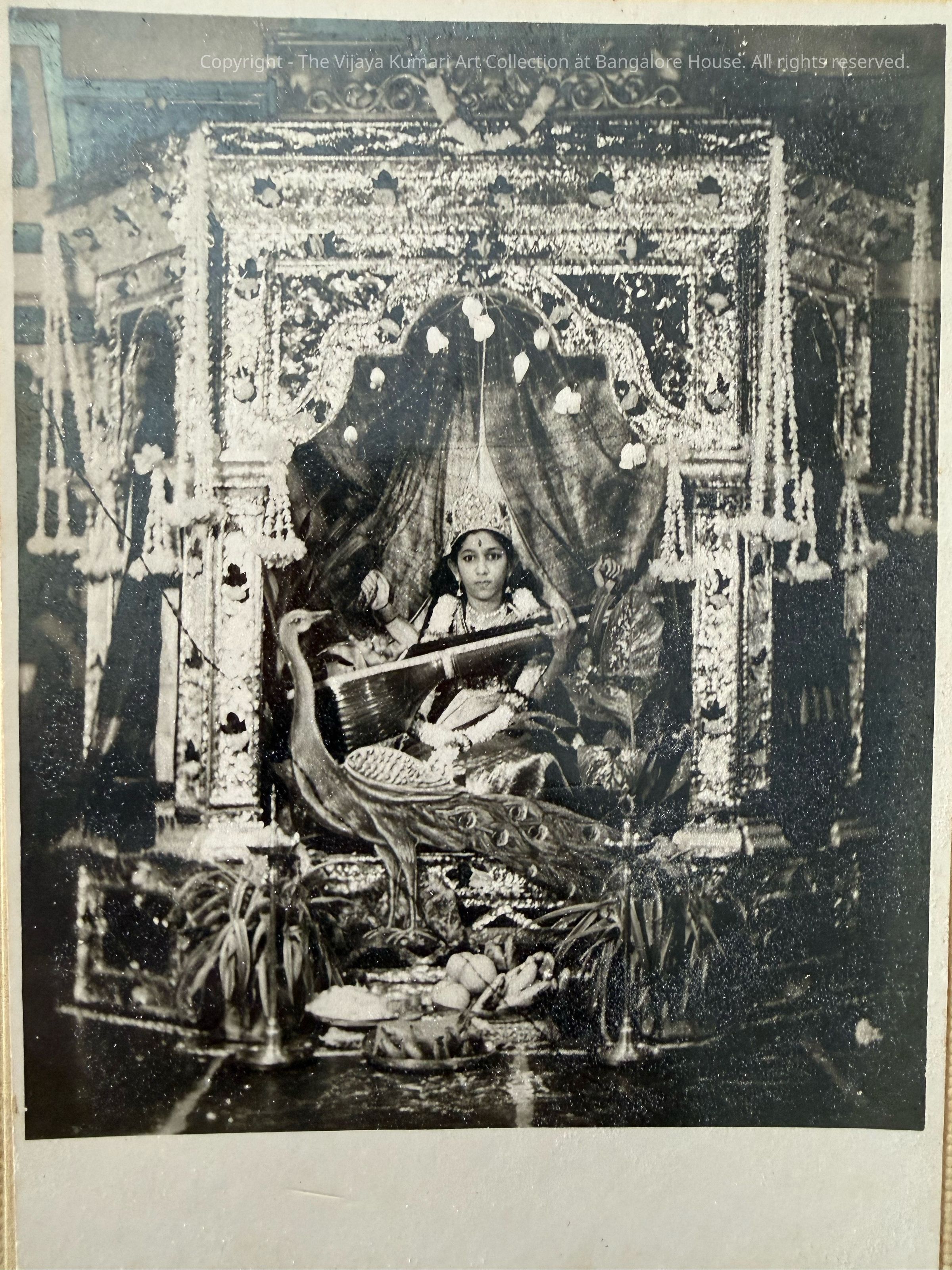
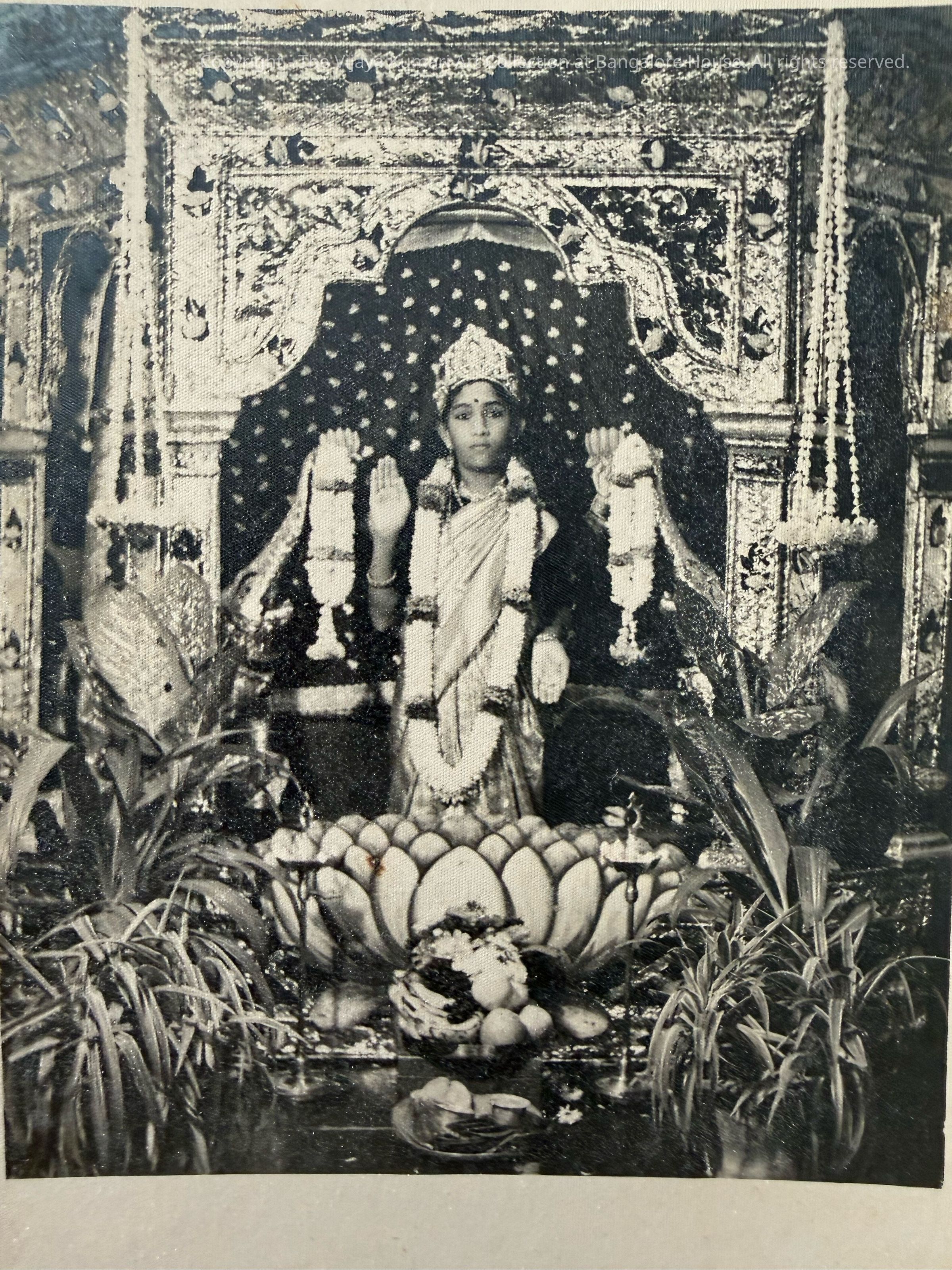
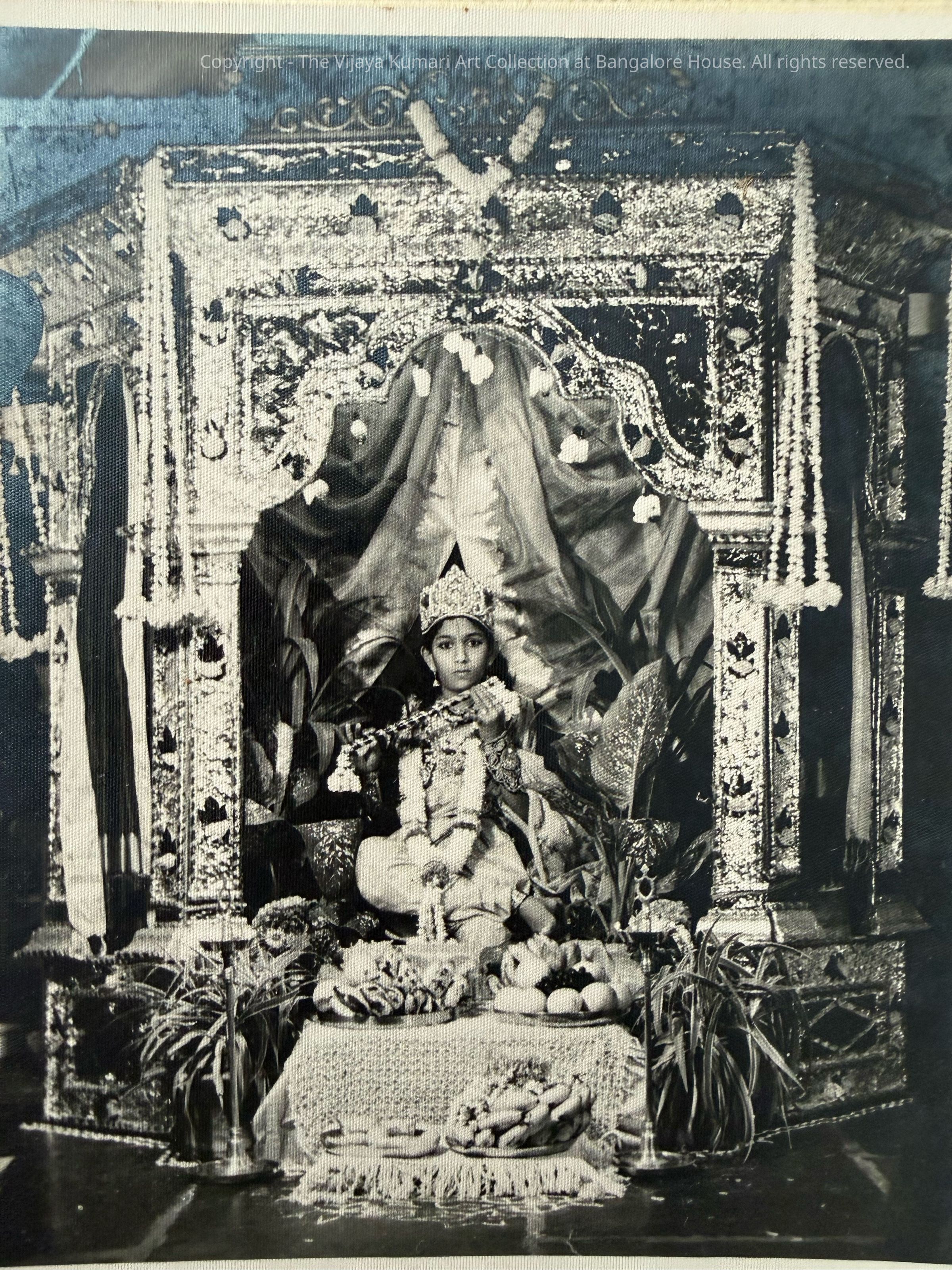
Group of three black-and-white ceremonial photographs depicting Vijaya Kumari Ramakrishna during a traditional South Indian coming-of-age celebration in Bangalore. In the photographs, she appears costumed respectively as the Hindu deities Saraswathi, Lakshmi, and Krishna within elaborate ritual settings incorporating floral garlands, lamps, offerings, decorative structures, and devotional iconography. The photographs preserve important evidence of mid-20th-century ceremonial culture surrounding female adolescence and family celebration in South India.
⸻
Detailed
This set of three ceremonial black-and-white photographs documents Vijaya Kumari Ramakrishna during a traditional South Indian coming-of-age celebration held in Bangalore during the late 1950s or early 1960s. During this period, girls’ coming-of-age ceremonies in many South Indian families could involve large domestic gatherings, ritual observances, formal photography, and elaborate symbolic presentation marking transition into womanhood.
The photographs show Vijaya Kumari portrayed in three distinct devotional forms: Saraswathi, Lakshmi, and Krishna. Each image places her within a richly ornamented ceremonial pavilion incorporating garlands, textiles, ritual lamps, fruits, decorative foliage, and temporary architectural staging characteristic of domestic ceremonial culture of the period. The scale and theatricality of the arrangements reflect the importance attached to such celebrations within aspirational middle-class Bangalore households during the early post-independence era.
In the Saraswathi portrait, Vijaya Kumari appears seated with a veena and swan imagery associated with the Hindu goddess of learning, music, and knowledge. In the Lakshmi portrait, she stands amid lotus imagery, ritual lamps, and offerings associated with prosperity and auspiciousness. In the Krishna portrait, she appears seated with a ceremonial flute and devotional adornment associated with Krishna iconography.
Collectively, the photographs preserve significant visual evidence of gendered ceremonial traditions, domestic ritual staging, and devotional performance practices in South India during the mid-20th century. Within the broader context of The Vijaya Kumari Art Collection, the images also resonate with later themes central to Bangalore House, particularly the relationship between education, ritual culture, femininity, performance, and symbolic identity.
The photographs remain adhered to their original cardboard backing mounts, a presentation format commonly used by commercial studios and photographers in mid-20th-century South India for ceremonial and commemorative portraiture. Such mounts provided rigidity, durability, and a more formal presentation suitable for display, exchange among relatives, or preservation within family albums and household archives.