Name/Title
Engraved and Painted Souvenir Cowrie Shell with “Be Happy” MottoEntry/Object ID
178Description
Summary
Decorated cowrie shell engraved and hand-painted with tropical imagery and the phrase “BE HAPPY,” acquired by Vijaya Kumari Ramakrishna during a South Indian family tour circa 1973–1975. The shell likely originated from a coastal tourist market in Karnataka or Tamil Nadu and reflects a category of inexpensive vernacular souvenirs commonly sold to domestic travelers during the period.
Although modest in commercial value, the object possesses strong curatorial significance within Bangalore House due to its direct association with Vijaya Kumari Ramakrishna’s travel life, long-term domestic display, and the unexpectedly resonant message “Be Happy,” a phrase closely aligned with the emotional and philosophical atmosphere of Bangalore House itself. The object also preserves evidence of an earlier hand-crafted tourist tradition in which shells were both engraved and painted, rather than merely surface-painted as in many later examples.
⸻
Detailed
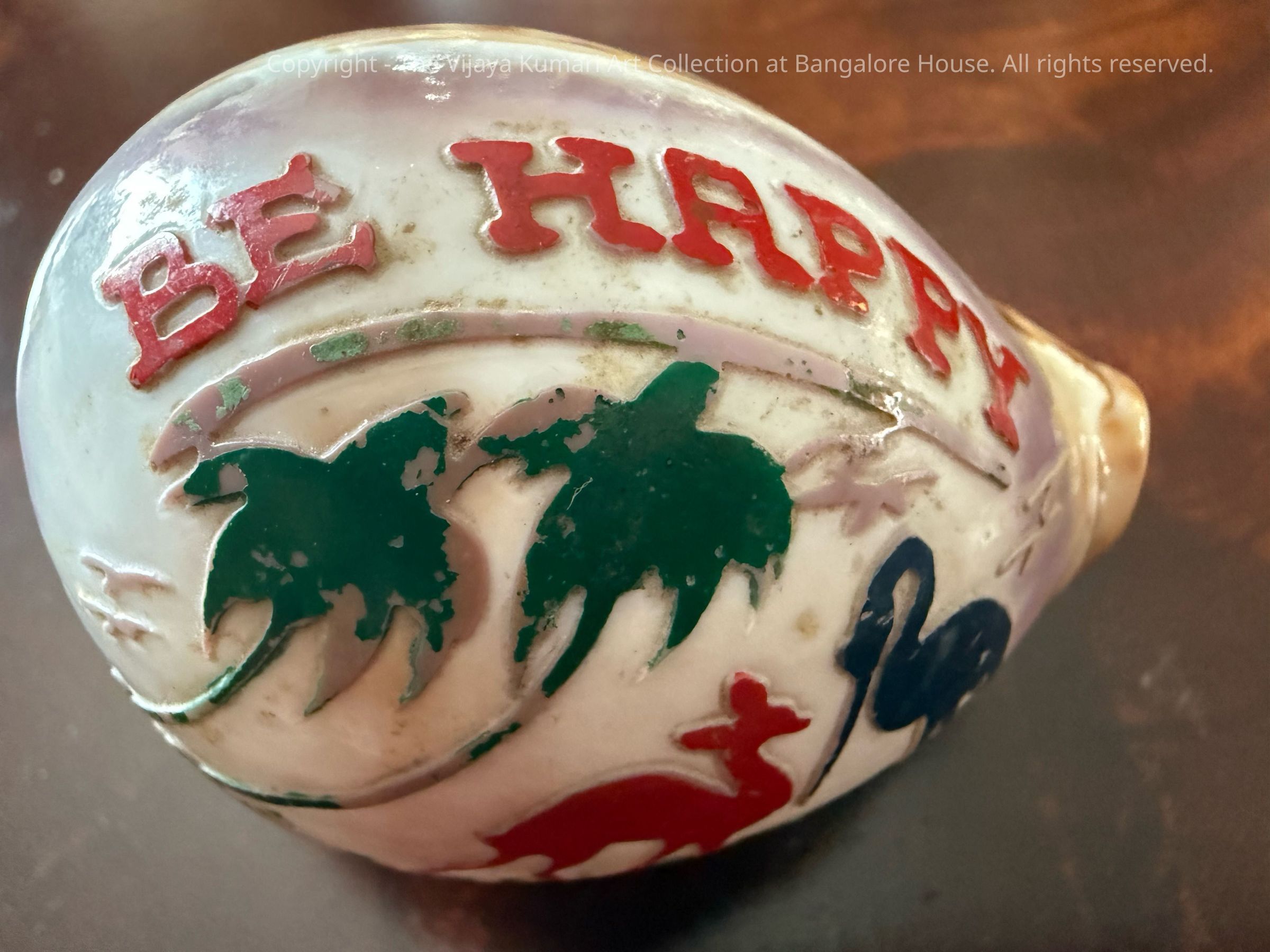
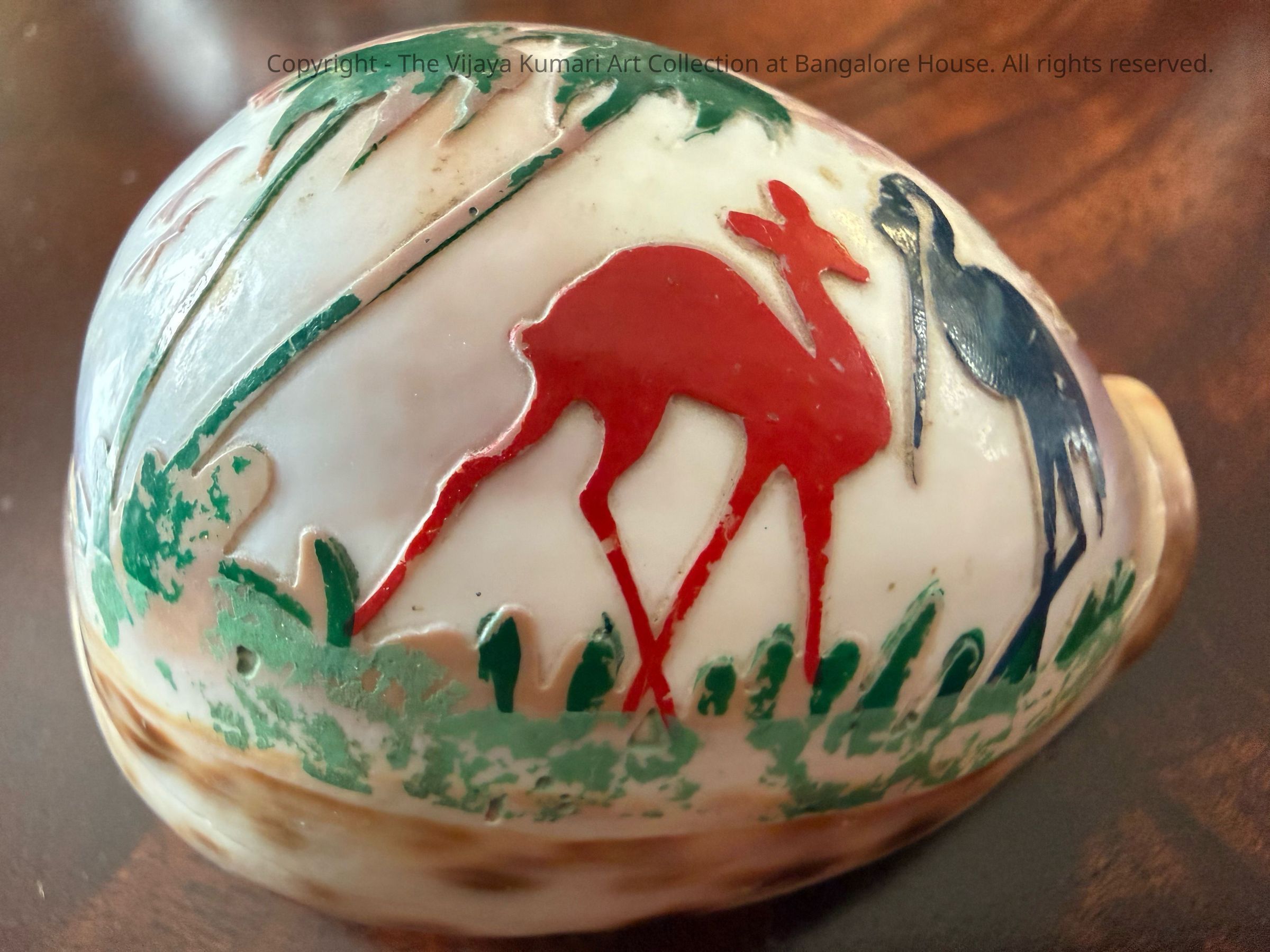
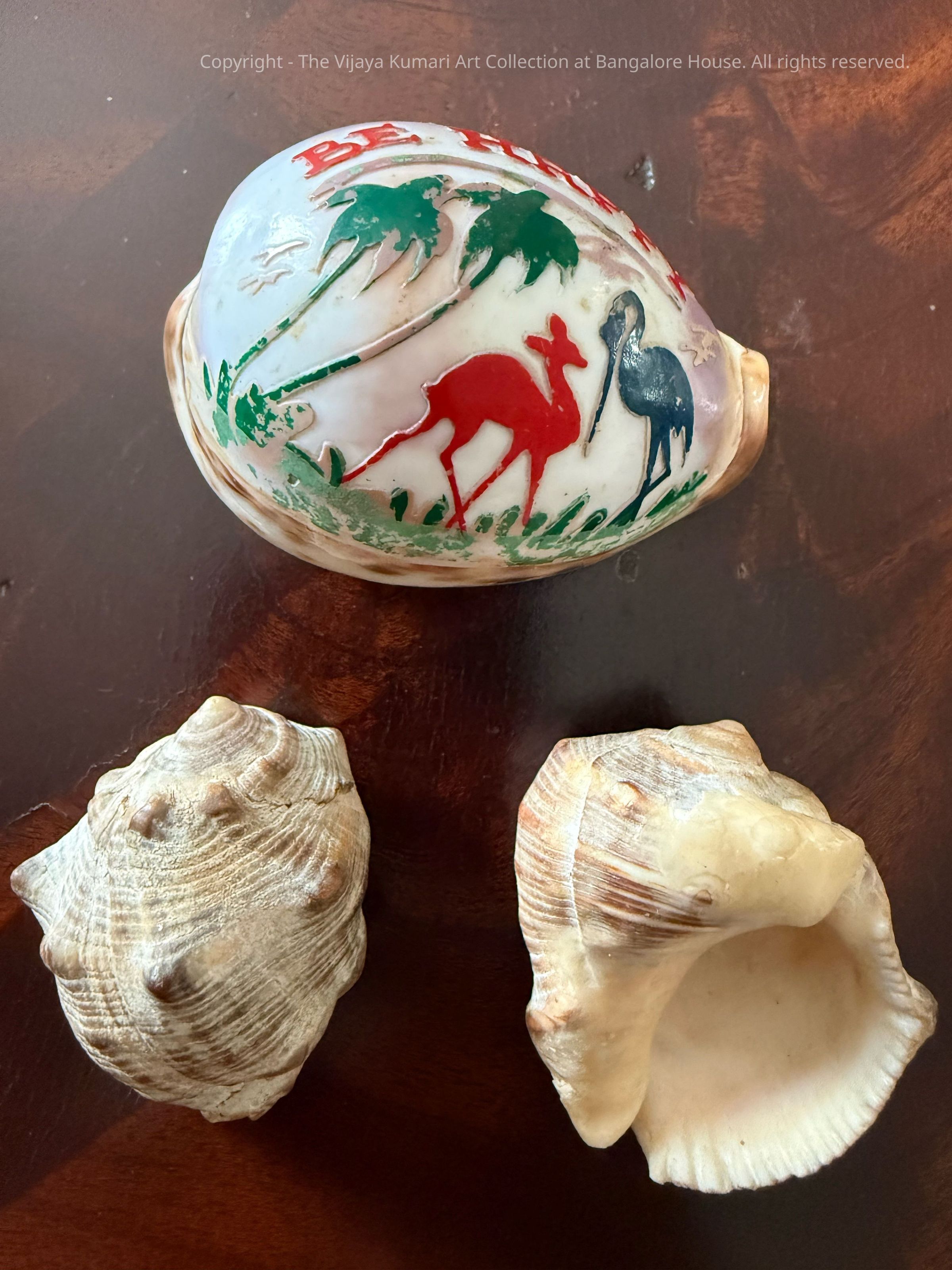
The object consists of a natural cowrie shell decorated through shallow engraving and hand-painted enamel or lacquer pigments. One side features the raised phrase “BE HAPPY” executed in red lettering across the upper curve of the shell. Below the text appears a stylized tropical landscape incorporating palm trees, birds, marsh vegetation, and long-legged wading birds rendered in green, blue-black, and red pigments.
The engraved outlines remain clearly visible beneath and around the painted surfaces, indicating that the imagery was first incised into the shell before color application. This combination of engraving and painting reflects a more labor-intensive method than many later tourist shells, which were often only painted or screen-decorated without carved detailing.
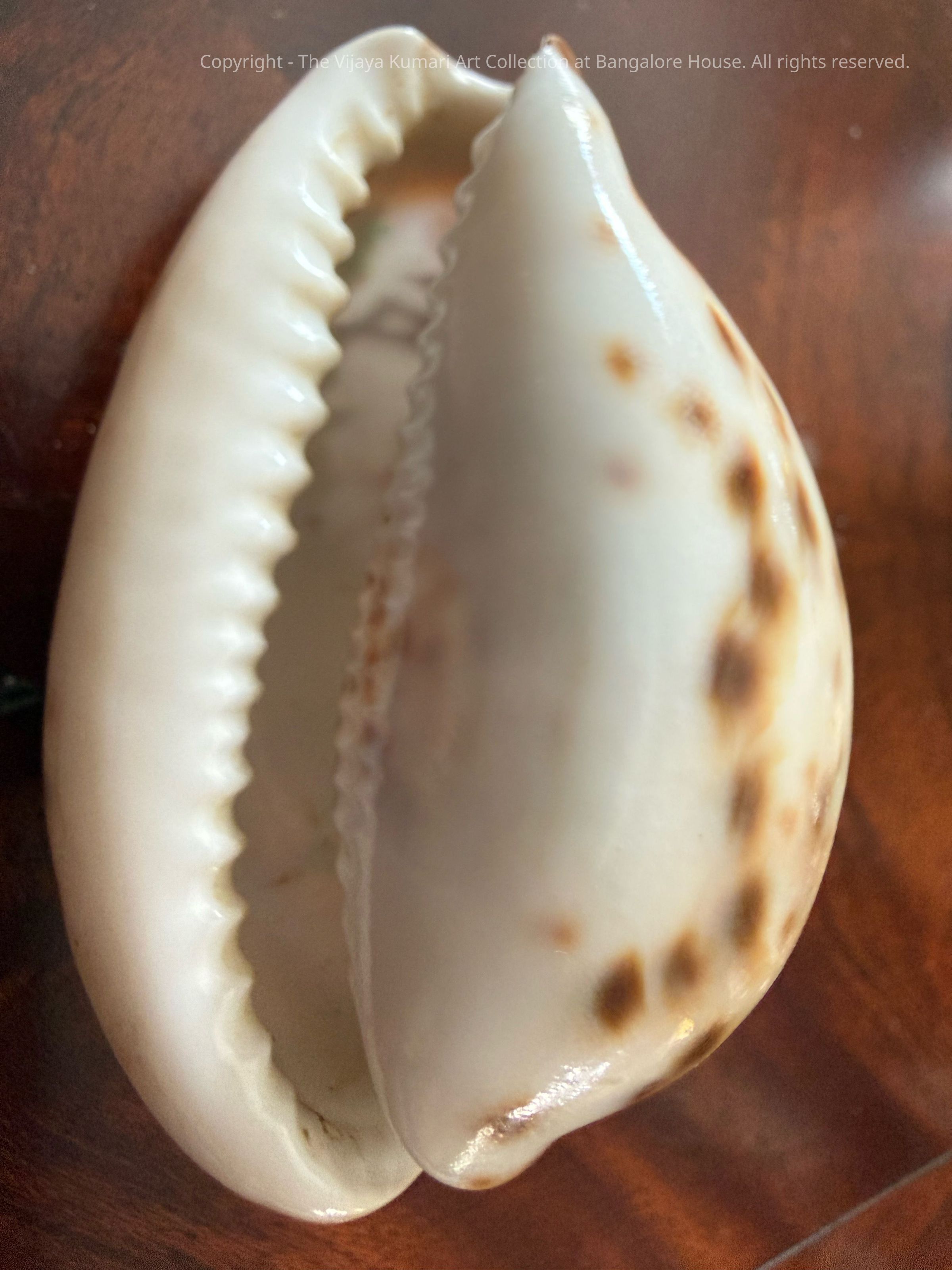
The opposite side retains the shell’s natural opening and serrated interior lip, preserving the object’s material identity as an unmodified marine shell rather than a cast imitation. Natural spotting and tonal variation remain visible around the outer shell margins.
Wear patterns indicate long-term domestic display and handling. Areas of paint loss, abrasion, and surface fading are visible throughout, particularly within the green foliage and portions of the lettering. These losses are consistent with age, handling, and prolonged exposure within a household display cabinet.
According to family history, the shell was purchased by Vijaya Kumari Ramakrishna during a South Indian tour with her husband’s sister’s family circa 1973–1975. The object remained in her display cabinet throughout the owner’s childhood and was later brought into Bangalore House shortly before or shortly after her passing in 2013.
The shell carries unusual interpretive significance within the context of Bangalore House because of its “BE HAPPY” inscription. Although originally intended as a generic tourist sentiment, the phrase retrospectively aligns with the house’s enduring ethos of hospitality, emotional warmth, continuity, and cultivated domestic joy. As such, the object functions simultaneously as travel souvenir, vernacular craft object, and inadvertent philosophical emblem.
Associated Objects
Two additional smaller natural seashells, likely collected directly from a shoreline near Mangalore, India, accompany the principal souvenir shell. Unlike the engraved shell, these appear unmodified and retain their natural marine surfaces and forms. They reinforce the broader theme of coastal travel memory and informal family collecting.Made/Created
Date made
circa 1973 - 1975Place
Region
South IndiaCountry
India