Infant Rattle with Pierced Spherical Terminals
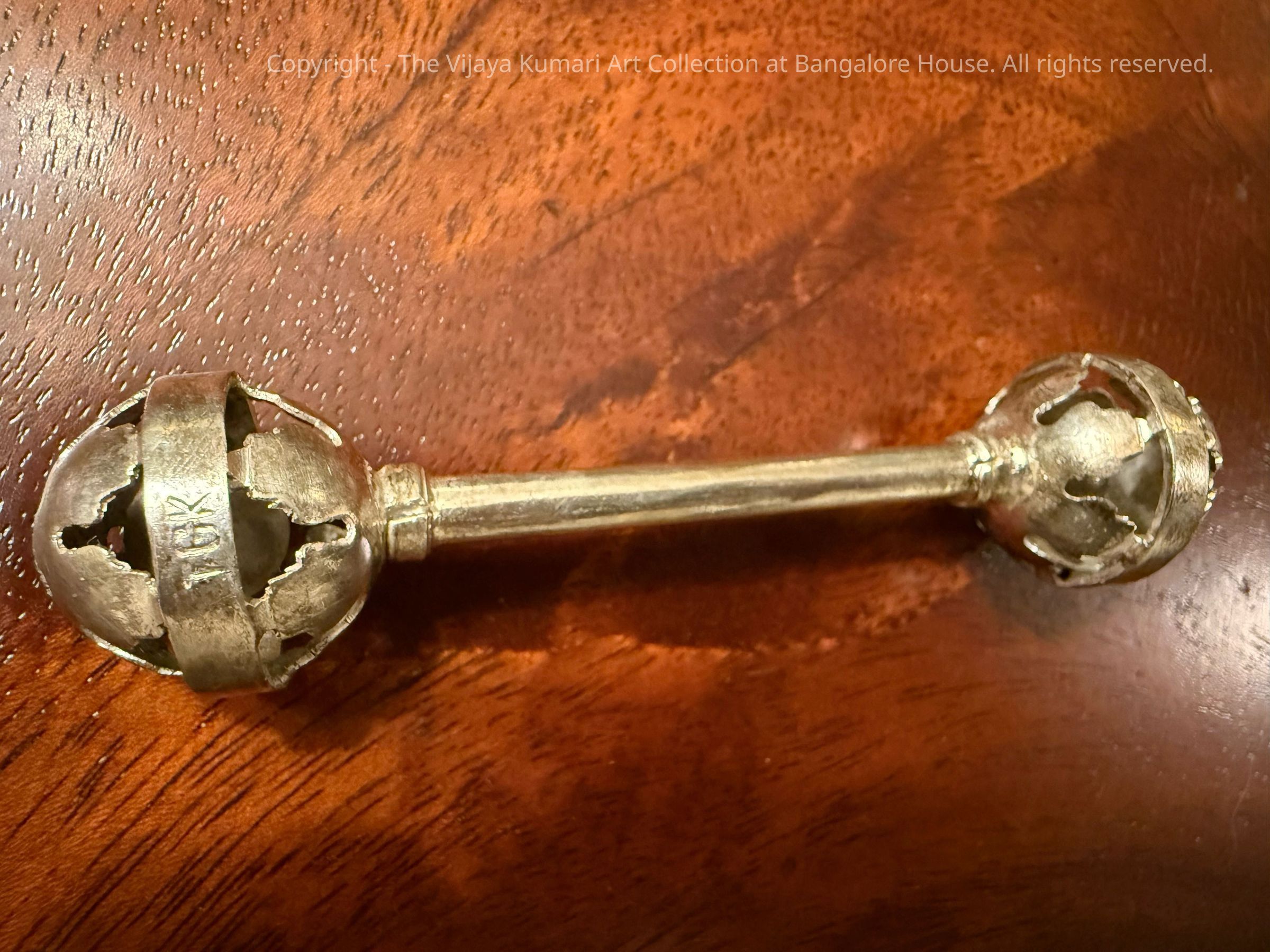
Silver Infant Rattle
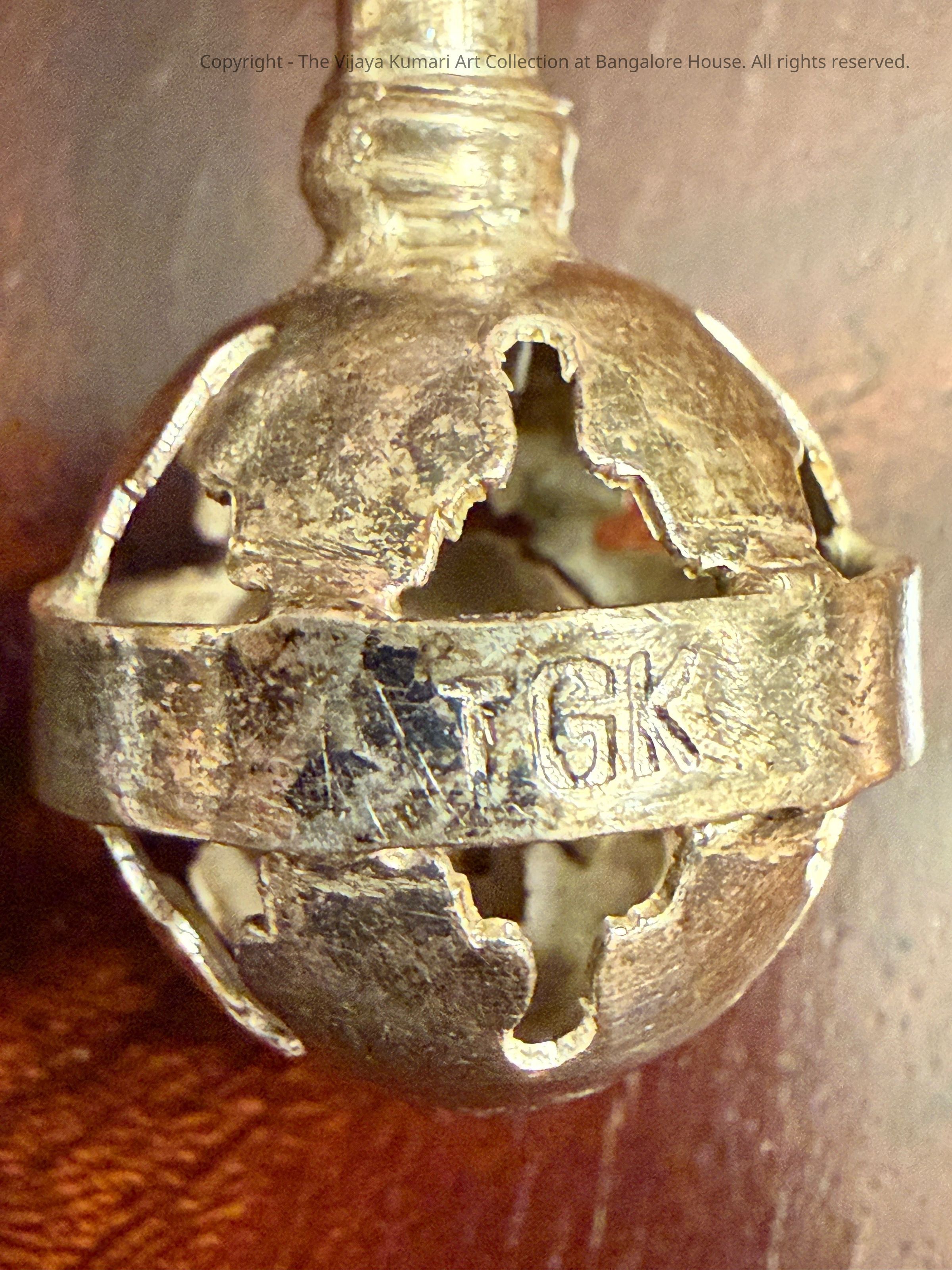
Overall view of the handcrafted silver infant rattle with pierced spherical terminals and central handle. The maker’s mark “TGK” appears on the applied terminal bands.
Name/Title
Infant Rattle with Pierced Spherical TerminalsEntry/Object ID
122Description
Summary Handcrafted silver infant rattle with pierced spherical terminals enclosing loose internal elements, producing sound when shaken. Made in Bangalore circa 1968 and preserved within the family, the piece bears the maker’s mark “TGK” on both terminal bands. Retained and later returned by the owner’s mother, it represents both a vernacular form of South Indian silverwork and one of a limited number of objects carried forward from the family’s home in India. ⸻ Detailed The rattle is composed of a straight cylindrical handle terminating at both ends in hollow spherical forms constructed from joined hemispherical sections. Each sphere is pierced with irregular, hand-cut openings and encircled by an applied equatorial band stamped “TGK.” The internal loose elements, enclosed during fabrication, produce sound when the object is shaken. The surfaces display fine hammering and finishing marks consistent with hand fabrication rather than industrial manufacture. The pierced apertures retain slight tearing and asymmetry, indicating manual cutting. The stamped mark shows minor variation in depth and alignment, further supporting workshop production. The silver retains a warm, bright tone following only light washing, with areas of oxidation remaining in recessed surfaces. This behavior suggests relatively high silver content and confirms the absence of aggressive polishing, preserving the original surface character. Minor surface wear and micro-abrasions are present but consistent with age; the structure remains intact with no significant deformation. The form draws upon traditional South Asian bell (ghunghroo) constructions, translated into an infant rattle intended for sensory engagement and possibly auspicious gifting. While modest in scale and execution, the object reflects continuity between craft tradition and domestic life in mid-20th century Bangalore. The object was preserved by the owner’s mother and later given back to the owner prior to her passing. As few objects from the family home in India were retained following the owner’s relocation to the United States, this rattle assumes added significance as a surviving link between place, family history, and early life. Although originally intended as an infant object, the rattle retains a quiet functional presence through its material durability and tactile qualities. It may still be handled and sounded, and serves as a physical point of continuity between early life, place of origin, and present context. Its retention within the collection is not decorative but functional in a broader sense, operating as a biographical and material anchor within a limited group of objects transmitted across generations.Use
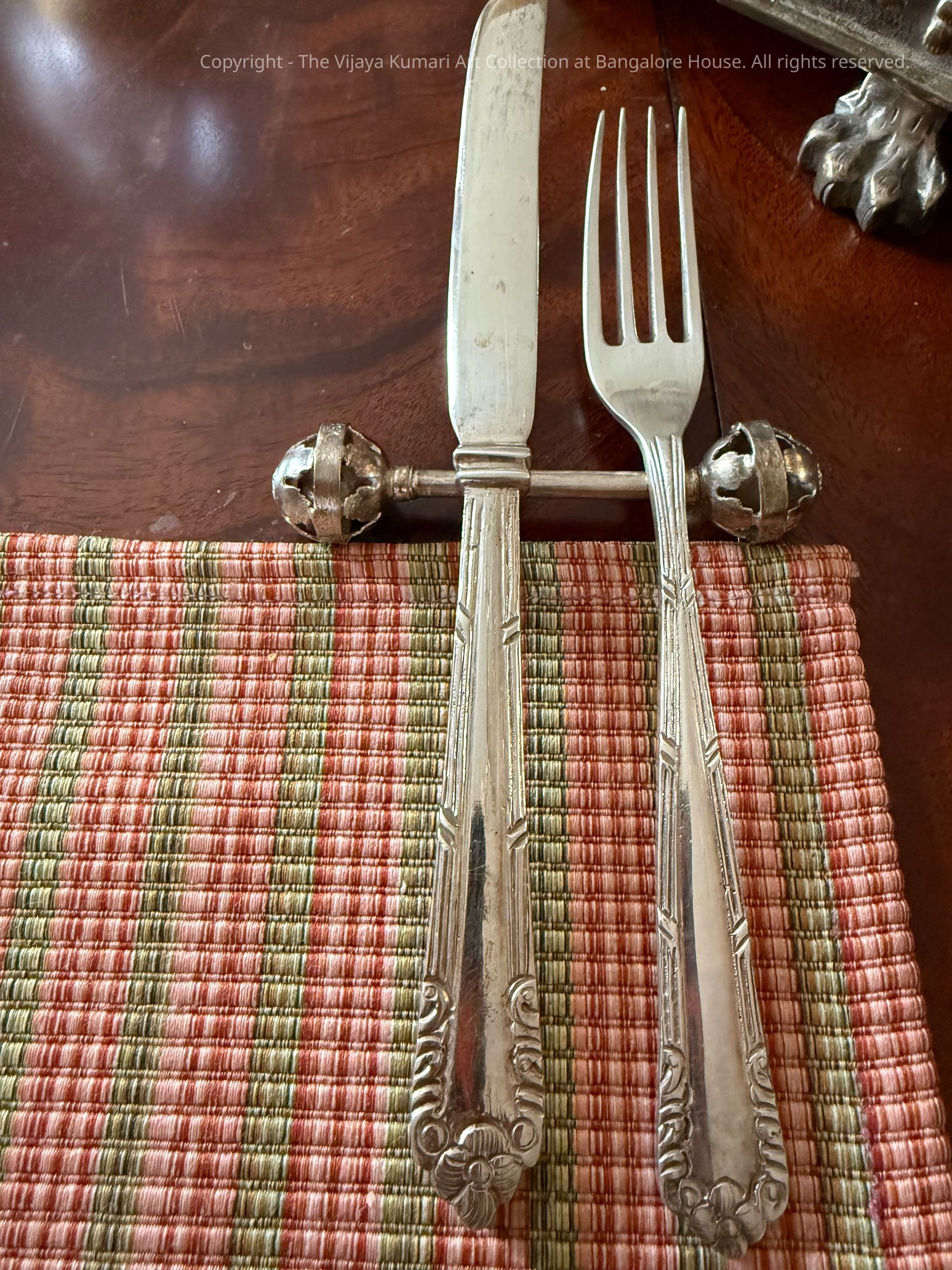
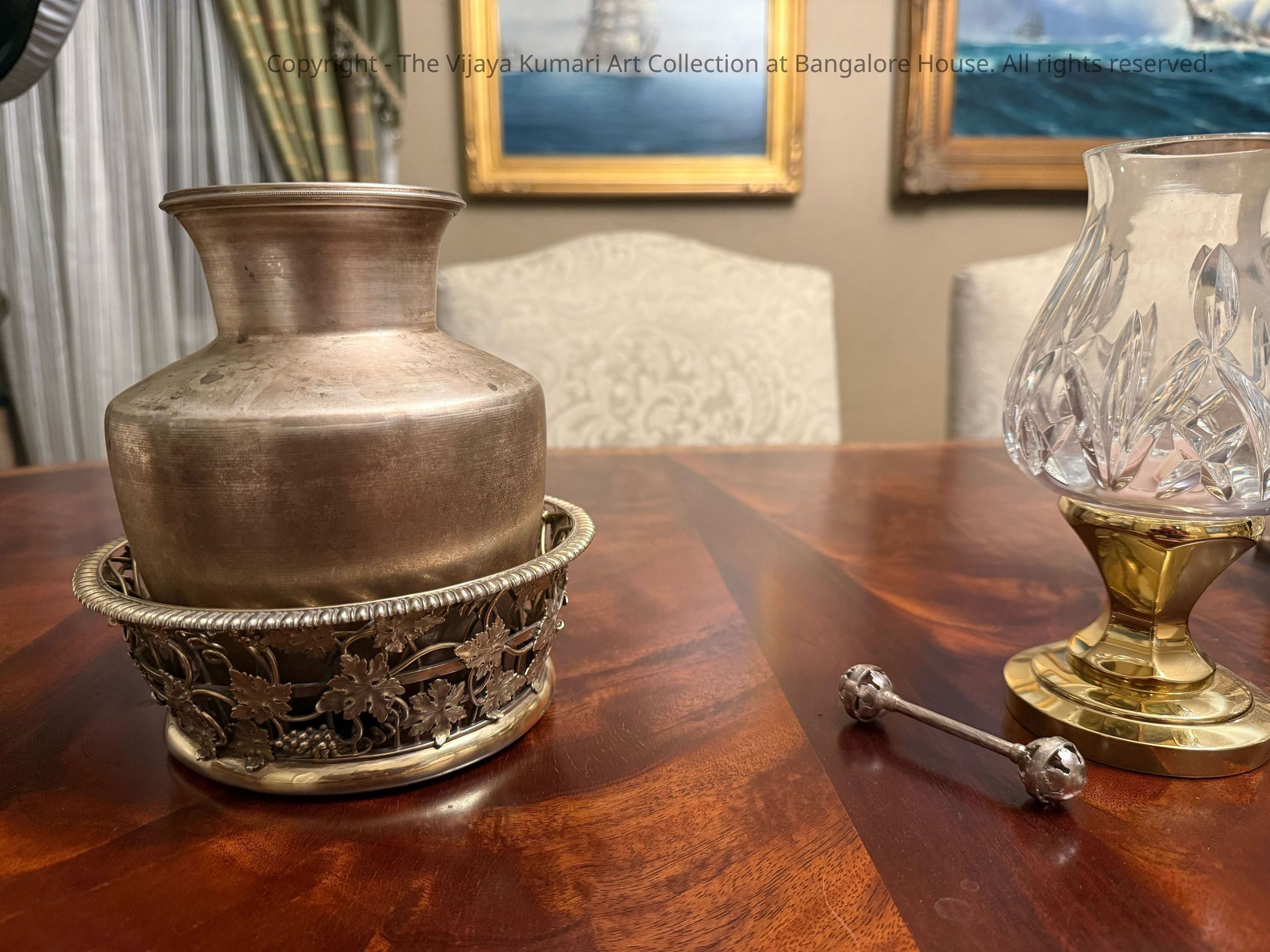
Historical: rattle to soothe baby Current: In its present use within the dining setting, the object functions as a knife rest, its spherical terminals elevating utensils above the table surface. This secondary use is structurally compatible with the form and extends the object’s functional life without alteration. In its present context, the object also functions as a small hand-held signaling instrument within the dining setting—used to gather attention, initiate a toast, or circulate among guests—extending its original auditory purpose into a contemporary social role.Category
Permanent Collection