Name/Title
Hand-Embroidered Table Cover with Floral Cross-Stitch BorderEntry/Object ID
157Description
Summary
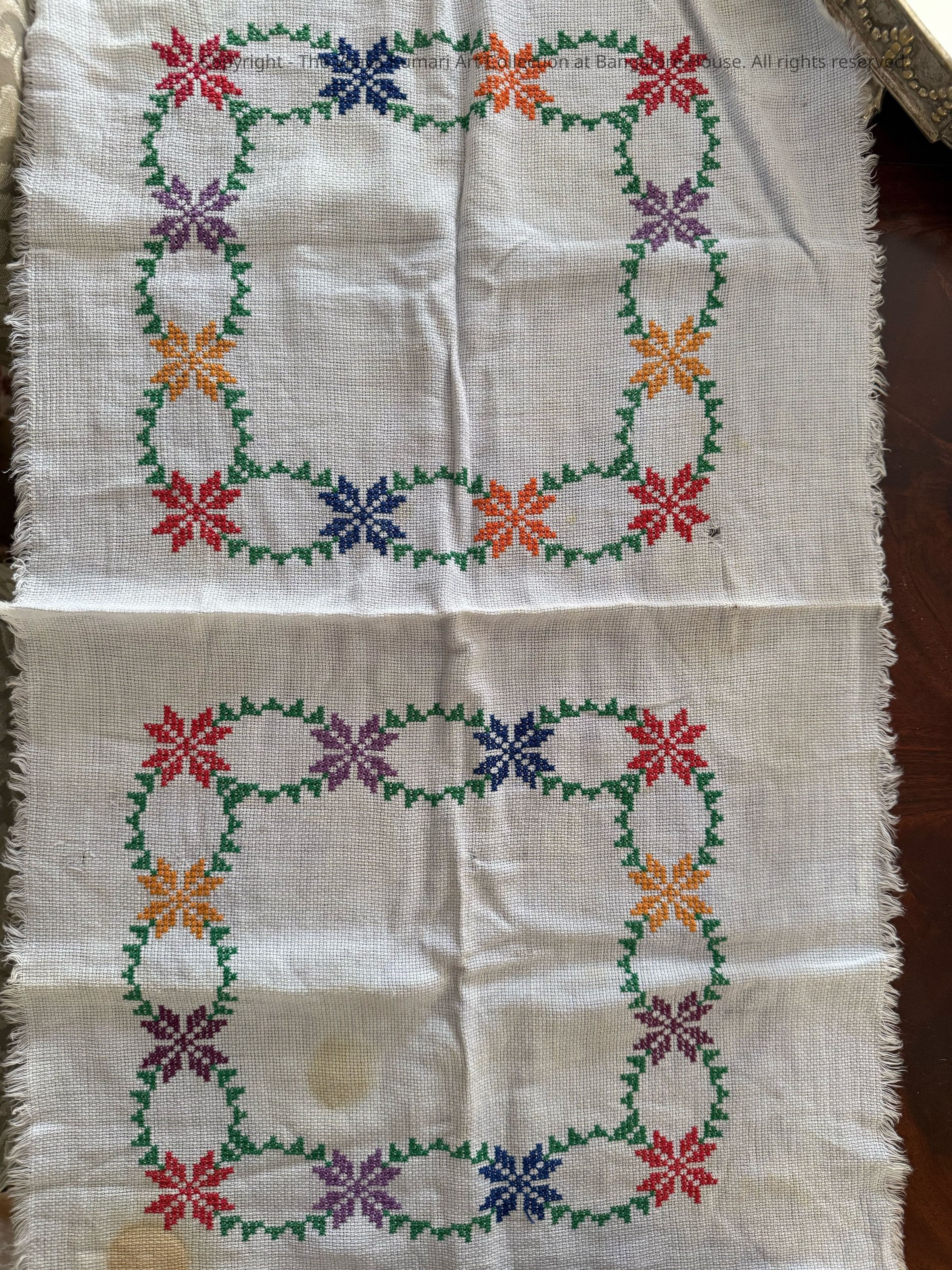
A hand-embroidered domestic textile executed by Vijaya Kumari Ramakrishna in Karnataka during the mid-1970s, following instruction from the owner’s paternal aunt, who practiced needlework and decorative handcraft traditions. The textile features two large rectangular floral borders worked in brightly colored cross-stitch embroidery on an open-weave cotton ground. Originally used actively within the family home as both a table covering and protective radio cover, the textile survives as a materially worn but emotionally significant document of South Indian domestic craft culture of the period.
The object was given directly to the owner during Vijaya Kumari’s final visit to Bangalore House in June 2012 and is now preserved within her memorial cabinet as a biographical and cultural artifact rather than a decorative textile alone.
Detailed
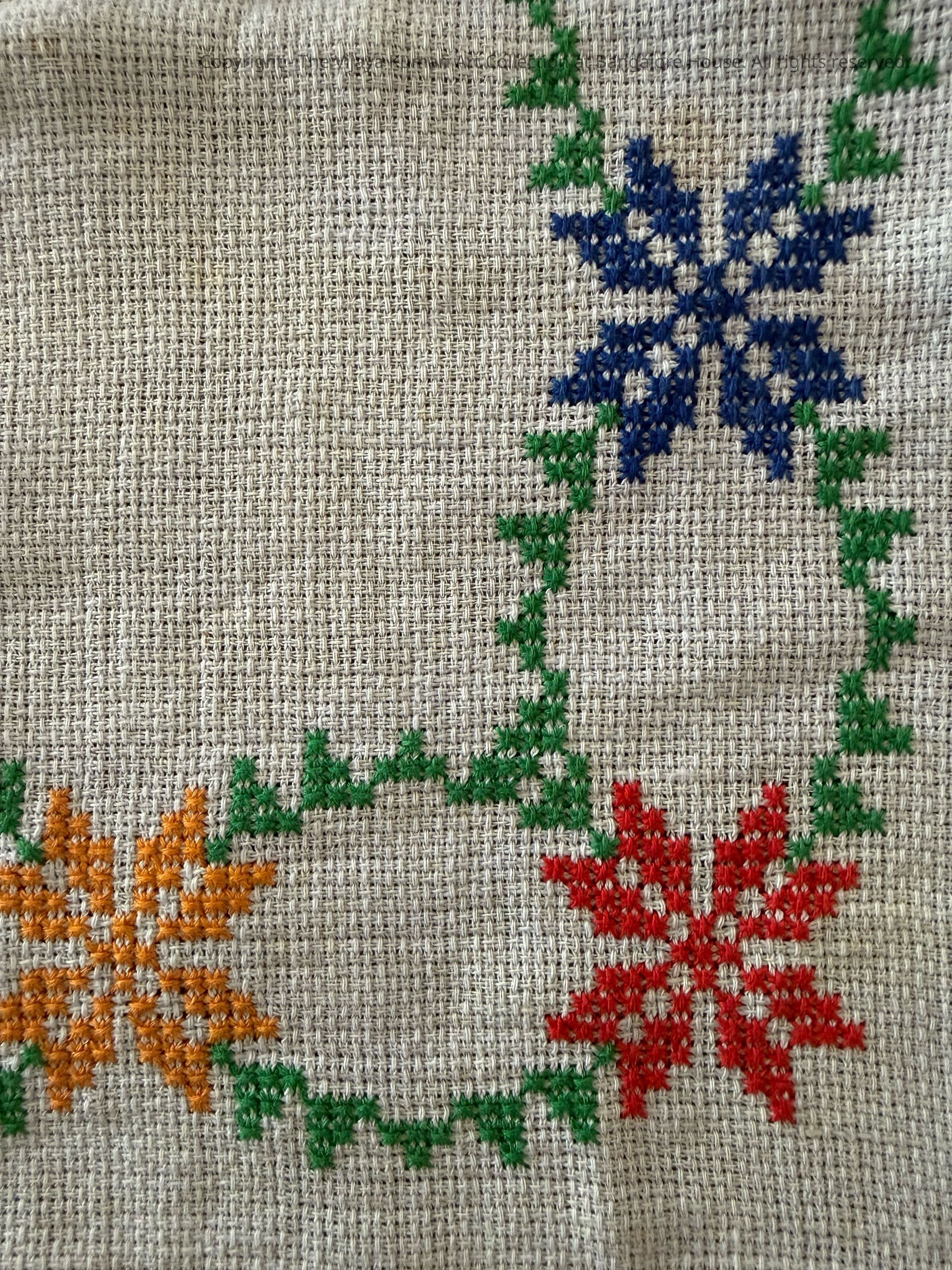
Rectangular hand-embroidered textile constructed from a loosely woven off-white cotton ground cloth with visible grid structure suitable for counted-thread embroidery. The textile is decorated with two large rectangular looping borders composed of repeating floral starburst motifs connected by green zig-zag vine forms. Floral motifs are worked in alternating red, blue, orange, and purple threads, producing a rhythmic geometric arrangement characteristic of domestic cross-stitch pattern traditions popular in India during the 1960s–1970s.
The embroidery is executed in counted cross-stitch with consistent stitch direction and generally disciplined spacing, indicating careful handwork by a non-professional but practiced domestic maker. The floral units are symmetrical and modular, suggesting use of either a printed guide, transferred pattern, or orally/shared domestic motif tradition common among women’s craft circles of the period.
The cotton ground is relatively coarse and utilitarian rather than fine linen, consistent with household-use textiles intended for repeated laundering and practical use. Edge finishing appears minimal; exposed selvage and fraying edges indicate either unfinished margins or long-term wear and laundering loss.
Condition reflects sustained domestic use over multiple decades. Visible wear includes:
generalized softening of the textile structure
scattered staining and discoloration
edge fraying and thread loss
minor distortions from folding and washing
localized abrasion to embroidered areas
age-related toning to the cotton ground
The object retains strong documentary and biographical integrity despite condition issues. Importantly, the visible wear is directly connected to its long functional life within the family household rather than neglect or improper storage. The textile was reportedly last washed by the maker herself prior to being transferred to Bangalore House for preservation in 2012.
The object functions within the collection as a memorial and cultural continuity artifact documenting:
mid-20th century South Indian women’s domestic craft practices
intergenerational transmission of hand skills among women
household textile use prior to widespread decorative consumer imports
the role of handcrafted domestic objects within everyday family life
Its significance is therefore primarily biographical, cultural, and ethnographic rather than market-based.