Name/Title
Pair of Porcelain German Shepherd (Alsatian) FigurinesEntry/Object ID
162Description
Summary
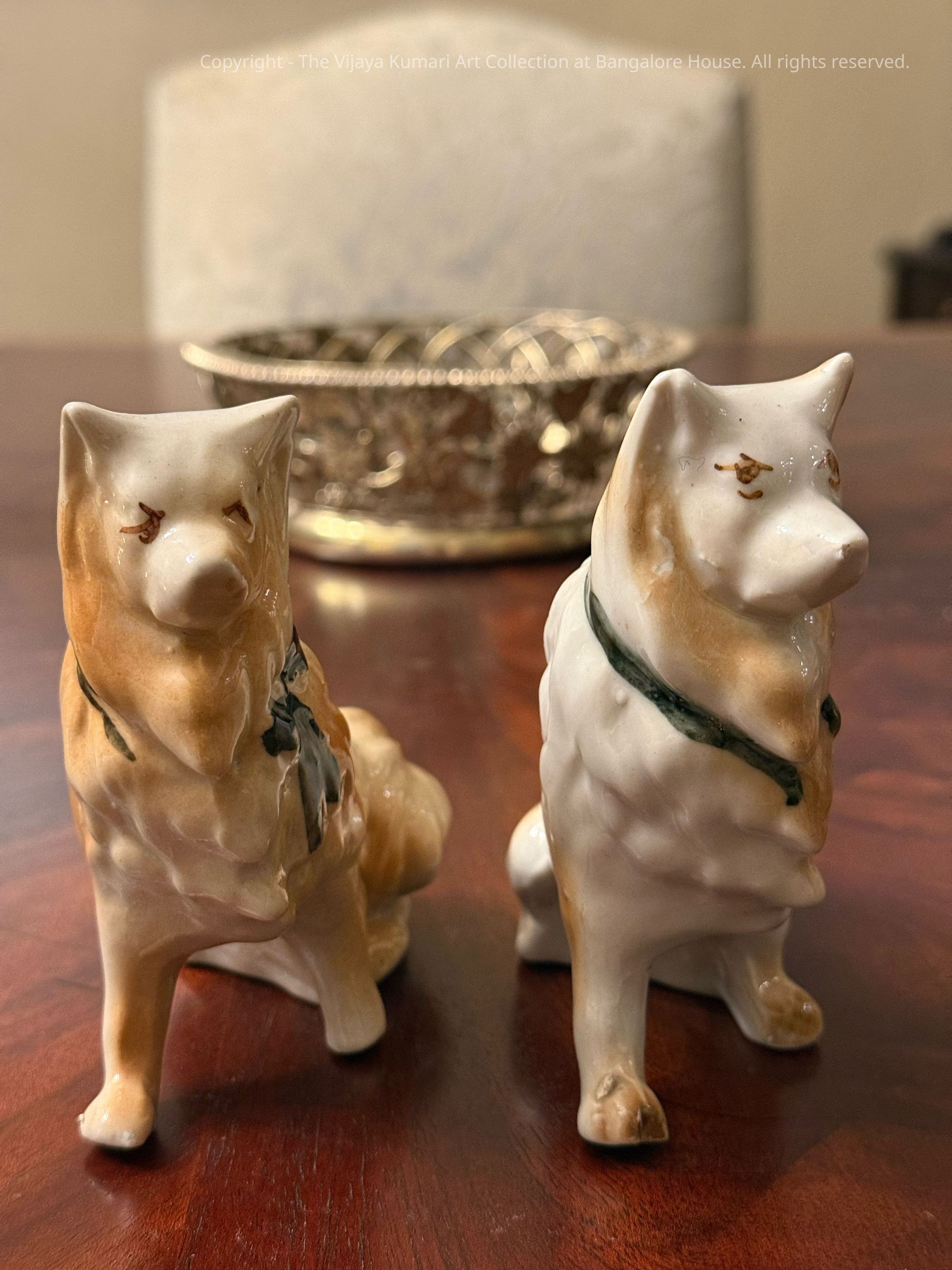
Pair of seated porcelain German Shepherd (Alsatian)-type dog figurines produced as inexpensive decorative household ceramics during the late 1960s or early 1970s. The figures were acquired by Vijaya Kumari Ramakrishna in Bangalore during the formative years of her household, likely contemporaneously with the porcelain Shiva bust and other objects associated with Dasara display traditions and domestic devotional environments.
Although modest commercial objects at the time of purchase, the pair accumulated substantial emotional and biographical significance through decades of family ownership and display. Vijaya Kumari later gave the figures to her younger sister, but personally retrieved and brought them to Bangalore House in San Jose in June 2012, shortly before her passing in 2013. Their importance within the collection derives from continuity of memory, domestic attachment, and intergenerational transfer rather than rarity or material value.
⸻
Detailed
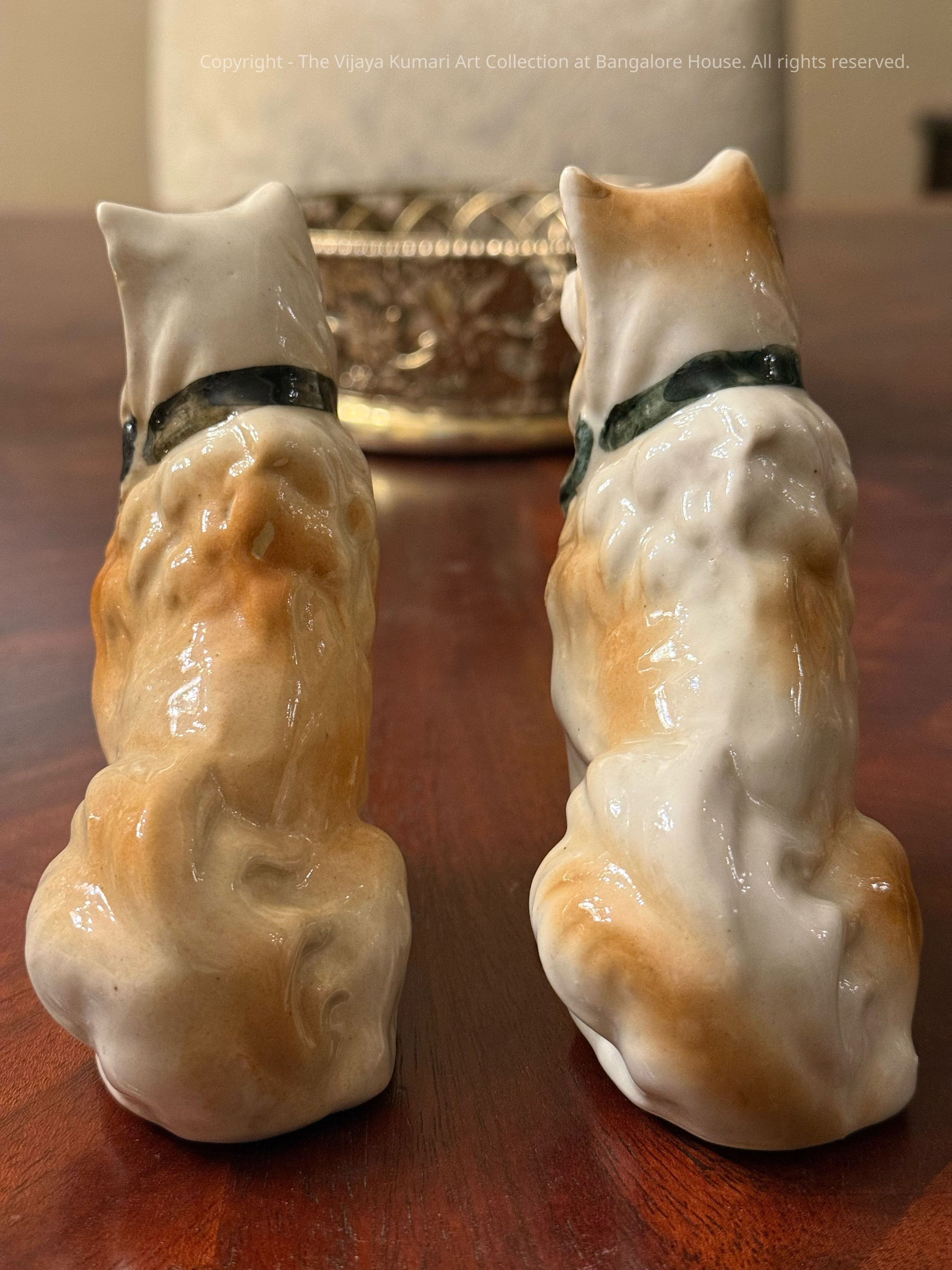
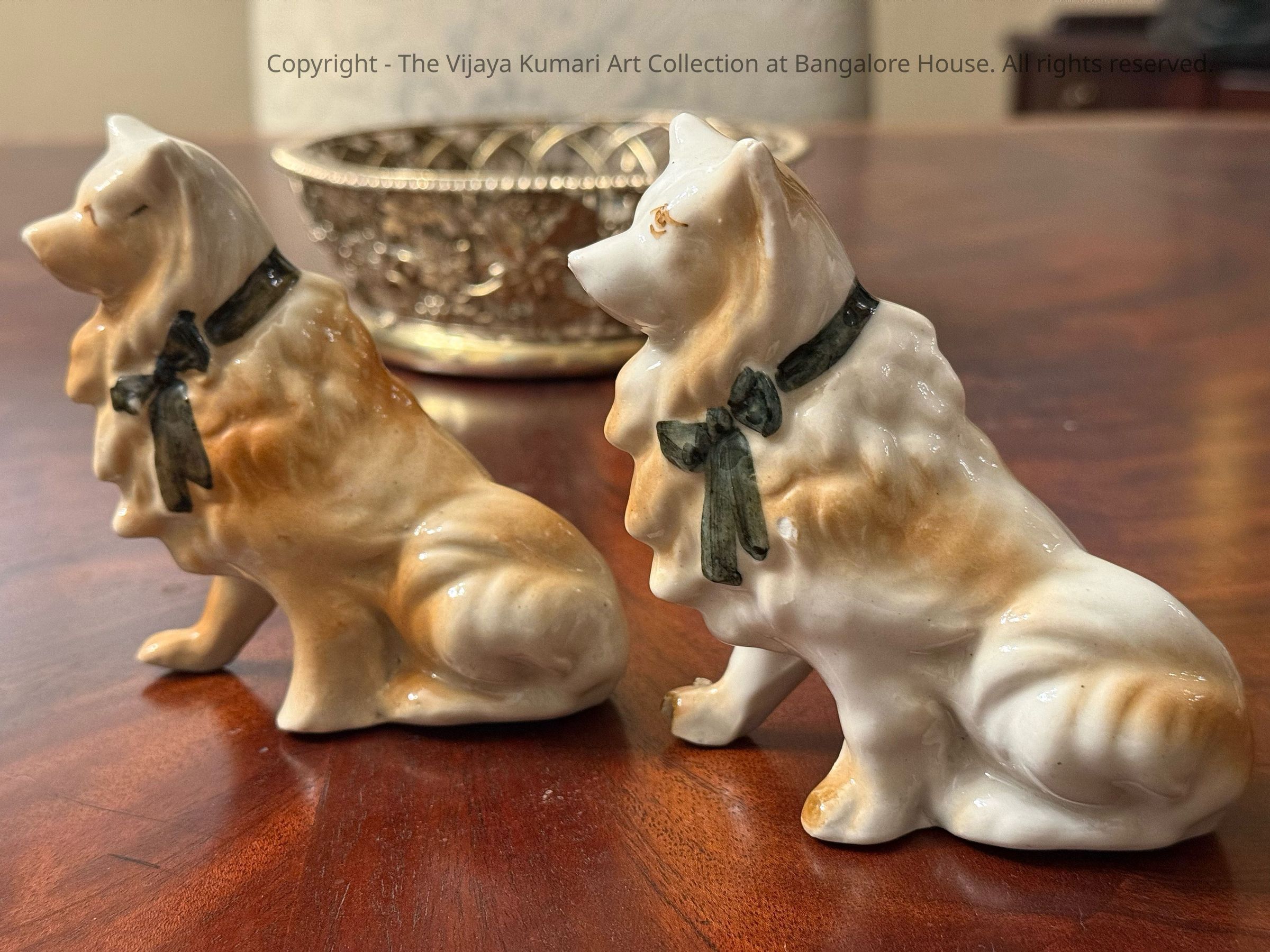
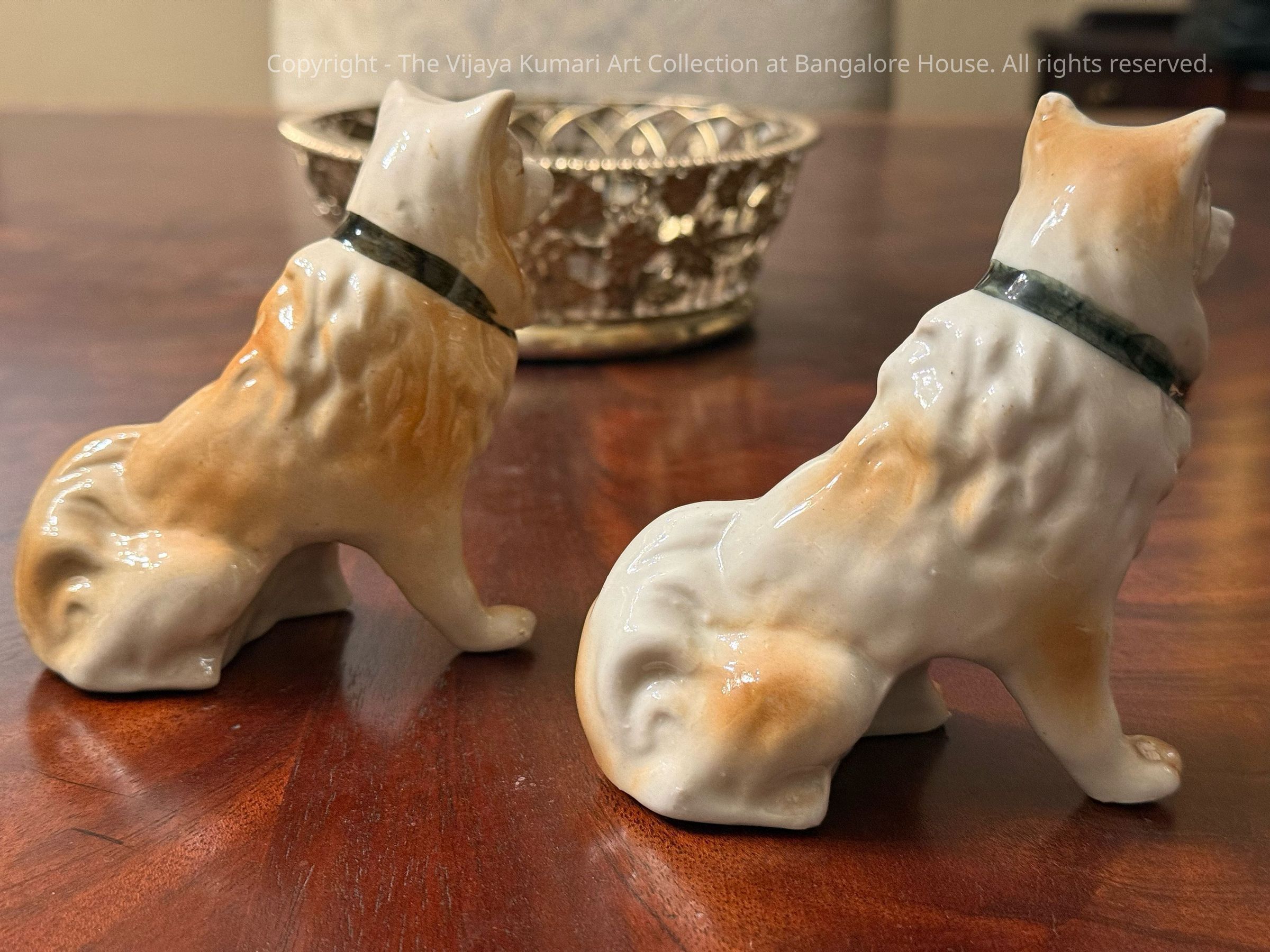
The pair consists of seated long-haired German Shepherd (Alsatian)-type dogs modeled in closely related but not perfectly mirrored poses. Each figure sits upright with forelegs extended, chest lifted, and tail curled along the side and rear of the body. The heads are angular with elongated muzzles and upright triangular ears characteristic of shepherd breeds rather than spaniels or toy dogs.
The bodies are heavily stylized, with sculpted flowing fur rendered through broad molded contours rather than naturalistic detailing. Both figures are finished in glossy cream and honey-brown glazes with softly blended transitions beneath a transparent overglaze. The collars are painted dark green-black with tied ribbon bow motifs descending at the chest.
Facial features are minimally articulated using fine brown enamel strokes to indicate eyes and brows. Subtle asymmetries between the two figures suggest hand-finishing after mold production. The glaze exhibits pooling, minor irregularities, and tonal variation typical of economical commercial ceramic production of the period.
The figures appear mold-manufactured rather than individually sculpted and are consistent with vernacular decorative ceramics widely sold in Bangalore and other South Indian urban markets during the late 1960s and early 1970s. Such objects commonly served as shelf ornaments, festival display elements, or decorative accents within middle-class domestic interiors.
Within Bangalore House, the pair functions less as decorative animal sculpture and more as a memory-bearing domestic artifact tied directly to Vijaya Kumari Ramakrishna’s early homemaking years. Their transfer between sisters and eventual return to her son shortly before her death gives them particular emotional gravity within the collection. They exemplify the house’s larger curatorial pattern in which modest vernacular objects become historically significant through lived use, continuity, and familial transmission.Made/Created
Date made
circa 1968 - 1972Relationships
Related Entries
Notes
Acquired with or about the same time as Shiva (cat. no. 51)