Pair of Pattada Gombe (Royal Couple Festival Dolls)
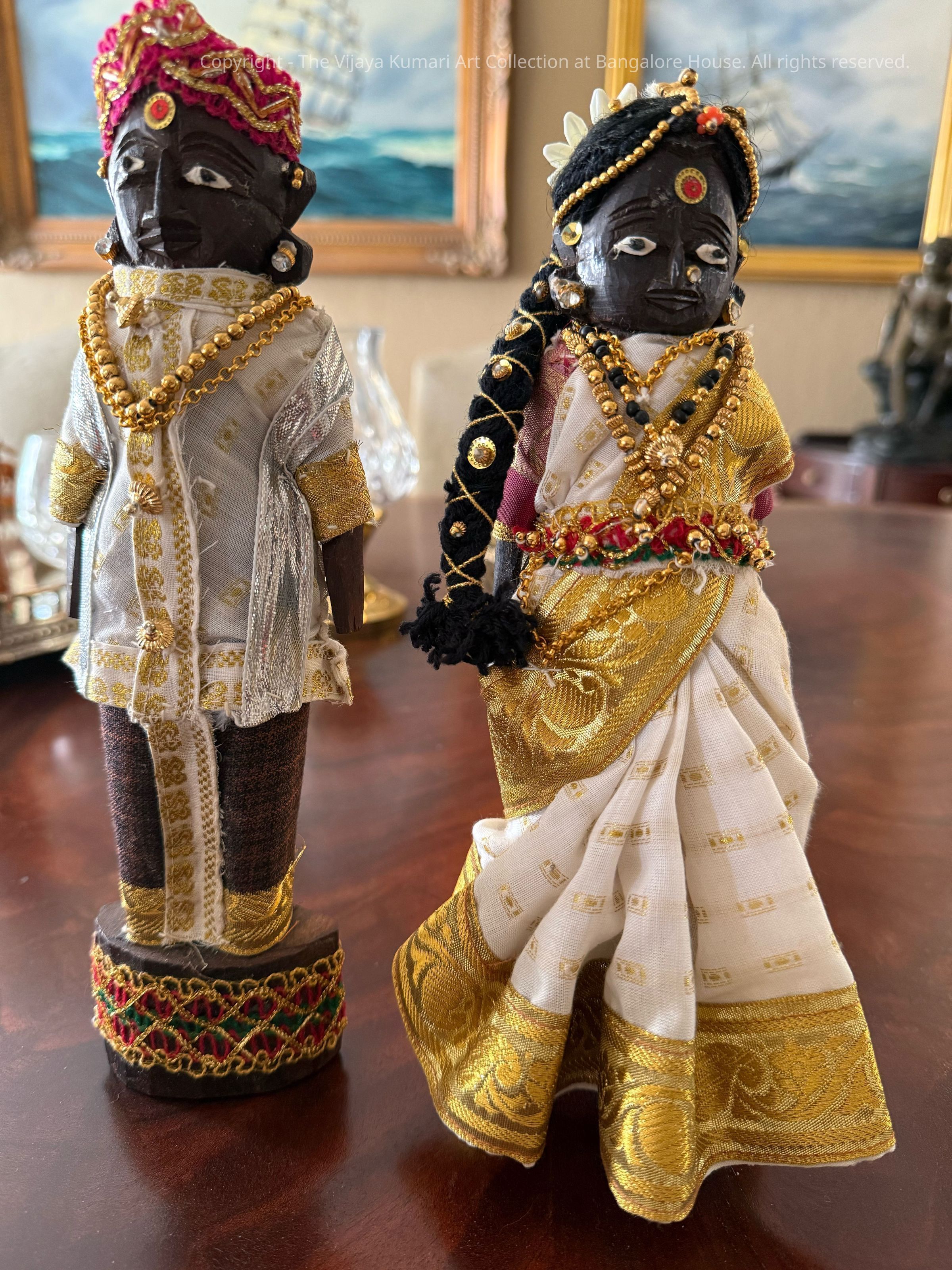
Pair of Karnataka Pattada Gombe festival dolls
Overall frontal view of the male and female Pattada Gombe figures displayed together in ceremonial dress. The image documents the paired presentation characteristic of Karnataka Dasara and Navaratri household doll displays.
Name/Title
Pair of Pattada Gombe (Royal Couple Festival Dolls)Entry/Object ID
155Description
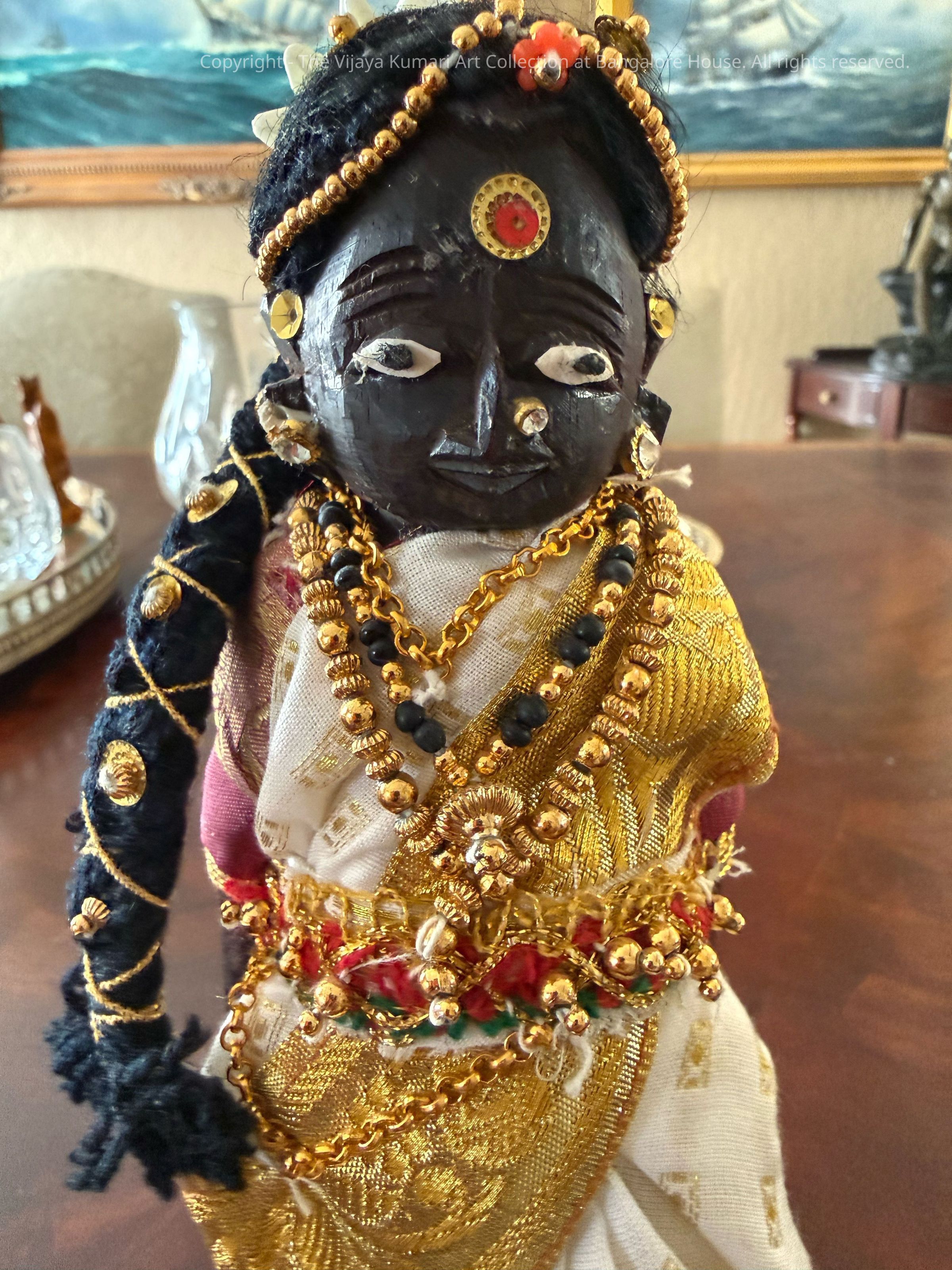
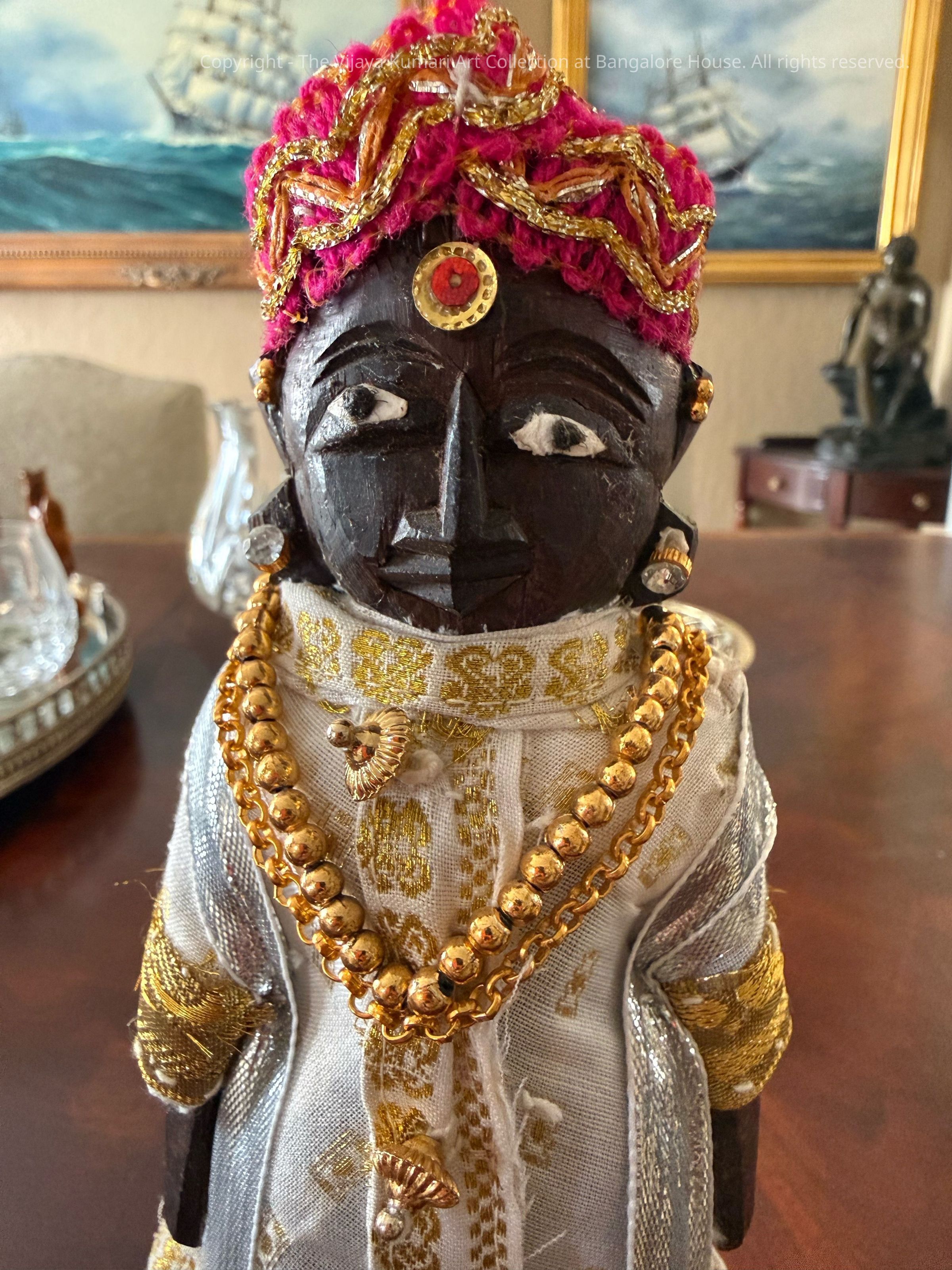
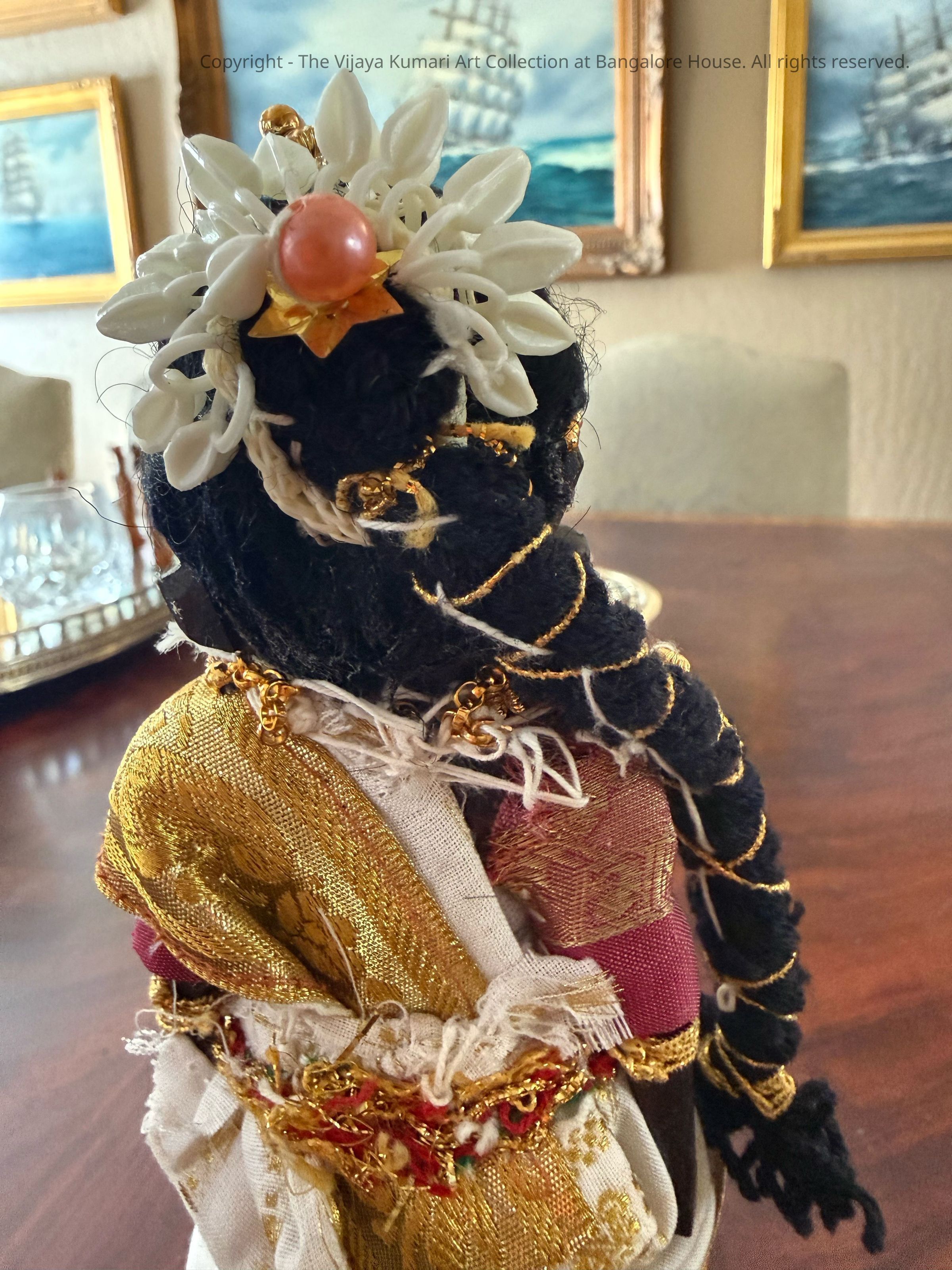
Summary A pair of traditional Karnataka Pattada Gombe (“royal dolls”) representing a ceremonially dressed male and female figure, made for display during Dasara/Navaratri golu arrangements. Carved in wood and hand-painted, the dolls retain their characteristic stylized facial geometry and dark lacquered surfaces associated with mid-20th century Karnataka festival doll production. This smaller surviving pair belonged to Vijaya Kumari during the establishment of her early household and was later gifted by her to Bangalore House during her final visit to San Jose in 2012. Shortly before the transfer, the dolls were re-costumed by a longtime Bangalore neighbor in period-appropriate South Indian attire, including woven textiles, jewelry elements, and hair adornments. The pair remains in excellent preserved condition after nearly fourteen years on continuous display within Vijaya Kumari’s memorial curio cabinet. Detailed The pair consists of standing male and female festival dolls carved in wood with simplified cylindrical bodies and disproportionately large heads, characteristic of vernacular Pattada Gombe traditions from Karnataka. Both figures are painted in a deep brown-black surface coating with stylized white-painted almond eyes, sharply angular noses, and incised brows. Facial modeling is intentionally schematic rather than naturalistic, emphasizing symbolic presence over realism. The male figure stands upright on an integrated circular base wrapped with decorative textile trim. He wears a white and gold costume suggestive of South Indian ceremonial male attire, including a wrapped lower garment and draped upper textile. The costume incorporates metallic braid, gold-toned bead chains, sequins, and ornamental trim. A bright magenta textile turban edged with gold braid crowns the figure. Jewelry and costume embellishments appear to be assembled from lightweight decorative materials rather than precious metal components. The female figure is dressed in a white sari with broad gold borders and supplementary gold textile overlay. The torso is wrapped in layered textile components including pink sleeve elements and gold brocade-like shoulder drapery. Multiple necklaces, waist ornaments, and bead strands decorate the figure. The long braided hair is constructed from black textile fiber wrapped with metallic thread and ornamented with floral and bead-like decorative elements. Rear examination confirms deliberate attention to coiffure and braid presentation, an important aspect of South Indian feminine ceremonial identity. Construction appears to combine carved wood heads and bodies with later applied textile dressing and ornamentation. The painted surfaces exhibit minor age-related abrasions and handling wear but remain visually coherent and stable. Textile fraying and slight adhesive aging are visible in localized areas, particularly around the female figure’s shoulder and waist adornments, but no major structural instability is evident from the available views. The 2012 re-costuming is itself now historically significant within the object biography. Rather than functioning as intrusive restoration, it represents a continuation of the dolls’ living domestic and ritual tradition, in which dressing and redressing formed part of active festival preparation and household care.Type of Sculpture
Free StandingArtwork Details
Medium
WoodCategory
Permanent Collection