Sandalwood Carving of Raghavendra Swamy before a Shrine
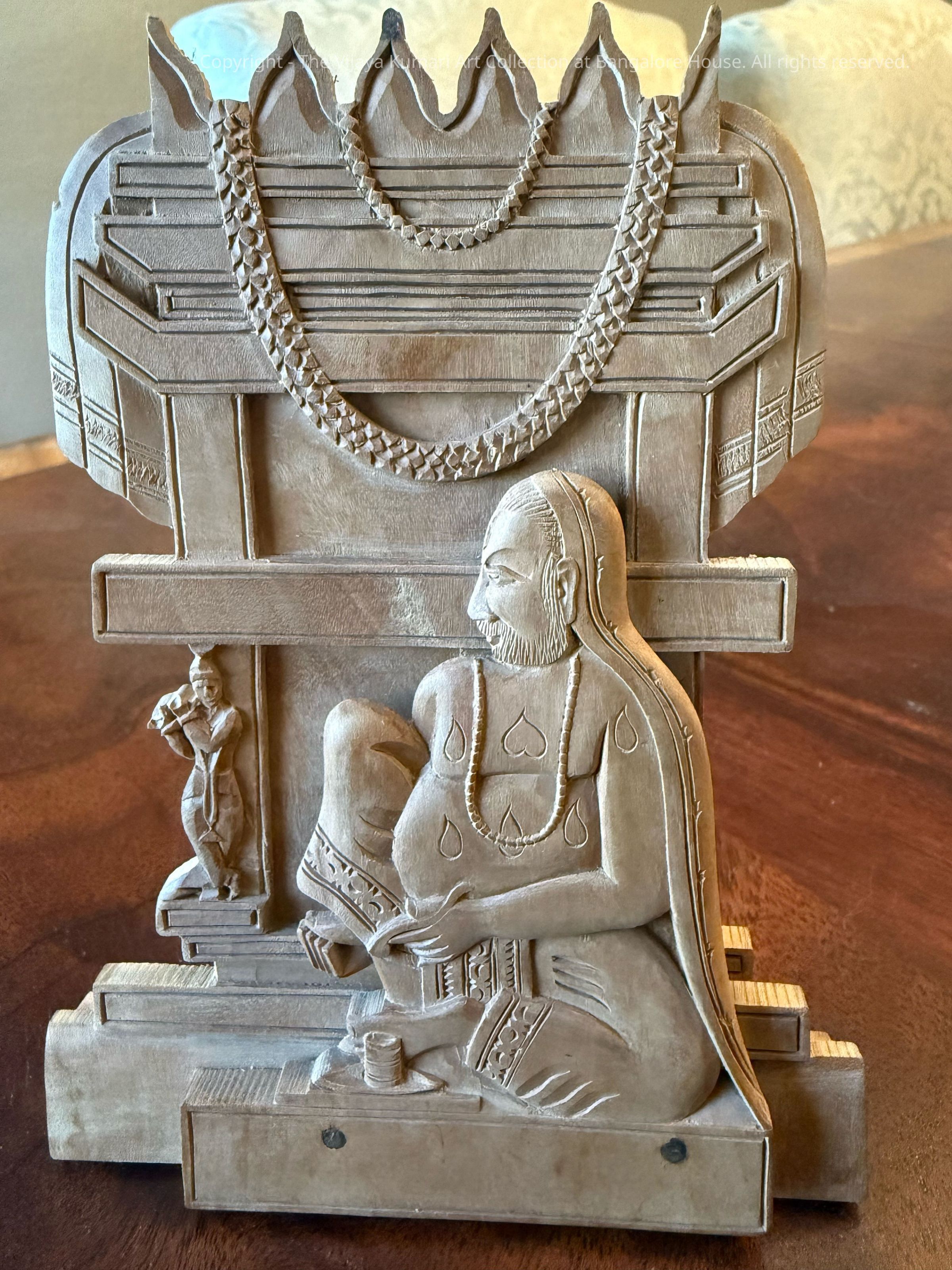
Front view of sandalwood carving depicting Raghavendra Swamy before shrine structure
Front view showing seated Raghavendra Swamy, suspended garland motifs, shrine architecture, and subsidiary Krishna figure carved in sandalwood.
Name/Title
Sandalwood Carving of Raghavendra Swamy before a ShrineEntry/Object ID
180Description
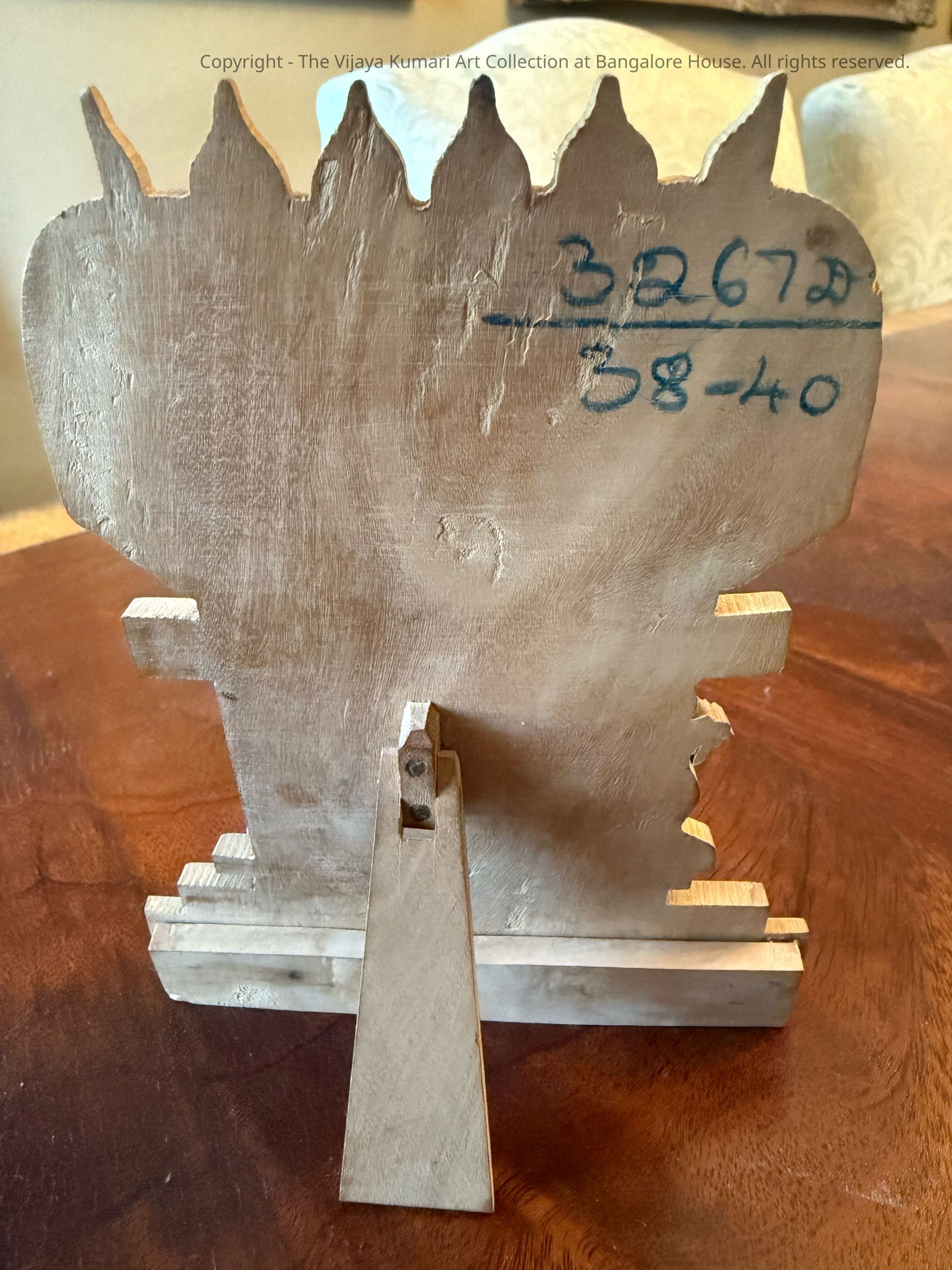
Summary Relief-carved sandalwood devotional object depicting Raghavendra Swamy seated before an architectural shrine structure, likely produced in Mysore, Karnataka, circa 1983. Executed in a modest but coherent workshop style associated with Karnataka pilgrimage and tourist carving traditions, the object incorporates suspended garland motifs and a small secondary figure likely representing Lord Krishna. Purchased by the owner’s mother during a visit to Mysore and displayed within her domestic showcase-prayer cabinet, the carving functioned as an active devotional object within the household. In 2012, shortly before her death from terminal cancer, she transferred the object to the owner as part of a deliberate act of stewardship and continuity, explicitly identifying selected objects as “for the museum.” ⸻ Detailed The object is a freestanding sandalwood devotional relief carving depicting the Hindu saint Raghavendra Swamy seated in contemplative posture before a stylized shrine or temple backdrop. The saint is represented cross-legged with draped robes, elongated vertical tilak, necklace, and manuscript or scripture resting across the lap. Behind the figure rises an architectonic shrine structure composed of stepped horizontal moldings, pointed finials, and suspended garland swags carved in shallow relief. At lower left, a small standing subsidiary figure—likely intended to represent Lord Krishna—appears within a niche-like setting, reinforcing Raghavendra Swamy’s devotional association with Krishna within the Madhva tradition. The carving is executed in low to moderate relief with simplified contouring and restrained detailing. Tool marks and linear incision remain visible throughout. Surface finishing is matte and relatively soft, consistent with commercial Mysore sandalwood devotional carving of the late 20th century rather than highly refined atelier production. The reverse is flat-finished and fitted with a hinged support allowing upright tabletop display within a domestic cabinet or shrine setting. Blue handwritten numerical notation appears on the reverse, likely associated with workshop inventory or point-of-sale marking. The sandalwood has aged to a pale warm brown tone with mild oxidation and localized handling darkening. Minor wear is present at projecting edges and finials, but the object remains structurally stable and visually coherent. The carving was purchased by the owner’s mother during a visit to Mysore circa 1983 following family pilgrimage connections to Mantralaya and devotion to Raghavendra Swamy. It was displayed within the household showcase, which functioned partly as a curio cabinet and partly as a devotional domestic shrine. In 2012, shortly before her death, the owner’s mother intentionally transferred the object to the owner as part of a conscious act of intergenerational stewardship.Type of Sculpture
ReliefArtwork Details
Medium
SandalwoodCategory
Permanent Collection