Sandalwood Perpetual Calendar and Pen Stand with Elephant
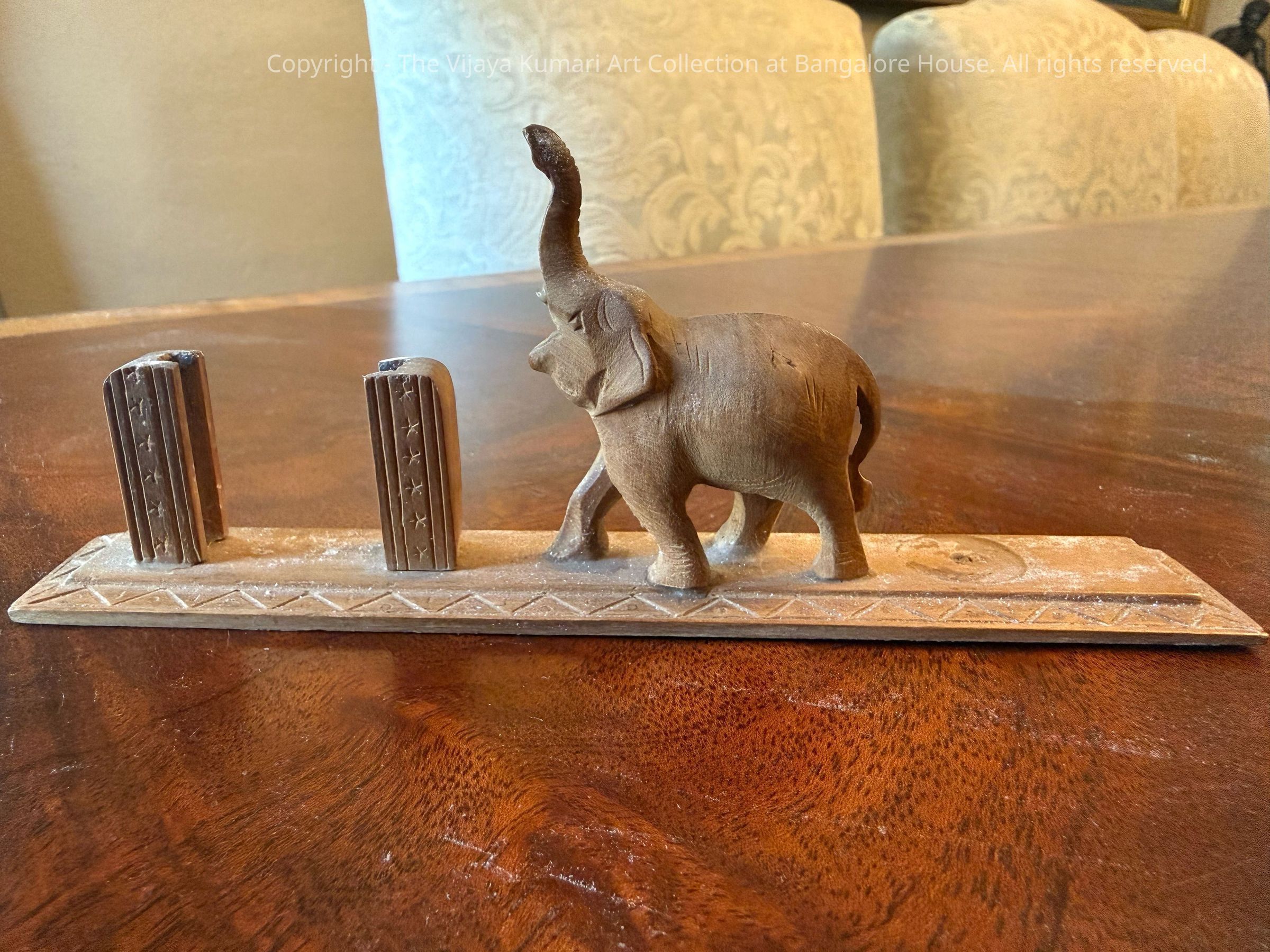
Sandalwood perpetual calendar and pen stand with elephant, side view
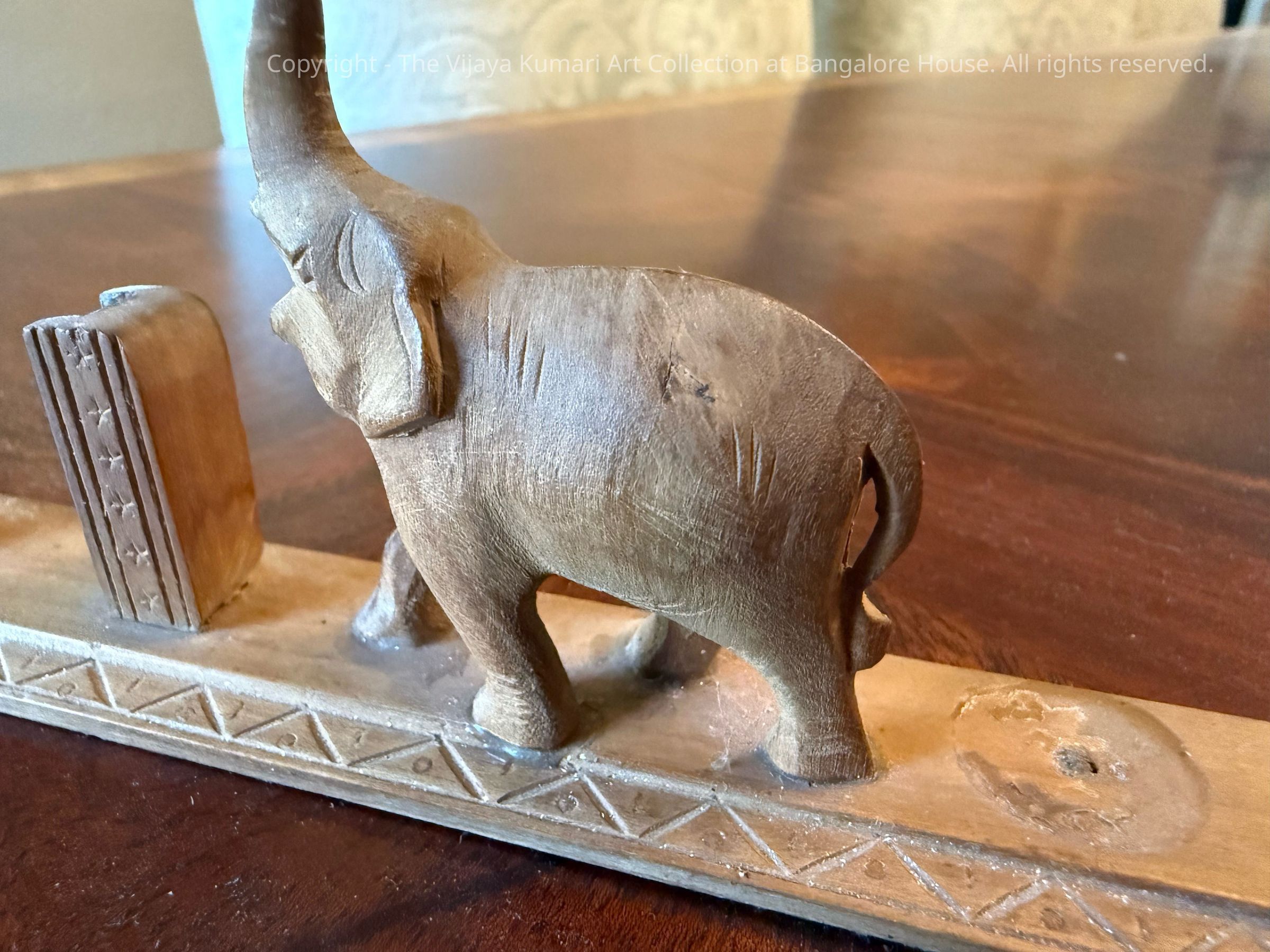
Side view showing carved elephant figure, upright calendar slots, and geometric border decoration on sandalwood platform.
Name/Title
Sandalwood Perpetual Calendar and Pen Stand with ElephantEntry/Object ID
181Description
Summary Combined sandalwood perpetual calendar and pen stand produced in Karnataka, likely Mysore or Bangalore region, circa 1983. The object integrates a small carved elephant with a functional desk calendar system and pen holder, representing the popular South Indian sandalwood desk accessories widely used in middle-class households during the late 20th century. Originally used daily within the owner’s family home, the calendar became associated with nightly domestic ritual through the owner’s maternal grandfather, who regularly changed the day and date before bed. Following his death, the owner’s mother continued the practice for a period of years. Although the original date tabs and pen holder are now lost, the surviving object functions as a material record of intergenerational domestic continuity and routine. ⸻ Detailed The object is a long rectangular sandalwood desk accessory combining a perpetual calendar, pen stand, and carved elephant figure. The composition consists of a flat platform with incised geometric border decoration supporting two upright slotted calendar holders and a sculptural elephant in raised-trunk posture. The elephant is carved in simplified volumetric form with shallow incised detailing at the ears, legs, and body folds. The trunk rises vertically in an exaggerated gesture associated with auspicious elephant imagery common in Mysore tourist and handicraft production. The tail is represented through a pierced open contour. The calendar mechanism originally employed removable plastic tabs displaying day and date information; these elements are no longer present. A circular recessed socket at one end of the platform indicates the former location of a pen-holder attachment, now missing. The sandalwood surface has oxidized to a warm medium-brown tone with localized handling polish and visible dust accumulation within carved recesses. Minor abrasions, scratches, and edge wear are present throughout, consistent with prolonged household use. Despite losses to functional components, the object remains structurally stable and visually coherent. The object was likely acquired as a gift circa 1983 and was actively used within the owner’s family household. The owner recalls that the maternal grandfather changed the calendar tabs nightly before retiring to bed, establishing a recurring domestic ritual later continued by the owner’s mother after his death. Following the owner’s mother’s passing, the object was retained as part of the surviving material memory of the household.Type of Sculpture
Free StandingArtwork Details
Medium
SandalwoodCategory
Permanent Collection