Name/Title
Porcelain Bust of ShivaEntry/Object ID
51Description
Summary
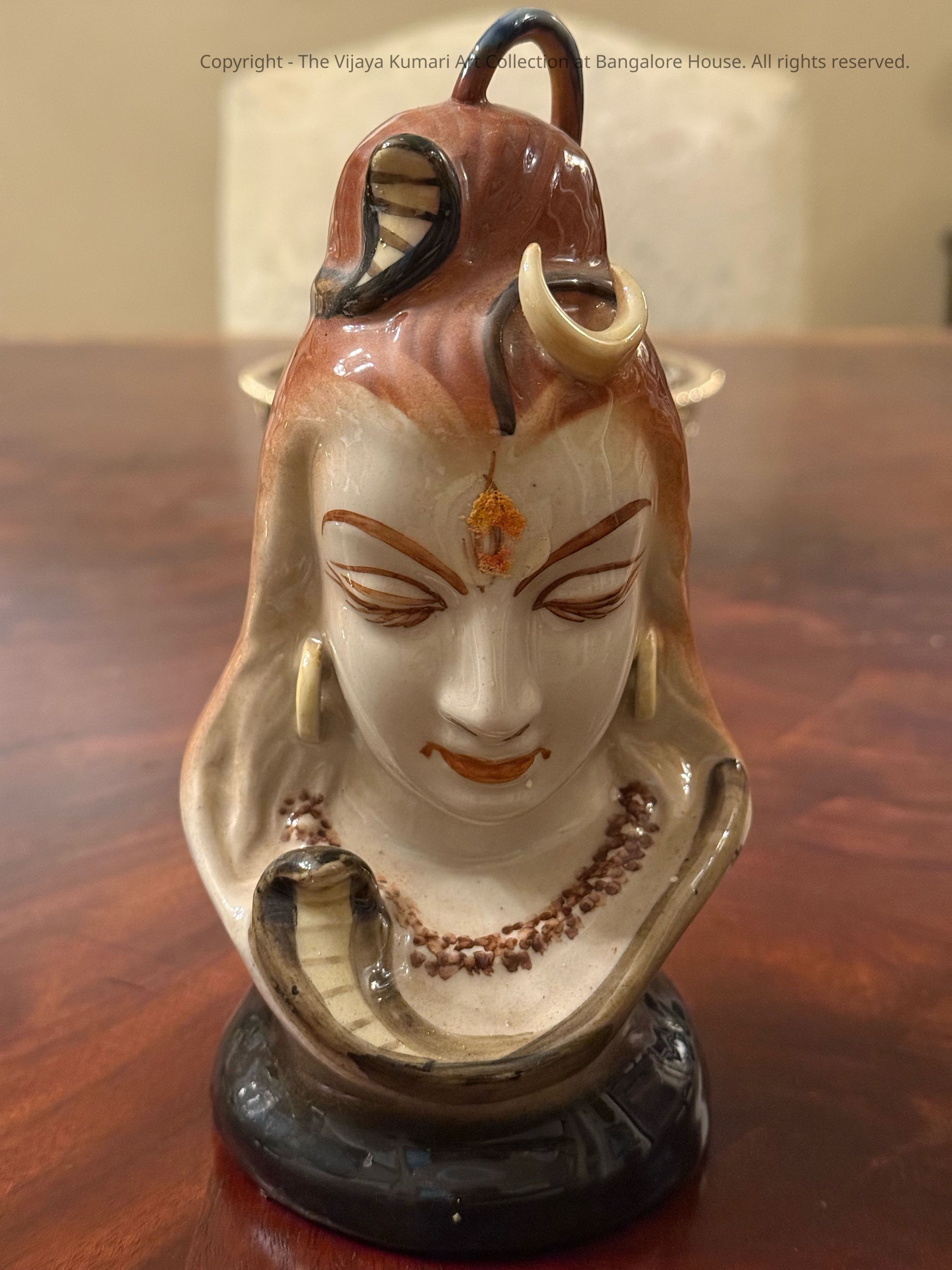
Small glazed porcelain bust representing Shiva in a stylized devotional form, combining sculptural portraiture with symbolic iconography including crescent moon, cobra, rudraksha beads, and ascetic hair arrangement. The object was acquired by Vijaya Kumari Ramakrishna in Bangalore during the early formation of her household, likely from a street vendor between 1969 and 1972. Although modestly priced at the time of purchase, the sculpture became integrated into both Dasara doll festival displays and the family’s active devotional environment, giving it layered domestic, ritual, and biographical significance.
The object was later gifted to Bangalore House circa 2012 during Vijaya Kumari’s final visit prior to her passing in 2013. It now functions not primarily as a decorative souvenir, but as a surviving material link to the establishment of the family home, devotional continuity, and the transmission of cultural memory across generations.
⸻
Detailed
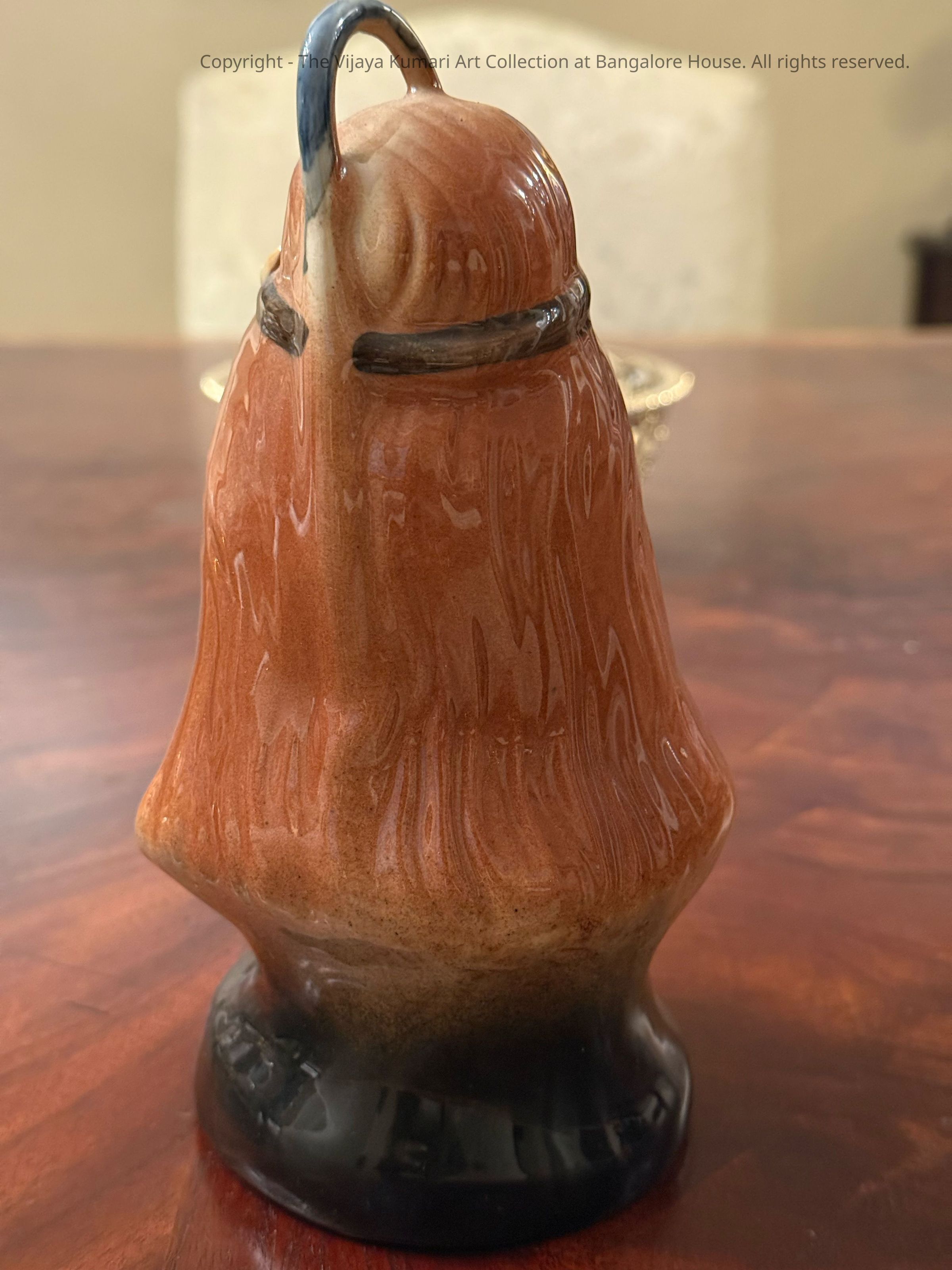
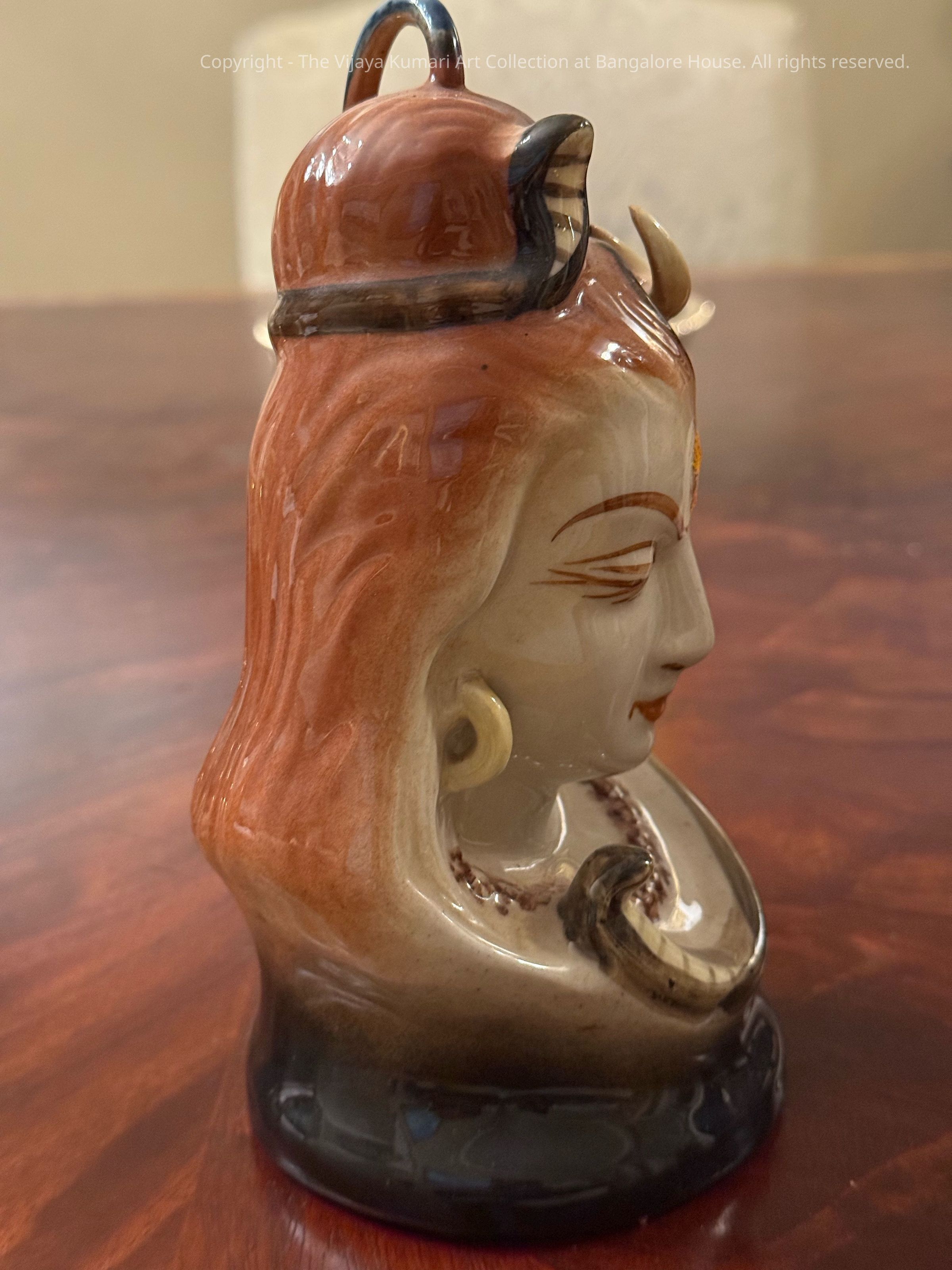
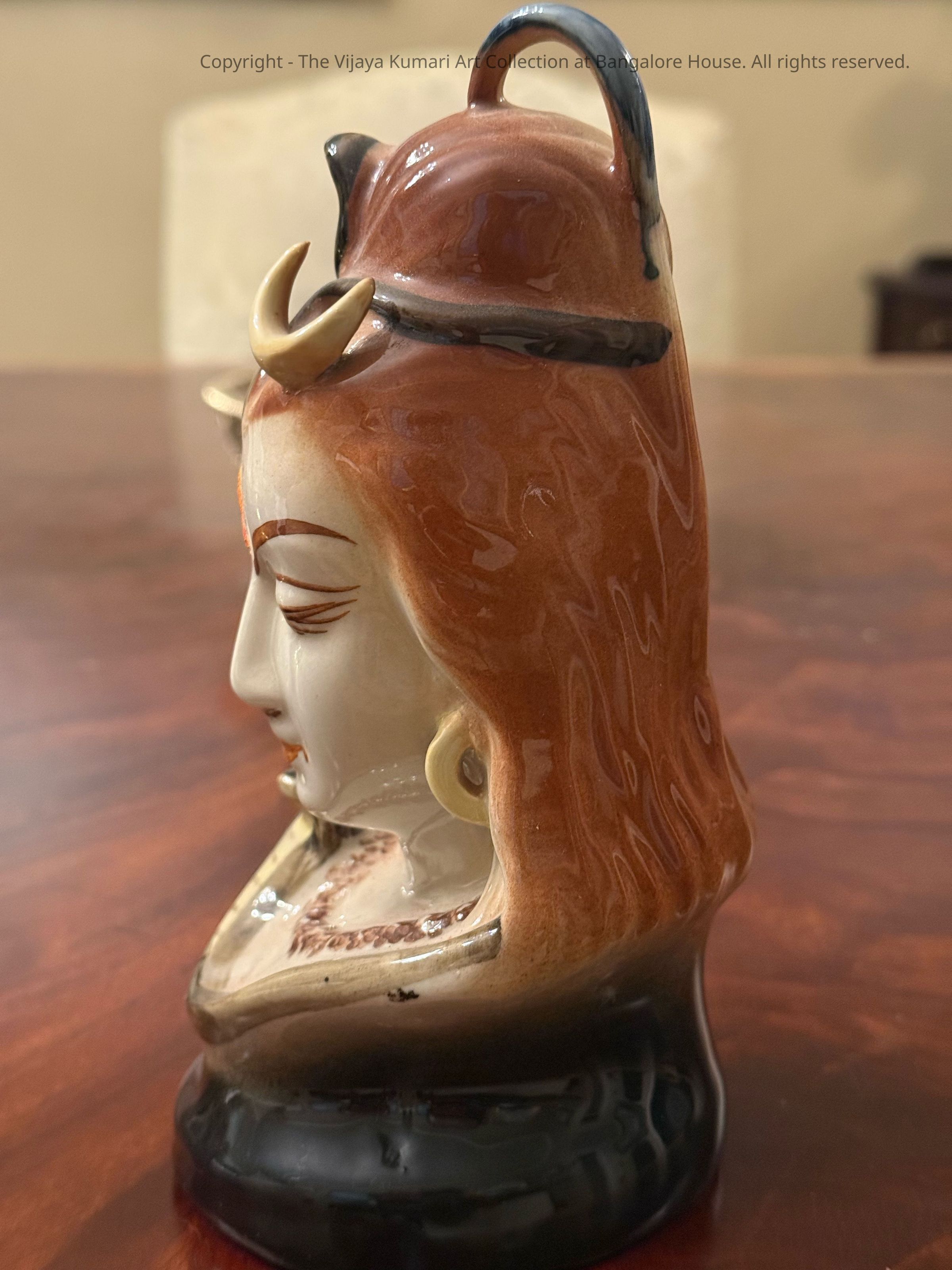
The sculpture depicts Shiva as a frontal bust emerging from an integral rounded base. The head is crowned by a high piled jata-like coiffure rendered in flowing reddish-brown glaze with darker accents. A crescent moon projects from the proper right side of the head, while a stylized cobra rises across the chest and left shoulder area, its hood painted with dark linear striping. Another serpent form encircles the upper hair mass.
The face is idealized and symmetrical, with elongated almond-shaped closed eyes outlined in brown enamel, arched brows, narrow nose, and softly smiling mouth. The forehead bears a painted tilak or devotional mark executed in orange and red pigment. Ear ornaments are represented as simplified circular loops. Around the neck appears a painted rudraksha-style bead necklace rendered in dotted brown enamel.
The object appears mold-formed rather than individually sculpted, consistent with mass-produced devotional ceramics produced for middle-class domestic religious display in South India during the late 1960s and early 1970s. Surface glazing is glossy throughout, with pooled glaze variation and slight irregularities visible along contours and recessed areas. Color transitions between cream, reddish-brown, and dark charcoal tones are softly blended beneath the glaze, creating a mildly marbled visual effect typical of economical ceramic production of the period.
The underside is not visible in the provided photographs, preventing examination for maker’s marks, mold numbers, kiln supports, or factory labels. No signatures or workshop marks are visible from the documented views.
The sculpture occupies an important position within the history of the family household. According to owner documentation, it formed part of the annual Dasara golu display tradition alongside other domestic ritual figures, including the Pattada Gombe pair (cat. 155). Unlike purely seasonal display objects, however, this Shiva image also functioned continuously within the household’s devotional environment as an active prayer object. Its significance therefore derives from accumulated domestic use, ritual continuity, and intergenerational transmission rather than rarity or material value.Made/Created
Date made
circa 1969 - 1972Relationships
Related Entries
Notes
Acquired with or about the same time as pair of Alsatian dogs (cat. no. 162)