Soapstone Shrine Set with Ganesha, Nandi, and Shiva Linga
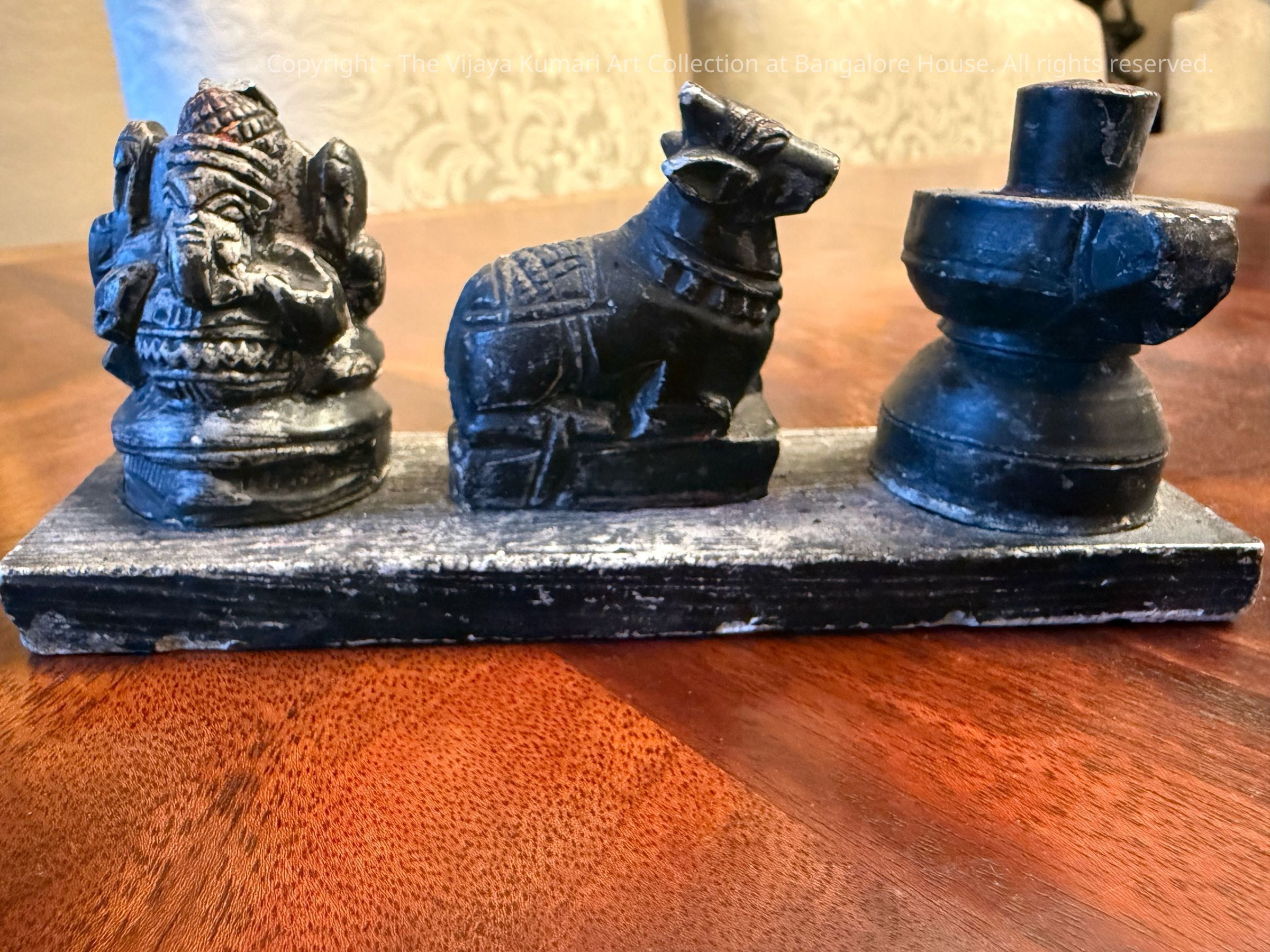
Soapstone shrine set with Ganesha, Nandi, and Shiva linga
Front view showing soapstone devotional ensemble comprising Ganesha, Nandi, and Shiva linga mounted on rectangular platform.
Name/Title
Soapstone Shrine Set with Ganesha, Nandi, and Shiva LingaEntry/Object ID
184Description
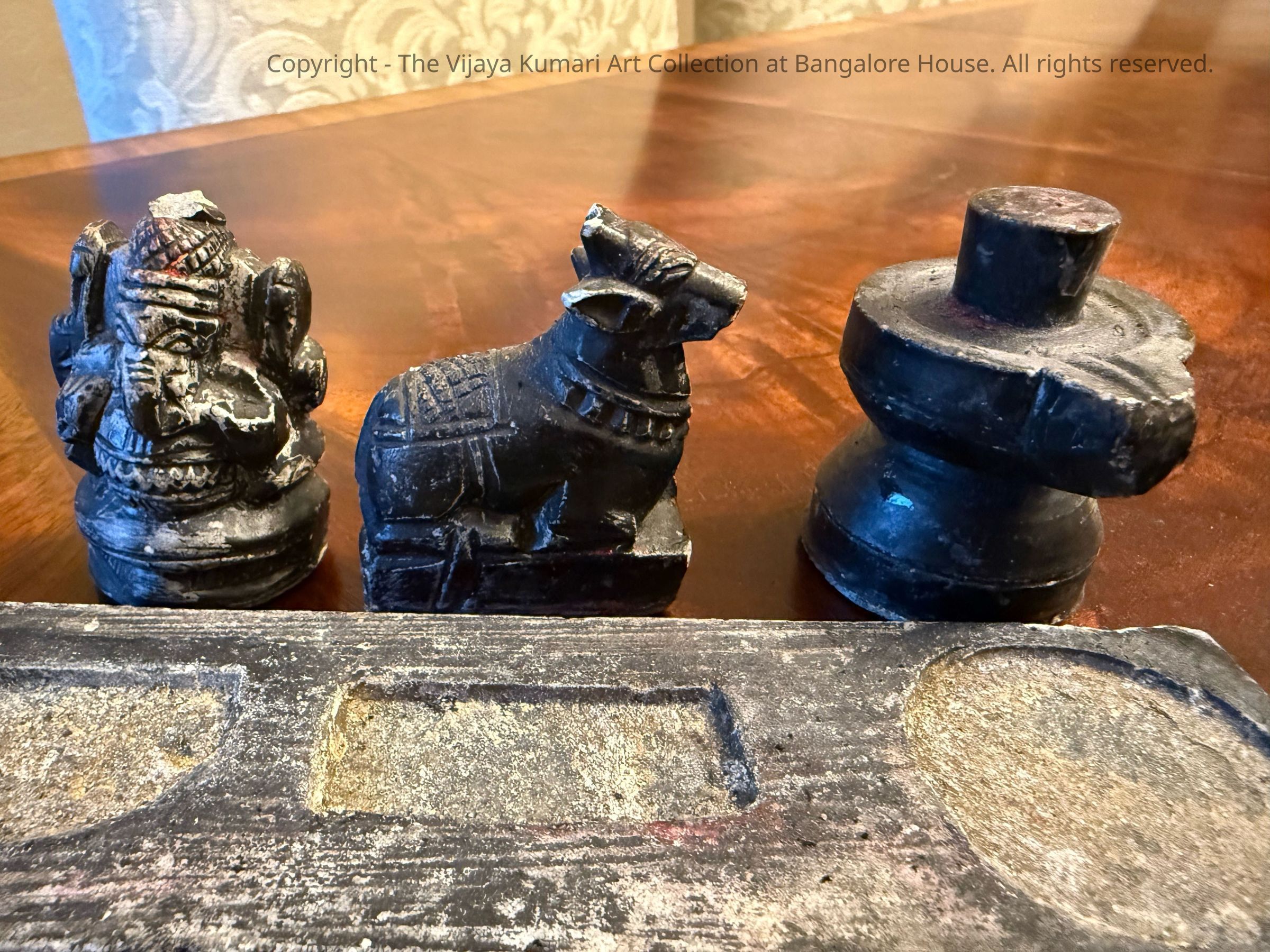
Summary Soapstone domestic devotional shrine ensemble comprising Ganesha, Nandi, and Shiva linga figures mounted on a fitted rectangular platform, likely produced in Karnataka, India, between the 1950s and late 1960s. The ensemble remained in continuous household devotional use within the prayer cabinet of Vijaya Kumari Ramakrishna following the establishment of her home circa 1969. Extensive surface wear, soot accumulation, and handling abrasion reflect prolonged ritual use across multiple decades before the object entered the Bangalore House Pooja Collection after her death in 2013. ⸻ Detailed The object consists of three individually carved soapstone devotional elements fitted into recessed sockets within a rectangular platform base. The ensemble comprises a seated Ganesha figure, a recumbent Nandi figure, and a Shiva linga with yoni base. The carvings are executed in a vernacular domestic devotional style emphasizing ritual recognizability and functional durability over sculptural refinement. Ganesha is represented in compact seated form with simplified facial and ornamental detailing. Nandi retains incised saddle and body ornament despite surface smoothing from handling and devotional contact. The Shiva linga is proportionally enlarged relative to the ensemble and displays characteristic cylindrical linga form set within a projecting yoni base. The figures are removable from the platform, indicating individual carving and later assembly into a unified domestic shrine configuration. The soapstone surfaces have darkened substantially through age and prolonged devotional use. Oil exposure, soot accumulation, incense residue, and repeated handling have produced generalized surface smoothing and tonal darkening throughout the ensemble. Wear is especially visible on projecting areas including the crown of Ganesha and edges of the Shiva linga. Minor chipping and abrasion are present across all elements. The ensemble likely originated between the 1950s and late 1960s and may have entered Vijaya Kumari Ramakrishna’s household either through personal acquisition around the time she established her home circa 1969 or through transfer from her maternal household. The shrine remained in regular devotional use within the family prayer cabinet/showcase for several decades before entering the owner’s stewardship following her death in 2013.Category
Permanent Collection